
Best Third Fired Decorative Tiles India 2027: Wall Art Picks for Pooja Room, Bathroom and Kitchen
Explore nine third fired decorative tile picks for Indian pooja rooms, bathrooms and kitchens, with prices, placement rules, maintenance guidance and practical advice on availability risks.
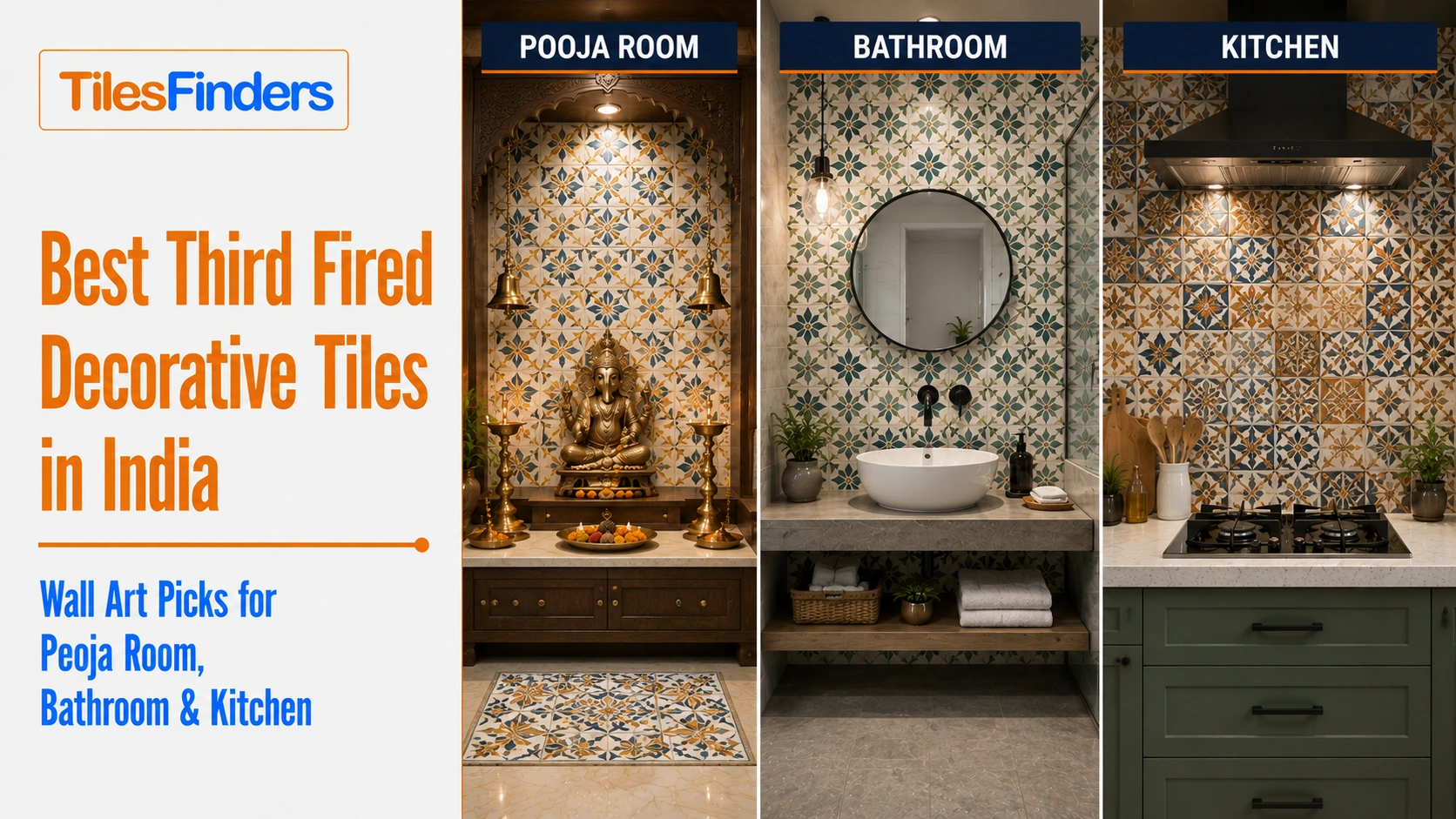
Third-fired tiles are premium decorative over-glaze surfaces best reserved for small, low-contact wall applications where genuine gold or platinum lustre creates visual impact. Choose carefully, confirm the base body and lead time, and always retain a full extra box for future repairs.
This is the only tile category where the biggest buying risk is not choosing the wrong design. It is choosing a beautiful third-fired tile option that will not exist in three years when you need four tiles to repair a damaged corner. Specialist batches are small, ranges turn over quickly, and matching later is frequently impossible. This guide gives nine picks with that risk built into the assessment rather than left as a footnote.
What Makes This Purchase Different
| Factor | Standard Tile | Third Fired |
| Batch size | Large production runs | Small specialist batches |
| Range lifespan | Core ranges run for years | Frequently discontinued within a few seasons |
| Lead time | Days from stock | Weeks, across three firings and often a specialist facility |
| Repair matching | Usually achievable later | Frequently impossible once the batch is gone |
| Overage approach | A percentage of the area | A full extra box, since percentages are meaningless at this scale |
| Handling on site | Standard | Vulnerable at cut edges, needs a briefed installer |
Before comparing individual designs, it helps to understand why Third Fired Tiles in India behave differently from standard decorative tiles. This explains the over-glaze process, firing temperatures, durability limits and why these tiles require more careful handling and maintenance.
The consequence worth planning around: Your offcuts are your repair stock. Not the supplier's, not the manufacturer's, yours. On a six-square-foot pooja panel, that means the two or three spare tiles sitting in a box in your storeroom are, realistically, the only matching replacements that will ever exist for that wall. Store them flat, dry, and somewhere you will remember. Households that skip this step and later damage a single tile usually end up replacing the entire panel, which turns a two thousand-rupee problem into a ten thousand-rupee one. |
The Nine Picks
1. BEST OVERALL
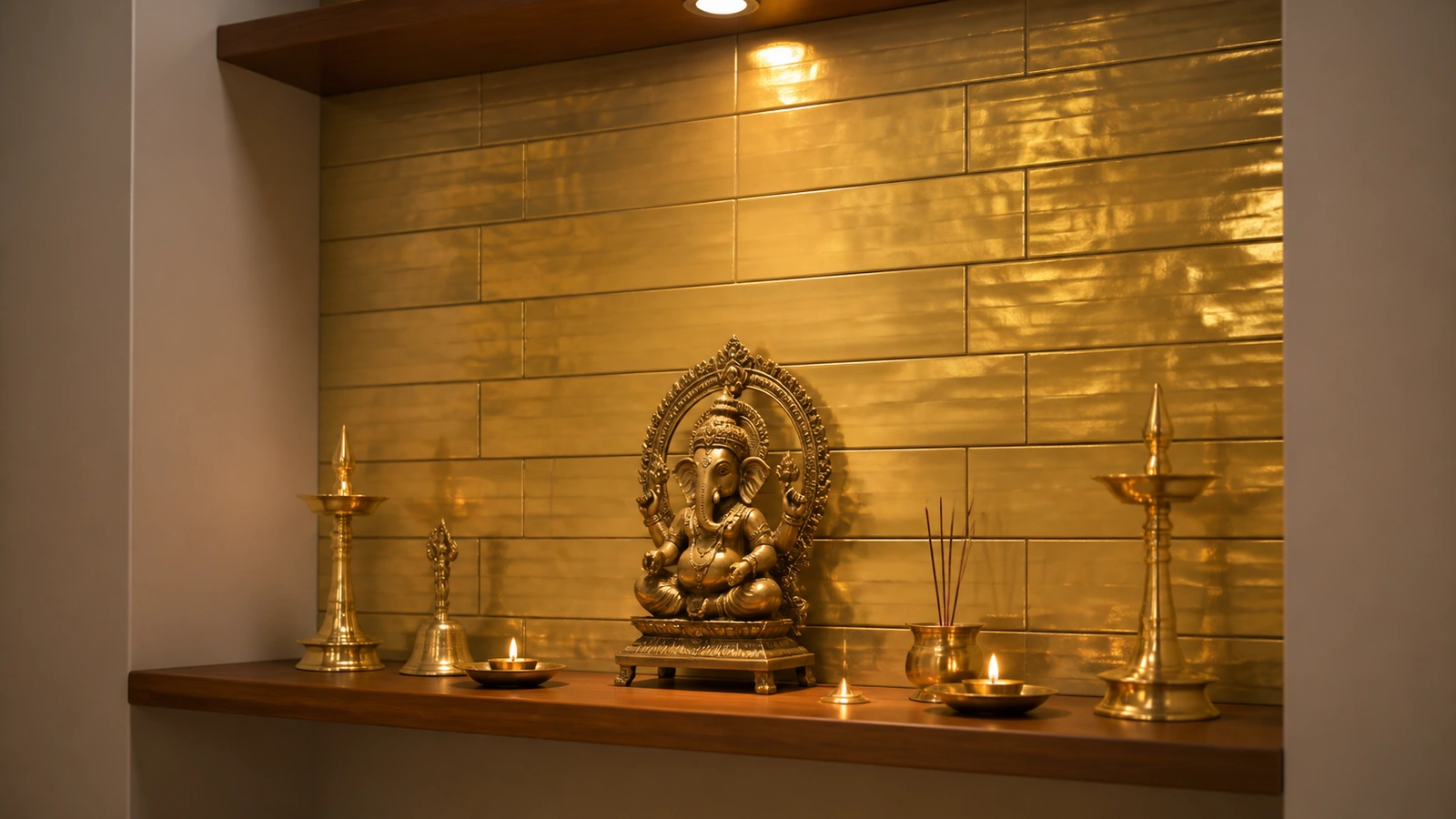
Gold Lustre Backdrop Panel, Pooja Room
Third-fired gold lustre on ceramic base | 300x300 mm or 300x600 mm | Wall, low contact | Rs. 250 to Rs. 480/sq.ft
Typical panel cost: About Rs. 1,500 to Rs. 2,880 for a 6 sq.ft panel
The application this material was made for. Genuine fired gold answers diya flame in a way no printed metallic can, because a moving flame is exactly the light source real metal reflects best. Small area, high impact, and the clearest justification for the premium anywhere in the home.
Choose this if: you have a pooja shelf or niche where lamp light reaches the wall directly.
Skip it if: a deep shelf shadows the panel, unless you add a concealed warm light at the panel head to compensate.
2. BEST FIRST PURCHASE
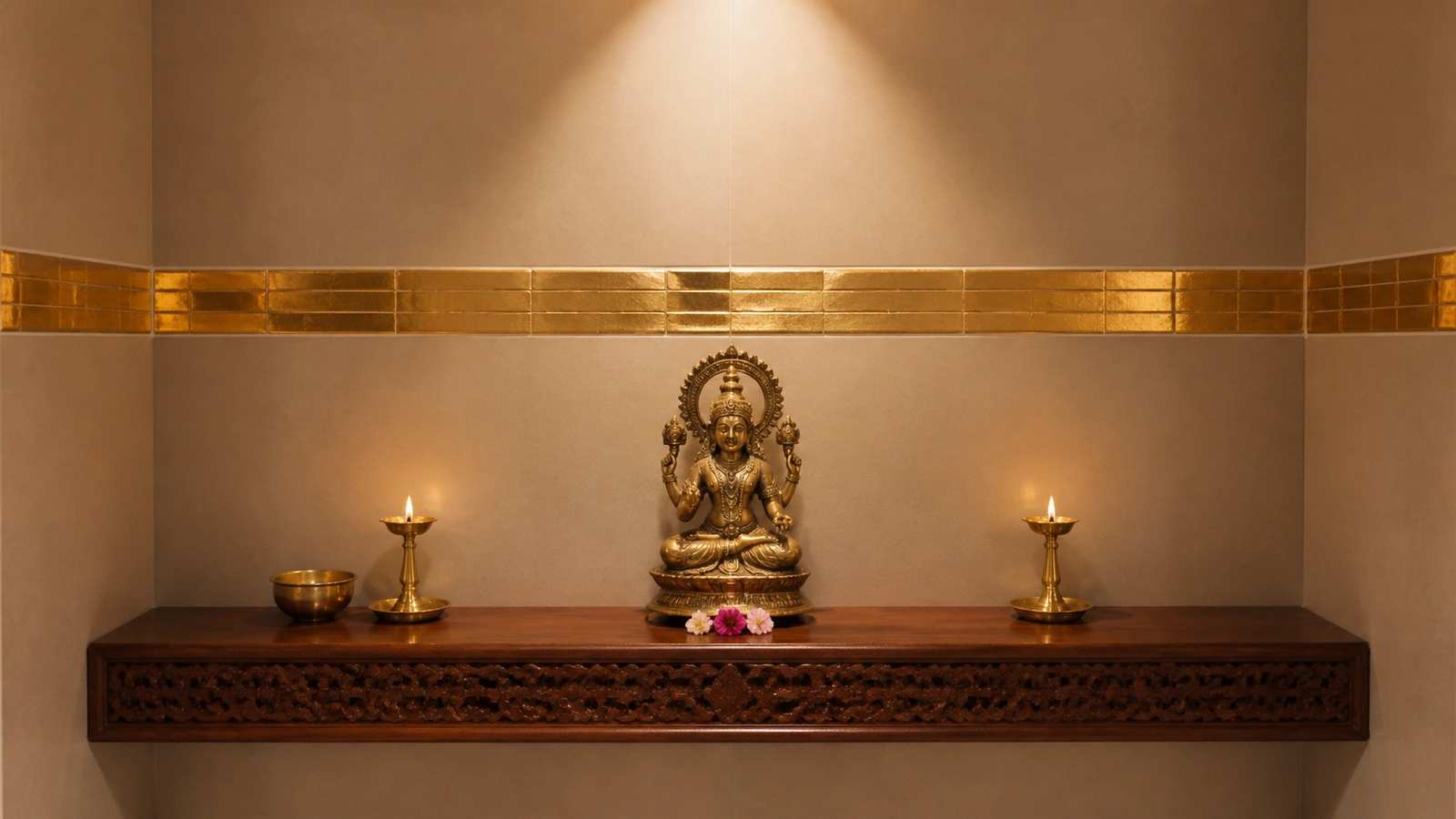
Gold Lustre Border Strip, Single Run
Third-fired gold lustre border | 75x300 mm strip | Wall, low contact | Rs. 250 to Rs. 480/sq.ft
Typical panel cost: About Rs. 500 to Rs. 960 for a 2 sq.ft run
The lowest-risk way into the category. A single horizontal band costs less than a decent light fitting, and it tells you whether genuine fired metal actually appeals to you in your own lighting before you commit to a panel.
Choose this if: you have never used this material and want to test it before spending more.
Skip it if: you already know you want a full panel, since two separate small orders will not match and buying once is cheaper.
3. BEST FOR A FORMAL POOJA ROOM

Raised Motif Gold Medallion
Third-fired gold lustre, raised decorative motif | Custom panel | Wall, low contact | Rs. 300 to Rs. 600/sq.ft
Typical panel cost: About Rs. 1,200 to Rs. 2,400 for a 4 sq.ft medallion
The most intricate pooja room tile option in the category, with dimensional relief carrying the gold rather than a flat surface. For a household where the pooja room is genuinely formal, and the decoration is meant to be looked at closely.
Choose this if: the room is a dedicated pooja space rather than a corner, and symmetry around the idol matters to you.
Skip it if: the placement cannot be centred on the idol, since off-centre symmetry reads as an error in this context.
If you want more ways to use fired gold beyond a single medallion, these Third Fired Tile Design Ideas cover intricate applications for pooja rooms and bathrooms. They show how borders, niches and backdrop panels can create impact while keeping the decorative area controlled.
4. BEST FOR A BATHROOM
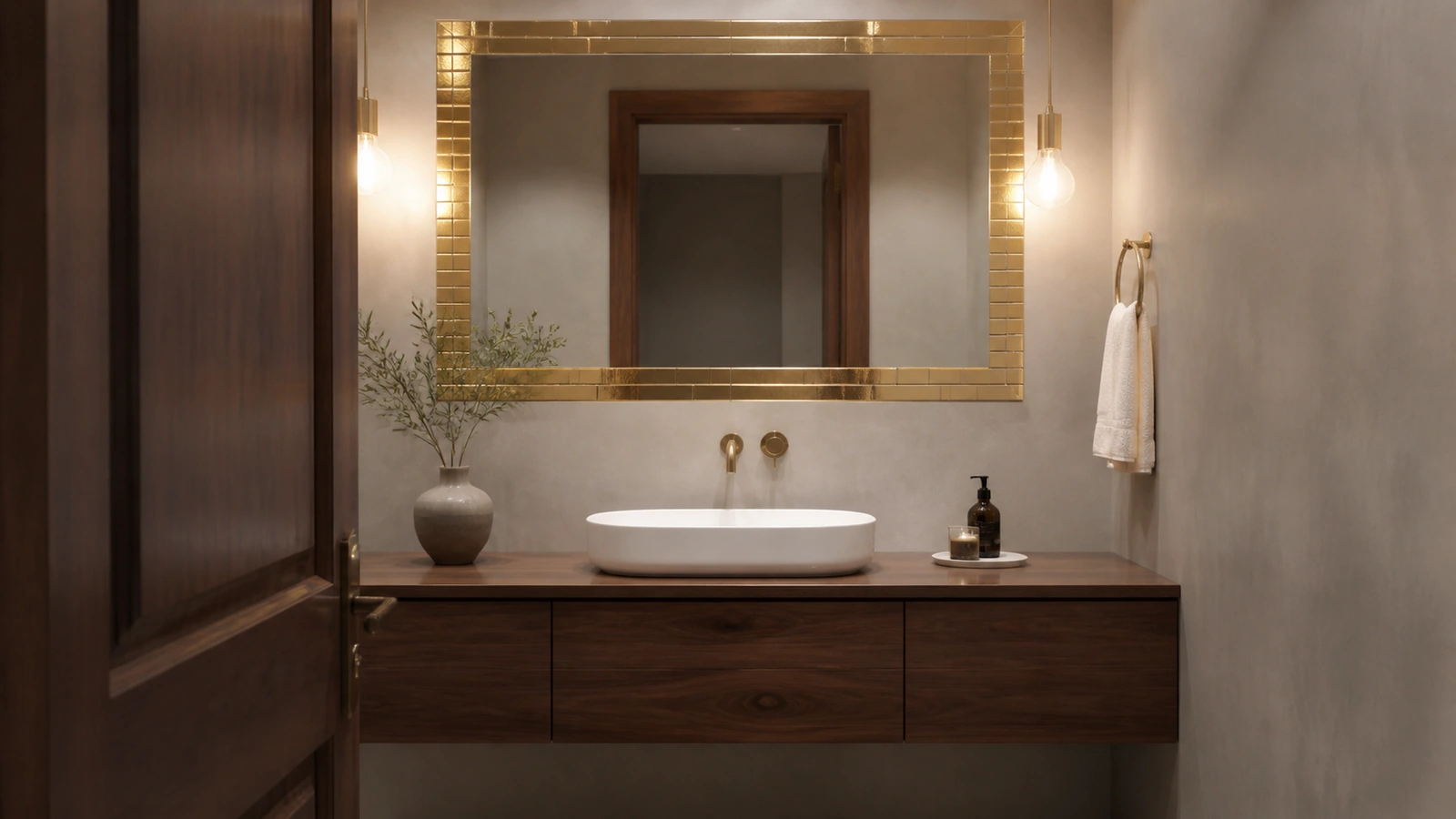
Gold Lustre Mirror Surround Border
Third fired gold lustre border | 75x300 mm strip | Wall, low contact | Rs. 250 to Rs. 480/sq.ft
Typical panel cost: About Rs. 750 to Rs. 1,440 for a 3 sq.ft surround
The one bathroom surface genuinely clear of splash and abrasive cleaning, seen at close range every single day. A slim band framing the vanity mirror is the safest bathroom application of this material and the most used.
Choose this if: the mirror sits at least 300 mm clear of the basin rim and the household can be briefed on cleaning.
Skip it if: acidic descalers are used routinely in the room, since they are common against hard water in India and will destroy a lustre finish.
5. BEST FOR A KITCHEN
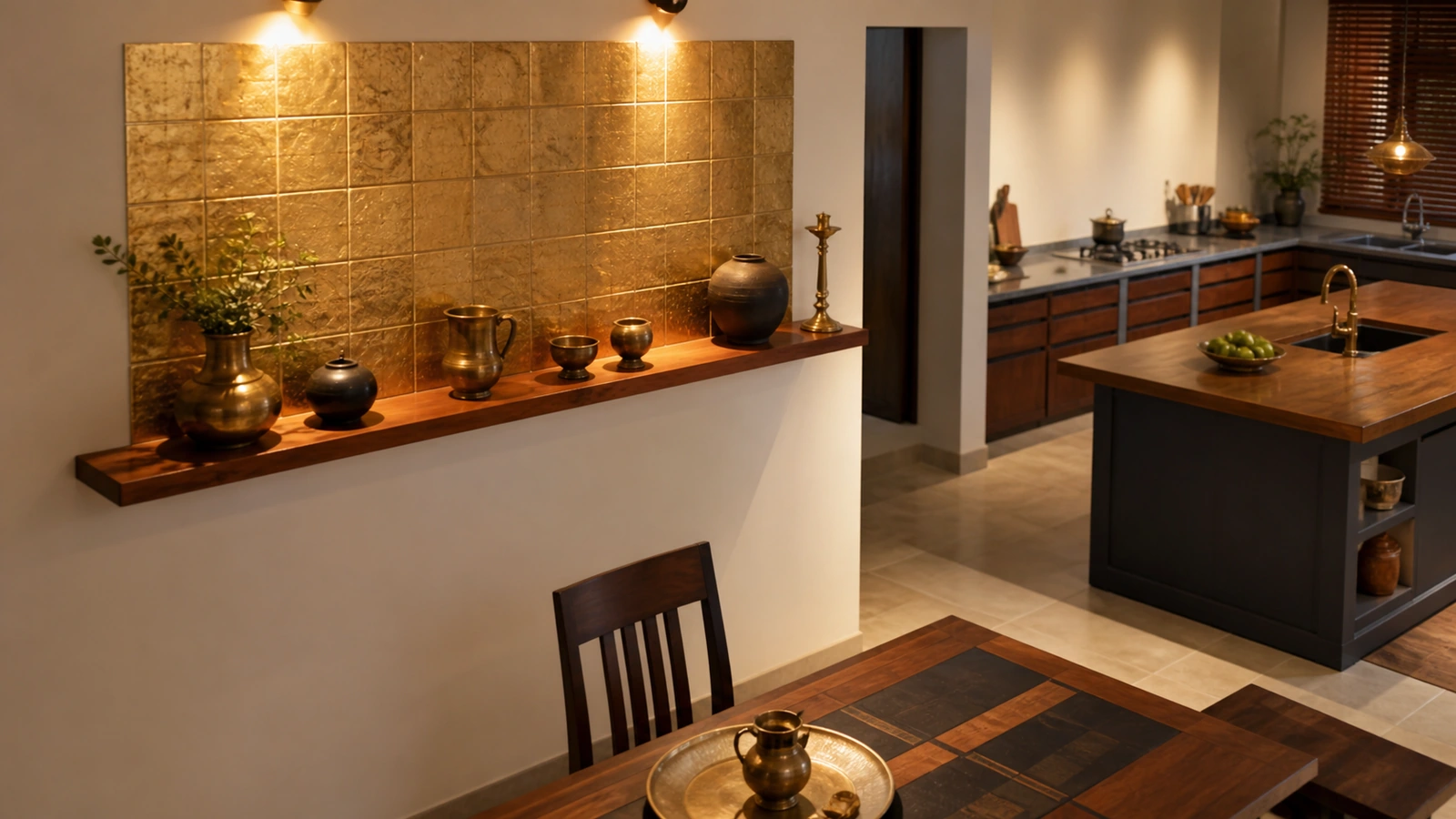
Gold Lustre Panel, Display or Dining Wall
Third fired gold lustre | 300x300 mm | Wall, low contact, away from cooking zone | Rs. 250 to Rs. 480/sq.ft
Typical panel cost: About Rs. 1,000 to Rs. 1,920 for a 4 sq.ft panel
Kitchens are the hardest room in this guide for this material, so the placement does the work. A kitchen tile panel above an open display shelf or on a dining nook wall within an open-plan kitchen, positioned genuinely away from the hob.
Choose this if: the kitchen is open-plan with a wall or nook well clear of the cooking zone.
Skip it if: the only available wall is the backsplash behind the hob, where oil aerosol will dull the lustre and degreasing will damage it.
6. BEST CONTEMPORARY
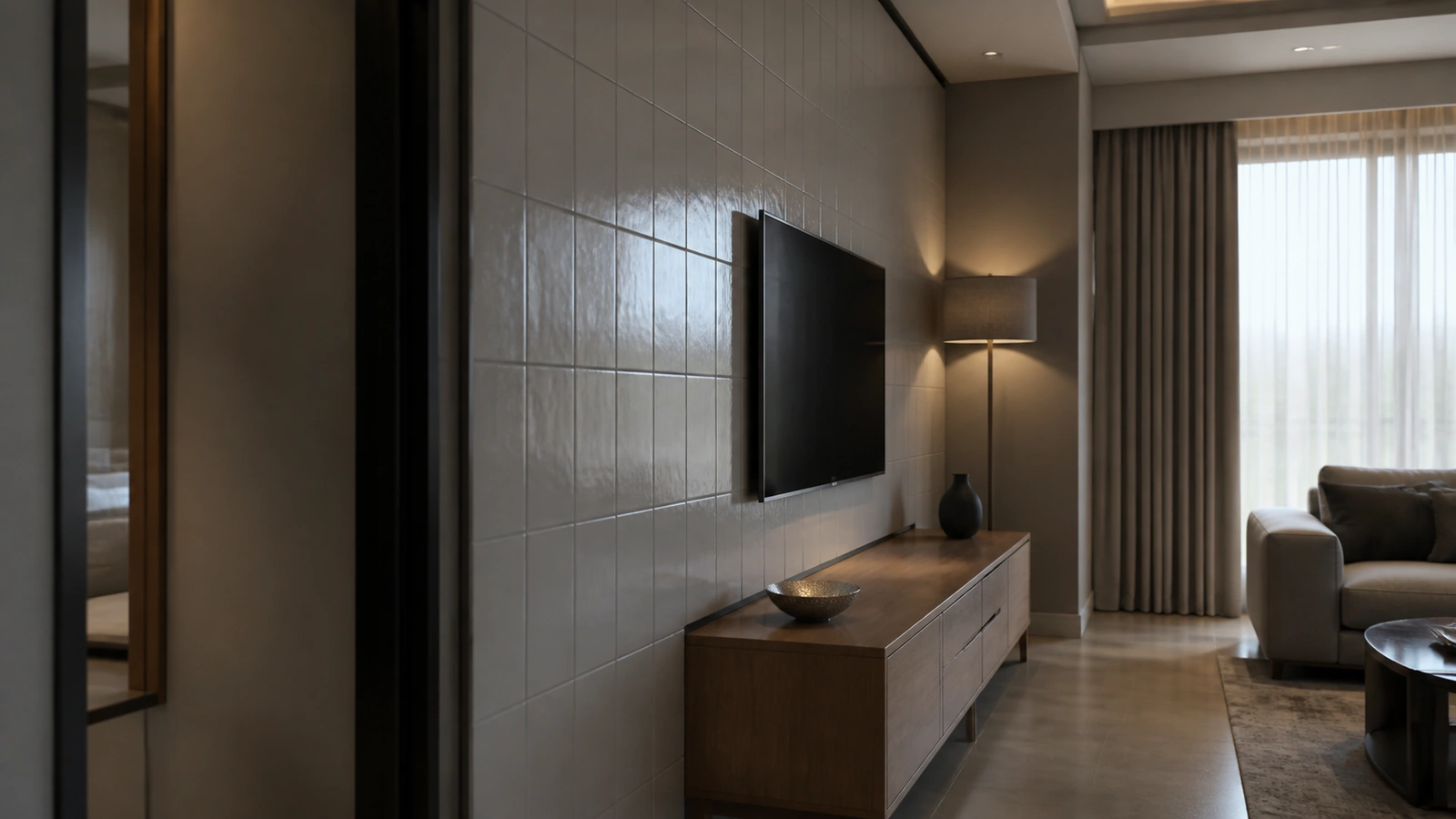
Platinum Lustre Panel, Plain
Third fired platinum lustre, plain | 300x600 mm | Wall, low contact | Rs. 280 to Rs. 520/sq.ft
Typical panel cost: About Rs. 1,680 to Rs. 3,120 for a 6 sq.ft panel
Genuine fired metal without any traditional ornamental reference. A plain platinum panel relies entirely on the sheen shifting as light moves across it, which reads as architectural rather than decorative.
Choose this if: you want real fired metal in a modern scheme and can light it with a grazing rather than a frontal source.
Skip it if: the panel will be viewed from one fixed position under flat light, where a plain lustre reads as merely grey.
7. BEST VALUE
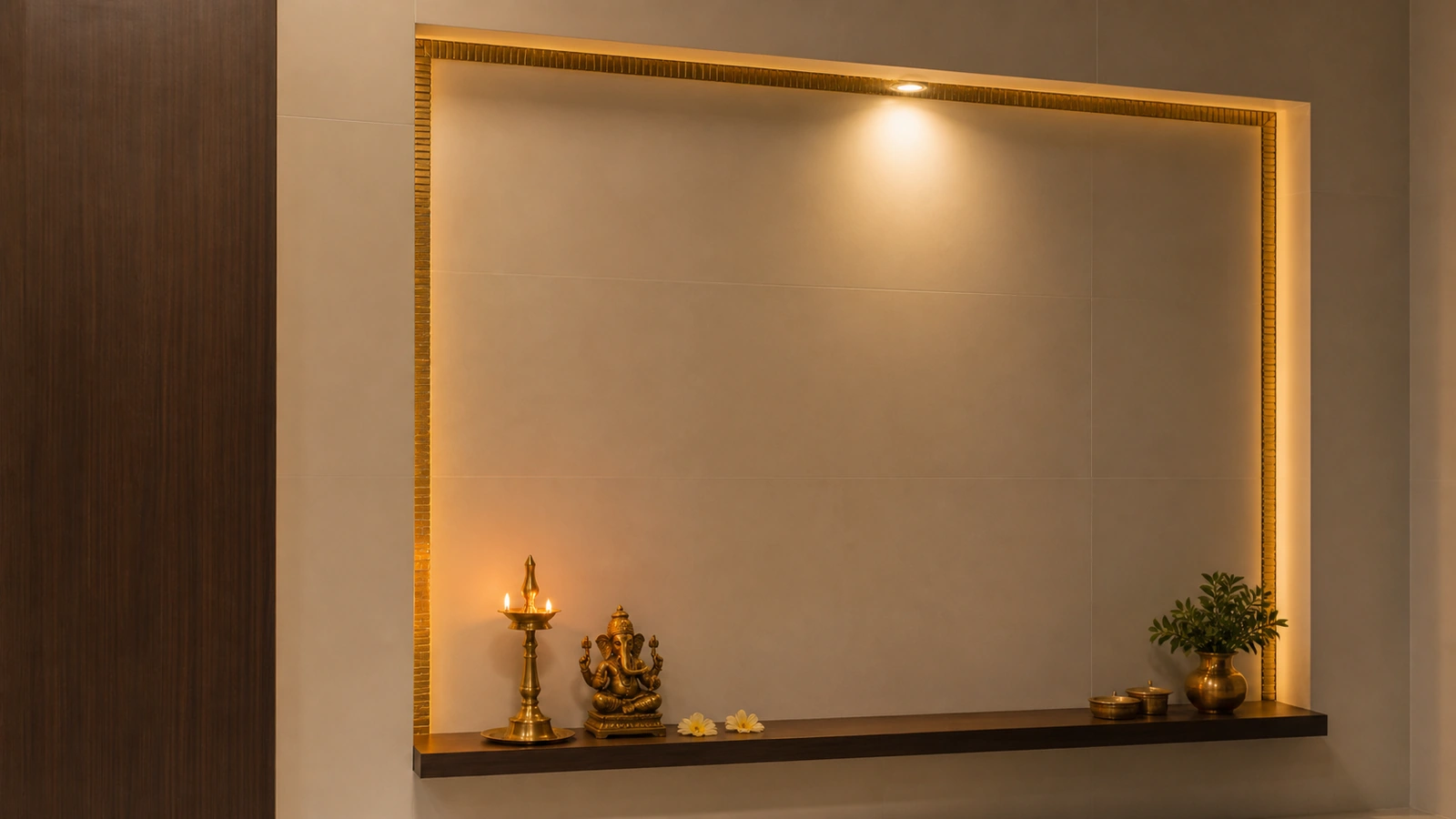
Gold Lustre Border on a Plain Ceramic Field
Third fired gold lustre border + plain ceramic field | 75x300 mm border | Wall, low contact | Rs. 250 to Rs. 480/sq.ft border
Typical panel cost: About Rs. 1,000 to Rs. 1,920 for a 4 sq.ft border plus field tile
The most efficient use of the material in this guide. A slim gold border framing a large plain ceramic field, where the plainness is exactly what makes the gold register as precious rather than decorative.
Choose this if: you want the effect at the lowest genuine cost and are willing to let the surrounding surface stay quiet.
Skip it if: you plan a patterned or textured field tile, which competes with the border and diminishes both.
8. BEST FOR A GIFT OR OCCASION
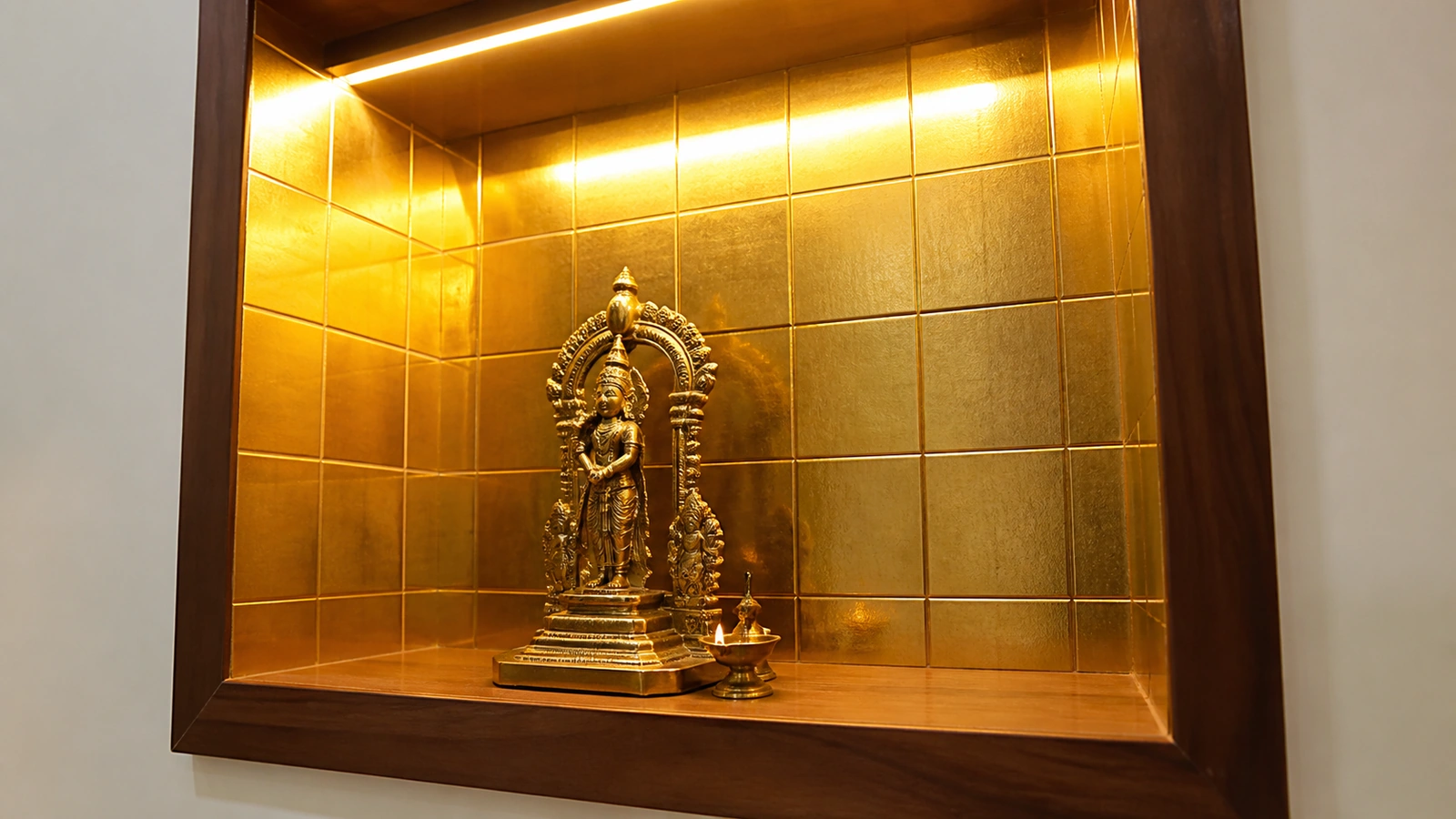
Gold Lustre Niche Lining, Compact
Third fired gold lustre | 300x300 mm | Wall, low contact | Rs. 250 to Rs. 480/sq.ft
Typical panel cost: About Rs. 1,000 to Rs. 1,920 for a 4 sq.ft niche
A contained niche lined in gold lustre is a genuinely meaningful gift for a new home or a wedding, because it is small enough to be affordable and permanent enough to be remembered.
Choose this if: you are gifting a home upgrade and want something used daily rather than displayed occasionally.
Skip it if: the recipient has not agreed the placement, since this material cannot be moved once fixed and the position matters more than the tile.
9. BEST PREMIUM STATEMENT
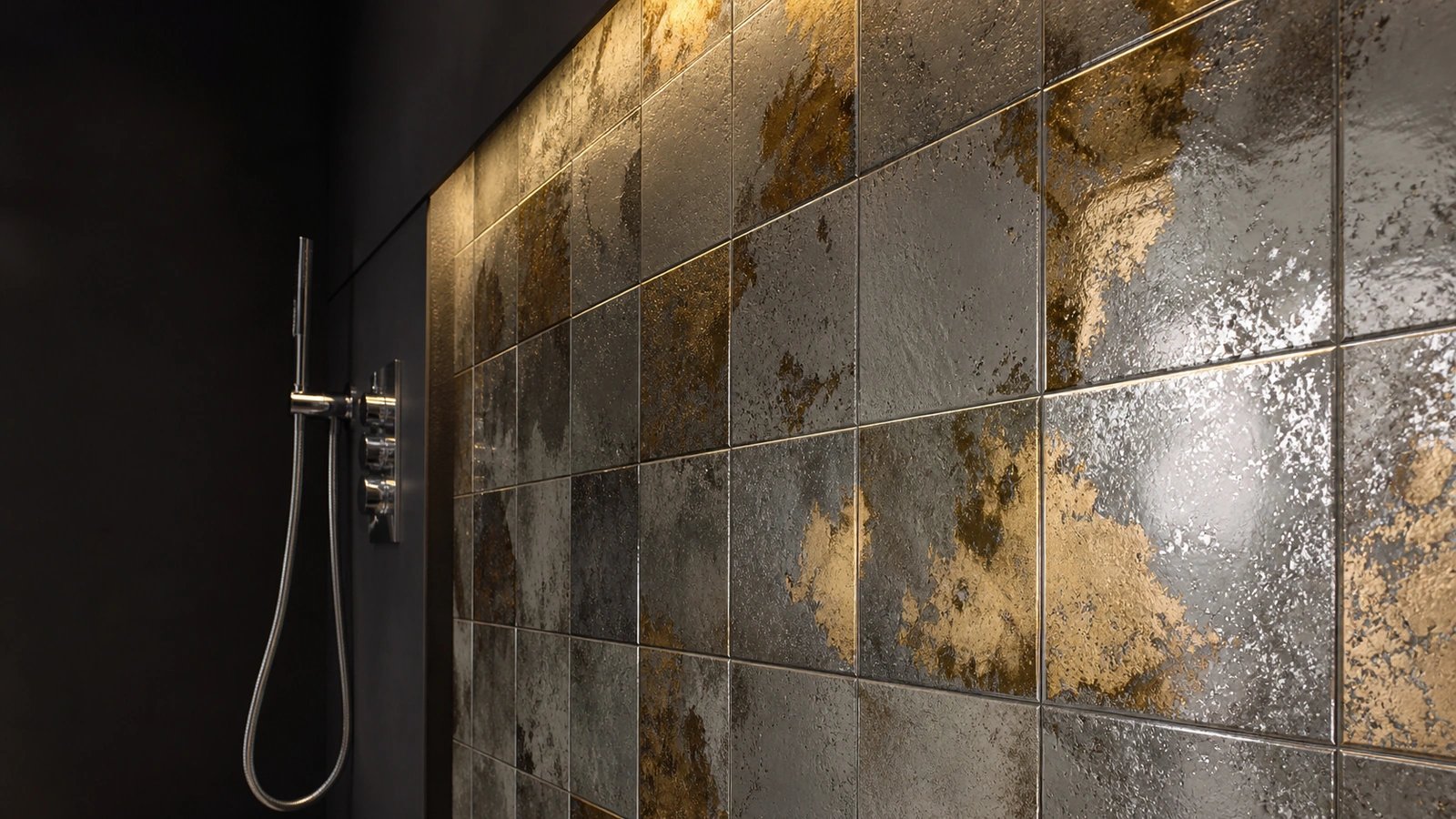
Gold and Platinum Lustre Combination Panel
Third fired gold and platinum lustre | 300x300 mm | Wall, low contact | Rs. 250 to Rs. 480/sq.ft
Typical panel cost: About Rs. 2,000 to Rs. 3,840 for an 8 sq.ft panel
Two fired metals in one composition, typically platinum as the field with gold as the accent, producing a layered metallic depth a single lustre cannot achieve. The most ambitious pick here and the one most dependent on getting the lighting right.
Choose this if: you want the fullest expression of the category and have a dedicated light source for the panel.
Skip it if: the two metals would be split evenly, since equal quantities read as indecision rather than as a designed combination.
Ordering: The Rules That Are Specific to This Category
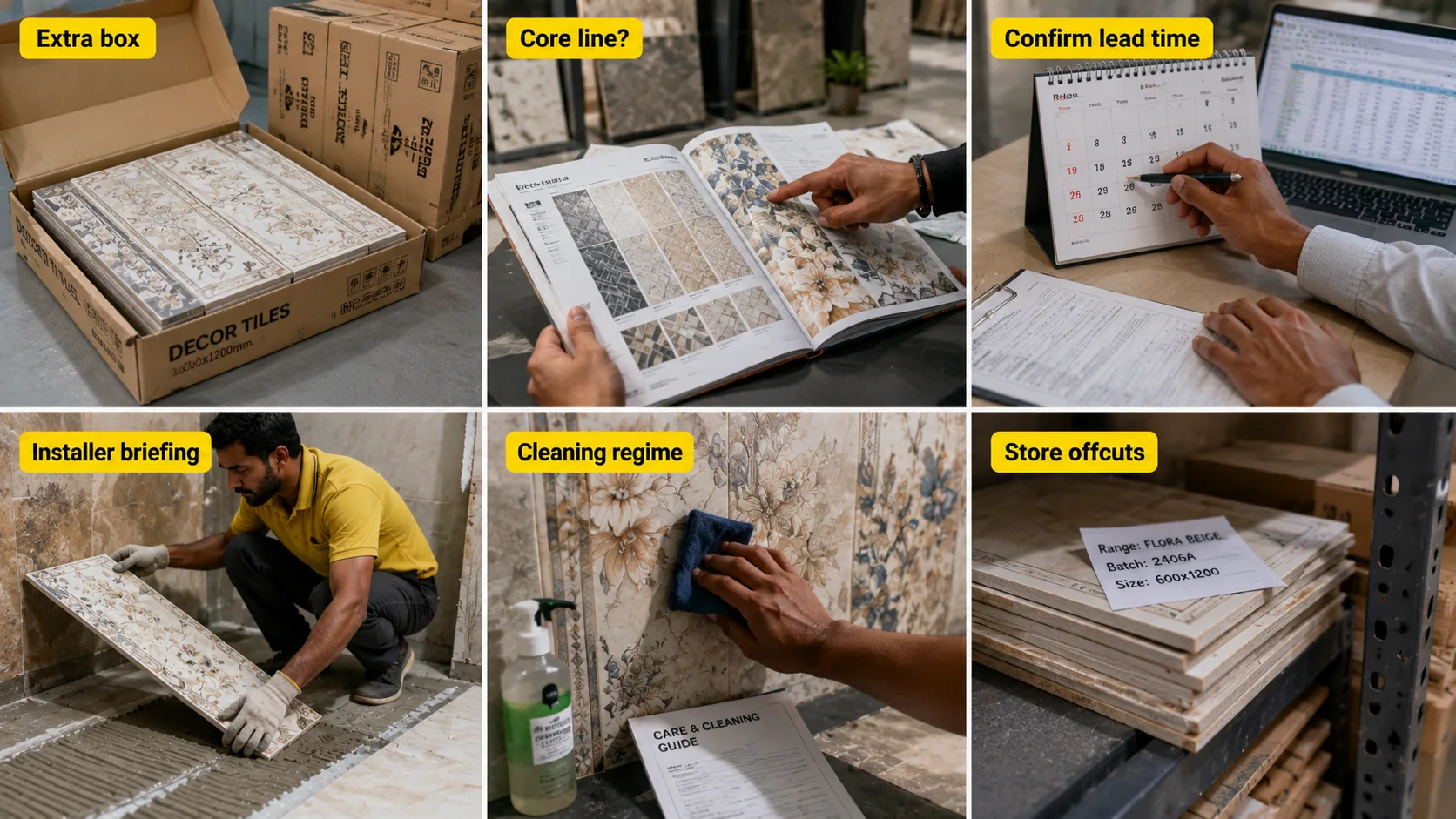
- Order one full extra box, not a percentage. On a four- to six-square-foot panel, a percentage overage is meaningless, and edge damage during cutting is more likely with a decorated layer than with plain tile.
- Ask how long the range has been in production and whether it is a core or seasonal line. A range introduced this season is the one most likely to be gone when you need a repair.
- Confirm lead time before fixing any programme dates, since three firings and a specialist facility make this the slowest component of any tiling order.
- Brief the installer specifically. The decorated layer is vulnerable at cut edges, and standard handling assumptions do not apply to a surface fired at 750 degrees rather than 1,200.
- Specify the cleaning regime at handover in writing, since whoever eventually cleans the panel will not know what it is unless told, and abrasive or acidic products remove decoration rather than dirt.
- Store the offcuts flat and dry, labelled with the range and batch, because they are realistically the only matching replacements that will ever exist.
What to Ask Before Ordering
On availability risk: "How long has this range been in production, and is it a core line or a seasonal introduction? If I need four tiles for a repair in three years, what are the chances you can supply them?" |
Confirming it is genuinely third fired: "Is this decoration third fired, and how many firings has the tile been through? I want genuine fired lustre rather than a printed metallic effect." |
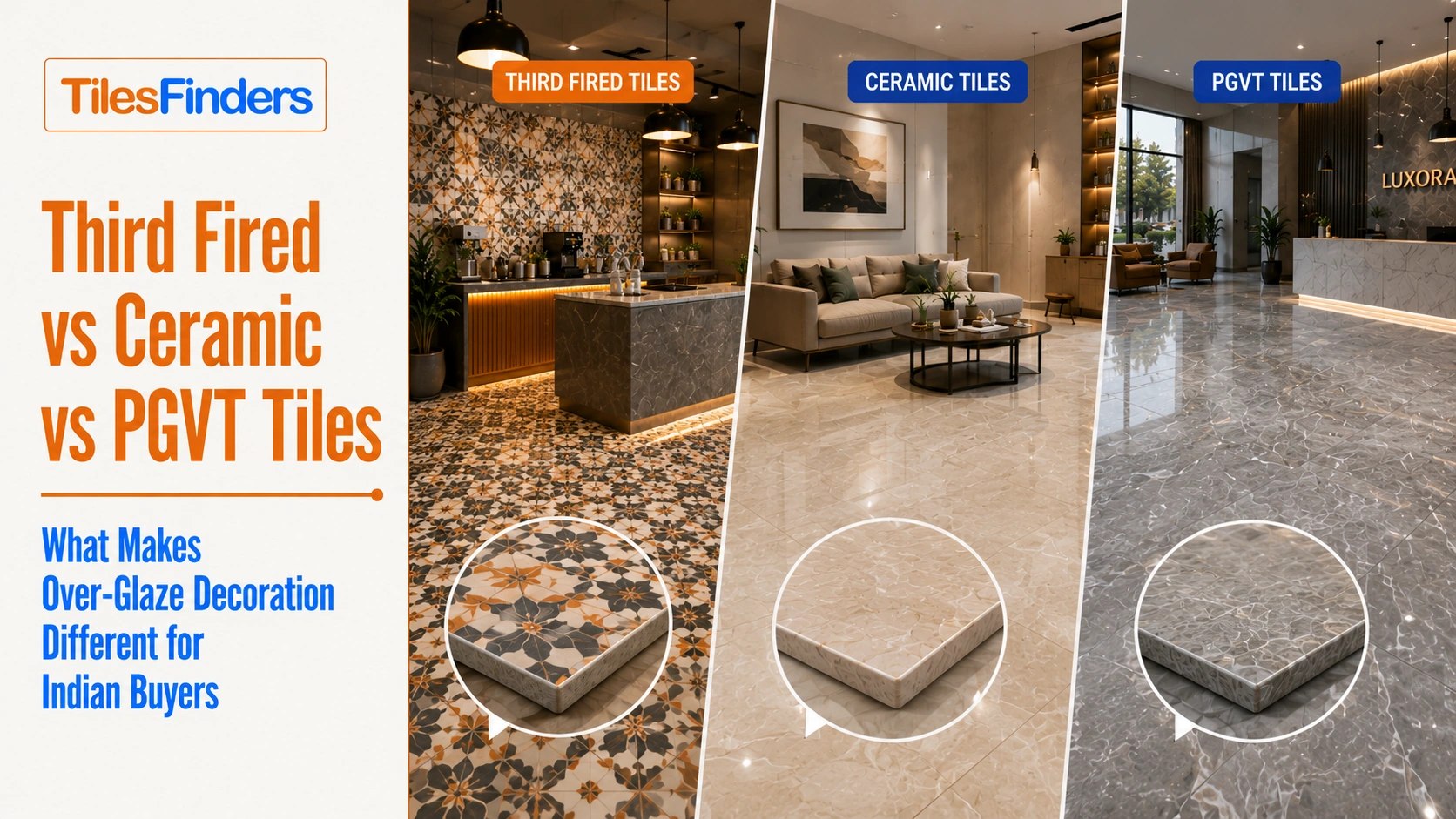
The decorative finish should not be confused with the tile body underneath it. Third Fired vs Ceramic vs PGVT explains how these categories differ, helping buyers understand which surfaces need ceramic or vitrified construction and where third-fired decoration actually belongs.
On the base beneath the decoration: "What body is under the lustre, ceramic or vitrified, and what is its water absorption figure? I understand the decoration does not determine that." |
The Non-Negotiables
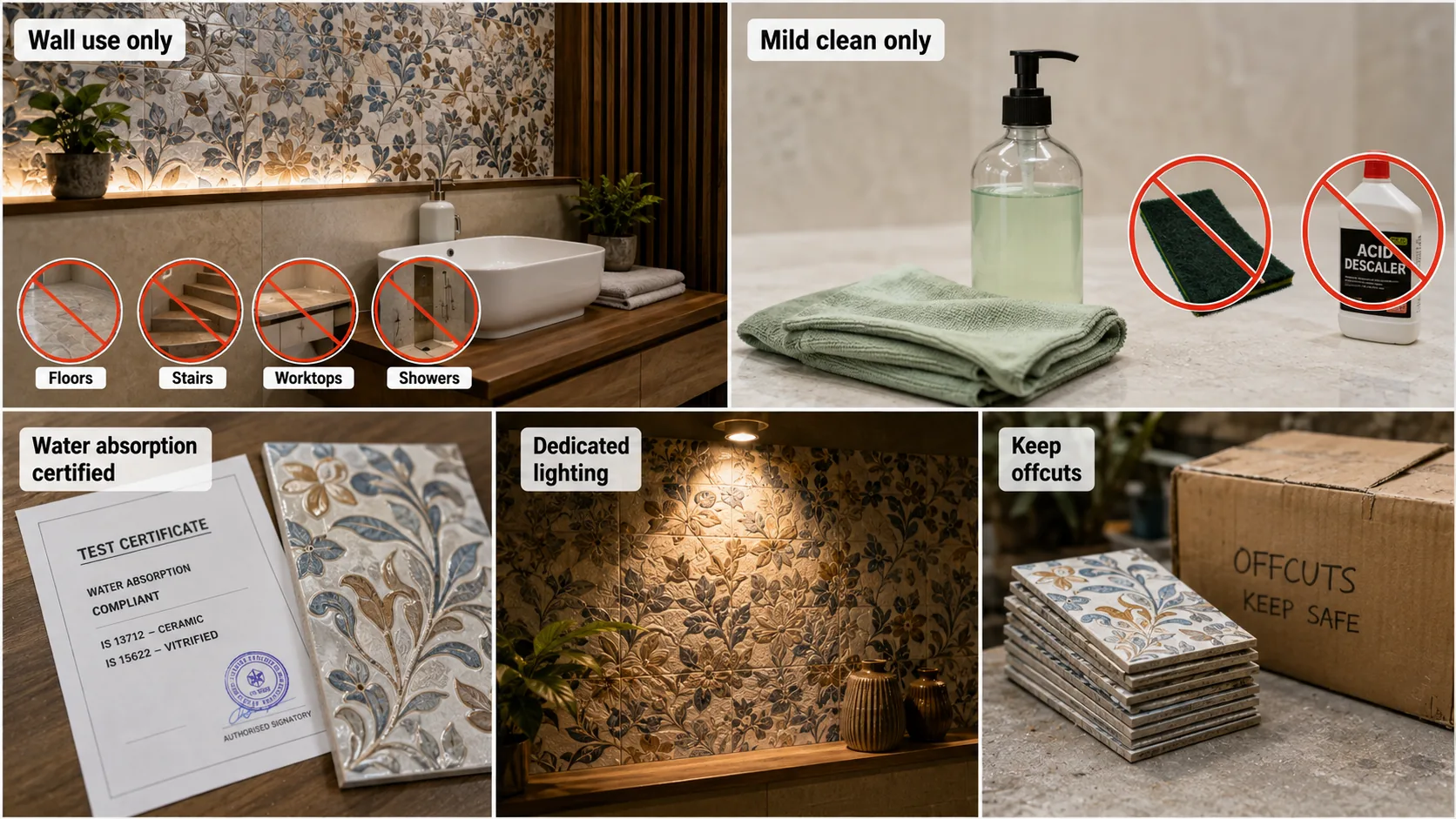
- Wall and low-contact placement only. No floors, stairs, worktops, shower enclosures or heavily handled edges, because the low third firing temperature cannot produce a durable-contact bond.
- Mild detergent and a soft cloth only, with abrasive pads and acidic descalers excluded entirely and permanently.
- Water absorption confirmed against the base body, referencing IS 13712 for ceramic and IS 15622 for vitrified, with the test certificate requested.
- A dedicated light source planned alongside the tile, since this material without directional light performs no better than a printed alternative costing a fraction as much.
- Offcuts retained, which is the single most important thing on this list and the one most often skipped.
Source Third Fired Ranges Through TilesFinders
Third fired gold and platinum ranges can be compared on TilesFinders alongside printed metallic alternatives, with production status and lead time confirmed before ordering, so the availability risk is understood at the point of purchase rather than discovered at the point of repair.
FAQs
A gold lustre backdrop panel of around six square feet behind the idol placement, at roughly Rs. 1,500 to Rs. 2,880. Genuine fired gold answers the diya flame in a way printed metallic finishes cannot, which is the clearest justification for the premium anywhere in a home.
Not the design choice but the availability. Specialist batches are small, and ranges turn over quickly, so matching a repair three years later is frequently impossible. Your retained offcuts are realistically the only replacements that will ever exist for that panel.
One full extra box rather than a percentage. On a four- to six-square-foot panel, a percentage is meaningless, and edge damage during cutting is more likely with a decorated layer than with a plain tile.
Away from the cooking zone, yes. A panel above an open display shelf or on a dining nook wall in an open-plan kitchen works well. Behind the hob, it does not, because oil aerosol dulls the lustre and the degreasing needed to remove it damages the over-glaze.
A vanity mirror surround kept at least 300 mm clear of the basin rim, and essentially nowhere else. Shower enclosures, splash zones and floors all rule it out, and acidic descalers used against hard water will destroy a lustre finish.
A single gold lustre border strip of around two square feet, at roughly Rs. 500 to Rs. 960. It costs less than a decent light fitting and tells you whether genuine fired metal appeals to you in your own lighting.What is the cheapest way to try this material? A single gold lustre border strip of around two square feet, at roughly Rs. 500 to Rs. 960. It costs less than a decent light fitting and tells you whether genuine fired metal appeals to you in your own lighting.
Yes, using plain platinum rather than ornamental gold, lit by a grazing source rather than a frontal one. The sheen shifting as light moves across it reads as architectural rather than decorative.
Let one metal clearly dominate, typically platinum as the field with gold as the accent. Splitting the area evenly between two metals reads as indecision rather than as a designed combination.
Because genuine fired metal reflects directional light, and without a defined source to reflect it performs no better than a printed metallic effect costing a fraction as much. Budgeting the tile without budgeting the light wastes most of what you paid for.


See our tile guides first
Set TilesFinders as a preferred source and our buying guides surface ahead of the rest for you.
Add as preferred sourceTakes one tap. Nothing to install.
What Readers Say
I was about to redo my parking area with the wrong tile size until I read this. The layout comparisons saved me from a costly mistake.
We reference TilesFinders guides while briefing clients on material selection. The size and pattern breakdowns are accurate and easy to explain visually.
On site, I get asked about grout spacing all the time. This article gave me a solid reference I now share with my team before every job.
Finally a guide that doesn't just push generic advice. The oil stain removal steps actually worked on our clubhouse driveway tiles.
I run a small construction firm and now send this link to clients directly when they ask about entrance tile sizing. Saves me an hour of explaining.
Good practical detail, though I wish there were more examples for compact apartment entrances specifically, not just villas.
My mother-in-law wanted marble, I wanted vitrified. This blog gave us the neutral comparison we needed to actually decide together.
Detailed without being overwhelming. I appreciated that it covered both cost and maintenance, not just the aesthetics.
Used the algae and hard water removal tips on our terrace tiles after the monsoon. Worked better than what our regular cleaner was doing.
As someone who sources tiles for multiple builder projects, I find these comparisons genuinely useful for vendor conversations, not just consumer content.
Recommended this to a client who kept second-guessing the entrance design. The small vs large layout section settled the debate instantly.
Straightforward and honest, no unnecessary jargon. Would like to see a similar breakdown for outdoor pool-deck tiles next.
We've bookmarked several TilesFinders guides for our design handbook. Reliable source when clients want data, not just opinions.
Two paths, one marketplace.
Get free quotes from verified suppliers.
Share your room, budget, and style. Suppliers in local area respond within hours.
Get Free QuotesList your business, reach real buyers.
Put your showroom in front of homeowners searching for tiles right now.
List Your Business