Stylish Kitchen Backsplash Ideas That Are Easy to Clean
Upgrade your kitchen with beautiful, practical, easy-clean backsplash ideas—from glossy classics ...


Loading designs...


















The wall surfaces in an Indian kitchen take more punishment than most buyers expect. Oil mist from the cooktop, steam from pressure cookers, and water from the sink reach every wall, not just the backsplash strip above the counter. Picking the right kitchen wall tiles means choosing a tile that wipes clean daily, stays fixed even with temperature changes, and still looks right after five years of hard use.
This page covers every decision that goes into choosing kitchen wall tiles, which tile type and body to use, which sizes work where, how colour choices play out in real Indian kitchens, and which finishes are actually practical.
Two tile types cover almost all kitchen wall applications in India: ceramic and GVT. Each has a different role depending on wall position, budget, and the look you want.
| Tile Type | Water Absorption | Best Wall Position | Sizes | Price Range (Rs./sq.ft) | IS Standard |
| Ceramic | 12% to 16% | Backsplash, above-counter strip, utility wall | 12x18, 12x24, 1x1 | Rs. 35 to Rs. 90 | IS 13630 |
| GVT | 0.05% | Full wall, floor to ceiling, feature walls, and designed kitchens | 2x2, 2x4, 32x48 | Rs. 80 to Rs. 200 | IS 15622 |
| PGVT | 0.05% | Full wall, large format slab look (walls only) | 2x2, 2x4, 32x48 | Rs. 100 to Rs. 250 | IS 15622 |
| Ceramic (mosaic format) | 12% to 16% | Backsplash accent, feature strip, small kitchen wall | 1x1 (300x300) | Rs. 45 to Rs. 110 | IS 13630 |
Ceramic wall tiles for the kitchen are the most common choice for the backsplash and the wall strip above the counter. They are easy to cut with a tile cutter, available in every colour, and cost less per sq.ft than vitrified options. GVT and PGVT make sense when the kitchen design calls for a full-height wall in a large format or marble-look tiles with fewer grout lines.
Size is the decision most buyers get wrong. A large tile on a small wall looks heavy and produces more wastage from cuts. A small tile on a tall, full-height wall creates too many grout lines and makes the surface hard to clean. Here is what each size does in practice:
| Size | Alias | Where It Works on Kitchen Walls | What It Does to the Space | Constraint |
| 300x450 | 12x18 | Backsplash strip, utility kitchen walls | Compact format, suits low wall heights below 7 ft | Wall only, never floor |
| 300x600 | 12x24 | Backsplash, full wall in smaller kitchens | Horizontal run reduces visual joins, popular in modular kitchens | Wall only, never floor |
| 300x300 | 1x1 | Mosaic-style backsplash, small kitchen walls, borders | Square format, useful as an accent or a full small-wall cover | Wall and floor (ceramic exception: bathroom floor only) |
| 600x600 | 2x2 | Full kitchen wall in medium kitchens, feature wall | Fewer grout lines, reads cleaner on taller walls | Both the wall and the floor |
| 600x1200 | 2x4 | Full wall in larger kitchens, designed open-plan kitchens | Large format with minimal joins, needs a flat plaster base | Both the wall and floor |
| 800x1200 | 32x48 | Feature wall, full wall cladding in large kitchens | Very large format, gives a near-groutless slab look | Both the wall and floor |
For the typical Indian modular kitchen (8 to 10 ft wide, 7 to 8 ft ceiling), 300x600 (12x24) ceramic covers the backsplash area well. The 2x2 or 2x4 GVT tiles are the right size when the kitchen is larger, or the buyer wants full-height wall cladding above the dado.
The kitchen wall is not one uniform surface. The zone above the cooktop, the backsplash behind the sink, and the wall above the counter each have different cleaning demands. Picking the same finish everywhere is not always the right call.
| Wall Zone | Recommended Finish | Why | What to Avoid |
| Backsplash above cooktop | Gloss or Sugar | Oil mist wipes off a glazed surface easily; gloss shows splashes immediately, so you know to clean | Matte or textured: oil settles into the surface and is harder to remove |
| Backsplash behind sink | Gloss or Sugar | Watermarks are easier to wipe; gloss resists mineral deposits from hard water better than matte | High-depth punch or textured: grout lines near the sink collect calcium deposits |
| Wall above counter (non-cooking zone) | Gloss, Sugar, or Matte | Less direct contact with cooking by-products; matte is fine here if you prefer the look | Non-specific, but avoid polished sugar near open cooking areas |
| Full wall (floor to ceiling) | Matte, Matte Carving, or Polished Glossy (PGVT, walls only) | Matte carving gives a textured marble look without the cleaning issues of deep-texture tiles; polished glossy on full walls looks sharp but shows water drops | High Glossy or Super High Glossy: low scratch resistance, not suited for wall surfaces with daily contact |
| Feature or accent wall | Sugar, Glitter, Stucco, Matte Carving | These finishes give visual interest without the cleaning penalty of high-depth punch or rocker finishes. | Polished Sugar: very hard to clean; avoid near the cooktop |
Grey is the most asked-for colour after white in Indian kitchen wall tiles. It works with white, wood, and dark cabinet finishes without looking out of place. Light grey (near white) in 12x24 gloss ceramic is the most common choice for standard modular kitchens. Dark grey in 12x24 matte ceramic gives a heavier, more considered feel that suits open-plan kitchens with good natural light.
Grey kitchen wall tiles in GVT in a 2x2 or 2x4 size are used in designed kitchens where the wall runs full height. A grey GVT in matte finish at 2x4 with dark grey grout gives very few visible joins and a clean, flat wall surface. Prices for grey ceramic run from Rs. 40 to Rs. 85 per sq.ft; grey GVT runs from Rs. 90 to Rs. 180 per sq.ft.
White kitchen wall tiles are one of the most requested specifications in Indian kitchen tiles. The most important decision with white is the finish. Gloss white ceramic in 12x24 is the standard for a backsplash. A white matte tile on the full wall above the dado gives a softer, less reflective surface that some buyers prefer in a brightly lit kitchen. Both are valid; the choice depends on how much direct light the wall receives.
Buyers who ask for modern kitchen wall tiles are usually looking for one of three things: large format tiles with fewer grout lines, a neutral colour with a matte or textured finish, or a tile that looks different from the standard white gloss 12x18 that has been used in Indian kitchens for 20 years.
In practice, a modern kitchen wall tile in India means GVT in 2x2 or 2x4 in grey, white marble, or concrete-look finish, or ceramic in 12x24 in a colour other than plain white. The format and colour matter more than the finish. A plain white 12x24 gloss ceramic in a horizontal bond already looks more current than the same tile in 12x18 in a stacked layout, simply because of the proportion and the fewer joins.
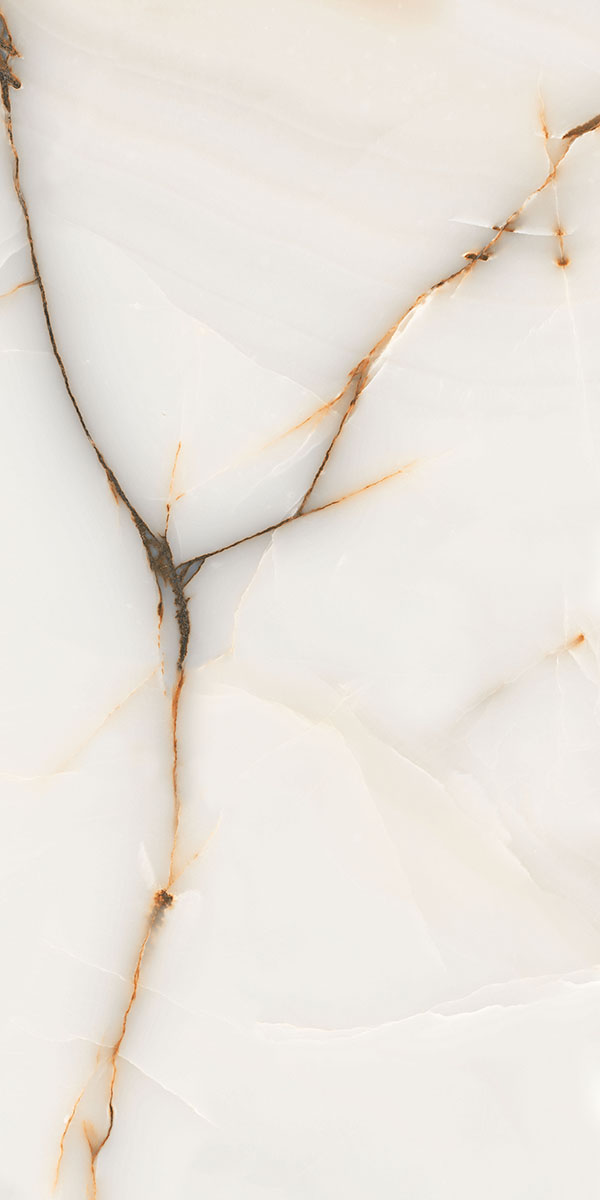
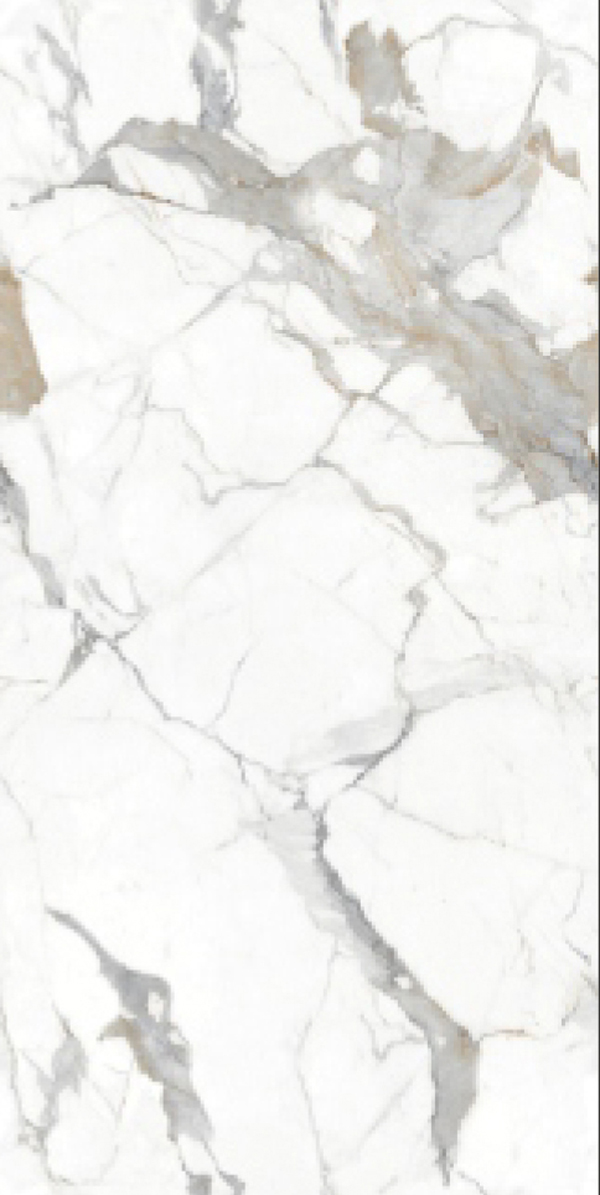
A marble tile backsplash is one of the most searched kitchen wall tile combinations in India. The look is aspirational, but natural marble is not suitable for kitchen walls: it stains from oil and turmeric, absorbs water, and chips at grout lines in a high-use cooking environment.
The two practical marble tile backsplash options from Indian manufacturers are:
For the modern backsplash tiles with a marble finish and the fewest visible grout lines, GVT in 2x4 with a polished glossy finish is the right specification. For a tighter budget, ceramic in 12x24 with a marble print gives the same visual at a lower cost but with more joins.
Specify the vein direction when ordering marble-look tiles. Random vein layouts look more natural on walls. Matched-vein (bookmatched) layouts need more careful planning at the tile-laying stage and usually need 15% extra tiles to allow for pattern matching.
Small wall tiles kitchen buyers typically want one of two things: a mosaic pattern on the backsplash or a small format tile for a kitchen with very low wall height above the counter (under 18 inches).
Mosaic kitchen wall tiles in the Indian market are ceramic in 300x300 (1x1) format. They are used in two ways: as a full backsplash wall in a smaller kitchen, or as a feature accent strip between rows of larger tiles. A 1x1 gloss white or grey ceramic tile on the backsplash is a budget option that works well in rental kitchens and small apartments.
For a more detailed mosaic pattern, some manufacturers produce small tile sheets (100x100 or 75x150 pieces on mesh backing) in ceramic. These are wall-only and must be fixed with a flexible tile adhesive to account for the many grout joints. Budget for 15% extra tiles and additional adhesive versus larger format tiles.
One practical note on mosaic kitchen wall tiles: more tiles mean more grout lines, and more grout lines near a cooktop mean more places for cooking grease to collect. For a kitchen with heavy oil cooking, a larger format tile with fewer joins is the easier surface to keep clean.
Textured wall tiles, kitchen buyers often picture a rough stone or brick look on the wall behind the hob or in the dining-side elevation of an open kitchen. In the Indian tile system, texture comes from the punch type, not the finish:
Textured wall tiles in kitchen layouts need wider grout lines (3 to 4mm) to accommodate the uneven tile edges. Use a non-sanded epoxy grout for narrow joints and a sanded grout for joints above 3mm. Factor in 10 to 15% extra adhesive for high-depth tiles, as the contact area on the back is uneven.
Use this guide to match your kitchen situation to the right wall tile specification:
| Kitchen Type | Recommended Tile | Size | Finish | Budget (Rs./sq.ft) |
| Standard modular kitchen, heavy Indian cooking | White or grey gloss ceramic | 12x24 | Gloss | Rs. 40 to Rs. 70 |
| Modular kitchen, marble backsplash look | Ceramic marble print | 12x24 | Gloss | Rs. 55 to Rs. 100 |
| Designed kitchen, full-height wall cladding | GVT grey or white marble | 2x4 | Matte or Polished Glossy (walls only) | Rs. 90 to Rs. 180 |
| Open-plan kitchen, modern look | GVT concrete or stone look | 2x2 or 2x4 | Matte or Matte Carving | Rs. 80 to Rs. 160 |
| Small kitchen or rental apartment | White gloss ceramic or 1x1 mosaic | 12x18 or 1x1 | Gloss | Rs. 35 to Rs. 65 |
| Feature or accent wall (non-cooking side) | High-depth punch ceramic or textured GVT | 12x18 or 12x24 | Texture or Stucco | Rs. 50 to Rs. 110 |
| Builder apartment, tight timeline | White gloss ceramic 12x24 in brick bond | 12x24 | Gloss | Rs. 35 to Rs. 60 |
Always buy 10% extra tiles to cover cuts, breakage, and future replacements from the same batch. Ask the tile supplier for the batch number (also called shade number or lot number) and keep at least 3 to 5 tiles from the original batch for future repairs. Colour shade can vary between batches, even in the same catalogue design.
The right kitchen wall tile depends on the zone: backsplash, above-counter strip, or full-height wall. Each zone has a different finish and size requirement. Ceramic and GVT wall tiles from verified Indian manufacturers are listed on TilesFinders with size, finish, and tile type filters to match the right tile to each zone. Standard gloss ceramic starts from Rs. 35 per sq. ft.; large format GVT in premium finishes goes up to Rs. 250 per sq ft.
For the backsplash and above-counter strip, gloss ceramic in 12x24 is the most practical choice for Indian kitchens. It cleans easily, resists oil stains on the glazed surface, and costs between Rs. 35 and Rs. 90 per sq.ft. For full-height wall cladding in a larger or designed kitchen, GVT in 2x2 or 2x4 with matte or polished glossy finish gives a longer-lasting, lower-maintenance surface at Rs. 80 to Rs. 200 per sq.ft.
Only if the tile is a floor-safe size with a floor-safe finish. GVT in 2x2 with matte or GHR finish can go on both walls and floors. Ceramics in 300x450 (12x18) and 300x600 (12x24) are wall-only sizes and must not be used on floors. PGVT with a polished glossy finish is wall-only. Always check size and finish constraints before specifying the same tile for both surfaces.
No. Grey ceramic or GVT in a gloss finish cleans exactly the same way as white gloss. The difference is that white tiles show calcium deposits from hard water more clearly, while mid-grey tiles hide them better between cleans. Dark grey matte tiles can show oil splashes more visibly than light grey gloss. For daily Indian cooking, a light to mid grey in gloss finish is the easiest grey option to maintain.
The term modern kitchen backsplash usually refers to a backsplash with fewer grout lines, a neutral colour (grey, white marble, concrete), and a larger tile format than the traditional 12x18 white gloss. The standard backsplash uses 12x18 white gloss ceramic in a stacked or brick bond layout. A modern kitchen uses 12x24 in a horizontal bond, or GVT in 2x2 with a marble or concrete look for backsplashes. The tile body and fixing method are the same; the look changes.
Mosaic tiles can be used near the cooktop but need more frequent cleaning. The many grout joints collect oil and cooking residue faster than a larger tile with fewer joints. Use epoxy grout for mosaic tiles near the cooktop,p as it resists staining and does not absorb oil the way cement grout does. Clean the mosaic backsplash after every cooking session with a damp cloth and a mild degreaser.
Coverage per box varies by manufacturer and tile size. A standard 12x24 ceramic tile box covers approximately 1.0 to 1.1 sq.m (about 11 sq.ft). A 12x18 ceramic tile box covers approximately 0.8 to 0.9 sq.m (about 9 sq.ft). Always calculate your wall area, add 10% for cuts and wastage, then divide by the box coverage stated on the packaging. Do not rely on estimates; check the box specification before ordering.
Yes, compared to flat gloss ceramic. The surface depth of textured tiles traps cooking grease, especially near the cooktop. Texture punch tiles (0.3 to 1mm depth) are manageable with weekly cleaning using a stiff brush and degreaser. High-depth punch tiles (2.5 to 5mm) should not be placed directly behind the cooktop or sink; they are best on a dining-facing feature wall in an open kitchen where direct cooking exposu
For the backsplash area above the counter and cooktop, use epoxy grout. Epoxy grout does not absorb oil, resists turmeric and cooking acid stains, and lasts longer without re-grouting. For wall areas away from direct cooking contact, standard cement-based grout with a polymer additive is fine. Use unsanded grout for joints under 3mm and sanded grout for joints of 3mm and above. Always seal cement grout on the backsplash once it cures.