
Reception Area Tile Design for First Impression
Make a lasting first impression. Discover the best tile colours, layout patterns, and durable fin...


Loading designs...







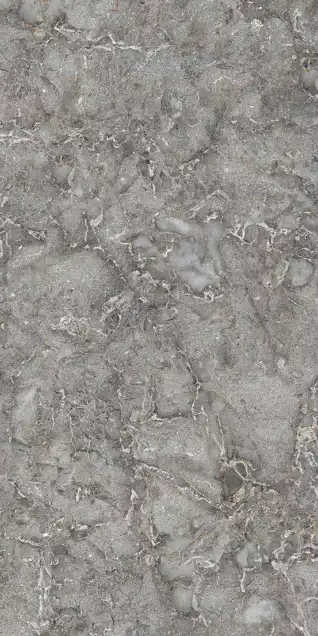











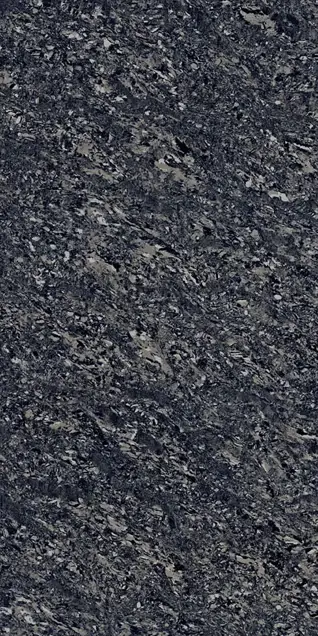
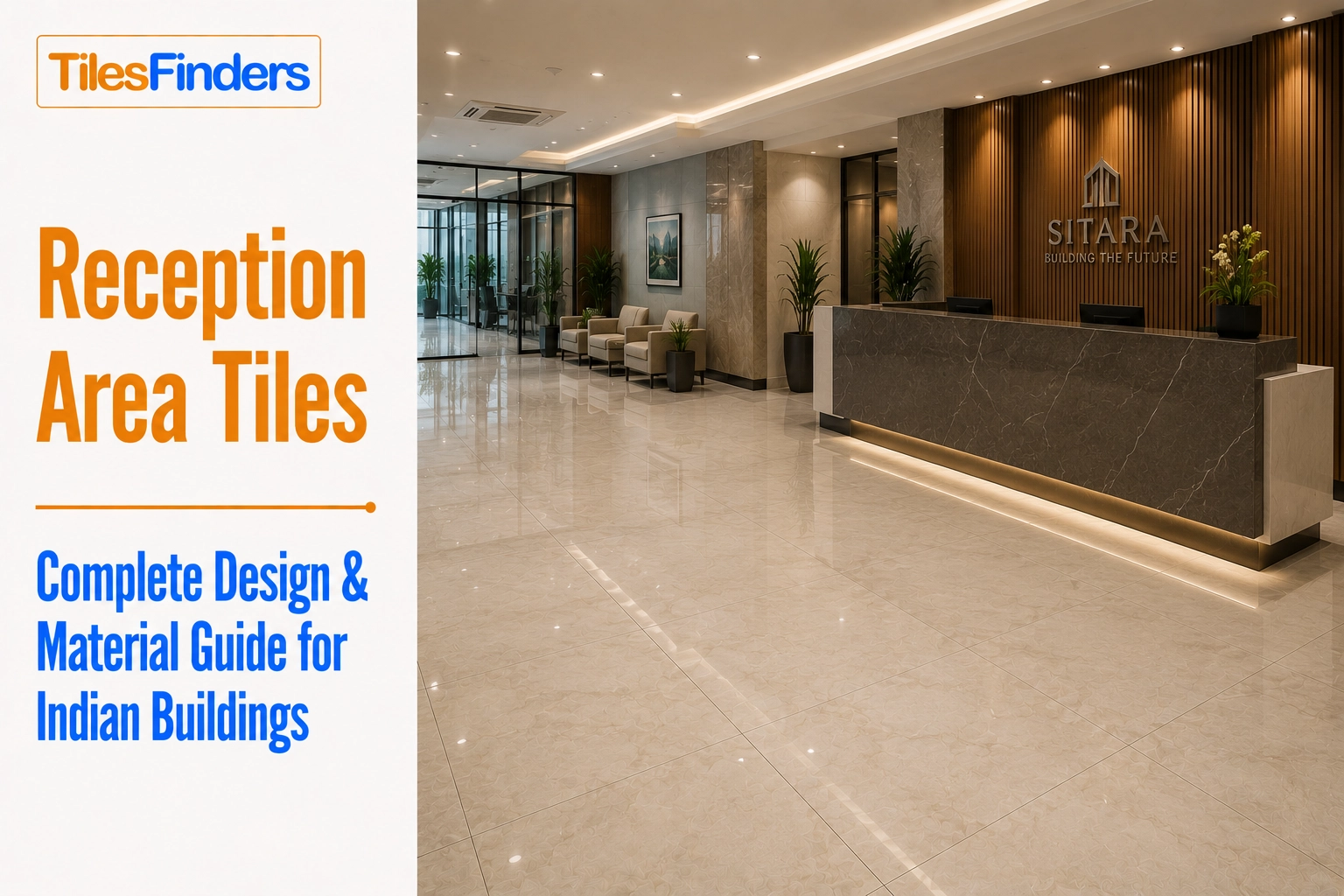
Reception tiles serve two purposes at the same time. They carry the heaviest foot traffic in any building, from the first step inside the entrance to the desk, and they are also the first visual impression every visitor forms of the space. A reception floor that looks premium but wears badly is a maintenance problem within two years. A floor that is durable but visually flat does not deliver the impression a well-designed office, hotel, or clinic reception deserves.
Tiles for a reception area must meet a higher durability standard than tiles used in bedrooms or living rooms. Thousands of footsteps per day, office chair castors, wheeled luggage in hotel lobbies, and cleaning equipment in hospital corridors all load a reception floor in ways that domestic floors never experience. The tile body type, the colour depth, and the finish must all be chosen with commercial-grade durability in mind.
Reception floor tiles in India are in full-body vitrified, and the Double Charge category starts from Rs. 85 per sq ft in 800x800mm (32x32) polished format. Large slab formats in 1200x2400mm (8x4) for premium hotel and corporate lobbies cost Rs. 150 to Rs. 320 per sq ft.
The foot traffic load in a reception area is fundamentally different from a residential floor. A medium-sized corporate office reception with 200 staff and visitor movements per day puts more cumulative load on a tile in one year than a bedroom floor carries in a decade. This load differential is why tile body type matters more in a reception than almost anywhere else.
Standard GVT tiles absorb 0.05% water and are suitable for most indoor floors, but their glaze-only colour depth means that areas of extremely high concentrated traffic, such as the path from the entrance to the lift bank, can show surface wear on the glaze over five to eight years. Full-body vitrified tiles carry colour through the entire tile thickness. Even where the glaze surface wears at a heavily trafficked path, the colour beneath remains consistent. This is why full-body vitrified tiles are specified as the commercial floor tile standard for high-footfall reception areas.
Double Charge tiles have a 3mm to 4mm pressed colour layer that is harder and denser than a standard glaze. This makes them harder-wearing than GVT on a reception floor at a price between GVT and full-body vitrified. Their limitation is the cut edge: where tiles are cut at columns, steps, or perimeter skirtings, the cut reveals a different-coloured body beneath the colour layer. In open floor areas where all edges are concealed by skirting, this does not matter. For reception floors with exposed step edges or visible column bases, full-body vitrified tile is the more complete specification.
Note: Ceramic tiles must never be used on any reception floor regardless of traffic level. Ceramic absorbs 12% to 16% water under IS 13630 and is a wall-only tile category. Any ceramic tile used on a commercial floor will fail under sustained foot traffic within months.
| Body Type | Absorption | Colour Depth | Best Reception Use | Price Rs./sq.ft |
| Full Body Vitrified | 0.05% | Full depth | All reception floors; visible cut edges | Rs. 90 to Rs. 240 |
| Double Charge | 0.05% | 3mm to 4mm | Open floor areas; concealed edges | Rs. 85 to Rs. 200 |
| GVT (Glazed Vitrified) | 0.05% | Glaze surface only | Dry reception floors; lower traffic | Rs. 75 to Rs. 160 |
| PGVT (Polished Glazed Vitrified) | 0.05% | Glaze surface only | Reception desk cladding; feature walls | Rs. 90 to Rs. 280 |
| Ceramic | 12% to 16% | Glaze surface only | Not suitable for any reception floor | Rs. 25 to Rs. 80 |
The size of the tile on a reception floor changes how the room reads from the entrance. Large format tiles have fewer grout joints per square foot, which makes the floor appear more continuous, and the room appear larger. In a reception area of 300 square feet, a 600x600mm (2x2) tile produces approximately 500 visible joint lines across the floor. The same floor in 800x1600mm (32x64) produces fewer than 150. The visual difference is significant from a standing angle at the entrance.
The 800x800mm (32x32) format is the most widely specified size for office reception floor tiles and clinic reception tiles in India. It is large enough to read as a premium commercial floor tile and small enough to be manageable during laying in a room with columns, lift lobbies, and reception desk cut-outs. Full body vitrified polished tiles in 32x32 from Morbi manufacturers start from Rs. 90 per sq.ft.
Hotel reception floor tiles and large corporate lobby floors typically step up to 800x1600mm (32x64) or 1200x1200mm (4x4). The 32x64 format gives a directional, board-like layout across the lobby floor. The 4x4 square format suits symmetrical lobby spaces where the tile grid aligns with the room's architectural geometry. Both sizes require a laser-levelled screed and experienced commercial laying contractors.
For the largest premium hotel lobbies and showroom floors in India, 1200x2400mm (8x4) slab tiles are laid as near-seamless surfaces with 1.5mm to 2mm joints. These slabs require specialist lifting equipment, full-bed adhesive application, and a contractor who has previously laid tiles in this format. Prices for 8x4 slabs start from Rs. 150 per sq.ft.
Note: Any tile above 600mm in either dimension requires tile adhesive for fixing. Do not use sand-cement mortar for large-format reception floor tiles. Adhesive gives a consistent thin bed that maintains the flatness required for large tiles. Sand-cement mortar produces an uneven bed that causes lippage at large tile edges.
| Size (mm) | Alias | Best Reception Use | Screed Flatness | Price Rs./sq.ft |
| 600x600 | 2x2 / 24x24 | Small reception below 200 sq.ft | Standard | Rs. 75 to Rs. 160 |
| 800x800 | 32x32 | Standard office and clinic reception | Good flatness required | Rs. 90 to Rs. 200 |
| 800x1600 | 32x64 | Hotel lobby, corporate reception | High flatness required | Rs. 95 to Rs. 240 |
| 1200x1200 | 4x4 | Large hotel and showroom lobbies | Very high flatness required | Rs. 120 to Rs. 280 |
| 1200x2400 | 8x4 | Premium hotel and commercial lobbies | Laser-levelled screed required | Rs. 150 to Rs. 320 |
The finish choice for a reception floor has both an aesthetic dimension and a safety dimension. Polished tiles in a reception create the premium, light-reflective look that most hotel and corporate reception specifications call for. They also become slippery when wet. Managing this risk requires understanding where the wet zone in a reception begins and ends.
The entry zone, which covers the first 1 to 2 metres inside the main entrance door, is the zone most likely to have wet footwear walking across it during rain. In Indian commercial buildings, this zone should use a GHR finish tile or a recessed mat well with a commercial entrance mat. The polished finish reception floor begins beyond this zone. Many well-specified commercial receptions use a contrasting GHR or textured tile strip immediately inside the entrance as both a design feature and a functional transition.
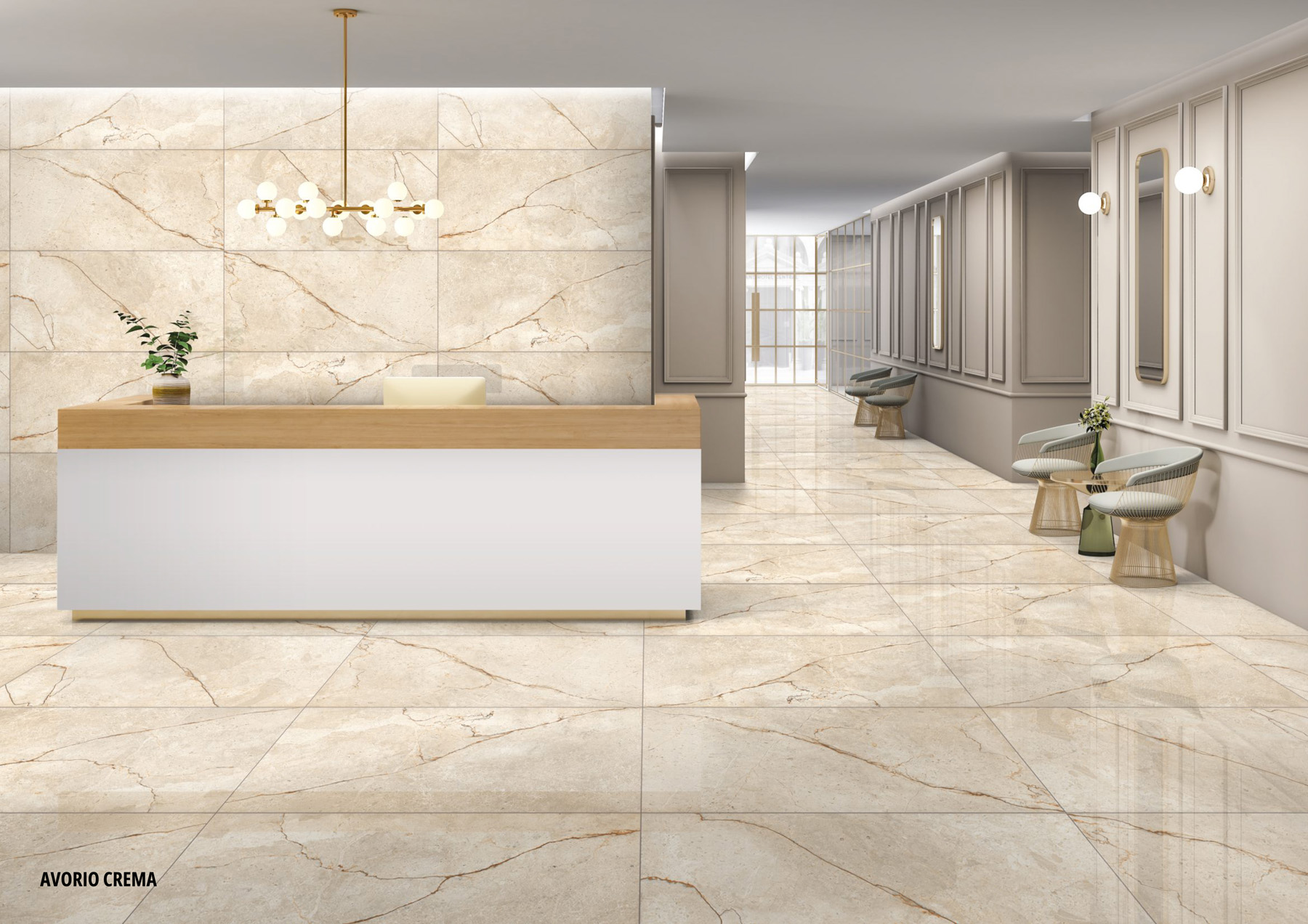
Polished Glossy Double Charge and full body vitrified polished tiles in the main reception floor reflect the lobby lighting and make the space feel larger and brighter. This is particularly valuable in office reception floors where natural light is limited. A polished floor in a reception with good overhead lighting reads as a premium material from the entrance.
Matte and satin finish reception tiles are specified for hospitals and clinics where infection control protocols require regular wet mopping with clinical cleaning agents. A polished reception floor in a hospital context is harder to maintain consistently clean because the reflective surface shows cleaning marks. GVT matte or full body vitrified matte in 32x32 or 2x4 suits clinic reception tiles, where hygiene and ease of maintenance outweigh the premium visual of a polished floor.
| Finish | Floor Safe | Entry Zone Safe | Best Use in Reception |
| Polished Glossy (PGVT / DC) | Yes (dry zone) | No (needs mat zone) | Main reception floor; desk cladding; feature wall |
| Satin Matte (Double Charge) | Yes (dry zone only) | No | Dry reception floors; lower sheen than polished |
| GHR (Full Body / GVT) | Yes (all zones) | Yes | Entry transition zone; outdoor-adjacent reception areas |
| Matte (GVT / Full Body) | Yes (all zones) | Yes | Contemporary reception floors; lower maintenance than polished |
A tiled reception desk is one of the most impactful individual elements in a reception area because the front counter face is at eye level for every visitor as they approach. The tile choice for the desk cladding sets the tone for the entire reception design.
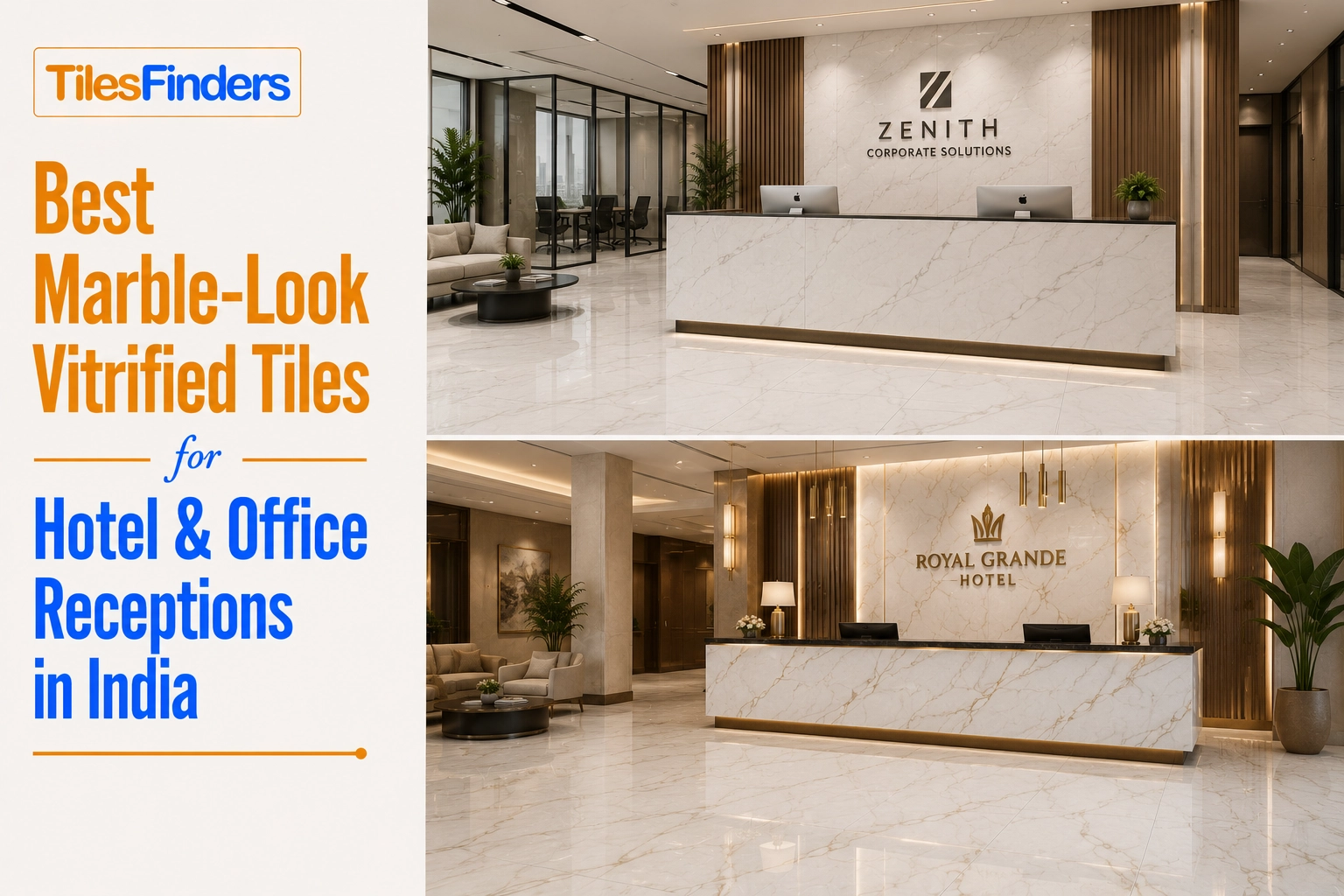
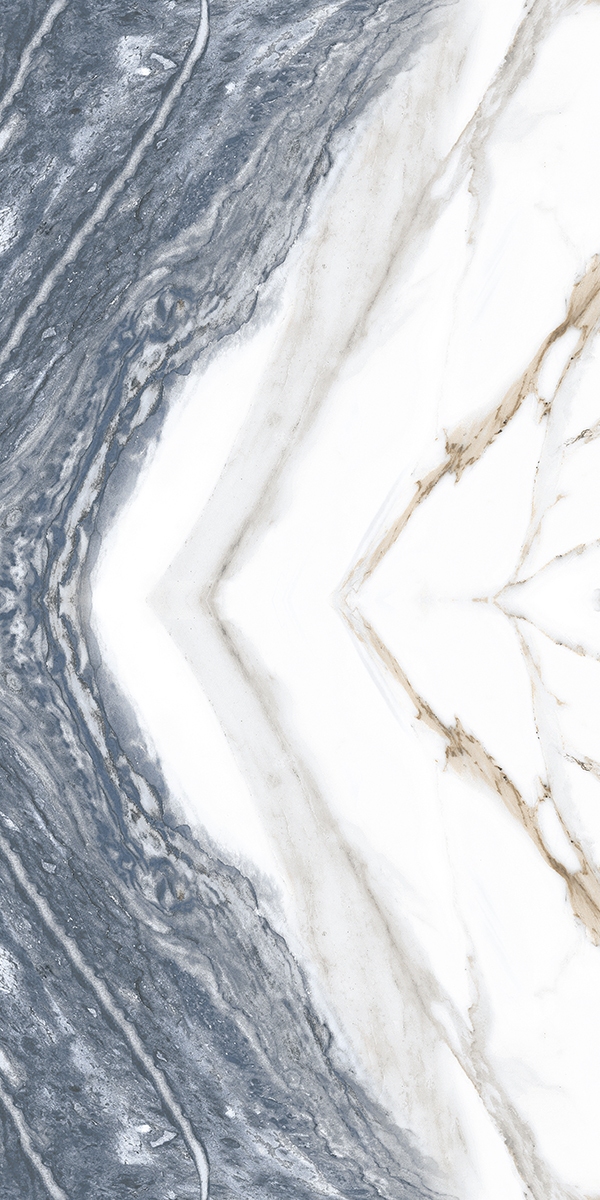
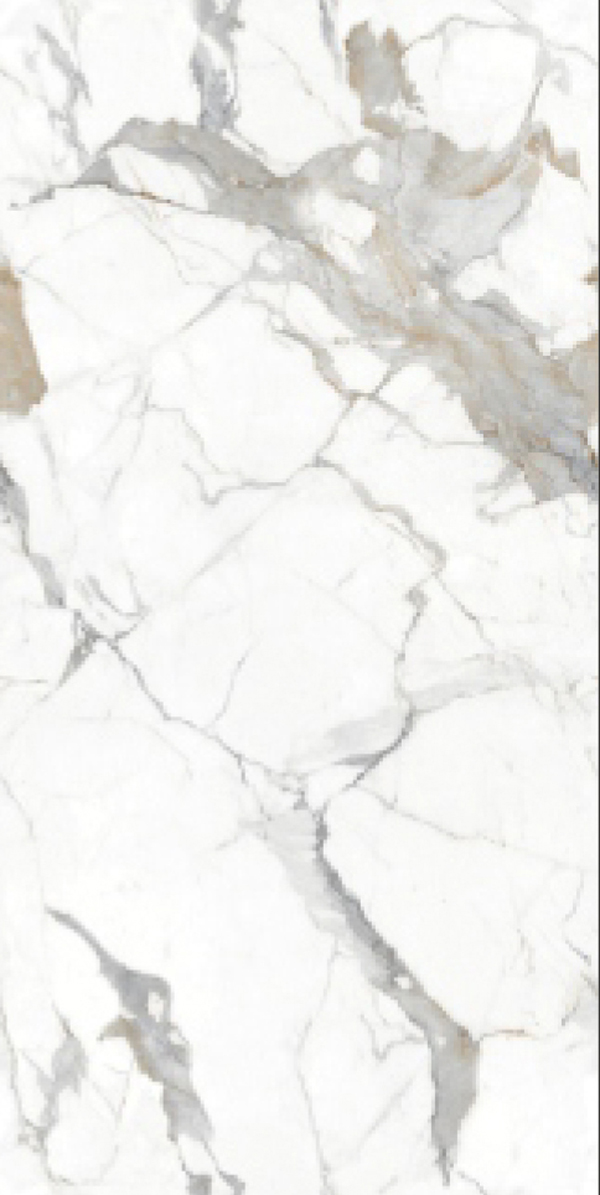
PGVT Polished Glossy tiles in marble-look, plain white, or grey stone designs are the most common choice for reception desk tiles in Indian commercial projects. The polished surface on the vertical face of the counter reflects light and gives the counter a depth and premium finish that painted plywood or plain plaster cannot achieve. PGVT Polished High Glossy in a Carrara marble look or a Calacatta gold pattern on the reception counter face with a matching marble-look floor creates a unified premium reception area design. PGVT 2x4 tiles for desk cladding cost Rs. 110 to Rs. 280 per sq.ft.
For the fixing, the counter face must be a flat, rigid substrate before tiles are fixed. MDF or plywood sheeting at 18mm thickness fixed to the counter frame gives a suitable substrate. Apply polymer-modified tile adhesive with a notched trowel and fix the tiles in full-bed coverage. Seal all joints and perimeter edges with matching silicone sealant rather than grout. Grout at a counter edge tends to crack as the counter flexes slightly under use. Silicone accommodates this movement without cracking.
The top surface of a reception desk is a working surface that takes impact from keyboards, filing, and bags. Use a tile with a matte or honed finish on the desk top surface rather than a polished tile. A polished desk top scratches visibly under daily use. Full body vitrified matte in a matching colour and pattern to the front desk tiles gives a consistent look across the counter with a more durable top surface.
Note: PGVT tiles for reception desk cladding are used on the vertical face of the counter only. Do not use PGVT on the horizontal top surface of the reception desk because the polished finish scratches under daily work surface use.
The design language of a reception area changes significantly by building type. Each type has a different visitor expectation, a different functional requirement, and a different budget structure for finishes.
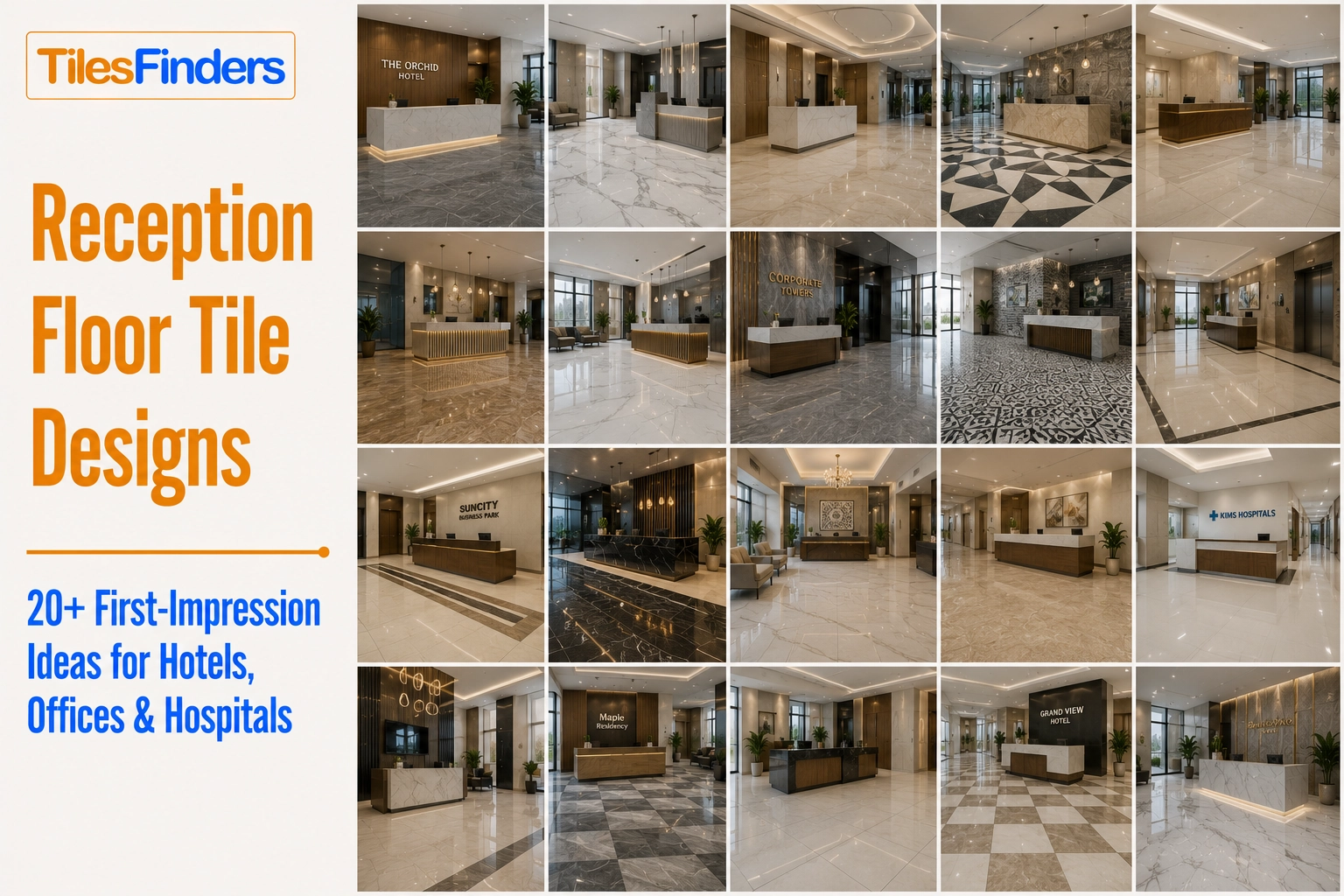
A corporate office reception area typically specifies a neutral, large-format polished tile that complements the company's visual identity without competing with it. Light grey, warm beige, and cream marble-look Double Charge tiles in 32x32 or 32x64 polished finish are the most common choice for office reception floor tiles in India. The polished floor reflects the lobby lighting, which suits most corporate offices where ceiling heights are between 3 and 4 metres. Prices for Double Charge polished 32x32 office lobby tiles start from Rs. 90 per sq.ft.
A hotel lobby reception floor is specified for the highest durability and the strongest visual impression in the tile category. Full body vitrified polished tiles in 32x64 or 4x4 format, often in a marble-look or stone-look pattern, are the standard specification for 3-star to 5-star hotel reception floors in India. For 5-star properties, 8x4 slab tiles in a Statuario or Calacatta marble look with book-matched grain are increasingly common in new hotel projects. Hotel reception floor tile prices start from Rs. 120 per sq.ft for full-body vitrified polished 32x64.
Clinic reception tiles prioritise hygiene and ease of maintenance over visual premium. Full body vitrified or GVT in matte or GHR finish in a light colour, typically white, off-white, or light grey, suits most hospital and clinic reception floors. The light colour makes dust and debris visible quickly, which supports cleaning routines. GHR finish gives anti-skid performance on a floor that is mopped multiple times daily. Clinic reception floor tiles in GVT or full body vitrified GHR start from Rs. 90 per sq.ft.
A showroom reception area is a sales environment, and the floor and desk tiles both contribute to the product aspiration the showroom is trying to create. For a premium furniture or jewellery showroom, a marble-look PGVT polished floor in 32x32 or 32x64 with a matching marble-look PGVT reception desk front communicates quality at the point of entry. For a tile showroom reception specifically, the reception floor is also a product display surface that should demonstrate the tiles available in the catalogue.
| Reception Type | Recommended Floor | Desk Cladding | Price Range Rs./sq.ft |
| 5-star hotel lobby | Full body vitrified polished 32x64 or 4x4 | PGVT marble-look 2x4 | Floor: Rs. 120 to Rs. 240; Desk: Rs. 110 to Rs. 280 |
| Corporate office | Double Charge polished 32x32 or 32x64 | PGVT plain or marble-look 2x4 | Floor: Rs. 90 to Rs. 200; Desk: Rs. 110 to Rs. 220 |
| Hospital / clinic | Full body vitrified matte or GHR 2x2 or 32x32 | Plain GVT matte or PGVT 2x2 | Floor: Rs. 90 to Rs. 160; Desk: Rs. 75 to Rs. 140 |
| Showroom / retail | Double Charge polished 32x32 | PGVT marble-look or stone-look 2x4 | Floor: Rs. 85 to Rs. 200; Desk: Rs. 110 to Rs. 250 |
| School / college | Full body vitrified matte 2x2 or 32x32 | GVT matte 2x2 | Floor: Rs. 90 to Rs. 160; Desk: Rs. 75 to Rs. 130 |
Large format tiles on a reception floor are unforgiving of poor subfloor preparation. A tile that spans 800mm or more across an uneven screed will either crack under point loading or produce lippage at the joints that is immediately visible on a polished surface.
The screed beneath a large format reception floor must be flat to within 3mm over a 3-metre straightedge. For tiles above 1200mm in any dimension, the tolerance is 2mm over 3 metres. Achieving this requires a self-levelling screed compound rather than a hand-floated sand-cement mix in most cases. Self-levelling compound costs more per square foot than standard screed but reduces laying waste and rework significantly in a large reception project.
Use polymer-modified tile adhesive in full-bed application for all reception floor tiles above 600x600mm. Back-butter the tile with a second adhesive application on the tile back before laying for tiles above 800mm in any dimension. This ensures full adhesive contact across the tile without air pockets, which cause tile cracking under point loads over time.
Grout joint width for reception floor tiles should be 2mm for tiles up to 800x800mm and 3mm for larger formats. Use epoxy grout in all reception floor joints. In high-traffic reception floors, cement grout cracks and darkens within two to three years. Epoxy grout holds its colour and does not crack under commercial foot traffic. The cost premium of epoxy grout over cement grout in a 1,000 sq.ft reception floor is typically Rs. 15,000 to Rs. 25,000 in materials, which is recovered many times over in reduced maintenance and regrout costs over the floor's life.
Full body vitrified and Double Charge tiles for reception floors are manufactured in Morbi, Gujarat across the main commercial sizes: 800x800mm (32x32), 800x1600mm (32x64), 1200x1200mm (4x4), and 1200x2400mm (8x4). Morbi manufacturers supply the large majority of commercial floor tiles used in office, hotel, and retail reception projects across India. Full body vitrified polished 32x32 from Morbi, Gujarat starts from Rs. 90 per sq.ft. Double Charge polished 32x64 starts from Rs. 95 per sq.ft. Large slab formats in 8x4 from premium Morbi manufacturers start from Rs. 150 per sq.ft. Prices vary by brand, pattern complexity, and order volume.
Full body vitrified and Double Charge reception floor tiles absorb 0.05% water, which meets IS 15622:2006 vitrified tile standards for commercial floor use. This near-zero absorption keeps the tile body stable under daily wet mopping in hospital and clinic receptions and under the sustained foot traffic of a hotel lobby. The scratch resistance of Double Charge tiles is measured under IS 15622 as a hardness rating: Double Charge tiles typically achieve 6 to 7 on the Mohs scale, which means they resist scratching from sand, grit, and shoe soles carried in from outside. Full body vitrified tiles achieve similar hardness ratings with the advantage of consistent colour at any cut depth.
Full body vitrified polished and matte tiles in 32x32, 32x64, and 4x4 sizes, Double Charge polished tiles for reception floors, PGVT marble-look and stone-look tiles for reception desk cladding, and GHR finish tiles for entry transition zones are listed on TilesFinders with body type, finish grade, water absorption rate, and size alias on every product card. Use the category filter to select full body vitrified or Double Charge and the size filter to narrow to large format options.
Full body vitrified or Double Charge tiles are the best for reception floors with heavy foot traffic. Both absorb 0.05% water and carry the colour through the full tile body, so cut edges and worn surfaces remain consistent over years of use. Large format tiles in 800x800mm (32x32) or 800x1600mm (32x64) in polished or satin finish suit most reception floors. Prices start from Rs. 90 per sq.ft for full body vitrified and Rs. 85 per sq.ft for Double Charge polished.
800x800mm (32x32) and 800x1600mm (32x64) are the most common sizes for reception area tiles in India. Large format tiles reduce the number of grout joints visible across the floor, which makes the reception look more open and uninterrupted. For very large lobbies above 500 square feet, 1200x1200mm (4x4) and 1200x2400mm (8x4) slab formats give the fewest joints. All large format tiles above 800mm require a flat screed and experienced laying contractors.
Yes, with conditions. Polished tiles in PGVT or Double Charge are safe on a dry reception floor that does not receive direct rainwater from an entrance without matting. In buildings where the reception entrance is exposed to rain, a mat zone or a GHR-finish tile in the immediate entry zone is essential for safety. The main reception floor beyond the entry mat zone can be polished. Never use PGVT polished tiles in a wet entrance without a mat or GHR transition zone.
PGVT Polished Glossy or Polished High Glossy in marble-look, plain white, or stone-look designs are the most common tiles for cladding a tiled reception desk. The front face of the reception counter is a vertical dry surface that never carries foot traffic, so polished vitrified tiles at Rs. 90 to Rs. 280 per sq.ft are a practical and premium-looking choice. Cut the tiles to the panel dimensions and fix with adhesive on a flat substrate. Seal the joints with matching silicone rather than grout for a cleaner finish.
Marble-look tiles suit formal reception areas in hotels, corporate offices, and premium clinics where the visual impression on visitors matters. Plain light grey or cream large-format tiles suit contemporary offices and showrooms where a clean, minimal background is preferred. Marble-look PGVT in 2x4 or larger sizes on both floor and reception desk gives a unified look. Plain tiles are easier to clean in high-traffic areas because the uniform surface does not show cleaning marks as visibly as veined marble patterns.
Double Charge tiles have a 3mm to 4mm colour layer pressed into the top of the tile body. The colour runs deeper than a standard GVT glaze but does not extend through the full tile thickness. Full body vitrified tiles carry the colour and pattern through the entire tile depth. For reception floors where cut edges at walls and columns will be visible, full body vitrified is the better specification because the cut edge matches the surface. For open floor areas where edges are concealed by skirting, Double Charge gives comparable performance at a slightly lower price.
Measure the reception area in square feet. Add 10% for cuts and breakage in a standard rectangular room. For rooms with columns, alcoves, or curved walls, add 12% to 15%. For large format tiles in 800x1600mm and above, order 12% extra as the perimeter cuts generate larger offcuts that cannot be reused. Always order from a single batch number. For a reception floor above 500 square feet, confirm that the full quantity is available from one batch before starting work.
Avoid high-gloss polished tiles without a mat zone at the building entrance. Rain-wet footwear on a polished reception floor creates a serious slip hazard. GHR finish or a rougher textured tile should be used in the entry transition zone, which typically covers the first 1 to 2 metres inside the entrance door. The main reception floor beyond this zone can be polished. Never use ceramic tiles on any reception floor regardless of traffic level, as ceramic absorbs 12% to 16% water and will fail under daily commercial foot traffic.