


Pooja Room Tiles: Complete Vastu, Design & Buying Guide
Explore modern pooja room tiles designs, Vastu-friendly colours, mandir wall tiles, marble finish...


Loading designs...



















The pooja room is the one space in an Indian home where tile selection is guided by meaning as much as by function. Colour, surface, and pattern all carry specific associations in Indian worship traditions, and the tile choices that work in a kitchen or bathroom are not necessarily the right choices for a space used for daily prayer. White marble-look GVT, cream glossy ceramic, saffron yellow tiles, and gold accent surfaces all appear in Indian mandir tile specifications for reasons that are rooted in cultural practice rather than interior design preference alone.
The practical considerations are equally specific. A pooja room or puja ghar wall tile must withstand daily exposure to incense smoke, dhoop residue, oil lamp soot, camphor deposits, flower oil, kumkum, and water from daily abhishek rituals. The floor tile must be safe for kneeling and floor seating, which means an anti-skid matte or GHR finish is the correct specification regardless of what the wall tiles use. The surface must be easy to clean without abrasive products that damage the glaze or the printed surface.
The range of pooja room tiles in India covers dedicated worship rooms, wall-mounted mandir units, devghar niches, puja ghar corners, and thakur ghar shrines across all regional traditions. The tile specifications differ between a full dedicated room and a wall-mounted cabinet, but the colour and surface guidance applies across all formats.
Colour choice in a pooja room is not purely aesthetic. Specific colours carry cultural significance across Indian regional and religious traditions. The list below covers the most widely accepted colour associations for home worship spaces in India.
| Colour | Association | Traditions Where Used | Tile Format |
|---|---|---|---|
| White | Purity, clarity, cleanliness | All Hindu, Jain, and Sikh traditions | White GVT glossy, white marble-look |
| Cream / Off-white | Warmth, purity without starkness | All traditions, especially in South India | Cream ceramic glossy, cream GVT |
| Yellow / Saffron | Spiritual knowledge, devotion, auspiciousness | North and West India, Vaishnavite temples | Yellow GVT, saffron ceramic |
| Light green | Abundance, growth, natural prosperity | South India, some Shaivite traditions | Pale green ceramic, mint GVT |
| Gold | Divine presence, wealth, auspiciousness | All traditions for accent and border use | Gold metallic GVT, gold mosaic |
| Light blue / sky blue | Divine consciousness, Krishna devotion | Vaishnavite, ISKCON-influenced spaces | Pale blue GVT, light blue ceramic |
White is the starting point for most Indian pooja room tile design decisions. A full white wall in white tiles, GVT glossy or high-gloss, gives the worship space clarity and visual calm. The surface is easiest to keep clean after daily rituals because white shows marks clearly, prompting regular cleaning rather than allowing residue to accumulate unnoticed.
Yellow and saffron tones in yellow tiles, GVT or ceramic are used on pooja room walls in North and West Indian households, particularly in Gujarat, Rajasthan, and Maharashtra, where the saffron-yellow palette has strong Vaishnavite and traditional associations. Light yellow on walls with white on the ceiling and cream on the floor gives a warm, complete pooja room palette without requiring any bold colour.
The finish decision for a pooja room splits into two clear specifications: walls and floors have different requirements because they are used differently in a worship space.
Glossy finish is the most practical choice for pooja room wall tiles because it is the easiest surface to clean after daily worship. Incense smoke coats tile surfaces over time. Oil lamp soot, camphor ash, flower petal residue, and kumkum all need to be wiped from tile surfaces daily or after major worship occasions. On a glossy tile surface, all of these can be cleaned with a damp cloth in seconds. On a matte or textured surface, the same residue penetrates the micro-surface and requires scrubbing. In a space cleaned daily, the difference in maintenance effort accumulates significantly over the years of use.
High-gloss PGVT tiles in white or cream on pooja room walls also reflect the light from diyas and oil lamps, giving the worship space a luminous quality that matte walls do not produce. The reflection of flame from a glossy white or cream tile wall is a specific aesthetic that Indian pooja room design has developed around, and it is one of the reasons glossy tiles dominate the category.
The floor of a pooja room is used for kneeling, floor seating, and the bowing and prostration gestures of prayer. A glossy or polished floor tile is unsafe in this context because the surface becomes slippery underfoot and particularly hazardous during the kneeling and rising movement. GVT matte or GHR finish in 300x300mm (1x1) for the pooja room floor gives the anti-skid grip needed for floor seating without conflicting with the glossy wall specification. Water is also used on pooja room floors during cleaning and abhishek, making anti-skid grip a safety requirement.
Note: Never use PGVT polished or glossy finish on pooja room floors. The polished surface is a safety hazard for kneeling and floor seating. Use GVT matte or GHR finish only for any pooja room floor tile specification.
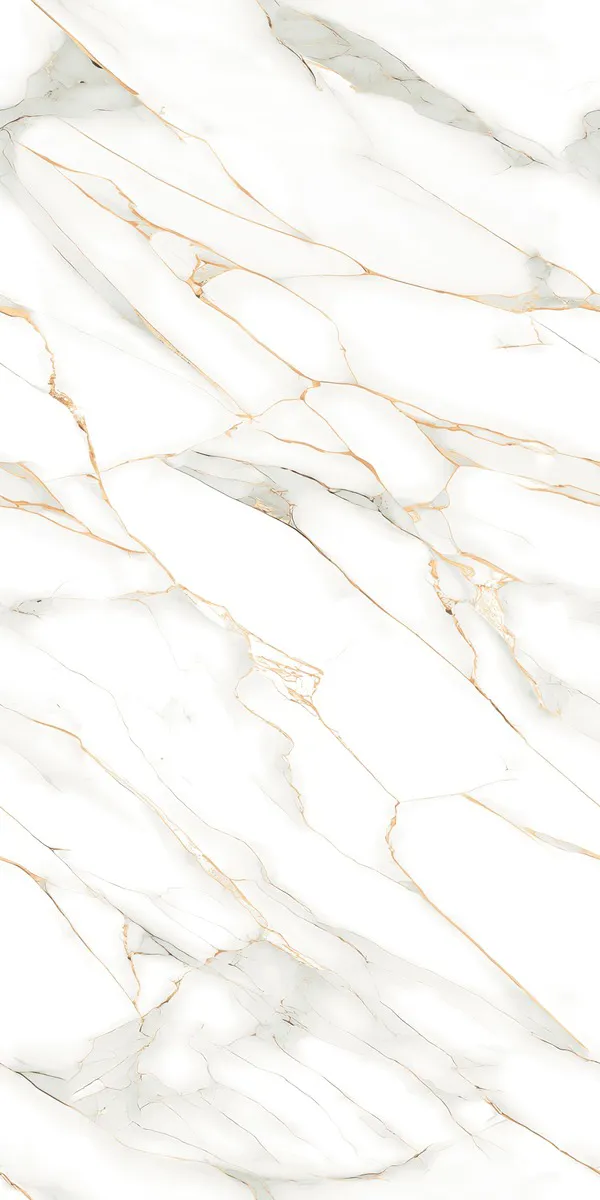
The white marble look is the most common surface design for Indian pooja room wall tiles. It references the white marble of iconic Indian temples such as the Dilwara temples in Rajasthan, the Birla mandirs across India, and the white marble interiors of traditional haveli worship rooms. In-home pooja room design, the marble surface evokes the material language of sacred architecture without the cost or maintenance of natural white marble.
Natural white marble tiles require sealing before installation in a pooja room. Daily worship deposits, particularly kumkum, turmeric, and oil, stain unsealed natural marble permanently and penetrate the stone body even when sealed over time. Resealing every 12 to 18 months is required to maintain the surface. In a worship space used daily, this maintenance schedule is often not followed, and the marble surface deteriorates significantly over a few years. GVT white marble look tiles with water absorption below 0.05% do not absorb any of these materials. The surface wipes clean with a damp cloth regardless of what has been placed on it, and the colour and veining pattern remain consistent for the life of the tile. At Rs. 70 to Rs. 160 per sq ft for glossy GVT marble-look, the price is a fraction of natural white marble at Rs. 200 to Rs. 500 per sq ft, with none of the ongoing maintenance cost.
3D tiles for pooja room use are ceramic or GVT tiles with a raised relief surface pattern. In pooja room applications, 3D relief tiles are used on the backdrop wall directly behind the deity, on the arch or niche frame around the mandir unit, or as a full feature wall. Common 3D relief patterns include lotus flower, geometric mandala, Om symbol in raised form, architectural bracket shapes (toranas), and peacock feather motifs. These tiles are produced in white, cream, and gold-tinted finishes. They are wall-only tiles. The raised surface makes them unsuitable for floor use, as the relief pattern accumulates dust and is harder to clean on a floor than on a wall.
Om tiles for pooja room use carry the Om symbol as a printed, embossed, or relief-carved surface element on a white, cream, or marble-look tile background. These are used as single accent tiles placed at the centre of the backdrop wall or at the entrance step of the pooja room. God tiles, or tiles with printed devotional imagery, are ceramic or GVT tiles with screen-printed or inkjet-printed deity images. Tirupati, Ganesha, Lakshmi, Saraswati, and Shiva are the most commonly printed deity tiles in the Indian market. These are ceramic tiles used as accent pieces within a plain tile field rather than as full-room coverings.
Gold accent tiles for the pooja room are GVT or glass mosaic tiles with a metallic gold surface. They are used for borders around the mandir arch, as a single course of tiles separating the lower and upper sections of the worship wall, and as frame elements around 3D relief panels. Among gold tiles, the most common pooja room format is a 50mm or 100mm gold GVT mosaic strip used as a border tile, or a 100x300mm gold GVT wall tile used as an accent in a white or cream tile field. Gold glass mosaic gives a more vivid, light-catching metallic quality than printed gold GVT and is used in high-end mandir wall designs at Rs. 200 to Rs. 400 per sq.ft.
A dedicated pooja room or puja ghar is a full room given entirely to worship. Standard tile specification: 300x600mm (12x24) GVT glossy white or cream on walls, 300x300mm (1x1) GVT matte white or cream on the floor, a marble-look or 3D relief feature wall behind the deity position, and gold or saffron border tiles at cornice height and at the floor-wall junction. The backdrop wall tile is typically a different surface from the plain walls, either a marble-look GVT, a 3D relief tile, or a god tile panel. Ceiling tiles are uncommon in Indian pooja rooms, but some high-end installations use white GVT or pressed tin-look tiles on the ceiling.
A standard 5x5-foot pooja room requires approximately 5 sq ft of floor tile and approximately 60 sq ft of wall tile for a room with a 9-foot ceiling. Material cost at Rs. 65 to Rs. 130 per sq ft for GVT matte floor and Rs. 80 to Rs. 160 per sq ft for GVT glossy wall runs Rs. 5,000 to Rs. 12,000 in tile cost before installation. White or cream epoxy grout is recommended throughout the pooja room to keep joint lines clean and resistant to kumkum and oil staining over the years of daily worship.
A wall-mounted mandir unit refers to the tile applied to the wall directly behind and around a prefabricated wooden or marble mandir cabinet. This is not a room tile specification; it is a 3 to 4 sq.ft tile panel that forms the backdrop to the mandir unit. White marble-look GVT in 300x600mm or 300x300mm, or a 3D relief tile panel in white or cream, is the standard specification for this application. The tile must be installed before the mandir unit is fixed to the wall and must account for the dimensions of the cabinet so the tile field frames the unit cleanly.
In Bihar, Jharkhand, and eastern India, the devghar is often a wall niche rather than a full room. In Rajasthan and western India, the thakur ghar may be a corner alcove within the main living room. Tile specifications for these smaller worship spaces follow the same colour and finish guidance as a full pooja room, but on a smaller scale. A 2x2 foot niche in white GVT glossy with a single Om accent tile at the back of the niche is a complete and culturally appropriate specification for either regional format.
Temple tiles and home mandir tiles share colour and surface language but differ significantly in scale, body type, and performance requirements. For home mandirs, GVT in 300x300mm to 600x1200mm in glossy white or cream covers most applications. For institutional temples, the scale shifts to large format natural stone or full body vitrified in Jaisalmer yellow sandstone, white Makrana marble, or Kota stone for floors and walls that must handle hundreds of daily visitors, outdoor exposure, and load-bearing column and podium requirements that residential tiles are not designed for.
Wall tiles for temple exteriors must handle direct sunlight, rain exposure, and the thermal cycling of Indian summers, which means outdoor-rated GVT in GHR or textured finish at larger formats is the minimum specification. Natural stone for temple exteriors requires specialist installation and ongoing maintenance that institutional religious trusts are better positioned to manage than private households. For home worship spaces at any scale, GVT is the practical and cost-appropriate specification.
Pooja room tiles in white, cream, marble-look, and yellow are manufactured in Morbi, Gujarat and comply with IS 15622:2006 for GVT and IS 13630 for ceramic. Water absorption below 0.05% in GVT means that daily cleaning with water and mild detergents does not penetrate the tile body or affect the printed surface over the tile's lifetime. Morbi manufacturers produce white and cream GVT in glossy finish across 300x300mm (1x1), 300x600mm (12x24), 600x600mm (2x2), and 600x1200mm (2x4) for pooja room wall use, and in matte finish in 300x300mm and 400x400mm for pooja room floor use.
Retail prices for pooja room tiles across Indian cities run Rs. 70 to Rs. 130 per sq ft for standard white or cream GVT glossy in 600x600mm, Rs. 90 to Rs. 160 per sq ft for marble-look GVT in 600x1200mm, and Rs. 40 to Rs. 80 per sq ft for cream ceramic glossy in 300x450mm and 300x600mm. Decorative 3D relief tiles and Om tiles in ceramic run Rs. 80 to Rs. 200 per sq ft. Gold glass mosaic accent tiles run Rs. 200 to Rs. 400 per sq ft. Transport from Morbi adds 10% to 25% to prices in cities distant from the Gujarat manufacturing cluster.
The scope of a pooja room tile specification changes significantly between a full dedicated room and a wall-mounted mandir unit. A full room needs floor tiles, wall tiles, a feature backdrop wall, and border or accent tiles. A wall-mounted mandir needs only 3 to 4 sq.ft of backdrop tile selected to frame the cabinet. On TilesFinders, pooja room tiles are listed by colour, finish, surface design, body type, and size, so both the full-room specification and the single backdrop panel can be shortlisted separately, with their water absorption and maintenance requirements stated on every product.
White, cream, off-white, light yellow, saffron, and light green are the most commonly used auspicious colours for pooja room tiles across Hindu, Jain, and Sikh traditions in India. White is the most universal, representing purity and clarity. Yellow and saffron are associated with spiritual knowledge and devotion. Light green is used in some regional traditions, particularly in South India, where it is associated with abundance. Avoid red, dark brown, or black as dominant colours in a pooja room, though black is occasionally used as an accent.
Glossy or high-gloss GVT finish is the most practical choice for pooja room wall tiles because it is easy to clean after daily worship. Incense smoke, dhoop residue, flower oil, camphor deposits, and kumkum leave marks on tile surfaces, and a glossy surface wipes clean much more easily than a matte or textured finish. For the floor, matte or GHR finish is the safe specification because the floor is used for kneeling and floor seating and must be anti-skid.
A 3D tile for a pooja room is a GVT or ceramic tile with a raised relief surface that gives the wall a three-dimensional texture. In pooja room applications, 3D relief tiles are used on the backdrop wall behind the deity, on the arch or frame around the mandir unit, or as a full feature wall. Common 3D patterns include lotus, geometric mandala, Om symbol relief, and architectural bracket shapes. These are wall-only tiles and must not be used on floors.
Om tiles for a pooja room are ceramic or GVT tiles with an Om symbol printed, embossed, or carved into the tile face. These are used as single accent tiles within a plain white or cream tile field, typically placed at the centre of the backdrop wall behind the deity or at the entrance to the pooja room. Common colour combinations include white with gold printing, cream with saffron, and white marble look with a gold Om. Price runs Rs. 50 to Rs. 300 per tile, depending on the size and surface treatment.
Natural white marble tiles are used in pooja rooms across India, but require sealing before installation and periodic maintenance. Dhoop smoke, oil lamp residue, and kumkum stain unsealed natural marble permanently. Glossy white GVT tiles in a marble-look surface design give the same visual effect with water absorption below 0.05%, no sealing required, and easy wipe-down maintenance after daily worship. For most Indian households, white marble-effect GVT is the practical choice over natural white marble in a worship space used daily.
300x600mm (12x24) GVT glossy in white or cream on walls and 300x300mm (1x1) GVT matte on the floor is the standard specification for a small dedicated pooja room in India. These sizes work within the proportions of a 4x4 or 5x5 foot pooja room without making the space feel cluttered. For a pooja room with a ceiling height above 9 feet, a 600x1200mm glossy white tile on the walls gives the room more height and visual spaciousness.
Devghar, puja ghar, and thakur ghar are regional Indian language terms for a home worship space. Devghar is the Nepali and Bhojpuri term used widely in Bihar, Jharkhand, and eastern UP. Puja ghar is the most common term across North India in Hindi-speaking households. Thakur ghar is used specifically in Rajasthani and western Hindi-speaking communities to refer to the space or cabinet that houses the deity. All three refer to the same space and use the same tile specifications as the general pooja room tile category.
Home mandir tiles are sized and specified for domestic worship spaces, typically small rooms or wall-mounted cabinet units. Temple tiles cover a much larger surface area and are specified for institutional religious spaces, large mandapam floors, and exterior temple walls. Home mandir tiles are commonly GVT in 300x300mm to 600x1200mm in white, cream, or marble-effect. Temple tiles are more likely to be larger format GVT or natural stone in Jaisalmer yellow sandstone, white marble, or Kota stone, specified for durability under heavy foot traffic and outdoor exposure.