

800x3000 Tiles: The Floor to Ceiling Slab Size
No Designs Present In Your Pincode Area
Please Change Your Pincode And Explore Designs
800x3000 tiles (32x120 inch, 3x10 feet) are among the longest tile panels made for the Indian market, close to matching a full floor-to-ceiling wall height in one uninterrupted piece. Very few manufacturers stock this size as a standard line item, so it is usually ordered specially rather than picked off a shelf.
This size exists only as a full body vitrified panel, since the extreme length rules out porcelain or GVT construction the same way it does for shorter large format sizes such as 1200x1800mm and 1200x2400mm. Buyers typically request marble, stone, or concrete look finishes, matching the design language used across the rest of a project.
Prices for 800x3000 tiles range from Rs. 220 to Rs. 480 per sq.ft from Morbi and Gujarat manufacturers, higher than any shorter large format size due to production difficulty and low order volumes. Buyers should expect a longer lead time than a standard size, since most factories only run this length on request.
Reading the Size: mm, Inches and Feet
800mm converts to approximately 2.62 feet or 31.5 inches, commonly rounded to 32 inches. 3000mm converts to approximately 9.84 feet or 118.1 inches, commonly rounded to 120 inches or loosely to 10 feet.
This gives the 32x120 tiles and 3x10 tiles names occasionally seen in search results, both describing the same 800mm by 3000mm panel. One panel covers approximately 25.8 square feet, more than an 800x2400mm panel and close to a 1200x2400mm panel despite being far narrower.
Only One Body Exists at This Length
This size is manufactured exclusively as a full body vitrified tile. A printed glazed layer cannot reliably hold together across a length this extreme without visible chipping or colour mismatch, so no porcelain, GVT, or ceramic version exists at 800x3000.
Water absorption for a genuine panel at this size stays below 0.5 percent, tested under IS 15622:2006 standards for vitrified tiles. A 10mm thick panel weighs approximately 56 kilograms, and a 12mm panel weighs closer to 68 kilograms, making careful handling essential from the moment the panel leaves the factory.
Why the Length Matters: Matching a 9 or 10 Foot Ceiling
The defining reason buyers choose this exact length is ceiling height. Many premium Indian homes and commercial interiors are built with a 9 to 10 foot ceiling, and a 3000mm panel is long enough to run floor to ceiling in a single piece without any horizontal joint at all.
This makes this size the practical upper limit for a genuinely seamless, full height feature wall in most residential and mid-rise commercial projects, since going taller quickly outpaces standard ceiling heights and adds cost without adding usable coverage. A shorter panel such as 800x2400mm tiles still needs a horizontal joint or a cut panel to reach a 9 or 10 foot wall.
How It Stacks Up Against the Other Big Sizes
Compared with 800x2400mm, this size adds roughly 600mm of extra length, enough to close the gap to a standard tall ceiling without a second panel or a horizontal cut. Compared with 1200x2400mm tiles, this size is narrower but taller, trading width for the ability to run a single panel floor to ceiling.
Buyers planning a genuine floor-to-ceiling feature wall in a 9 or 10 foot room should measure the exact wall height before ordering, since even a small shortfall against 3000mm defeats the purpose of choosing this length over a shorter, more readily available large format size.
Sourcing This Size: Lead Time and Site Access
Very few Indian manufacturers keep this size in regular production, so most orders are placed as a special run against a minimum quantity, with a longer lead time than a standard large format size. Buyers should confirm production timelines and minimum order quantity with the manufacturer before committing a project schedule to this size.
Transport and site delivery need more planning than even 800x2400mm, since a 3000mm crate is longer than a standard shipping container's usable internal width in some vehicle types, and lift or stairwell access for upper floor delivery needs checking well before the panel arrives on site.
A minimum of three to four trained installers and a mechanical suction lifter are needed to handle a panel this size safely. Site access, lift dimensions, and stairwell turns should all be confirmed with the transporter and installer together, since a panel this long cannot be improvised around on delivery day.
Epoxy grout at the joints is recommended over standard cement grout for this size, since it resists staining and monsoon moisture far better across the very few, very wide joints a panel this long produces. Confirming grout colour and joint width with the installer before the panel arrives avoids a mismatch on a wall this visible.
Marble, Stone, and Book Matched Designs
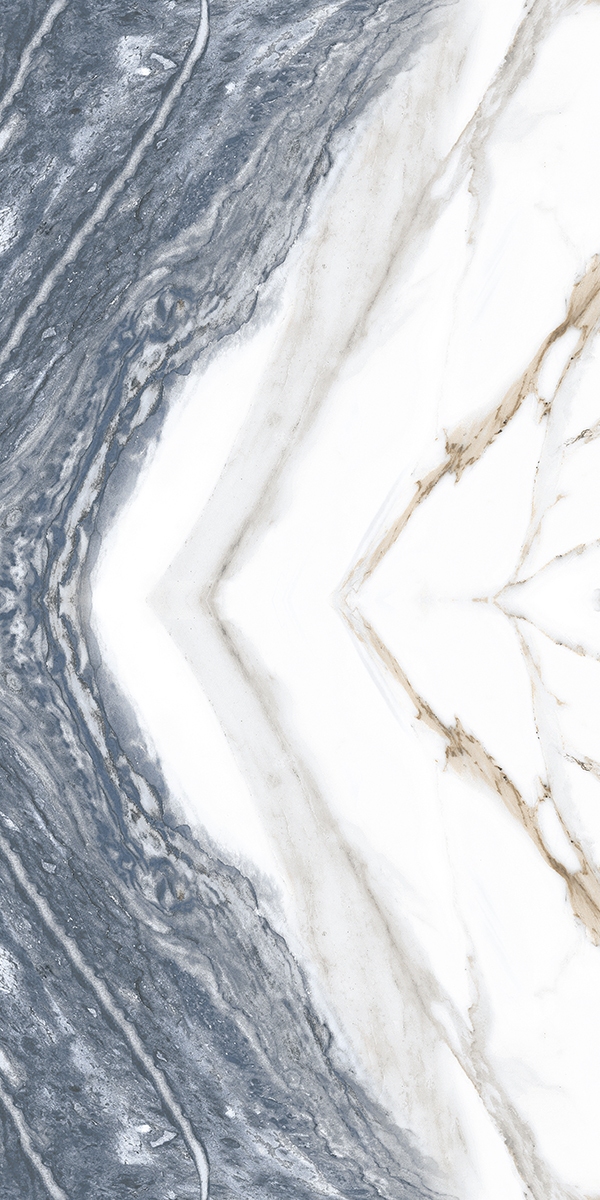
Book matching remains available at this size for buyers wanting continuous marble look tiles veining across a full height feature wall, since the panel's height means a book matched pair can run floor to ceiling with only a single vertical joint between them. Manufacturers offering this size in a marble look almost always support book matching as a paired order.
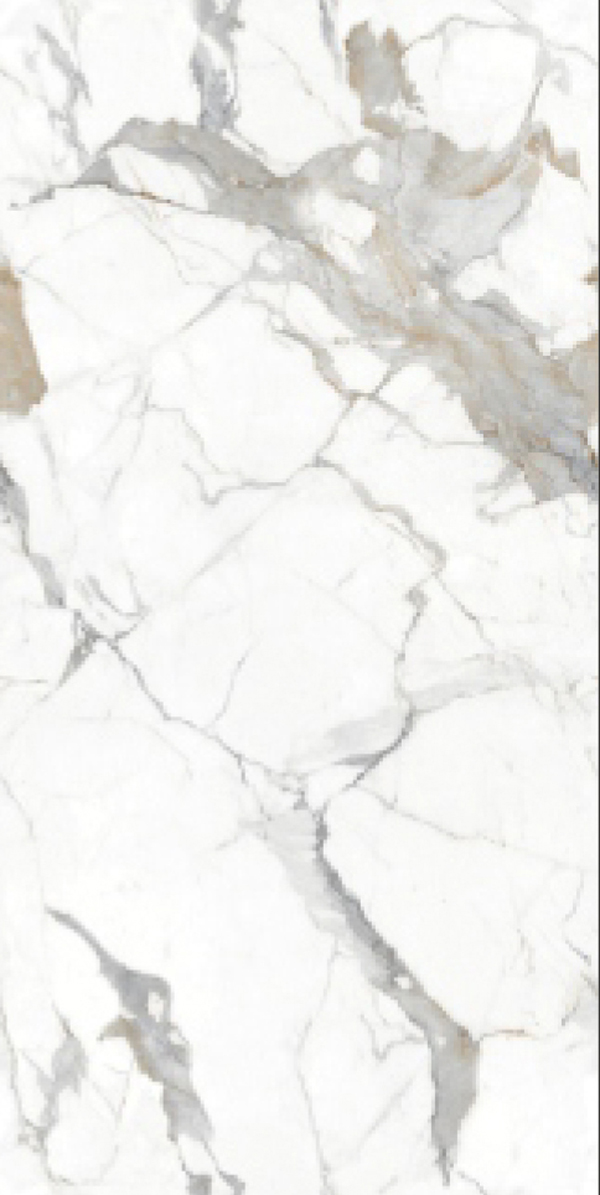
Concrete and stone look finishes are also available, generally chosen for a minimalist, architectural feature wall rather than a patterned or veined design. Wood plank look is rare at this exact length, since the extreme proportions suit a stone or marble style panel more naturally than a timber grain pattern.
What This Slab Size Costs
800x3000 tiles are priced from Rs. 220 to Rs. 480 per sq.ft from Morbi and Gujarat manufacturers, the highest range of any large format size covered on TilesFinders. This reflects low production volumes, higher breakage risk, and the custom crating and transport this length needs.
Book-matched marble look pairs sit at the top of this range, while plain concrete or stone look tiles without matched veining are usually priced lower. Freight, custom crating, crane or hoist hire, and a larger installation crew should all be budgeted well beyond the base tile price for a project using this size.
Verified Specifications and Sourcing
Genuine 800x3000 full body vitrified tiles carry water absorption below 0.5 percent, compliant with IS 15622:2006 standards for vitrified tiles, keeping the panel stable through India's monsoon humidity and summer heat without warping along its length. Most panels at this size are manufactured in Morbi, Gujarat, on a made-to-order basis rather than kept as standing stock.
Price for this size spans Rs. 220 to Rs. 480 per sq.ft, the highest of any large format tile sold in India. Buyers outside Gujarat should budget for the longest freight lead time and highest breakage insurance cost of any tile size, and should confirm production and delivery timelines well ahead of an installation date, particularly around the monsoon season when transit can slow further.
Measure Twice Before You Order
Ordering 800x3000 tiles is a decision reserved for a specific floor-to-ceiling feature wall in a 9 or 10 foot room, given the cost, lead time, and installation planning this size demands. TilesFinders lists this size alongside other large format options from Morbi and Gujarat manufacturers, with body, water absorption, and book matching availability confirmed on every listing.
A correctly measured and installed panel at this size delivers a genuinely seamless, floor-to-ceiling surface that no shorter large format tile can achieve without at least one visible joint.





FAQs
800x3000 tiles measure approximately 2.6 feet by 9.8 feet, since 800mm converts to roughly 2.62 feet and 3000mm converts to roughly 9.84 feet. Some listings round this loosely to 3x10 feet. The exact manufactured size stays fixed at 800mm by 3000mm across brands.
This size matches a 9 or 10 foot ceiling in one panel, avoiding the joint a shorter size like 800x2400mm would need. This makes it the practical choice for a seamless, floor to ceiling feature wall. Shorter sizes remain more available and less expensive for most other uses.
No, 800x3000 tiles are manufactured exclusively in full body vitrified construction, not porcelain, GVT, or ceramic. The extreme length needs a body strong enough through its full thickness to resist cracking during handling. Always confirm the actual body type on the technical data sheet.
A 10mm thick 800x3000 panel weighs approximately 56 kilograms, and a 12mm panel weighs closer to 68 kilograms. This is heavier than an 800x2400mm panel of the same thickness due to the extra length. Handling needs a mechanical lifter and a trained multi person crew.
No, very few Indian manufacturers keep this size in regular production, so most orders are placed as a special run with a longer lead time. Buyers should confirm minimum order quantity and production timelines before committing to a project schedule. Standard large format sizes remain far more readily available.
800x3000 tiles typically cost between Rs. 220 and Rs. 480 per sq.ft in India, the highest range of any large format size. Book matched marble look designs sit at the top of this range. Freight and custom crating add further to the total project cost.
Yes, book matching is available at this size for marble look designs, letting veining run continuously across a feature wall with only one vertical joint. Most manufacturers offering this size in marble look support book-matched pairs. Confirm availability directly with the manufacturer before ordering.
Handling 800x3000 tiles safely typically needs three to four trained installers along with a mechanical suction lifter. Site access, lift dimensions, and stairwell turns should be confirmed with the transporter well before delivery. This is more crew than a shorter large format size such as 800x2400mm typically requires.