


Office Floor Tiles in India: Complete Commercial Buyer's Guide
Choose the best office floor tiles in India with PEI 4–5 ratings, GVT and full-body vitrified opt...


Loading designs...




















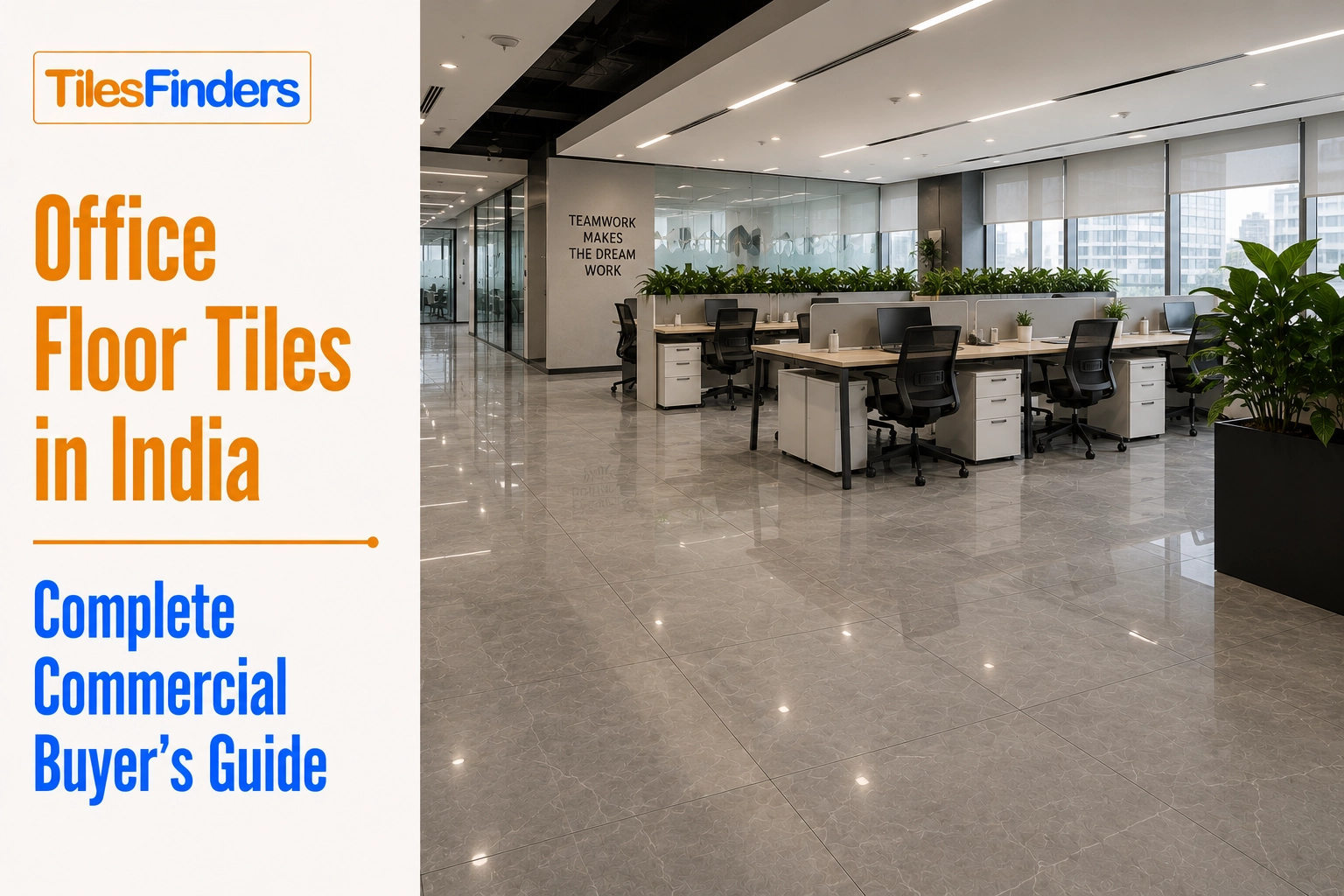
Office tiles carry a different set of requirements from residential tiles. A corporate office floor takes foot traffic from multiple people throughout the working day, chair castors rolling across it continuously, trolleys carrying equipment, and daily mopping with commercial cleaning solutions. A residential living room floor takes gentle household use in comparison. The tile that goes on an office floor has to survive this repeated daily load over ten to fifteen years without surface dulling, without chipping under castor pressure, and without becoming difficult to clean as the surface wears. Getting office tiles right means understanding traffic, durability, and the professional visual quality the space needs simultaneously.
Indian office spaces range enormously: a 200 square foot home office in an apartment, a 500 square foot small business office in a commercial building, a 5,000 square foot corporate floor with reception, conference rooms, and open-plan workstations. The tile decision changes across these scales. A home office can use the same tile specification as a bedroom with minor adjustments. A corporate floor needs a commercial-grade vitrified tile specification that holds its finish through years of daily use. A reception area needs a tile that communicates quality and professionalism to every visitor.
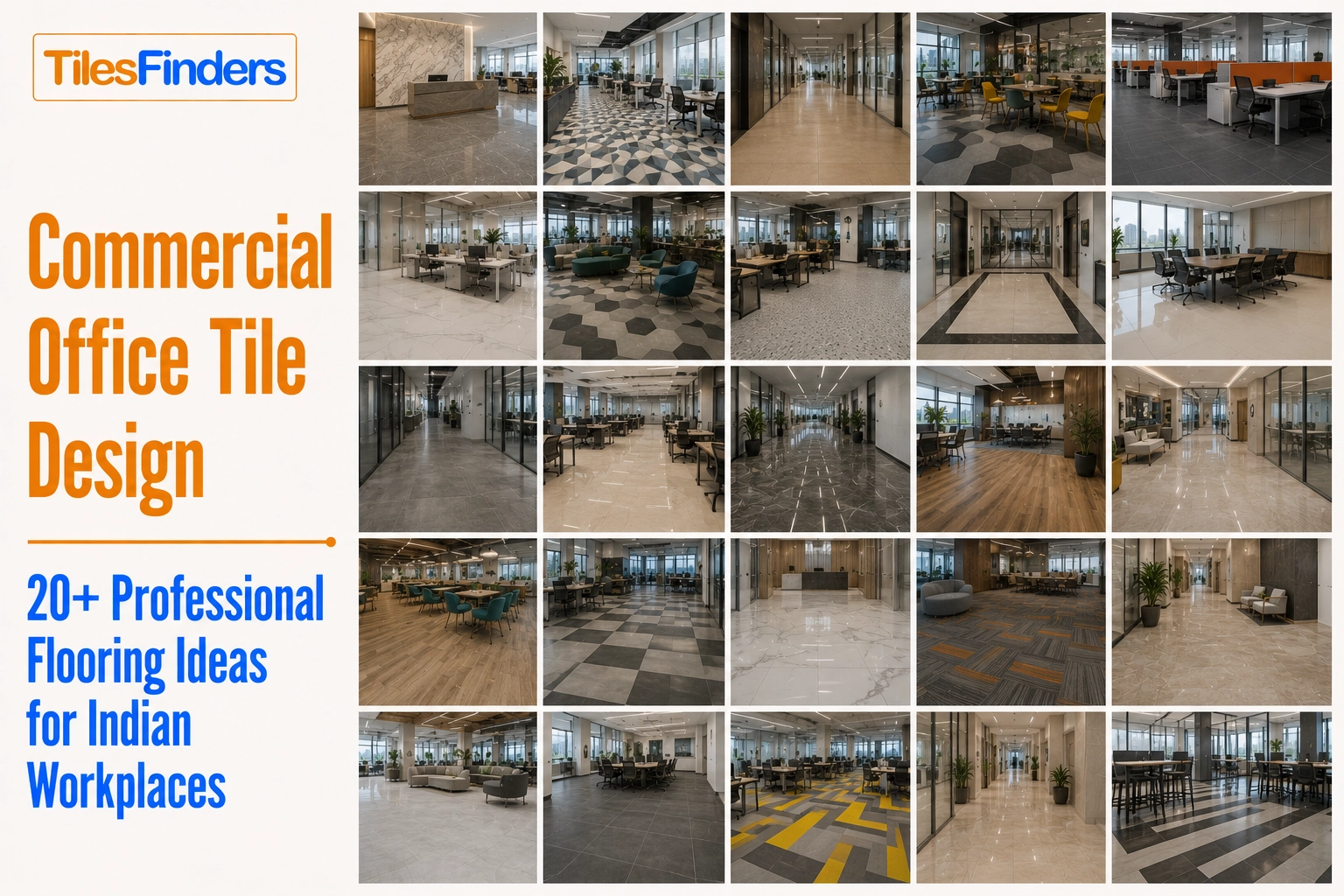
This page covers office tiles across all of these contexts: the correct body types for different office floor zones, the wall tile decisions for reception areas and conference rooms, how tile size and colour affect the perception of office space, wooden tiles for office floors in creative and professional environments, and the complete price range for office tiles from Morbi manufacturers.
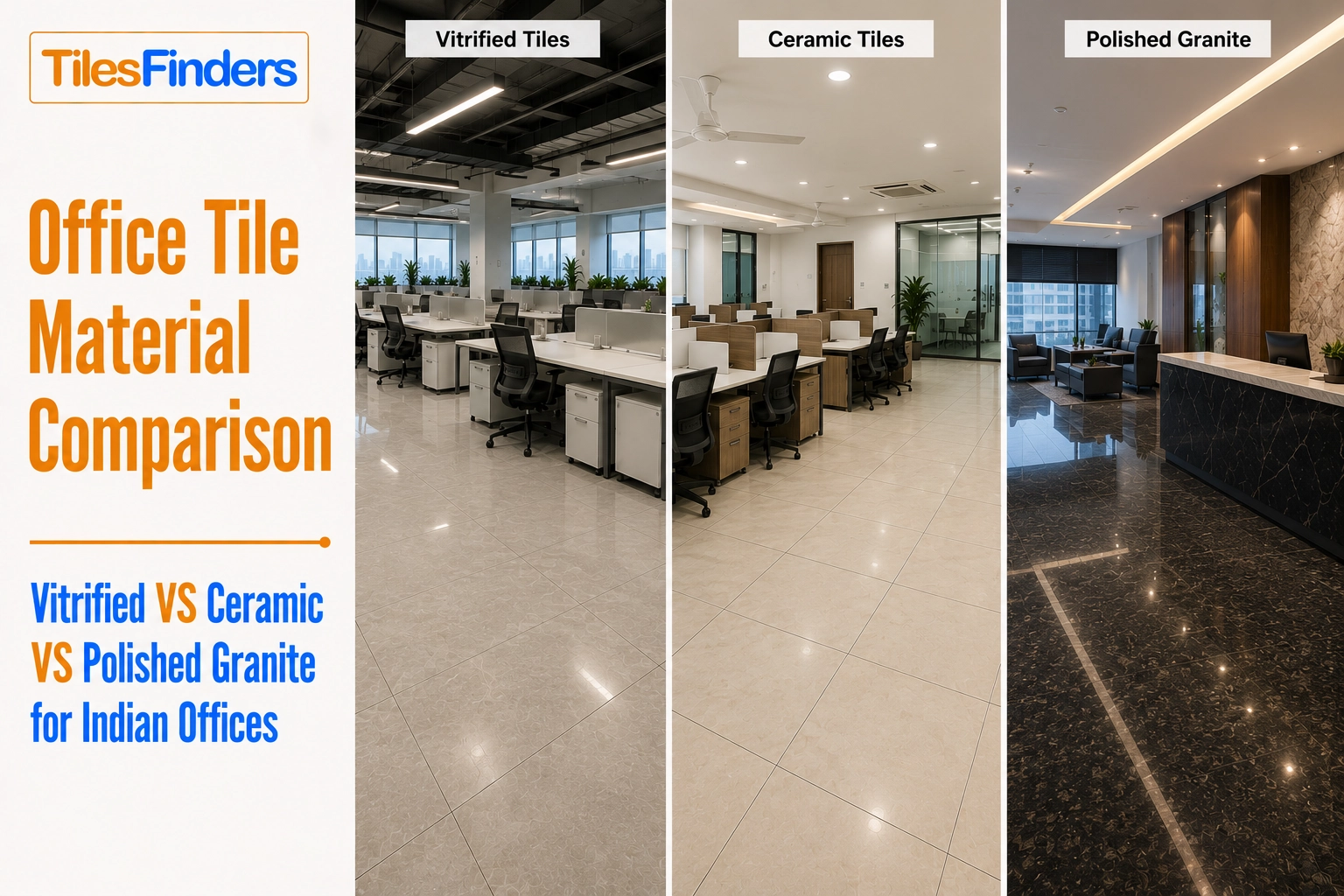
Full-body vitrified tiles are the strongest floor tile specification for high-traffic commercial office floors. The colour and pattern run through the full depth of the tile body, not just the surface glaze. This means that if the tile surface takes a chip from a castor impact or a trolley edge, the colour beneath is the same as the surface colour, and the chip is far less visible than on a glazed tile where the chip exposes a different-coloured body beneath. For corporate office floors, large retail spaces, and any office that sees continuous daily foot traffic from multiple people, full-body vitrified tiles in 600x600mm or 800x800mm in polished or satin matte finish are the most durable specification available in the GVT family. Price range: Rs. 55 to Rs. 130 per sq ft from Morbi.
GVT (Glazed Vitrified Tiles) rated under IS 15622:2006 with water absorption below 0.05% are the most used floor tiles in Indian offices at mid-range and above. GVT tiles are available in every finish relevant to an office floor: polished glossy for a corporate, light-amplifying floor; satin matte for a professional floor that hides minor marks and footprints; and matte for the lowest-maintenance option in a busy office. GVT is available in sizes from 600x600mm to 1200x1800mm, giving a full range of format options for different office sizes and zones. Price range: Rs. 40 to Rs. 120 per sq ft.
Ceramic tiles rated under IS 13630 with 12% to 16% water absorption are suitable for light-traffic office floors, including small home offices, private cabins with minimal daily traffic, and office utility areas. For main corridors, reception floors, and open-plan workstation areas with regular daily foot traffic, GVT or full-body vitrified gives a longer maintenance-free surface life than ceramic. Ceramic tiles for office walls, however, are a fully appropriate choice: office walls are dry and not subject to the same traffic load as the floor. Price range: Rs. 25 to Rs. 65 per sq ft.
The final decision for an office floor tile is more complex than for a residential space because the floor is seen and maintained daily by multiple people, and its appearance directly contributes to the professional quality of the workspace.
Polished GVT on an office floor gives the space a corporate, light-amplifying quality: the reflective surface makes large open-plan floors look expansive, and the high-shine finish communicates investment and quality to visitors and clients. The practical trade-off is that a polished office floor shows dust, footprints, and scuff marks more readily than matte and requires more frequent daily mopping to look maintained. In a corporate office with professional housekeeping staff who mop the floor daily, polished GVT is a practical choice. In a small business office or a home office where floor maintenance is the owner's responsibility and may not be daily, satin matte or matte GVT is the lower-effort choice that still looks professional.
Satin matte GVT is the middle ground that most mid-range Indian office floors use: it gives a professional, composed appearance with a soft sheen that reflects light without the full reflective drama of a polished floor, and it hides footprints and minor marks considerably better than polished. It is the most practical finish for a busy Indian office where cleaning frequency may vary. Matte GVT requires the least cleaning effort and is the correct choice for office areas with high foot traffic through the main entrance, where dirt and grit from footwear are most present.
Tile size in an office has a significant effect on how the space reads. A 600x600mm tile in a 500 square foot office creates a balanced grid. A 600x1200mm tile in the same space reduces the number of grout lines and makes the floor read as a cleaner, more expansive surface. A 600x600mm tile in a large 3,000 square foot corporate floor looks like a checkerboard from the entrance: too many joints, too much visual segmentation. The correct tile size increases with the floor area and ceiling height of the office.
| Office Type and Size | Recommended Tile Size | Finish | Visual Effect | Price Range (Rs./sq.ft) |
|---|---|---|---|---|
| Home office (under 150 sq.ft) | 600x600mm or 600x1200mm | Satin Matte or Matte GVT | Proportionate scale, clean and professional | Rs. 42 to Rs. 85 |
| Small office (150 to 400 sq.ft) | 600x600mm or 600x1200mm | Polished or Satin Matte GVT | Contemporary, light-amplifying | Rs. 45 to Rs. 95 |
| Medium open-plan office (400 to 1500 sq.ft) | 600x1200mm or 800x800mm | Polished or Satin Matte GVT/Full Body Vitrified | Few grout lines, expansive floor | Rs. 55 to Rs. 120 |
| Large corporate floor (above 1500 sq.ft) | 600x1200mm or 800x1600mm | Polished Full Body Vitrified | Slab-like, high-quality corporate finish | Rs. 65 to Rs. 130 |
| Reception area | 600x1200mm or 800x1600mm | Polished GVT or Full Body Vitrified | Maximum visual quality at client entry point | Rs. 60 to Rs. 130 |
| Conference room | 600x600mm or 600x1200mm | Satin Matte GVT | Professional, non-distracting | Rs. 45 to Rs. 100 |
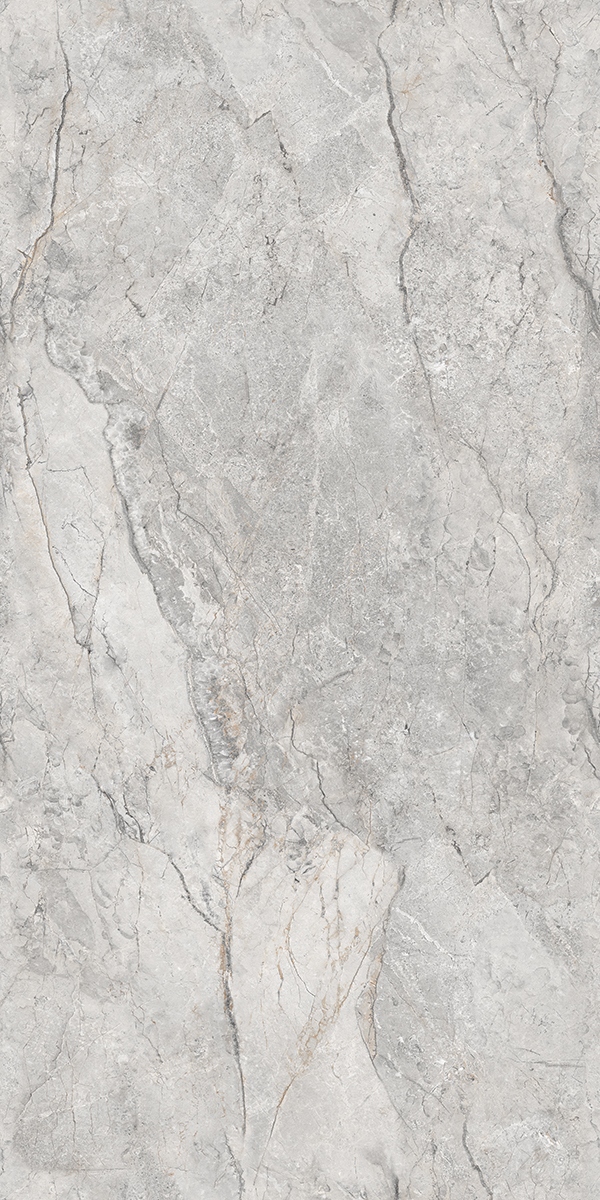
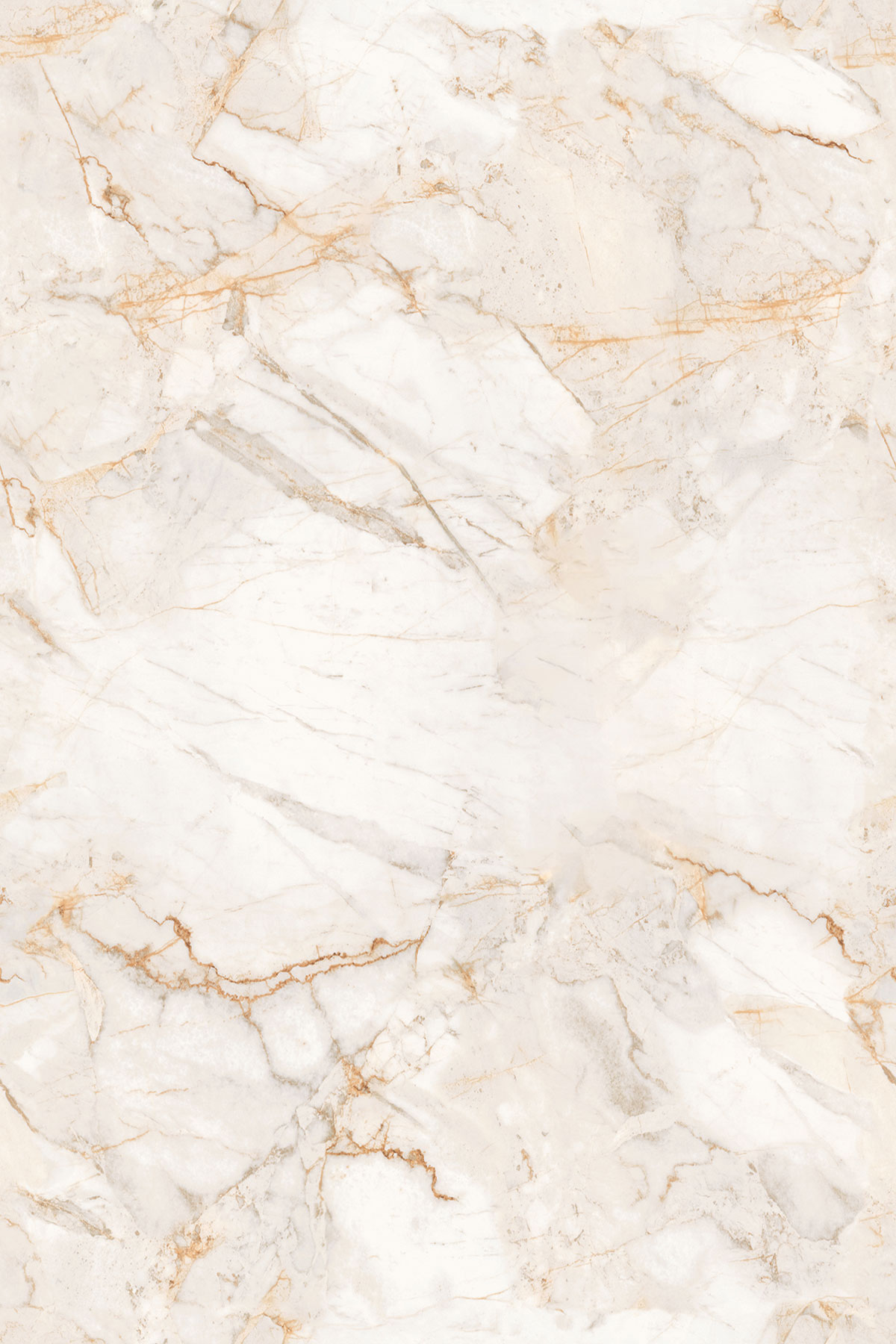
Office floor tile colour in India follows a consistent professional palette: light grey, warm cream, off-white, and beige are the dominant colour directions for corporate and professional office floors. These neutral tones read as clean and professional under office fluorescent and LED lighting, work with any wall colour and furniture, and show less accumulated dirt and coffee staining than pure white.
Dark tiles on an office floor (charcoal, deep grey, black) give a premium, high-contrast look that works in design studios, law firms, and executive spaces where the aesthetic intention is sophisticated rather than approachable. Dark floors require more frequent cleaning than light floors to look maintained, and they show more dust and debris in the fluorescent lighting typical of an office environment.
Tile pattern in a corporate office floor is typically minimised: a single consistent tile across the full floor area in a straight grid creates the cleanest, most professional look. Pattern changes are used to define zones: a darker tile border strip in the reception area, a different tile direction in the conference room, or a contrasting tile strip at corridor junctions that visually organises the floor plan without using physical barriers.
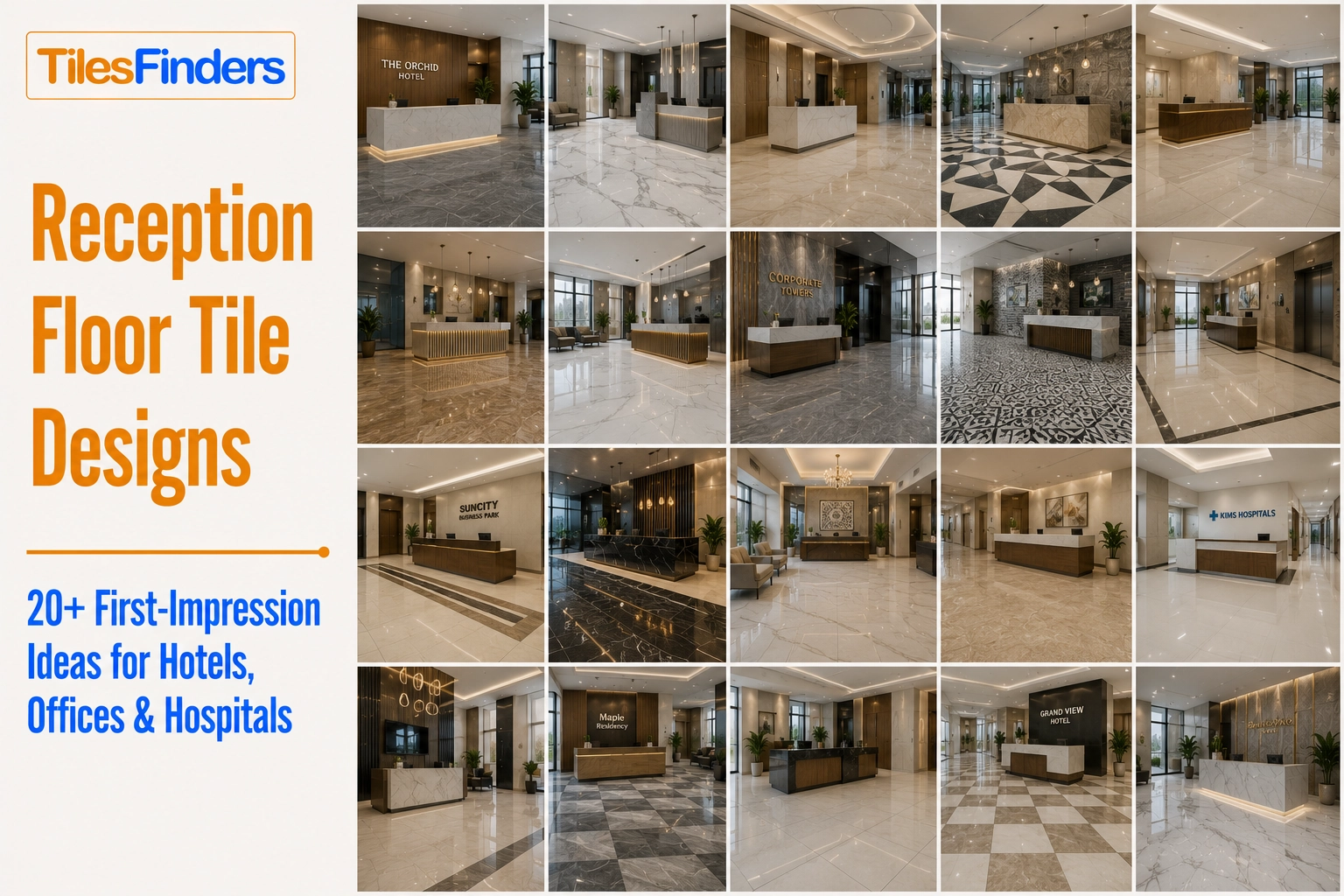
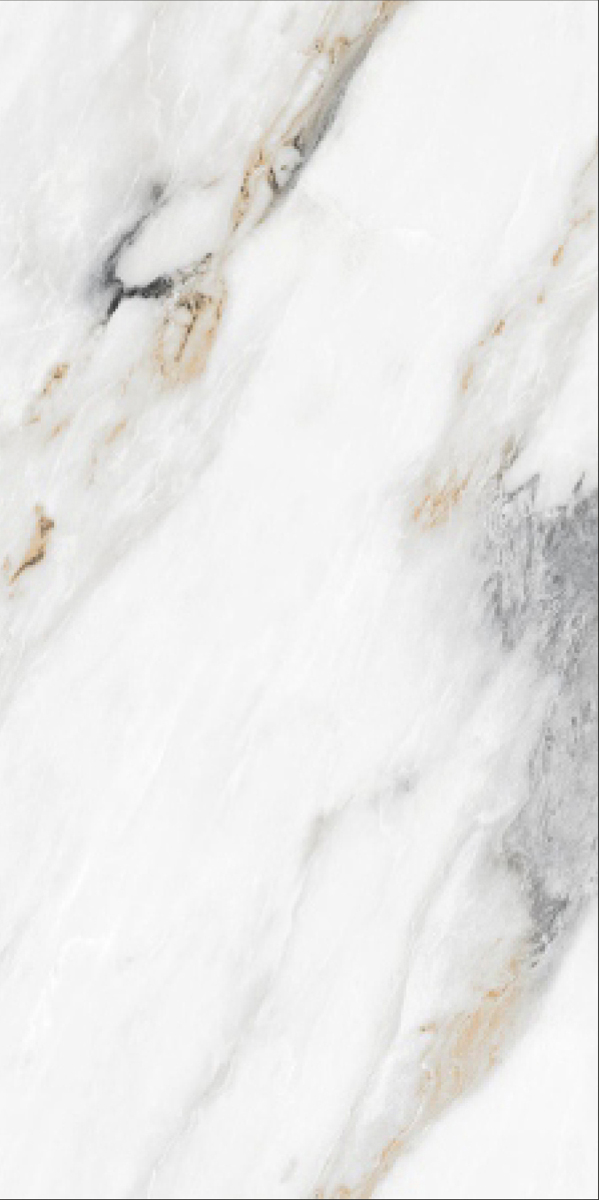
The reception area is the first impression of any office. The tile specification for a reception floor prioritises visual quality above all else: this is the surface a client or visitor sees first, and it sets the tone for the professional quality of the entire workspace. A large-format polished GVT or marble look tile in 800x1600mm or 600x1200mm in a light cream or grey polished finish gives the reception floor a generous, composed quality that signals investment and quality. Marble-look PGVT on the reception accent wall behind the reception desk, in a book-matched large-format layout, amplifies this quality further. Price range for reception floor tiles: Rs. 60 to Rs. 130 per sq.ft.
Reception wall tiles are the one office wall application where PGVT in polished finish is most commonly used. The reception wall is a dry, stable indoor surface, and PGVT on this wall gives the reception the same polished quality as high-end hotel lobbies at a price point accessible to mid-range commercial offices. PGVT must be used on the reception wall only, not on any floor surface.
The open-plan workstation floor takes the highest daily foot traffic of any zone in the office. It also faces the most chair castor movement: a standard office chair on castors moves across the floor multiple times per day and creates point-load pressure on the tile surface over time. Full-body vitrified tiles are the strongest specification for open-plan floors in large corporate offices because the colour runs through the full tile depth, and castor-point loads do not expose a different-coloured body beneath if the surface is slightly marked. GVT in satin matte or matte finish is adequate for smaller open-plan offices with moderate daily traffic.
Colour for open-plan office floors: light grey and warm cream in 600x1200mm satin matte or matte finish are the most used directions. These colours hide the inevitable minor marks from daily use better than white or very dark tiles and provide a neutral backdrop that does not compete with branding, wall colours, or furniture. A 600x1200mm tile in the open-plan area with tight 2mm grout joints gives a consistent, clean floor plane across a large area.
Conference rooms are lower-traffic than the open-plan floor but receive concentrated use during meetings, which includes chairs being pushed back frequently and heavy conference tables. A satin matte GVT in 600x600mm or 600x1200mm in neutral grey or cream is the standard for Indian conference room floors. The satin matte finish does not create distracting light reflections in a room that may use a projection screen or TV, and it does not show the footprint marks of multiple meeting participants as readily as a polished finish.
An acoustic consideration for tiled conference rooms: a hard tile floor amplifies footfall sound within the space. In a conference room where acoustic quality matters, a carpet tile or an acoustic underlay under the tile may be specified. In most Indian conference rooms at the small to mid-scale, this is not a concern, but in large boardrooms with high ceilings where the tile surface amplifies sound, a softer floor finish in the carpet tile direction reduces reverberation.
The office entrance and main corridor take the highest concentration of outdoor footwear traffic in the building, which brings in the most grit, moisture, and floor-marking potential. A matte or satin matte GVT in 600x600mm in a mid-grey or warm stone-look tone is the most practical corridor specification: the texture of the matte surface hides grit marks, the mid-tone colour hides dirt better than light cream, and the 600x600mm format is easy to replace if individual tiles are damaged in a high-impact area.
Office wall tiles are used in four contexts: the reception accent wall, cabin partition walls, washroom walls (not covered on this page, which focuses on dry office surfaces), and meeting room feature walls. All of these are dry indoor surfaces where any tile body type and any finish is technically valid. The choice is driven by the design role of the wall.
Reception accent wall: PGVT in polished or satin matte finish in 800x1600mm or 1200x1800mm in marble-look, solid colour, or abstract vein pattern is the most used office wall tile. This wall is seen by every visitor and carries the office's visual identity. A well-specified PGVT marble-look reception wall gives a professional service office the quality signal of a much larger investment.
Cabin glass partition base tiles: many Indian offices have glass partition panels that sit on a low tile base of 300 to 600mm height. This dado base tile in GVT or ceramic glossy in a neutral grey or white gives the partition base a finished quality that complements the glass above. The tile extends the floor material up the partition base to create a visual continuation of the floor plane.
Meeting room feature wall: a 3D Matte Carving GVT panel or a stone-look GVT on one wall of a meeting room gives the space a designed quality without requiring the full investment of a PGVT marble-look wall. A feature wall tile in a meeting room also serves as a backdrop for video calls, which has become a significant design consideration in Indian offices.
Wooden floor tiles for office, specifically GVT tiles with a wood-grain surface design in polished, satin, matte, or matte finish, are increasingly used in Indian home offices, design studios, creative agencies, co-working spaces, and professional consultancy offices where the interior aesthetic is intended to feel warm and domestically professional rather than corporate. A wood-look tile plank floor in an office gives the space a quality that polished grey vitrified cannot: it makes the office feel designed and inhabited rather than merely functional.
The indoor office environment allows a wider finish range for wood-look tiles than an outdoor balcony or patio. In an office, polished or satin matte wood-look GVT is a valid choice: the office floor is dry and does not need the outdoor anti-skid grip specification. Polished wood-look GVT in a warm oak or grey-washed oak in 300x1200mm in a home office or creative studio gives the space a flooring quality that rivals actual timber. Price range: Rs. 55 to Rs. 110 per sq ft for wood-look GVT office floor tiles from Morbi.
A small office, typically 150 to 300 square feet, needs tile choices that make the space feel larger and more organised rather than compressed and cluttered. Three tile decisions have the most impact on a small office:
Tile size: 600x1200mm in a small office creates fewer grout lines than 600x600mm and makes the floor read as a single continuous surface rather than a grid. This gives the small office a sense of floor expanse that is disproportionate to its actual area. A 600x600mm tile in a small office creates a dense joint grid that visually segments the floor and makes the space feel smaller.
Colour: Light grey, cream, and off-white tiles in polished or satin matte finish reflect overhead LED light back into the room, which makes the ceiling feel higher and the space more open. Dark tiles in a small office absorb light and make the space feel enclosed. A light-coloured tile floor in a small office is one of the most cost-effective ways to make the space feel larger.
Wall tile: A PGVT accent wall in 800x1600mm or 600x1200mm on one wall of a small office in a light marble-look or plain cream polished finish amplifies light and adds depth to the space without taking up any physical room. A single tiled accent wall in a small office gives the space a designed quality at a lower cost than tiling all four walls.
| Tile Type | Body Type | Format | Finish | Price Range (Rs./sq.ft) |
|---|---|---|---|---|
| Standard office floor | GVT | 600x600mm | Polished or Satin Matte | Rs. 40 to Rs. 75 |
| Large-format office floor | GVT | 600x1200mm | Polished or Satin Matte | Rs. 55 to Rs. 100 |
| Premium office floor | Full Body Vitrified | 600x600mm, 800x800mm | Polished or Satin Matte | Rs. 55 to Rs. 130 |
| Reception and lobby floor | GVT or Full Body Vitrified | 800x1600mm, 600x1200mm | Polished | Rs. 65 to Rs. 130 |
| Reception accent wall | PGVT | 800x1600mm, 1200x1800mm | Polished or Satin Matte | Rs. 70 to Rs. 145 |
| Office wall (ceramic or GVT) | Ceramic or GVT | 300x600mm, 600x600mm | Glossy or Matte | Rs. 28 to Rs. 80 |
| Wood-look office floor | GVT | 300x1200mm, 200x1200mm | Polished or Satin Matte | Rs. 55 to Rs. 110 |
| Conference room floor | GVT | 600x600mm, 600x1200mm | Satin Matte or Matte | Rs. 42 to Rs. 90 |
Installation cost: Rs. 35 to Rs. 55 per sq ft for standard straight lay in 600x600mm or 600x1200mm. Large-format tiles in 800x1600mm and above require back-buttering and full mortar bed coverage, adding Rs. 10 to Rs. 20 per sq ft to the installation cost.
Office tile selection starts with the zone (reception, open-plan, conference room, corridor), the traffic level, and the professional visual quality the space needs. Browse GVT, full body vitrified, and PGVT office floor and wall tiles in neutral grey, cream, marble-look, and modern design directions on TilesFinders. Confirm body type and finish based on the specific zone before shortlisting.
GVT in polished or satin matte finish is the most used office floor tile in India for small to mid-scale offices. Full body vitrified tiles in polished or satin matte finish are the strongest specification for large corporate floors with high daily foot traffic and chair castor load. 600x600mm to 600x1200mm are the most used sizes. Light grey, cream, and neutral stone-look are the most used colour directions. Price range: Rs. 40 to Rs. 130 per sq ft from Morbi, depending on body type and size.
GVT has a glazed surface layer where the design and colour are in the glaze. Full body vitrified tiles carry the colour through the full tile depth. On an office floor under chair castors and heavy daily traffic, a chip on a GVT tile exposes a different-coloured body beneath. The same chip on a full-body vitrified tile shows the same colour throughout, making the damage far less visible. Full-body vitrified tiles are the stronger specification for large, high-traffic corporate floors. For home offices and small business offices with moderate traffic, GVT is adequate.
600x1200mm is the most practical size for most Indian office floors. It creates fewer grout lines than 600x600mm, making the floor look larger and cleaner. For large corporate floors above 1500 square feet, 800x1600mm in full-body vitrified gives the most expansive, slab-like floor quality. For small offices and home offices under 200 square feet, 600x600mm or 600x1200mm are proportionally correct. Avoid large formats in very small offices where the tile size would be disproportionate to the room dimensions.
Yes. Polished GVT and full-body vitrified tiles are appropriate for office floors. Unlike outdoor wet surfaces, an indoor office floor does not create a slip risk under normal dry conditions with polished tiles. The trade-off of polished office floor tiles is that they show footprints, dust, and minor marks more readily than satin matte or matte tiles and require more frequent daily mopping to look maintained. In offices with professional housekeeping, polished is a practical choice. In small offices or home offices with less frequent maintenance, satin matte or matte is the more forgiving finish.
PGVT in polished or satin matte finish in 800x1600mm or 1200x1800mm in marble-look, solid colour, or abstract vein pattern is the most used tile for office reception accent walls. PGVT is specified for walls only and must not be used on any floor. The reception wall is a dry indoor surface and PGVT gives it a polished, hotel-suite quality that communicates quality and investment to every visitor. Price range: Rs. 70 to Rs. 145 per sq ft from Morbi.
Vitrified tiles for an office refer to GVT (Glazed Vitrified Tiles) and full-body vitrified tiles, both of which absorb less than 0.05% water under IS 15622:2006. In an office context, vitrified tiles are the correct floor specification because of their hardness, their resistance to staining from cleaning chemicals, and their long service life under daily commercial use. GVT is the entry to mid-range vitrified option for offices; full-body vitrified is the premium option for high-traffic corporate floors.
For a small office under 300 square feet, 600x1200mm GVT in a light grey, cream, or off-white in polished or satin matte finish makes the office feel larger by minimising grout lines and reflecting overhead lighting. A PGVT accent wall on one wall in a light marble-look or plain cream polished finish adds depth and quality without physically consuming space. Avoid dark tile colours and small tile formats in small offices: both make the space feel more compressed.
Yes. GVT wood-look tiles in polished or satin matte finish in 300x1200mm or 200x1200mm plank format are used in home offices, design studios, creative agencies, and professional consultancy offices where a warm, designed-to-be-lived-in quality is the intention. Unlike outdoor balcony wood-look tiles that require matte or GHR finish for anti-skid grip, indoor office wood-look tiles can use polished or satin matte finish since the office is a dry indoor surface. Price range: Rs. 55 to Rs. 110 per sq.ft.