
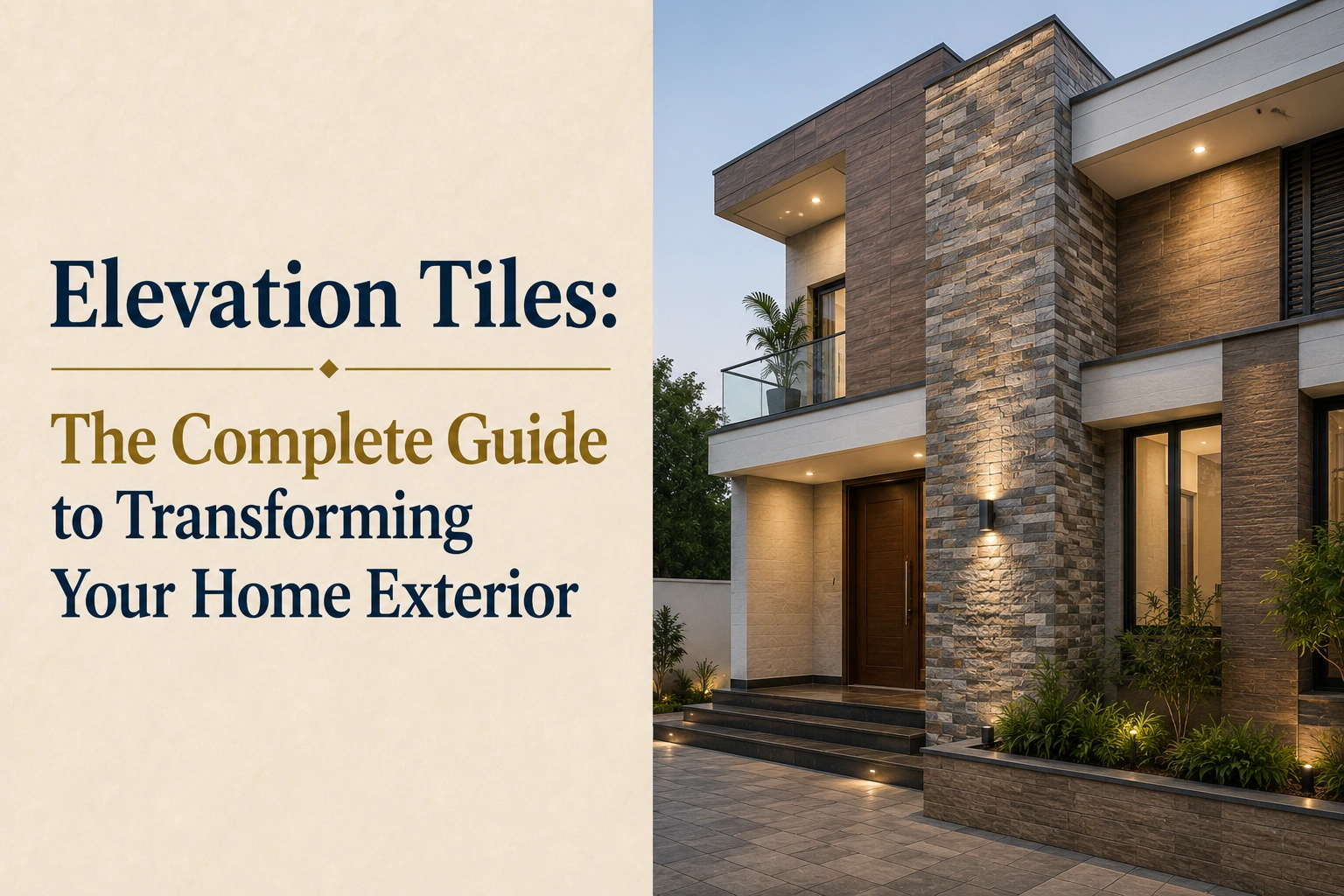
Elevation Tiles: The Complete Guide to Transforming Your Home Exterior
Complete guide to elevation tiles for home exteriors, covering tile types, sizes, finishes, 3D de...


Loading designs...

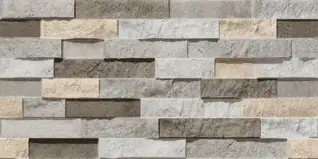
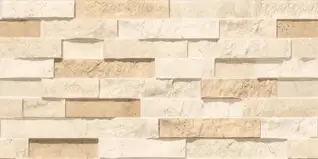
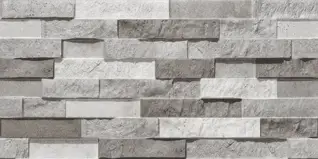
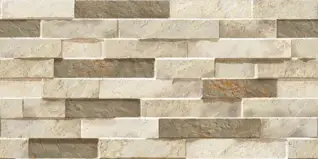
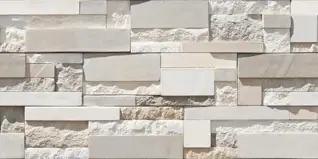
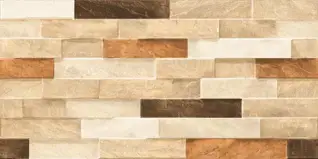
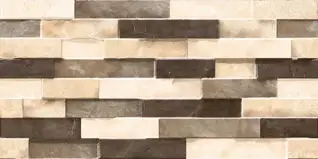
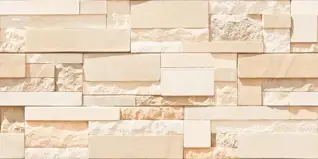
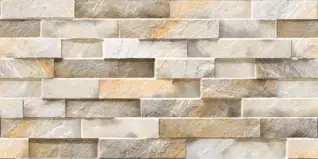
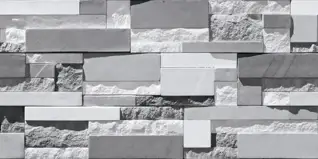
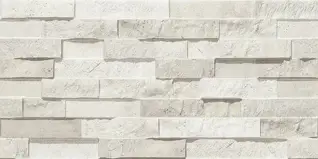
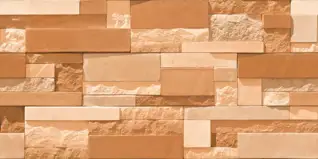
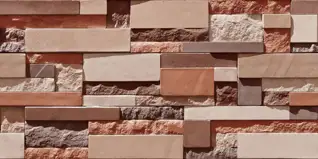
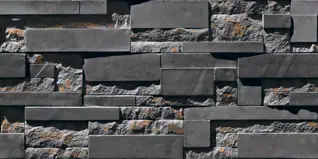
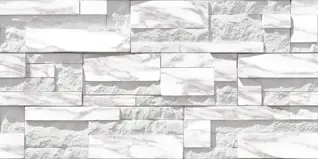
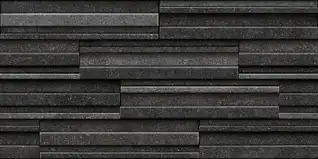
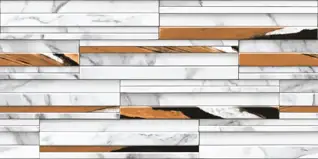
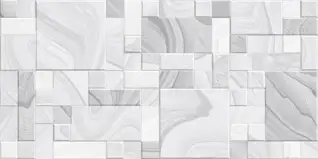
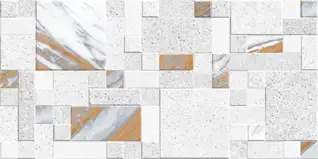
Stone cladding tiles are the single most used tile category for Indian residential and commercial exterior elevation walls. The appeal of stone on a building's exterior has always been about visual weight and permanence, and GVT stone cladding tiles deliver that appearance at water absorption below 0.05%, a figure no cut natural stone can match. As part of the broader elevation tiles category, stone cladding tiles are available in formats and surface treatments that replicate every major Indian and imported stone type used in construction: sandstone, kota stone, laterite, grey slate, white limestone, and split-face rock textures.
The distinction that matters most in this category is between stone-effect GVT tiles and natural stone cladding tiles. Both are used on Indian exterior walls. They look similar from the road. Their performance through Indian monsoons is not similar at all, and the maintenance requirement over ten years is substantially different. This page covers both, explains where each is appropriate, and gives the tile-by-tile breakdown for the stone types and colour ranges most searched in India.
Natural stone cladding uses cut slabs or split pieces of actual quarried stone fixed to a wall with adhesive or mortar. The stone piece itself is the wall finish. Sandstone, granite, slate, and quartzite are commonly used for this in India. The problem with natural stone on an Indian exterior wall is absorption: sandstone absorbs 5% to 15% water depending on the grade and cut, slate absorbs 0.5% to 1%, and most Indian sandstone used for wall cladding absorbs more water than porcelain tiles.
In Indian monsoon conditions, a sandstone-clad wall on a west-facing elevation absorbs rain on every wet day for four to five months of the year. That absorbed water carries dissolved minerals from the wall substrate, which deposit on the tile face as white efflorescence stains when the wall dries out. The same absorbed water expands in the adhesive layer during post-monsoon heat, which loosens the bond between the stone piece and the wall. After three to five monsoon seasons, a natural stone-clad wall typically shows efflorescence, grout joint staining, and some loose pieces.
GVT stone cladding tiles absorb less than 0.05% water, certified under IS 15622:2006. On the same west-facing wall, rain runs off the tile face and exits at the epoxy grout joint without entering the tile body. The joint stays clean because epoxy grout does not absorb minerals. After ten monsoon seasons, a well-installed GVT stone cladding wall looks substantially the same as it did at installation, assuming the adhesive was applied with full back coverage and the joints were filled with epoxy grout.
Sandstone is the most searched stone type for Indian exterior elevation cladding. The sandstone look is characterised by a warm, granular surface with visible sedimentary grain lines running horizontally across the face of the tile. Colour range: buff yellow, warm beige, terracotta-orange, rose pink, and pale grey. The grain pattern is fine enough to read clearly from 10 to 15 feet, which makes it well-suited to main facade wall runs where the tile is seen at street distance.
Sandstone cladding tiles in GVT matte finish, 300x600mm or 600x600mm, are the most common choice for residential front elevations, boundary walls, and gate pillars across North and West India. The buff-yellow and beige tones complement both white and grey painted plaster sections on the same building. Sandstone look tiles sourced from Morbi in matte GVT finish are available from Rs. 50 to Rs. 85 per sq.ft in 300x600mm and 600x600mm sizes.
Sandstone wall tiles for outdoor use must use GVT body type with matte or GHR finish. Do not use ceramic sandstone-look tiles on open exterior walls regardless of how closely they match the stone grain. The water absorption difference between ceramic (12% to 16%) and GVT (below 0.05%) makes ceramic unsuitable for any outdoor wall surface that gets monsoon rain.
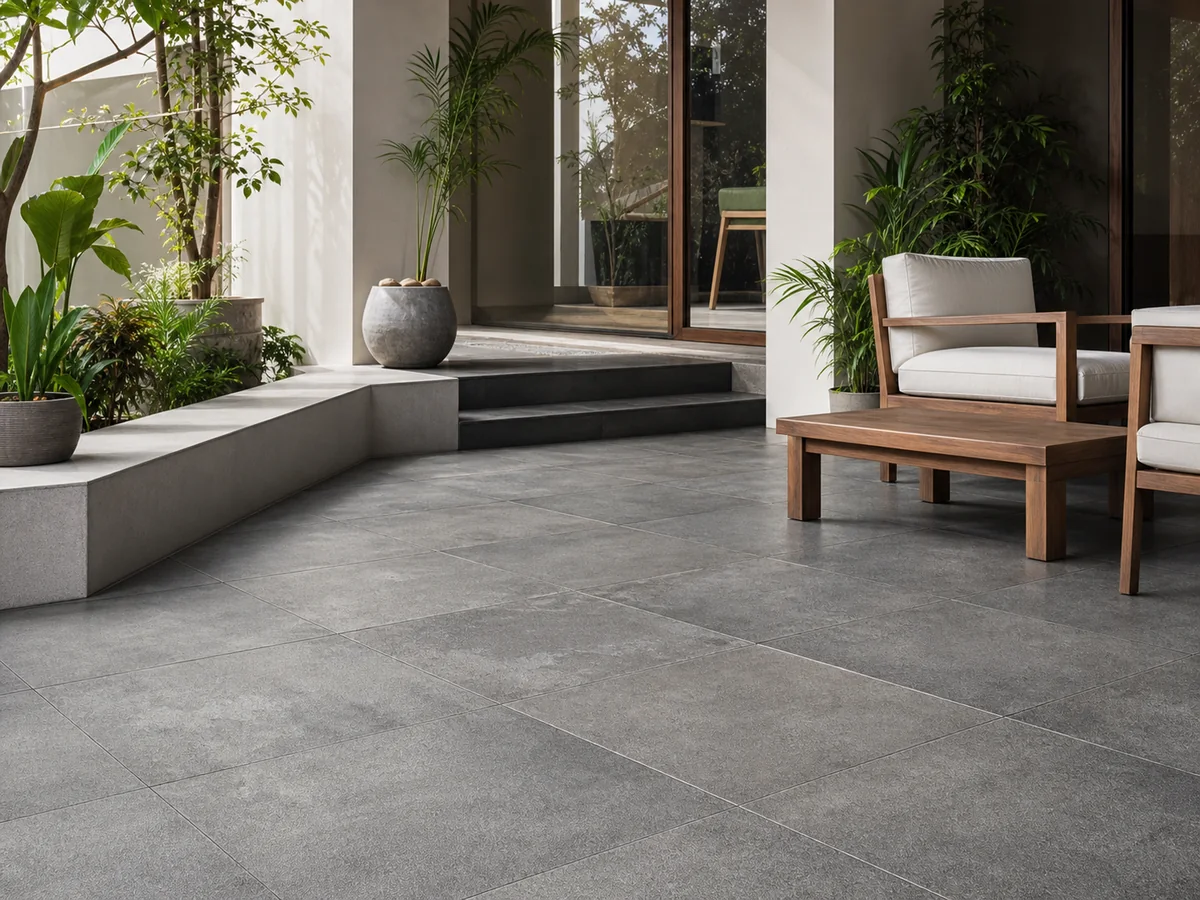
Grey stone cladding tiles are the most popular colour in this category for contemporary Indian residential and commercial buildings. The grey stone look ranges from light dove grey with fine limestone grain, to mid-grey with a slate-type surface texture, to deep charcoal with a rough quartzite face. Each reads differently on a wall at street distance: light grey lifts the facade in overcast monsoon light, mid-grey holds its value in both morning and afternoon sun, and charcoal gives the building a grounded, high-contrast presence from the road.
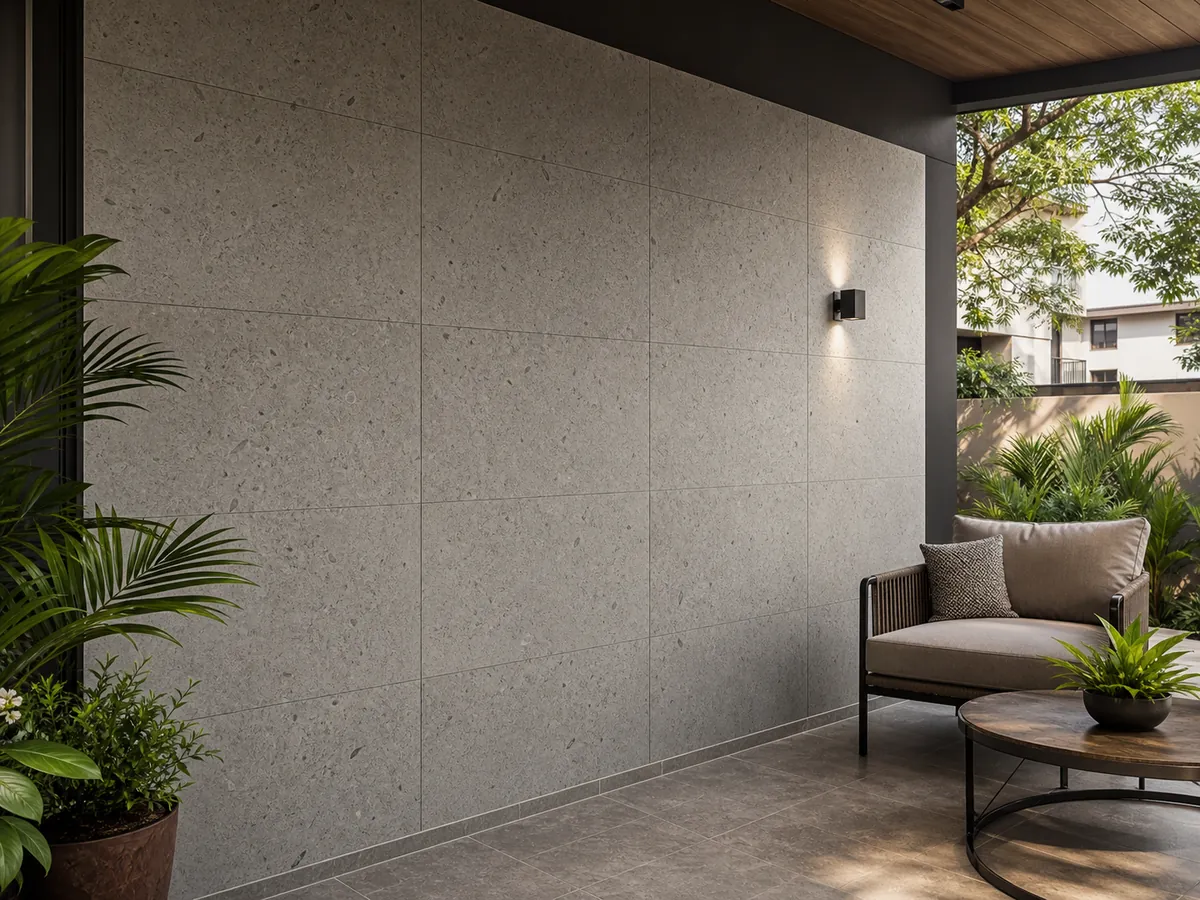
Grey stone wall cladding in GVT format is the most used outdoor stone cladding tile specification in Indian cities today. 600x600mm and 600x1200mm in matte or GHR finish are the most common formats. Large-format grey stone cladding tiles in 600x1200mm create a very clean, almost monolithic wall surface from the road, with far fewer horizontal grout lines than 300x600mm layouts. Price range for grey GVT stone cladding tiles: Rs. 55 to Rs. 100 per sq ft from Morbi.
White and ivory stone cladding tiles use GVT with a white limestone, white quartzite, or cream travertine surface print. White stone wall cladding on an exterior elevation creates a high-contrast, light-reflecting facade that reads well in full sun. The practical challenge with white stone cladding on Indian road-facing walls is maintenance: white tile surfaces on busy urban streets collect road dust, pollution deposits, and monsoon watermarks faster than grey or beige surfaces, and the deposits are more visible on white than on any other colour.
For road-facing front elevations in Indian cities with heavy traffic, white stone cladding tiles work best on upper floor panels that are above the road dust zone, or on courtyard-facing walls where road dust load is lower. Ground-level boundary walls and gate pillars in white stone cladding require more frequent cleaning than the same tiles in grey or beige. GVT white stone cladding tiles: Rs. 50 to Rs. 90 per sq.ft from Morbi in matte finish.
Kota stone is a fine-grained limestone quarried in Kota, Rajasthan, blue-grey in colour with a natural split face and visible fossil markings. It has been used on Indian floors and stairs for generations and is now used as a wall cladding on exterior elevations. Actual Kota stone on an exterior wall absorbs 2% to 4% water depending on the cut and sealing condition, and its split-face surface traps dust in the texture pockets.
GVT Kota stone look cladding tiles replicate the distinctive blue-grey colour and fine fossil-mark surface of Kota stone at water absorption below 0.05%. Matte and GHR finish options are available. The GHR finish captures the slight sheen of a well-polished Kota stone surface while retaining the outdoor safety profile of a textured tile. Size: 300x600mm and 600x600mm. Price range: Rs. 55 to Rs. 90 per sq.ft. On an exterior elevation, GVT Kota-look tiles outperform actual Kota stone on every monsoon-season performance metric.
Laterite is a red-brown, porous, iron-rich rock used extensively as a building material in Kerala, coastal Karnataka, and Goa. Laterite wall cladding is characteristic of traditional architecture in these states: the red-orange, rough-textured face of a laterite block wall is one of the most recognisable exterior surfaces in South Indian coastal construction.
GVT laterite-look cladding tiles replicate the warm red-brown colour and rough pitted surface texture of laterite at a fraction of the water absorption of the actual material. Real laterite absorbs significant water in coastal monsoon conditions, which drives moss and algae growth into the surface pores over time. GVT laterite-look tiles in matte or GHR finish stay clean through the same monsoon seasons. This is a particularly relevant tile category for Kerala, Karnataka coast, and Goa elevation projects. Size: 300x600mm and 600x600mm. Price range: Rs. 55 to Rs. 90 per sq ft from Morbi. For a fuller picture of how different stone cladding types are used across specific wall zones on an Indian home, the cladding tiles guide covers the outdoor vs indoor specification framework in detail.
Rock cladding tiles and rock tiles for outside walls refer to GVT tiles with a pronounced three-dimensional surface relief that replicates the broken, irregular face of split rock or rough-quarried stone. Unlike flat stone-look tiles, where the surface design is primarily a colour and grain print, rock cladding tiles have a physical surface relief built into the tile face, creating genuine shadow depth and irregular light reflection.
Split-face rock texture tiles are the heaviest-looking stone cladding option on an exterior wall. The irregular surface relief creates strong shadow lines that change through the day as the light angle shifts. This makes rock cladding tiles particularly effective on boundary walls, gate pillars, and entry feature panels where the tile is seen from close range and where the tactile surface quality adds to the overall design.
GVT rock cladding tiles in matte or GHR finish in 300x600mm format are the standard specification for Indian exterior wall use. The 300x600mm size works well with split-face surface textures because the tile size is proportionate to the scale of the rock texture pattern. Larger formats in 600x600mm can look monotonous with split-face textures if the pattern repeat is too regular across the tile face. Price range: Rs. 60 to Rs. 110 per sq.ft for GVT rock-texture cladding tiles from Morbi.
Pebble stone wall cladding on Tilesfinders is GVT tiles with a pebble-mosaic surface design printed or embossed onto a standard tile body. These are standard-size tiles (300x300mm, 300x600mm) where the tile face carries a pattern of rounded pebble shapes in varying sizes and colours. The tile installs as a single unit with normal tile adhesive and grout.
Pebble stone wall cladding tiles work well on garden walls, water feature surrounds, boundary wall accent panels, and decorative pillar sections. The rounded pebble surface design reads as organic and informal, which suits garden-facing walls and landscaped entry areas better than the clean face of a main house elevation. GVT pebble-look matte finish is the correct outdoor specification. Price range: Rs. 50 to Rs. 85 per sq.ft.
Stone effect wall cladding is a broad term that covers two technically different tile surface types. The first is a digital print stone effect: a high-resolution photographic image of stone grain fired into the tile glaze. The second is a pressed or embossed relief stone effect: the tile face has a three-dimensional surface texture that creates the tactile impression of stone, in addition to or instead of a colour print.
Digital print stone-effect tiles give the most accurate colour replication of specific stone types. Kota stone's blue-grey fossil pattern, Rajasthani pink sandstone's warm grain, and white quartzite's translucent vein pattern are all reproduced more faithfully in digital print GVT than in embossed relief tiles. The limitation of a digital print is that from very close range, the tile surface is flat, which a trained eye can distinguish from actual stone.
Relief or GHR stone-effect tiles have a raised surface texture that catches light and creates shadow depth similar to actual cut stone. From close range, the tactile quality of a GHR stone tile is closer to actual stone than a flat digital print. From street distance, both look equivalent. For boundary walls, gate pillars, and entrance panels seen from within 5 feet, GHR or Matte Carving stone-effect tiles give the closer-to-stone experience.
Stone cladding on an elevation can cover the full facade wall from ground to parapet, or it can be used as a feature zone material on one section of the building while another tile or finish covers the rest. Both approaches are used in Indian residential and commercial construction, and each has a different tile size and format requirement.
Full facade stone cladding: 600x600mm or 600x1200mm GVT stone-look tiles in a single colour across the entire wall run. This reads as a composed, unified facade from the road. The tile size choice determines how many horizontal joint lines appear across the wall height. A 600x1200mm tile on a 10-foot-tall ground floor panel creates only two horizontal grout lines across the full height, which gives a slab-like appearance. A 300x600mm tile on the same panel creates five to six horizontal lines, which gives more texture and rhythm.
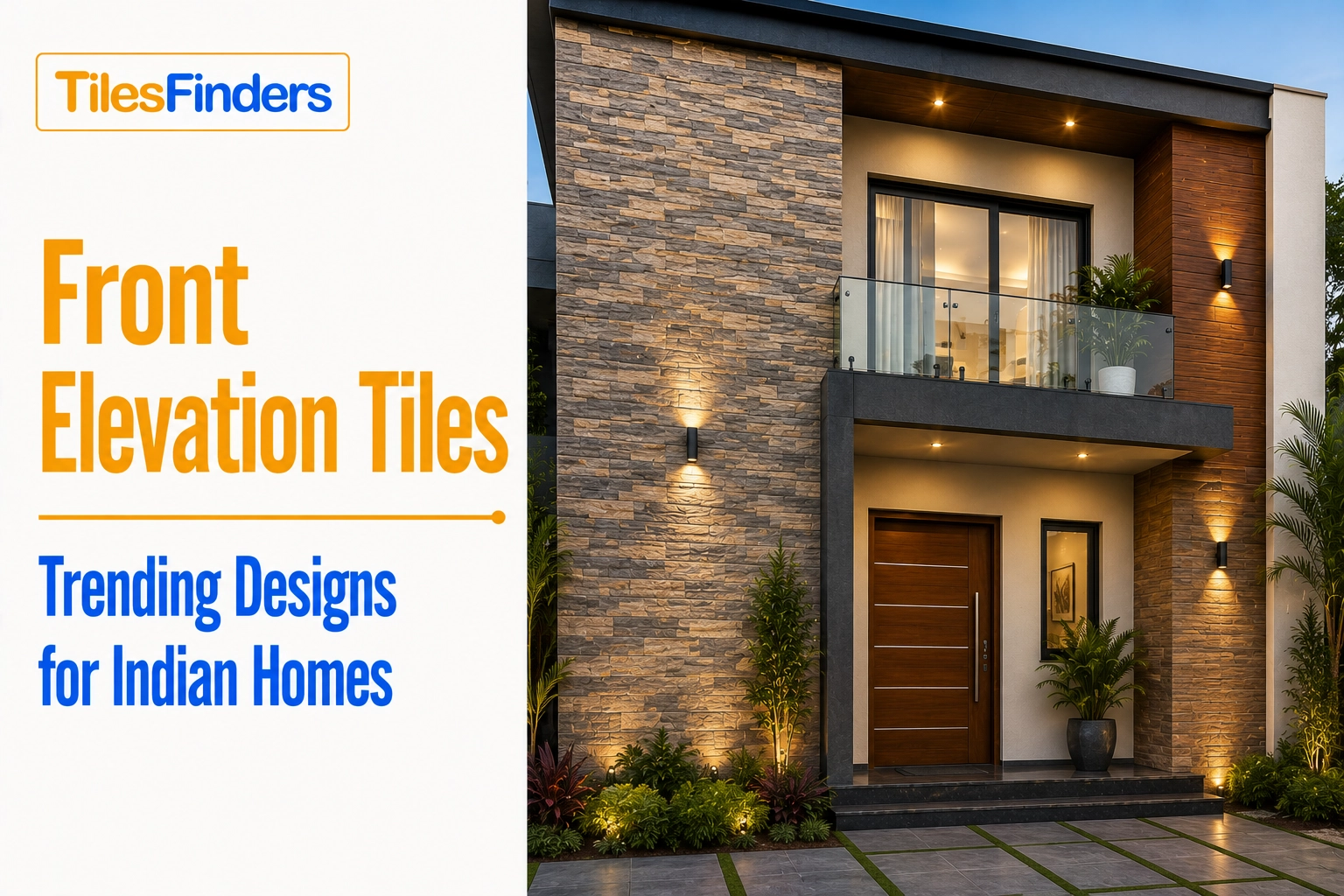
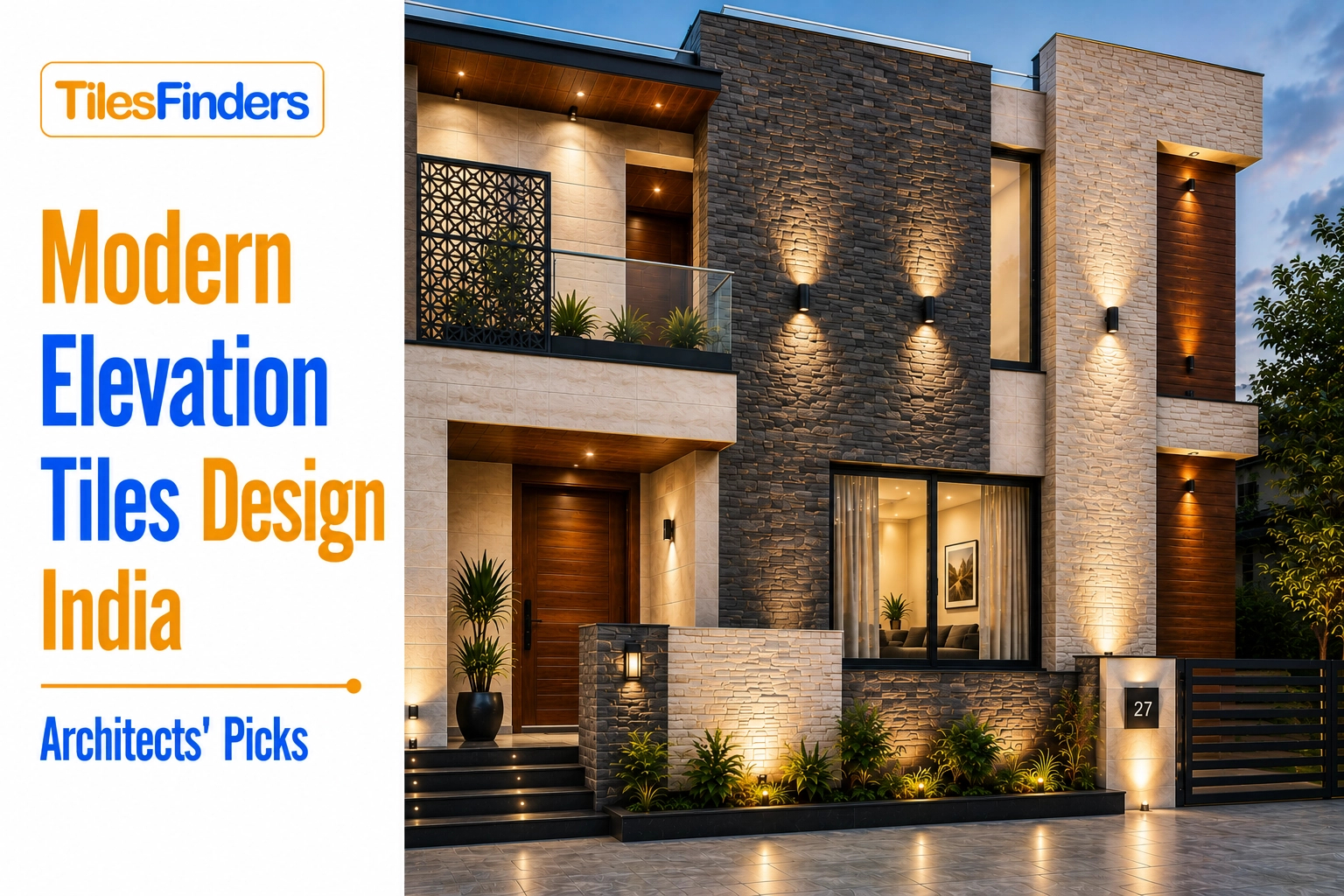
Feature zone stone cladding: 300x600mm or 600x600mm GVT stone-look tiles on the entry portal, ground floor band, or pillar faces, with a different tile on the upper floor panels. This creates a visual base that grounds the building and draws attention to the entry zone. Dark grey or charcoal stone cladding tiles on the lower section with a lighter grey or beige smooth tile above is one of the most used combinations for contemporary Indian homes.
| Stone Type Look | Colour Range | Best Format | Finish | GVT Outdoor Rated? | Price (Rs./sq.ft) |
|---|---|---|---|---|---|
| Sandstone | Buff, beige, rose, orange, pale grey | 300x600mm, 600x600mm | Matte or GHR | Yes | Rs. 50 to Rs. 85 |
| Grey slate or limestone | Light grey to charcoal | 600x600mm, 600x1200mm | Matte or GHR | Yes | Rs. 55 to Rs. 100 |
| White or ivory limestone | White, cream, ivory | 600x600mm, 600x1200mm | Matte | Yes | Rs. 50 to Rs. 90 |
| Kota stone look | Blue-grey, dark grey | 300x600mm, 600x600mm | Matte or GHR | Yes | Rs. 55 to Rs. 90 |
| Laterite look | Red-brown, terracotta-red | 300x600mm, 600x600mm | Matte or GHR | Yes | Rs. 55 to Rs. 90 |
| Rock or split-face | Dark grey, brown, rust | 300x600mm | Matte or GHR | Yes | Rs. 60 to Rs. 110 |
| Pebble mosaic look | Multi-colour, grey, beige | 300x300mm, 300x600mm | Matte | Yes | Rs. 50 to Rs. 85 |
Note: All outdoor stone cladding tiles must be GVT body type in matte, GHR, or textured finish. Do not use ceramic-bodied stone-look tiles on open exterior walls. Do not use satin matte or sugar finish on any exterior stone cladding surface.
GVT stone cladding tiles certified under IS 15622:2006 absorb less than 0.05% water by weight. In the Indian monsoon context, this means a stone cladding tile on a west or south-west-facing exterior elevation stays dry through the full monsoon season. The moisture in monsoon air and rain does not enter the tile body, does not carry into the adhesive layer behind the tile, and does not cause the mineral staining and efflorescence that affect natural stone cladding on Indian exterior walls.
Morbi, Gujarat, produces GVT stone cladding tiles in all the major stone looks used in Indian exterior wall construction: sandstone, grey slate, white limestone, kota-look, laterite-look, and split-face rock textures. Standard export sizes for exterior stone cladding: 300x600mm, 600x600mm, and 600x1200mm. Ex-factory prices from Morbi: Rs. 45 to Rs. 55 per sq ft for plain sandstone and grey stone-look in 300x600mm, and Rs. 65 to Rs. 110 per sq ft for large-format and rock-texture options. Retail prices across Indian cities add 25% to 40% above ex-factory, depending on distance from Gujarat and dealer margin.
The right stone cladding tile for an exterior wall depends on the stone type look, the wall orientation, and the format that suits the panel dimensions. The catalogue on TilesFinders covers GVT stone cladding tiles across all colour ranges, including sandstone, grey slate, white limestone, kota-look, laterite-look, and rock-texture options, with water absorption data, IS certification details, finish specifications, and Morbi source pricing on every listing. Filter by finish first to confirm outdoor suitability, then narrow by stone look and size to build your shortlist.
Stone cladding tiles are tiles with a stone-look surface design fixed to exterior or interior walls with tile adhesive and epoxy grout to create a stone-finish cladding layer. GVT stone cladding tiles absorb less than 0.05% water, certified under IS 15622:2006, and are the standard outdoor specification for Indian exterior elevation walls. They replicate sandstone, slate, limestone, Kota stone, laterite, and other stone types without the water absorption and maintenance issues of actual cut stone in the Indian climate.
GVT stone-look tiles in matte or GHR finish are the best choice for Indian exterior wall stone cladding. They absorb less than 0.05% water, stay clean through monsoon rain without efflorescence staining, and do not require sealing. Sandstone-look and grey slate-look GVT tiles in 300x600mm or 600x600mm are the most used options. Prices from Morbi: Rs. 50 to Rs. 100 per sq.ft.
Natural stone cladding uses cut pieces of actual quarried stone, which absorbs 2% to 15% water depending on the stone type. GVT stone cladding tiles absorb less than 0.05% water. On an Indian exterior wall that gets direct monsoon rain, the difference means that GVT stone cladding does not absorb rain, does not produce efflorescence staining, and does not loosen from the adhesive layer through water expansion and contraction cycling. GVT stone cladding tiles require no sealing and maintain their appearance through multiple monsoon seasons without the maintenance natural stone demands.
Sandstone cladding tiles are GVT tiles with a surface design that replicates the warm, granular grain pattern of sandstone in buff yellow, warm beige, terracotta-orange, rose pink, or pale grey. They are used on residential front elevations, boundary walls, and gate pillars across North and West India. GVT sandstone cladding tiles in matte finish, 300x600mm or 600x600mm, absorb less than 0.05% water and hold their colour and grain through Indian monsoon conditions. Price range: Rs. 50 to Rs. 85 per sq.ft from Morbi.
Kota stone wall cladding tiles are GVT tiles that replicate the blue-grey colour and fine fossil-mark surface texture of Kota limestone from Rajasthan. Actual Kota stone absorbs 2% to 4% water on an exterior wall. GVT Kota-look tiles absorb less than 0.05%, which means no efflorescence staining and no monsoon-driven debonding in Indian exterior applications. Available in matte and GHR finish, 300x600mm and 600x600mm formats. Price: Rs. 55 to Rs. 90 per sq.ft.
Laterite stone cladding tiles are GVT tiles with a warm red-brown surface texture that replicates the appearance of laterite rock used in traditional Kerala and coastal Karnataka construction. GVT laterite-look tiles absorb less than 0.05% water, avoiding the moss and algae growth that affects actual laterite in the high-humidity coastal monsoon environment. Available in matte and GHR finish, 300x600mm and 600x600mm formats. Price range: Rs. 55 to Rs. 90 per sq.ft.
Rock cladding tiles are GVT tiles with a pronounced three-dimensional split-face surface relief that replicates the irregular, broken face of quarried rock. Unlike flat stone-look tiles with a colour print, rock cladding tiles have a physical surface texture that creates shadow depth and irregular light reflection on the wall. They are used on boundary walls, gate pillars, and entry feature panels where the tile is seen from close range. GVT matte or GHR finish, 300x600mm format. Price range: Rs. 60 to Rs. 110 per sq ft.
Epoxy grout is the correct specification for all outdoor stone cladding tile joints. Epoxy grout is waterproof and does not absorb the mineral deposits from monsoon rain that cause the white staining visible at the grout joints of cement-grouted stone cladding walls. For stone cladding on Indian exterior walls, joint width of 2mm to 3mm with epoxy grout in a colour matched to the tile body is the standard specification.