
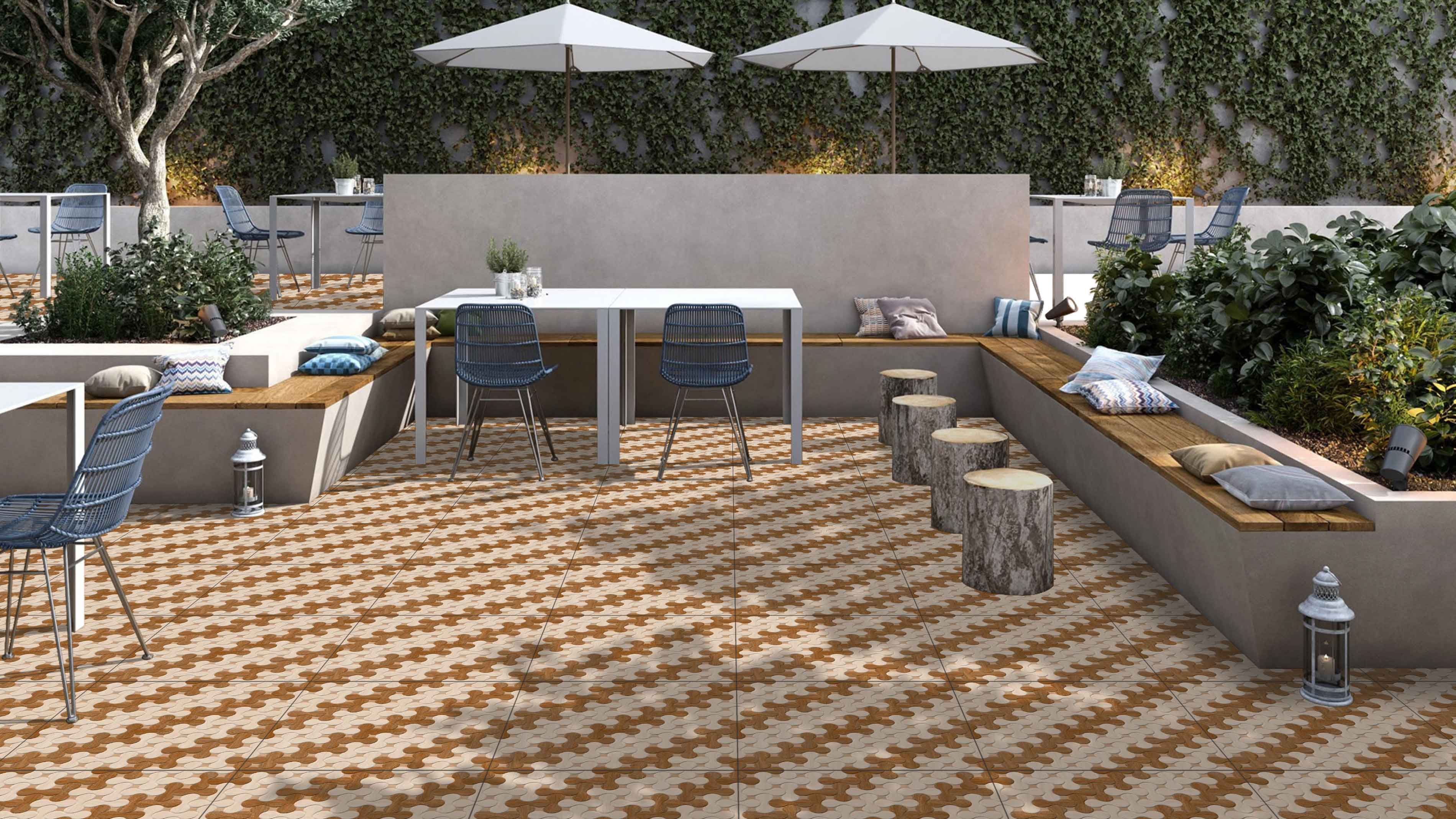
Best Outdoor Tiles for Indian Weather Conditions
Create lasting outdoor spaces with the right flooring. Learn why low water absorption, proper gri...


Loading designs...
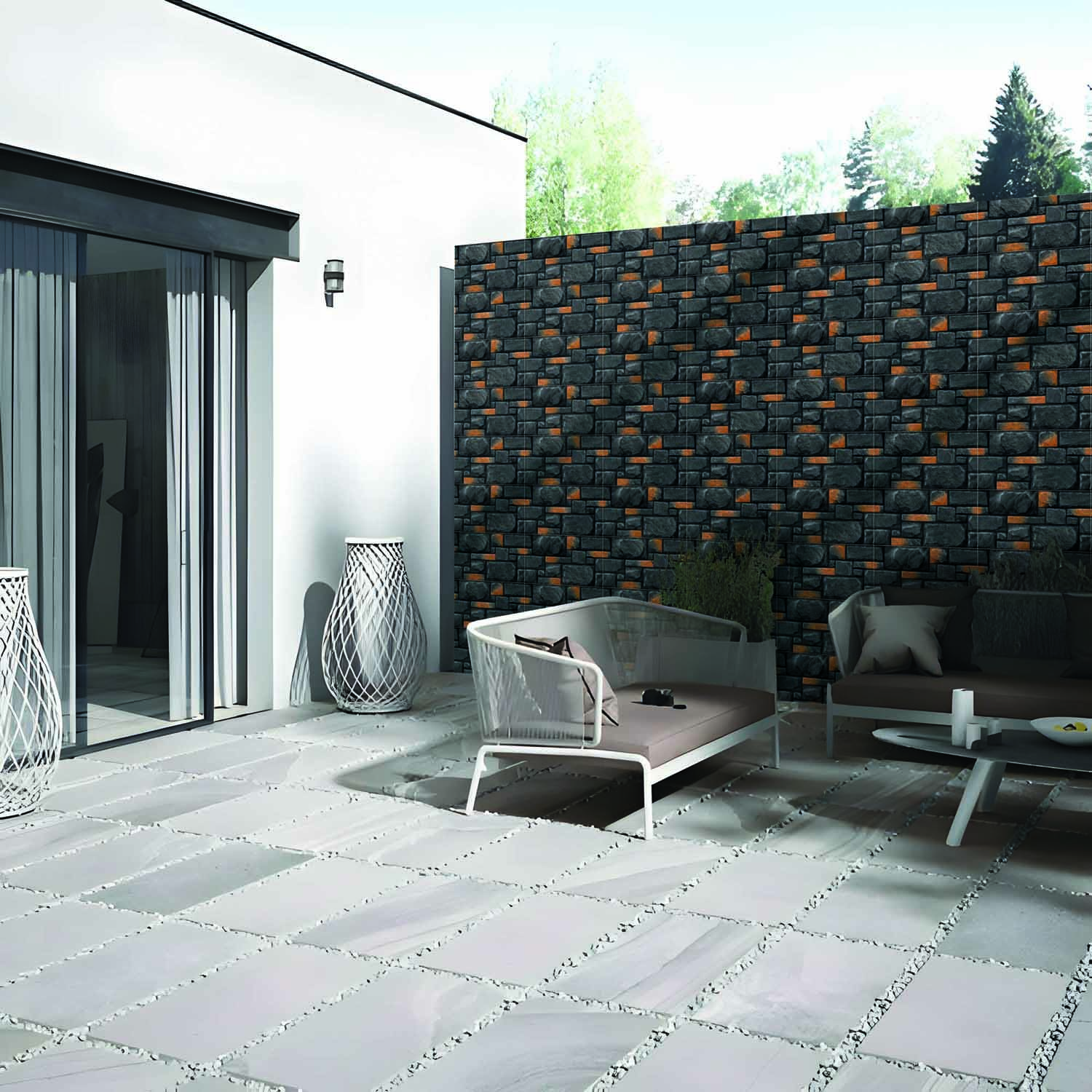
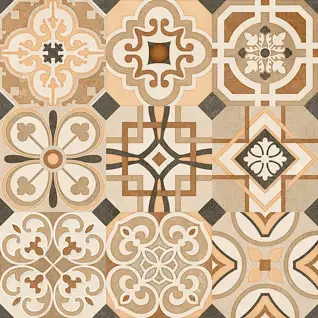
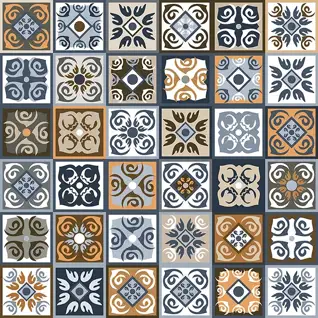
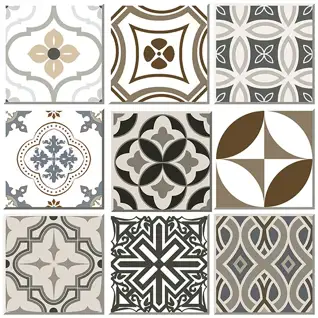
Moroccan outdoor tiles are one of the most misinterpreted tile purchases in Indian home renovation. The geometric star-and-cross pattern and arabesque look is popular for terraces, garden paths, pool surrounds, and covered verandas, but the body type that works indoors for the same pattern fails outdoors within one to two monsoon seasons. Moroccan style outdoor tiles in India must meet two non-negotiable criteria: water absorption below 0.5% and anti-slip finish of R11 or higher. This page covers the five-step selection process for Moroccan outdoor floor tiles, a surface-by-surface specification table, and a list of the six most common mistakes buyers make when choosing outdoor Moroccan tiles in India.
Safety: Most Moroccan tiles sold in India are NOT safe for outdoor floors. Ceramic body tiles (IS 13630) with 12% to 16% water absorption, crack in Indian monsoon wet-dry cycles. GVT tiles at 0.5% to 3% water absorption fail on fully exposed terraces. Only full-body vitrified tiles (IS 15622:2006) at 0.05% water absorption and porcelain Moroccan outdoor tiles with R11 anti-slip finish are safe for exposed outdoor floors in India. Read this page before buying any Moroccan tile for an outdoor surface.
Follow these five steps in order. Skipping any step leads to the wrong tile for an outdoor surface.
Step 1: Confirm the surface exposure level. Covered veranda or balcony (roof above, no direct rain): GVT at 0.5% to 3% water absorption is acceptable. Fully exposed terrace, garden path, pool surround, or outdoor patio with no roof: full body vitrified at 0.05% or porcelain Moroccan outdoor tiles only. The single biggest error in outdoor tile selection in India is using a tile rated for covered outdoor areas on a fully exposed surface.
Step 2: Verify the water absorption certificate. Ask your supplier for the water absorption test certificate before ordering. The figure must be 0.05% for fully exposed outdoor Moroccan tiles. A supplier who cannot produce this figure is selling an indoor tile for outdoor use. Do not accept verbal assurances. The certificate must show the IS 15622:2006 or ISO 13006 standard reference.
Step 3: Confirm R11 anti-slip finish. All outdoor Moroccan floor tiles must have GHR (grip) or rock finish with R11 slip resistance. Matte finish gives R9 to R10, which is acceptable for covered verandas with limited rain exposure. Fully exposed outdoor floors, pool surrounds, and garden paths need R11. Ask your supplier for the pendulum test slip resistance rating, not just the finish name.
Step 4: Select the correct size for the surface. 300x300 mm (300x300 mm) is the most practical size for garden paths, pool surrounds, and curved outdoor areas. 450x450 mm suits flat covered verandas and outdoor patios. Large Moroccan outdoor tiles at 600x600 mm work on large flat terraces with a concrete screed sub-base that is flat to within 3 mm over 2 metres. Do not use 2x2 tiles (600x600 mm) on garden paths or surfaces with level changes.
Step 5: Plan drainage slope and movement joints. Outdoor floors must slope at 1-in-50 fall (20 mm per metre) toward a drain or away from the building. Moroccan outdoor tiles cannot be laid flat. Movement joints (expansion joints) must be placed every 3 to 4 metres in outdoor tile bedding to accommodate thermal expansion. Indian surface temperatures on west-facing terraces reach 55 to 65 degrees Celsius in May and June. Without movement joints, tile cracking and grout joint failure occur within 2 to 3 years.
Pro tip: Ask your tile contractor to show you where the movement joints will be before the tile bedding is laid, not after. Movement joints in a Moroccan outdoor tile floor must align with the geometric pattern repeat or they will cut through the centre of a star pattern and look like a crack. Plan joint placement in the dry-lay stage when tiles are still moveable.
| Outdoor Surface | Water Absorption Required | Slip Resistance | Recommended Body | Size Range | Price (Rs./sq.ft) |
| Covered veranda (roof present) | Below 3% | R10 minimum | GVT or full body vitrified | 300x300 to 600x600 mm | Rs. 110 to Rs. 180 |
| Exposed terrace (no roof) | 0.05% max | R11 (GHR/rock) | Full body vitrified only | 300x300 to 600x600 mm | Rs. 130 to Rs. 220 |
| Garden path | 0.05% max | R11 (rock finish) | Full body vitrified only | 300x300 to 450x450 mm | Rs. 130 to Rs. 200 |
| Pool surround | 0.05% max | R11 (rock finish) | Full body vitrified or porcelain | 300x300 mm | Rs. 150 to Rs. 250 |
| Outdoor patio (covered) | Below 3% | R10 minimum | GVT or full body vitrified | 450x450 to 600x600 mm | Rs. 110 to Rs. 200 |
| Balcony (partial rain exposure) | 0.05% max | R11 (GHR) | Full body vitrified | 300x300 to 450x450 mm | Rs. 130 to Rs. 220 |
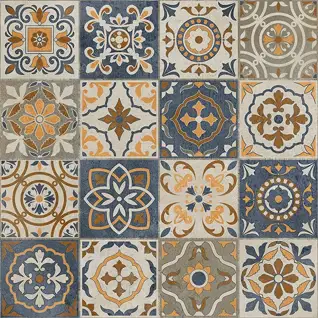
Note: Blue Moroccan outdoor tiles and other coloured Moroccan outdoor floor tiles must use a UV-stable glaze to retain colour on south and west-facing terraces in India. Non-UV-stable glazes on outdoor Moroccan tiles fade visibly within 2 to 3 years on surfaces exposed to direct summer sun for 6 to 8 hours daily. Ask your supplier for the UV stability rating on any coloured Moroccan-style outdoor tiles before ordering.
| Body Type | Water Absorption | Outdoor Safe? | Why / Why Not |
| Ceramic (IS 13630) | 12% to 16% | No | Absorbs monsoon water, expands, cracks within 1 to 2 seasons |
| GVT (Glazed Vitrified) | 0.5% to 3% | Covered only | Acceptable for covered verandas, fails on exposed surfaces over time |
| Full Body Vitrified (IS 15622:2006) | 0.05% | Yes (all outdoor) | Correct body for all outdoor Moroccan floor tiles including exposed terraces |
| Moroccan Porcelain Outdoor Tiles | Below 0.5% | Yes (all outdoor) | Frost-resistant to ISO 13006, suited to all outdoor and pool surrounds |
| Zellige / encaustic | 6% to 12% | No | High absorption causes surface crazing and efflorescence outdoors |
| Hand-painted ceramic | 10% to 14% | No | Body and painted glaze layer both fail under outdoor wet-dry cycling |
Pro tip: Full body vitrified and Moroccan porcelain outdoor tiles have through-body colour, meaning the colour and pattern run through the full depth of the tile body, not just the glaze surface. This matters outdoors because chips and scratches from dropped tools, garden furniture legs, and hail do not expose a white tile body underneath. Through-body colour tiles maintain their appearance after surface wear in a way that glazed tiles cannot.
Large Moroccan outdoor tiles in 450x450 mm and 600x600 mm formats are produced in full body vitrified body by Morbi manufacturers in Gujarat and are the most visible format change in the Indian outdoor tile market over the last five years. The larger tile format reduces grout joints on a terrace or garden path, which improves drainage and reduces the joints available for weed growth between tiles. Prices for large Moroccan outdoor tiles in full body vitrified body start at Rs. 130 per sq.ft for 450x450 mm and Rs. 160 per sq.ft for 600x600 mm.
The sub-base requirements for large format Moroccan outdoor floor tiles are stricter than for 1x1 tiles. A 600x600 mm tile needs a concrete screed that is flat to within 3 mm over 2 metres and fully cured before tiling begins. Any hollow below a large outdoor tile causes it to crack under point load from foot traffic, furniture legs, or heavy planters. Use a notched trowel and full-bed adhesive (not spot-bedding) when laying large Moroccan outdoor tiles outdoors.
Note: Do not use large Moroccan outdoor tiles (600x600 mm) on garden paths with uneven sub-bases or any outdoor surface that carries vehicle weight. The larger format tiles have a lower tolerance for sub-base irregularities than 300x300 mm tiles. A 600x600 mm tile bridging a hollow in the sub-base will crack within 3 to 6 months of foot traffic. Use 300x300 mm Moroccan outdoor floor tiles on paths and any surface that cannot be fully levelled.
Outdoor grout and adhesive requirements differ significantly from indoor products. Standard indoor tile adhesive and cement grout are not safe for outdoor Moroccan tiles in India.
Tile adhesive: Use flexible tile adhesive rated for outdoor use (C2 grade with S1 or S2 flexibility). Flexible adhesive accommodates the thermal expansion and contraction of outdoor tiles, which experience surface temperatures from 10 to 65 degrees Celsius across the year in most Indian states. Standard C1 rigid adhesive cracks at outdoor temperature ranges.
Grout: Outdoor epoxy grout is the correct choice for all exposed outdoor Moroccan tile joints. Cement grout outdoors absorbs monsoon rain repeatedly, grows algae and mould in the joint, and causes efflorescence (white salt deposits) on the tile surface within one to two monsoon seasons. Outdoor epoxy grout costs Rs. 200 to Rs. 280 per kg but does not crack, absorb water, or support algae growth.
Movement joints: Fill expansion joints with a flexible sealant (polyurethane or silicone) rated for outdoor use, not with grout. Grout in a movement joint cracks and pops out as the tile field expands in summer heat. A movement joint filled with flexible sealant compresses and expands with the tile without cracking.
Tile sealer: Full-body vitrified Moroccan outdoor tiles do not need sealing. GVT tiles on covered verandas benefit from a penetrating surface sealer applied after installation to reduce algae growth on the matte surface in monsoon humidity. Reapply the sealer every 3 to 4 years.
Full body vitrified Moroccan outdoor tiles certified to IS 15622:2006 absorb 0.05% water, which is the only body specification safe for fully exposed outdoor floors in India. The 450x450 mm (450x450 mm) format is the most widely produced outdoor-rated Moroccan tile size by Morbi manufacturers in Gujarat, priced from Rs. 130 to Rs. 175 per sq.ft with GHR rock finish. Gujarat's tile cluster produces full-body vitrified outdoor Moroccan tiles with UV-stable glazes and through-body colour that hold the geometric star-and-cross and arabesque patterns at the scale required for large outdoor terrace areas.
Indian outdoor surface conditions are among the most demanding for tile performance anywhere in the world. West-facing terraces in Gujarat, Rajasthan, and Maharashtra reach surface temperatures of 55 to 65 degrees Celsius in May and June, followed by monsoon rain at ambient temperatures of 28 to 32 degrees Celsius from June to September. This thermal shock range of 25 to 35 degrees Celsius within minutes of rain landing on a hot outdoor surface, causes surface crazing and body cracking in any tile body with water absorption above 0.5%. Morbi and the broader Gujarat manufacturing base supply Moroccan-style outdoor floor tiles in 600x600 mm (600x600 mm) format from Rs. 160 to Rs. 220 per sq.ft with rock finish rated for these extreme thermal conditions.
These are the six most frequent errors buyers and contractors make when specifying Moroccan outdoor tiles. Each mistake leads to tile failure, replacement cost, or a safety hazard.
Mistake 1: Using ceramic or GVT tiles on an exposed outdoor floor. Ceramic body at 12 to 16% water absorption cracks in one monsoon season on an exposed terrace. GVT at 0.5 to 3% fails on exposed surfaces within 2 to 3 years. Only full body vitrified or porcelain Moroccan outdoor tiles are safe for exposed outdoor floors.
Mistake 2: Choosing matte finish for a pool surround or garden path. Matte finish gives R9 to R10 slip resistance. Pool surrounds and rain-exposed paths need R11 (GHR or rock finish). A matte Moroccan outdoor tile at a pool edge is a slip hazard when wet. Always confirm the pendulum test rating, not just the finish name.
Mistake 3: Laying outdoor tiles without a drainage slope. Outdoor Moroccan tiles laid flat collect standing water. Standing water on an outdoor tile floor accelerates grout joint failure and creates a permanent algae surface. All outdoor tiles must be laid at a 1-in-50 fall (20 mm per metre) toward a drain or building edge.
Mistake 4: Omitting movement joints on large outdoor terrace areas. Without movement joints every 3 to 4 metres, thermal expansion in summer causes grout joint failure and tile cracking. This is the most common cause of large outdoor Moroccan tile floor failure in India. Movement joints must be placed before tiling begins, not cut in afterward.
Mistake 5: Using standard cement grout outdoors. Cement grout on outdoor Moroccan tiles absorbs monsoon rain, develops efflorescence (white salt staining), and grows algae within one monsoon season. Use outdoor epoxy grout or polymer-modified flexible grout rated for outdoor use on all exterior Moroccan outdoor floor tiles.
Mistake 6: Ordering a non-UV-stable glaze for a coloured outdoor tile. Blue Moroccan outdoor tiles and terracotta colourway outdoor tiles with non-UV-stable glazes fade on south and west-facing surfaces within 2 to 3 years. The fading is not uniform, producing a patchy appearance that cannot be corrected without full tile replacement. Confirm the UV stability rating with your supplier before ordering any coloured Moroccan style outdoor tiles.
Full body vitrified Moroccan outdoor floor tiles with GHR rock finish, IS 15622:2006 certification, and UV-stable glaze across every geometric pattern from star-and-cross to blue arabesque are catalogued with verified Indian pricing on TilesFinders, India's dedicated tile marketplace. Use the outdoor surface filter to view only tiles rated for exposed terrace and garden use, compare large format and standard sizes side by side, and request a physical sample with the water absorption certificate before placing a full order.
Full body vitrified Moroccan outdoor tiles to IS 15622:2006 at 0.05% water absorption and Moroccan porcelain outdoor tiles at below 0.5% water absorption are the only safe options for exposed terraces in India. Ceramic, GVT, zellige, and encaustic Moroccan tiles all fail on exposed outdoor floors in Indian monsoon wet-dry cycling. Specify GHR or rock finish with R11 anti-slip rating for all outdoor terrace floors.
Moroccan outdoor tiles in India cost Rs. 110 to Rs. 180 per sq.ft for GVT options on covered verandas and Rs. 130 to Rs. 250 per sq.ft for full body vitrified options on exposed outdoor floors. Large Moroccan outdoor tiles in 600x600 mm format cost Rs. 160 to Rs. 220 per sq.ft. Moroccan porcelain outdoor tiles for pool surrounds cost Rs. 150 to Rs. 250 per sq.ft. Morbi manufacturers in Gujarat supply most of the outdoor-rated range.
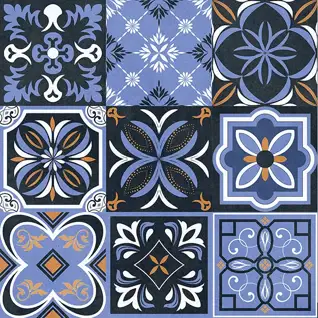
Blue Moroccan outdoor tiles with a UV-stable glaze can be used on south-facing terraces. Without a UV-stable glaze specification, the blue colour fades on surfaces exposed to direct sun for 6 to 8 hours daily within 2 to 3 years. Always ask your supplier for the UV stability rating on any coloured Moroccan-style outdoor tiles before ordering. Full body vitrified blue Moroccan outdoor tiles from Morbi manufacturers in Gujarat are produced with UV-stable glaze as standard for outdoor applications.
300x300 mm is the most practical size for garden paths in Moroccan outdoor tiles. This size cuts cleanly around curved edges, level changes, and stepping stone gaps. Large Moroccan outdoor tiles at 450x450 mm and 600x600 mm require a perfectly level concrete sub-base and are not suited to garden paths with irregular sub-bases or slopes greater than 1-in-20.
R11 anti-slip finish (GHR or rock finish) is required for all exposed outdoor Moroccan floor tiles. Pool surrounds and garden paths need R11 as a minimum. Covered verandas with limited rain exposure can use R10 (sugar or GHR finish). Matte finish at R9 is not safe for any outdoor Moroccan floor tile. Never use gloss, polished, or semi-polished finish on any outdoor floor.
Full-body vitrified Moroccan outdoor tiles do not need sealing. The 0.05% water absorption body is non-porous and does not absorb water, algae, or staining. GVT Moroccan tiles on covered verandas benefit from a penetrating surface sealer applied after installation to slow algae growth on the matte surface during monsoon months. Reapply every 3 to 4 years. Never seal vitrified body outdoor tiles with a surface film sealer; it traps moisture under the glaze.
Outdoor epoxy grout is the correct choice for exposed outdoor Moroccan tile joints. Cement grout outdoors absorbs monsoon rain, develops efflorescence, and grows algae within one monsoon season. Outdoor epoxy grout costs Rs. 200 to Rs. 280 per kg. Fill movement joints with polyurethane or silicone sealant rated for outdoor use, not grout. Grout in a movement joint cracks and pops out as the tile field expands in Indian summer heat.
Yes, but only full body vitrified or Moroccan porcelain outdoor tiles with R11 rock finish and 0.05% water absorption. Pool surrounds need the strictest combination of slip resistance and water resistance of any outdoor surface. The tile must be non-porous (chlorine-resistant) and anti-slip at R11 when wet. 300x300 mm is the most practical size for pool surrounds as it cuts around curves and pool inlets cleanly.