Elevation Tiles: The Complete Guide to Transforming Your Home Exterior
Complete guide to elevation tiles for home exteriors, covering tile types, sizes, finishes, 3D designs, colour selection, installation tips, and modern facade ideas.
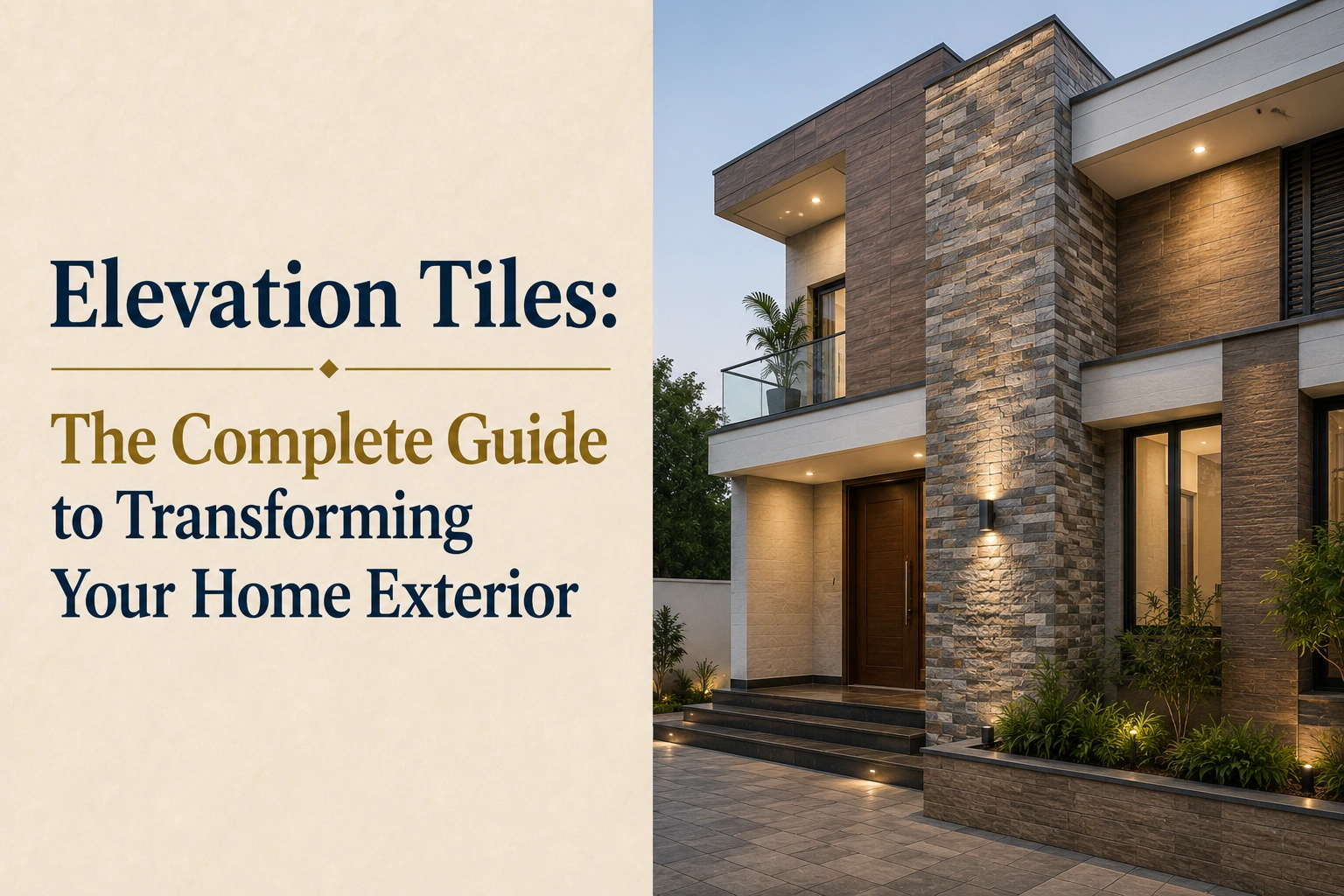
Your home's exterior speaks before you open the door. The facade is the first and most lasting impression your property makes, whether on guests, neighbours, or potential buyers.
And yet, most homeowners spend months choosing interior tiles but make their exterior decisions in an afternoon.
That is a mistake worth correcting. The right elevation tiles can take a plain concrete structure and turn it into a standout architectural statement. The wrong choice can look dated in three years, crack under weather stress, or become a maintenance headache.
This guide covers everything you need to know: tile types, sizes, finishes, design strategies, and the common mistakes that cost homeowners thousands in repairs or replacements.
What Are Elevation Tiles?
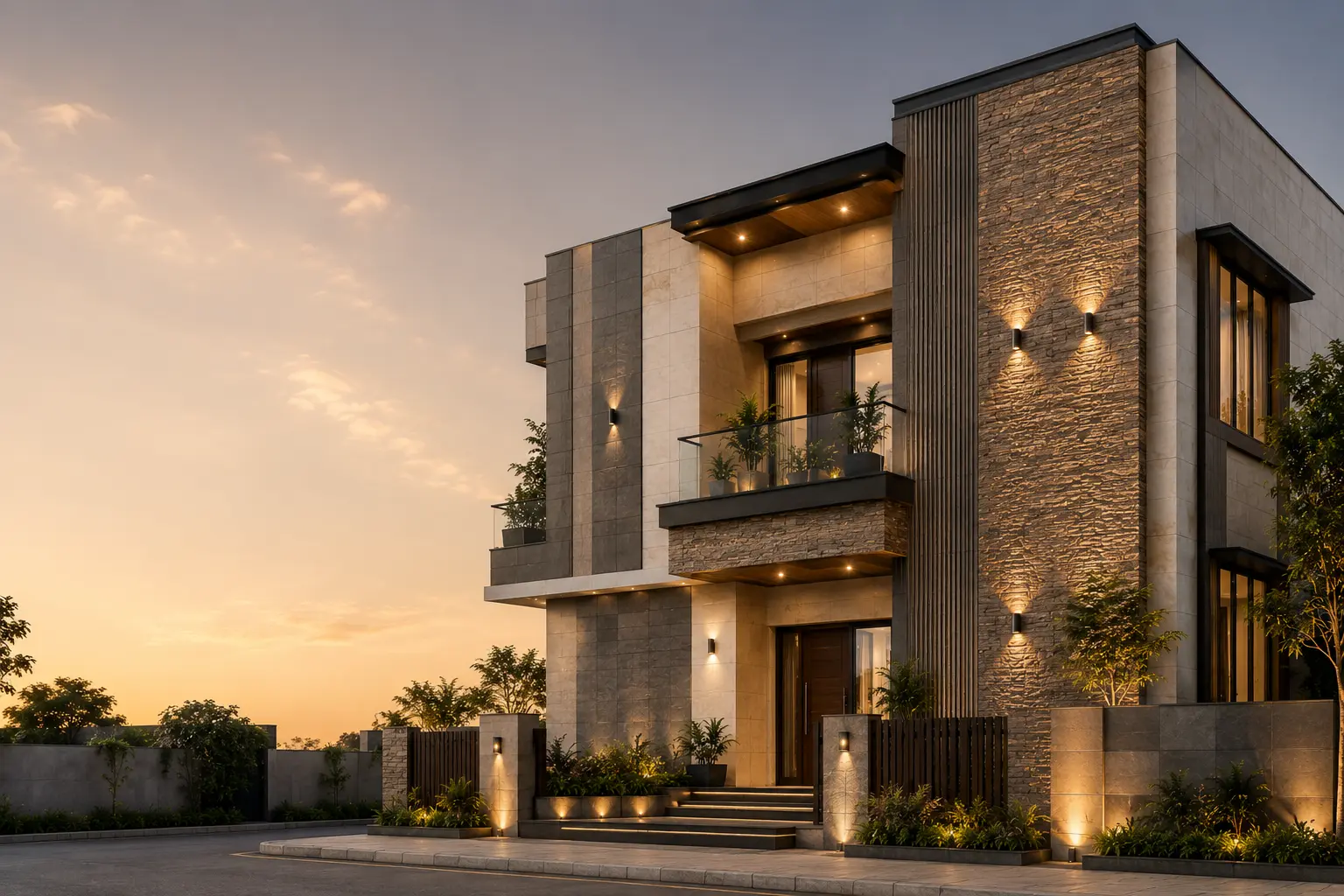
Elevation tiles are specifically applied to the exterior vertical surfaces of a building. That includes the front facade, side walls, compound walls, pillars, and any outdoor feature wall you want to highlight.
They are different from standard interior wall tiles in one critical way: they have to survive everything the outdoors throws at them. Rain, direct sunlight, humidity, dust, thermal expansion, and, in some parts of India, frost.
Home elevation tiles serve both a structural and decorative purpose. They protect the underlying wall from moisture and weather damage, while also defining the architectural character of your home.
What separates a good elevation tile from a bad one comes down to three factors: body type, finish, and water absorption rate. Understanding these three things will help you make a decision you will not regret.
Why the Right Tile Changes Everything About Your Home's First Impression
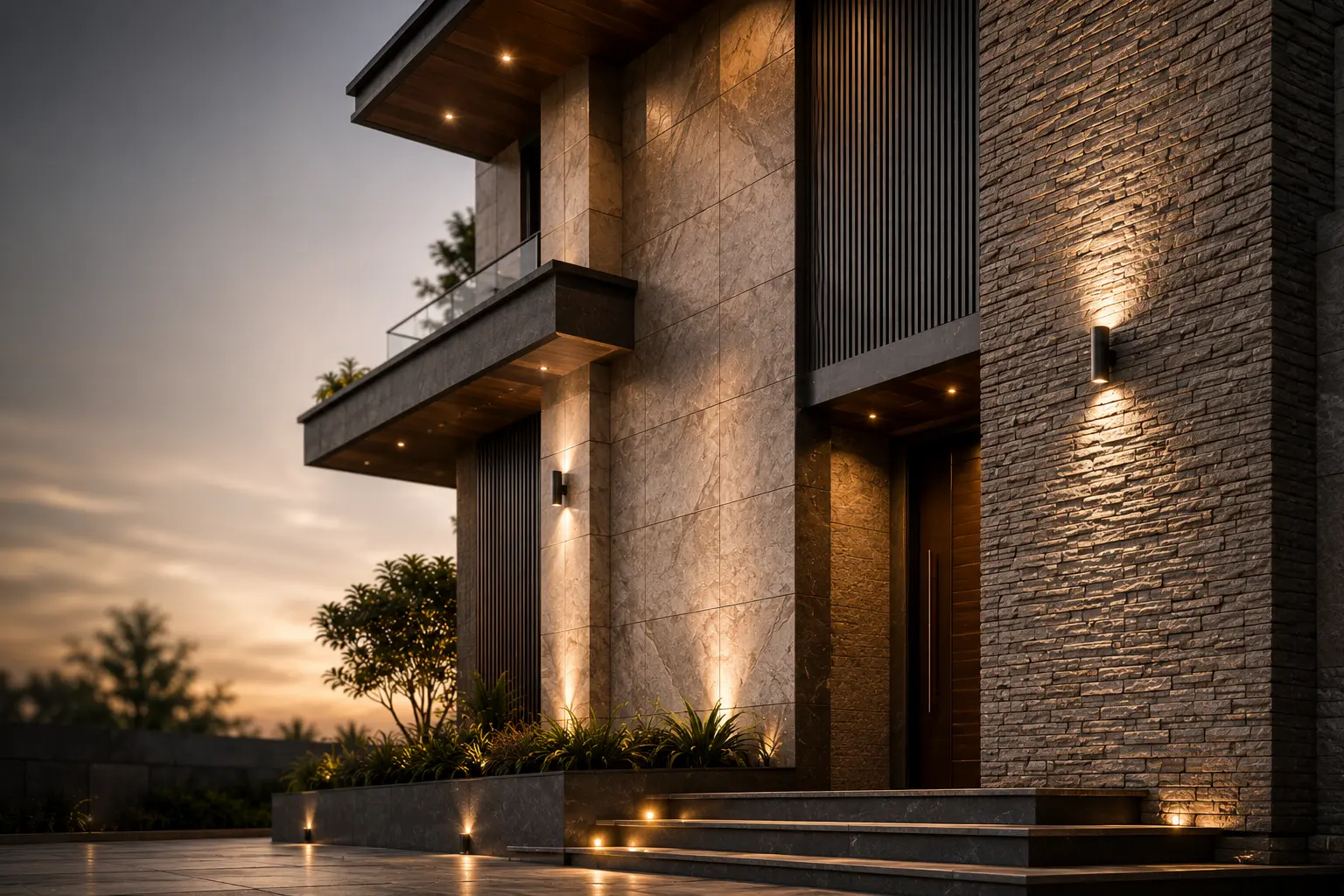
Think about the last time you drove through a well-planned residential area. The homes that catch your eye almost always have one thing in common: a deliberate, well-executed exterior.
Exterior elevation tiles are the single most impactful material choice you can make for your facade. Unlike paint, they do not fade in two seasons. Unlike exposed brick, they resist staining and moss. Unlike bare plaster, they give you design flexibility.
Beyond aesthetics, the right exterior tile protects your structural investment. A tile with low water absorption (0.05% in vitrified tiles) prevents moisture from seeping into your walls, which is the primary cause of seepage, plaster damage, and long-term structural wear in Indian homes.
There is also a real estate angle. Homes with well-finished, durable exteriors command a measurable premium in resale. The facade is the one thing every buyer sees before stepping inside.
Types of Tiles Best Suited for Elevation Area
This is where most online guides fall short. They show you pretty pictures without telling you which tile body types actually hold up outdoors.
Here is a straightforward breakdown.
GVT (Glazed Vitrified Tiles)
GVT tiles are the most versatile option for elevation tiles. They have a vitrified body (type: Vitrified), which means the tile is fired at extremely high temperatures to form a dense, low-porosity structure.
Water absorption: 0.05%. That number matters. It means moisture has almost no way in.
GVT tiles are suitable for both wall and floor applications and work well for exterior cladding in most Indian climates. They are available in sizes including 600x1200, 800x1200, 800x1600, and larger slab formats, giving architects and homeowners significant design freedom.
Full Body and Colour Body Vitrified Tiles
Both of these are vitrified tile categories with an important advantage for outdoor use: the colour runs through the entire body of the tile. This means even if the surface gets chipped at an edge or corner, the tile does not reveal a stark white clay body underneath.
Full-body tiles are ideal where edge detailing and grooves are part of the design. Colour Body tiles are preferred for high-end architectural projects where consistency of tone is critical.
What to Avoid for Exteriors
Ceramic tiles have water absorption rates of 12% to 16%. That level of porosity is completely unsuitable for exterior elevation applications. Over one monsoon season, moisture penetration can cause ceramic tiles to crack, effloresce, or simply fall off the wall.
PGVT (Polished Glazed Vitrified Tiles) are also not recommended for exterior use. They are best kept for bathroom walls and interior applications where high traffic and outdoor conditions are not a concern.
| Tile Type | Water Absorption | Suitable for Exterior? | Best Use |
| GVT | 0.05% | Yes | Wall cladding, elevation |
| Full Body | 0.05% | Yes | Facade, pillars, feature walls |
| Colour Body | 0.05% | Yes | Architectural projects |
| PGVT | 0.05% | No | Bathroom walls only |
| Ceramic | 12-16% | No | Indoor walls only |
Choosing the Right Size for Your Home Exterior
Size selection is more strategic than it looks. The wrong size on a facade can make a large home feel busy, or a compact home feel cramped.
600x1200 (24x48 inches)
This is the workhorse of front wall tile design. The large format creates clean horizontal lines, makes the facade look expansive, and reduces the number of visible grout joints. It works for both wall and floor applications, making it a go-to for architects who want a seamless exterior look from ground to parapet.
800x1600 (32x64 inches)
For homes with tall facades or double-height entrance features, this oversized format creates a dramatic impact. Available in GVT, Full Body, and Colour Body vitrified types. The minimal grout lines give a near-seamless appearance that reads as genuinely premium.
300x450 and 300x600
These smaller formats are used for wall cladding and accent panels only. They are never used for floor applications. Their strength lies in design flexibility: you can create patterns, frame windows, or create textured accent zones on an otherwise large facade.
1200x1800 and 1200x2400 (Large Slabs)
These large slab formats (known as 6x4 and 8x4, respectively) are used for high-end, minimal-joint facade designs. They suit contemporary and modern architectural styles where uninterrupted surface planes are part of the design language.
| Size | Best Use on Exterior | Notes |
| 600x1200 | Main facade, large walls | Most versatile exterior size |
| 800x1600 | Double-height feature walls | Premium, low grout joints |
| 300x450 | Accent panels, window surrounds | Wall only; High-Depth Punch available |
| 300x600 | Textured feature zones | Wall only; excellent for 3D effects |
| 1200x1800 | Modern slab facades | Large format, architectural look |
| 1200x2400 | Contemporary minimal facades | Seamless high-end appearance |
Finishes That Actually Work Outdoors
The finish of a tile determines how it looks and, critically, how safe and durable it is in outdoor conditions. This is the section most blogs skip entirely, and it is where most homeowners make expensive mistakes.
GHR (Glaze High Resistance)
If you are looking at exterior wall tiles design for any area at ground level where foot traffic occurs, such as porch walls, compound walls, or plinth-level cladding, the GHR finish is among the best choices. It has a stone-like textured surface that performs well in both high-traffic indoor and outdoor settings.
Matte and Matte Carving
Matte finish tiles offer high scratch resistance and anti-skid properties. For exterior cladding at accessible heights, this is a safe and low-maintenance choice. Matte Carving adds a layer of visual sophistication, with glossy veins running through a matte base, creating a surface you can see and feel.
Texture Finish
A texture finish with a depth of 0.3 to 1mm mimics natural materials like slate, fabric, or stone. It works well on facades where you want character without the bold shadow-play of High Depth Punch tiles. It is subtle, practical, and ages well.
Stucco Finish
Stucco finish tiles replicate the look of traditional cement plaster. The surface can be soft matte or semi-glossy, giving the facade an organic, slightly raw appearance that works particularly well with contemporary, industrial, and minimalist architectural styles.
What makes stucco finish tiles practical for exterior use is the combination of visual texture and durability. Unlike actual cement plaster, which cracks over time and requires repainting, stucco finish vitrified tiles hold their appearance through weather cycling. They are an excellent choice for compound walls, boundary cladding, and accent zones where a tactile, handcrafted appearance is the design goal.
Finishes to Avoid on Exteriors
Glossy, High Glossy, Satin Matte, Super High Glossy, and Semi Polished finishes are all contraindicated for outdoor flooring and wet areas. They are slippery and have low scratch resistance. While some of these can be used on upper-wall cladding where no foot contact occurs, they should never appear at ground-floor level or on any exterior surface that people walk near.
The World of 3D and Textured Elevation Tiles
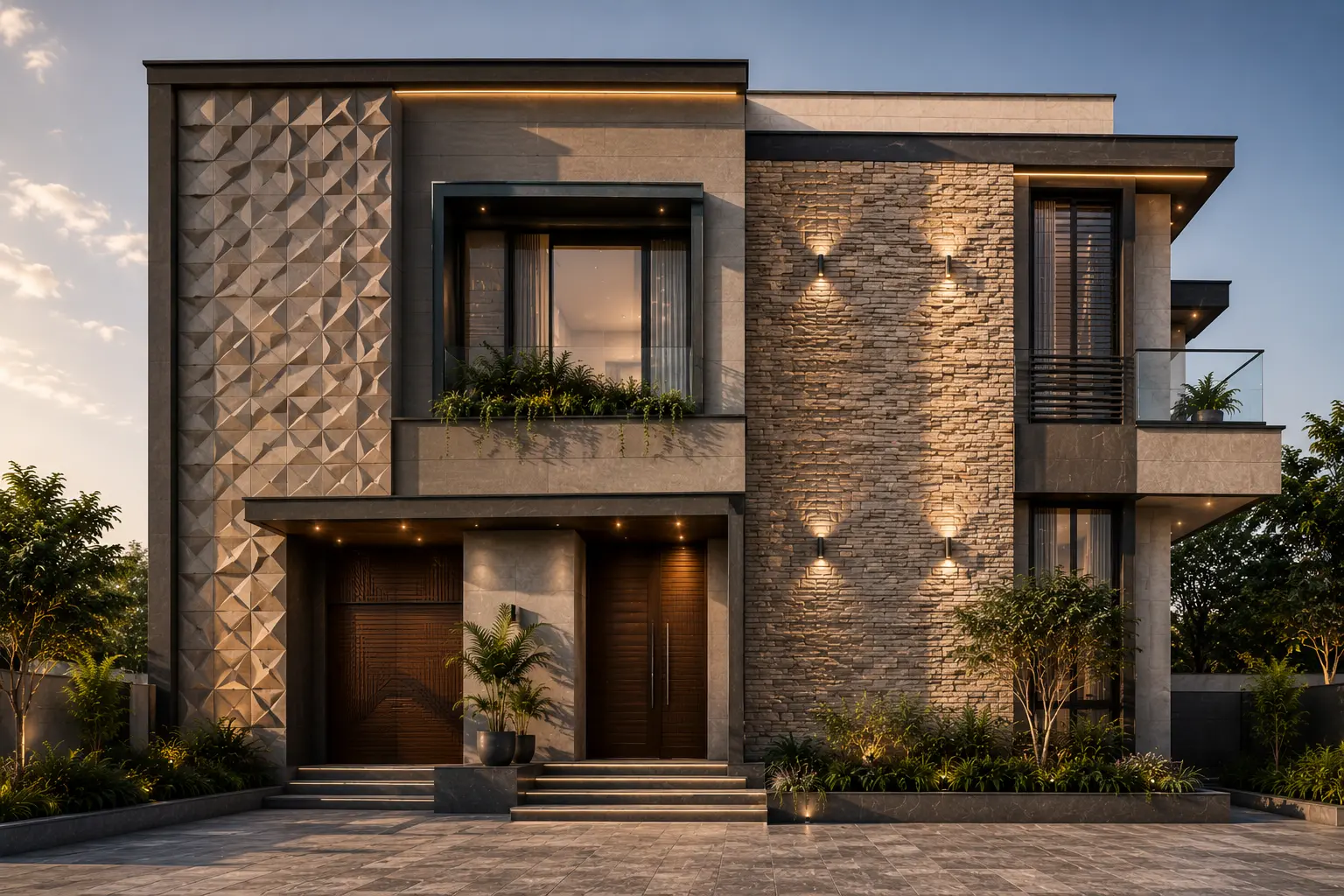
One of the most searched but least explained categories is 3d elevation tiles. The term refers to tiles with physical depth that create shadow lines, texture, and visual relief on a flat facade.
There are four punch (design depth) categories that determine how three-dimensional a tile looks.
- Plain: Flat surface with a printed design. No physical depth.
- Texture: Subtle 0.3 to 1mm depth. Creates a tactile surface that mimics stone, slate, or fabric without dramatic protrusion.
- Embossed: Repeated raised patterns with physical peaks and recesses. You can see and feel the pattern. Common for brick or geometric motifs.
- High Depth (2.5 to 5mm): This is the true 3D tiles option. Available only in 300x450 and 300x600 sizes, these tiles create dramatic shadow lines and textured facade effects. They are exclusively for wall cladding and elevation, never for flooring.
- Abstract: Random non-repeating shapes (flowers, geometric forms, organic patterns) with physical depth. Every section of the wall looks different, creating a truly bespoke facade.
High-depth elevation tiles are particularly effective for accent zones around entrances, pillar cladding, and feature walls flanking the main door. They catch raking light at different times of day, making the facade look different at sunrise, noon, and dusk.
Colour Strategy for Exteriors
Colour choice for elevation wall tiles is about more than personal preference. In Indian climates, it also has practical implications.
Light Tones: Whites, Creams, and Light Greys
Light-coloured tiles reflect more sunlight and absorb less heat. For homes in hot, dry climates like Rajasthan, Gujarat, or coastal Maharashtra, lighter tones keep the exterior wall cooler, which translates to lower indoor temperatures.
From a design perspective, whites and light greys are forgiving. They make facades look cleaner over time, and staining from rain splashes is less visible on textured matte surfaces.
Dark Tones: Charcoals, Deep Greys, and Near-Blacks
Dark tones are having a moment in contemporary architecture. A deep charcoal facade with minimal grout lines reads as sophisticated and urban. However, dark tiles absorb significantly more heat. In tropical or semi-arid regions, this can become uncomfortable.
If you love dark tones, use them strategically. A dark feature panel flanking the entrance, combined with lighter tones on the main facade, gives you drama without the thermal penalty.
Earthy and Natural Tones
Beige, terracotta, warm brown, and stone-mimicking palettes remain consistently popular for Indian homes. They blend with the landscape, age gracefully, and work equally well in traditional and contemporary architectural styles.
How to Choose Elevation Tiles for Exterior Walls: A Step-by-Step Framework
Whether you are building fresh or renovating, this framework helps you make a defensible, design-informed decision.
| Step | What to Decide | Key Options / Guidance | Pro Tip |
| 1 | Define architectural style | Establish the design language so finishes and patterns stay coherent (Contemporary, Traditional, Transitional, Industrial) | Style choice dictates everything downstream; decide this first |
| 2 | Identify surfaces to tile | Different surfaces may need different sizes or finishes (Main facade, Compound wall, Pillar cladding) | Map each surface separately before shortlisting tiles |
| 3 | Select body type | Choose a body type built for exterior durability (GVT - Glazed Vitrified, Full Body, Colour Body, Water absorption ≤ 0.05%) | Low water absorption is non-negotiable for all exterior applications |
| 4 | Choose the finish by location | Match finish to accessibility and safety requirements (Ground level: GHR, Matte, Texture / Upper wall: Broader options available) | Anti-slip finishes (GHR, Matte) are critical where foot traffic is possible |
| 5 | Select tile size | Scale tile size to wall dimensions for visual harmony (Large walls: 600×1200 mm, 800×1600 mm / Accent panels: 300×450 mm, 300×600 mm) | Larger tiles reduce grout lines and give a premium, seamless look |
| 6 | Consider punch/texture | Add tactile depth and shadow play to the facade (High Depth, Embossed, Flat - standard) | High Depth and Embossed punches create character that no flat tile can match |
| 7 | Shortlist colours with the architect | Verify colours in real-world lighting conditions before finalising (Test samples outdoors, Check at dusk, Multiple times of day) | Facades lit by warm evening light can look very different from morning light. |
Best Elevation Tiles Designs for Modern Indian Homes
Indian residential architecture has settled on a few dominant exterior design languages. Here are the most requested and well-executed approaches.
The Monochrome Minimal Look
A single large-format tile (600x1200 or 800x1600) in a light grey matte or posh finish, applied floor-to-parapet with barely visible grout lines. No decorative borders, no contrasting accents. The quality of the tile and the precision of installation do all the talking.
Best for: Contemporary homes, architects who prefer restrained elegance.
The Contrast Panel Approach
A neutral base (cream or light grey GVT) across the main facade, with a bold dark accent panel at the entrance or a vertical strip on one side. Front elevation tiles designed like this creates visual hierarchy without overwhelming the facade.
Best for: Semi-contemporary homes, owners who want personality without full commitment to a bold scheme.
The Textured Feature Wall
Using High Depth or Abstract punch tiles on one prominent section of the facade, typically around the main entrance or the primary visible wall from the street. The rest of the facade stays in a complementary neutral matte tile.
This is one of the most effective ways to use outdoor elevation tiles to create a genuinely distinctive exterior without heavy investment across the entire facade.
The Stone-Mimicking Facade
GHR finish or Texture finish tiles in earthy, stone-like tones create a look that references natural stone at a fraction of the cost and with superior durability. This works for both traditional and contemporary styles and ages exceptionally well in Indian conditions.
Common Mistakes Homeowners Make with Exterior Cladding Tiles
Even well-intentioned buyers make errors that show up two monsoons later.
Using Indoor Tiles on the Exterior
Ceramic tiles are the most common offender. With 12% to 16% water absorption, they are completely wrong for outdoor use. After one rainy season, you will see cracking, efflorescence (white salt deposits), and eventual tile fall-off.
PGVT tiles are another mismatch. They are not recommended for high-traffic or wet areas, and exterior environments expose them to both.
Choosing a Glossy Finish for Elevation
A glossy or satin matte finish might look stunning in the showroom. On an exterior wall at ground level, it becomes a slipping hazard and shows every fingerprint, water streak, and dust trail. Reserve glossy finishes for upper wall cladding where no contact occurs.
Ignoring Punch Type for 3D Tile Applications
High-depth punch tiles are only available in 300x450 and 300x600 sizes. Homeowners who want 3D effects but select 600x1200 tiles will be disappointed. Understanding the link between size and design depth options saves significant time and money during the specification stage.
Skipping Grout Joint Planning
Grout joint width affects the visual weight of the tile pattern. Large-format tiles with micro-joint installations look clean and seamless. Smaller tiles with wide grout joints look patchy and dated quickly. Discuss grout colour with your tile supplier before installation begins.
Over-Specifying on Accent Panels
Covering the entire facade in a single decorative or high-depth tile often results in a cluttered, busy appearance. Use statement tiles as accents. Restraint in tile design almost always produces a more sophisticated result.
Expert Tips for Getting the Best from Your Elevation Tiles
Always request a physical sample of any tile in your shortlist and view it at the actual installation site, not just in a showroom with controlled lighting.
For large facades, calculate your tile quantity with a 10% to 15% buffer for cuts, breakage, and future repairs. Dye lots change, and matching tiles from a later batch is genuinely difficult.
If your facade has both vertical surfaces (walls) and horizontal surfaces (porch floors), choose tiles whose finish is appropriate for each context. Never use a wall-specification tile on a floor.
For high-rise buildings or homes with significant wind exposure, consult your structural engineer about adhesive type and expansion joint planning before installation begins.
When specifying 1200x1800 or 1200x2400 sizes, understand these are large slab formats. They require skilled installation teams and specific adhesive systems. Saving on labour costs at this stage is a false economy.
Ready to Plan Your Exterior?
The facade of your home is not just a surface. It is a long-term investment in how your property presents itself to the world and how well it withstands the weather year after year.
The right elevation tiles bring together body strength, finish suitability, size logic, and design intent into a coherent exterior that works as hard as it looks.
If you are in the planning stage, take your time with the selection. Visit a tile showroom with your architect, request physical samples, and test them in natural light at the actual site. A few extra hours at this stage can make a difference that lasts decades.
Stop guessing and start comparing. TilesFinders lets you filter elevation tiles by size, finish, body type, and design look, so you can shortlist exactly what suits your home exterior before stepping into a single showroom.
-f1da82bc-3e84-43ae-ba89-25798aa2a206.webp)
FAQs
GVT (Glazed Vitrified Tiles) and Full Body Vitrified tiles are the best choices for house front elevations. Both have a water absorption rate of 0.05%, which makes them highly resistant to moisture damage. They are available in large formats like 600x1200 and 800x1600, which reduce visible grout lines and create a cleaner facade appearance.
Start with body type: always choose vitrified tiles (GVT, Full Body, or Colour Body) for exterior walls. Then select a finish appropriate for the surface's exposure. GHR, Matte, and Texture finishes work well outdoors. Avoid Glossy, Satin Matte, and polished finishes at accessible heights. Finally, choose a size that suits your wall dimensions and design intent.
Light to medium tones (whites, light greys, warm beiges, and natural stone tones) are safest for most Indian climates because they reflect heat rather than absorb it. If you want darker tones, use them strategically as accent panels rather than across the entire facade.
Vitrified tiles are significantly better for exterior elevation. Ceramic tiles have a water absorption of 12% to 16%, which makes them unsuitable for outdoors. One rainy season is enough to cause cracking, efflorescence, or tile detachment. Vitrified tiles (GVT, Full Body, Colour Body) at 0.05% water absorption are purpose-built for the durability demands of exterior use.
Vitrified elevation tiles with 0.05% water absorption are effectively waterproof for all practical purposes. They are also resistant to UV fading, thermal cycling, and the mechanical stresses caused by seasonal temperature changes. The key is selecting the right tile body type. Ceramic tiles are not weather-resistant and should not be used outdoors.
For modern Indian homes, the most popular approaches include: large-format GVT tiles in matte grey for a minimal look, high-depth punch tiles in 300x600 as entrance accent panels, and stone-mimicking GHR finish tiles for a natural texture. Combining two complementary tile designs (one neutral base, one textured accent) gives a refined contemporary result.
For outside walls, GVT or Full Body vitrified tiles in Matte, GHR, or Texture finish are the best all-round performers. They combine weather resistance, anti-skid safety where needed, and broad design availability. For purely decorative upper-wall cladding with no foot contact, the options expand to include more design-forward finishes.

See our tile guides first
Set TilesFinders as a preferred source and our buying guides surface ahead of the rest for you.
Add as preferred sourceTakes one tap. Nothing to install.
What Readers Say
I was about to redo my parking area with the wrong tile size until I read this. The layout comparisons saved me from a costly mistake.
We reference TilesFinders guides while briefing clients on material selection. The size and pattern breakdowns are accurate and easy to explain visually.
On site, I get asked about grout spacing all the time. This article gave me a solid reference I now share with my team before every job.
Finally a guide that doesn't just push generic advice. The oil stain removal steps actually worked on our clubhouse driveway tiles.
I run a small construction firm and now send this link to clients directly when they ask about entrance tile sizing. Saves me an hour of explaining.
Good practical detail, though I wish there were more examples for compact apartment entrances specifically, not just villas.
My mother-in-law wanted marble, I wanted vitrified. This blog gave us the neutral comparison we needed to actually decide together.
Detailed without being overwhelming. I appreciated that it covered both cost and maintenance, not just the aesthetics.
Used the algae and hard water removal tips on our terrace tiles after the monsoon. Worked better than what our regular cleaner was doing.
As someone who sources tiles for multiple builder projects, I find these comparisons genuinely useful for vendor conversations, not just consumer content.
Recommended this to a client who kept second-guessing the entrance design. The small vs large layout section settled the debate instantly.
Straightforward and honest, no unnecessary jargon. Would like to see a similar breakdown for outdoor pool-deck tiles next.
We've bookmarked several TilesFinders guides for our design handbook. Reliable source when clients want data, not just opinions.
Two paths, one marketplace.
Get free quotes from verified suppliers.
Share your room, budget, and style. Suppliers in Morbi respond within hours.
Get Free QuotesList your business, reach real buyers.
Put your showroom in front of homeowners searching for tiles right now.
List Your Business