Front Elevation Tiles: Trending Designs for Indian Homes
June 02, 2026 390
Explore trending front elevation tiles for Indian homes, including stone, wood, brick, and 3D designs. Compare sizes, finishes, prices, and expert tips for durable exteriors.
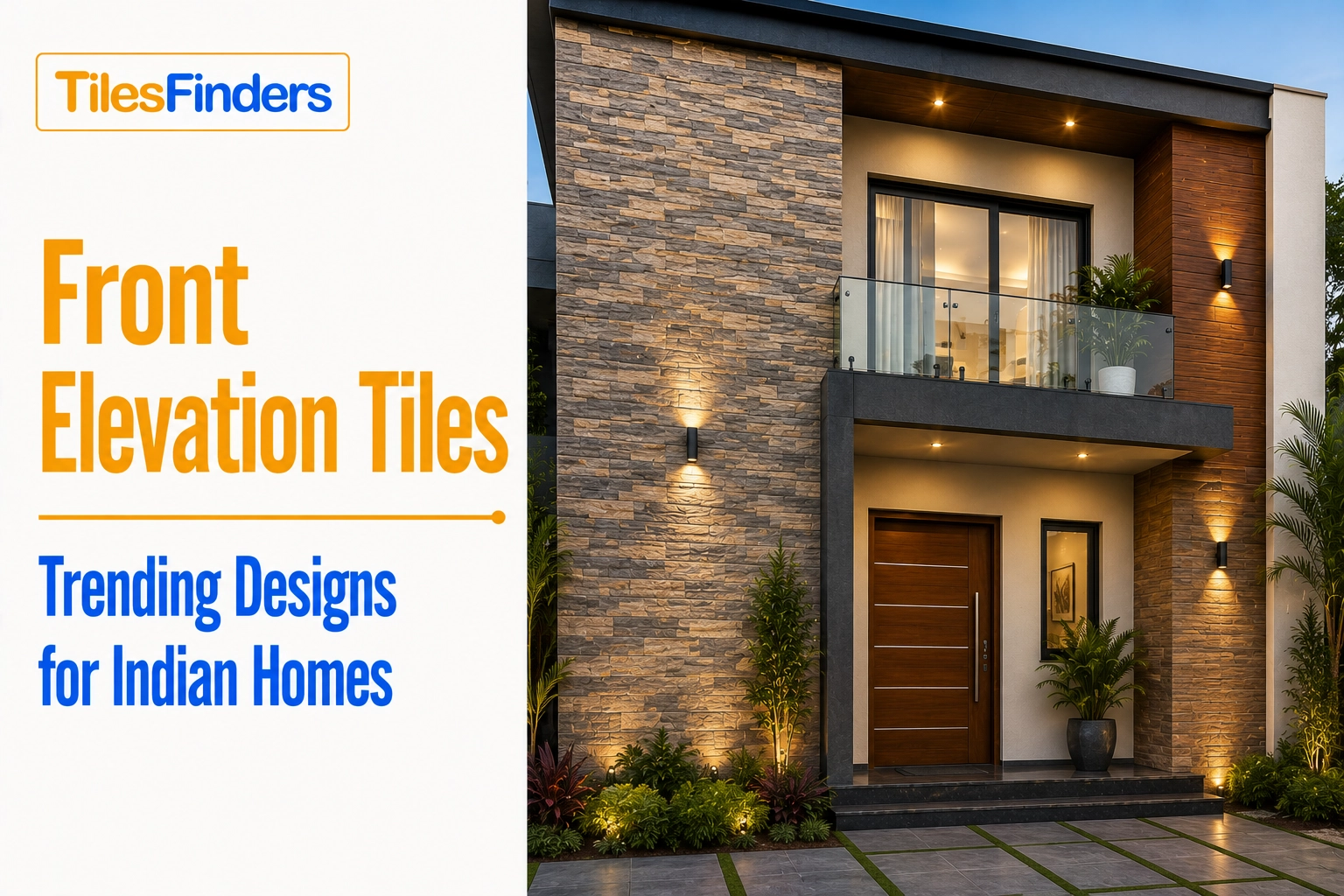
The front of your home tells a story before anyone steps inside. Neighbours, guests, and even prospective buyers form an opinion the moment they see your exterior, and that opinion sticks. Front elevation tiles now carry most of that visual weight in Indian homes.
Choosing poorly can mean cracked surfaces after two monsoons, colour bleaching under harsh summer sun, or a look that feels dated within five years. The right tile choice, however, keeps your facade looking sharp for 15 to 25 years with almost no upkeep.
This guide covers the tile types, trending designs, correct sizes, finish options, price ranges, and buying tips that matter specifically for Indian homes and Indian weather.
Why the Front Elevation Matters More Than Most Homeowners Realise
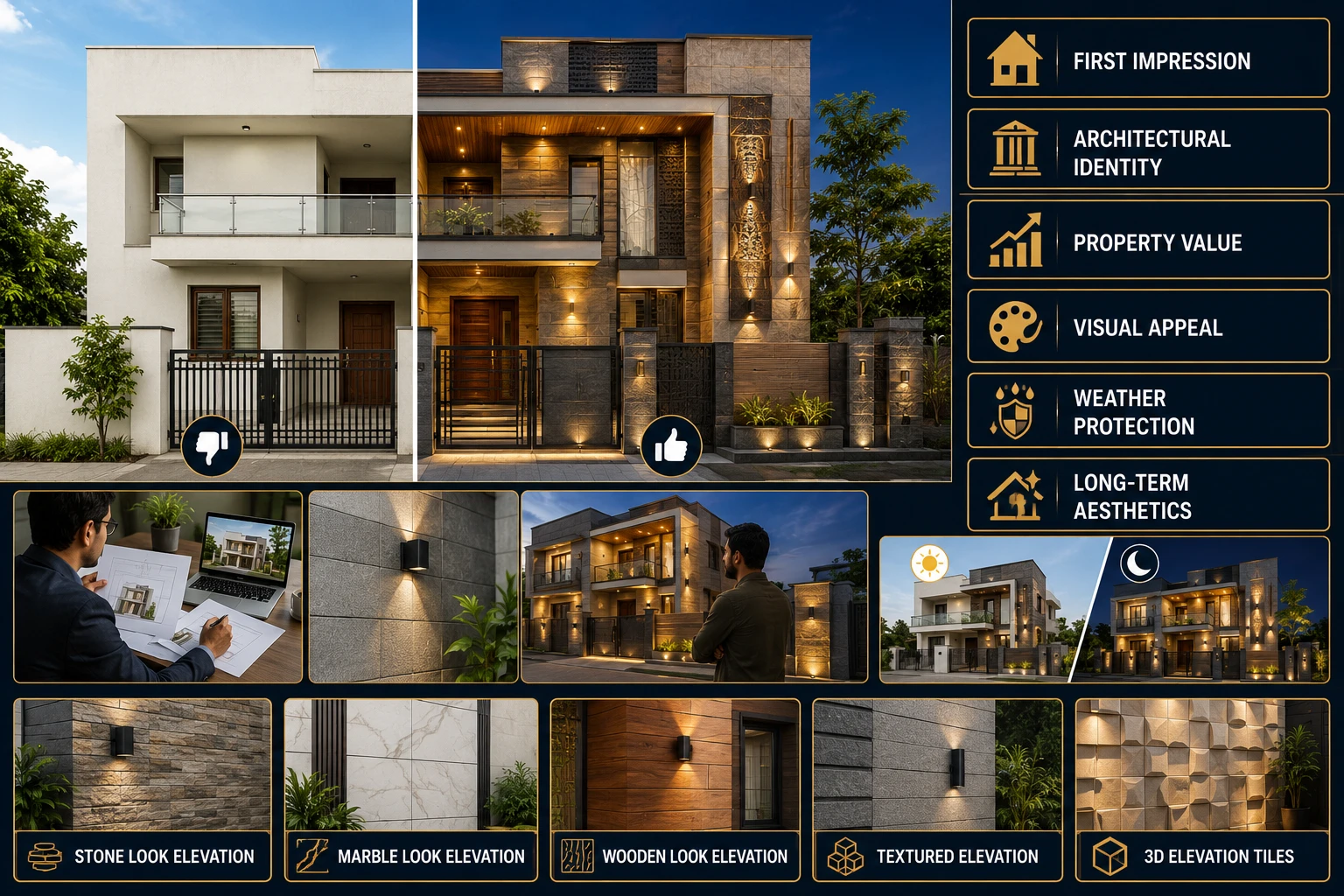
First Impressions and Resale Value
Indian real estate buyers walk by or drive past a property before ever speaking to the seller. The exterior forms their first data point. A well-executed facade tile design communicates that the home is well-built and maintained, which directly reflects in the negotiation room when you decide to sell.
In cities like Pune, Bengaluru, and Hyderabad, where society apartments and independent houses sit side by side, the front elevation helps your property stand out. Architects and interior designers in these markets report that homes with well-finished exterior wall cladding consistently attract stronger initial interest.
Weather Exposure and Long-Term Performance
Indian climates are not gentle. Coastal cities like Mumbai, Kochi, and Chennai deal with relentless humidity and salt-laden air. Rajasthan and parts of Gujarat see extreme UV exposure. Delhi and Lucknow face cold winters alongside summer heat. Your elevation tiles need to handle all of this without fading, cracking, or absorbing moisture.
Paint peels. Plaster cracks over time. Tiles, when chosen correctly for exterior use, hold their surface colour and structural integrity through decades of monsoon cycles and temperature swings. This is why the switch from painted surfaces to tile cladding has grown sharply in Indian construction since 2020.
Types of Tiles Used for Front Elevation in India
Not every tile category works for exterior use. Water absorption, UV resistance, and surface hardness determine whether a tile holds up outdoors. Here are the categories that actually belong on a home exterior.
Ceramic Elevation Wall Tiles
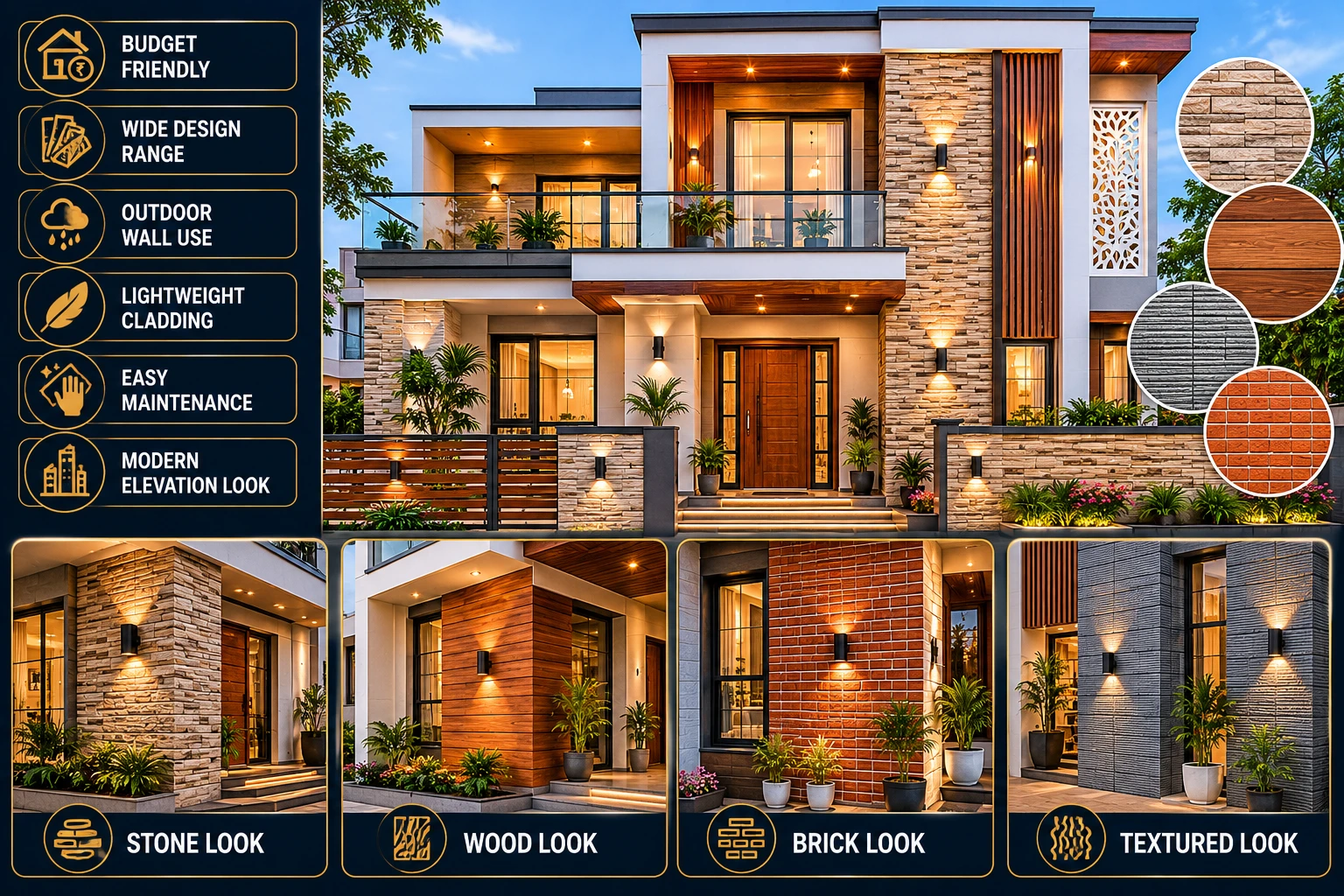
Ceramic elevation tiles are wall-only products, available in 12x18-inch (300x450 mm) and 12x24-inch (300x600 mm) sizes. These two sizes are strictly for wall and elevation cladding. Ceramic has a water absorption of 12 to 16 per cent, which makes it unsuitable for flooring but perfectly acceptable for vertical exterior surfaces that drain freely.
Ceramic elevation tiles are lightweight, easy to cut during installation, and come in a wide range of surface textures, including stone look, brick finish, and textured concrete. Approximate price range: Rs. 30 to Rs. 80 per sq. ft., making them the most accessible option for budget-conscious builders.
GVT (Glazed Vitrified) Elevation Tiles
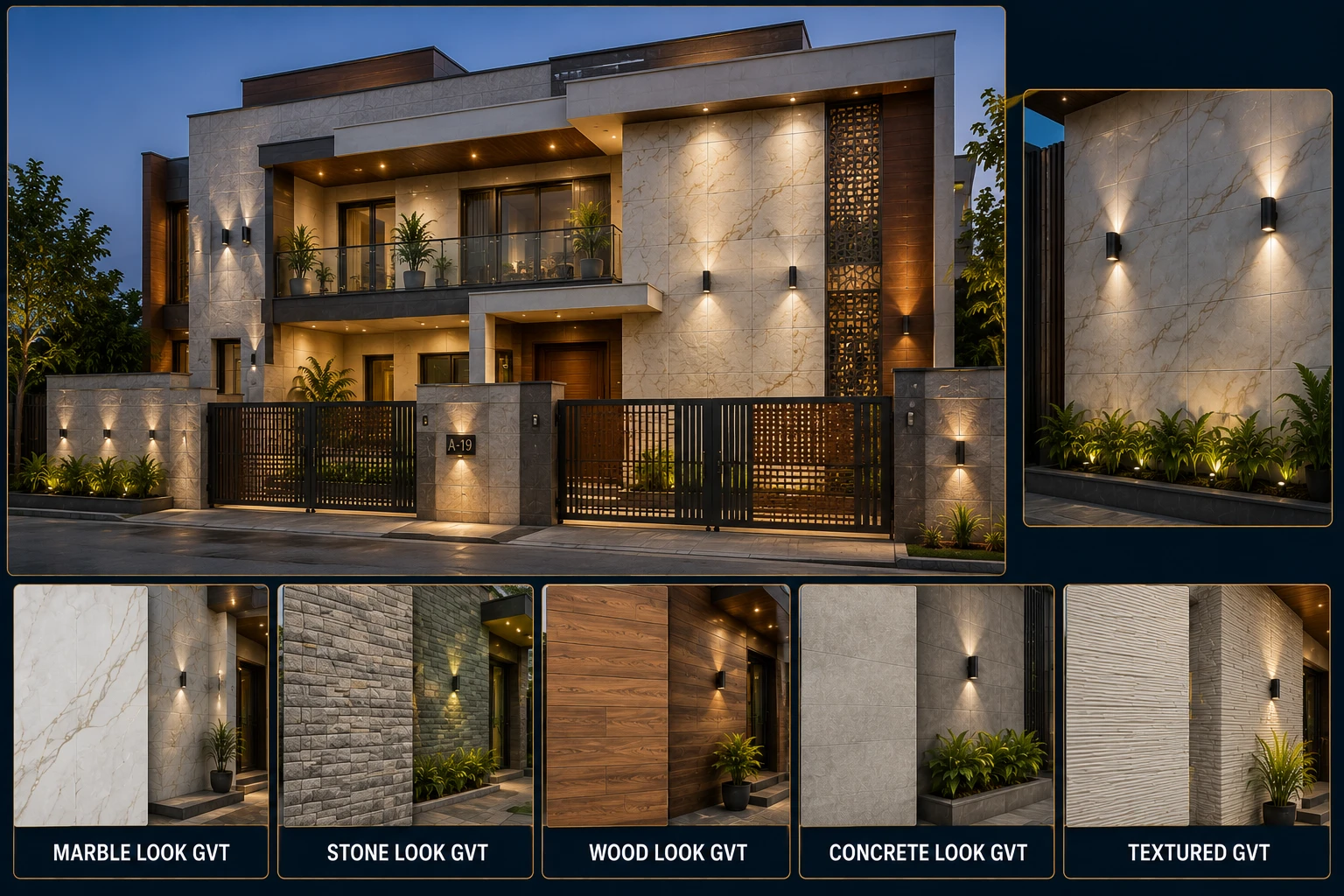
GVT tiles have a water absorption rate of just 0.05 per cent, which makes them excellent for outdoor wall cladding in high-humidity cities. They carry high-depth punch designs in 300x450 mm and 300x600 mm formats, giving a striking 3D stone or brick relief that catches light and shadow beautifully on a home facade.
GVT also comes in larger wall-and-floor formats like 2x4 (600x1200 mm), which some architects use for a continuous, hotel-lobby feel on villa exteriors. Price range for GVT elevation tiles: approximately Rs. 60 to Rs. 150 per sq. ft.
Full Body Vitrified Tiles
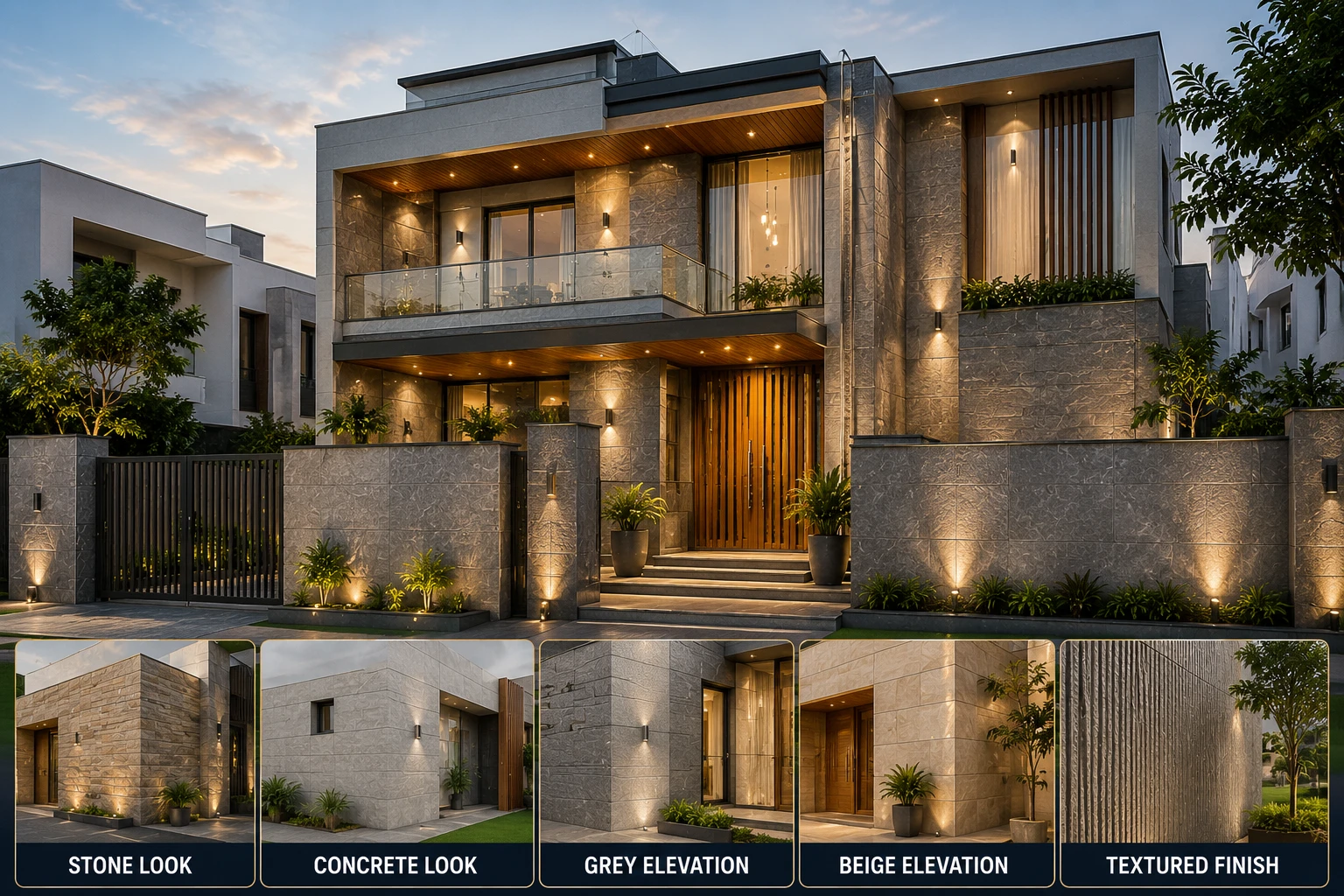
Full-body vitrified tiles carry colour through the entire tile body, which means chips or edge wear do not expose a different-coloured base. For high-traffic entry areas, porch corners, and compound boundary walls where abrasion is likely, Full Body tiles are a sound choice. Available in 2x2 (600x600 mm) and 2x4 (600x1200 mm) sizes for elevation use, priced from Rs. 90 to Rs. 200 per sq. ft.
High Depth Elevation Tiles (3D Wall Cladding)
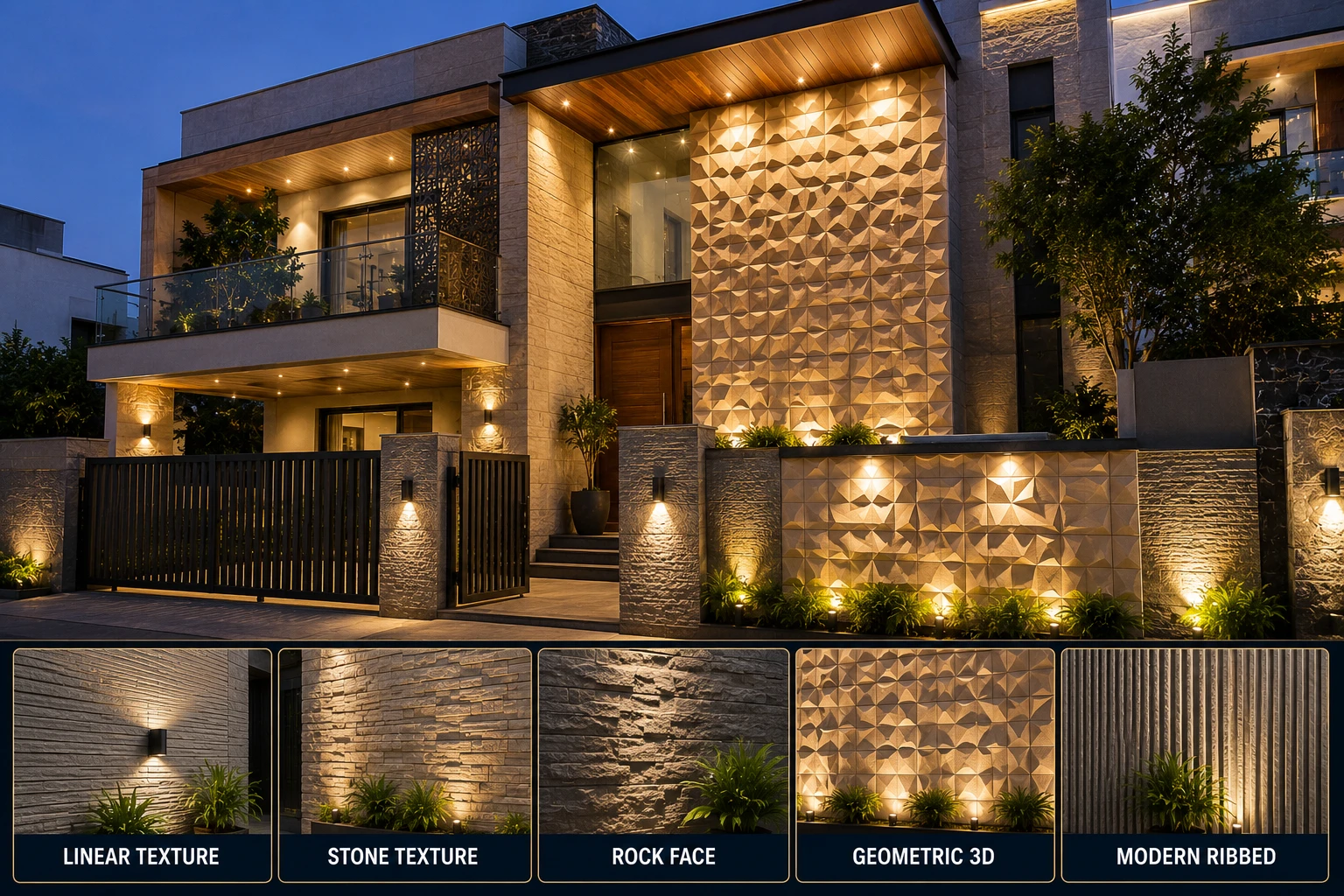
High-depth tiles have a surface relief depth of 2.5 to 5 mm that creates dramatic stone or brick textures you can actually feel. These are wall cladding and elevation-only products, available strictly in 300x450 mm and 300x600 mm sizes. They should never be used on any floor surface.
The shadow play that High Depth tiles create on a home exterior changes throughout the day as sunlight angles shift. This is why they remain one of the most requested choices in 3D tiles for front elevation projects across India.
Trending Front Elevation Tile Designs for Indian Homes in 2026
Stone Finish Look
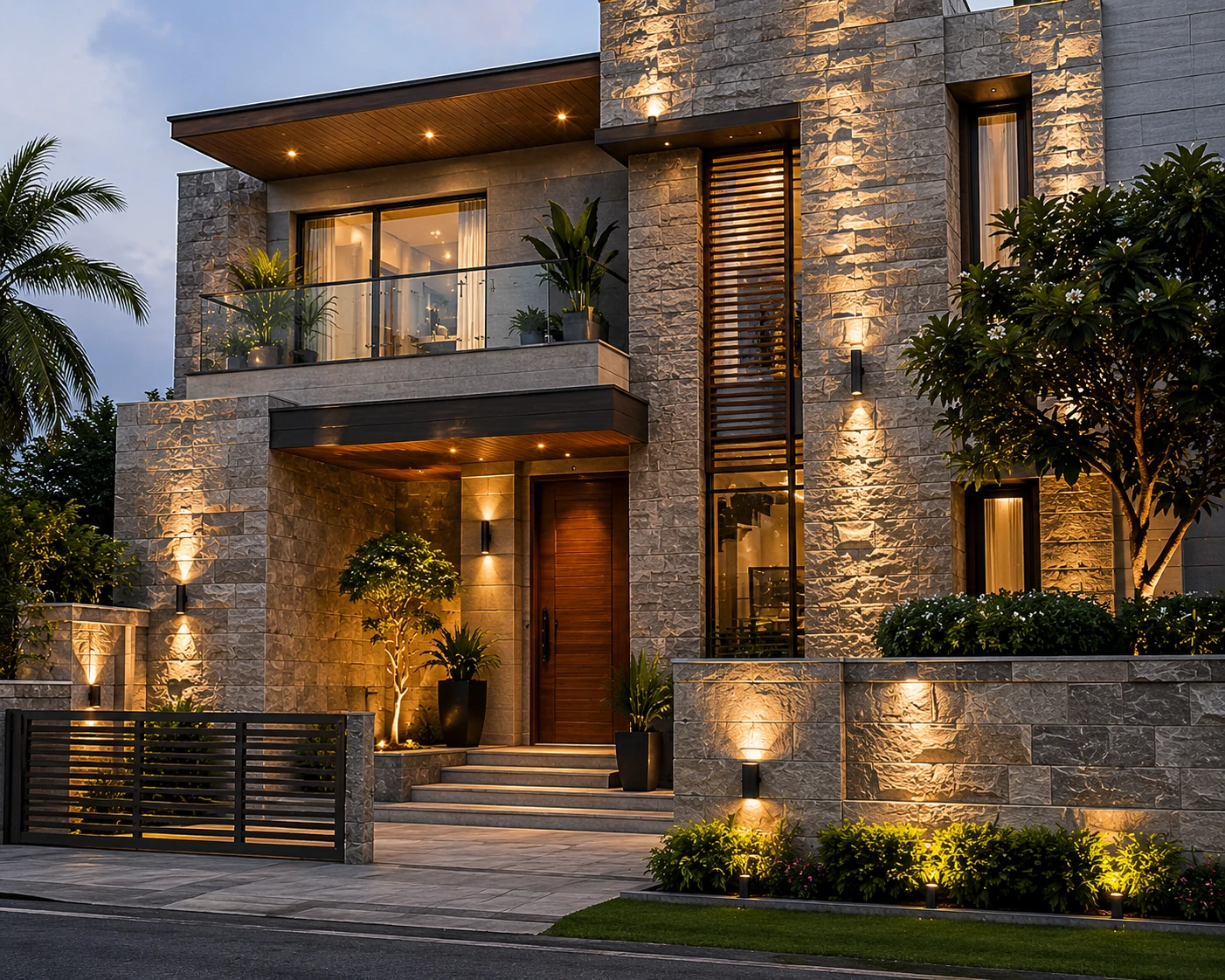
Stone look elevation tiles give a home the feel of natural slate, sandstone, or granite without the weight and maintenance that comes with real stone. These tiles replicate the rough, earthy texture of Rajasthan stone or Himalayan slate at a fraction of the cost.
The appeal is strongest on independent bungalows and villas in cities like Jaipur, Indore, and Nashik, where architecture tends to reference regional materials. Grey and beige tones are the most popular choices in this category. Stone finish tiles in the 300x450 mm format work well for accent panels around the main gate and entry porch.
Wood Finish Elevation Tiles
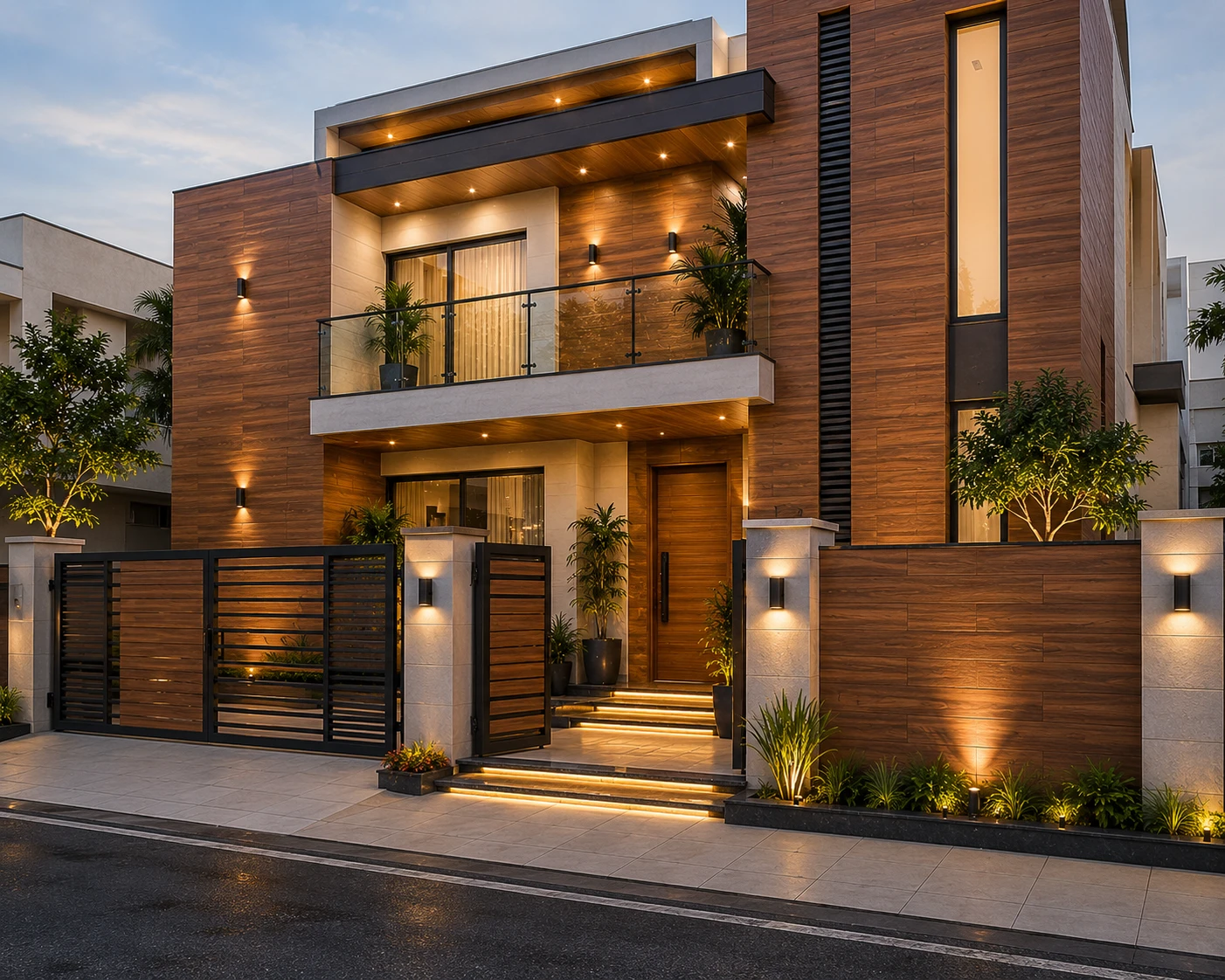
Wood-look tiles for home front walls have grown significantly in demand over the past two years, particularly in Kerala, Goa, and coastal Karnataka, where real wood verandah detailing has always been part of the local aesthetic. Tile-based wood finish handles humidity, termites, and UV exposure far better than actual timber.
The 200x1200 mm (8x48 inch) plank tile format creates convincing vertical wood slat panels on a home exterior. Pairing warm oak tones with white or off-white plaster areas gives a contemporary look that reads modern without feeling cold.
Concrete Texture Tiles
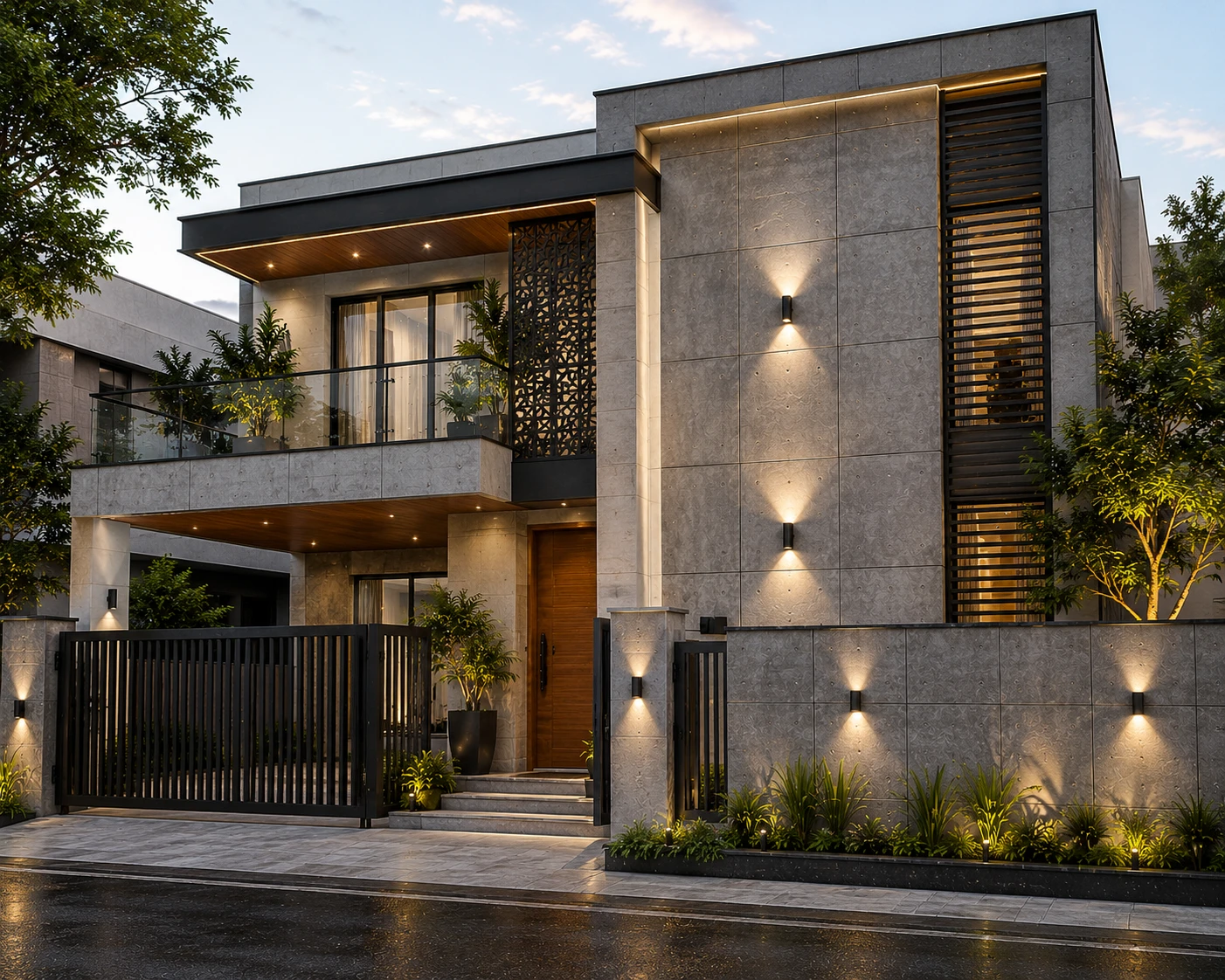
Concrete finish tiles deliver the raw, industrial look that architects and designers have favoured in urban residential projects across Mumbai, Bengaluru, and Gurugram. The appeal is a clean, minimal facade that ages well and does not show surface dust as clearly as glossy finishes.
These tiles come in matte finish, which is correct for exterior use since matte surfaces resist water spots and do not create glare. In 300x600 mm ceramic format, concrete texture tiles work cleanly on the full facade or as a contrasting panel between windows.
Brick Finish Elevation Tiles
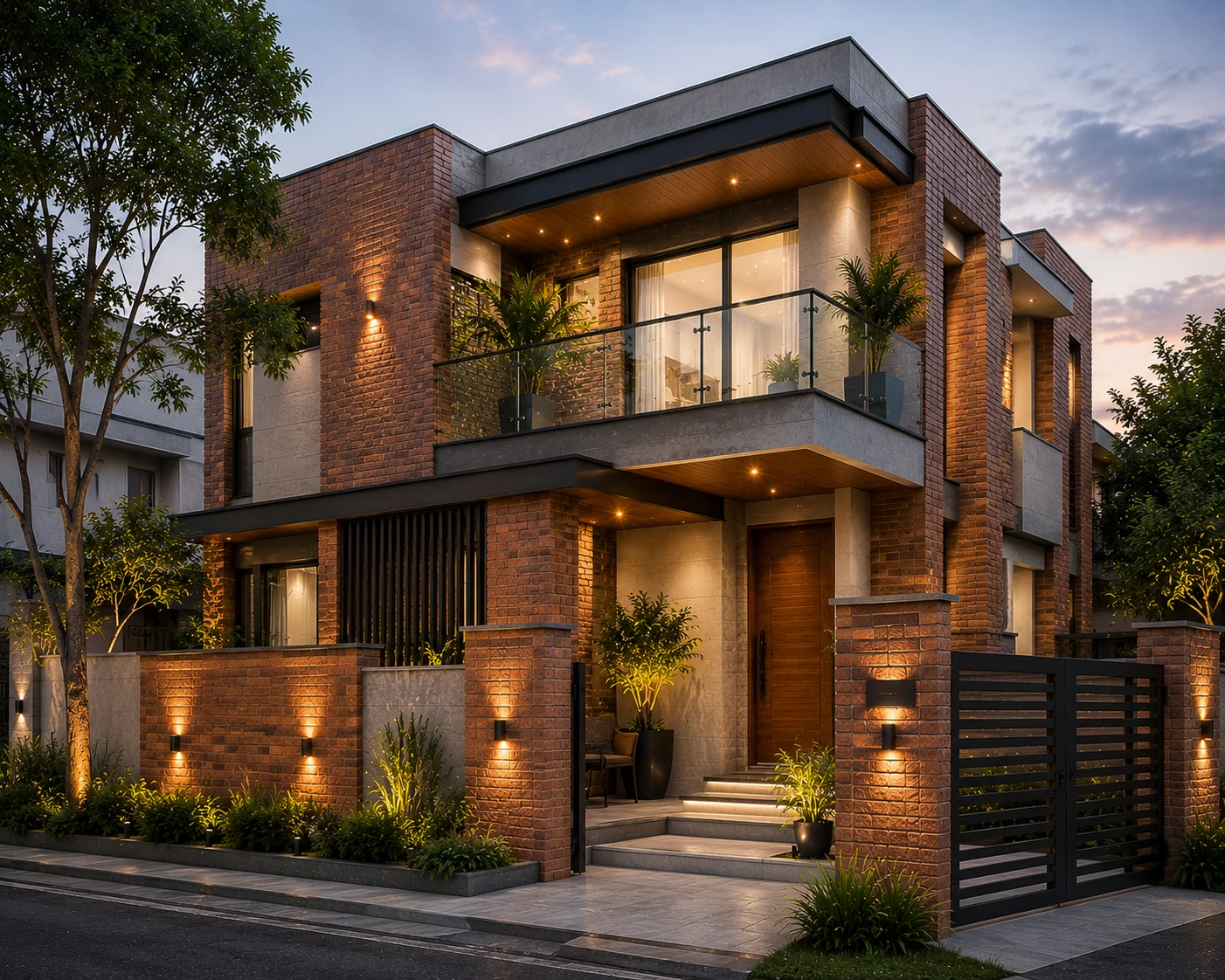
Brick look exterior tiles bring warmth and character to homes that would otherwise read as plain concrete boxes. The IIM Ahmedabad campus made exposed brick architecture famous in India, and brick-finish tile cladding brings a version of that quality to everyday residential construction.
These tiles are popular in heritage cities like Lucknow, Varanasi, and old-city Hyderabad, but also in newer urban townships where developers want to add character. Terracotta reds and warm sandy buff tones are the standard colour choices, available in High Depth punch format for maximum texture.
3D Textured Elevation Tiles
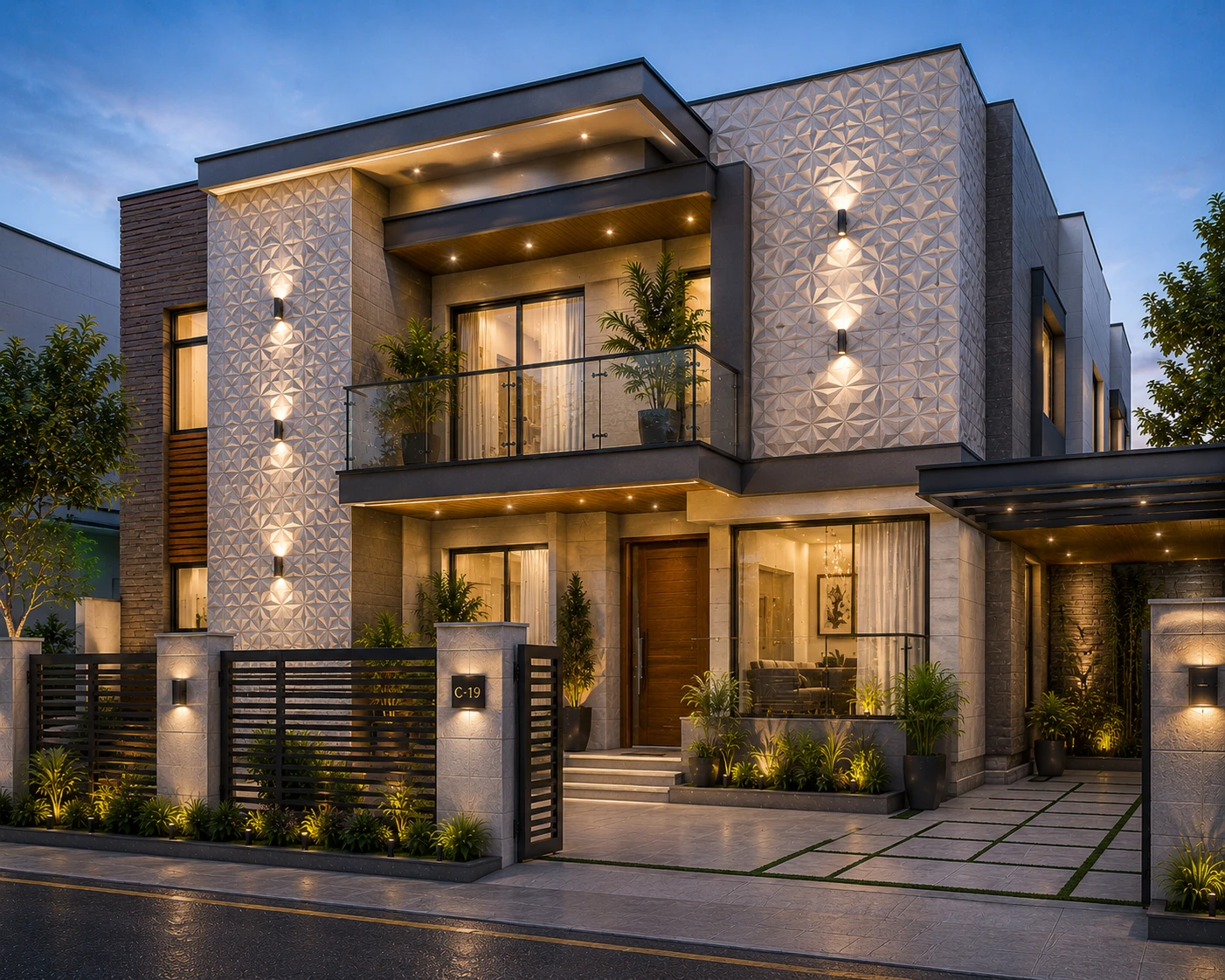
Three-dimensional tiles with wave, honeycomb, cube, or geometric relief patterns create a sculptural quality on a home facade that sets it apart from neighbours. As sunlight moves from morning to afternoon, the shadows within the tile pattern shift, giving the exterior a sense of movement.
These designs work best as feature panels rather than full-facade cladding. A single wall or gate column finished in 3D tiles with plain plaster on the surrounding surfaces creates a much stronger visual impact than covering every surface with texture.
Right Tile Sizes for Front Elevation
The size of your elevation tile changes how your home reads from the street. Larger formats create a contemporary, seamless look. Smaller tiles with visible grout lines give character and texture. The choice depends on your facade area, home style, and the effect you want.
| Tile Size | Common Name | Best Use on Elevation |
| 300x450 mm | 12x18 inch | Wall and elevation only. Stone finish, brick, High Depth 3D cladding panels |
| 300x600 mm | 12x24 inch | Wall and elevation only. Concrete texture, wood finish strips, full facade cladding |
| 200x1200 mm | 8x48 inch | Wooden plank style. Vertical slat feature panels on villa facades |
| 600x600 mm | 2x2 inch | Larger porch walls, compound walls, boundary feature areas |
| 600x1200 mm | 2x4 inch | Contemporary villa facades, large open exterior wall areas |
For small 20x30 or 30x40 house plots common in Bengaluru, Hyderabad, and Pune, the 300x450 mm and 300x600 mm formats are the standard choice. They tile neatly around windows, doors, and cornices without requiring many awkward cuts. Larger 2x4 tiles make more sense for open villa facades where there are long, uninterrupted wall runs.
Best Finishes for Exterior Elevation Tiles
The finish on your elevation tile determines how it handles rain, dust, UV light, and daily pollution. Getting this right matters more on the exterior than anywhere else in the home.
| Finish Type | Suitability for Exterior | Key Trait |
| Matte | Excellent | No glare, hides dust, works in all Indian climates |
| Matte Carving | Excellent | Matte with textured veins, anti-slip on horizontal surfaces |
| GHR (Glaze High Resistance) | Excellent | Stone-look texture, best for high-traffic entry and porch areas |
| High Depth / Textured Punch | Excellent (wall only) | Deep 3D relief, dramatic shadow play on facades |
| Glossy | Not recommended outdoors | Shows watermarks, fades under UV, slippery on any horizontal surface |
| Sugar | Limited use | Transparent gloss drops on matte; possible on sheltered porch walls only |
Matte finish elevation tiles are the safest default for Indian weather. They do not show monsoon water stains and hold colour better under UV exposure than glossy surfaces. If you want a stone or brick effect, Matte Carving and GHR finishes replicate that texture convincingly while remaining practical for outdoor surfaces.
Avoid glossy tiles on any elevation surface that faces direct rain or afternoon sun. The finish will streak, and the visual impact becomes the opposite of what you intended.
Front Elevation Tile Prices in India
Prices below are approximate 2026 Indian market rates and vary by brand, dealer, city, and tile grade. GST at 18 per cent applies to tile purchases and is not included in these ranges.
| Tile Category | Price Range (per sq. ft.) | Best For |
| Ceramic elevation tiles | Rs. 30 to Rs. 80 | Budget projects, small homes, boundary walls |
| GVT elevation tiles | Rs. 60 to Rs. 150 | Mid-range homes, villa facades, 3D cladding |
| Full Body vitrified | Rs. 90 to Rs. 200 | Premium porch areas, compound walls, high-traffic corners |
| 3D wall tiles (High Depth) | Rs. 120 to Rs. 350 | Feature panels, gate columns, accent walls |
| Large format (2x4, vitrified) | Rs. 90 to Rs. 220 | Contemporary villa exteriors, open wall runs |
For a typical Indian 3BHK independent house with a frontage of around 200 to 400 sq. ft. of elevation area, the tile material cost alone ranges from Rs. 15,000 to Rs. 1.2 lakh depending on the category. Installation labour in most cities runs Rs. 40 to Rs. 80 per sq. ft. on top of material cost. Always buy 10 per cent extra for cuts, breakage, and future replacement.
Expert Tips Before Buying Front Elevation Tiles
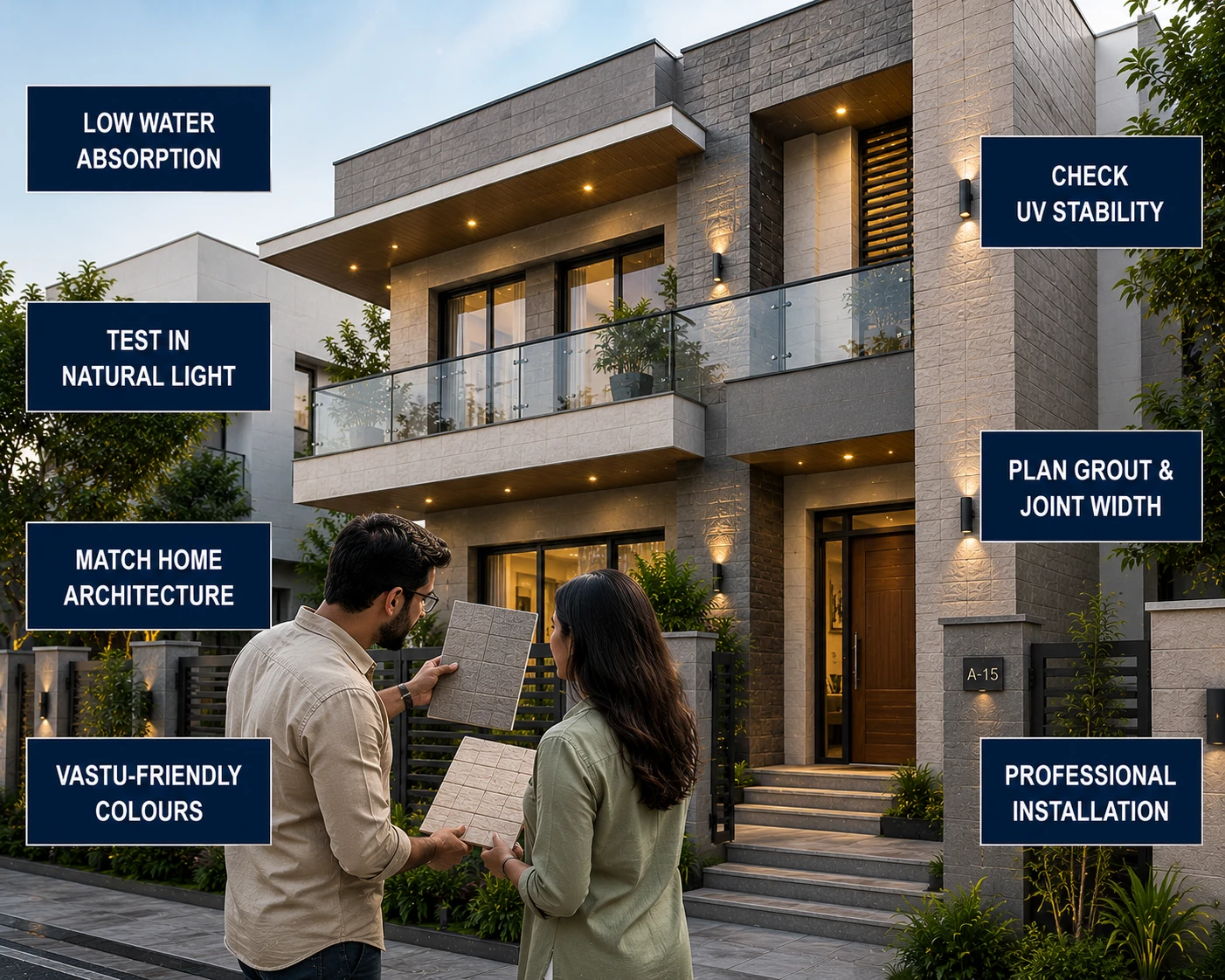
1. Prioritise Water Absorption Rating
For any tile going on the exterior, check the water absorption figure. Ceramic elevation tiles sit at 12 to 16 per cent, which is fine for walls. GVT and vitrified categories stay at 0.05 per cent. Lower absorption means less moisture penetrating the tile body, which directly affects how long the tile maintains its look and structural grip on the wall.
2. Test the Tile in Your Actual Light
Tiles look different under showroom lighting compared to your home's facade facing north or south. Request tile samples and hold them against your actual exterior wall at different times of day. A tile that reads warm beige in the showroom can look grey-white in the afternoon sun. This step prevents costly regrets.
3. Match the Tile Style to Your Home Architecture
Contemporary flat-roof homes with large windows suit concrete texture, minimal stone finish, or clean large-format tiles in neutral tones. Traditional gabled-roof homes or villas with arched elements pair better with brick finish, terracotta tones, or sandstone-look cladding. Mixing architectural styles and tile styles in one facade rarely works well.
4. Consider Vastu for Colour Choice
Many Indian homeowners factor Vastu Shastra into exterior colour decisions. North-facing homes often use white, cream, or light green tones. East-facing homes traditionally pick sunrise colours like soft gold, yellow, or cream. South and west-facing homes tend towards earthy browns, greys, and terracotta. Tile finishes in these tones are widely available in both ceramic and vitrified categories.
5. Check UV Stability for Your City
Cities like Jodhpur, Nagpur, Surat, and Ahmedabad see sustained high UV exposure across the summer months. In these climates, light-toned matte tiles hold colour significantly better than glossy surfaces. Ask your dealer specifically for tiles tested against UV fading, or check if the product specification mentions colour-stability under ISO standards.
6. Plan for Grout and Joint Width
Grout colour affects how the finished elevation reads from the street. Matching grout to the tile colour gives a seamless, flowing look. Contrasting grout (say, dark grey grout with a cream tile) emphasises each tile individually, which works well for brick finish and stone patterns, but can look heavy on a full facade.
7. Budget for Professional Installation
Elevation tile work is more technical than interior tiling. The surface must be perfectly plumb, adhesive must be rated for outdoor use, and waterproofing at joints is non-negotiable. Under-budgeting on installation is the most common reason elevation tiles crack, fall, or show water seepage within three to five years of completion.
Common Mistakes to Avoid When Selecting Elevation Tiles
Using interior tiles outdoors.
Many homeowners pick leftover interior vitrified tiles for the porch or front wall to save cost. Interior-grade tiles, particularly PGVT (Polished Glazed Vitrified), are not made for prolonged rain exposure or direct sunlight. PGVT surfaces become slippery when wet and can dull under UV exposure over time. Use tiles specifically manufactured and certified for exterior and elevation use.
Choosing a glossy finish for the full facade.
Glossy elevation surfaces show every water streak after a rain shower and collect dust visibly. They also create glare that can be harsh in strong afternoon light. Glossy or high-gloss finishes belong in sheltered interior spaces, not on an outdoor wall that faces weather year-round.
Covering every surface with the same tile.
Full-facade tile cladding in one pattern and colour can look monotonous, especially on smaller homes. Using a plain plaster or paint finish on the majority of the facade with tile cladding as accent panels creates a far more composed exterior. Feature areas like the main entry column, gate, and window surrounds benefit most from cladding.
Skipping the expansion joint.
Exterior tiles expand and contract with temperature change. Without proper expansion joints every 2 to 3 metres, the tile system builds up stress and eventually cracks or pushes tiles off the wall. Good installation practice always includes expansion joints, and a reliable contractor will plan for them without being asked.
Buying the exact measured quantity.
Order at least 10 per cent more tiles than your measured facade area. Cutting around windows, doors, pipes, and edges always creates waste. If a tile gets damaged a few years after completion, matching the same batch from the same manufacturer is not always possible. A small buffer stored away saves a major headache later.
Ignoring the porch floor when planning the elevation.
The porch floor and the front elevation wall are seen together every time someone approaches your home. Picking high-depth elevation tiles and porch floor tiles in isolation often results in a clash of tones and textures at the threshold. Plan both surfaces as a coordinated palette from the start.
Making Your Exterior Choice
The front elevation of your home is one of the few surfaces that you see every single day and that every visitor sees immediately. The right tile choice rewards you with a clean, low-maintenance exterior for decades.
For a broader understanding of materials, finishes, installation tips, and design styles, explore our guide on the Elevation Tiles Guide before finalising your exterior wall selection.
Before finalising any purchase, note your home's facing direction, plot frontage dimensions, dominant weather pattern for your city, and your architectural style. Carry these details into the showroom and ask specifically for tiles rated for exterior or elevation use. Compare samples in your actual outdoor light before committing.
You can explore a wide range of elevation tile designs, materials, and finishes on India's growing tile marketplace. Platforms like TilesFinders help you compare options across categories and connect with verified dealers who stock tiles suited to exterior wall cladding for Indian homes.
FAQs
Ceramic elevation tiles in 300x450 mm or 300x600 mm are the most widely used, as they handle Indian weather well and come in stone, brick, wood, and textured finishes. GVT elevation tiles with High Depth punch give a more dramatic 3D finish and suit mid-range to premium homes. For premium villa projects, full-body vitrified tiles offer the best long-term durability at entry porch corners and gate columns.
Yes. GVT and full-body vitrified tiles are suitable for exterior wall cladding because their water absorption is extremely low (0.05 per cent). PGVT (Polished Glazed Vitrified) is not recommended for exterior use as the polished surface is slippery when wet and can lose its finish under sustained UV exposure. Always check the product specification for outdoor suitability before purchasing.
300x450 mm (12x18 inch) and 300x600 mm (12x24 inch) are the standard sizes for elevation cladding in Indian homes. They work well around windows, cornices, and gate columns without requiring complex cuts. For open wall runs on villas, 600x1200 mm (2x4) or 200x1200 mm plank tiles give a larger, contemporary feel.
Ceramic elevation tiles range from Rs. 30 to Rs. 80 per sq. ft. GVT elevation tiles cost approximately Rs. 60 to Rs. 150 per sq. ft. Full Body and 3D High Depth tiles run from Rs. 90 to Rs. 350 per sq. ft., depending on design complexity. Installation adds Rs. 40 to Rs. 80 per sq. ft. in most Indian cities. All prices are approximate, and GST at 18 per cent applies separately.
Matte finish is the best all-round choice for home exterior walls in India. It does not show watermarks after rain, handles UV exposure well, and hides surface dust between cleanings. Matte Carving and GHR (Glaze High Resistance) finishes add texture for a stone-look result while remaining practical for outdoor surfaces. Avoid glossy finishes on any exterior surface that faces direct rain.
Vastu guidance for exterior colours generally favours light, positive tones. White, cream, and light beige are considered suitable across most facing directions. North-facing homes often use cool whites or light greens. East-facing homes suit sunrise tones like soft gold and cream. South and west-facing homes are traditionally associated with earthy browns, terracotta, and muted ochre. Tiles in all these tones are widely available in the Indian market.
Good-quality front elevation tiles installed correctly last 15 to 25 years. The key factors are the tile's outdoor suitability rating, proper waterproof adhesive, correct expansion joints, and professional installation. Tiles that crack or fall within a few years almost always trace back to installation shortcomings rather than tile quality.
