

Luxury Living Room Tiles: Designs That Impress Guests
Elevate your living room with luxury tiles that impress. Discover seamless large-format trends, d...


Loading designs...




















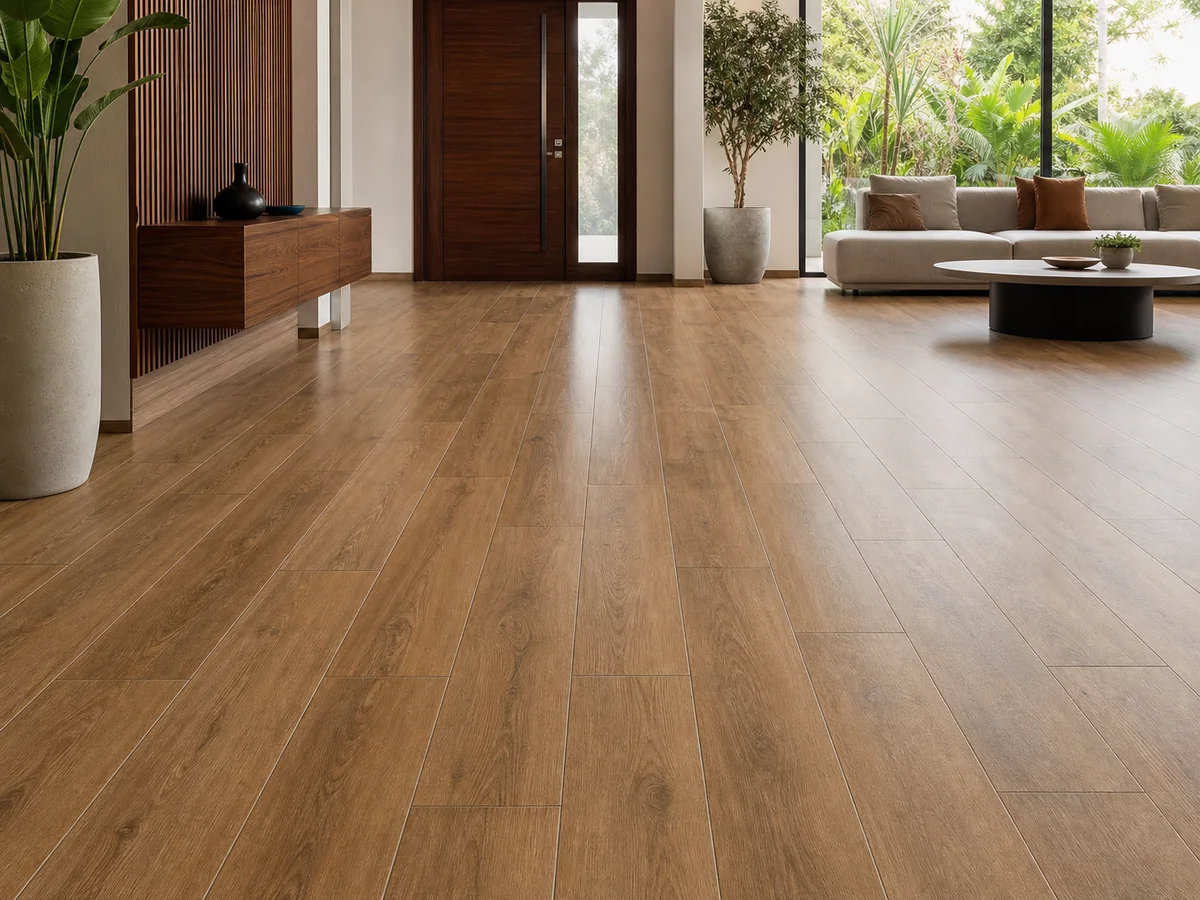
The hall in an Indian home carries more foot traffic than any other room. It is walked across every time someone moves between the entrance, the kitchen, the bedrooms, and the balcony. Guests see it the moment they enter. Children run across it. Furniture sits on it for years without moving. The tile that goes on a hall floor has to handle all of this without showing wear, without becoming difficult to clean, and without looking out of place against whatever comes through the main door. Getting the living room tiles decision right for a hall specifically means thinking about the floor differently from a bedroom or a study.
The word hall covers several different spaces depending on the Indian home type. In an independent bungalow or villa, the hall is the main drawing and sitting room, typically 250 to 500 square feet, with direct access from the main door and connections to the dining area, kitchen passage, and staircase. In an apartment, the hall is often a combined living and dining space that doubles as the primary circulation zone. In a row house, the hall may be a narrow front room with the staircase running along one wall. Each of these shapes and traffic patterns calls for a slightly different tile decision.
This page covers hall floor tiles design from the Indian home perspective: how the hall's proportions, traffic pattern, and connection to adjacent spaces should drive the tile size and layout choice, what tile body types are correct for hall floors, how to handle the transition between the entrance and the hall floor, and what a hall farshi design involves in terms of layout and tile selection.
A bedroom floor is walked on lightly and primarily in bare feet or soft footwear. A study floor may carry a chair on wheels. A kitchen floor faces water spills and cleaning chemicals. The hall floor faces all categories of use: outdoor footwear, indoor footwear, bare feet, furniture legs, heavy items being moved, and the dragging of luggage or equipment. It is also the first floor surface a visitor sees and the one most closely observed because it is viewed while standing in the middle of it.
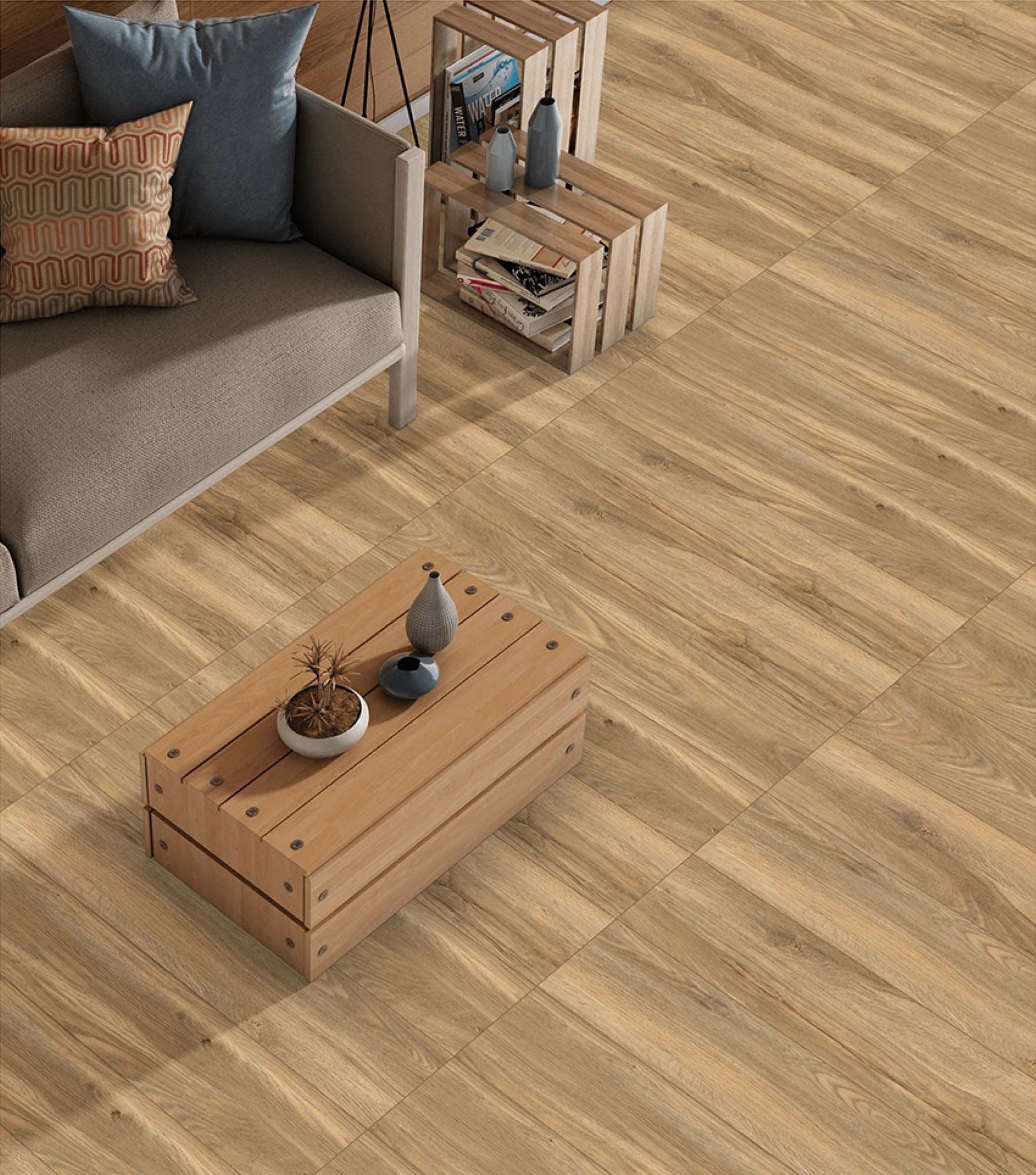
These combined factors mean the hall floor tile needs to be harder and more scratch-resistant than a bedroom tile, easier to clean than a kitchen tile (because it is in direct view), and visually composed enough to work as the centrepiece of the main social room in the house. Full-body vitrified tiles and GVT in polished or satin matte finish are the standard specifications for hall floors in Indian homes for precisely these reasons.
Ceramic tiles in the main hall floor are a compromise. They absorb 12% to 16% water at the body level, which does not matter much for a dry hall, but the surface hardness of ceramic is lower than that of vitrified options. In a high-traffic hall walked on daily with outdoor footwear, a ceramic tile will show surface micro-scratches and dullness faster than GVT or full body vitrified. For low-traffic halls in smaller apartments, ceramic is adequate. For the primary hall of a family home with regular daily traffic, GVT or full-body vitrified is the correct specification.
Farshi, from the Hindi and Urdu word for floor, is used in Indian interior design conversations to describe the overall floor finish of a room, particularly the hall or main living space. Hall farshi design refers to the complete floor tile composition: the tile chosen, the size, the laying pattern, and any borders or inlay elements that define the floor as a designed surface rather than a plain tiled area.
A basic hall farshi design uses one tile across the entire floor in a straight lay pattern with uniform grout joints. This is the most common approach in Indian homes at all price points because it is the easiest to install, the least wasteful in tile cutting, and the most neutral visually. A more considered hall farshi design introduces one or more of the following elements: a border tile at the perimeter, a different tile or inlay strip defining a central rug zone, a diagonal lay across the full floor, or a combination of a large-format field tile with a smaller accent tile at specific intervals.
The choice between a plain farshi and a designed farshi depends on the hall size, the budget for installation labour, and how much visual attention the floor is meant to draw. In a large hall of 400 square feet or more, a designed floor with a perimeter border and a defined central zone gives the floor a composed architectural quality. In a compact hall of 150 to 200 square feet, a single large-format tile in a straight lay does more for the space than a complex inlay pattern that would make the room feel smaller.
The shape of a hall, whether square, long and narrow, or L-shaped, directly affects which tile size and laying direction works best. This is the decision that most buyers underweight when selecting hall floor tiles, focusing on colour and finish before considering how the tile size will read against the room's actual dimensions.
A hall that is roughly square, where the length and width are within 20% of each other, takes any tile format well. 600x600mm in a straight lay or 800x800mm creates a balanced grid that does not pull the eye in any particular direction. 600x1200mm in a square hall works best when laid with the long edge running parallel to the main window wall, which draws the eye toward the light source and makes the room feel wider. 800x1600mm tiles in a square hall give very few grout lines and a slab-like floor quality.
A hall that is significantly longer than it is wide, common in row houses and some apartment layouts, benefits from a tile format and laying direction that counters the tunnel effect of the proportions. 600x1200mm tiles laid with the long edge running across the width of the hall, rather than along its length, visually widen the room. 600x600mm in a diagonal lay in a narrow hall creates a diamond grid that breaks the strong longitudinal read of the space. Avoid laying 600x1200mm tiles with the long edge running along the length in a narrow hall, as it will emphasise the tunnel proportions.
An L-shaped hall or an open-plan hall that connects directly to the dining area without a threshold works best with one consistent tile across the full floor area, which visually unifies the two zones. Any change of tile at the elbow of an L-shaped hall will make the space feel smaller and more segmented. 600x1200mm or 800x1600mm in a single straight lay direction across the entire open-plan area gives the best sense of spatial continuity.
The laying pattern determines how the grout joints fall across the floor and is a decision made at the design stage before installation begins. Once tiles are laid, the pattern is fixed.
| Laying Pattern | Best Tile Format | Effect in Hall | Installation Complexity |
|---|---|---|---|
| Straight lay (stack bond) | Any square or rectangular | Classic, neutral, emphasises room shape | Low, least tile waste |
| Brick bond (offset) | 600x1200mm, 300x600mm | Adds horizontal rhythm, softens a square room | Low to moderate, some cutting at edges |
| Diagonal (45 degree) | 600x600mm, 800x800mm | Makes the room feel wider, good for narrow halls | High, more waste at perimeter cuts |
| Herringbone | 300x600mm, 200x1200mm | Strong directional pattern, high design character | High, precise alignment required |
| Perimeter border with field tile | 600x600mm or 600x1200mm field, smaller border | Frames the hall floor as a composed surface | Moderate, requires planning two tile types |
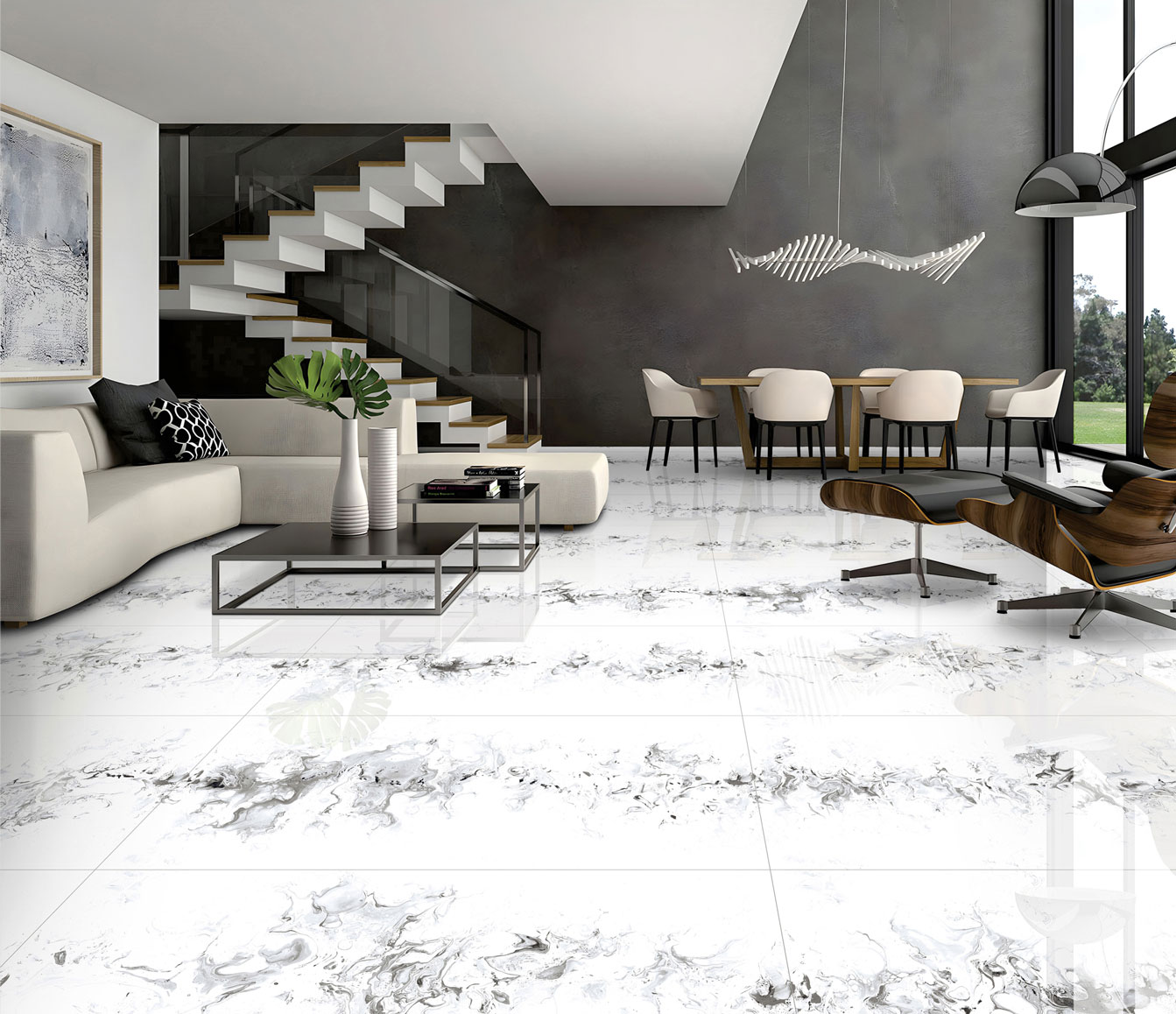
| Book match (mirrored adjacent tiles) | 800x1600mm, 1200x1800mm in marble look | Replicates a continuous marble slab appearance | High tiles must be matched at the factory |
The junction between the entrance floor tile and the hall floor tile is one of the most visible details in an Indian home because every person who enters sees it at the moment they cross the threshold. If the entrance uses a different tile, a different size, or a different colour from the hall, this junction needs to be handled deliberately.
Three approaches work in Indian residential construction. The first is a flush transition: both tiles are the same thickness, and the grout joint between the last entrance tile and the first hall tile is the same width as all other joints. This requires both tiles to be exactly the same thickness. The second approach uses a threshold strip, typically a polished stone or metal trim piece, to mark the junction between two different tile types. The third approach uses the same tile across both the entrance and the hall, which makes the junction invisible. For halls that connect directly to an uncovered entrance, the hall tile must be GVT with water absorption below 0.05% for at least the first meter from the door, since rain splash and wet footwear will reach this zone. Stone look tiles in GVT matte finish work well at this transition zone because they do not show water marks from wet footwear the way polished tiles do.
Skirting tiles are the narrow vertical tile strips fixed to the wall at floor level, covering the junction between the floor tile and the wall plaster. In a hall where the floor tile has been carefully designed, the skirting needs to be specified as part of the same design decision.
The standard skirting for a GVT hall floor is a matching GVT tile cut to 4 to 6 inches in height and fixed vertically against the wall with the same adhesive used for the floor. The skirting tile colour and finish typically match the floor tile. For a polished GVT floor, a polished skirting in the same tile gives a continuous finished quality to the room. For a matte floor, a matte skirting. Mixing a polished floor with a matte skirting or vice versa tends to look unresolved.
Skirting height in Indian residential halls is typically 3 to 4 inches for a standard room and 4 to 6 inches for a hall with high ceilings or large-format floor tiles. A taller skirting is proportionally correct in a room where the floor tile is 800x1600mm or larger. A 3-inch skirting on a floor of 1200x1800mm slabs looks undersized.
In multi-storey Indian homes, the hall on the first floor or upper floors sits above a structural slab rather than directly on a ground-level base. This changes two aspects of the tile specification: the sub-floor preparation and the tile weight consideration.
Large-format tiles in 800x1600mm and above are heavier per tile than smaller formats. On an upper floor hall, the structural engineer's specification for floor load capacity should confirm that the tile weight combined with the adhesive and screed is within the slab's design load. For most standard Indian residential RCC slabs, GVT tiles up to 800x1600mm are within load parameters. Large format tiles above 800x1600mm should be checked against the structural specification before ordering, particularly on upper floors of older constructions.
Sound transmission through upper-floor tiles is a consideration in multi-storey homes. A tile laid directly onto a structural slab with rigid adhesive transmits footfall sound more than a tile laid on a screed with some acoustic decoupling. In upper-floor halls, a 25mm to 40mm screed layer between the slab and the tile bed reduces footfall noise to the floor below, which matters in a hall with heavy daily traffic.
| Hall Size (approx) | Recommended Tile Size | Finish | Laying Pattern | Approximate Tile Qty (sq.ft) |
|---|---|---|---|---|
| Up to 150 sq.ft (compact apartment hall) | 600x600mm or 600x1200mm | Polished or Satin Matte GVT | Straight lay | 170 to 190 sq.ft with cuts |
| 150 to 250 sq.ft (standard apartment hall) | 600x1200mm or 800x800mm | Polished or Satin Matte GVT | Straight or brick bond | 170 to 280 sq.ft with cuts |
| 250 to 400 sq.ft (villa or bungalow hall) | 600x1200mm or 800x1600mm | Polished GVT or Full Body Vitrified | Straight lay or book match | 280 to 450 sq.ft with cuts |
| 400 sq.ft and above (large hall or open plan) | 800x1600mm or 1200x1800mm | Polished GVT or Full Body Vitrified | Straight lay or book match | 450 sq. ft. and above |
Note on quantities: Always add 10% to 15% above the measured floor area when ordering hall floor tiles to account for perimeter cuts, waste during installation, and reserve tiles for future repairs. Diagonal laying patterns require 15% to 20% additional quantity.
GVT hall floor tiles from Morbi, Gujarat, are manufactured under IS 15622:2006 in the full range of sizes used for Indian residential halls. Ex-factory prices for standard residential hall floor tile sizes: Rs. 40 to Rs. 60 per sq ft for 600x600mm in polished or matte GVT, Rs. 55 to Rs. 90 per sq ft for 600x1200mm, and Rs. 70 to Rs. 120 per sq ft for 800x1600mm in polished or satin matte finish. Full body vitrified tiles for high-traffic hall floors: Rs. 55 to Rs. 130 per sq ft at retail.
Installation cost for hall floor tiles in Indian cities: Rs. 35 to Rs. 55 per sq ft for standard straight lay in 600x600mm or 600x1200mm. Diagonal laying and herringbone patterns add Rs. 15 to Rs. 25 per sq.ft to the installation cost due to the additional cutting involved. Large-format tiles in 800x1600mm and above require back-buttering and full mortar bed coverage, which adds to both material and labour cost.
Hall floor tile selection starts with the room dimensions and shape, then works through the traffic level, the adjacent floor finishes, and the design character the space needs. Browse GVT and full-body vitrified hall floor tiles in polished, satin, matte, and stone-look finishes across all residential sizes on TilesFinders and compare options by size, finish, and body type before shortlisting.
GVT (Glazed Vitrified Tiles) in polished or satin matte finish is the best tile for hall floors in India. GVT absorbs less than 0.05% water, is rated under IS 15622:2006, and is hard enough to handle the daily foot traffic of a main hall without surface degradation. For large halls with heavy daily use, full-body vitrified tiles are the strongest specification. Sizes most used: 600x1200mm and 800x1600mm. Price range: Rs. 55 to Rs. 120 per sq ft from Morbi.
Hall farshi design refers to the complete floor tile composition of a hall or main living room: the tile chosen, the size, the laying pattern, and any borders or inlay elements that define the floor as a designed surface. A basic hall farshi uses one tile in a straight lay. A more designed farshi introduces a perimeter border, a central inlay, a diagonal pattern, or a combination of field tile and accent tile to give the floor a composed, architectural quality.
600x1200mm is the most used tile size for Indian residential hall floors today. It creates a balanced rectangular grid with fewer grout lines than 600x600mm, which makes the hall feel larger. For halls above 300 square feet, 800x1600mm gives a slab-like floor quality with very few visible joints. For compact halls under 150 square feet, 600x600mm or 800x800mm is proportionally more appropriate than very large formats.
In a long and narrow hall, lay 600x1200mm tiles with the long edge running across the width of the hall rather than along its length. This visually widens the room and counters the tunnel effect of narrow proportions. Alternatively, 600x600mm tiles in a 45-degree diagonal lay create a diamond grid that breaks the strong lengthwise read of a narrow hall. Avoid running 600x1200mm tiles lengthwise in a narrow hall, as it makes the space feel longer and more constricted.
Polished GVT and satin matte GVT are the two most used finishes for Indian hall floors. Polished finish makes the hall look larger and more light-filled, but shows dust and footprints readily and needs more frequent cleaning. Satin matte gives a softer sheen, hides footprints better than polished, and requires less maintenance. For a hall with heavy daily traffic, matte or satin matte is the lower-maintenance specification. For a formal drawing room used less frequently, a polished finish gives a more composed visual quality.
Order 10% to 15% above the measured floor area for a hall floor in a standard straight or brick bond laying pattern. This covers perimeter cuts, breakage during installation, and spare tiles for future repairs. For a diagonal or herringbone laying pattern, increase the allowance to 15% to 20% because diagonal layouts produce more cut waste at the perimeter edges. Always keep spare tiles from the same batch for future repairs, as tile shades can vary slightly between production batches.
Using the same tile across the entrance and the hall is the cleanest design approach. It eliminates the visible junction between two different tile types and makes the combined space read as a single continuous floor. If the entrance is an uncovered or semi-covered area, the shared tile must be GVT with water absorption below 0.05% so it handles rain splash and wet footwear at the entrance end. A matte or satin matte finish at the entrance end avoids water marks from wet shoes that would show on a polished tile.
Hall floor tile installation in India costs Rs. 35 to Rs. 55 per sq.ft for a standard straight lay in 600x600mm or 600x1200mm GVT. Diagonal or herringbone laying patterns add Rs. 15 to Rs. 25 per sq.ft to the installation cost. Large-format tiles in 800x1600mm and above require back-buttering and full mortar bed coverage, which increases both material and labour costs. Screed levelling before tiling adds Rs. 15 to Rs. 30 per sq.ft, depending on the condition of the existing floor base.