Living Room Tiles: Designs, Materials & Buying Guide for Indian Homes
Explore the best living room tiles in India for 2026. Compare vitrified, porcelain, matte, glossy, and marble-look tiles with expert tips on sizes, designs, pricing, and maintenance.
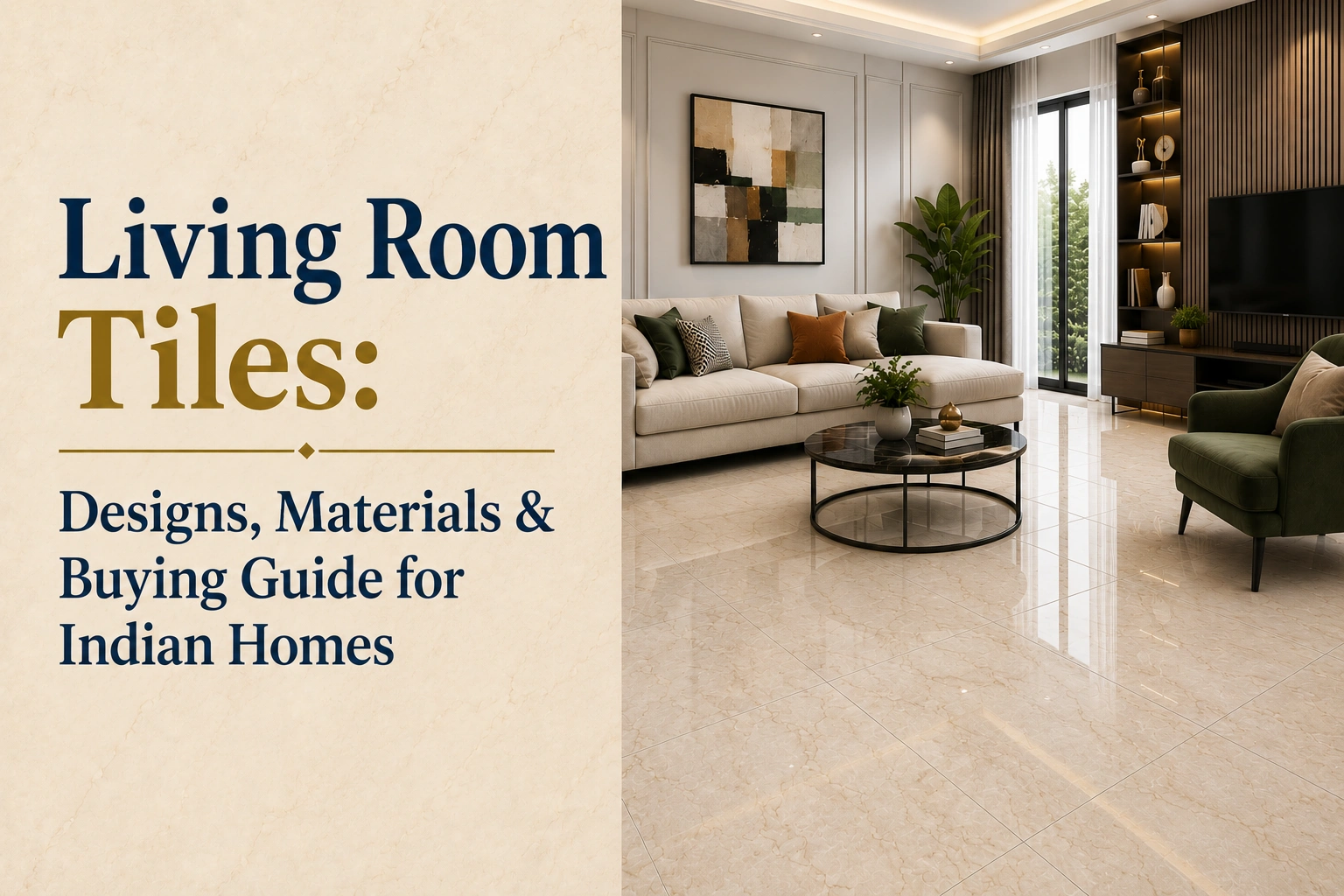
Choosing the right living room tiles is not only about design. The flooring you select affects maintenance, lighting, durability, comfort, and the overall appearance of your home for years.
For Indian homes, factors like dust, strong sunlight, heavy furniture, and daily foot traffic make tile selection even more important. A surface that looks luxurious inside a showroom may not always perform well in real living conditions.
This guide explains:
- The best tile materials for living rooms
- glossy vs matte finishes
- ideal tile sizes
- colour combinations
- pricing in India
- common buying mistakes
- practical recommendations based on budget and lifestyle
Whether you are designing a compact apartment, modern villa, or family home, this guide will help you choose living room tiles more confidently.
Why Your Living Room Tile Choice Matters More Than You Think
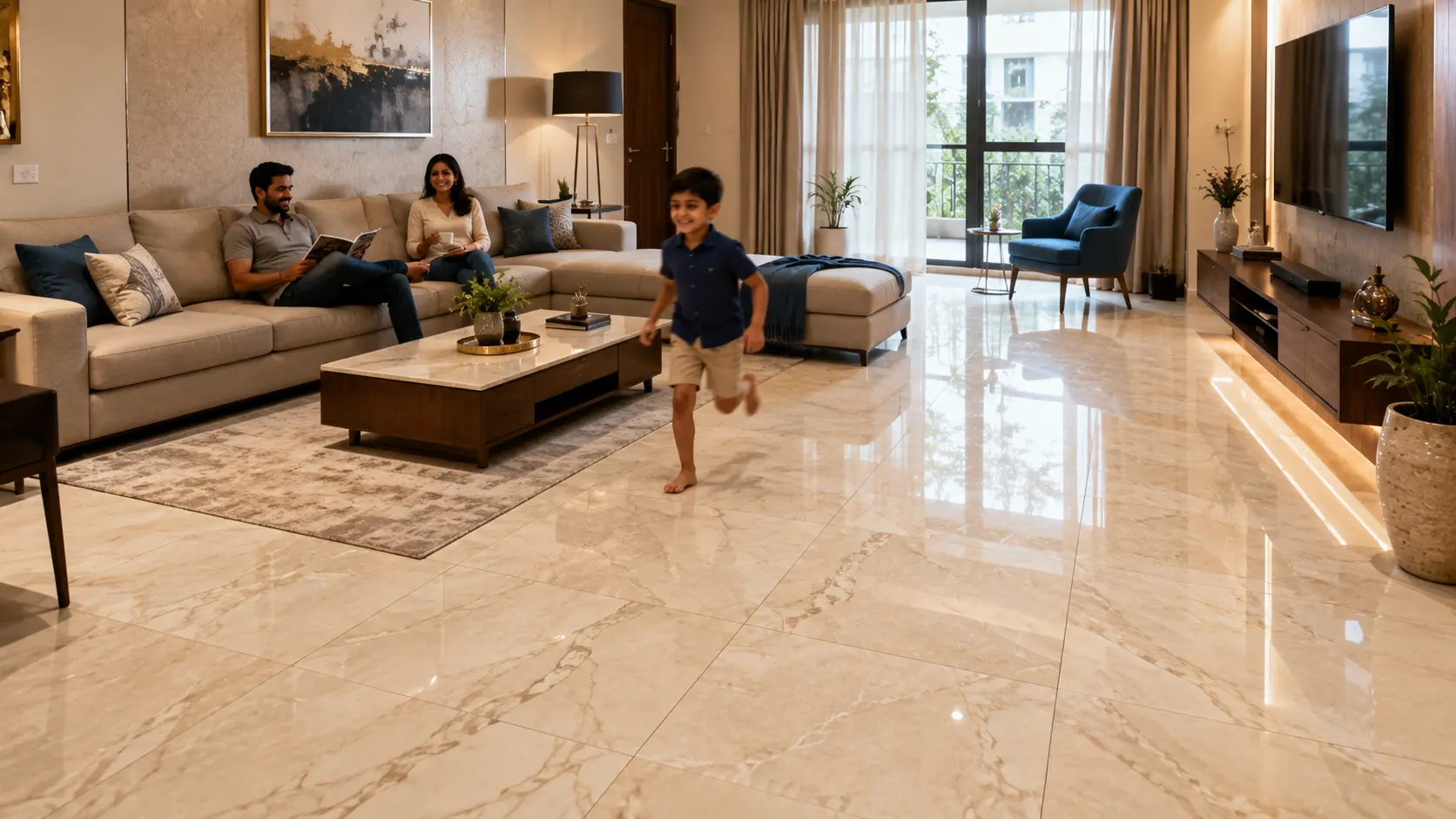
Living room flooring is usually expected to last for 10 to 20 years without replacement. Changing it later is expensive, dusty, and disruptive. Unlike paint or curtains, replacing hall floor tiles means breaking the flooring, removing adhesive, levelling the base again, and reinstalling the entire surface.
Indian homes also create flooring conditions that many international design blogs never account for.
Most living rooms regularly deal with:
- dust entering from balconies and windows
- heavy furniture pressure
- daily footwear movement
- strong summer sunlight
- hard water cleaning
- inconsistent lighting conditions
A tile that looks elegant online may quickly start showing scratches, grout stains, or excessive glare once it enters real daily use.
That is why selecting living room floor tiles is not only about aesthetics. It is about durability, maintenance comfort, lighting compatibility, and how the flooring behaves after years of actual use.
Types of Tiles Used for Living Rooms in India
Before choosing colours or patterns, understand the tile material itself. Material affects durability, maintenance, scratch resistance, and long-term flooring performance far more than surface design alone.
Ceramic Tiles
Ceramic tiles are clay-based, kiln-fired, and coated with a glazed surface layer. They remain one of the most affordable tile categories available in India.
Ceramic works especially well for:
- living room feature walls
- TV unit backdrops
- decorative wall panels
- compact apartment interiors
The biggest advantage of ceramic tile is design variety. Manufacturers produce ceramic surfaces in:
- marble effects
- geometric textures
- floral patterns
- concrete finishes
- metallic looks
However, ceramic tiles are softer than vitrified or porcelain products. On heavily used living room floors, the glazed surface may scratch or wear faster over time.
Water absorption rate: 6% to 16%
Typical price range: ₹25 to ₹90 per sq. ft.
Vitrified Tiles
Vitrified tiles remain the most popular flooring option for Indian living rooms. These tiles are fired at very high temperatures, making them denser, harder, and far less porous than ceramic surfaces.
They handle:
- heavy furniture
- daily foot traffic
- scratches
- moisture
- long-term wear
Vitrified tiles come in four major categories:
GVT (Glazed Vitrified Tiles) use digital surface printing and are commonly selected for marble-look and wood-look flooring designs.
PGVT (Polished Glazed Vitrified Tiles) create a more polished, luxury appearance and are popular in premium apartments and modern halls.
Double-Charge Vitrified Tiles use two compressed pigment layers, making them highly durable under heavy family foot traffic.
Full-Body Vitrified Tiles carry colour and texture throughout the tile body, making chips and scratches much less visible over time. They are especially preferred in commercial spaces and large family homes.
Water absorption rate: Below 0.5%
Typical price range: ₹60 to ₹180 per sq. ft.
You can also compare different vitrified tile finishes and room-specific collections before selecting flooring.
Porcelain Tiles
Porcelain tiles are known for their refined surface finish, superior stain resistance, and premium aesthetic appeal, making them a popular choice for luxury living rooms and modern high-end interiors.
They use refined white clay and fire at extremely high temperatures, which creates:
- superior density
- better stain resistance
- lower porosity
- stronger scratch resistance
Porcelain works especially well in:
- luxury apartments
- villas
- open-plan living rooms
- high-end modern interiors
Large-format porcelain slabs are becoming increasingly popular because they reduce grout visibility and create cleaner, more seamless flooring.
Matte porcelain finishes are especially trending in modern Indian homes because they soften reflections and feel visually calmer under warm indoor lighting.
Water absorption rate: Below 0.5%
Typical price range: ₹90 to ₹350 per sq. ft.
Marble-Look and Stone-Look Tiles
Natural marble looks elegant, but maintaining it in Indian homes becomes difficult and expensive over time. Real marble stains with hard water, reacts to acidic cleaners, and gradually loses polish in high-use areas.
Marble-look vitrified and porcelain tiles solve these issues while still delivering a premium appearance.
They provide:
- realistic veining
- easier maintenance
- lower staining risk
- better durability
- more consistent finishes
Soft beige marble patterns, warm grey stone textures, and satin-finish surfaces are especially popular in modern living room tile design trends for Indian homes.
Typical price range: ₹80 to ₹250 per sq. ft.
Many homeowners now prefer marble-look tiles because they offer the appearance of natural stone with easier maintenance.
Best Living Room Tiles Based on Home Type & Budget
Not every tile works equally well for every home. Your ideal flooring depends on budget, maintenance expectations, room size, and lifestyle.
Here are practical recommendations for Indian homes:
| Requirement | Recommended Tile Type |
| Budget apartment under ₹100/sq. ft. | GVT vitrified tiles |
| Luxury modern interiors | Large-format porcelain tiles |
| Low-maintenance family homes | Matte vitrified tiles |
| Homes with pets or children | Matte or textured vitrified tiles |
| Small living rooms | Light-coloured 600x1200 mm tiles |
| Premium marble appearance | PGVT marble-look tiles |
| High-traffic joint families | Double-charge vitrified tiles |
Choosing tiles based on actual usage patterns usually delivers better long-term satisfaction than selecting designs only for visual appeal.
Living Room Floor Tiles vs Wall Tiles: What Changes
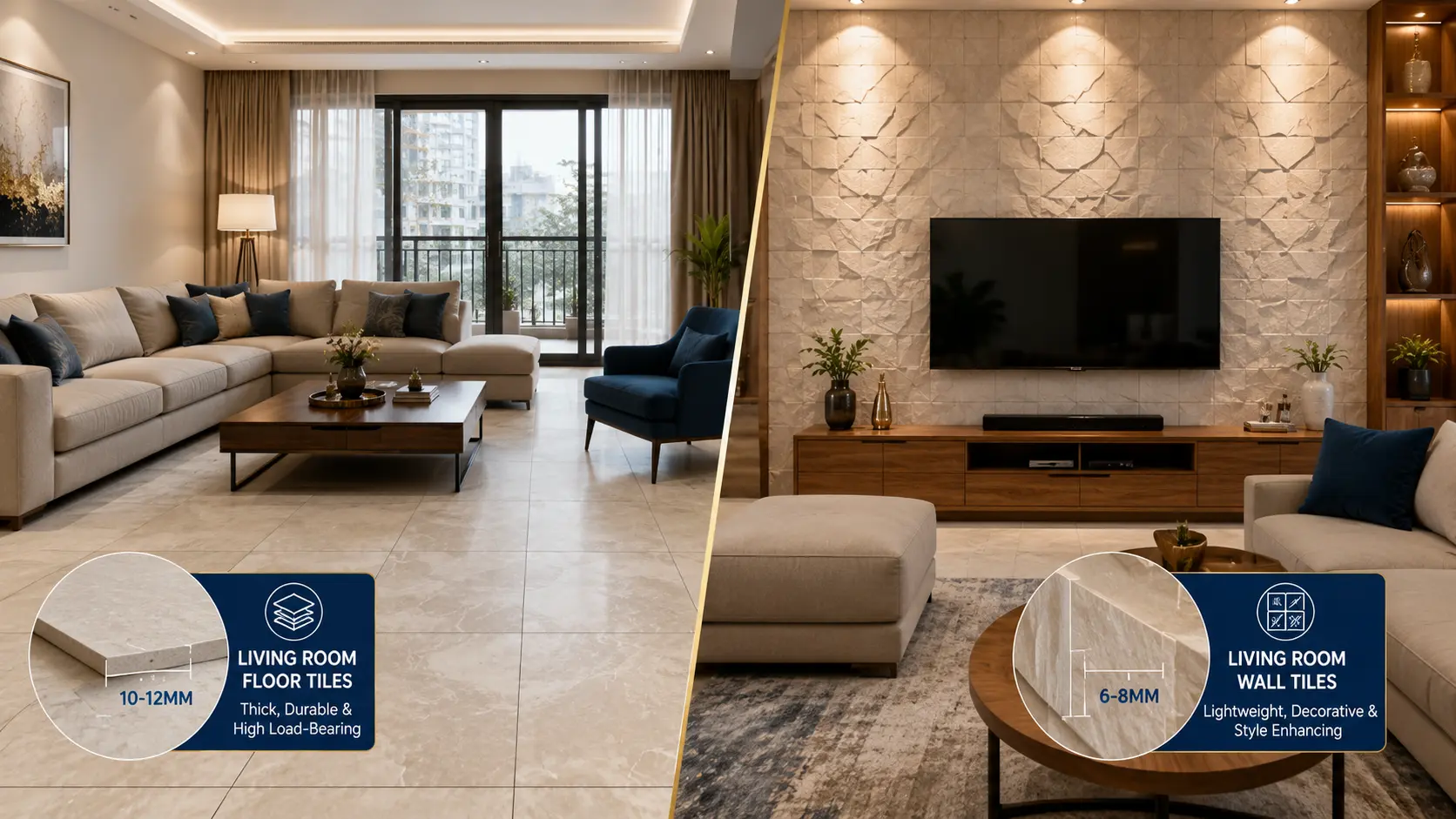
Most homeowners assume all tiles perform the same way. They do not.
Floor tiles require:
- higher strength
- better impact resistance
- thicker body structure
- wear resistance under furniture and foot traffic
Wall tiles focus more on:
- lightweight construction
- decorative appearance
- easy cleaning
- simpler installation
Using wall tiles on a living room floor is one of the most expensive mistakes homeowners make because thinner surfaces crack or wear quickly under load.
Always confirm whether a tile is approved for floor use, wall use, or both before purchasing.
Modern Living Room Tile Trends in Indian Homes
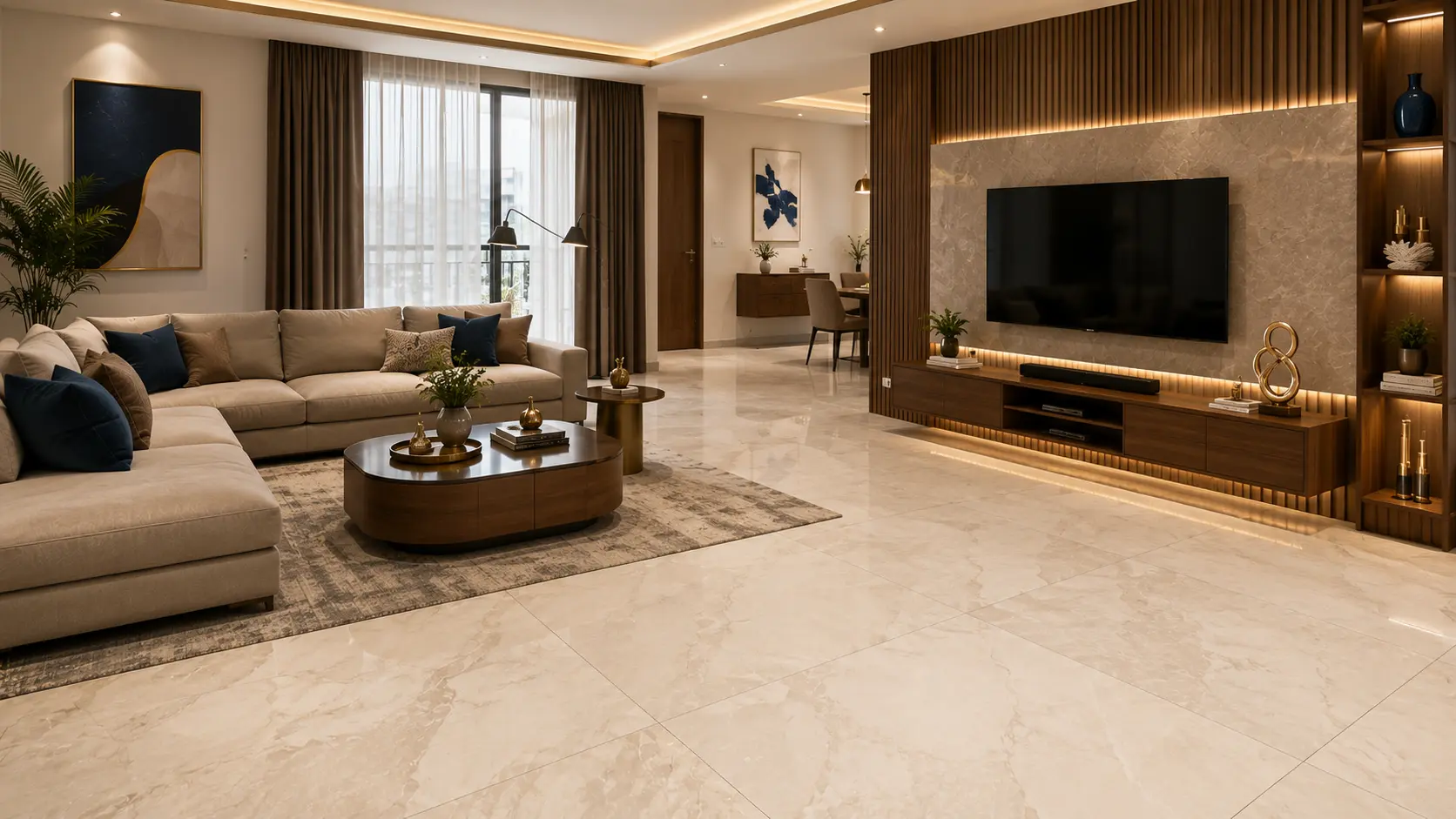
Living room flooring trends have changed significantly over the last few years. Ultra-glossy white halls are slowly being replaced by warmer, softer, and more texture-rich interiors.
Large-Format Tiles
Large-format tiles continue dominating modern hall tiles design trends because they reduce grout lines and create cleaner, more seamless flooring. Popular sizes now include 600x600 mm, 600x1200 mm, and even 800x1600 mm slabs for premium interiors. Fewer grout joints help living rooms appear larger, cleaner, and more premium visually.
However, oversized slabs also create more cutting wastage in compact apartments, especially around corners and furniture layouts. Smaller Indian homes usually benefit more from medium-format flooring because it balances spacious appearance with practical installation.
Marble-Look Flooring
For the living room, marble tiles remain one of the strongest design trends in India.
Earlier, mirror-polished white marble effects dominated the market. Now homeowners increasingly prefer:
- satin marble finishes
- soft matte textures
- warmer stone tones
- realistic veining patterns
These surfaces hide dust better and feel more natural during everyday use.
Earthy Colours and Warm Neutrals
Cold, glossy white flooring is slowly declining in popularity.
Modern living room tiles now focus more on:
- warm beige
- dusty grey
- sandstone tones
- mocha brown
- muted earthy colours
These shades work significantly better under Indian lighting conditions and maintain a warmer appearance throughout the day.
Fluted and Textured Wall Tiles
Living room wall tile designs are evolving rapidly with modern Indian interiors increasingly using fluted vertical textures, stone-inspired wall surfaces, and subtle 3D panels. These decorative tiles are commonly placed behind TV units, sofas, and console tables to create a focal point without overwhelming the entire room.
The best approach is to use textured tiles on one feature wall only. Overusing heavily textured surfaces across multiple walls often makes living rooms feel visually crowded and harder to balance with furniture and lighting.
Glossy vs Matte Living Room Tiles: Which is Better?
This remains one of the most debated flooring decisions for Indian homes.
Glossy tiles reflect more light and help compact apartments appear brighter and visually larger. In homes with limited natural light, this effect can improve the overall openness of the room.
But glossy surfaces also reveal:
- dust
- footprints
- scratches
- reflected glare
Matte tiles absorb light instead of reflecting it. They hide dust and smudges much better and usually feel calmer under warm indoor lighting.
Here is a practical comparison for Indian homes:
| Condition | Better Choice |
| Small apartment with limited light | Glossy or satin finish |
| Large hall with strong sunlight | Matte finish |
| Family home with children or pets | Matte or textured |
| Formal low-use living room | Glossy or PGVT |
| Entrance-connected hall area | Matte or anti-skid texture |
Many modern interiors now combine matte tile flooring with satin-finish walls and warm lighting to create a balanced, premium appearance.
Choosing the Right Tile Size for Your Living Room
Tile size affects how spacious a living room feels, how visible the grout lines appear after installation, the overall installation cost, and the amount of material wastage generated during cutting and fitting.
Very small tiles create excessive grout lines, while oversized slabs can create unnecessary cutting wastage in compact apartments. Using a tile calculator before ordering helps reduce material wastage and budget overruns.
Here is a practical tile size guide for Indian living rooms:
| Living Room Size | Recommended Floor Tile | Recommended Wall Tile |
| Under 120 sq. ft. | 600x600 mm or 600x1200 mm | 300x600 mm |
| 120 to 200 sq. ft. | 600x1200 mm | 600x1200 mm |
| 200 sq. ft. and above | 800x1600 mm or larger | 600x1200 mm or larger |
A good practical rule: avoid tiles smaller than 600x600 mm for living room floors unless the design specifically requires more grout detailing.
Always order 8 to 10 percent extra material to account for cutting and future replacements.
Which Colour Tiles Make a Living Room Look Bigger?
Colour affects spatial perception more than most homeowners realize.
Light shades reflect more light and visually expand compact spaces. Warm beige, ivory, soft grey, sand, and off-white remain some of the safest colour choices for Indian living rooms.
Dark glossy flooring inside compact apartments usually absorbs light and makes the room feel tighter.
Another common mistake is using heavily patterned flooring across the entire hall. Busy patterns visually reduce openness and compete heavily with furniture layouts.
A reliable combination for Indian homes remains:
- warm neutral flooring
- off-white walls
- natural wood furniture
- warm lighting
Living Room Tile Mistakes That Become Expensive Later
Some tile mistakes only become visible after a few months of daily use.
Common long-term problems include:
- overly glossy flooring showing constant dust and footprints
- dark polished tiles make compact rooms feel smaller
- trendy patterns becoming visually outdated quickly
- poor grout colour selection creates dirty-looking joints
- oversized slabs causing excessive cutting wastage
- slippery polished flooring near balcony-connected halls
Neutral colours, practical finishes, and timeless patterns usually age better than highly trend-driven designs.
How to Select Tiles for Living Room Floors
Most homeowners choose tiles mainly by appearance. Professionals usually focus on performance first.
Always inspect tile samples under your actual home lighting before placing orders. A surface that looks luxurious under showroom lights may feel completely different under your living room lighting.
Also check:
- tile thickness
- finish consistency
- edge quality
- grout compatibility
- calibration accuracy
If you are selecting large-format slabs, confirm your contractor has experience handling them. Uneven installation causes lippage, where one tile edge sits higher than another.
That becomes both visually distracting and physically uncomfortable.
Professional Tip
Many homeowners focus only on tile appearance but ignore edge calibration and installation quality. Even premium tiles can look uneven if installed poorly.
Before purchasing large-format tiles, confirm:
- the installer has slab-handling experience
- levelling clips will be used
- grout spacing is planned correctly
- the floor base is fully levelled
Poor installation causes lippage, hollow sounds, cracking risk, and uneven reflections under lighting.Common Mistakes Homeowners Make While Buying Living Room Tiles Common Mistakes Homeowners Make While Buying Living Room Tiles
Common Mistakes Homeowners Make While Buying Living Room Tiles
One of the biggest mistakes is choosing flooring entirely under showroom lighting. Showroom environments are specifically designed to make polished surfaces look dramatic.
Ignoring maintenance reality is another issue. Highly polished floors often require significantly more frequent cleaning in dusty Indian conditions.
Many homeowners also buy extremely trendy patterns that feel outdated within a few years. Neutral surfaces generally age better visually.
Another expensive mistake is ordering only the exact quantity required. Tiles break during cutting, and future replacements may not match production batches. Always order extra material.
Living Room Tile Prices in India: 2026 Budget Guide
Living room flooring costs vary depending on material, finish, size, and brand positioning.
| Tile Type | Material Cost (per sq. ft.) | Best For |
| Ceramic Wall Tiles | ₹30 to ₹90 | Feature walls |
| GVT Tiles | ₹60 to ₹120 | Modern flooring |
| PGVT Tiles | ₹80 to ₹180 | Premium interiors |
| Porcelain Tiles | ₹90 to ₹350 | Luxury living rooms |
| Designer Large-Format Tiles | ₹120 to ₹500 | High-end interiors |
Final Thoughts
The best living room tiles are not always the trendiest or most expensive ones. The right flooring is the one that continues feeling comfortable, practical, and visually balanced years after installation.
Before visiting any tile showroom, note down your hall dimensions, natural lighting conditions, furniture colour palette, maintenance expectations, and a realistic flooring budget to make more practical and accurate tile decisions.
Then compare tile samples inside your actual home instead of depending entirely on catalogue photography or showroom displays.
You can also explore modern living room tiles, compare finishes, and connect with trusted suppliers through TilesFinders to make your selection process easier and more informed.
India’s growing tiles marketplace also helps homeowners compare floor tile designs for living room spaces, trending wall collections, and modern interior styles in one place.
FAQs
Vitrified tiles remain the best overall choice for Indian living room floors because they combine durability, low maintenance, stain resistance, and modern design flexibility.
Glossy tiles work well in compact spaces with limited lighting, while matte finishes perform better for daily maintenance and long-term comfort in busy family homes.
600x1200 mm tiles with fewer grout lines usually help compact Indian living rooms feel larger and cleaner.
Yes. Vitrified tiles are denser, less porous, and significantly more durable under heavy foot traffic compared to ceramic flooring.
Before buying tiles, check the PEI wear rating, water absorption rate, BIS certification, shade consistency, and surface calibration to ensure the tiles are durable, properly finished, and visually consistent after installation.

See our tile guides first
Set TilesFinders as a preferred source and our buying guides surface ahead of the rest for you.
Add as preferred sourceTakes one tap. Nothing to install.
What Readers Say
I was about to redo my parking area with the wrong tile size until I read this. The layout comparisons saved me from a costly mistake.
We reference TilesFinders guides while briefing clients on material selection. The size and pattern breakdowns are accurate and easy to explain visually.
On site, I get asked about grout spacing all the time. This article gave me a solid reference I now share with my team before every job.
Finally a guide that doesn't just push generic advice. The oil stain removal steps actually worked on our clubhouse driveway tiles.
I run a small construction firm and now send this link to clients directly when they ask about entrance tile sizing. Saves me an hour of explaining.
Good practical detail, though I wish there were more examples for compact apartment entrances specifically, not just villas.
My mother-in-law wanted marble, I wanted vitrified. This blog gave us the neutral comparison we needed to actually decide together.
Detailed without being overwhelming. I appreciated that it covered both cost and maintenance, not just the aesthetics.
Used the algae and hard water removal tips on our terrace tiles after the monsoon. Worked better than what our regular cleaner was doing.
As someone who sources tiles for multiple builder projects, I find these comparisons genuinely useful for vendor conversations, not just consumer content.
Recommended this to a client who kept second-guessing the entrance design. The small vs large layout section settled the debate instantly.
Straightforward and honest, no unnecessary jargon. Would like to see a similar breakdown for outdoor pool-deck tiles next.
We've bookmarked several TilesFinders guides for our design handbook. Reliable source when clients want data, not just opinions.
Two paths, one marketplace.
Get free quotes from verified suppliers.
Share your room, budget, and style. Suppliers in Morbi respond within hours.
Get Free QuotesList your business, reach real buyers.
Put your showroom in front of homeowners searching for tiles right now.
List Your Business