

Top Kitchen Tile Colour Combinations That Transform Your Space
Choosing the right kitchen tile colour is critical. Options range from timeless Black & White...


Loading designs...


















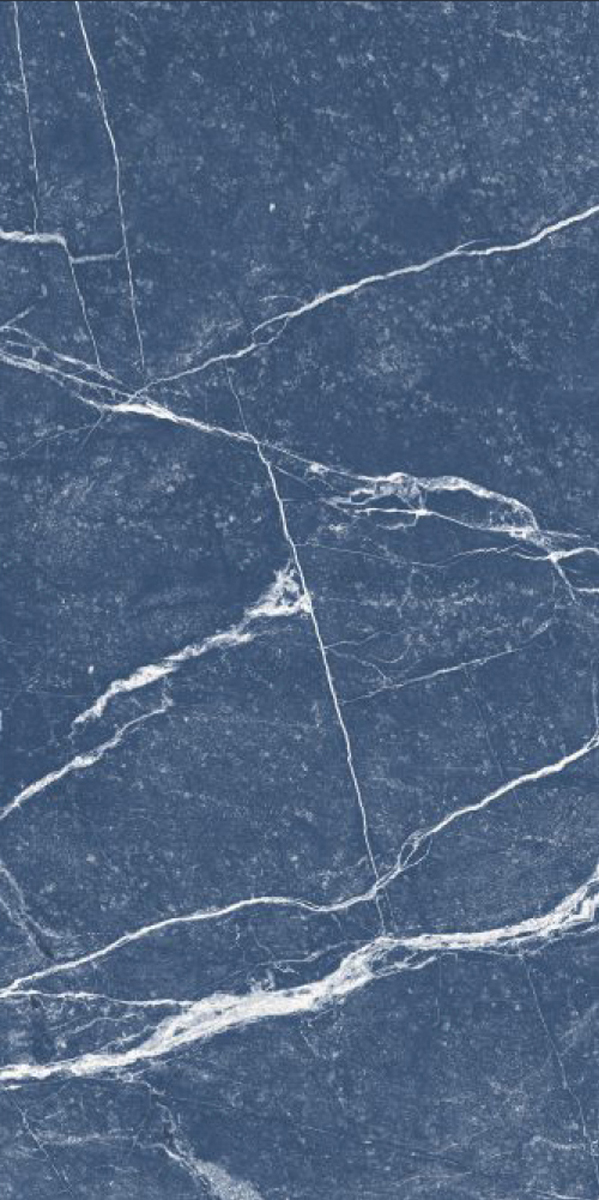
Blue is one of the most requested non-neutral colours in Indian kitchen tiles. It sits at a unique position in the colour spectrum for kitchens: it is saturated enough to read as a deliberate colour choice but cool enough to keep the kitchen feeling open and uncluttered. Unlike warm colours (green, terracotta, yellow) that can make a kitchen feel smaller, blue on a kitchen wall reads as a receding colour that adds visual depth to the space.
The shade decision is the one that matters most with blue kitchen tiles. Light blue, mid-blue, navy, and dark blue read completely differently in an Indian kitchen, and the same shade can look flat, vibrant, or overpowering depending on the direction the kitchen faces, the cabinet colour, and the artificial lighting colour temperature. Across the kitchen tiles range, blue is available in ceramic for wall and backsplash applications and in GVT for both walls and floors. This page covers every shade from powder blue to near-black navy, the blue-and-white combination specifically, and where each shade does and does not work in Indian kitchen conditions.
Blue is the most light-sensitive colour in the kitchen tile range. The same tile sample can read as a fresh, clean blue under cool daylight, a grey-blue under warm LED lighting, and a deep, heavy tone under fluorescent tubes. Checking a blue tile sample under the kitchen's actual installed lighting before ordering is not optional; it is the single most important step in getting the right shade.
| Kitchen Orientation | Natural Light Quality | How Blue Reads | Best Blue Shade | Shade to Avoid |
| North-facing | Cool, diffused; no direct sun | Blue looks cooler and more grey-blue throughout the day | Light blue or warm-toned mid-blue with a slight green undertone | Navy or dark blue; already cool light makes them feel heavy |
| South-facing | Warm, direct afternoon sun | Blue reads brighter and more saturated in afternoon light; it can look almost electric | Navy or mid-blue; the warm light balances the cool tile | Very pale light blue; can look washed out in strong sun |
| East-facing | Warm morning light; cool afternoon | Blue reads differently in the morning vs. the afternoon; needs a stable mid-tone | Mid-blue or powder blue; reads well under both light conditions | Dark blue; heavy in cool afternoon light |
| West-facing | Cool morning; warm afternoon sun | Similar to east but reversed; afternoon warmth lifts the shade | Mid-blue or navy; afternoon light enriches deeper tones | Very pale blue; reads as almost white in strong afternoon sun |
Under warm-white LED lighting (2700K to 3000K), which is the most common kitchen lighting in Indian homes, any blue tile shifts toward grey-blue. Under cool-white LED (4000K to 5000K), blue reads closer to its true shade. If the kitchen uses warm-white LEDs and the buyer wants a blue that reads as genuinely blue (not grey-blue) under that lighting, choose a mid-to-dark blue with a higher saturation. A pale blue under warm-white LED can read as barely blue.
| Shade | Colour Character | Kitchen Walls | Kitchen Backsplash | Cabinet Pairing | Avoid |
| Powder blue/sky blue | Very pale; almost white with a blue tint; cool undertone | Works in south-facing or brightly lit kitchens; can look flat in north-facing ones | Fresh and airy as a backsplash strip; pairs well with white grout | White, cream, light timber; chrome or stainless fixtures | North-facing kitchens; warm yellow LED lighting |
| Light blue (mid-pale) | Clearly blue but not saturated; sits between powder and mid-blue | Versatile; works in most Indian kitchen orientations | The most practical blue for a backsplash in any modular kitchen | White, cream, timber in any tone; brass or chrome fixtures | Very dark timber cabinets where light blue looks washed out |
| Mid-blue (classic blue) | Saturated, clear blue; reads as a confident colour choice | Works as a full wall in kitchens with white cabinets and good lighting | Strong backsplash statement; pairs with white or off-white grout | White cabinets only; chrome, stainless, or matte black fixtures | Cream or beige cabinets; warm timber without white upper cabinets |
| Navy blue | Deep, rich blue; reads as almost dark from a distance | Best as a backsplash strip only in standard kitchens; full wall in large kitchens with strong lighting | High-contrast statement backsplash against white cabinets | White cabinets exclusively; brass or matte black fixtures | Small kitchens, north-facing kitchens, warm timber cabinets |
| Dark blue (near-black blue) | Very deep; reads as almost black with a blue undertone | Feature wall only in large or open-plan kitchens | Bold single-row accent at the backsplash; not recommended for full backsplash in small kitchens | White cabinets only; brass, gold, or matte black fixtures | Small kitchens; any cabinet colour other than white or off-white |
Blue kitchen wall tiles are available in ceramic for the backsplash and standard wall applications, and in GVT for larger format full-wall cladding. The tile body and size decision depends on how much of the wall is being tiled and how close the tile will be viewed.
Ceramic in 300x600 (12x24) gloss finish is the standard specification for a blue kitchen backsplash or wall tile in Indian homes. The gloss finish on blue gives the colour its full saturation, and the reflective surface adds brightness to the kitchen wall. Matte blue ceramic on a kitchen wall is a valid choice in kitchens with strong natural light where the buyer wants a softer, less reflective finish. For full coverage of tile types and surface-by-surface rules, the kitchen wall tiles page covers the specification framework.
Blue ceramic in 12x24 gloss is available across a wide shade range from Indian manufacturers in Morbi: powder blue, sky blue, teal-blue, cobalt, indigo, and navy. Prices run from Rs. 40 to Rs. 85 per sq.ft depending on shade depth and finish. Darker and more saturated blues are slightly more expensive than pale blues because the glaze requires more pigment.
GVT in a blue or teal look in 600x600 or 600x1200 gives a more consistent colour depth than ceramic for full-height kitchen wall cladding. On a large wall area, the GVT glaze holds the blue colour more evenly across tiles from the same batch than ceramic, which can show shade variation between boxes. For a designed kitchen where the full wall above the dado is tiled in blue, GVT in 2x4 with a polished glossy finish gives a sharp, jewel-like blue surface. GVT blue in 2x2 runs from Rs. 85 to Rs. 165 per sq. ft.; in 2x4, Rs. 100 to Rs. 190 per sq ft.
Note: Gloss and polished glossy finishes are safe on kitchen walls. They must not be used on kitchen floors. For any blue tile on a kitchen floor, use GVT in matte or GHR finish only.
The backsplash is where blue kitchen tiles have the most visual impact and the most practical constraints. It sits at eye level, is seen from across the kitchen, and takes direct cooking contact. The tile in this zone needs a glazed surface that wipes clean from oil and cooking splashes, and a colour that holds up under both cooking heat proximity and daily cleaning.
Gloss ceramic in 12x24 is the most practical blue backsplash tile specification. The glazed surface resists oil and cooking stains, the size gives a clean horizontal run with fewer grout lines than 12x18, and the gloss finish gives the blue colour its full depth. A light blue backsplash tile in gloss ceramic in 12x24 with white grout and white cabinets is one of the most cohesive and timeless kitchen tile combinations in the Indian market.
For the backsplash zone directly behind the cooktop, avoid matte or textured blue tiles. Oil mist from cooking settles into matte and textured surfaces more visibly than on gloss. Behind the cooktop, gloss is always the practical choice regardless of the colour.
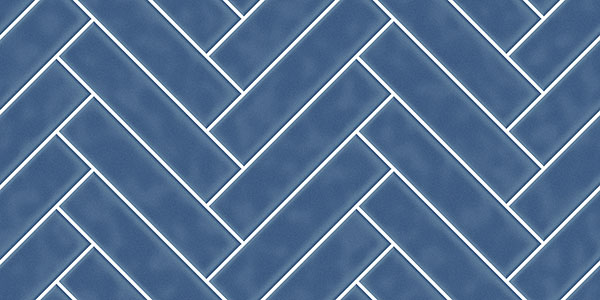
The blue subway tile backsplash uses ceramic in the rectangular 12x18 or 12x24 format in a blue gloss finish, laid in a horizontal brick bond. Subway tiles are wall-only, gloss finish, horizontal brick bond, white grout. The most commonly available blue subway shades from Indian manufacturers are light blue, mid-blue, and teal-blue. Navy subway tiles are less stocked as standard and may need specific sourcing from the manufacturer directly before ordering.
Blue and white is one of the most enduring colour combinations in kitchen tile design, drawing from Portuguese azulejo tradition, English Delft tile heritage, and the Indigo textile culture that is deeply familiar across Indian homes. In a kitchen context, blue and white tile combinations are used in four distinct ways:
The simplest blue and white combination. A single blue tile colour laid in a brick bond or grid with white grout joints. The white grout creates a grid pattern that reads as a deliberate design element rather than a construction joint. This works best with light to mid-blue tiles where the contrast between tile and grout is moderate. With very dark blue tiles, the white grout grid becomes very prominent and can dominate the surface. If the tile is navy or dark blue, a grey or tone-matched grout gives a cleaner, more unified surface than white grout.
Patterned ceramic tiles in blue and white, inspired by Delft, Portuguese, or Moroccan geometric tile traditions, are available from Indian manufacturers in 200x200 and 300x300 in gloss finish. These work best as a contained feature: the full backsplash strip of two to three rows, or a panel behind the hob, rather than the full kitchen wall. A full wall of patterned blue and white tiles competes with everything else in the kitchen. A contained panel reads as a deliberate design accent.
A blue field tile across the main backsplash area with a solid white border tile running the perimeter of the tiled zone. This gives the backsplash a framed, composed look. The border tile is typically one tile wide. In a 12x24 blue field, a white 12x24 border along the top and side edges of the backsplash gives a clean, architectural finish. This is the combination most associated with a considered, designed kitchen rather than a default tile job.
Individual blue and white tiles alternating in a checkerboard or pattern layout. This is more demanding to lay accurately and produces more cut wastage than a single-colour field. It works well on a small backsplash area or as a feature panel behind the hob. On a large backsplash run, the alternating pattern becomes visually busy. Limit alternating blue and white layouts to areas under 20 sq.ft.
| Blue and White Combination | Best Kitchen Application | Tile Size | Grout Colour | Avoid In |
| All-blue gloss ceramic, white grout | Standard modular kitchen backsplash | 12x24 | White | Very dark blue on small backsplash; use grey grout instead |
| Patterned blue and white ceramic | Feature panel behind hob; contained backsplash strip | 200x200 or 300x300 | White | Full kitchen wall; open-plan kitchens where the pattern reads from multiple angles |
| Blue field, white border | Full backsplash runs with a finished, framed look | 12x24 for both | White or off-white | Very small kitchens where a border reduces the field area too much |
| Alternating blue and white | Small feature panel or hob splashback | 12x12 or 12x24 | White | Large backsplash areas; any run over 20 sq.ft |
Blue kitchen floor tiles are a less common request than blue wall tiles, and for good reason. A blue floor in a kitchen changes the entire visual register of the space far more dramatically than a blue wall. Where a blue backsplash reads as an accent, a blue floor reads as the dominant surface in the room. That is not necessarily a problem, but it requires a deliberate design commitment that not every kitchen layout supports.
For kitchen floors, the finish constraint is absolute: matte or GHR only. Blue gloss or polished tiles must not be used on kitchen floors.
Three practical considerations specific to blue on a kitchen floor:
GVT in a mid-blue or teal matte finish in 600x600 is the most practical blue kitchen floor tile for buyers who want the blue floor look with manageable daily maintenance. Prices run from Rs. 90 to Rs. 170 per sq.ft. The GVT tiles category page shows the full available range in blue and teal tones with size and finish filters.
| Cabinet Colour | Blue Shade That Works | Blue Shade to Avoid | Fixture Finish | Grout Colour |
| White or off-white | Any blue from light to navy; navy creates the strongest contrast | None; white cabinets work with the full blue range | Chrome, stainless, brass, or matte black all work | White grout for light blue; grey or matching for navy |
| Light timber (oak, pine) | Light blue or powder blue; warm-toned blue with a slight green undertone | Navy or dark blue; cool, deep blue clashes with the warm orange-brown of light timber | Brushed nickel, brass, or matte black | Off-white or warm grey to match the timber tone |
| Dark timber (walnut, teak) | Light blue on walls as contrast; avoid blue on floor with dark timber | Mid-blue or navy with dark timber; the combination looks heavy | Brass or antique bronze to warm the combination | Off-white; avoid white, which creates too many contrast levels |
| Grey cabinets | Mid-blue or teal-blue; blue with a slight green undertone reads well against grey | Navy with grey cabinets reads as too cool overall | Chrome, stainless, or matte black | Mid-grey grout to unify the cool tones |
| Cream or beige cabinets | Light blue or powder blue; warm blue with a slight aqua undertone | Dark blue or navy; too much contrast against warm cream | Brass, gold, or brushed nickel | Warm off-white or cream-toned grout |
The combination that appears most in Indian kitchen renovation projects is light blue gloss ceramic on the backsplash with white cabinets, white grout, and chrome or stainless steel fixtures. It is enduring because the contrast levels are moderate: the blue is clearly present but does not compete with the cabinet, the countertop, or the appliances. For buyers who want more visual impact, stepping up to mid-blue or navy on the backsplash against white cabinets creates a high-contrast combination that reads as a conscious design decision.
| Your Kitchen Requirement | Recommended Tile | Size | Finish | Price Range (Rs./sq.ft) |
| Light blue backsplash, white cabinets | Light blue gloss ceramic | 12x24 | Gloss | Rs. 40 to Rs. 75 |
| Navy backsplash, statement kitchen | Navy gloss ceramic or GVT | 12x24 or 2x2 | Gloss (ceramic) or Polished Glossy (GVT wall only) | Rs. 55 to Rs. 165 |
| Blue subway tile backsplash | Mid-blue or light blue gloss ceramic | 12x18 or 12x24 | Gloss | Rs. 40 to Rs. 80 |
| Blue and white backsplash | Light or mid-blue gloss ceramic, white grout | 12x24 | Gloss | Rs. 40 to Rs. 85 |
| Full blue kitchen wall, designed kitchen | GVT blue or teal | 2x4 | Polished Glossy (walls only) | Rs. 100 to Rs. 190 |
| Blue kitchen floor, mid-range | Mid-blue or teal GVT matte | 2x2 | Matte | Rs. 90 to Rs. 165 |
| Dark blue feature wall, open-plan kitchen | Dark blue or navy GVT | 2x4 | Polished Glossy (walls only) | Rs. 110 to Rs. 190 |
| Budget light blue backsplash | Powder blue gloss ceramic | 12x18 or 12x24 | Gloss | Rs. 40 to Rs. 65 |
Always test a blue tile sample in the kitchen space under the actual installed lighting before ordering the full quantity. Blue is the colour that changes most between showroom lighting and kitchen lighting. A tile that reads as a fresh mid-blue under bright showroom LEDs can read as a grey-blue under warm-white kitchen lighting. No other kitchen tile colour requires this sample check more urgently than blue.
Blue kitchen tiles from verified Indian manufacturers in Morbi, Rajkot, and Gujarat are listed at TilesFinders across the full shade range from powder blue to near-black navy. Ceramic gloss in 12x24 for backsplash and walls starts from Rs. 40 per sq. ft.; GVT in blue and teal for full walls and floors runs from Rs. 85 to Rs. 190 per sq.ft. Use the colour filter to narrow by blue shade, then the finish filter to separate wall-safe gloss from floor-safe matte before shortlisting. All ceramic tiles listed meet IS 13630; all GVT tiles meet IS 15622.
Light blue in gloss ceramic in 12x24 is the most versatile and widely used shade for a kitchen backsplash in Indian homes. It works with white, cream, and timber cabinets, reads well under both warm and cool LED lighting, and does not overpower the kitchen the way navy or dark blue can in smaller spaces. For buyers who want more visual impact, mid-blue gives a stronger statement while still pairing well with white cabinets. Navy works best in kitchens with strong natural light or well-planned artificial lighting.
Yes, in matte finish only. GVT in matte or GHR finish in a mid-blue or teal tone in 600x600 is the correct specification for a blue kitchen floor. Gloss or polished blue tiles must not be used on kitchen floors as they are slippery when wet. Blue floors work best in larger kitchens above 100 sq.ft where the blue does not make the space feel enclosed. In smaller kitchens, a blue floor can make the space feel cooler and tighter than a neutral floor would.
The most practical combination is an all-blue gloss ceramic tile with white grout on the backsplash. The white grout creates a grid pattern that reads as a design element without requiring a second tile. For a more composed look, use a blue field tile with a white border tile running one tile wide around the perimeter of the backsplash. For a feature panel look, patterned blue and white ceramic in 200x200 on a contained zone behind the hob gives a traditional decorative accent without covering the full backsplash.
It can, but only on the backsplash strip of two to three tile rows between the counter and overhead cabinets, not on the full wall. In a small kitchen, navy on the full wall above the dado makes the space feel smaller and heavier. On the backsplash strip only, navy creates a high-contrast accent against white cabinets that reads as deliberate and considered. White or off-white cabinets are essential; navy with cream, timber, or grey cabinets in a small kitchen creates a colour conflict that is difficult to resolve with other materials.
Gloss for ceramic in 12x18 and 12x24 on the backsplash and above-counter wall. Gloss gives blue its full colour saturation and is easy to wipe clean from oil and cooking splashes. Matte blue ceramic is a valid choice for wall areas away from direct cooking contact, where the buyer prefers a softer look. For GVT on a full kitchen wall, polished glossy gives the sharpest blue surface. All gloss and polished finishes are wall-only; they must not be used on kitchen floors.
Warm-white LED lighting (2700K to 3000K) suppresses the blue in any tile and shifts it toward grey-blue. The effect is stronger on pale blue tiles than on deep blue or navy. Under warm-white LEDs, a powder blue tile can read as almost grey. To maintain a genuine blue reading under warm LED lighting, choose a mid-blue or deeper shade with higher colour saturation. Alternatively, switch the kitchen lighting to cool-white LEDs (4000K), which allow the blue to read closer to its true shade.
Not on a gloss finish. Gloss blue ceramic wipes clean as easily as white or grey ceramic. The glazed surface does not absorb oil or cooking stains. The practical consideration specific to blue tiles is that white calcium deposits from hard water show more visibly on mid and dark blue tiles than on neutral tiles. In cities with hard water, wipe down the backsplash after cooking and rinse the surface when cleaning to prevent calcium ring marks from drying on the tile.
Dark grey or anthracite grout with navy blue tiles keeps the joins subtle and lets the blue surface read as a continuous panel. White grout with navy tiles creates a very prominent grid pattern where the bright white joints compete with the deep blue for attention. If the buyer specifically wants the grid to show as a design element, white grout works. If the goal is a surface that reads as close to a flat navy panel as possible, dark grey or matching grout is the better specification.