Kitchen Tiles Guide: Walls, Floors, Backsplash & Designs Explained
Master your kitchen renovation. Learn why vitrified matte floors and glossy walls are the secret to surviving heavy Indian cooking without sacrificing modern design.
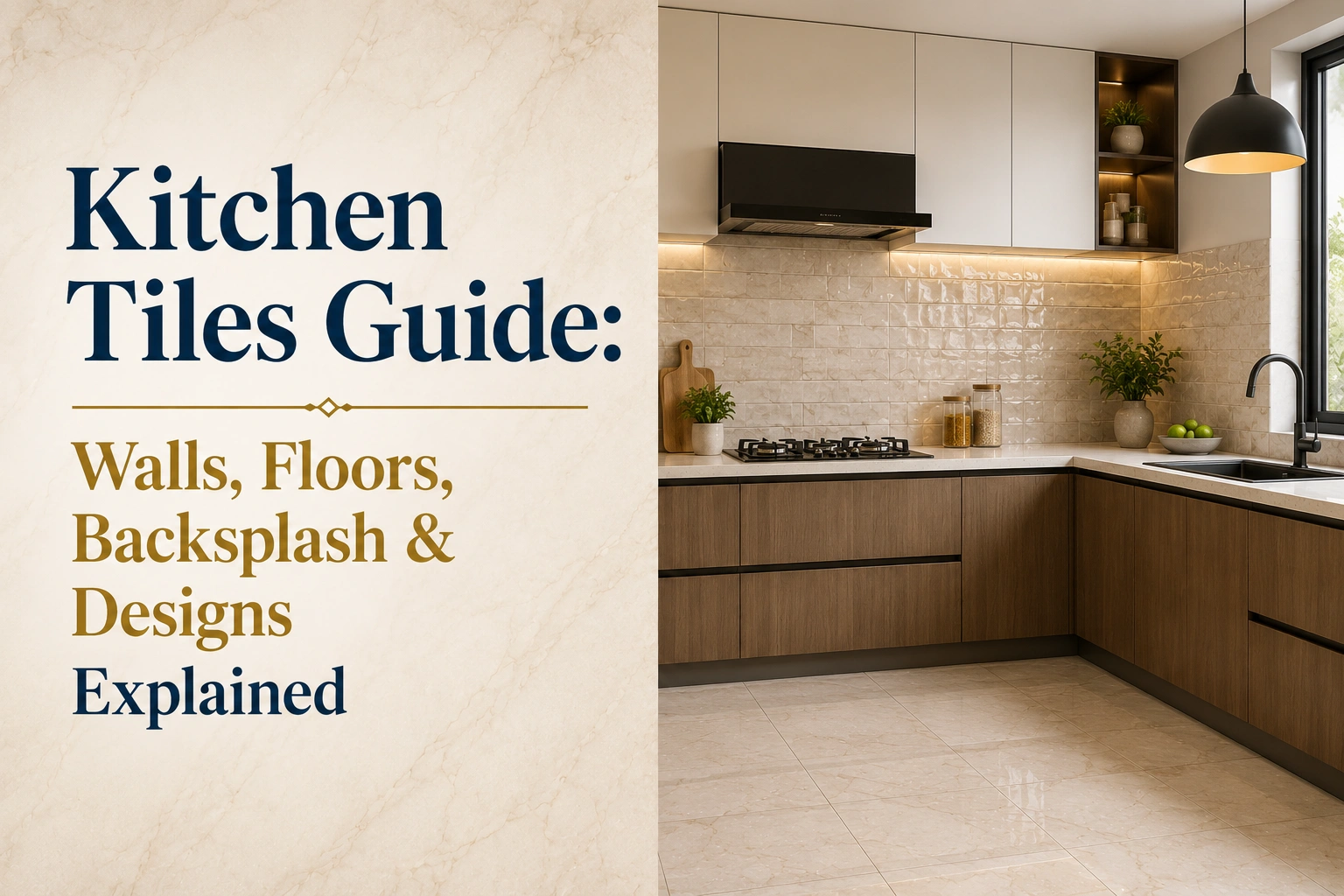
Choosing kitchen tiles sounds easy until you actually start shopping.
A tile that looks stunning in a showroom can feel too reflective under your kitchen lights. A trendy backsplash may look amazing online, but it becomes difficult to clean after a few months of cooking. Even the wrong floor finish can become slippery once oil and water enter the picture.
That is why kitchen tiles should never be selected only on appearance.
The right kitchen tile ideas balance design, durability, maintenance, safety, and long-term practicality. This guide breaks everything down clearly so you can choose kitchen wall tiles, floor tiles, and backsplash designs that genuinely work in Indian homes.
Why Kitchen Tiles Matter More Than Most Homeowners Realise
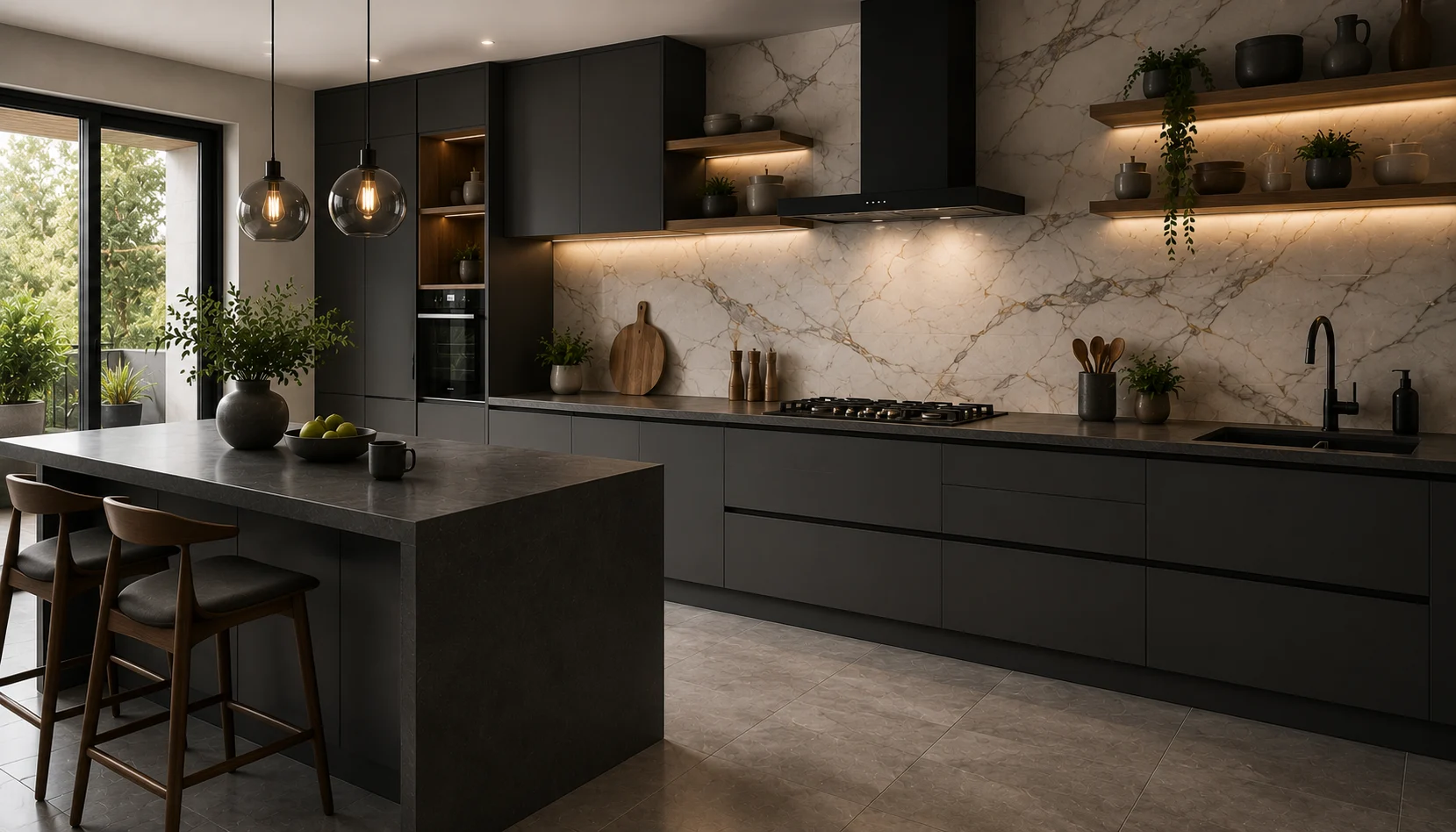
Indian kitchens deal with far more stress than many people expect.
There is heat from cooking, regular exposure to water, oil splashes, spice stains, steam, and daily cleaning. In many homes, the kitchen also doubles as a social space where family members gather throughout the day.
A poor tile choice becomes obvious very quickly.
Glossy floors can become slippery near the sink. Light grout lines start looking yellow around the stove. Some cheap surfaces absorb stains from turmeric and masala oils within months.
Good kitchen tiles solve these problems before they happen.
The best kitchen surfaces are:
- easy to clean
- stain resistant
- heat resistant
- durable under daily use
- visually balanced under Indian lighting conditions
That balance matters more than chasing trends.
Types of Kitchen Tiles Used in Indian Homes
Before selecting colours or patterns, understand the tile material first. Material affects cleaning, durability, moisture resistance, and long-term maintenance.
Ceramic Kitchen Tiles
Ceramic tiles remain common in Indian kitchens because they are affordable and widely available.
They work best on kitchen walls where direct impact and heavy foot traffic are limited.
Glossy ceramic wall tiles are especially popular because grease and food splashes wipe off easily.
Typical Uses:
- Kitchen walls
- Compact apartment kitchens
- Budget renovations
Vitrified Kitchen Tiles
Vitrified kitchen tiles are one of the most preferred choices for modern Indian kitchens because of their very low water absorption, durability, and easy maintenance.
These tiles are manufactured using clay, silica, quartz, and other minerals fired at high temperatures, creating a dense and highly compact surface. Compared to ceramic and porcelain tiles, vitrified tiles absorb significantly less water, which makes them highly resistant to moisture, stains, and daily kitchen spills.
That lower porosity becomes especially useful in Indian kitchens where:
- Regular mopping is common
- Oil splashes happen daily
- Masala stains are frequent
- Moisture exposure is constant near sinks and cooking zones
Glazed vitrified tiles (GVT) are particularly popular because they combine a vitrified body with a digitally printed glazed surface. This allows a wide variety of modern finishes such as:
- marble-look designs
- concrete finishes
- stone-inspired textures
- wood-look surfaces
- matte contemporary patterns
One major advantage of vitrified kitchen tiles is maintenance.
Because the surface absorbs very little moisture, stains remain mostly on the top layer instead of penetrating deep into the tile body. This makes cleaning easier over long-term daily usage.
Vitrified tiles also perform well in:
- modular kitchens
- open kitchens
- heavy-use family homes
- large-format modern layouts
Best For:
- Kitchen flooring
- Modern modular kitchens
- Moisture-prone kitchen areas
- High-use Indian households
- Easy-maintenance interiors
Water Absorption:
- Extremely low compared to ceramic and porcelain tiles
Porcelain Kitchen Tiles
Porcelain kitchen tiles are another durable option used in Indian kitchens, especially in modern and premium interiors.
They are made using refined clay and fired at high temperatures to create a dense tile surface with better durability than regular ceramic tiles. Porcelain tiles generally absorb less water than ceramic tiles, but they are typically not as moisture-resistant as vitrified tiles.
This makes porcelain a practical middle-ground option between ceramic and vitrified surfaces.
Porcelain kitchen tiles are commonly available in:
- matte finishes
- satin finishes
- polished surfaces
- anti-slip textures
- marble-look designs
- stone-inspired patterns
They are often selected for kitchens where homeowners want:
- a cleaner, premium appearance
- better durability than ceramic
- modern surface finishes
- moderate moisture resistance
Matte porcelain surfaces also work well for kitchen floors because they provide decent grip near wet zones.
However, for kitchens exposed to very heavy moisture, frequent spills, and intense daily usage, vitrified tiles are usually considered the more practical low-absorption option.
Best For:
- Premium kitchen walls and floors
- Contemporary modular kitchens
- Medium to heavy household use
- Decorative kitchen interiors
Water Absorption:
- Lower than ceramic tiles but generally higher than vitrified tiles
Mosaic Kitchen Backsplash Tiles
Mosaic kitchen backsplash tiles are mainly used for decorative accents.
They add texture and visual depth behind the hob, chimney, or sink area. Small patterned sections can make a plain kitchen feel far more finished.
Still, there is one thing many homeowners ignore.
More grout lines mean more cleaning effort.
That is why mosaic designs work best in smaller feature areas instead of across the entire kitchen wall.
Kitchen Wall Tiles vs Kitchen Floor Tiles
This is where many homeowners make expensive mistakes.
Kitchen wall tiles and floor tiles are designed differently. Using the wrong tile in the wrong place affects both safety and durability.
| Feature | Wall Tiles | Floor Tiles |
| Surface | Glossy or smooth | Matte or textured |
| Purpose | Easy cleaning | Grip and durability |
| Thickness | Lighter | Heavier and stronger |
| Slip Resistance | Not important | Essential |
| Best Finish | Glossy | Matte |
Glossy kitchen wall tiles are easier to wipe clean after cooking splashes.
Matte kitchen floor tiles perform better because they reduce slipping when water or oil spills happen.
For Indian kitchens, anti-skid kitchen floor tiles are usually the safer option, especially near sinks and cooking areas.
Easy-to-Clean Kitchen Tiles: What Actually Matters
Many homeowners assume glossy tiles are always easier to clean.
That is only partially true.
Cleaning performance depends on:
- surface texture
- grout width
- tile porosity
- finish type
- stain resistance
For example, heavily textured kitchen wall tiles may hide dust initially but often trap grease inside grooves near cooking zones.
Similarly, tiny mosaic backsplash tiles create dozens of grout joints that require more scrubbing over time.
Large-format vitrified and porcelain tiles usually perform better for low-maintenance kitchens because:
- They have fewer grout lines
- The surface absorbs less staining
- Grease wipes off more easily
- Regular mopping becomes faster
In Indian kitchens, matte floors combined with satin or glossy walls usually create the most balanced maintenance setup.
Best Kitchen Backsplash Tile Designs for Modern Indian Kitchens
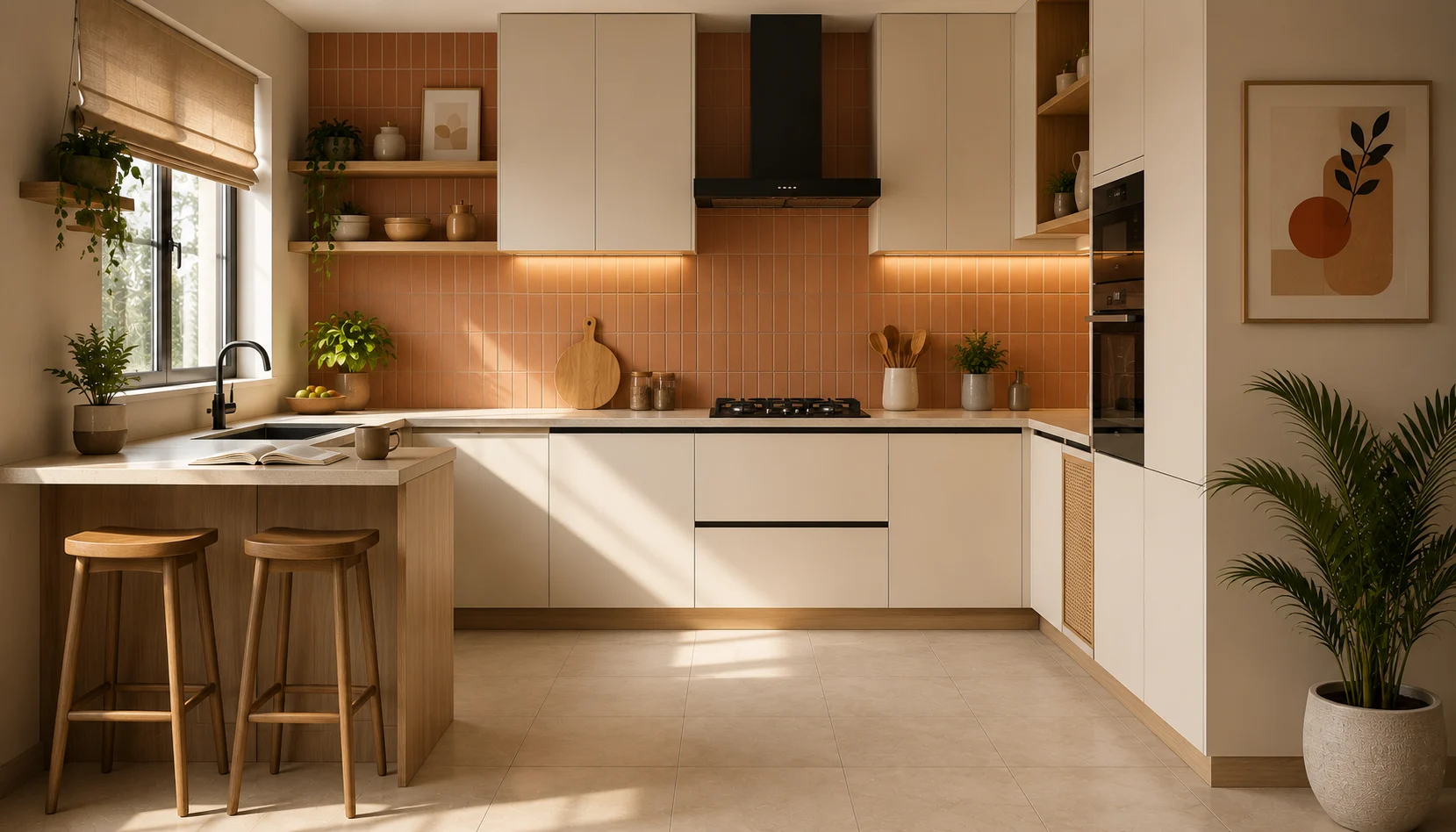
Backsplashes protect your walls from cooking splashes, but they also shape the overall look of the kitchen.
The best backsplash tile designs balance style and maintenance.
Subway Tiles for Kitchen Backsplash
Subway tiles continue to dominate modern kitchens because they feel clean and timeless.
White subway tiles pair well with almost every cabinet finish, including wood laminates, matte black kitchens, and grey modular units.
They also reflect light well in compact kitchens.
One important detail matters here.
Choose stain-resistant grout. White grout near Indian cooking zones stains quickly.
Moroccan Pattern Backsplashes
Moroccan-style backsplash tile designs add personality without overwhelming the kitchen.
These patterns work best:
- behind the stove
- inside niche sections
- as compact feature strips
Using them across every wall usually makes smaller kitchens feel visually crowded.
Mosaic Kitchen Backsplash Tiles
Mosaic backsplashes work beautifully in contemporary kitchens when used carefully.
Glass and stone-look mosaic tiles reflect light nicely and help break the monotony of plain cabinetry.
Still, they require regular grout cleaning.
For low-maintenance homes, limit mosaics to small accent sections.
Marble-Look Backsplash Tiles
Marble-look vitrified tiles have become extremely popular in Indian kitchen tiles design.
They provide the appearance of natural marble without the staining issues real marble surfaces face near cooking zones.
Matte marble-look finishes also hide fingerprints and grease marks better than ultra-glossy surfaces.
Popular Kitchen Tile Colour Combinations That Actually Work
Kitchen tile colour combinations look very different under real household lighting compared to showroom setups.
That is why practical colour planning matters.
White Walls + Grey Floors
This remains one of the safest combinations for Indian homes.
It feels clean, modern, and bright without becoming difficult to maintain.
Grey floor tiles also hide dust and water marks better than plain white flooring.
Beige + Warm Wood Tones
This combination works especially well in homes with warm lighting.
It creates a softer kitchen environment and feels less clinical compared to pure white kitchens.
Sage Green Backsplash + Neutral Walls
Muted green backsplash tile designs are trending heavily in 2026.
They add freshness without becoming overpowering.
Softer greens pair especially well with matte white or beige cabinetry.
Black Floors + Marble-Look Walls
This combination creates a premium appearance in larger kitchens.
However, dark floors require proper lighting. In poorly lit kitchens, they can make the space feel smaller.
Why Lighting Changes the Way Kitchen Tiles Look
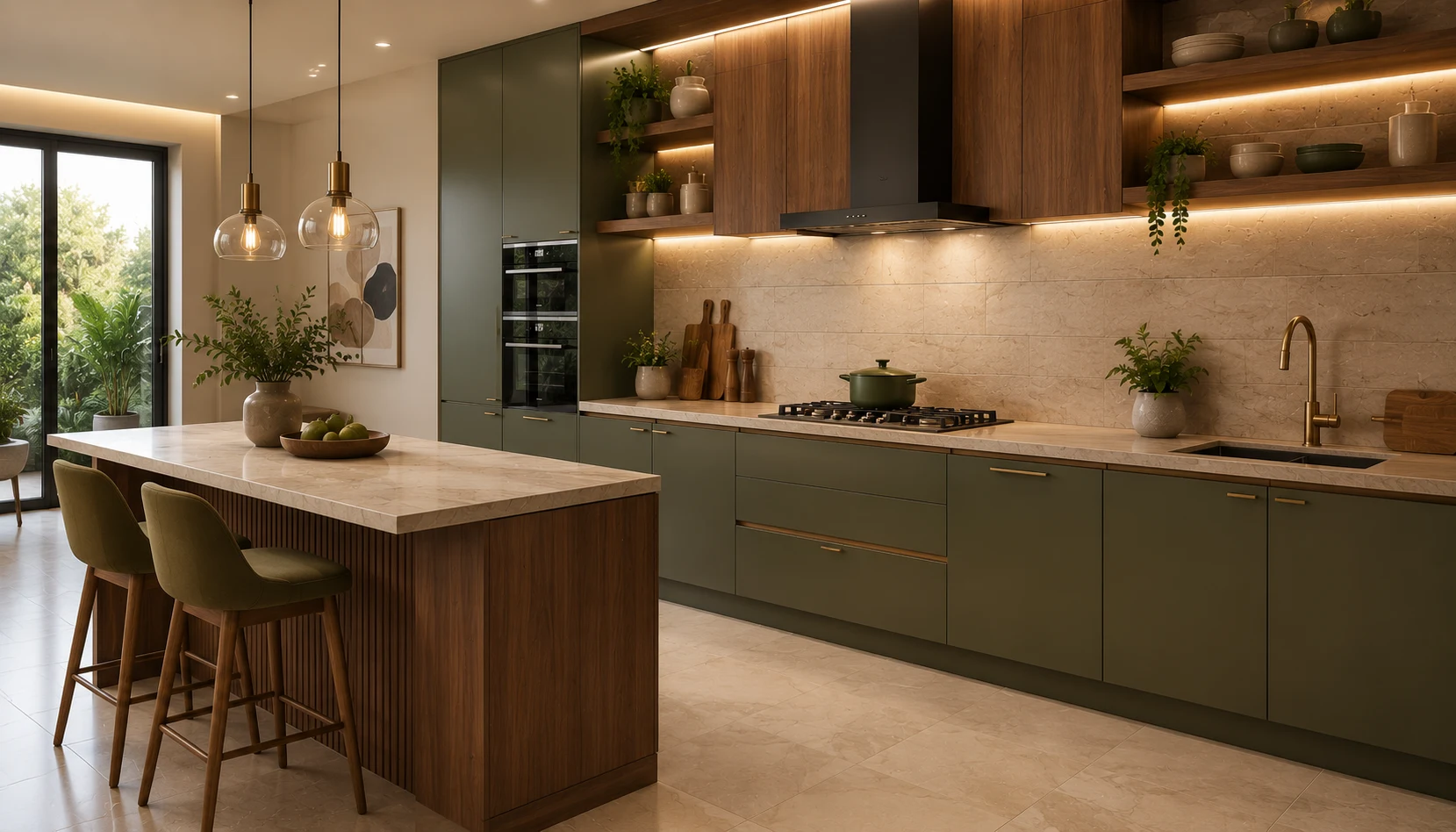
This is something most showroom visits fail to prepare buyers for.
Kitchen tiles can look dramatically different depending on:
- warm lighting
- cool white LEDs
- natural sunlight
- chimney lighting
- shadow placement near cabinets
A glossy white tile under showroom spotlights may appear luxurious. The same tile under warm yellow kitchen lights can suddenly look cream or slightly dull.
Dark kitchen floor tiles can also feel elegant in large display setups, but make compact Indian kitchens feel visually tight once cabinets and appliances are installed.
That is why physical sampling matters.
Always bring tile samples home and view them:
- during daytime
- under nighttime lighting
- with kitchen lights switched on
- beside your cabinet laminate
This one step prevents many expensive regrets later.
Best Tile Sizes for Small and Large Kitchens
Tile size affects:
- visual openness
- grout visibility
- installation cost
- cutting wastage
Here is a practical guide for Indian kitchens:
| Kitchen Size | Floor Tile Size | Wall Tile Size |
| Small Kitchens | 300x300 mm or 300x600 mm | 300x600 mm |
| Medium Kitchens | 600x600 mm | 600x1200 mm |
| Large Kitchens | 600x600 mm or 800x800 mm | 600x1200 mm |
Large-format tiles reduce grout lines and create a cleaner appearance.
Many modern homeowners also prefer 600x1200 mm tiles for kitchens and bathrooms because they create a more seamless and premium-looking surface with fewer grout joints.
But there is a catch.
In compact kitchens with multiple corners and fixtures, oversized tiles increase cutting wastage significantly.
That directly increases your project cost.
Matte vs Glossy Kitchen Tiles: Which One Works Better?
This debate comes up in almost every kitchen renovation project. The answer depends on where the tile is being installed.
| Area | Best Finish | Why |
| Kitchen Walls | Glossy or Satin | Easier grease cleaning |
| Kitchen Floors | Matte | Better grip and safety |
| Backsplash | Satin or Semi-Gloss | Easier maintenance without excessive glare |
| Open Kitchens | Matte or Satin | More balanced appearance |
Glossy surfaces reflect more light and help compact kitchens feel brighter.
But on floors, they become risky when oil or water spills happen.
Matte kitchen floor tiles are generally safer for Indian homes because they provide more traction and hide dust, footprints, and water marks better during daily use.
A balanced combination usually works best:
- matte flooring
- satin backsplash
- glossy or satin wall surfaces
That setup keeps the kitchen practical without making it look visually flat.
How to Choose the Right Kitchen Tiles for Your Home
The best tile choice depends on how your kitchen actually functions.
Based on Cleaning Needs
If you cook heavily every day:
- Choose stain-resistant kitchen tiles
- Avoid highly textured wall surfaces
- Use darker grout near the stove
Glossy walls clean faster. Matte floors hide dirt better.
Based on the budget
Ceramic works well for budget-friendly wall applications. Porcelain tiles usually offer the best balance between cost, durability, and maintenance for floors. Vitrified becomes worth considering for long-term premium kitchens.
Based on Family Usage
Homes with children or elderly family members should prioritize anti skid kitchen floor tiles. Safety matters more than achieving a showroom-like glossy finish.
Based on Kitchen Size
Smaller kitchens benefit from lighter colours and medium-format tiles. Very dark colours and oversized patterns can make compact spaces feel cramped.
Common Mistakes People Make When Buying Kitchen Tiles
Choosing Glossy Floor Tiles
Glossy floors look attractive initially, but become risky around wet cooking areas. Matte finishes are safer for everyday use.
Ignoring Grout Colour
Many homeowners focus only on tile colour. Then they choose bright white grout near cooking areas and regret it within weeks. Mid-tone grout shades stay cleaner visually.
Buying Tiles Only by Appearance
A beautiful tile that stains easily or becomes slippery creates long-term frustration.
Always ask about:
- water absorption
- slip resistance
- stain resistance
- thickness
Not Ordering Extra Material
Tiles break during cutting and installation. Always order at least 5 to 10 percent extra material for future repairs and replacements.
Expert Tips Before You Finalise Kitchen Tiles
- Take tile samples home and check them under your actual kitchen lighting.
- Confirm that all boxes belong to the same shade batch.
- Ask for matte samples if you are selecting kitchen floor tiles.
- Check whether textured surfaces are genuinely easy to clean.
- Match the grout colour carefully with the tile tone.
- Avoid very rough textures near cooking zones because grease settles inside grooves.
A homeowner in Ahmedabad recently selected heavily textured black backsplash tiles for a modular kitchen renovation. The design looked stunning initially. After a few months, the grease buildup inside the grooves made daily cleaning frustrating.
The tiles were not bad.
They simply did not match the kitchen's real usage pattern.
That distinction matters.
Final Thoughts
The best kitchen tile ideas are not always the trendiest ones online.
Good kitchen tiles survive daily cooking, regular cleaning, heat exposure, and years of use without becoming difficult to maintain.
Before finalising anything, think about how your kitchen actually functions every day. Consider lighting, cooking habits, cleaning frequency, and who uses the space most often.
A practical decision usually ages far better than a purely visual one. Exploring a reliable tiles marketplace can also help homeowners compare designs, finishes, sizes, and pricing more efficiently before making a final decision.
You can also explore different Indian kitchen tiles design styles, compare finishes, and connect with trusted tile dealers through TilesFinders to make the selection process simpler and more informed.
FAQs
Glossy finishes usually work better for kitchen walls because they clean easily after cooking splashes. Matte finishes are better for kitchen floors since they provide better grip and reduce slipping risks.
Start with one dominant neutral tone. Then create contrast using either the floor or backsplash. Avoid making every surface heavily patterned at the same time. In smaller kitchens, lighter walls combined with slightly darker floors usually work best.
Vitrified and porcelain tiles are generally the best options for Indian kitchen floors. They resist stains, moisture, scratches, and daily wear far better than standard ceramic flooring.

See our tile guides first
Set TilesFinders as a preferred source and our buying guides surface ahead of the rest for you.
Add as preferred sourceTakes one tap. Nothing to install.
What Readers Say
I was about to redo my parking area with the wrong tile size until I read this. The layout comparisons saved me from a costly mistake.
We reference TilesFinders guides while briefing clients on material selection. The size and pattern breakdowns are accurate and easy to explain visually.
On site, I get asked about grout spacing all the time. This article gave me a solid reference I now share with my team before every job.
Finally a guide that doesn't just push generic advice. The oil stain removal steps actually worked on our clubhouse driveway tiles.
I run a small construction firm and now send this link to clients directly when they ask about entrance tile sizing. Saves me an hour of explaining.
Good practical detail, though I wish there were more examples for compact apartment entrances specifically, not just villas.
My mother-in-law wanted marble, I wanted vitrified. This blog gave us the neutral comparison we needed to actually decide together.
Detailed without being overwhelming. I appreciated that it covered both cost and maintenance, not just the aesthetics.
Used the algae and hard water removal tips on our terrace tiles after the monsoon. Worked better than what our regular cleaner was doing.
As someone who sources tiles for multiple builder projects, I find these comparisons genuinely useful for vendor conversations, not just consumer content.
Recommended this to a client who kept second-guessing the entrance design. The small vs large layout section settled the debate instantly.
Straightforward and honest, no unnecessary jargon. Would like to see a similar breakdown for outdoor pool-deck tiles next.
We've bookmarked several TilesFinders guides for our design handbook. Reliable source when clients want data, not just opinions.
Two paths, one marketplace.
Get free quotes from verified suppliers.
Share your room, budget, and style. Suppliers in Morbi respond within hours.
Get Free QuotesList your business, reach real buyers.
Put your showroom in front of homeowners searching for tiles right now.
List Your Business