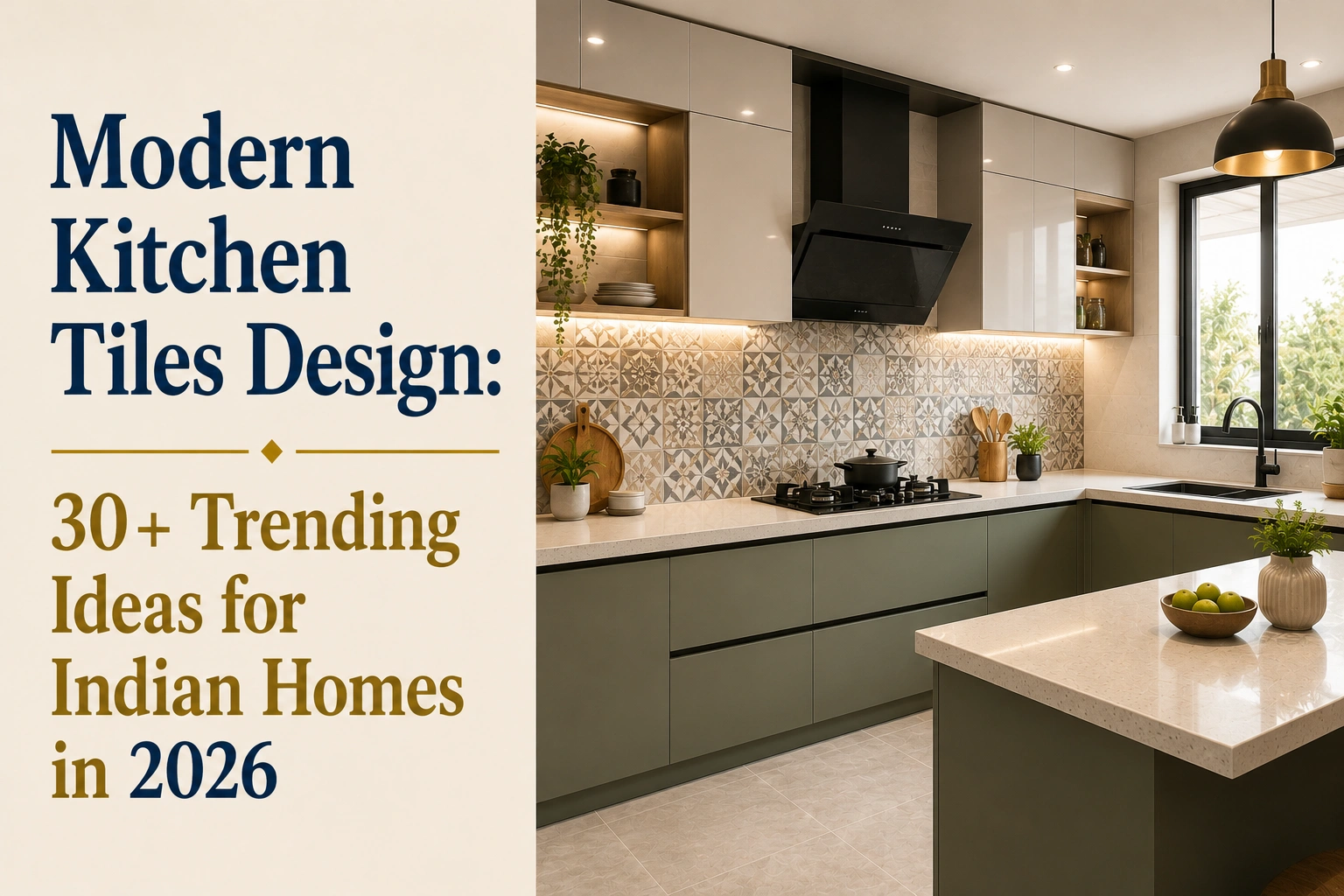
Modern Kitchen Tiles Design: 30+ Trending Ideas for Indian Homes in 2026
Upgrade your kitchen with 2026's top tile trends! Discover 30+ designs, from wood-look floors to sage green subway walls, plus expert tips on picking safe, stain-resistant matte tiles.
- Why Your Kitchen Tile Choice Matters More Than You Think
- Types of Modern Kitchen Tiles for Indian Homes
- 30+ Modern Kitchen Tiles Design Ideas for 2026
- Kitchen Tiles Colour Combination Guide for Indian Homes
- Recommended Tile Sizes for Indian Kitchens
- Matte vs Glossy Kitchen Tiles: Which One Works Better?
- Anti-Skid Kitchen Floor Tiles: Why Indian Homes Need Them
- Expert Tips Before Buying Kitchen Tiles in India
- Common Mistakes People Make When Choosing Kitchen Tiles
The kitchen works harder than any other room in an Indian home. Daily cooking with masala, oil splatter, steam, and hard water leaves its mark fast. Most homeowners realise this only after their tiles start looking dull six months into a renovation.
The wrong modern kitchen tiles design choice costs you in two ways: extra cleaning every day, and replacement costs within a few years. Getting the tile category, finish, and size right from the start saves both.
This guide covers 30+ design ideas trending in 2026, the tile types that actually hold up in Indian kitchens, colour combination ideas, size guidance, and practical buying tips from the market.
Why Your Kitchen Tile Choice Matters More Than You Think
The Daily-Use Reality of Indian Kitchens
Indian kitchens deal with stresses that most global tile guides overlook. Haldi and masala stains penetrate porous surfaces within minutes. Cooking smoke builds up on wall tiles over months, especially around the hob area. Hard water in cities like Ahmedabad, Jaipur, and Chennai leaves calcium deposits that turn glossy tiles chalky.
Monsoon humidity is another factor. Ground-floor kitchens in older buildings face moisture seeping from the base. A tile with even moderate water absorption will eventually crack or de-bond from the wall in these conditions.
The kitchen floor in most 2BHK and 3BHK flats sees heavy foot traffic, dropped vessels, and regular mopping with strong detergents. A tile that looks good in a showroom under LED spotlights may not hold up to that daily routine.
What Happens When Homeowners Choose Wrong
Glossy floor tiles in wet cooking zones become slip hazards when cooking oil or water hits them. Many Indian households with elderly members or young children have faced accidents this way. Switching tiles post-renovation means breaking existing flooring and spending two to three times the original budget.
Light-coloured grout between tiles looks clean in the showroom. In a working kitchen, it turns brown within a year and stays that way no matter how often you scrub. Dark or grey grout choices prevent this entirely.
Types of Modern Kitchen Tiles for Indian Homes
Not every tile category works in every kitchen zone. If you're unsure which option suits your space, read this detailed kitchen tiles guide for Indian homes to understand materials, finishes, sizes, and practical buying tips. Here is what each type offers and where it fits best.
Vitrified Kitchen Tiles (GVT and PGVT)
Vitrified tiles are the most popular category for modern Indian kitchens, and with good reason. GVT tiles (Glazed Vitrified Tiles) absorb less than 0.05% water, which means masala stains and cooking oil sit on the surface rather than seeping in. A quick wipe cleans them.
GVT works on both kitchen floors and walls. Sizes like 600x600 mm (2x2) and 600x1200 mm (2x4) are popular for floors. For kitchen walls, the same sizes work, along with 300x600 mm (12x24) for smaller backsplash areas.
PGVT (Polished Glazed Vitrified Tiles) has a high-shine finish that looks striking on kitchen feature walls. However, PGVT is not recommended for kitchen floors because the polished surface becomes slippery when wet. Keep PGVT to walls only in kitchen spaces.
Price range: GVT tiles run from approximately ₹60 to ₹150 per sq. ft. depending on brand and design. PGVT falls in a similar range but can go higher for large-format sizes.
Ceramic Kitchen Wall Tiles
Ceramic tiles remain a strong choice for kitchen walls in India, mainly because of the wide design range and accessible pricing. They come in 300x300 mm (1x1), 300x450 mm (12x18), and 300x600 mm (12x24) sizes. All three are wall-only options; ceramic tiles have 12 to 16% water absorption, which rules them out for floors.
The 12x18 and 12x24 sizes are popular for kitchen backsplash areas behind the cooking platform and sink. They lay fast and the design variety covers everything from plain whites to textured stone looks to hand-painted patterns.
Price range: Ceramic kitchen wall tiles start from around ₹30 to ₹80 per sq. ft., making them accessible for budget renovations and rentals.
Large Format Kitchen Tiles
Large format tiles in sizes like 600x1200 mm (2x4) and 800x1600 mm (32x64) are now practical for Indian kitchens, especially in open kitchen-living layouts common in newer 3BHK and 4BHK flats. Fewer grout lines mean easier cleaning, which is a real advantage in a kitchen.
On kitchen walls, a 2x4 tile in a marble-look or concrete-look finish creates a seamless surface that photographs well and ages cleanly. On floors, the same size makes smaller kitchens appear larger by removing visual breaks.
| Tile Category | Best Kitchen Zone | Recommended Sizes | Price Range (per sq. ft.) |
| GVT (Glazed Vitrified) | Floor + Wall | 2x2, 2x4, 8x48 (plank) | ₹60 to ₹150 |
| PGVT (Polished Vitrified) | Wall only | 2x2, 2x4 | ₹70 to ₹160 |
| Ceramic | Wall only | 12x18, 12x24 | ₹30 to ₹80 |
| Marble-look GVT | Floor + Wall | 2x2, 2x4 | ₹80 to ₹250 |
| Wooden Plank Tiles | Floor | 8x48, 8x40 | ₹70 to ₹180 |
| Porcelain | Floor + Wall | 2x2, 2x4 | ₹90 to ₹220 |
30+ Modern Kitchen Tiles Design Ideas for 2026
White and Grey Kitchen Tile Combinations
White and grey are the most consistent performers in Indian kitchens across the last five years, and 2026 is no different. The combination works because it reads clean without showing every dust mark, pairs with almost any cabinet colour, and holds its look as trends shift.
A popular execution: large 2x4 white marble-look vitrified tiles on the kitchen floor, with grey subway tiles or a textured grey ceramic tile on the backsplash wall. Dark charcoal grout on the floor and light grey grout on the wall keep the contrast without looking busy.
Wooden Plank Tiles for Kitchen Floors
Wooden plank tiles in the 8x48 format are growing fast in 2026, particularly in open kitchen-dining layouts in Pune, Bangalore, and Hyderabad flats. The warm wood grain against white or cream cabinetry gives kitchens a Scandinavian-meets-Indian feel that works across budgets.
Go for mid-tone oak or walnut finishes rather than very dark wood look tiles in kitchens, since darker tiles show every smudge and cooking residue. A matte finish is important here for grip. Pair with light grey or off-white wall tiles to balance the warmth of the floor.
Subway Tile Kitchen Walls
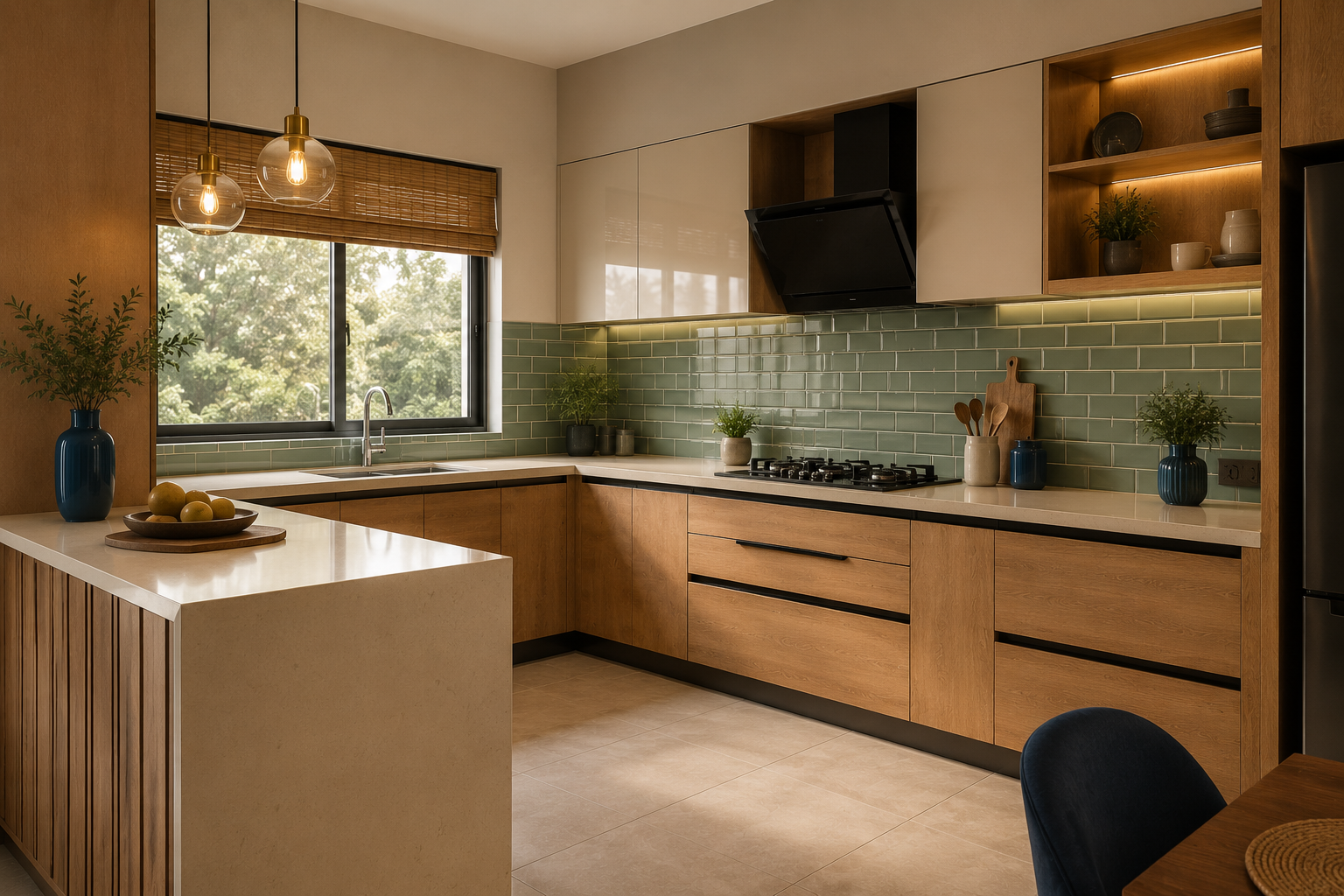
The subway tile wall does not fade because it adapts to colour. In 2026, off-white, sage green, slate blue, and warm terracotta subways are replacing the plain white that dominated a few years ago. The design is the same: rectangular tile, brick-bond lay, dark grout.
Sage green ceramic 12x24 tiles on the backsplash wall with off-white lower cabinets and a light oak-look floor tile is one of the strongest design combinations emerging in Indian modular kitchen renovations this year.
Marble-Look Tiles for Indian Kitchens
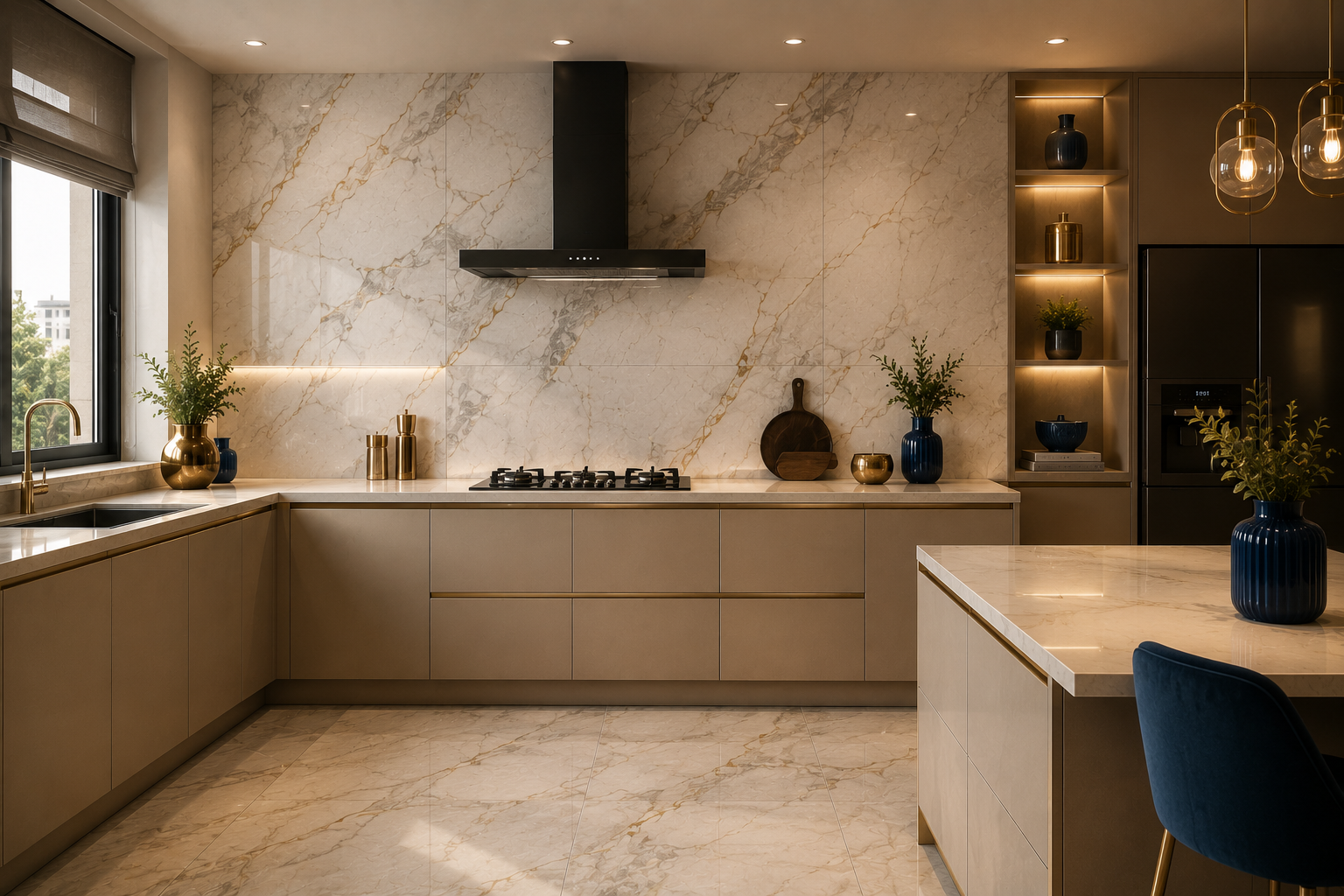
Marble-look GVT tiles in the Statuario or Calacatta pattern (white base with bold grey or gold veining) are popular for kitchen feature walls, especially the wall directly behind the open shelving or the cooking counter visible from the living area.
For the floor, choose a marble-look GVT in a matte or posh finish rather than polished. Polished marble-look is beautiful on walls but slippery on floors when wet. The matte version keeps the same visual and stays safe.
Textured and 3D Kitchen Wall Tiles
Textured kitchen tiles with a fabric, slate, or raised-pattern surface add depth to kitchen walls without using colour. These work especially well as an accent wall behind open kitchen shelves or as a complete backsplash in kitchens with otherwise plain cabinetry.
The practical caveat: textured tiles with deep grooves collect cooking grease faster than smooth surfaces. In an Indian kitchen where oil and masala are part of daily cooking, choose textures with shallow relief (0.3 to 1mm depth, the Texture punch category) rather than deep 3D patterns. Easier to wipe clean.
Bold Colour Combination Ideas
Dark navy or forest green kitchen wall tiles are the biggest colour shift happening in 2026. These appear most in the backsplash area paired with white or light wood cabinetry. The contrast is strong without being aggressive, and these darker tones actually hide masala marks better than pale surfaces.
Terracotta-toned tiles are seeing a return, especially in homes in cities like Jaipur, Jodhpur, and Ahmedabad, where earthy palettes connect naturally with the local design culture. Terracotta wall tiles paired with a neutral cream or off-white floor give a kitchen warmth that white-and-grey schemes cannot.
Large Format Tiles in Open Indian Kitchens
Open kitchens connected to the living or dining space in 3BHK and 4BHK flats benefit most from large-format tiles because the same tile can run across both spaces, removing the visual break at the kitchen boundary. A 2x4 concrete-look or marble-look tile on the floor, running from the kitchen into the dining area, makes the entire space feel connected and larger.
On kitchen walls in open layouts, a single large-format feature tile behind the cooking counter (800x1600 mm or 2x4 in a statement marble or graphic pattern) draws focus without cluttering the visible cooking zone.
Black and White Kitchen Tile Designs
Black and white checkerboard floors are back in 2026, this time in the form of large-format 2x2 vitrified tiles rather than the old small-format ceramic. The updated version uses soft black and warm off-white rather than jet black and stark white, which reads less harsh and fits better into Indian home palettes.
On kitchen walls, black matte tiles paired with brushed brass or matte gold hardware create a bold, urban look that works in compact modular kitchens in Mumbai and Bangalore apartments.
Kitchen Tiles Colour Combination Guide for Indian Homes
Colour choice in the kitchen is not just about looks. The right combination reduces visual clutter, makes the space feel larger, and stays forgiving of daily cooking stains.
| Wall Tile Colour | Floor Tile Colour | Cabinet Colour That Works | Mood |
| White / off-white | Warm beige or cream | Light wood, sage green | Bright, airy, easy to maintain |
| Grey subway or textured | White or light grey | White, charcoal | Modern, neutral, clean |
| Sage green | Light oak wood-look | White or cream | Warm, organic, contemporary |
| Marble-look (white-grey veins) | Same marble-look or plain white | Dark grey, navy, black | Luxurious, editorial |
| Dark navy or bottle green | Light cream or beige | White or natural wood | Bold, high contrast, urban |
| Terracotta or rust | Neutral beige or off-white | White or cream | Earthy, warm, Indian-rooted |
A general rule that works for most Indian kitchens: keep the floor lighter than the wall tiles, or match them closely in tone. A very dark floor in a small kitchen makes the space feel heavy. Reserve dark tile colours for walls or accent backsplash areas where they add depth without shrinking the space.
Recommended Tile Sizes for Indian Kitchens
Tile size affects how a kitchen feels. Getting the size right for your kitchen dimensions and layout is as important as colour choice.
| Size (mm) | Preferred Name | Best Kitchen Use | Notes |
| 300x450 | 12x18 | Wall (backsplash, small kitchens) | Wall only. Good for compact spaces. |
| 300x600 | 12x24 | Wall (subway tile, backsplash) | Wall only. Most popular ceramic backsplash size. |
| 600x600 | 2x2 | Floor + wall | Works in kitchens of all sizes. Versatile. |
| 600x1200 | 2x4 | Floor + wall, open kitchens | Makes small kitchens look larger. Popular in modular kitchens. |
| 200x1200 | 8x48 | Floor (wooden plank look) | Great for open kitchen-dining layouts. |
| 800x1600 | 32x64 | Feature wall | Statement tiles for open kitchen feature walls. Not for floors. |
For a small kitchen (below 80 sq. ft.), the 2x2 tile on the floor and 12x24 on the wall is the most balanced combination. It avoids the floor looking cut-up and the walls looking too busy. For larger open kitchens above 120 sq. ft., the 2x4 or 8x48 plank format on the floor works well and reduces grout lines.
Matte vs Glossy Kitchen Tiles: Which One Works Better?
This is the most common question in kitchen tile decisions, and the answer depends on where in the kitchen the tile goes.
| Feature | Matte Kitchen Tiles | Glossy Kitchen Tiles |
| Slip resistance | High. Safer for wet floors. | Low. Not suitable for kitchen floors. |
| Stain visibility | Low. Hides smudges well. | High. Shows water marks and oil prints. |
| Scratch resistance | High. | Low to moderate. |
| Cleaning effort | Needs regular wiping, but smudges are less visible. | Watermarks appear fast; needs frequent polishing. |
| Light reflection | Absorbs light, looks calm. | Reflects light, making the kitchen brighter. |
| Best use in the kitchen | Floor, cooking zone wall | Feature wall away from the cooking zone |
| Price range (approx.) | Similar to glossy; varies by brand. | Similar range, high-gloss finishes can cost more. |
The practical answer for most Indian kitchens: use matte tiles on the floor and the backsplash wall directly behind the hob and sink. Use glossy or high-gloss tiles only on walls away from the cooking zone, such as the refrigerator side wall or the dining-facing kitchen wall, where they add brightness without a cleaning burden.
Matte carving finish is a good middle path: the surface is matte and safe, but the tile has subtle glossy veins or patterns that give it visual interest. This finish works both on floors and walls and fits modern kitchen tile design trends in 2026.
Anti-Skid Kitchen Floor Tiles: Why Indian Homes Need Them
Anti-skid kitchen floor tiles are not optional in Indian homes where cooking involves oil, water, and high daily activity around the hob and sink. A slip on a polished kitchen floor has caused injuries in many households, particularly for elderly family members.
The finish types that provide real anti-skid grip for kitchen floors include matte, GHR (Glaze High Resistance), Rain Drops, and Texture punch surfaces. These have a surface coefficient of friction that keeps footing stable when wet. They are available across GVT and porcelain categories in kitchen-appropriate sizes.
The finishes to avoid on kitchen floors: Glossy, High Glossy, Super High Glossy, PGVT Polished, Satin Matte, and Semi Polished. These look good on walls but are slip hazards when wet.
| Finish Type | Anti-Skid? | Safe for Kitchen Floor? |
| Matte | Yes | Yes |
| GHR (Glaze High Resistance) | Yes | Yes |
| Rain Drops | Yes | Yes |
| Texture | Yes | Yes |
| Matte Carving | Yes | Yes |
| Glossy | No | No |
| High Glossy / Super High Glossy | No | No |
| PGVT Polished | No | No |
| Satin Matte | No | No |
Expert Tips Before Buying Kitchen Tiles in India
1. Test the Tile in Your Kitchen's Actual Lighting
Showroom LED lighting makes every tile look brighter and crisper than it will in your kitchen. If your kitchen faces north or has limited natural light, bring a tile sample home and see it in that light before committing. Darker tiles in low-light kitchens can make the space feel smaller than expected.
2. Match Grout Colour to Your Maintenance Reality
Light grout looks crisp initially but turns yellow or brown in a working kitchen within a year. Charcoal, slate grey, or medium-tone grout hides cooking residue and stays clean-looking with normal mopping. This is a small decision with large daily impact.
3. Buy 10% Extra Tiles for Wastage and Replacement
Tile batches have slight colour and shade variations between production runs. If you run short and need to reorder, the new lot may not match your installed tiles exactly. Buy 10% above your measured area. Store the extras for future repairs.
4. Check the Tile's PEI Rating for Floors
PEI (Porcelain Enamel Institute) rating tells you how much foot traffic a tile can handle without wearing through the surface design. For kitchen floors, look for PEI 3 or above. High-traffic family kitchens benefit from PEI 4. This rating is usually listed on the tile packaging or can be confirmed with the dealer.
5. Ask About Rectified vs Non-Rectified Tiles
Rectified tiles are cut to precise dimensions after firing, which allows tighter grout joints and a more seamless appearance. Non-rectified tiles have natural size variation and need wider grout lines. For the large-format tiles (2x4, 32x64) increasingly used in modern kitchens, rectified tiles are strongly preferred.
6. Confirm Tile Thickness for Kitchen Floors
Kitchen floors see dropped vessels, pressure from refrigerators, and sometimes movement of heavy appliances. Standard vitrified tile thickness of 8 to 9mm works for most kitchens. For commercial-style kitchens or high-load zones, 10mm or thicker tiles are worth the price difference.
7. Avoid Buying Without Seeing a Physical Sample
Online tile catalogues show colours accurately but cannot convey surface texture, weight, or how the finish behaves under your home's specific light. Always visit a showroom and see physical samples, especially for large-format or textured tiles where small images can be misleading.
Common Mistakes People Make When Choosing Kitchen Tiles
Choosing glossy tiles for the kitchen floor. It looks clean and bright in the showroom. In a working kitchen, it becomes slippery when any cooking liquid touches it. This is the most common tile mistake in Indian kitchen renovations.
Using light grout with white tiles. White grout and white tiles look sharp on Instagram. In six months, the grout near the hob is brown, and no amount of cleaning fully removes it. Charcoal grout with white tiles is a practical choice that still looks modern.
Picking very dark floor tiles in a small kitchen. Dark tiles make small Indian kitchens (below 70 sq. ft.) feel even smaller and show every footprint. Light to mid-tone floor tiles open the space without looking impractical.
Choosing deep-textured tiles for the cooking zone backsplash.** Deep grooves in textured tiles trap cooking grease and require hard scrubbing in a space that already needs frequent cleaning. Keep high-texture tiles to areas away from the hob.
Not buying enough tiles. Ordering exactly the measured amount with no buffer means any breakage, cut wastage, or future repair requires a new order, and the new batch may not match the original shade.
Ignoring tile category. Many homeowners choose tiles based on design alone without checking the category. Ceramic tiles are wall-only (with a narrow exception for 300x300 mm on bathroom floors). Putting a ceramic 12x24 on a kitchen floor, or a polished PGVT on a wet kitchen floor, are mistakes that show up fast in daily use.
Picking the right modern kitchen tiles design comes down to matching your cooking habits, kitchen size, lighting, and daily cleaning tolerance. A glossy tile that photographs well may not serve you in a kitchen where oil and steam are part of everyday cooking.
Before you finalise your tiles, note down your kitchen dimensions, lighting direction, the colours of your existing or planned cabinetry, and whether you have elderly family members at home who need anti-skid floors. Take tile samples home and live with them under your kitchen's actual light for a day before deciding.
You can explore a wide range of kitchen tiles across GVT, ceramic, marble-look, and wooden plank categories through India's growing tile marketplace.
Platforms like TilesFinders help you compare modern kitchen tiles designs, finishes, and sizes from leading Indian manufacturers before visiting a showroom.

FAQs
GVT (Glazed Vitrified Tiles) in a matte or GHR finish are the best choice for kitchen floors in Indian homes. They absorb less than 0.05% water, resist masala and oil stains, and the matte finish provides the anti-skid grip needed in a wet cooking zone. Popular sizes are 600x600 mm (2x2) and 600x1200 mm (2x4). Avoid glossy and PGVT finishes on kitchen floors as they become slippery when wet.
The most practical kitchen tile colour combination for Indian homes is a light or neutral floor (white, cream, light grey, or wood-look) paired with a slightly darker or contrasting backsplash wall tile. White or off-white floor tiles with grey or sage green wall tiles work in most kitchens. For a bolder look, dark navy wall tiles paired with a cream or beige floor tile give strong contrast without making the space feel heavy.
Matte tiles are better for kitchen floors because they provide anti-skid grip and hide cooking smudges better. Glossy tiles are suitable for kitchen walls away from the cooking zone, where they add brightness and are easier to wipe clean. The backsplash wall behind the hob and sink should also use matte or textured tiles for easier maintenance and safety. Never use glossy, high-glossy, or polished finishes on kitchen floors.
For a small Indian kitchen (below 80 sq. ft.), a 600x600 mm (2x2) tile on the floor and 300x600 mm (12x24) on the wall is the most balanced combination. The 600x600 mm floor tile is large enough to reduce visual break without overwhelming the space, and the 12x24 wall tile is a standard, widely available size that fits most standard backsplash heights in Indian kitchens.
Yes. Wooden plank tiles (vitrified or porcelain tiles with a wood-grain print) in sizes like 200x1200 mm (8x48) are a practical choice for kitchen floors. Unlike real wood, they handle water, cooking spills, and regular mopping without warping. Choose a matte finish for kitchen floor use. They work particularly well in open kitchen-dining layouts where a warmer, more residential feel is the goal.
The best anti-skid finishes for kitchen floors are matte, GHR (Glaze High Resistance), Rain Drops, and Texture punch surfaces. These are available in GVT and porcelain categories. Among these, GHR finish tiles are the most hard-wearing for high-traffic kitchen zones. Avoid glossy, polished, satin matte, and semi-polished finishes on kitchen floors as they become slippery when any liquid touches them.
The leading kitchen tile trends in India for 2026 include large-format 2x4 marble-look GVT tiles on floors, sage green or dark navy ceramic subway tiles on backsplash walls, wooden plank tiles (8x48) in open kitchen-dining layouts, and matte carving finish tiles that combine anti-skid safety with textural interest. Warm terracotta tones are also returning in kitchens across Rajasthan and Gujarat homes.

See our tile guides first
Set TilesFinders as a preferred source and our buying guides surface ahead of the rest for you.
Add as preferred sourceTakes one tap. Nothing to install.
What Readers Say
I was about to redo my parking area with the wrong tile size until I read this. The layout comparisons saved me from a costly mistake.
We reference TilesFinders guides while briefing clients on material selection. The size and pattern breakdowns are accurate and easy to explain visually.
On site, I get asked about grout spacing all the time. This article gave me a solid reference I now share with my team before every job.
Finally a guide that doesn't just push generic advice. The oil stain removal steps actually worked on our clubhouse driveway tiles.
I run a small construction firm and now send this link to clients directly when they ask about entrance tile sizing. Saves me an hour of explaining.
Good practical detail, though I wish there were more examples for compact apartment entrances specifically, not just villas.
My mother-in-law wanted marble, I wanted vitrified. This blog gave us the neutral comparison we needed to actually decide together.
Detailed without being overwhelming. I appreciated that it covered both cost and maintenance, not just the aesthetics.
Used the algae and hard water removal tips on our terrace tiles after the monsoon. Worked better than what our regular cleaner was doing.
As someone who sources tiles for multiple builder projects, I find these comparisons genuinely useful for vendor conversations, not just consumer content.
Recommended this to a client who kept second-guessing the entrance design. The small vs large layout section settled the debate instantly.
Straightforward and honest, no unnecessary jargon. Would like to see a similar breakdown for outdoor pool-deck tiles next.
We've bookmarked several TilesFinders guides for our design handbook. Reliable source when clients want data, not just opinions.
Two paths, one marketplace.
Get free quotes from verified suppliers.
Share your room, budget, and style. Suppliers in Morbi respond within hours.
Get Free QuotesList your business, reach real buyers.
Put your showroom in front of homeowners searching for tiles right now.
List Your Business