

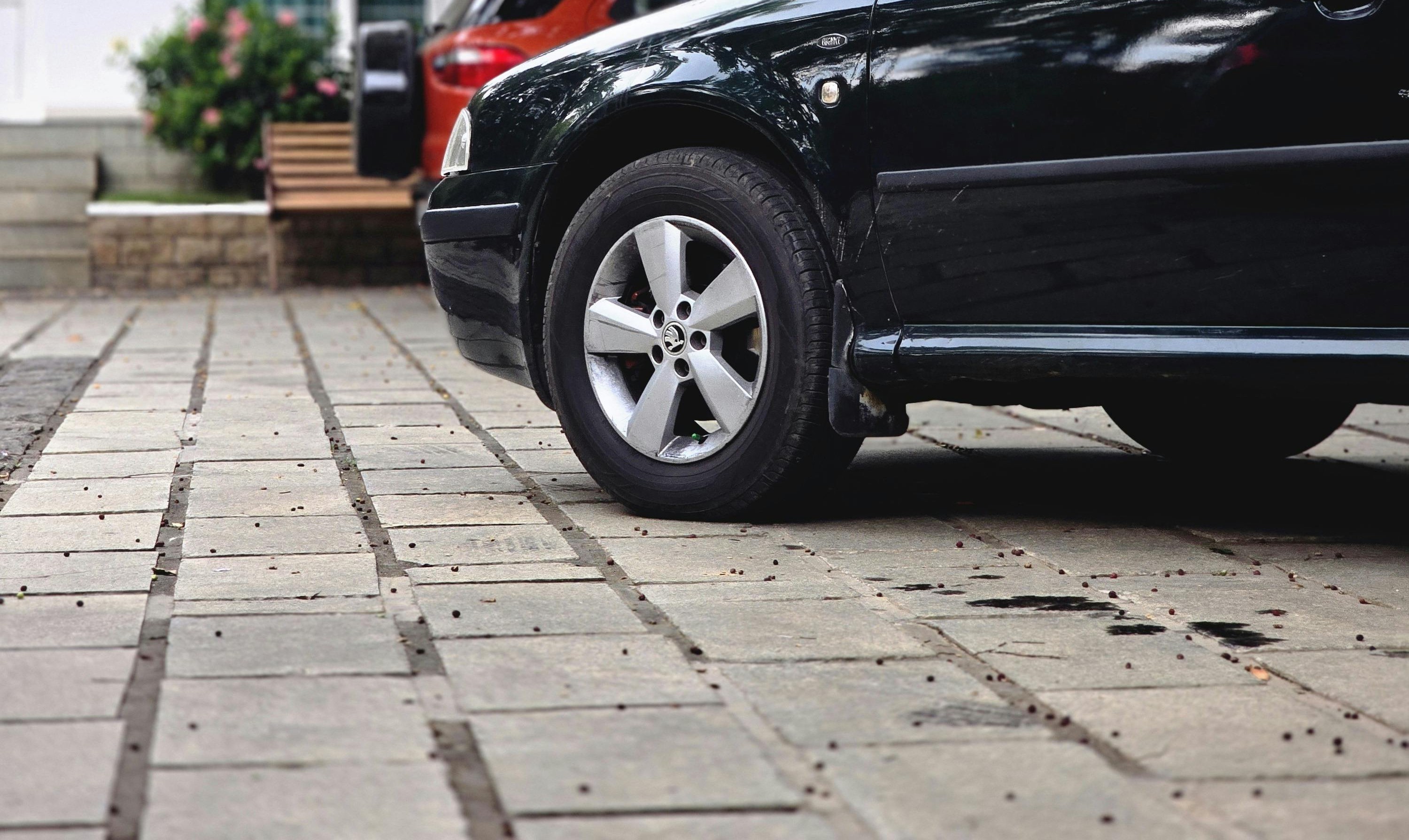
Best Parking Tiles for Heavy Vehicles: What Actually Works?
Stop parking tile cracks before they start. Prioritize 10-16mm vitrified tiles and anti-skid text...


Loading designs...
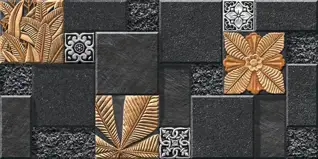


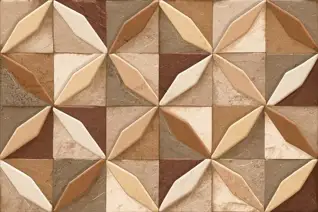



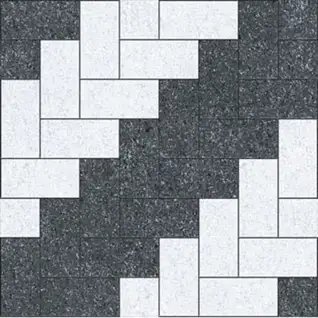




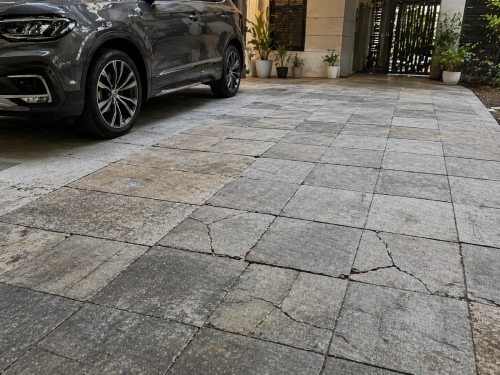
Not all vitrified tiles handle the same vehicle weight. A standard GVT tile works fine under a 1,200 kg hatchback. The same tile under a 2,500 kg SUV parked daily in the same spot will eventually develop micro-cracks along the grout lines. The cracks are invisible at first. After one or two monsoon seasons, water enters, the adhesive weakens, and the tile lifts.
Heavy-duty parking tiles solve this by using a tile body that distributes load more evenly, absorbs zero water, and holds its surface finish through years of tyre friction and outdoor exposure. This page is a buying guide: which tile type to use based on the actual vehicle load, which sizes work, what the correct finish is, and what the tile will cost.
Start here. Pick the row that matches your parking situation. Everything else on this page goes deeper into each option.
| Your Parking Situation | Tile to Use | Size | Finish | Price Guide |
| Single car at home. Standard hatchback or sedan under 1,500 kg. | GVT matte | 16x16 or 20x20 | Matte | Rs. 55 to Rs. 95/sq.ft |
| Home car porch. SUV or crossover above 1,800 kg. | GVT GHR or full body vitrified matte | 20x20 or 2x2 | GHR or matte | Rs. 70 to Rs. 180/sq.ft |
| Double garage or two vehicles on the same porch. | Full body vitrified matte | 20x20 or 2x2 | Matte or GHR | Rs. 90 to Rs. 200/sq.ft |
| Sloped driveway or ramp at home. | GVT GHR or full body vitrified GHR | 16x16 or 20x20 | GHR only | Rs. 65 to Rs. 180/sq.ft |
| Basement car park. Multiple vehicles, daily use. | Full body vitrified matte | 2x2 or 20x20 | Matte or GHR | Rs. 95 to Rs. 220/sq.ft |
| Commercial parking. Vans, trucks, and daily heavy loads. | Full body vitrified matte or GHR | 2x2 | GHR or matte | Rs. 100 to Rs. 230/sq.ft |
Hard Rule: Never use PGVT, double charge, glossy, high-glossy, satin matte, or semi-polished finish tiles on any parking floor, regardless of vehicle weight. High breaking strength alone does not make a tile safe if the finish is slippery when wet.
Both are vitrified. Both have 0.05% water absorption. The difference that matters for heavy parking use is what happens at the tile edge and under repeated point load.
A GVT tile has a glazed design layer on top of a vitrified body. The design and colour live in that top layer. Under a car tyre, the load is spread across the full tyre face. Over the years, the tyre contact strips along the parking path may show faint surface wear on GVT tiles in high-frequency use areas.
A full-body vitrified tile has the same material running through 100% of the tile thickness. There is no separate surface layer to wear through. The tile behaves the same at the surface, at the edge, and at the base. For a drain channel edge, a ramp cut, or a corner near a gate pillar that takes car door contact, the full body tile shows no colour difference if it chips.
For home car porches with a standard car load, GVT matte 16x16 or 20x20 is the correct tile. For commercial parking, ramp areas, double garages with heavy vehicles, or anywhere the tile edge is exposed at a step or drain, full-body vitrified tiles in 20x20 or 2x2 matte are the right spec.
Note: Double-charged vitrified tiles are not heavy-duty parking tiles. They are made for dry indoor floors. Outdoor exposure, rain, and vehicle load will degrade double-charged tiles. Never use them on any parking floor.
Tile size changes how the load is distributed across a parking floor. A smaller tile has more grout joints per sq.ft. Every grout joint is a point where load concentrates when a tyre rolls over it. In a 16x16 tile layout, a tyre path crosses roughly 18 to 20 grout lines per metre of travel. In a 20x20 layout, that drops to 14 to 16 lines. In a 2x2 layout, it drops to around 8 to 10.
Fewer grout joints under a tyre path means fewer load concentration points, less grout cracking over time, and a flatter surface that stays clean longer. For heavy parking tiles, this is why 20x20 and 2x2 are specified for higher-load situations, even though 16x16 meets the IS 15622:2006 breaking strength standard.
| Size | Alias | Grout Lines per Metre (Approx) | Best Load Use | Floor Only or Both |
| 400x400 mm | 16x16 | 18 to 20 lines | Standard home car porch, single vehicle | Floor only |
| 500x500 mm | 20x20 | 14 to 16 lines | Double garage, SUV load, open driveway | Floor only |
| 600x600 mm | 2x2 | 8 to 10 lines | Commercial parking, heavy vehicle, basement | Floor and wall |
| 600x1200 mm | 2x4 | 5 to 6 lines | Open feature driveways, compound wall cladding | Floor (matte only) and wall |
Buying note: 16x16 and 20x20 are floor-only sizes. Do not use them for parking boundary wall cladding or gate pillar facing. For walls, use 1x1, 2x2, or 2x4 in GVT matte or GHR.
The most common expensive mistake in parking tile projects is buying a tile with the right body strength but the wrong finish. A tile with IS 15622:2006 certification and a Polished Glossy finish is not a heavy-duty parking tile. It is a slip hazard with good break resistance.
Gloss-level finish on a wet parking floor is the leading cause of fall injuries on home car porches in India. Rain, car washing, and morning dew all create wet conditions. The finish must grip under all of them.
| Finish | Safe on Parking Floor | When to Use It |
| Matte | Yes | Flat car porches with good drainage. All vehicle weights. |
| GHR (Glaze High Resistance) | Yes | Sloped driveways, ramps, and areas with prolonged water exposure. |
| Rain Drops | Yes | Car porches in high-rain areas. Easy to hose clean. |
| Matte Carving | Yes | When design depth is wanted. Recessed veins grip well. |
| Glossy | Never | Wall use only. Slippery when wet. |
| Polished Glossy (PGVT) | Never | Wall use only. Never on any parking floor. |
| High Glossy | Never | Wall use only. Very slippery outdoors. |
| Satin Matte | Never | Looks matte, slips like glass when wet. |
| Semi Polished | Never | Not for outdoor or wet areas. |
GHR finish is worth specifying on all sloped surfaces, including a gentle 1:80 drainage slope on a flat car porch. The stone-like surface texture grips at every angle, not just on a level plane.
Heavy parking tiles cost more than standard indoor tiles because the tile body must meet a higher breaking strength. Full-body vitrified tiles cost more than GVT tiles of the same size for the same reason. Here is a realistic price guide for the Indian market, sourced from Morbi manufacturers.
| Tile Spec | Price Range | What Changes at the Higher End |
| GVT 16x16 matte | Rs. 55 to Rs. 95/sq.ft | More detailed stone or concrete pattern, branded range |
| GVT 16x16 GHR | Rs. 60 to Rs. 105/sq.ft | GHR texture adds to the base cost |
| GVT 20x20 matte | Rs. 65 to Rs. 115/sq.ft | Fewer but more visible tiles; more design scrutiny |
| GVT 20x20 GHR | Rs. 70 to Rs. 130/sq.ft | Higher anti-skid spec on a larger format |
| Full body vitrified 20x20 matte. | Rs. 90 to Rs. 180/sq.ft | Full body consistency, better edge performance |
| Full body vitrified 2x2 matte. | Rs. 95 to Rs. 220/sq.ft | Commercial-grade body, lowest grout joint count |
| Full body vitrified 2x2 GHR | Rs. 100 to Rs. 230/sq.ft | Highest anti-skid and body spec combined |
For a 30 sq ft single car porch using GVT 16x16 matte, budget Rs. 1,900 to Rs. 3,200 for floor tiles (30 sq ft plus 10% wastage at Rs. 55 to Rs. 95). For the same porch in full body vitrified 20x20, budget Rs. 3,300 to Rs. 6,600. Prices vary by brand and region. Always add 10% to 15% wastage for car porches with drain channels and kerb cuts.
A car porch tile needs to handle two things at the same time: the static load of a parked vehicle and the rolling load each time the vehicle enters and leaves. The rolling load is actually more demanding than static weight because the tyre applies a shearing force on the tile surface as it slows down or accelerates.
GVT matte in 16x16 handles this load comfortably. The static load per tyre is under 400 kg. The rolling shear is low. A standard GVT matte tile with outdoor-rated adhesive will perform here for 15 to 20 years without cracking under normal use.
GVT GHR in 20x20 or full body vitrified 20x20 matte is the step up for this load range. The heavier the vehicle, the more the load concentrates at each tyre contact point. A 20x20 tile distributes that contact load over a larger tile area than a 16x16, which reduces peak stress at the tile centre. Full body vitrified handles the edge-and-corner loads better when the tyre rolls close to a drain channel or step edge.
Full body vitrified 2x2 matte, or GHR, is the only correct spec here. Trucks and loaded vans can exceed 5,000 kg on the rear axle. At that weight, a standard GVT tile will fail at the grout joints within two to three monsoon cycles. Full body vitrified 2x2 with a proper concrete screed base (minimum 100 mm), epoxy grout, and outdoor-rated adhesive is the correct complete spec for this load level.
Digital printing on vitrified tiles applies the pattern using inkjet technology onto the tile surface before the glaze layer is fired. The body is still GVT or full body vitrified with 0.05% water absorption and breaking strength. The digital process adds no weakness to the tile body.
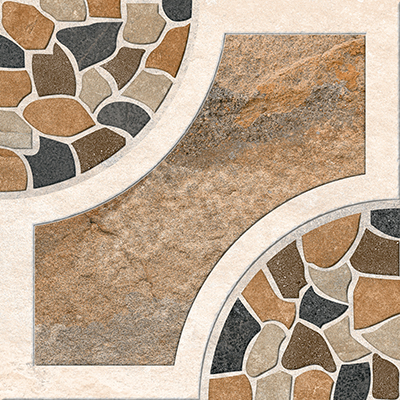
Heavy-duty digital parking tiles give the same stone, slate, concrete, or wood-look patterns available on standard indoor tiles, on a body that handles vehicle load and outdoor exposure. The pattern sits below the protective glaze layer, so it does not fade or wear through under tyre friction in the way an older screen-printed tile might.
On a parking floor, the pattern choice also has a practical side. A stone-look pattern with natural variation across the tile surface hides tyre rubber deposits, oil spots, and dust better than a plain solid-colour tile. A mid-grey concrete-look digital tile on a home car porch stays looking clean between washings far longer than a plain white or light tile.
Digital stone and concrete-look parking tiles in GVT matte and GHR are listed in the stone and concrete look tile range on Tilesfinders.
A heavy-duty tile on a poorly prepared base does not perform like a heavy-duty tile. These are the three mistakes that most often turn a correct tile spec into a failed floor.
Standard white cement is not tile adhesive. It does not bond to vitrified tiles reliably, and it has no flexibility to handle the thermal expansion of an outdoor concrete slab through Indian summer temperatures. Use an outdoor-rated flexible tile adhesive for all parking applications. For 2x2 and larger tiles, apply adhesive to both the tile back and the base surface (back-buttering) so there are no hollow spots under the tile.
Concrete slabs expand and contract with temperature. In India, an unshaded outdoor slab can move 4 to 6 mm across a 6-metre run between a cold December night and a peak June afternoon. Without expansion joints at 3 to 4 metre intervals, that movement has nowhere to go. The tile surface takes the stress and lifts or cracks, usually at the grout line nearest the slab midpoint.
A perfectly flat outdoor parking floor holds water. Standing water on a flat car porch breaks down tile adhesive faster than any vehicle load. The base must slope at a minimum of 1:80 toward the drain before laying begins. On existing flat bases, a self-levelling compound with built-in slope is the correct fix before tiles go down.
Full body vitrified and GVT parking tiles in matte and GHR finish, with IS 15622:2006 breaking strength data and 0.05% water absorption verified against each listing, are on Tilesfinders. Use the size and finish filters on this page to narrow to your vehicle load level, and browse the complete heavy load outdoor tile range to compare body types side by side.
Not exactly. All vitrified tiles have 0.05% water absorption and meet IS 15622:2006 minimum breaking strength. But not all vitrified tiles have the same breaking strength value, the same body consistency, or the same surface abrasion resistance. Full-body vitrified tiles have a higher effective load distribution than GVT tiles under repeated point load from vehicle tyres. The term heavy duty specifically refers to full-body vitrified or high-spec GVT with GHR finish used on outdoor floors under significant and repeated vehicle weight.
You can use the same colour family, but not the same size. 16x16 and 20x20 are floor-only sizes and must not be used on walls. For the compound wall, use 2x2 or 2x4 GVT matte or GHR in the same colour as the floor. This gives a coordinated look across both surfaces without forcing a wall tile in the wrong size.
The early signs are a hollow sound when you tap a tile (adhesive bond has broken underneath), cracked grout lines along the tyre path, tiles that have lifted slightly at one edge, or water pooling in the same spot after every rain. If more than two or three tiles show any of these signs, the whole parking floor needs assessment before the problem spreads. Replacing individual tiles while the base adhesive is failing underneath is a short-term fix.
Yes, for two reasons. Cement grout on an outdoor parking floor absorbs oil, fuel, and cleaning chemicals permanently. It also supports algae growth in shaded areas. Epoxy grout resists all of these. The second reason is strength: epoxy grout does not crack under vehicle load the way cement grout does over time. The upfront cost is higher, but the grout will outlast the cement option significantly on a heavy parking floor.
For a 2-car garage of approximately 45 to 55 sq. ft., using full-body vitrified 20x20 matte at Rs. 90 to Rs. 180/sq.ft, the floor tile material cost runs from Rs. 4,600 to Rs. 11,000 (55 sq.ft plus 12% wastage). For GVT GHR 20x20 at Rs. 70 to Rs. 130, the same area costs Rs. 3,500 to Rs. 6,500. Add adhesive, epoxy grout, and laying labour separately. Prices vary by brand and region.
On a standard car load (under 1,500 kg), a standard GVT matte parking tile and a full-body vitrified heavy-duty tile will both last well if the base is correct. The difference shows up in two situations: first, when the vehicle weight is above 2,000 kg and the tyre point load increases. Second, at drain channel edges, step edges, and ramp cuts, where a tile corner takes direct impact from tyres turning tight. At those points, full body vitrified holds its edge; GVT shows a colour change at the chip.
Both. Full-body vitrified tiles come in stone-look and concrete-look patterns where the texture runs through the full body, not just the surface. GVT heavy-duty tiles come in a wider range: stone, slate, concrete, wood-look, and abstract pattern digital prints. All finishes follow the same outdoor parking rule: matte or GHR on floors, any finish acceptable on walls.