How to Choose Parking Tiles That Don’t Crack or Wear Out
Stop your parking tiles from cracking. Learn why a solid base, 10–16mm thickness, and vitrified anti-skid materials are the real secrets to a driveway that handles heavy vehicles.
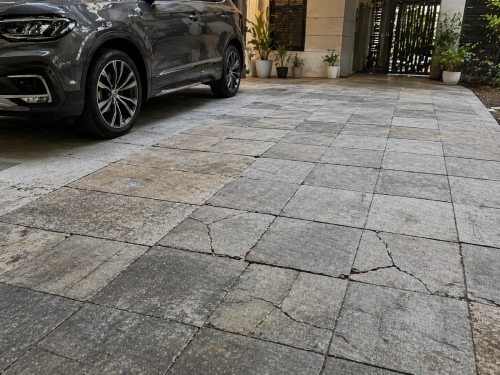
Why Parking Tiles Fail So Often
Most parking tiles don’t fail immediately.
They look fine when installed. Even after a few weeks, everything feels solid. The problem usually starts later,small cracks, uneven surfaces, or worn-out patches that appear without warning.
And when that happens, the common assumption is that the tile quality was poor.
In reality, that’s not always true.
In many cases, the issue starts much earlier, during selection. Tiles that are visually appealing but structurally weak are often chosen for parking areas. That’s where the problem begins.
Understanding parking tiles design from a performance point of view, not just aesthetics, makes all the difference.
Quick Answer
To prevent cracking or wear, choose vitrified or porcelain parking tiles with a matte or anti-skid finish, and ensure proper thickness (10–16 mm). Also, focus on correct installation and drainage,because even strong tiles fail on a weak base.
What Actually Causes Parking Tiles to Crack or Wear Out
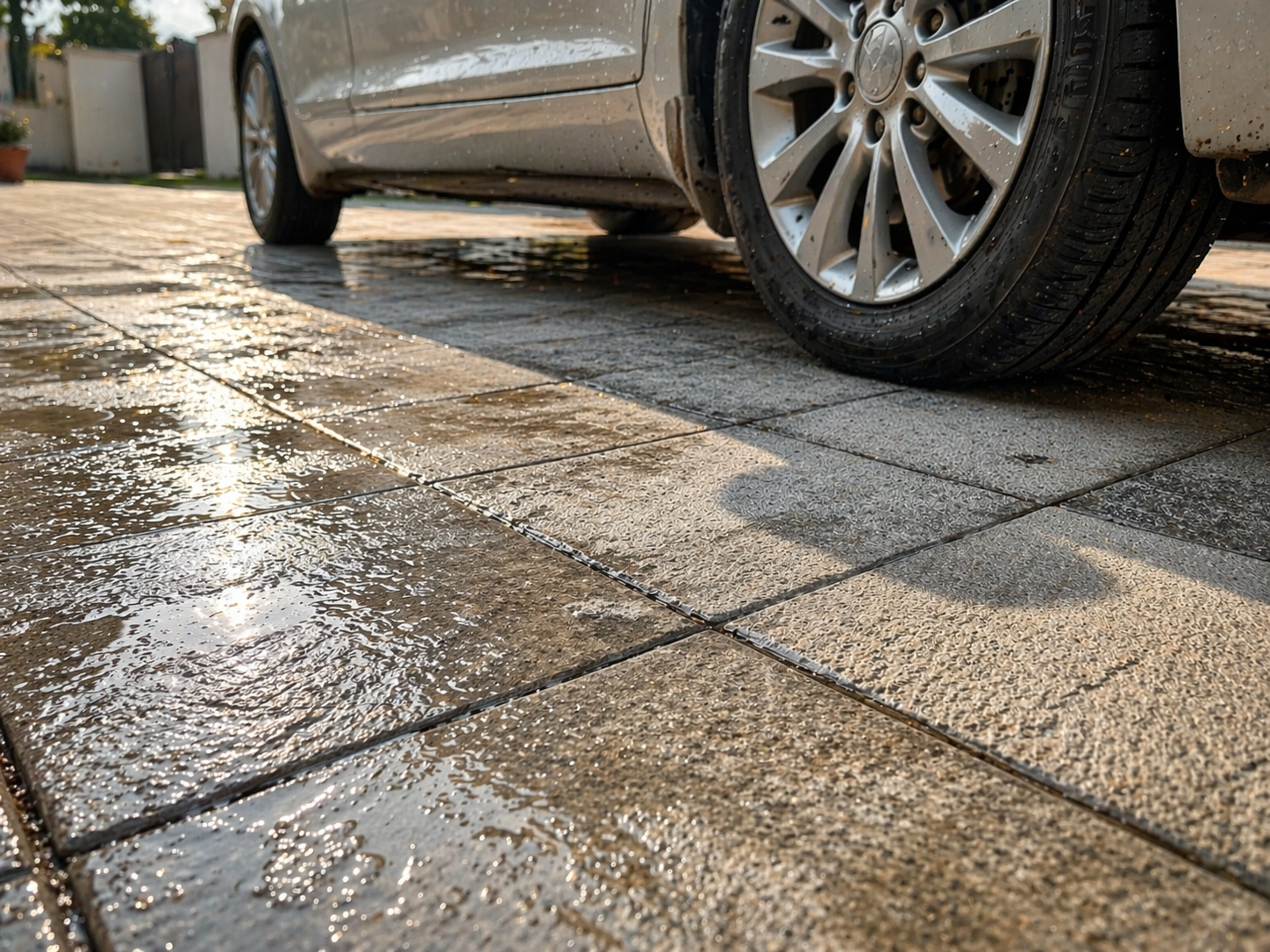
Before choosing the right tile, it’s important to understand what goes wrong.
1. Incorrect Thickness
Thin tiles cannot distribute the vehicle load properly. Over time, pressure points cause cracks.
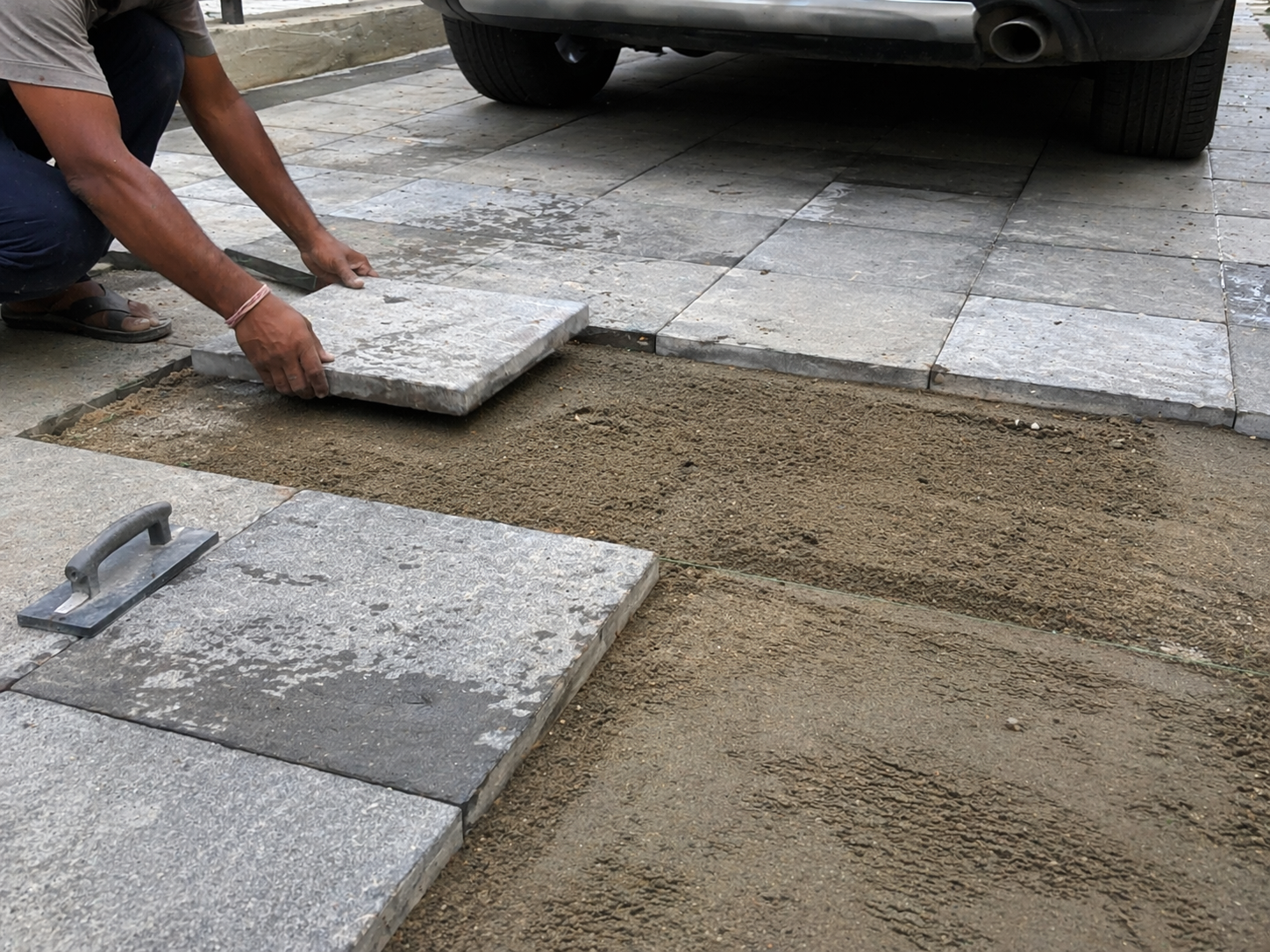
2. Weak Base Preparation
Even the strongest tile will fail if installed on an uneven or poorly cured base.
This is one of the most common reasons behind tile damage.
3. Water Retention and Poor Drainage
Water that stays beneath or around tiles weakens the structure.
This is especially relevant in Indian monsoon conditions.
4. Wrong Surface Finish
Smooth tiles may look clean but become slippery and wear unevenly.
This is why anti skid parking tiles are recommended for safety and durability.
Types of Parking Tiles That Actually Last
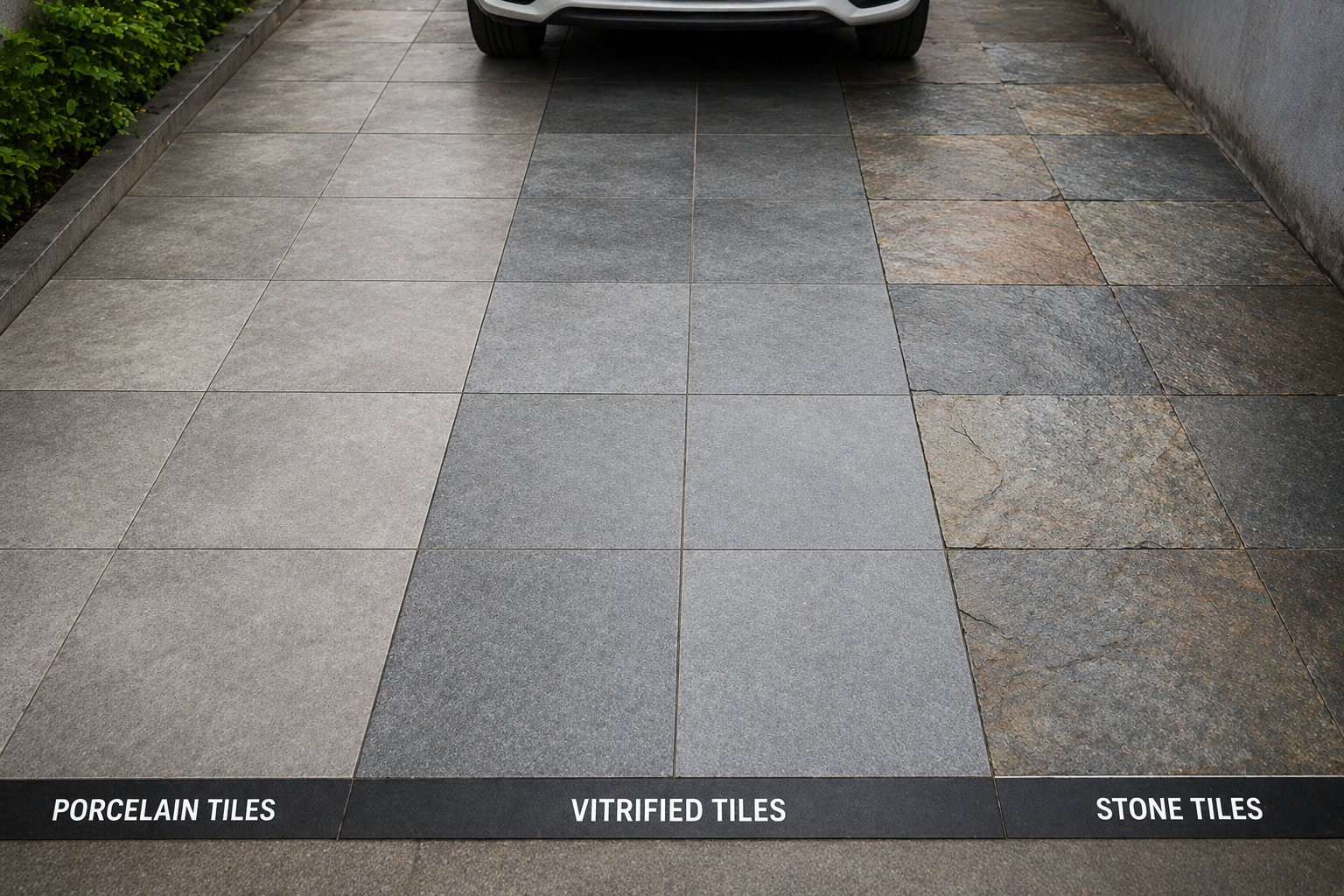
Vitrified Tiles
These are widely used for parking areas for a reason.
They have water absorption of 0.5% or less, which helps during the monsoon, and they maintain structural integrity under pressure. This makes them reliable for daily vehicle movement.
Most modern car parking tiles are built using these materials because they balance strength and maintenance.
Porcelain Tiles
You’ll see this in many parking areas,porcelain tiles don’t show issues quickly. They handle water and pressure without reacting much, which is why they’re often used.
Finish matters more than people think. Smooth tiles may look clean at first, but they don’t always behave the same after regular use. Slightly rough or matte ones tend to feel more practical. They don’t get slippery easily and hold their surface better over time.
Stone Tiles
Stone-look Tiles designed for outdoor use are built to handle temperature variation and moisture.
You will often see these under outdoor parking tiles categories, especially for open parking areas exposed to sunlight and rain.
Best Choice for Long-Lasting Parking Tiles
There is no single “best” tile.
But there is a combination that consistently works.
Recommended Combination:
- Vitrified or porcelain body
- Matte or textured finish
- Minimum 10–16 mm thickness
- High PEI Rating of 4 or 5 for abrasion resistance
- Anti-skid surface
- Proper installation base
This combination ensures that parking floor tiles handle both load and environmental stress effectively.
Parking Tiles Price: What You Should Actually Consider
Price is often misunderstood.
Lower-cost tiles may seem attractive initially, but they often compromise on thickness or material density.
Factors affecting parking tiles price:
- tile thickness
- body type (porcelain vs ceramic)
- finish (matte, textured)
- manufacturing quality
This is why comparing parking tiles price without understanding specifications can lead to wrong decisions.
Things to Consider Before Selecting Parking Tiles
Load Type and Vehicle Weight
Parking areas don’t fail because of design. They fail because the load wasn’t considered properly.
A bike barely stresses the surface. A car does. An SUV or heavier vehicle puts consistent pressure in the same zones. That difference matters more than most people realise while selecting tiles.
For lighter use like bikes, smaller formats such as 300×300 mm or 400×400 mm usually hold up without issues. There’s less weight, so the surface doesn’t get stressed much.
With cars, it changes. Sizes like 400×400 mm or 500×500 mm behave more reliably. They stay stable when vehicles move in and out regularly.
600×600 mm tiles are sometimes used for heavier vehicles, but in actual projects they’re less common. Not because they don’t work,but because they need a properly prepared base. Without that, problems don’t show immediately… they show later.
Most cracking issues come from mismatch,tile size vs actual usage.
Surface Grip and Safety
In wet conditions, smooth tiles become risky.
Tiles with texture or matte finish prevent slipperiness and provide better grip to reduce accidents.
Size and Format
Larger tiles often get selected for how they look. Clean lines, fewer joints. But performance doesn’t always follow appearance.
300×300 mm works well in lighter areas. Smaller size means pressure spreads out better, which reduces stress points.
400×400 mm is usually the safest option in most parking spaces. It’s not too small, not too large,and that balance is what helps over time.
500×500 mm sits in between. It works fine for cars, but only when the base underneath is properly levelled. That part gets ignored more often than it should.
600×600 mm (2×2, thicker variants) can take load, but they’re less forgiving. Fewer joints mean more pressure per tile. So if the installation isn’t accurate, the tile takes the stress,and that’s where cracks start.
This is where parking tiles design for home need to combine function with visual simplicity.
Maintenance Over Time
Tiles that are easy to clean and resistant to stains reduce long-term effort.
Highly textured tiles may trap dirt, while overly smooth tiles show marks easily.
Common Mistakes People Make While Choosing Parking Tiles
| Common Mistake | Right Choice | Why It Prevents Cracks & Wear |
| Choosing tiles only for looks | Focus on strength and durability first | Strong tiles resist pressure and last longer |
| Using thin tiles | Select 10–16 mm thickness | Thicker tiles handle vehicle load without breaking |
| Ignoring surface type | Choose matte or anti-skid finish | Reduces slipping and surface damage over time |
| Poor base preparation | Ensure solid, level concrete base | Prevents tile movement, cracks, and loosening |
| No drainage planning | Maintain a slight slope (1–2%) | Avoids water pooling that weakens tiles |
| Using indoor tiles outdoors | Pick outdoor-specific parking tiles | Designed to handle weather, heat, and moisture |
These mistakes don’t show immediately, but they affect long-term performance.
Why Indian Conditions Demand Better Tile Selection
Parking tiles in India face more stress than in many other regions.
- High temperatures cause expansion
- Monsoon introduces water exposure
- Dust and daily use increase abrasion
This is why tiles for parking area must be selected with durability as the primary factor.
In cities like Ahmedabad, surface heat and dust make tile performance even more critical.
Parking Tiles Design for Home: Practical Yet Clean
A parking space doesn’t need to look plain.
Modern parking tiles design for home focuses on:
- neutral tones (grey, brown, stone look)
- textures that hide dust and tyre marks
- patterns that remain consistent over time
Good design is not about complexity,it’s about clarity and usability.
If you're exploring outdoor durability further, Best Outdoor Tiles for Indian Weather Conditions
Expert Recommendation
From experience, the most reliable approach is simple:
- Choose strength over design
- Prioritise material and thickness
- ensure proper base preparation
- keep design practical and easy to maintain
This approach works across different types of homes and parking conditions.
You can also explore: Stone tiles for natural durability and Grey tiles for heavy-duty applications. These are often considered for alternative parking solutions.
Choosing Tiles That Actually Last
Parking tiles are often selected based on how they look at the time of purchase.
But once installed, appearance becomes secondary.
What really matters is how the surface responds to regular use,weight, movement, heat, and water exposure. These factors don’t show up in a showroom, but they define how well the tile performs after a few months.
A tile that stays stable, doesn’t absorb much moisture, and maintains grip under changing conditions will always outlast one chosen only for design.
So when you’re making a decision, it helps to think beyond the catalogue.
The goal is not just a good-looking surface,it continues to work without issues.
FAQs
From what works consistently on site, vitrified tiles are a safer choice for parking zones. They handle both weight and moisture without reacting too much over time. It’s not just about strength on paper,these tiles tend to stay stable even with daily vehicle movement, which is what matters in the long run.
In most outdoor spaces, yes,they make a noticeable difference. A surface that feels fine when dry can behave very differently once water is involved. Anti-skid finishes don’t completely change the look, but they improve grip enough to avoid common slipping issues.
It’s not really about where the tile is installed; it depends more on the tile’s thickness, surface finish, and overall quality. If a tile has the right strength, an anti-skid surface, and can handle outdoor conditions, it can work well on terraces too.
400×400 mm and 2x2 (600x600 mm) tile sizes distribute load better and don’t put excessive stress on a single point. Larger tiles can work too, but only if the base preparation is done properly.
Nothing complicated. Regular cleaning is usually enough. The real advantage comes from choosing the right tile in the first place,once that’s sorted, maintenance doesn’t become a concern.

See our tile guides first
Set TilesFinders as a preferred source and our buying guides surface ahead of the rest for you.
Add as preferred sourceTakes one tap. Nothing to install.
What Readers Say
I was about to redo my parking area with the wrong tile size until I read this. The layout comparisons saved me from a costly mistake.
We reference TilesFinders guides while briefing clients on material selection. The size and pattern breakdowns are accurate and easy to explain visually.
On site, I get asked about grout spacing all the time. This article gave me a solid reference I now share with my team before every job.
Finally a guide that doesn't just push generic advice. The oil stain removal steps actually worked on our clubhouse driveway tiles.
I run a small construction firm and now send this link to clients directly when they ask about entrance tile sizing. Saves me an hour of explaining.
Good practical detail, though I wish there were more examples for compact apartment entrances specifically, not just villas.
My mother-in-law wanted marble, I wanted vitrified. This blog gave us the neutral comparison we needed to actually decide together.
Detailed without being overwhelming. I appreciated that it covered both cost and maintenance, not just the aesthetics.
Used the algae and hard water removal tips on our terrace tiles after the monsoon. Worked better than what our regular cleaner was doing.
As someone who sources tiles for multiple builder projects, I find these comparisons genuinely useful for vendor conversations, not just consumer content.
Recommended this to a client who kept second-guessing the entrance design. The small vs large layout section settled the debate instantly.
Straightforward and honest, no unnecessary jargon. Would like to see a similar breakdown for outdoor pool-deck tiles next.
We've bookmarked several TilesFinders guides for our design handbook. Reliable source when clients want data, not just opinions.
Two paths, one marketplace.
Get free quotes from verified suppliers.
Share your room, budget, and style. Suppliers in Morbi respond within hours.
Get Free QuotesList your business, reach real buyers.
Put your showroom in front of homeowners searching for tiles right now.
List Your Business