Stop cleaning your tiles like this: 5 everyday habits that are ruining your grout and glaze
Are your cleaning habits secretly destroying your floors? Discover the 5 common mistakes, like using acid, bleach, and hard scrubbers, that ruin tile glaze and grout, and what to use instead.
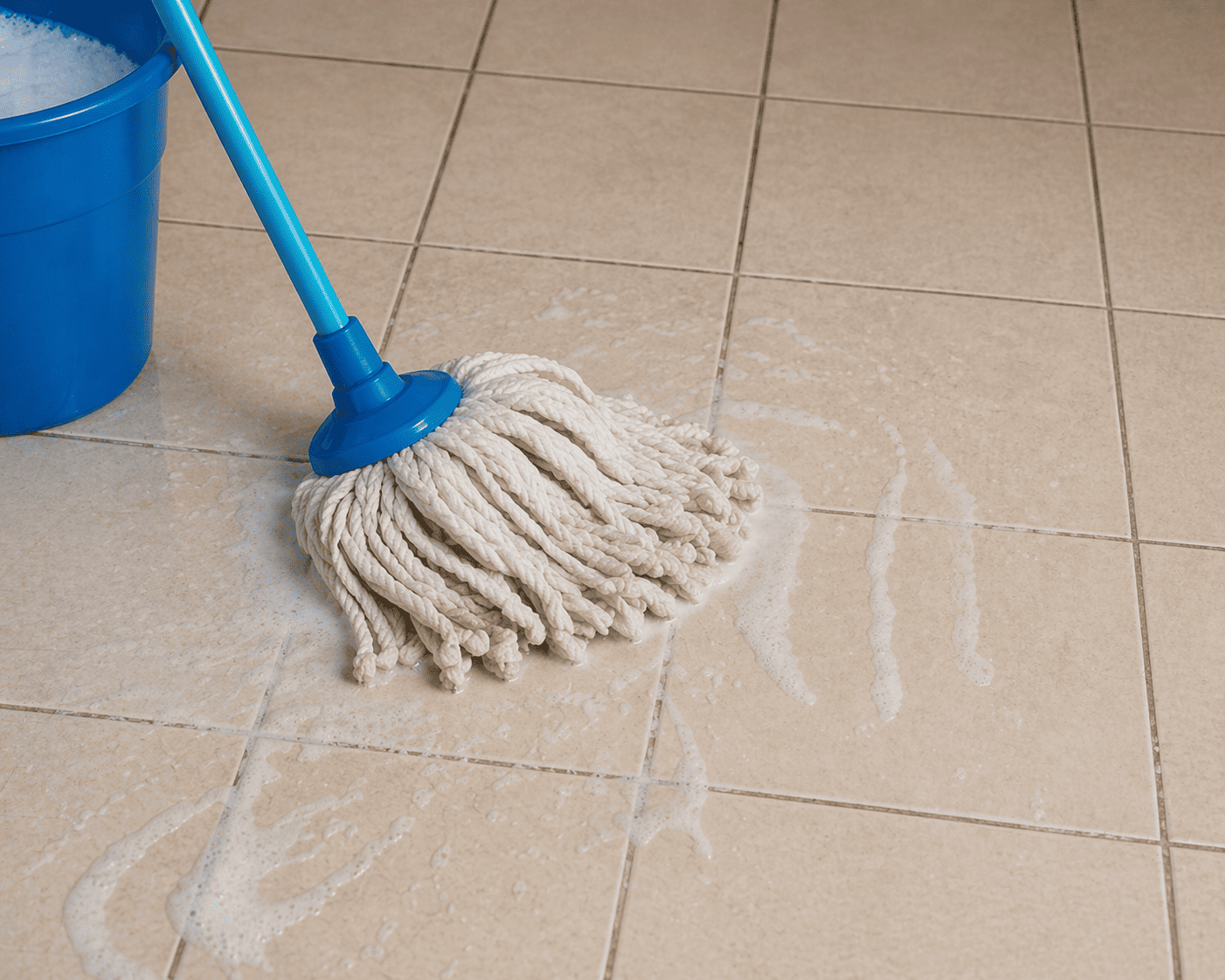
Most tile damage does not happen because the tiles are of low quality. It happens because of everyday cleaning habits that slowly destroy the surface over time. Harsh acids, rough scrubbers, excess water, and oily floor polishes can permanently damage grout lines, dull the glaze, and leave floors looking old long before they should.
Habit 1: The Acid Burn (Using toilet cleaners on floor tiles)
Many people use toilet cleaners, bathroom acids, or even vinegar on tile surfaces when they see stubborn stains. It seems effective at first because the stain disappears quickly.
The problem is that a strong acid not only attacks the stain.
- It burns the protective glaze layer on ceramic and vitrified tiles
- It weakens cement grout and makes it crumble over time
- It leaves surfaces dull and rough instead of smooth and reflective
- It increases the chances of future stains because the damaged tile becomes more porous
This is one of the biggest reasons behind dull vitrified tiles. Once the surface loses its glaze, it cannot be restored completely.
This damage becomes especially visible on Glossy floor tiles because acid removes the reflective finish and leaves patchy, cloudy marks.
Habit 2: The Drowning Method (Flooding the floor with wet mops)
A lot of people still clean floors using a bucket full of water and a soaking wet mop. The floor may look clean while wet, but too much water often creates more problems.
Vitrified surfaces do not absorb much water, so the dirty water simply moves around the floor and settles into the grout joints.
- Dirty water collects inside grout lines
- Moisture buildup can create bad smells and bacterial growth
- Grout slowly becomes dark and stained
- Floors take longer to dry and can feel sticky afterwards
This is one of the most common tile cleaning mistakes people make at home.
Instead of flooding the floor, use a damp microfiber mop. It cleans more effectively, dries faster, and does not force dirty water into the joints.
Habit 3: The Abrasive Scrub (Using steel wool or hard brushes)
When stains do not come off easily, people often switch to steel wool, hard plastic brushes, or rough scouring pads.
That may remove the stain, but it also damages the tile surface.
- Steel wool leaves tiny scratches on polished surfaces
- Hard scrubbers remove shine from glazed finishes
- Scratches trap dust and grime, making the floor look cloudy
- Mirror-like surfaces lose their smooth reflection over time
This habit is especially damaging for polished surfaces, nano finishes, and Glossy floor tiles.
If you are wondering what ruins tile glaze, rough scrubbing tools are one of the biggest reasons.
Use a soft nylon brush or microfiber cloth instead. They are strong enough to remove stains without damaging the surface.
Sharp scraping tools can be just as damaging as rough scrubbers.
Another common mistake happens when dried adhesive, like Fevicol, Favistick, tape residue, or even bird droppings, sticks to the floor. Many people try to remove them using sharp metal blades, knives, or hard scrapers. This can scratch the tile surface and even damage the glaze layer, leaving small marks or dull spots behind. Instead, pour hot water over the area and let it sit for a few minutes. Once the adhesive or dirt softens, it can usually be removed gently with a plastic scraper or soft cloth without damaging the tile surface.
Habit 4: The Wax Trap (Using oil-based polishes to add shine)
Many people think that adding floor polish or wax will make tiles look shinier. In reality, it usually does the opposite.
Modern vitrified tiles already come with a factory finish. They do not need extra polish.
When waxes or oil-based cleaners are used repeatedly:
- They leave behind a sticky layer on the floor
- Dust and dirt start sticking to the surface faster
- The floor begins to look greasy and cloudy
- Footprints become more visible
- The original finish gets hidden under residue
This is also the answer to a common question: Why is my floor sticky after mopping?
Usually, it happens because too much floor cleaner, wax, or soap is left behind on the surface.
Warm water and a mild pH-neutral cleaner work much better than heavy polishing products.
Habit 5: The Bleach Mistake (Trying to whiten grout)
Bleach is commonly used in kitchens and bathrooms to brighten dirty grout lines. While it may seem effective in the short term, repeated bleach use slowly damages grout.
- White grout can turn yellow over time
- Coloured grout can become patchy and faded
- Epoxy grout may lose its waterproof strength
- Bathroom wall tiles can develop uneven marks near grout joints
- Kitchen tiles may start looking worn around the edges
Instead of bleach, use a grout-safe cleaner and a soft brush. This keeps the grout cleaner without weakening it.
The Ultimate Tile Care Cheat Sheet: Do This, Not That
Protecting tile surfaces is much easier than repairing damaged ones.
| The Bad Habit | The Better Alternative | Why It Works |
| Acid cleaners or vinegar | pH-neutral floor cleaner | Cleans stains without damaging glaze or grout |
| Soaking wet mops | Damp microfiber mops | Prevents dirty water from collecting in the grout |
| Steel wool or hard scrubbers | Soft nylon brushes | Removes dirt without scratching the surface |
| Floor wax and polish | Mild soap with warm water | Leaves no sticky residue behind |
| Bleach on grout | Grout-safe cleaner | Protects grout colour and waterproofing |

FAQs
Use a tile-safe limescale remover instead of acid cleaners. Let it sit for a few minutes and then clean gently with a soft nylon brush.
Yes. Steam cleaners work well on matte and unglazed surfaces because they loosen dirt without harsh chemicals. Just avoid holding the steam on one grout line for too long.
This usually happens because too much floor cleaner or soap has been used. The leftover residue dries on the tile surface and creates a sticky layer. Reducing the cleaner quantity and mopping once with plain water usually fixes the problem.

See our tile guides first
Set TilesFinders as a preferred source and our buying guides surface ahead of the rest for you.
Add as preferred sourceTakes one tap. Nothing to install.
What Readers Say
I was about to redo my parking area with the wrong tile size until I read this. The layout comparisons saved me from a costly mistake.
We reference TilesFinders guides while briefing clients on material selection. The size and pattern breakdowns are accurate and easy to explain visually.
On site, I get asked about grout spacing all the time. This article gave me a solid reference I now share with my team before every job.
Finally a guide that doesn't just push generic advice. The oil stain removal steps actually worked on our clubhouse driveway tiles.
I run a small construction firm and now send this link to clients directly when they ask about entrance tile sizing. Saves me an hour of explaining.
Good practical detail, though I wish there were more examples for compact apartment entrances specifically, not just villas.
My mother-in-law wanted marble, I wanted vitrified. This blog gave us the neutral comparison we needed to actually decide together.
Detailed without being overwhelming. I appreciated that it covered both cost and maintenance, not just the aesthetics.
Used the algae and hard water removal tips on our terrace tiles after the monsoon. Worked better than what our regular cleaner was doing.
As someone who sources tiles for multiple builder projects, I find these comparisons genuinely useful for vendor conversations, not just consumer content.
Recommended this to a client who kept second-guessing the entrance design. The small vs large layout section settled the debate instantly.
Straightforward and honest, no unnecessary jargon. Would like to see a similar breakdown for outdoor pool-deck tiles next.
We've bookmarked several TilesFinders guides for our design handbook. Reliable source when clients want data, not just opinions.
Two paths, one marketplace.
Get free quotes from verified suppliers.
Share your room, budget, and style. Suppliers in Morbi respond within hours.
Get Free QuotesList your business, reach real buyers.
Put your showroom in front of homeowners searching for tiles right now.
List Your Business