IS-certified, sourced from MorbiChecked against IS 15622/13630, direct from Gujarat's tile hub
200+ verified dealersAcross India, checked and listed by TilesFinders
Free sample bookingHold the tile in your hand before you order
Orange kitchen tiles sit at the most saturated end of the warm colour spectrum available in the Indian tile range. From vivid amber-orange at the bright end to burnt orange, rust, and deep copper at the rich end, orange kitchen tiles are the colour choice for a kitchen where the tile is meant to be noticed. No other kitchen tile colour demands as much design discipline as orange: used on one surface with the right cabinet colour and the right grout, orange reads as bold and considered. Used across multiple surfaces or against the wrong cabinet, it overwhelms the kitchen entirely.
This page covers orange kitchen tiles across every surface in the kitchen tiles range, from the ceramic backsplash tile in a vivid orange glaze to burnt orange GVT in matte finish on the kitchen floor. The shade distinction matters: vivid orange and burnt orange read differently in an Indian kitchen, pair with different cabinet colours, and suit different kitchen styles. Both are covered here with the specific sizes, finishes, and design rules that determine whether orange becomes the statement surface it is meant to be.
Orange, Burnt Orange, and Terracotta: What Each Colour Actually Is
These three shades are close enough that buyers frequently search for all three interchangeably. They describe different colours on a tile glaze, and the distinction matters for cabinet pairing and for how the tile reads in a kitchen:
Colour
Glaze Character
How It Reads in a Kitchen
Cabinet Pairing
Kitchen Style
Vivid orange
Bright yellow-orange; high saturation; the most intense colour in the warm range
Energetic and bold; the strongest colour statement; reads from across the room
White only; any other cabinet colour competes with the orange
Contemporary, cafe-style, or designed accent kitchens
Amber orange
Warm golden-orange; slightly less saturated than vivid; honey quality
Warm and rich; less demanding than vivid; easier to pair
White, cream, or light timber
Transitional, farmhouse, or warm contemporary
Burnt orange
Deep reddish-orange; darker and earthier than amber; close to rust
Rich and grounded; the most sophisticated orange; reads as a designed surface rather than a bold colour choice
White, cream, or aged timber
Farmhouse, heritage, and warm contemporary kitchens
Rust
Very dark brownish-orange; right at the boundary with brown
Earthy and serious; reads close to brown at a distance; reveals orange in direct light
Cream, off-white, or aged timber
Rustic, farmhouse, or heritage bungalow kitchens
Terracotta (for reference)
Reddish-clay orange; more red than orange; the classic Indian earth colour
Traditional and warm; reads as an earth material rather than a vivid colour
Cream, white, or aged timber
Traditional Indian, farmhouse, transitional
The practical rule for most Indian kitchens: burnt orange is the most usable orange shade because it reads as warm and rich without the visual intensity that vivid orange brings to a small or enclosed space. Vivid orange works on the backsplash as an accent surface against white cabinets in a well-lit kitchen. On a full wall or on the floor of a standard-size kitchen, vivid orange needs careful assessment of the kitchen's natural light before committing.
How Indian Kitchen Light Changes Orange Tile
Orange is the most light-responsive colour in the warm kitchen tile range. The same orange tile reads differently under warm LED, cool LED, and natural daylight, and that variation is more extreme for orange than for any other kitchen tile colour except blue:
Under warm-white LED (2700K to 3000K): orange glows. The warm light enriches the yellow-orange, making vivid orange read as even brighter and burnt orange read as richer and deeper. This is the most common kitchen lighting condition in Indian homes, and it is the most flattering for orange tiles.
Under cool-white LED (4000K to 5000K): vivid orange reads as a more pure orange without the warm glow. Burnt orange can read as slightly brownish-orange. Both are still recognisably orange but without the depth that warm LED brings.
Under natural daylight in a south-facing kitchen: vivid orange in direct afternoon sun can read as almost fluorescent in intensity. Burnt orange in direct sun reads at its richest. South-facing kitchens handle vivid orange better than north-facing ones because the warm light balances the colour's energy.
In a north-facing kitchen with cool diffused light, vivid orange can read as flat or even slightly dull without warm light to enrich it. Burnt orange performs better in north-facing kitchens than vivid orange because its inherent warmth compensates for the cooler light.
The practical test before ordering any orange kitchen tile: view a full tile sample in the kitchen's actual installed lighting at the time of day when the kitchen is most used. No other colour in the kitchen tile range is more affected by lighting than orange.
Orange Kitchen Wall Tiles: Backsplash and Full Wall Options
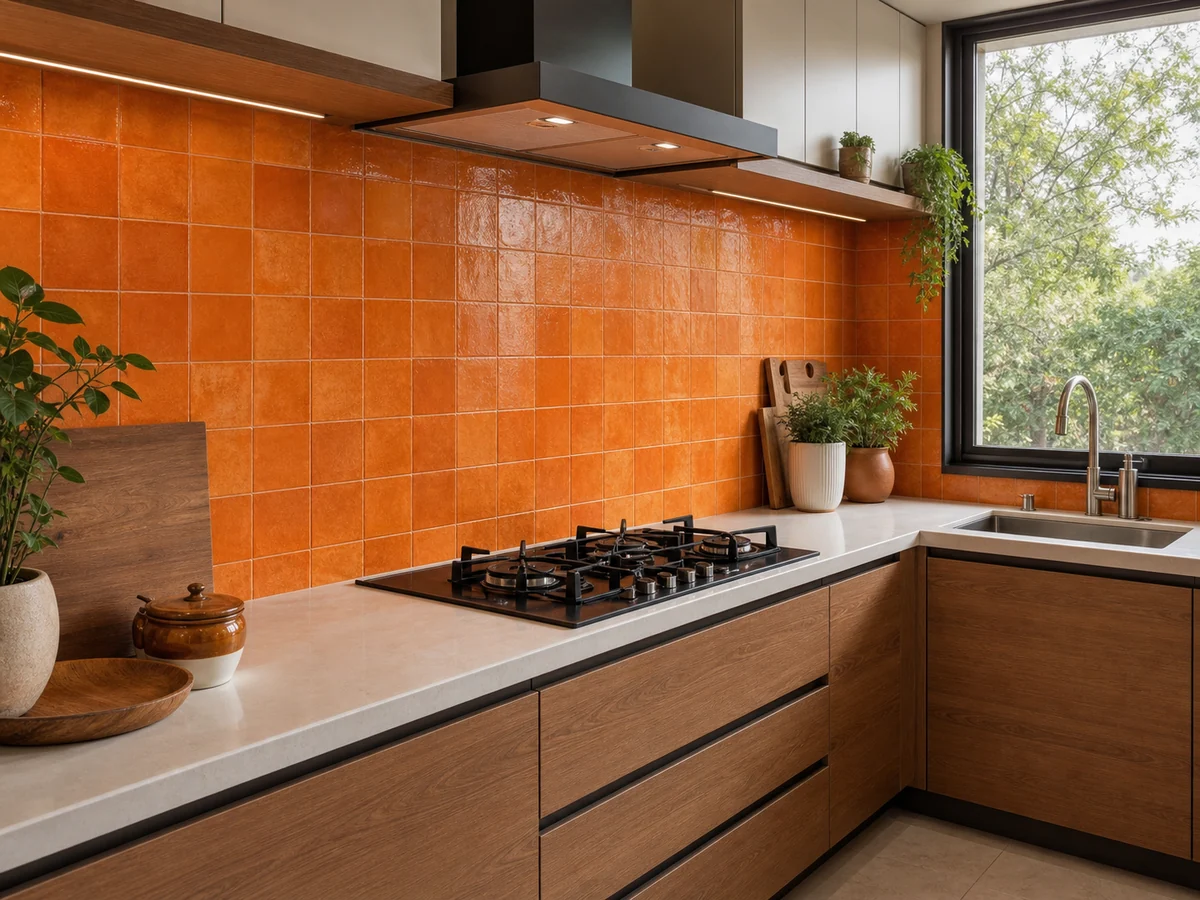
Orange kitchen wall tiles are most effective in the backsplash zone where the colour reads at eye level and is contained between the counter and overhead cabinets. A full kitchen wall in orange above the dado works only in large or open-plan kitchens with strong natural light and white or cream cabinets throughout.
Ceramic orange tiles for backsplash and walls
Ceramic in 12x18 (300x450) or 12x24 (300x600) in an orange or burnt orange gloss or sugar finish is the standard orange kitchen backsplash tile. These are wall-only sizes and must not be placed on kitchen floors. Gloss finish gives orange its full saturation and is the easiest to wipe clean from cooking oil near the backsplash. Sugar finish gives a softer surface that reads less intensely than flat gloss, which makes it a practical choice for vivid orange, where the buyer wants the colour without the full reflective intensity.
Ceramic orange tiles for kitchen walls are available from manufacturers in Morbi and Gujarat in both vivid orange and burnt orange glazes. Prices run from Rs. 50 to Rs. 90 per sq.ft for standard gloss or sugar finish in 12x24. For the surface-by-surface wall tile specification that covers finish, size, and zone rules for all kitchen wall tiles, the kitchen wall tiles page covers those in detail.
GVT orange tiles for full-height walls
GVT in 2x2 (600x600) in a burnt orange or deep amber colour is the specification for a full-height kitchen wall in an orange shade. The GVT glaze holds colour more consistently across large production runs than ceramic tiles, which matters on a full wall where boxes from different batches are used. On the wall, gloss finish is safe; the no-gloss-on-floors constraint does not apply to vertical surfaces. GVT in a burnt orange polished glossy finish in 2x4 on one kitchen wall in an open-plan space reads as a warm, considered feature wall. GVT orange in 2x2 runs from Rs. 90 to Rs. 175 per sq. ft.,t depending on shade depth and finish.
Orange Backsplash Tile Kitchen: Three Approaches
The orange kitchen backsplash is where the colour makes the strongest impression with the least risk of overwhelming the kitchen. Three contained approaches give three distinct results:
Single vivid orange backsplash strip
Two to three rows of vivid orange gloss ceramic in 12x24, laid in a horizontal grid bond with white grout, between white overhead cabinets and a white or light grey countertop. The orange reads as a deliberate, graphic colour accent. The white grout adds a visible grid that gives the surface structure. This is the boldest orange backsplash approach and works best in a kitchen with strong natural or artificial light and no other warm colours in the palette.
Burnt orange subway backsplash
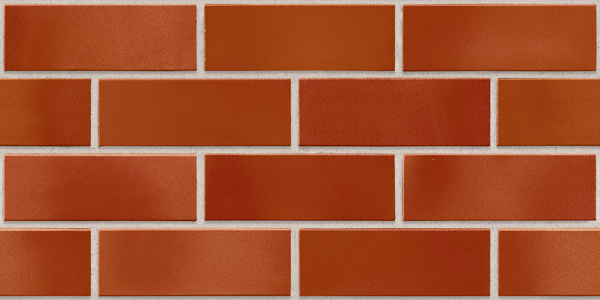
Burnt orange gloss ceramic in 12x18, laid in a horizontal brick bond with off-white or cream grout, gives a warmer, less intense backsplash than vivid orange. The brick bond format adds pattern to the colour, which reduces the intensity of the burnt orange by giving the eye multiple elements to focus on rather than a uniform field of one colour. This is the most versatile orange backsplash approach and suits farmhouse, transitional, and warm contemporary kitchens with cream or white cabinets.
Orange feature panel
A single contained panel of orange tile, 600 to 900mm wide, behind the hob or behind open kitchen shelves, with plain white or cream tile on the remaining backsplash. The orange panel reads as an inset design accent rather than a surface-wide colour decision. This is the lowest-commitment orange kitchen tile application and the easiest to coordinate with a kitchen that already has other warm materials, such as timber shelves, brass fixtures, or a warm countertop.
Burnt Orange Kitchen Tiles: The Most Practical Orange for Indian Kitchens
Burnt orange is the shade of orange that most consistently works across the range of Indian kitchen sizes, lighting conditions, and cabinet colour combinations. It sits at the point where orange has enough red and brown to read as an earth colour in warm light and a rich, saturated colour in neutral light, without tipping into the brightness of vivid orange or the brownness of rust.
Burnt orange GVT in matte finish in 2x2 is the most commonly specified burnt orange kitchen tile for floors and for full-height walls in Indian mid-range kitchens. The matte surface reads as a natural material rather than a coloured tile, which reduces the visual weight of the orange on a large surface. Burnt orange ceramic in 12x24 gloss is the standard backsplash tile in the burnt orange shade.
Burnt orange tiles work with three cabinet colour families that do not suit vivid orange: cream and ivory cabinets (the warm cream and the earthier burnt orange read from the same colour family), aged timber (the warm wood tone and the reddish-orange read together as natural materials), and dark timber as an upper cabinet contrast with burnt orange on the floor (the deep wood above and the warm earth below creates a layered warm palette that reads as a heritage or farmhouse kitchen).
Orange Floor Tiles Kitchen: When It Works and When It Does Not
An orange kitchen floor is a strong design decision that changes the entire visual register of the kitchen. Unlike an orange backsplash, which reads as an accent, an orange floor reads as the dominant surface in the room. The matte surface of a GVT floor tile in orange makes the colour more livable than a glossy surface would, but the colour itself still reads with significant visual weight from the kitchen entry.
GVT in matte or matte carving finish in 2x2 in a burnt orange or amber colour is the correct specification for a kitchen floor with orange tiles. The GVT body has water absorption of 0.05%, which handles Indian monsoon humidity and daily cooking water on the floor. The matte surface is anti-skid, which is the floor safety requirement for a kitchen floor regardless of tile colour.
Note: Gloss, high gloss, and satin matte finishes must not be used on kitchen floors. Orange kitchen floor tiles must be in matte or matte carving finish only. This applies to GVT and all other tile bodies regardless of colour.
Where an orange kitchen floor works
Large kitchens above 120 sq. ft. or open-plan kitchen-dining spaces where the floor reads as one of several large surfaces rather than the defining surface of a small room.
Kitchens with white or off-white cabinets throughout. The high contrast between the white cabinet and orange floor reads as a deliberate, designed decision. Any other cabinet colour reduces the contrast, and the orange can read as unresolved.
Farmhouse, heritage bungalow, or traditional Indian kitchen styles where an earthy,y warm floor is part of the design language.
Where an orange kitchen floor does not work
Small kitchens under 80 sq. ft. where the orange floor dominates the entire visible space and makes the room feel smaller and warmer than it is.
North-facing kitchens with cool diffused light where vivid orange reads as flat without warm light to enrich it. Burnt orange performs better in north-facing kitchens than vivid orange, but any orange floor in a north-facing small kitchen should be assessed with a full tile sample before ordering.
Kitchens with strongly coloured or heavily grained cabinets where the orange floor creates a colour conflict rather than a complement.
For the complete kitchen floor specification covering all tile bodies, finishes, and size rules, the kitchen floor tiles page covers those constraints in full.
Orange Kitchen Tiles with Indian Cabinet Colours and Fixtures
Orange Shade
Cabinet Colour
Countertop
Fixture Finish
Grout Colour
What It Reads As
Vivid orange
White only; any other cabinet colour competes
White or light grey quartz
Chrome or matte black
White (backsplash); off-white (floor)
Graphic and bold; the orange is the centrepiece
Amber orange
White, cream, or light timber
White, warm beige, or light stone quartz
Brass or chrome
Off-white or cream
Warm and considered, the amber reads as a rich accent
Burnt orange
White, cream, aged timber, or off-white
Warm beige quartz, Kota stone look, or travertine
Brass or antique bronze
Cream or off-white on backsplash; warm tan on floor
Earthy and rich; reads as a natural material colour
Rust
Cream or aged timber only
Warm stone look or beige quartz
Antique bronze or copper
Cream or natural mortar tone
Traditional and deeply warm; close to the farmhouse aesthetic
The one consistent rule across all orange kitchen tile shades: white or off-white cabinets are the safest partner. Orange is a high-saturation colour that benefits from a cool, neutral cabinet above or beside it. The contrast between the orange tile surface and the white cabinet is what gives the orange its design tension. Reducing that contrast by using cream, grey, or timber reduces the impact of the orange without making the combination warmer; it makes it muddier.
Orange Kitchen Tile Size and Body Guide
Size
Alias
Body
Surface
Best Orange Application
Price (Rs./sq.ft)
300x450
12x18
Ceramic
Wall and backsplash only; never floor
Orange subway-style backsplash in a horizontal brick bond
Rs. 50 to Rs. 85
300x600
12x24
Ceramic
Wall and backsplash only; never floor
Standard orange backsplash; single feature panel behind hob
Rs. 50 to Rs. 90
600x600
2x2
GVT
Wall and floor (matte for floors)
Orange floor tile; full-height orange wall in a designed kitchen
Rs. 90 to Rs. 175
600x1200
2x4
GVT
Wall and floor (matte for floors)
Orange feature wall in open-plan kitchen; fewer joins than 2x2
Rs. 110 to Rs. 195
600x600
2x2
Porcelain (matte)
Floor (primary); wall (secondary)
Orange kitchen floor where lighter tile weight is needed
Rs. 55 to Rs. 115
Note: 300x450 and 300x600 sizes are wall and backsplash only. They must not be used on kitchen floors regardless of colour or finish. For an orange kitchen floor, use GVT 2x2 or porcelain 600x600 in matte finish only.
Choosing the Right Orange Kitchen Tile
Requirement
Recommended Tile
Size
Finish
Price (Rs./sq.ft)
Vivid orange backsplash, white cabinets
Vivid orange gloss ceramic
12x24
Gloss
Rs. 55 to Rs. 90
Burnt orange backsplash, farmhouse kitchen
Burnt orange gloss or sugar ceramic
12x18 or 12x24
Gloss or Sugar
Rs. 50 to Rs. 90
Orange feature panel, behind the hob
Amber or burnt orange gloss ceramic
12x24
Gloss
Rs. 55 to Rs. 90
Orange kitchen floor, contemporary
Burnt orange GVT matte
2x2
Matte
Rs. 90 to Rs. 165
Orange kitchen floor, earthy tone
Rust or amber GVT matte carving
2x2 or 2x4
Matte Carving
Rs. 100 to Rs. 185
Full orange wall, open-plan kitchen
Burnt orange GVT glossy or matte
2x4
Glossy (wall only) or Matte
Rs. 110 to Rs. 195
Burnt orange floor, large open kitchen
Burnt orange GVT matte
2x4
Matte
Rs. 110 to Rs. 190
Budget orange backsplash
Vivid orange gloss ceramic, smaller size
12x18
Gloss
Rs. 50 to Rs. 80
Orange Kitchen Tile Performance Across Indian Climate Zones
GVT in burnt orange or amber carries a water absorption of 0.05%, which qualifies it under IS 15622 for vitrified tiles. In Indian kitchens that experience monsoon humidity from June to September every year, this absorption level means the GVT tile body neither expands from moisture uptake nor contracts on drying across the seasons. The adhesive bond stays stable. The sealed glaze on the tile face prevents cooking oil and turmeric staining from penetrating the body, making burnt orange GVT in matte finish one of the lowest-maintenance warm colour choices for a kitchen floor in Indian conditions. Epoxy grout at the joints between the floor tiles prevents oil staining in the grout lines during heavy cooking periods.
Orange Kitchen Tile Sizes and Prices from Indian Manufacturers
Ceramic in 12x24 (300x600) in vivid orange, amber, and burnt orange glaze finishes are produced by manufacturers across Morbi at Rs. 50 to Rs. 90 per sq.ft in gloss and sugar finish. GVT in 2x2 (600x600) in the burnt orange and amber shade family, which complies with IS 13630 water absorption classifications for vitrified tile bodies, runs from Rs. 90 to Rs. 175 per sq.ft from Gujarat-based producers. GVT in 2x4 (600x1200) for feature walls and larger kitchen floors in the orange colour family runs from Rs. 110 to Rs. 195 per sq.ft. Confirm shade availability with the manufacturer before specifying a large floor or wall order in any specific orange shade.
Put Warmth at the Centre of Your Kitchen
Vivid orange for a backsplash statement, amber for a warm accent wall, and burnt orange for a floor that grounds the kitchen in the warmest colour in the Indian tile range, all available in ceramic and GVT from verified manufacturers across Morbi and Gujarat on TilesFinders. Ceramic orange in 12x24 for the backsplash starts from Rs. 50 per sq ft; GVT in 2x2 in burnt orange and amber for floors and walls runs from Rs. 90 to Rs. 175 per sq ft. Order a full tile sample and view it in the kitchen's own lighting before committing to any orange shade.
Tiles Near You
Detecting location...
Explore tiles available with trusted dealers near your location.
This is the fact that decides everything else on an area page. Once you know wet or dry, the finish glossary above tells you exactly which finishes are even in play.
Floor needs GHR, matte or sugar. Walls can carry any finish, including glossy and PGVT.
The whole finish range is open here. Satin matte and matte are the most-picked defaults.
Floor treated as wet-adjacent, matte or GHR. Backsplash walls can go glossy without any risk.
No slip concern at all. The decision here is warmth underfoot, satin matte or sugar over polished.
Vehicle load plus rain exposure. Heavy-duty GHR, R10 or above, thicker bedding than indoor floors.
No wet-floor concern, but the traffic load favours full body or colour body over standard GVT.
Exterior facade wall, full weather exposure. Needs a tile rated for outdoor wall use, not standard interior wall stock.
GHR or matte only, R10 minimum. Confirm the R-rating on the spec sheet before ordering, matte alone isn't a guarantee.
Same rule whether covered or open, GHR finish, R10 minimum, never a polished surface.
Full sun and rain exposure. GHR finish, and check the structural load if it's a large tiled area.
Technically indoor and dry, but rain and mud get tracked in. Matte is the safer default over polished.
Same logic as office: dry floor, but full body or colour body suits the daily footfall better than standard GVT.
Mostly dry with occasional water offerings. Matte is the practical pick, no genuine wet-floor rating needed.
Not a floor, so slip rating doesn't apply, but daily water contact still rules out anything porous. GVT or PGVT both fine here.
Utility and laundry zones see as much water as a bathroom floor. Same GHR-or-matte rule applies.
Wall-mounted, so any finish is fine. Glossy is common precisely because it wipes clean of splashes fastest.
Too broad a category for one verdict, a retail floor and a commercial kitchen have different needs. Check the specific sub-use before picking a finish.
A buying guide on tile size, finish, anti-skid choices, and how to reduce wastage before you order.
How we keep this page accurate
Pricing on this page is checked against current dealer listings and manufacturer spec sheets. Body type facts, water absorption figures and IS standard references are checked against BIS documentation, not copied from other websites. This page still won't catch a batch-specific spec, so confirm exact figures with your dealer before ordering.
PricingChecked against live dealer listings
Technical specsVerified against IS 15622 and IS 13630
Dealer listingsChecked before being added to the directory
After The Tiles Are Laid
Living with your new tile
Five habits that keep any GVT, PGVT or porcelain floor looking new for years, not just months.
Use a pH-neutral cleaner
Acidic or alkaline cleaners can dull the glaze over time. A mild, pH-neutral floor cleaner keeps the finish intact.
Skip abrasive scrubbers
Steel wool or scouring pads can scratch a polished surface permanently. A soft mop or cloth is enough for daily cleaning.
Wait before heavy use
Light foot traffic is fine after 24 to 48 hours. Hold off on moving heavy furniture back for a full 7 days.
Seal cement grout
Cement grout benefits from a sealant applied a few weeks after laying, to resist staining. Epoxy grout doesn't need this.
Mind the monsoon
A door mat at every entry cuts down on grit that scratches matte finishes over a wet season.
Vivid orange kitchen tiles have a bright yellow-orange glaze with high saturation that reads as a strong colour statement in any lighting. Burnt orange tiles have a deeper, reddish-orange glaze with more brown and red in the tone, giving a richer and more earthy reading. Burnt orange is more versatile for Indian kitchens because it pairs with cream and timber cabinets, works in north-facing kitchens, and reads as a natural material colour rather than a bold accent.
Yes, if specified as GVT or porcelain in matte or matte carving finish. GVT 2x2 in burnt orange or amber matte is the correct kitchen floor tile body for the orange colour family. Glossy orange tiles must not be used on kitchen floors. Ceramic 12x18 and 12x24 are wall-only sizes and cannot go on floors regardless of colour.
White or off-white cabinets are the strongest pairing for all orange kitchen tile shades. The contrast between the white cabinet and the orange tile reads as deliberate and designed. Cream cabinets work with burnt orange but not vivid orange. Avoid grey, dark timber, or coloured cabinets with any orange tile; the combinations read as colour conflicts rather than warm accents.
Vivid orange in a north-facing kitchen with cool diffused light can read as flat or less intense than expected, because the cool light suppresses rather than enriches the warm orange. Burnt orange performs better in north-facing kitchens because its inherent warmth does not depend on warm light to read correctly. Always view a full tile sample in the kitchen's actual lighting before ordering any orange tile for a north-facing space.
Off-white or cream grout for burnt orange and amber tiles gives the most cohesive result. The warm grout reads as natural mortar alongside the earthy orange tile. White grout with vivid orange tiles creates a stronger contrast grid. Dark grey grout with orange tiles creates a cool-warm conflict at every joint that reads as unresolved. Epoxy grout on the orange backsplash resists cooking oil staining in the grout lines.
An orange kitchen floor works best in large kitchens above 120 sq. ft. or open-plan kitchen-dining spaces, with white or off-white cabinets, in south-facing or east-facing rooms with good natural light. It is less suitable for small kitchens under 80 sq. ft., north-facing kitchens, or kitchens with strongly coloured cabinets. Burnt orange in matte GVT 2x2 is the most practical floor specification in the orange colour family.
Yes. Ceramic in 12x24 in vivid orange, amber, and burnt orange glazes is available from manufacturers in Morbi and Gujarat at Rs. 50 to Rs. 90 per sq.ft. GVT in 2x2 in burnt orange and amber shades for floor and wall use runs from Rs. 90 to Rs. 175 per sq.ft. Stock availability for vivid orange ceramic is wider than for burnt orange or rust GVT; confirm availability before placing a large order in any specific shade.
Not if it is used on one surface with white or off-white cabinets. An orange backsplash strip in ceramic 12x24 gloss with white cabinets reads as a bold, considered accent. Orange on multiple surfaces, with non-white cabinets, or in a small north-facing kitchen, is where the colour becomes too much. The design rule for orange is containment: one surface, one tone, the rest of the kitchen in quiet neutrals.
What Our Customers Say
Real feedback from homeowners and contractors who found their perfect tiles
★★★★★
Found exactly the wood-look tiles I wanted for my living room. The dealer listed here had great stock and fair pricing. Saved me at least two weekends of running around showrooms.
★★★★★
Very detailed size and finish guide helped me choose anti-skid tiles for my bathroom. Wish I had found this site before my last renovation.
★★★★☆
Good comparison between vitrified and ceramic options. Contacted a dealer directly through the listing and got a quote within the hour.
★★★★★
As a contractor, I use this to quickly show clients different tile sizes and finishes on-site. The photos are high quality and load fast even on mobile data.
★★★★★
Loved how easy it was to filter by size and color together. Ended up going with 600x1200 GVT tiles for my hall, exactly what I was picturing.
★★★★☆
Solid resource for comparing tile finishes before visiting the showroom. Would like to see more price transparency, but overall a helpful first step.
★★★★★
The dealer directory saved me so much time. Called two showrooms directly from the site and had my order finalized within two days.
★★★★★
Great breakdown of PGVT vs GVT vs ceramic. I finally understood which tiles are meant for walls versus floors before making a costly mistake.
★★★★☆
Used this while renovating my kitchen backsplash. The FAQ section answered most of my questions about grout and water resistance without needing to call anyone.
★★★★★
Best part is being able to browse by room type. Picked out balcony and parking tiles in the same session without jumping between different sites.
0/4 selected
Compare Designs (0/4)
No designs added to compare yet. Open a design and tap "Compare" to add it here (up to 4).






-c55fd3da-e642-4ba4-bb70-b4fa4fdbccd9.jpg "Classic Roman")

-0bbed19f-3bd1-4a86-9d87-4391a535ef60.jpg "Claros White")