
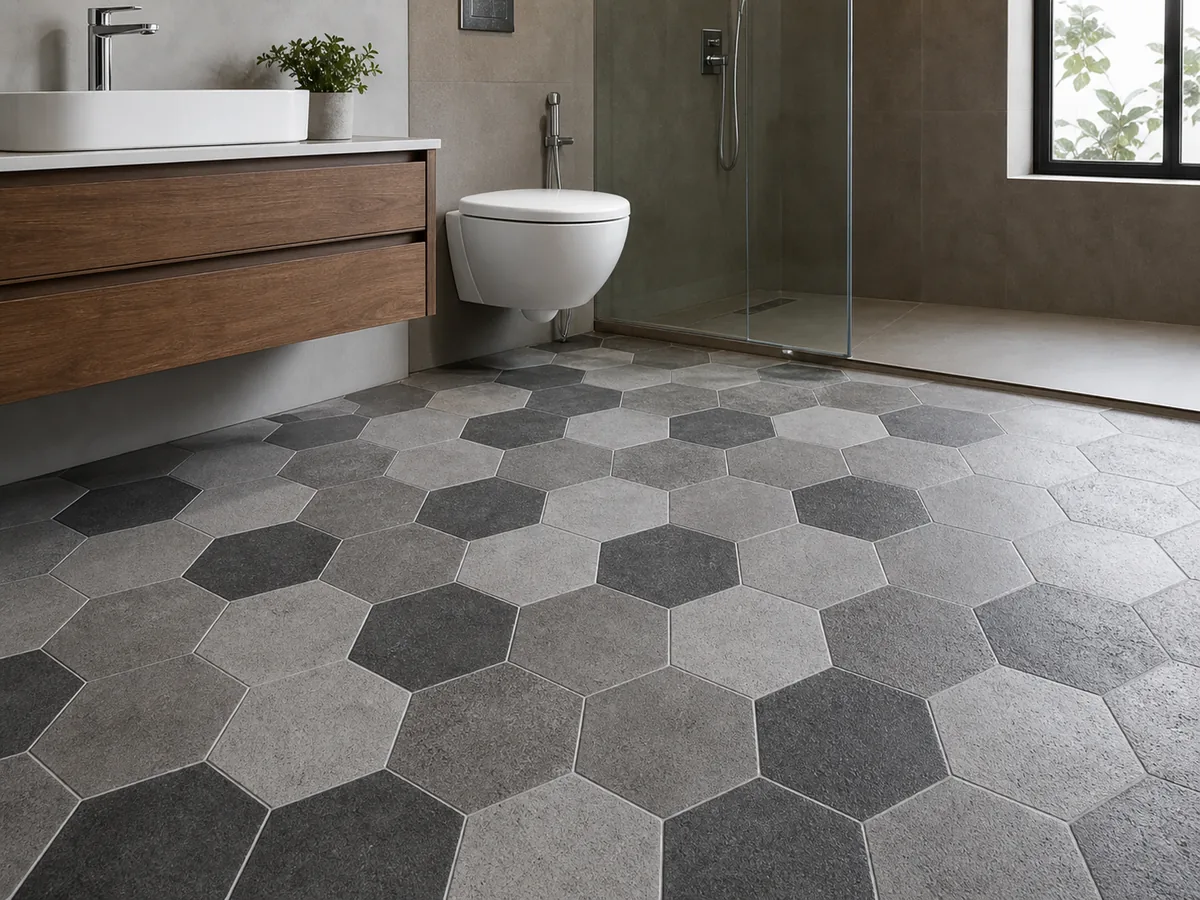
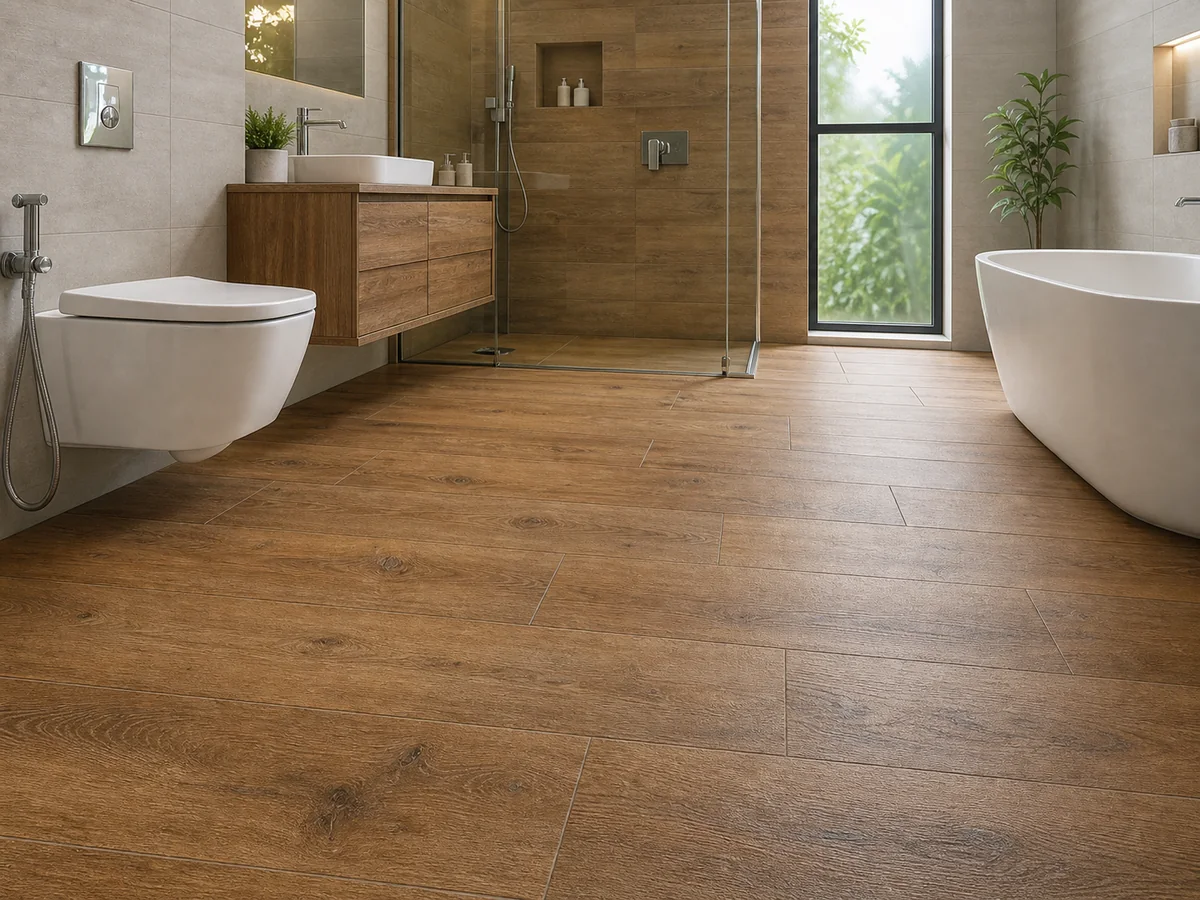
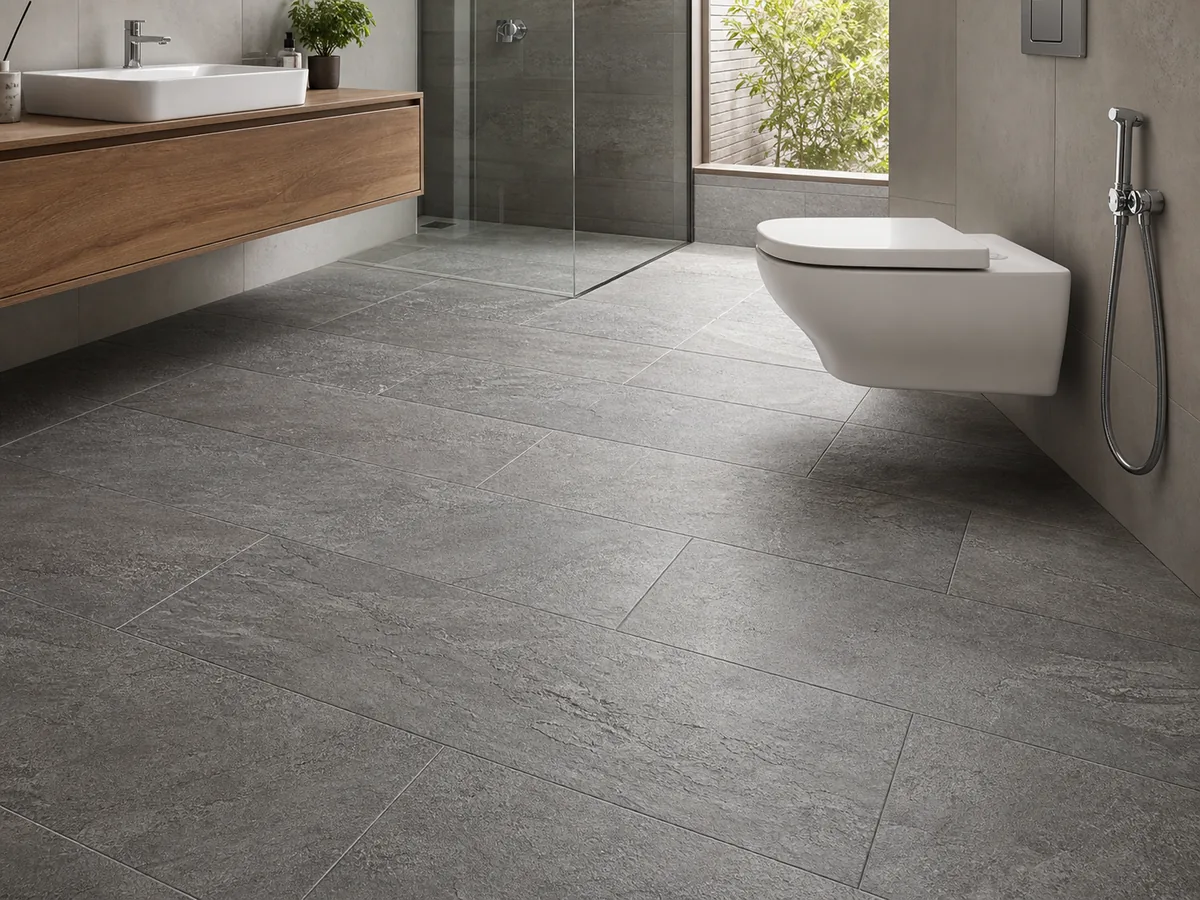
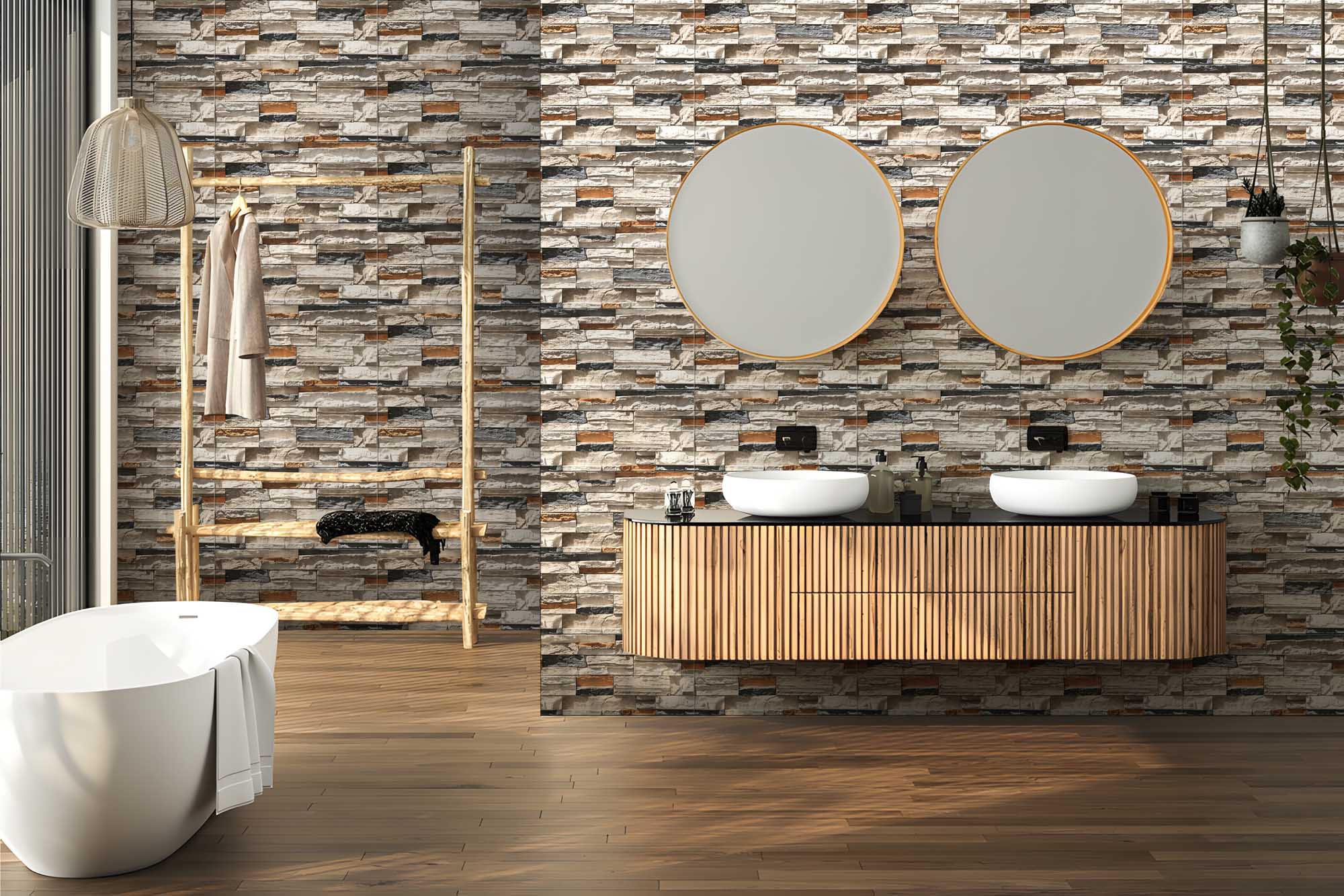
How to Choose the Right Bathroom Tile Size for Every Space
Don’t shrink your bathroom with the wrong tiles! Here’s how to pick the best size for more space ...


Loading designs...
















White bathroom tiles are the most searched tile colour in India. White works in every bathroom size, pairs with every fitting metal and colour, and is available in every body type, finish, and format that the Indian tile industry produces. The challenge with white is not finding it but choosing between the many variants: glossy or matte, ceramic or vitrified, plain or marble look, 300x600 mm or 800x1600 mm. This page covers each decision point with specific, practical guidance for Indian bathroom conditions.
White reflects more light than any other tile colour. In India, where bathrooms are often interior rooms with no natural light, a white tile floor and wall surface reflects artificial light across the room, making the bathroom feel larger and better-lit than it is. This is the primary functional reason why white dominates Indian bathroom tile sales.
White also gives the maximum flexibility for fitting and accessory choices. Chrome, brushed gold, matte black, gunmetal, and copper all read well against white. No other tile colour is equally forgiving of a fitting choice. When a homeowner changes fittings five years into ownership, white tiles remain compatible with the replacement hardware.
The maintenance trade-off for white is well-known: white tiles show soap scum, water marks, limescale, and grout staining more clearly than grey or mid-toned tiles. This is manageable with epoxy grout and a regular cleaning routine, but it is worth factoring into the choice for a family bathroom that is used by multiple people daily.
White bathroom floor tiles must carry an anti-skid finish. White tiles are produced in both glossy and matte finishes, and the glossy variants, which dominate the ceramic white tile market, are not safe on wet bathroom floors.
| Body Type | Standard | Water Absorption | Finish Options | Floor Use | Wall Use | Price (Rs/sq.ft) |
| GVT Vitrified | IS 15622 | 0.05% | Matte, GHR, Sugar, Posh Matte | Yes (matte/GHR only) | Yes | Rs. 60 to Rs. 185 |
| PGVT Polished Vitrified | IS 15622 | 0.05% | High Glossy, Polished | Dry vanity floor only | Yes | Rs. 75 to Rs. 220 |
| Double Charge Vitrified | IS 15622 | 0.05% | Glossy, Semi-Glossy | Dry areas only | Yes | Rs. 70 to Rs. 155 |
| Full Body Vitrified | IS 15622 | 0.05% | Matte | Yes | Yes | Rs. 85 to Rs. 200 |
| Ceramic | IS 13630 | 12% to 16% | Glossy, Matte | Matte 300x300 on floor only | Yes | Rs. 30 to Rs. 80 |
Note: Glossy white ceramic tiles are the most widely stocked white tile in India but are not safe on bathroom floors because of their low slip resistance when wet. For white bathroom floor tiles, always specify matte, GHR, or sugar finish GVT vitrified. Ceramic glossy white tiles belong on walls.
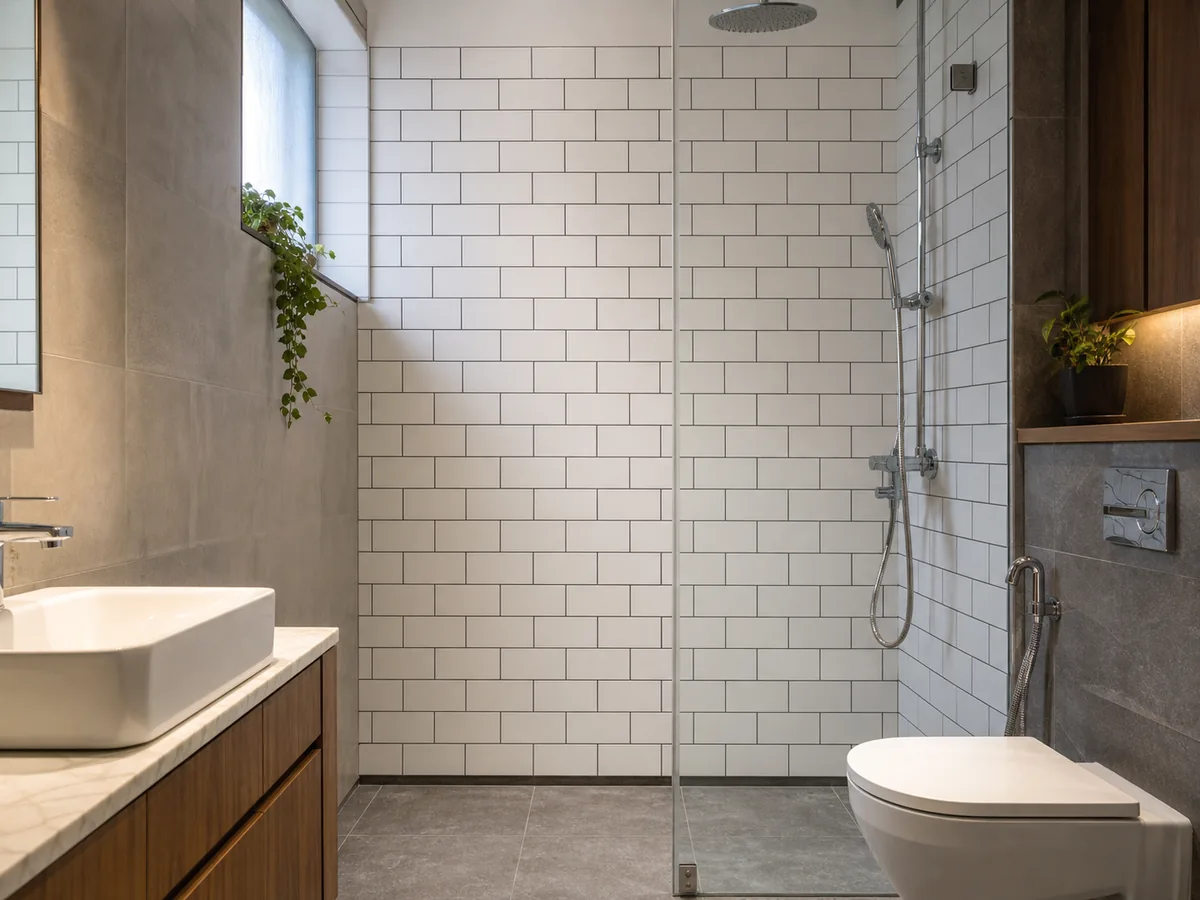
White subway tile bathroom installations are the most searched single-format application of white tiles in India. The white subway tile is a rectangular tile, typically in a 1:2 length-to-height ratio, laid in a running bond (brick bond) pattern on bathroom walls, backsplash areas, and shower enclosures.
In India, the white subway tile is most commonly found in 200x400 mm and 300x600 mm sizes in a glossy or semi-glossy ceramic finish. The gloss finish makes the tile highly reflective, which enhances the light-amplifying quality of white in low-light bathrooms. For shower enclosures and wet wall areas, vitrified in matte finish is the more durable option.
| Subway Size | Laying Pattern | Best Bathroom Use | Grout Joint | Grout Colour |
| 200x400 mm | Running bond (horizontal) | Backsplash, vanity wall, small bathroom walls | 2 to 3 mm | White, light grey, or charcoal |
| 300x600 mm | Running bond (horizontal) | Full wall cladding, shower enclosure | 2 to 3 mm | White or mid-grey |
| 300x600 mm | Vertical stack bond | Vanity wall; makes wall feel taller | 2 to 3 mm | White or light grey |
| 200x400 mm | Herringbone (45 degrees) | Feature wall, shower niche | 2 mm | Matching white grout |
Note: White subway tiles in glossy ceramic finish must not be used on bathroom floors. They are slippery when wet. Use them on walls and backsplash areas only.
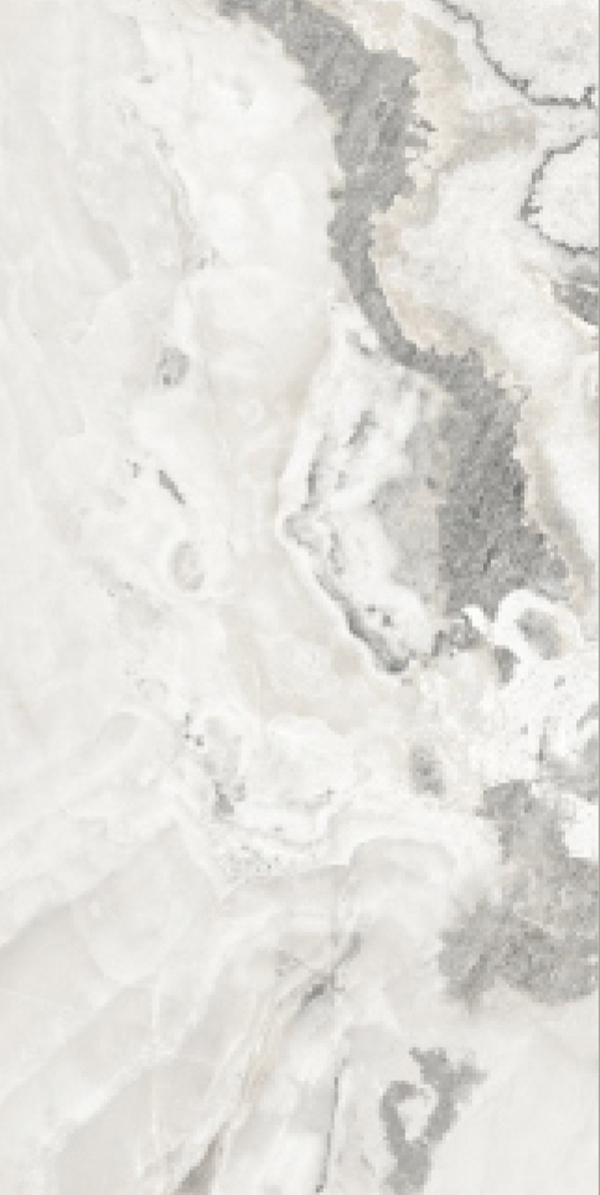
Bathroom tiles white marble are the category of white tiles that carry a marble surface print on a vitrified or ceramic body. The tile replicates the appearance of natural white marble, including the grey and gold veining, the tonal variation across the tile face, and the reflective quality of a polished stone surface.
In India, white marble look tiles are produced in both PGVT (polished, for walls and dry floors) and GVT matte finish (for bathroom floors). The PGVT version is more common because polished white marble has a higher-end visual quality that the matte version cannot fully replicate. However, the polished finish cannot be used on wet bathroom floors.
The three most replicated white marble looks in Indian tile manufacturing are Carrara (white with thin grey veining), Statuario (bright white with bold gold and grey veining), and Calacatta (warm white with thick contrasting veins). All three are available from multiple Gujarat manufacturers at different price points.
| Property | Natural White Marble | Marble White Bathroom Tiles (PGVT/GVT) |
| Water absorption | High; absorbs water, stains, soap | 0.05% (IS 15622); fully water resistant |
| Maintenance | Seal every 6 to 12 months; avoid acid cleaners | Mop weekly; no sealing required for GVT |
| Scratch resistance | Low; scratches with daily use | High (GVT); moderate (PGVT polished) |
| Cost (supply only) | Rs. 150 to Rs. 500+ per sq.ft for Makrana or imported | Rs. 75 to Rs. 220 per sq.ft for PGVT marble look |
| Veining consistency | Varies per slab; no two slabs match exactly | Consistent within batch; 4 to 8 face variations |
| Floor use (wet zones) | Honed finish only; polished is slippery | GVT matte version only; PGVT for walls/dry floors |
| Termite and pest risk | None | None |
| Colour change over time | Yellows with age in some varieties | Stable colour over tile's lifespan |
White marble bathroom tiles in PGVT and GVT formats are available from Indian manufacturers in the following sizes. The larger formats are designed to replicate the look of full marble slabs with fewer grout lines.
| Size | Common Name | Wall Use | Floor Use | Best For |
| 600x600 mm | 2x2 ft | Yes | GVT matte version | General bathroom floors and walls |
| 600x1200 mm | 2x4 ft | Yes | GVT matte version | Large bathrooms; fewer grout lines |
| 800x1600 mm | 32x64 | Yes | GVT matte version (verify flatness) | Statement walls; large master bathrooms |
| 1200x2400 mm | 4x8 ft slab format | Yes | Not recommended for bathrooms | Full wall panels; minimal grout |
| 300x600 mm | 12x24 | Yes | Wall only | Compact bathrooms; backsplash |
Large bathroom tiles white, typically 600x1200 mm and above, give a bathroom a cleaner, more open look than smaller tiles. Fewer grout lines mean less visual interruption across the floor or wall surface. The tile reads as a continuous white plane rather than a grid of individual units.
The practical requirements for large bathroom tile white installations are more demanding than for standard sizes. The floor screed must be flat to within 3 mm over a 2-metre span; any deviation shows a lippage (height difference between adjacent tiles) at the tile edges, which is both a visual defect and a trip hazard. The adhesive must achieve full coverage behind the tile (minimum 85% coverage in dry areas, 95% in wet areas per standard practice). Back-buttering the tile in addition to combing the floor is standard for tiles above 600x600 mm.
Large white bathroom tiles are defined here as tiles with at least one dimension above 600 mm. The main formats available from Indian manufacturers are listed below.
| Size | Wall Use | Floor Use (Wet) | Floor Use (Dry) | Finish Required for Floor | Labour Complexity |
| 600x600 mm | Yes | Yes (GVT matte) | Yes (GVT/PGVT) | Matte or GHR for wet floors | Standard |
| 600x1200 mm | Yes | Yes (GVT matte) | Yes | Matte or GHR | Moderate; requires level screed |
| 800x1600 mm | Yes | GVT matte only; verify screed | Yes | Matte or GHR | High; back-buttering required |
| 1200x2400 mm | Yes | Not recommended | Dry vanity only | Not applicable for wet floors | Very high; requires specialist tiler |
Note: 4x8 tiles must not be used on bathroom floors in wet zones. The size and weight make them impractical for most bathroom floor applications, and the large surface area requires a screed flatness tolerance that is difficult to achieve in most Indian residential bathrooms.
White bathroom wall tiles are where the widest range of finishes is available without the safety restrictions that apply to floors. Glossy, high-glossy, polished, matte, sugar, and textured finishes all work on bathroom walls. The finish choice affects how much light the tile reflects and how the wall reads at different times of the day.
| Finish | Light Reflection | Reads in Low Light | Cleaning Frequency | Best White Wall Tile Use |
| High Glossy / Polished | Very high (mirror-like) | Brightest; expands perceived space | Daily wipe to prevent soap film | Compact bathrooms; no natural light |
| Glossy | High | Bright adds a sense of space | Every 2 to 3 days | General wall cladding; most common |
| Semi-Glossy | Moderate-high | Bright without the mirror effect | Every 3 to 4 days | Shower walls; family bathrooms |
| Sugar | Low-moderate | Soft, diffused glow | Weekly | Feature walls, bathrooms with natural light |
| Matte | Low | Warm, flat white; no glare | Weekly | Modern bathrooms; accent walls |
| Textured | Diffused | Adds depth; absorbs glare | Weekly, may need a brush for recesses | Feature walls, spa-like bathrooms |
Modern white tile bathroom design in India in 2025 moves away from plain white glossy tiles across all four walls. The current direction uses white as a base and introduces variation through texture, format, and grout colour rather than through additional tile colours.
600x1200 mm or 800x1600 mm white GVT matte tiles on the floor with dark charcoal or graphite epoxy grout. The dark grout traces the tile grid on a white surface, giving the floor a graphic, deliberate pattern without introducing a second tile colour. This approach is particularly effective in bathrooms that are larger than 50 sq.ft where the large tile grid has enough room to repeat across the floor without looking crowded.
Glossy white subway tiles (300x600 mm in running bond) on the walls paired with a textured white or off-white GVT matte tile on the floor. The contrast between the smooth, reflective wall tile and the rough-textured floor tile adds depth to an all-white bathroom without using any colour. This is the safest all-white approach for family bathrooms because the textured floor tile has the highest anti-skid rating, and the glossy wall tile is the easiest to keep clean.
Plain white matte GVT on three walls, with a PGVT Carrara or Statuario marble-look tile on the fourth wall behind the washbasin or behind the bathtub. The marble-look feature wall gives the bathroom a focal point without committing the entire space to a patterned surface. This approach also allows the expensive PGVT marble tile to cover a smaller area, keeping the total tile budget lower.
Using two whites in the same bathroom: a warm white (slightly cream or ivory-toned) on the floor and a cool bright white on the walls, or vice versa. The tonal difference is subtle in natural light but adds visible depth under bathroom lighting. This approach works best when the two whites are in different finishes, such as matte on the floor and glossy on the wall, so the distinction reads clearly regardless of the light source.
Textured white tiles bathroom products carry a physical surface texture that adds grip on floors and visual depth on walls. The texture is either embossed into the tile glaze during manufacturing or carved as a pattern into the tile face. Here are the main texture types available in white.
| Texture Type | How It Looks | Grip Level | Floor Use | Wall Use | Best Application |
| GHR (Glaze High Resistance) | Micro-rough surface; looks like matte | Very high | Yes | Yes | Bathroom floors; shower zones; wet areas |
| Stone texture / Carving | Rough stone-like indentations on tile face | High | Yes | Yes | Feature floors; natural-look bathrooms |
| Linen / Fabric texture | Woven cross-hatch pattern | Moderate | No (insufficient grip) | Yes | Accent walls; behind washbasin |
| 3D relief / Embossed pattern | Geometric raised pattern on tile surface | Moderate to low | No | Yes | Feature walls; bath surrounds |
| Concrete texture | Fine aggregate-like rough surface | High | Yes | Yes | Industrial-look bathrooms; floors and walls |
| Sugar finish | Granular sparkle surface | Moderate | Yes (check R-rating) | Yes | General bathroom floors and walls |
Note: Linen, fabric, and 3D relief textures are wall-only finishes. Their surface pattern does not provide sufficient grip for wet bathroom floors. Always confirm the R-rating of any textured white tile before using it on a bathroom floor.
Grout colour changes how white bathroom tiles look more than almost any other decision after the tile itself. The table below covers the most common grout colour choices and what each does to the finished bathroom.
| Grout Colour | Effect on White Tiles | Maintenance Level | Best Paired With | Avoid When |
| Bright white | Tiles and grout merge; very clean, uniform surface | High; shows staining quickly | Glossy white wall tiles; marble look tiles | Family bathrooms used daily; hard water areas |
| Light grey | Subtle contrast; grout lines visible but not dominant | Moderate; forgiving of staining | Any white tile on floor or wall | Never avoid; most versatile white tile grout |
| Mid grey | Grout lines clearly defined; grid pattern readable | Low-moderate; very forgiving | Large white floor tiles; subway wall tiles | When a seamless, uniform surface is the goal |
| Charcoal / dark grey | High contrast; every tile individually framed | Low; dark grout hides staining | Large format white floor tiles; modern interiors | Small bathrooms where grid pattern can feel heavy |
| Black | Maximum contrast; graphic, deliberate look | Low; stain-resistant if epoxy | White marble look tiles; subway tiles in modern bathrooms | Traditional or classic bathroom styles |
For white bathroom tiles in daily-use Indian bathrooms, light grey epoxy grout is the most practical overall choice. It gives enough contrast to read well, tolerates the staining that comes with regular use, and works with every white tile format.
Prices below reflect the Indian market in 2025. They vary by body type, size, finish, and order quantity.
| Tile Type | Size Range | Finish | Price Range (Rs/sq.ft) | Best Use |
| Ceramic white (wall only) | 200x300 to 300x600 | Glossy, matte | Rs. 30 to Rs. 80 | Bathroom walls, backsplash |
| GVT white matte (floor and wall) | 300x300 to 800x1600 | Matte, GHR, Sugar | Rs. 60 to Rs. 185 | Bathroom floors and walls |
| PGVT white polished (wall, dry floor) | 600x600 to 1200x2400 | High Glossy, Polished | Rs. 75 to Rs. 220 | Feature walls, vanity floors |
| GVT white marble look (floor and wall) | 600x600 to 800x1600 | Matte (floor), Polished (wall) | Rs. 80 to Rs. 210 | Marble-look bathrooms |
| Full body white vitrified | 600x600 to 800x1600 | Matte | Rs. 85 to Rs. 200 | High-traffic bathroom floors |
Add Rs. 20 to Rs. 45 per sq.ft for standard laying labour. Add Rs. 10 to Rs. 25 per sq.ft extra for large-format tiles (600x1200 mm and above) due to back-buttering and screed-levelling requirements. Epoxy grout adds Rs. 15 to Rs. 30 per sq.ft.
Step 1: Decide on the floor or the wall. For floors, you need GVT vitrified or full-body vitrified with matte or GHR finish. PGVT polished is for walls and dry vanity floors only. Ceramic glossy white belongs on walls. This single decision eliminates most of the confusion in the white tile selection process.
Step 2: Choose the white tone. Pure bright white, warm white (ivory or cream tint), or off-white (grey-tinted). Pure white reflects the most light. Warm white suits bathrooms with warm-toned fittings (brushed gold, brass). Off-white is the easiest to maintain because slight yellowing is less visible than on pure white.
Step 3: Pick the size. Match tile size to bathroom size. For bathrooms under 30 sq.ft, use 300x300 mm or 300x600 mm on floors. For medium bathrooms (30 to 60 sq.ft), 600x600 mm is the standard. For large bathrooms above 60 sq.ft, 600x1200 mm gives a cleaner finish with fewer grout lines.
Step 4: Choose the finish. For floors, matte or GHR only. For walls, choose based on light: glossy or high-glossy for dark bathrooms; matte or sugar for well-lit ones. For shower enclosures, glossy ceramic on the walls is easy to wipe, and GVT matte on the shower floor is safe.
Step 5: Fix the grout colour. Light grey grout is the practical default for most white tile bathrooms. White grout looks best in showrooms but is hardest to maintain. Dark grout is a design choice that works when the tile format is large enough to carry the contrast.
Step 6: Calculate quantity. Add 10% wastage for standard lay. Add 15% for herringbone or diagonal. Add 12% to 15% for large format tiles (600x1200 mm and above) due to edge cuts and breakage during handling. Order all tiles from one batch to avoid tone variation between dye lots.
Shortlist White Bathroom Tiles by Finish, Size and Surface Style
White bathroom tile collections from Indian manufacturers are available on TilesFinders in glossy, matte, sugar, and textured finishes across multiple wall and floor sizes. Listings include technical details such as water absorption rate, body type, IS standards, and face variation information, making it easier to narrow down options for compact bathrooms, hotel projects, or modern residential interiors before requesting samples or dealer pricing.
White tiles show soap scum, limescale, and water marks more clearly than grey or mid-toned tiles. In Indian cities with hard water, regular wiping after shower use reduces limescale build-up on floors and walls. The key maintenance decision is grout: white cement grout on white tiles is difficult to keep clean in daily-use bathrooms. Using epoxy grout in light grey on all white tile installations cuts the cleaning effort significantly because epoxy grout does not absorb staining the way cement grout does.
No, if the bathroom floor is a wet zone. Glossy white tiles, whether ceramic or PGVT polished, have very low slip resistance when wet and do not meet IS anti-skid requirements for bathroom floors. Glossy white tiles belong on bathroom walls. For white bathroom floor tiles in wet areas, use GVT vitrified in matte or GHR finish with a water absorption below 0.05%.
White marble bathroom tiles are ceramic or vitrified tiles with a digitally printed marble surface. They have 0.05% water absorption (GVT), require no sealing, do not scratch as easily as natural stone, and cost significantly less per sq.ft. Natural white marble is a porous stone that absorbs water, stains from soap and cleaning products, requires sealing every 6 to 12 months, and yellows over time in some varieties. For wet Indian bathrooms, white marble bathroom tiles in GVT or PGVT are more practical than natural marble in every measurable way.
300x600 mm on walls and 600x600 mm on floors is the most practical combination for bathrooms between 25 and 50 sq.ft. The 600x600 mm floor tile in matte GVT fits most compact bathrooms with manageable cuts at the edges. Avoid 600x1200 mm or larger tiles in bathrooms under 25 sq.ft, as the tile is disproportionately large relative to the room and cut wastage increases to 15% or more.
Light grey grout is the most practical and universally recommended choice for white bathroom tiles in India. It provides enough contrast to read well, tolerates soap and water staining better than white grout, and suits every white tile format and finish. White grout looks the cleanest immediately after installation but requires the most frequent cleaning to stay presentable in a daily-use bathroom. Dark charcoal or black grout on white tiles is a strong design choice that works best in large-format, modern bathrooms.
Yes, to a point. A 600x600 mm white matte tile on the floor of a 35 sq.ft bathroom creates fewer grout lines and a more open surface than a 300x300 mm tile, which makes the floor read as less busy. However, very large tiles (800x1600 mm) in a small bathroom need so many edge cuts that the pattern reads as fragmented rather than expansive. The 600x600 mm to 600x1200 mm range is the practical upper limit for bathrooms under 50 sq.ft.
Textured white tiles bathroom surfaces with a GHR, sugar, or concrete texture are slightly harder to clean than smooth glossy tiles because their surface recesses trap soap residue and limescale. A stiff-bristle brush once a week removes build-up from recessed textures. GHR and concrete-texture tiles actually show soap film less clearly than high-glossy tiles despite being harder to clean with a cloth alone. Deep relief or 3D embossed textures on wall tiles accumulate dust and soap and need a brush more frequently.
Yes, and it is increasingly common in Indian homes. The most effective combinations mix finishes rather than colours: a matte white GVT floor tile with a glossy white ceramic wall tile, or a plain matte white floor with a marble-look PGVT feature wall. The key rule is to keep the grout colour consistent across the bathroom when mixing white tile formats. Different white tiles with different grout colours in the same bathroom read as unplanned rather than deliberate.
A white GVT matte or GHR finish tile in 300x300 mm or 400x400 mm is the safest and most practical choice for a shower floor. Smaller sizes (hexagon mesh sheets or 200x200 mm) give more grout lines and better grip in the shower zone. Avoid any glossy or polished white tile on the shower floor. The shower floor must always carry an R9 or higher slip resistance rating, which only matte, GHR, and sugar finish tiles reliably provide.