IS-certified, sourced from MorbiChecked against IS 15622/13630, direct from Gujarat's tile hub
200+ verified dealersAcross India, checked and listed by TilesFinders
Free sample bookingHold the tile in your hand before you order
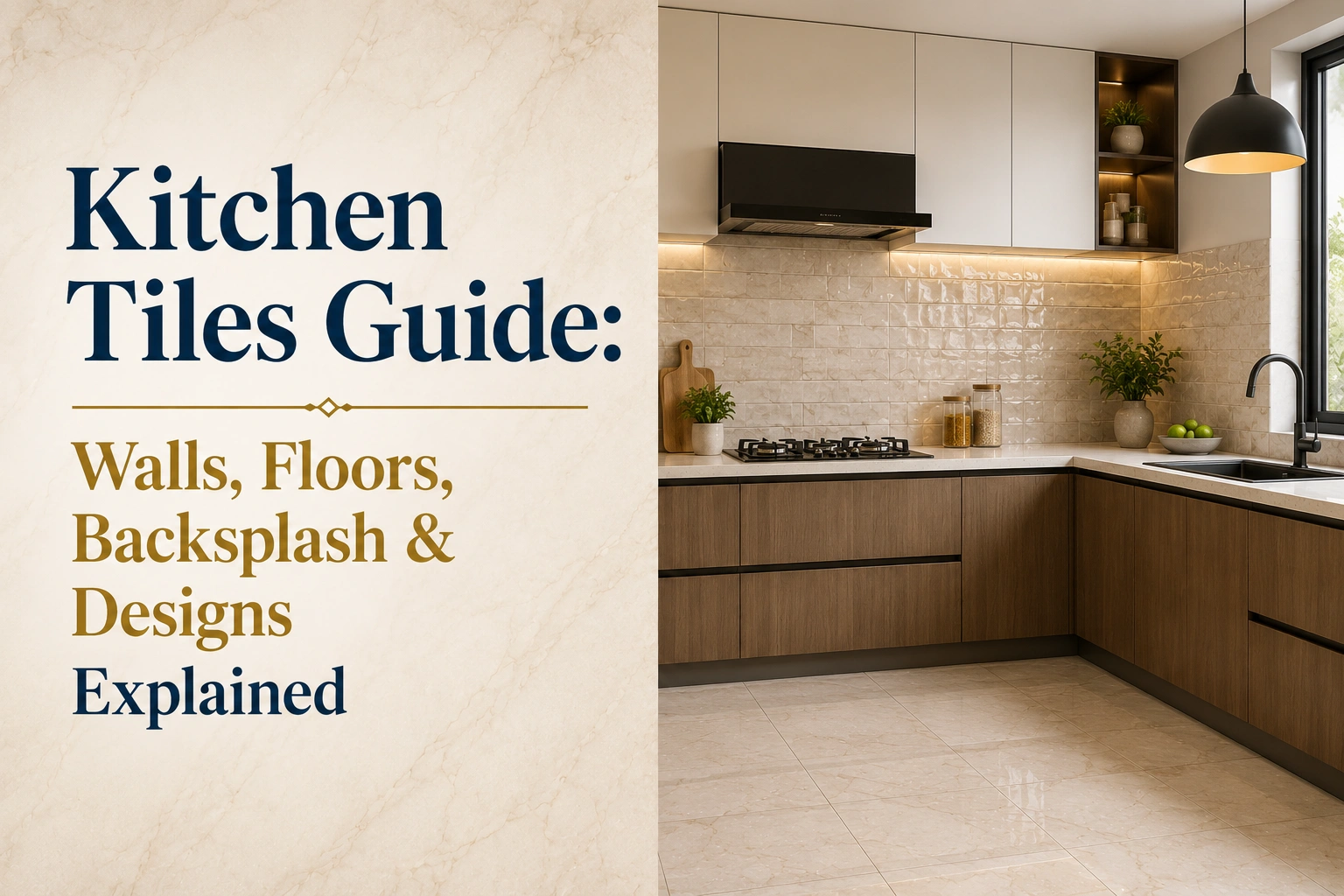
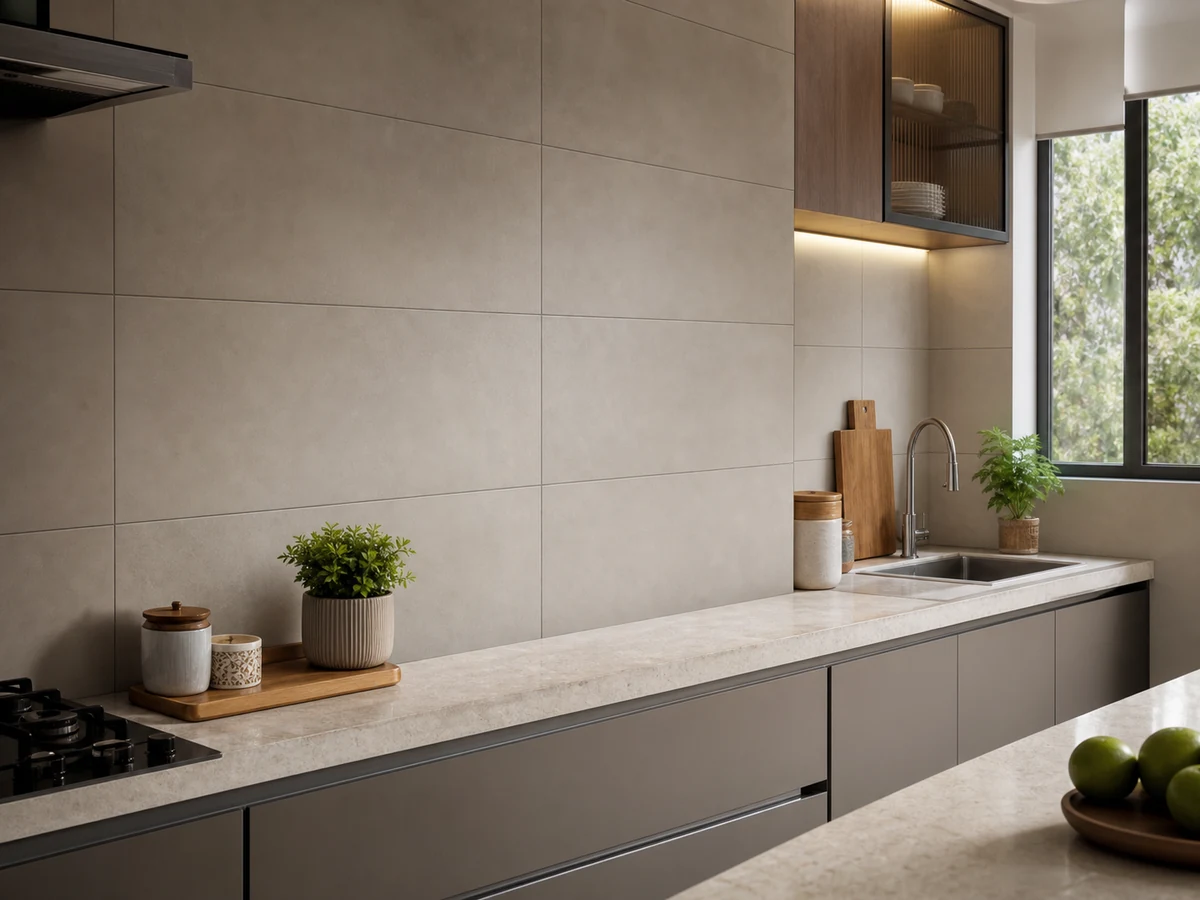
Plain kitchen tiles are the most common tile specification in Indian homes and the most misunderstood. Plain means no printed pattern, no multi-tile motif, no decorative design on the tile face: only colour, finish, and size. Those three variables are doing all the design work that patterns and prints do in other tiles, which means choosing plain kitchen tiles is not a simpler decision than choosing patterned tiles. It is a different set of decisions, and getting them right determines whether a plain kitchen reads as clean and considered or as unfinished.
This page covers plain kitchen tiles across every surface in the kitchen tiles range: wall tiles in ceramic, floor tiles in GVT, and the colour and finish decisions that make plain tiles read as a designed kitchen rather than a default one. Plain white kitchen tiles are covered in this page alongside grey, cream, beige, and black plain tiles, because plain is a specification category that crosses all colours. Buyers searching for kitchen tiles with a plain design, or for plain kitchen wall tiles in a specific colour, will find the full specification here.
Why Plain Kitchen Tiles Work Better Than Patterns in Many Indian Kitchens
Plain tiles are not the absence of a design decision. They are the result of one. In an Indian kitchen that already has multiple visual elements competing for attention, namely the cabinet colour, the countertop material, the appliances, the storage containers, and the cooking activity itself, a plain tile on the backsplash and wall provides the visual rest that lets the rest of the kitchen read clearly.
Three specific reasons plain kitchen tiles are often the stronger choice:
A plain tile does not date. A geometric print or a Moroccan pattern on the backsplash reflects a specific trend. Plain white or grey tiles on the kitchen wall read the same in five years as it does today.
Plain tiles make kitchens read as larger. A patterned backsplash draws the eye and sets a visual boundary. A plain backsplash in the same colour as the cabinets above it makes the wall read as a continuous surface, which opens the kitchen visually. This matters in small Indian modular kitchens where the wall above the counter is often the dominant visible surface from the entry.
Plain tiles are easier to clean in Indian cooking conditions. There are no pattern joins, no printed glaze edges to harbour residue, and no texture grooves to trap cooking grease. The flat glazed face of a plain ceramic tile wipes clean with a single pass of a damp cloth.
Kitchen Tiles Plain Design: The Three Decisions That Replace Pattern
With a patterned tile, the design is printed on the tile. With plain kitchen tiles, the design comes from three decisions that the buyer must make explicitly:
Decision 1: Colour
The colour of a plain tile is the loudest design signal on the surface. White reads as fresh and open. Grey reads as calm and contemporary. Cream reads as warm and traditional. Black reads as bold and graphic. Beige reads as the warmest and most forgiving of the neutral range. Each colour carries a different visual weight in a kitchen and a different pairing logic with cabinet colours. The colour section of this page covers the main plain tile colour choices and what each reads like in a kitchen.
Decision 2: Finish
The finish on a plain tile determines how light behaves on the surface and how visible cooking residue becomes between cleaning sessions. Gloss finish on a plain white wall tile reflects kitchen light and makes the surface feel brighter. Sugar finish on the same tile gives a softer glow. Matte finish tile gives the flattest reading with no reflective quality. On a plain tile, the finish distinction is more visible than on a patterned tile, because there is no printed design to draw the eye away from the surface character itself.
Decision 3: Grout colour
Grout colour on a plain tile is the design decision with the highest visual impact per rupee spent. White grout with white tiles makes the joins nearly invisible, and the wall reads as a flat white surface. Grey grout with white tiles makes every join visible and gives the wall a grid pattern. Matching grout with any plain tile colour reads as the most unified surface. A contrasting grout colour on a plain tile wall gives the tile a graphic quality that replaces the pattern that a printed tile would have provided. The choice of grout colour is, in effect, a design decision about whether the wall reads as plain or as subtly patterned.
Plain White Kitchen Tiles: The Most Specified Plain Tile in India
Plain white kitchen tiles are the most ordered tile specification in the Indian modular kitchen market. The white ceramic 12x24 on the backsplash and the white GVT 2x2 matte on the floor appear in more Indian kitchens than any other tile combination, because white reads as clean, bright, and neutral against every cabinet colour, countertop material, and appliance finish.
Plain white kitchen wall tiles
Ceramic in 12x24 (300x600) in a plain white gloss or sugar finish is the standard plain white kitchen wall tile specification. The 12x24 format gives a clean horizontal run with fewer joints than 12x18. Gloss white reflects kitchen light and is the easiest to wipe clean from cooking oil. Sugar finish is slightly softer but equally practical near the backsplash. White matte ceramic on a kitchen wall is less reflective and suits kitchens with strong natural light, where the buyer does not need the surface to add brightness.
Grout decisions for plain white kitchen wall tiles: white grout gives a unified, near-seamless surface; light grey grout gives a visible grid that reads as a contemporary tile pattern; dark grey grout gives a graphic grid that reads as an explicit design choice. For the full zone-by-zone wall specification, the kitchen wall tiles page covers all surface constraints.
Note: Plain white ceramic 12x24 is a wall-only tile. It must not be used on kitchen floors regardless of finish.
Plain white kitchen floor tiles
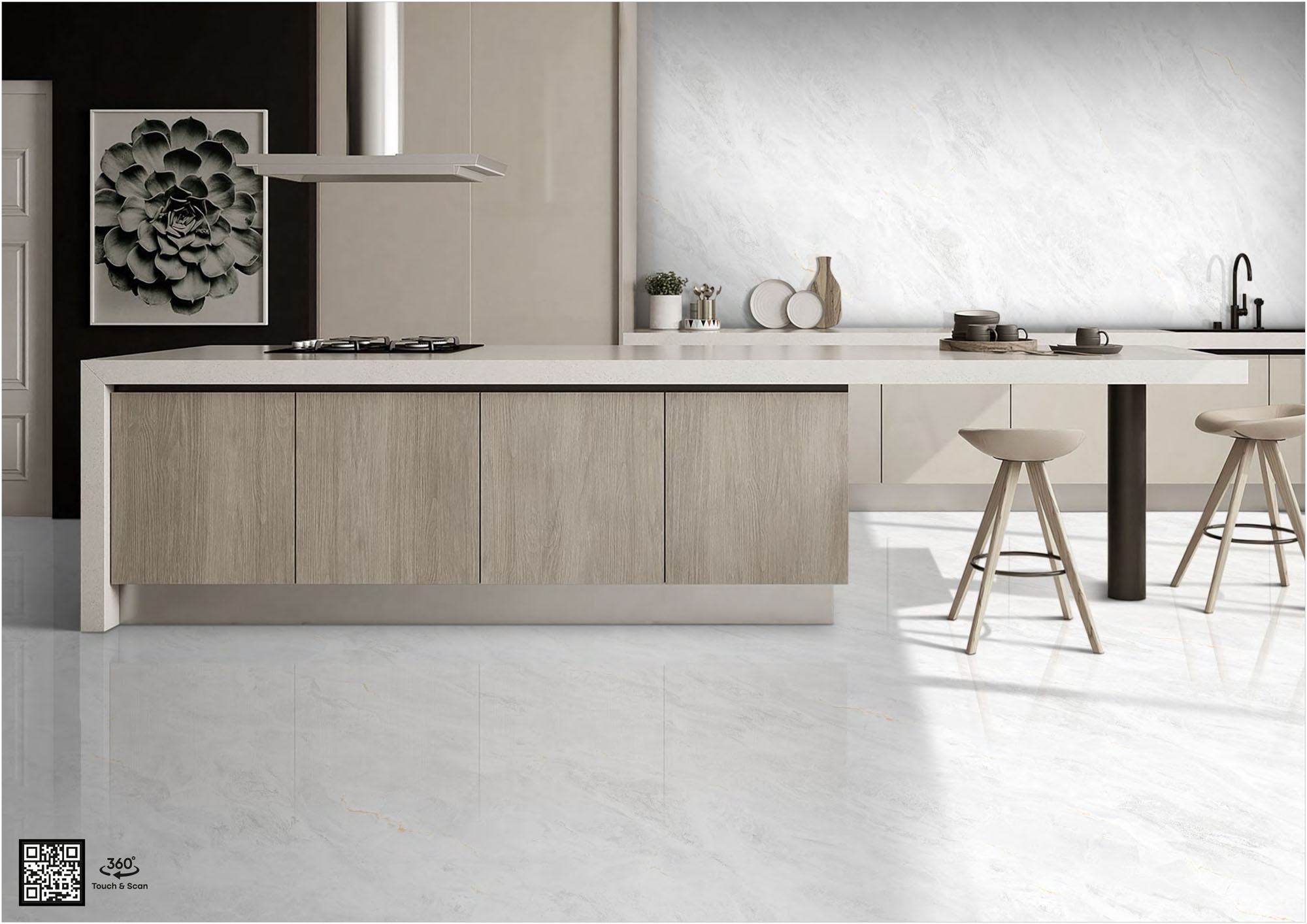
For a plain white kitchen floor, GVT in matte finish in 2x2 (600x600) is the correct specification. White matte GVT has water absorption of 0.05%, handles daily kitchen mopping and cooking water, and the matte surface is anti-skid. White on a kitchen floor shows dark residue and footprints more visibly than any other floor colour, which means a white kitchen floor requires the most frequent cleaning of any floor colour in Indian daily cooking conditions. For buyers who want the light, open feel of a pale floor without the maintenance pressure of pure white, cream or light beige GVT matte in 2x2 gives a similar spatial quality with lower residue visibility. For the full specification for white tile options across all sizes and bodies, the white kitchen tiles page covers the complete white range.
Plain Kitchen Tiles Colour Guide: What Each Colour Does in a Kitchen
Colour
Tile Body
Wall Finish
Floor Finish
Kitchen Visual Effect
Best Cabinet Pairing
Price (Rs./sq.ft)
White
Ceramic (wall); GVT (floor)
Gloss or Sugar
Matte
Brightest; most open; shows dark residue on the floor
Any cabinet colour
Rs. 40 to Rs. 165 (ceramic wall to GVT floor)
Cream or ivory
Ceramic (wall); GVT (floor)
Gloss or Sugar
Matte
Warm, open, softer than white; hides warm residue better
White, cream, or light timber cabinets
Rs. 45 to Rs. 165
Light grey
Ceramic (wall); GVT (floor)
Gloss, Sugar, or Matte
Matte
Cool, calm, contemporary; does not add warmth
White, grey, or any cool-neutral cabinet
Rs. 45 to Rs. 170
Mid-grey
Ceramic (wall); GVT (floor)
Gloss or Matte
Matte
Strong neutral; reads as a considered surface choice
White or light grey cabinets
Rs. 50 to Rs. 175
Beige or warm grey
Ceramic (wall); GVT (floor)
Gloss or Sugar
Matte
Warm neutral; most forgiving for Indian cooking residue; hides oil and dust well
Any warm-toned cabinet, timber, or cream
Rs. 45 to Rs. 165
Black or near-black
Ceramic (wall); GVT (floor)
Gloss (wall only)
Matte
Bold and graphic; needs white cabinets and good lighting
White cabinets only
Rs. 50 to Rs. 185
Navy or dark blue
Ceramic (wall); GVT (floor)
Gloss (wall only)
Matte
Rich and considered; less demanding than black; adds depth
White or off-white cabinets
Rs. 55 to Rs. 175
The most practical plain kitchen tile colour for Indian daily cooking conditions is warm beige or warm grey. These two colours hide cooking oil mist, dried water marks, and cooking dust better than white, cool grey, or any dark colour. Plain white on the wall and plain beige or warm grey on the floor is the combination that balances visual brightness (white wall) with practical maintenance (warm neutral floor).
Plain Kitchen Wall Tiles: Size, Finish, and Zone Guide
Plain kitchen wall tiles in ceramic are the standard specification for the backsplash and above-counter wall in Indian kitchens. The tile body, size, and finish are the only variables once the colour is decided.
Zone
Tile Body
Size
Finish
Reasoning
Backsplash directly behind the cooktop
Ceramic
12x24
Gloss
Gloss wipes clean from oil mist; matte holds grease in the surface texture near the cooktop
Backsplash behind sink and prep counter
Ceramic
12x24
Gloss or Sugar
Both finishes handle water splash and food contact equally well
Full wall above dado to ceiling
Ceramic (budget); GVT (mid-range)
12x24 (ceramic); 2x2 or 2x4 (GVT)
Gloss or Matte (both safe on walls)
GVT gives more colour consistency across large areas; fewer joins in 2x4
Feature wall (one wall only)
GVT
2x2 or 2x4
Gloss or Matte (both safe on walls)
Large format plain GVT on one wall reads as a considered material surface even without a pattern
Note: 300x450 and 300x600 are wall-only sizes. They must not be used on kitchen floors. For plain kitchen floor tiles, use GVT in 2x2 or porcelain in 600x600 in matte finish only.
Plain Tiles for Kitchen Floor: GVT Matte in Any Neutral Colour
A plain kitchen floor tile is GVT in matte finish in 2x2 (600x600) in whichever colour the buyer has chosen. The matte surface is anti-skid and handles the daily cooking water, cleaning water, and food residue that reach the kitchen floor in Indian cooking conditions. GVT has water absorption of 0.05%, which means the adhesive bond stays stable through monsoon humidity cycles year after year.
The colour decision on a plain kitchen floor is the only design decision left after finish and body are locked in. The four most practical plain kitchen floor tile colours for Indian daily use, in order of maintenance ease:
Warm beige or tan GVT matte: the most forgiving kitchen floor colour. Hides cooking dust, dry food residue, and oil marks between mopping sessions. The most common floor tile colour in Indian mid-range kitchens.
Light grey GVT matte: slightly less forgiving than warm beige because cool grey reads dried cooking residue more clearly. Very widely specified in contemporary Indian kitchens.
Cream or ivory GVT matte: between white and beige in maintenance visibility. Reads well with white or timber cabinets. Slightly more visible footprint and residue than beige.
White GVT matte: the brightest floor option, but the highest maintenance. Every footprint, dried water mark, and cooking spill reads clearly. Requires daily dry-mopping in any kitchen with active Indian cooking.
Plain GVT matte in 2x2 in these colours runs from Rs. 80 to Rs. 165 per sq.ft.
Grout Colour Is the Design Tool for Plain Kitchen Tiles
Grout colour with plain kitchen tiles is not a finishing decision; it is the primary design decision on the surface. Because there is no pattern on the tile to carry the visual interest, the grout joint is the only element that adds visual articulation to the plain surface.
Four grout approaches and what each does to a plain tile surface:
Matching grout (grout colour matches the tile colour exactly): the joins are nearly invisible. The surface reads as a flat, continuous plane of colour. This is the quietest, most refined look for a plain tile. Used widely in designed kitchens where the tile is meant to read as a material surface, not as individual tile pieces.
Tone-matched grout (grout one shade darker or lighter than the tile): the joins are visible as a subtle line but do not contrast sharply. The tile reads as individual pieces without a strong grid. This is the most commonly used grout approach for plain tiles in Indian kitchens and produces the most natural result.
White grout with any colour tile: the joins read as white lines regardless of tile colour. With dark tiles, this creates a graphic grid. With light tiles, it adds a bright line between each piece. This approach is used when the buyer wants the grid to read as part of the surface's visual character.
Contrasting grout (dark grout with light tile, or light grout with dark tile): the joins read as a strong grid that replaces what a pattern would provide. A plain white tile with charcoal grout, laid in a horizontal bond, reads as a brick-patterned surface because the grout grid is doing the pattern work.
The practical rule: if a buyer searches for plain kitchen tiles but finds the result too flat, the answer is usually not to add a patterned tile. The answer is to change the grout colour.
Light grey gives a low contrast grid; charcoal gives a high contrast grid
White with off-white grout for seamless backsplash; white with charcoal grout for a brick-look effect without patterned tile
Light grey
Mid-grey matching: subtle tile definition
White: visible grid; dark grey: graphic grid
Moderate; grey on grey reads as texture, not a graphic pattern
Light grey with matching mid-grey grout for full backsplash; white grout for more visual separation
Cream or ivory
Off-white or cream: near-seamless
Tan or warm grey: soft grid
Very low; warm tones blend across the join
Cream with off-white grout for a warm, unified surface; tan grout for gentle tile articulation
Beige or warm grey
Tan or warm beige: invisible join
Off-white: low contrast grid
Very low; warm neutral tiles with warm grout disappear into each other
Beige with tan grout for floor; warm grey with matching grout for full wall
Black or dark grey
Anthracite or dark grey: near-seamless dark surface
White: very high contrast; creates a bold grid
Very high with white grout; reads as a graphic pattern
Dark tile with anthracite grout for a unified dark surface; white grout only when the grid is an intentional design element
Choosing Plain Kitchen Tiles: A Decision Guide
Your Kitchen Requirement
Tile
Size
Finish
Grout
Price (Rs./sq.ft)
Plain white backsplash, any cabinet
White gloss ceramic
12x24
Gloss
Off-white or light grey
Rs. 40 to Rs. 75
Plain white full kitchen wall
White GVT matte or gloss
2x2 or 2x4
Matte or Gloss (walls only)
White or off-white
Rs. 85 to Rs. 165
Plain white kitchen floor
White GVT matte
2x2
Matte
Off-white epoxy grout
Rs. 85 to Rs. 155
Plain grey backsplash, contemporary kitchen
Mid-grey gloss ceramic
12x24
Gloss or Sugar
Matching mid-grey or white
Rs. 50 to Rs. 85
Plain grey kitchen floor
Light or mid-grey GVT matte
2x2
Matte
Matching grey epoxy grout
Rs. 90 to Rs. 165
Plain beige kitchen floor (most practical)
Warm beige GVT matte
2x2
Matte
Tan or warm beige epoxy grout
Rs. 85 to Rs. 155
Plain cream wall and floor
Cream ceramic (wall) + cream GVT matte (floor)
12x24 wall; 2x2 floor
Gloss wall; Matte floor
Off-white on both surfaces
Rs. 45 to Rs. 155
Plain black feature wall
Black GVT gloss or matte
2x2 or 2x4
Gloss (wall only) or Matte
Anthracite matching or white contrast
Rs. 95 to Rs. 185
Plain GVT Kitchen Floor Tiles and Indian Cooking Conditions
GVT in matte finish in 2x2 for a plain kitchen floor carries water absorption of 0.05%, which means the tile body does not expand or contract through the monsoon humidity cycle that Indian kitchens experience from June to September. The sealed glaze surface prevents cooking oil and turmeric from penetrating below the face, and the matte finish is anti-skid for the wet conditions that occur during cooking and cleaning. Epoxy grout between the floor tiles resists oil and turmeric staining in the joints. A plain beige or warm grey GVT matte floor in 2x2 with matching epoxy grout is the closest specification to a zero-maintenance kitchen floor available in the Indian tile market.
Plain Kitchen Tile Sizes and Prices from Indian Manufacturers
Ceramic in 12x24 for plain kitchen walls and backsplash is manufactured across Morbi in white, cream, grey, beige, and black glazes at Rs. 40 to Rs. 85 per sq.ft in gloss and sugar finish, meeting IS 13630 for ceramic tiles. GVT in 2x2 for plain kitchen floors and walls in the same colour range runs from Rs. 85 to Rs. 175 per sq.ft from producers across Gujarat, meeting IS 15622 for vitrified tiles. GVT in 2x4 for a plain full-height kitchen wall with fewer joins runs from Rs. 100 to Rs. 195 per sq.ft. Prices vary by colour depth, shade, and manufacturer; darker and more saturated glazes typically run Rs. 5 to Rs. 15 more per sq ft than standard neutral glazes.
The Right Plain Tile Changes Everything
White, cream, grey, beige, and black plain kitchen tiles in ceramic 12x24 for walls and GVT 2x2 matte for floors, from verified manufacturers across Morbi and Gujarat, are listed on TilesFinders with colour, finish, and tile body shown for every product. Plain ceramic for the backsplash starts from Rs. 40 per sq. ft.; plain GVT matte for the floor runs from Rs. 85 to Rs. 175 per sq.ft. Order a grout sample in two colours alongside the tile sample to see the exact grout effect before committing to the full order.
Tiles Near You
Detecting location...
Explore tiles available with trusted dealers near your location.
This is the fact that decides everything else on an area page. Once you know wet or dry, the finish glossary above tells you exactly which finishes are even in play.
Floor needs GHR, matte or sugar. Walls can carry any finish, including glossy and PGVT.
The whole finish range is open here. Satin matte and matte are the most-picked defaults.
Floor treated as wet-adjacent, matte or GHR. Backsplash walls can go glossy without any risk.
No slip concern at all. The decision here is warmth underfoot, satin matte or sugar over polished.
Vehicle load plus rain exposure. Heavy-duty GHR, R10 or above, thicker bedding than indoor floors.
No wet-floor concern, but the traffic load favours full body or colour body over standard GVT.
Exterior facade wall, full weather exposure. Needs a tile rated for outdoor wall use, not standard interior wall stock.
GHR or matte only, R10 minimum. Confirm the R-rating on the spec sheet before ordering, matte alone isn't a guarantee.
Same rule whether covered or open, GHR finish, R10 minimum, never a polished surface.
Full sun and rain exposure. GHR finish, and check the structural load if it's a large tiled area.
Technically indoor and dry, but rain and mud get tracked in. Matte is the safer default over polished.
Same logic as office: dry floor, but full body or colour body suits the daily footfall better than standard GVT.
Mostly dry with occasional water offerings. Matte is the practical pick, no genuine wet-floor rating needed.
Not a floor, so slip rating doesn't apply, but daily water contact still rules out anything porous. GVT or PGVT both fine here.
Utility and laundry zones see as much water as a bathroom floor. Same GHR-or-matte rule applies.
Wall-mounted, so any finish is fine. Glossy is common precisely because it wipes clean of splashes fastest.
Too broad a category for one verdict, a retail floor and a commercial kitchen have different needs. Check the specific sub-use before picking a finish.
A buying guide on tile size, finish, anti-skid choices, and how to reduce wastage before you order.
How we keep this page accurate
Pricing on this page is checked against current dealer listings and manufacturer spec sheets. Body type facts, water absorption figures and IS standard references are checked against BIS documentation, not copied from other websites. This page still won't catch a batch-specific spec, so confirm exact figures with your dealer before ordering.
PricingChecked against live dealer listings
Technical specsVerified against IS 15622 and IS 13630
Dealer listingsChecked before being added to the directory
After The Tiles Are Laid
Living with your new tile
Five habits that keep any GVT, PGVT or porcelain floor looking new for years, not just months.
Use a pH-neutral cleaner
Acidic or alkaline cleaners can dull the glaze over time. A mild, pH-neutral floor cleaner keeps the finish intact.
Skip abrasive scrubbers
Steel wool or scouring pads can scratch a polished surface permanently. A soft mop or cloth is enough for daily cleaning.
Wait before heavy use
Light foot traffic is fine after 24 to 48 hours. Hold off on moving heavy furniture back for a full 7 days.
Seal cement grout
Cement grout benefits from a sealant applied a few weeks after laying, to resist staining. Epoxy grout doesn't need this.
Mind the monsoon
A door mat at every entry cuts down on grit that scratches matte finishes over a wet season.
Plain kitchen tiles are ceramic, GVT, or porcelain tiles in a single solid colour with no printed pattern, no multi-tile motif, and no decorative texture depth. The only variables are colour, finish, and size. Plain tiles are the most commonly specified kitchen tile in Indian homes for both walls and floors because they give a clean, light surface that does not date and is easy to clean after heavy Indian cooking.
Plain white kitchen tiles in ceramic 12x24 are the standard wall and backsplash tile in Indian modular kitchens. They read as clean and bright against any cabinet colour, reflect kitchen light to lift the space, and wipe clean from cooking oil. GVT matte 2x2 in white is the correct body and finish for a plain white kitchen floor. Ceramic 12x24 in white is wall-only and must not be used on floors.
A patterned tile has a printed design on the glaze that carries the visual interest. A plain tile has no print; the visual interest comes from colour, finish, and grout colour instead. Plain tiles give the buyer more control over the final result through grout decisions. Changing the grout from off-white to charcoal on the same plain white tile changes the visual from seamless to graphic without changing the tile.
Gloss or sugar finish for the backsplash and wall. Gloss gives the tile colour its full brightness and wipes clean from cooking oil most easily. Sugar gives a softer, slightly less reflective surface that reads less intensely than flat gloss. Matte is safe on walls but is less practical on the backsplash near the cooktop, where oil mist reaches the surface daily.
Warm beige or warm grey GVT matte in 2x2 is the most practical plain kitchen floor tile colour for Indian conditions. Warm beige hides cooking dust, oil residue, and light food marks better than white, cool grey, or any dark colour. It requires less frequent mopping to look clean between uses than white or black floor tiles. Epoxy grout in a matching warm tan colour completes the specification.
Grout colour is the primary design tool for plain kitchen tiles. Matching grout makes joins nearly invisible,e and the surface reads as a flat colour plane. White grout with any tile colour adds visible lines between each tile. Contrasting grout (dark on light, or light on dark) adds a grid pattern that replaces what a print pattern would provide on a patterned tile. A plain white tile with charcoal grout reads as a brick-pattern surface without any printed design.
Yes, in the right specification. A plain white or cream tile on the backsplash in the same colour family as the overhead cabinets makes the wall read as one continuous surface and removes the visual boundary between cabinet and tile. This is one of the most effective ways to make a small Indian modular kitchen feel larger. Large format plain tiles in 2x4 with minimal grout joints also make a kitchen read as more open than the same colour in a smaller format with more visible joins.
White gloss ceramic in 12x24 is the most widely specified plain kitchen backsplash tile in India. It reads clean against any cabinet colour, reflects kitchen light, and wipes clean from cooking oil with minimal effort. Cream gloss ceramic is the warm alternative that suits kitchens with timber or cream cabinets. Grey gloss ceramic is the cool alternative for contemporary grey or white kitchen designs. All in 12x24 at Rs. 40 to Rs. 85 per sq.ft from manufacturers in Morbi.
What Our Customers Say
Real feedback from homeowners and contractors who found their perfect tiles
★★★★★
Found exactly the wood-look tiles I wanted for my living room. The dealer listed here had great stock and fair pricing. Saved me at least two weekends of running around showrooms.
★★★★★
Very detailed size and finish guide helped me choose anti-skid tiles for my bathroom. Wish I had found this site before my last renovation.
★★★★☆
Good comparison between vitrified and ceramic options. Contacted a dealer directly through the listing and got a quote within the hour.
★★★★★
As a contractor, I use this to quickly show clients different tile sizes and finishes on-site. The photos are high quality and load fast even on mobile data.
★★★★★
Loved how easy it was to filter by size and color together. Ended up going with 600x1200 GVT tiles for my hall, exactly what I was picturing.
★★★★☆
Solid resource for comparing tile finishes before visiting the showroom. Would like to see more price transparency, but overall a helpful first step.
★★★★★
The dealer directory saved me so much time. Called two showrooms directly from the site and had my order finalized within two days.
★★★★★
Great breakdown of PGVT vs GVT vs ceramic. I finally understood which tiles are meant for walls versus floors before making a costly mistake.
★★★★☆
Used this while renovating my kitchen backsplash. The FAQ section answered most of my questions about grout and water resistance without needing to call anyone.
★★★★★
Best part is being able to browse by room type. Picked out balcony and parking tiles in the same session without jumping between different sites.
0/4 selected
Compare Designs (0/4)
No designs added to compare yet. Open a design and tap "Compare" to add it here (up to 4).






-c55fd3da-e642-4ba4-bb70-b4fa4fdbccd9.jpg "Classic Roman")