Floor Tiles for Kitchen: Durability Meets Design
Discover the perfect Indian kitchen flooring. Learn why vitrified, matte, and large-format tiles are the best choice for durability, safety, and maintenance.
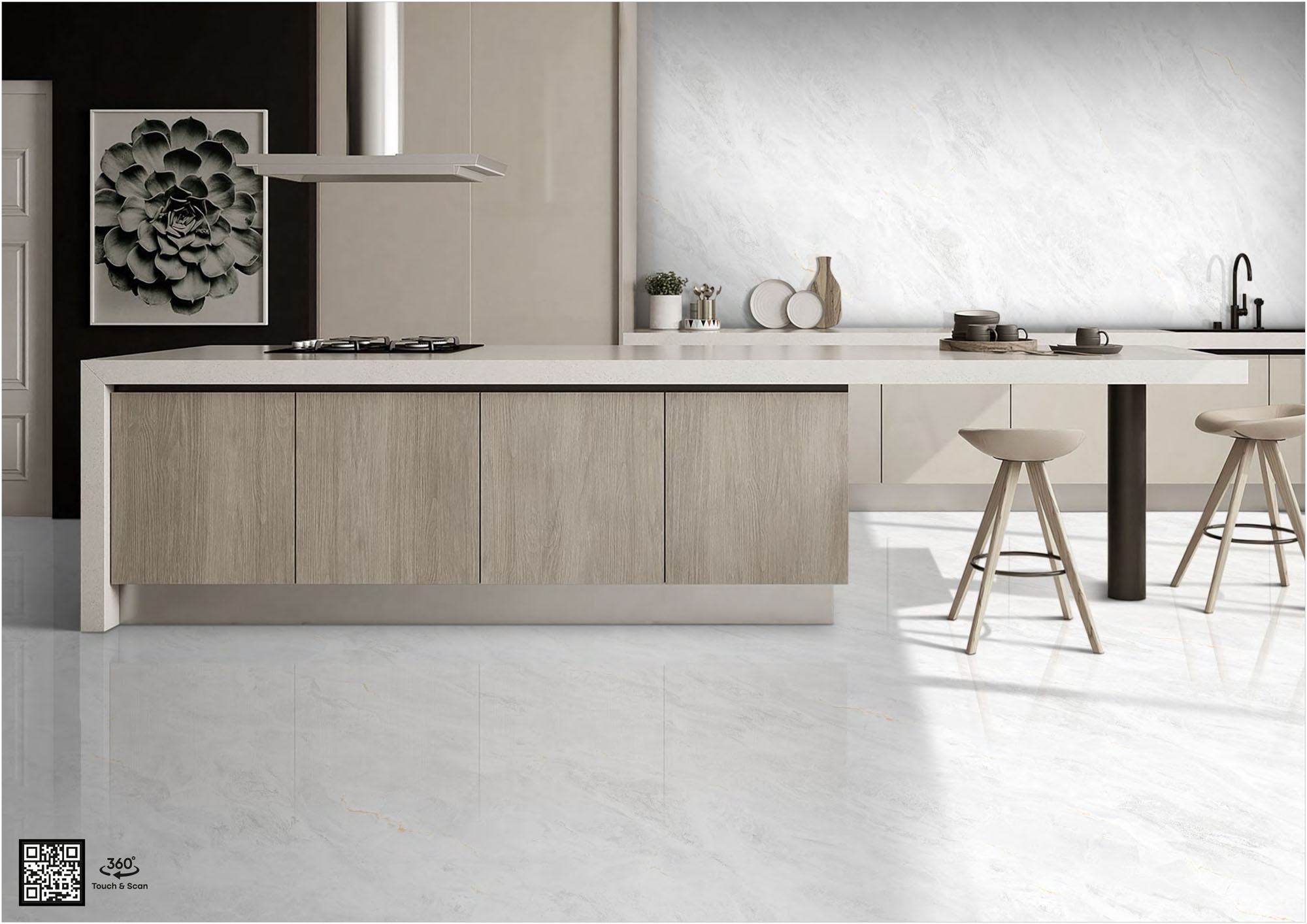
In India, a kitchen is more than just a place to cook; it’s a space where real everyday life happens. It’s where meals are made, conversations start without planning, and everyone ends up gathering at some point in the day.
But with all this activity, the kitchen floor goes through a lot. Haldi stains, oil splashes, water spills, pressure cooker ka steam, constant foot traffic, everything lands there first. So the tiles need to be strong enough to handle daily use and still look good over time.
That’s why choosing the right kitchen floor tiles is important. You need something durable, easy to clean, and stylish enough to match the vibe of your home
Key Factors for Your Kitchen Flooring: A Non-Negotiable Checklist
Choosing the right flooring is critical for an Indian kitchen, where daily cooking often involves strong spices, oil splatters, and heavy usage. The best kitchen tiles must offer a perfect blend of high durability, resistance to staining, and minimal maintenance.
Key Factors for Kitchen Flooring
When selecting flooring, consider these non-negotiable qualities:
- Water Resistance: The kitchen is a wet area. Tiles must be non-porous or have a very low absorption rate to prevent water damage, mold, and mildew.
- Stain Resistance: Turmeric (Haldi), chili powder, and oil are major stain culprits. Highly glazed or polished surfaces resist these stains better than matte or porous options.
- Durability (Wear and Tear): Look for tiles with a high PEI (Porcelain Enamel Institute) rating, typically PEI 4 or 5, to withstand heavy foot traffic and dropped utensils.
- Slip Resistance: Safety first. While a high gloss finish looks attractive, it can be extremely slippery when wet. A matte or textured finish offers better grip.
- Ease of Cleaning: The surface should require only simple mopping or wiping to look clean. Too much texture can trap dirt, making cleaning a chore.
The core Decision of body type: Vitrified Vs. Porcelain Vs. Ceramic Tiles for your kitchen
Now we know what we need in tiles, now it’s time to determine which material of tiles to pick. The market is full of different tile options, and each one comes with its own level of durability, maintenance needs, and visual style. If you end up choosing the wrong material, it can get damaged quickly, catch stains easily, or just not look good for long. So, with so many materials available, how do you decide which one will work best in your kitchen’s daily heavy use? Let’s look closely at the most popular and practical tile materials to help you find the right one for your home.
Vitrified Tiles and Porcelain: The Clear Winner for Floors
When you measure against the non-negotiable checklist, vitrified tiles emerge as the clear technical winner for your kitchen floor. They are specifically engineered to solve all the problems of a high-traffic kitchen.
Here’s how they meet the needs you defined:
- Solves Water Resistance:
Vitrified tiles are manufactured using a process that fuses clay, silica, feldspar, and other minerals. These materials are highly pressed and fired at an extremely high temperature to achieve full vitrification. This process creates a single, dense, glass-like body with an exceptionally low water absorption rate of less than 0.5%. This is a key advantage over many other tiles, including standard porcelain.
While porcelain tiles are made from similar materials, their firing process often does not reach this complete vitrification level. As a result, a porcelain tile's body absorbs slightly more water, and its overall durability is typically less than that of a fully vitrified tile.
Because of their near-zero absorption, vitrified tiles are superior for wet areas; water simply cannot penetrate them, which eliminates any risk of water damage or mould. (Though porcelain is still a perfectly usable option for general flooring.)
- Solves Stain Resistance:
When your floor is laid, the tile's surface is what's exposed and matters most for daily cleaning. Both vitrified and porcelain tiles are generally stain-resistant, offering a strong defense against tough Indian cooking stains like turmeric, oil, or masala.
However, the key factor in easy stain removal is the tile's surface texture.
Smooth Surfaces: On a smooth or polished finish, spills sit right on the surface instead of seeping in. A simple wipe is all it takes to clean it.
Rough/Textured Surfaces: A hard, heavily textured surface (which can be found on both tile types) might trap grime or stains, making them more difficult to clean.
- Solves Durability (Wear & Tear):
Because they are so dense and hard, vitrified tiles (especially GVT/PGVT/Full body/Double charge) consistently achieve high PEI ratings of 4 or 5.
Porcelain tiles also offer good durability, typically falling within a PEI range of 3 to 5.
This rating system measures a tile's resistance to wear. A tile rated PEI 3 is suitable for all residential and light commercial traffic, while tiles rated 4 or 5 are built to withstand heavy foot traffic, dropped utensils, and the dragging of furniture without chipping or scratching.
While porcelain is a strong contender, vitrified tiles rated PEI 4 and 5 are, without a doubt, among the most durable flooring choices for a high-traffic Indian kitchen.
Ceramic Tiles: Perfect for Walls but not for flooring
Standard ceramic tiles are best reserved for wall applications only. Their body is highly porous, meaning it absorb a significant amount of water. This porous structure makes the tile less dense and not strong enough to handle the daily wear and tear of kitchen flooring, leaving it vulnerable to chipping and cracking under foot traffic. While ceramic tiles are an excellent and cost-effective choice for kitchen wall tiles, they lack the necessary durability for floor installations.
The Safety vs. Maintenance Debate: Glossy vs. Matte Finish
Homeowners often get confused when choosing between safety and maintenance. If they choose matte tiles for safety, maintenance becomes a headache. And if they go for glossy tiles for easier cleaning, they compromise on safety. It’s a direct trade-off between Slip Resistance and Ease of Cleaning from our checklist. Let's break down the pros and cons.
The Case for a Glossy/Polished Finish
A high-gloss or polished finish is instantly attractive. It bounces light around the room, making your kitchen feel brighter, more spacious, and undeniably luxurious.
- The Pro: As you noted in our checklist, this finish is the champion of Ease of Cleaning. The perfectly smooth, non-porous surface means tough stains like haldi or oil splatters have nowhere to hide and can be wiped away with minimal effort.
- The Con: This beauty comes with a significant risk. A glossy finish does not offer much slip resistance. The moment it gets wet or greasy (a daily occurrence in any kitchen), it becomes a serious slip hazard, especially for children or elderly family members.
The Case for a Matte/Textured Finish
This is the finish that puts safety first. A matte, rustic, or lightly textured tile is the definitive anti-slip kitchen tile.
- The Pro: The surface provides superior grip underfoot. This "bite" is essential for a wet area, giving you peace of mind that your family is safe from accidental falls. This is the most practical and secure option for a high-traffic kitchen floor. With many choices available, you can easily choose a finish according to your requirements.
Satin Matte: This finish has a very slight, soft sheen, giving it a velvety look that's smoother and less flat than a standard matte.
Carving Matte: This finish features a textured surface where parts of the design are "carved" or recessed, adding physical depth you can feel. It offers the best of both elements, featuring a matte surface overall with glossy carving veins that stand out beautifully.
Regular Matte: This is the classic, less-reflective finish that provides a flat, natural look and is often used for its practicality and anti-slip properties.
Porsch Surface: This is a premium, zero-reflection matte finish that is exceptionally smooth to the touch, offering a modern, uniform look without any texture.
While all these are 'matte' (less reflective), their textures are very different. The best way to choose the right one for your home is to decide by touch and feel
- The Con: Some matte finishes with a very heavy texture or deep grooves can trap dirt. While this doesn't affect stain resistance, it might require a bit more scrubbing to clean the surface crevices and grout lines.
Smart Design: Kitchen Tile Ideas That Are Easy to Maintain
Your design choices play a major role in how easy your kitchen is to maintain. A smart kitchen isn’t just about looking pretty; it should also be easy to clean, handle daily mess, and address safety concerns. So, here are some floor tile ideas that look stylish and make maintenance a whole lot simpler for your kitchen.
1. Go Big: The Power of Large Format to medium large format Tiles
One of the biggest trends in kitchen floor tiles is also one of the most practical: using large-format tiles. For a medium-sized kitchen, medium-large formats (like 600x1200mm or 800x1600mm) are a great fit, while a large kitchen can use even larger formats (like 1200x1200mm or 1200x1800mm).
- The Benefit: Aesthetically, bigger tiles mean the printed design doesn't get repeated. Instead of a busy grid, you get to see one larger, continuous face of the pattern. This looks far more unique and allows natural stone or marble designs to look more realistic. The magic of large tiles is that they drastically reduce the number of grout lines on your floor. Grout is porous, and it's the number one place where dirt, grime, and mildew build up.
A key benefit of large-format tiles is the drastic reduction in joints, as your kitchen needs fewer tile pieces to cover the space. For an indoor kitchen floor, where temperature variation is very low, the tiles can be laid with such tight joints that it create a 'zero-grout' or seamless look. The main advantage of this nearly seamless surface is that during washing, water will not get trapped in any grout lines and can flow off the floor easily, making mopping much simpler.
- The Result: Fewer grout lines or no grout lines mean a cleaner, more seamless, and more spacious-looking floor. It's the ultimate hack for achieving an easy-maintenance kitchen.
2. The Best of Both Worlds: Wood & Stone-Look Tiles
Do you love the warm look of wooden flooring or the luxury of Italian marble? While beautiful, both are notoriously high-maintenance and impractical for a high-use Indian kitchen, as wood warps with water and real marble stains easily from turmeric or oil. This is where wood-look and stone-look vitrified tiles are a far superior alternative. Modern GVT (Glazed Vitrified Tiles) use high-definition digital printing to perfectly mimic these natural materials, giving you the stunning, realistic look of wood planks or marble veins. The result is you get that high-end aesthetic, but with all the practical benefits of a vitrified tile: it's stain-proof, waterproof, and extremely durable. It's the ultimate way to get a "high-maintenance" look with zero hassle.
3. The Modern Look: Terrazzo and Concrete Tiles
If you like a modern or simple style, terrazzo (with little spots) and concrete-look tiles are a great choice. They not only look cool, but they are also very useful.
The patterns on these tiles are great at hiding everyday dust, small crumbs, and dried water spots, so your floor looks clean all the time. Real concrete or terrazzo floors can soak up spills and get stained, but these tiles won't. They give you that modern style but are stain-proof, waterproof, and very strong, making them an easy choice for a busy kitchen.
4. The Statement Look: Moroccan and Floral Tiles
If you want your floor to be the star of the kitchen, Moroccan and Floral pattern tiles are a perfect choice. These tiles use bold colors and beautiful designs to create a "statement" floor that adds a lot of personality.
This is a great way to make your kitchen feel unique and stylish. And just like the other tiles, you don't have to worry about maintenance. The busy, colorful patterns are actually very good at hiding small crumbs or little spills. Giving you a beautiful, artistic look that is practical for everyday life.
Your Perfect Kitchen is Just a Smart Choice Away
Choosing the right tile for your kitchen doesn't have to be complicated. It all comes down to finding the smart balance between performance, safety, and style.
To get it right, just remember this simple formula:
- Floor: Use Vitrified Tiles for their unmatched durability and stain resistance.
- Walls: Use Ceramic Tiles for their endless design and colour options.
- Finish: Use a Matte or Semi-Matte finish on the floor for essential anti-slip safety.
- Size: Use Large Format Tiles for fewer grout lines and far easier cleaning.
This formula ensures you get a kitchen that is beautiful, safe for your family, and built to withstand the rigours of daily Indian cooking for years to come.
Ready to find your perfect balance?
Explore our complete collection of durable vitrified floor tiles and stunning kitchen backsplash tiles today!

See our tile guides first
Set TilesFinders as a preferred source and our buying guides surface ahead of the rest for you.
Add as preferred sourceTakes one tap. Nothing to install.
What Readers Say
I was about to redo my parking area with the wrong tile size until I read this. The layout comparisons saved me from a costly mistake.
We reference TilesFinders guides while briefing clients on material selection. The size and pattern breakdowns are accurate and easy to explain visually.
On site, I get asked about grout spacing all the time. This article gave me a solid reference I now share with my team before every job.
Finally a guide that doesn't just push generic advice. The oil stain removal steps actually worked on our clubhouse driveway tiles.
I run a small construction firm and now send this link to clients directly when they ask about entrance tile sizing. Saves me an hour of explaining.
Good practical detail, though I wish there were more examples for compact apartment entrances specifically, not just villas.
My mother-in-law wanted marble, I wanted vitrified. This blog gave us the neutral comparison we needed to actually decide together.
Detailed without being overwhelming. I appreciated that it covered both cost and maintenance, not just the aesthetics.
Used the algae and hard water removal tips on our terrace tiles after the monsoon. Worked better than what our regular cleaner was doing.
As someone who sources tiles for multiple builder projects, I find these comparisons genuinely useful for vendor conversations, not just consumer content.
Recommended this to a client who kept second-guessing the entrance design. The small vs large layout section settled the debate instantly.
Straightforward and honest, no unnecessary jargon. Would like to see a similar breakdown for outdoor pool-deck tiles next.
We've bookmarked several TilesFinders guides for our design handbook. Reliable source when clients want data, not just opinions.
Two paths, one marketplace.
Get free quotes from verified suppliers.
Share your room, budget, and style. Suppliers in Morbi respond within hours.
Get Free QuotesList your business, reach real buyers.
Put your showroom in front of homeowners searching for tiles right now.
List Your BusinessMore Blogs
See all
Bathroom & Kitchen Tile Ideas with 600x1200 mm Tiles
Modernise your home with 600x1200mm tiles. Discover design tips for seamless spa-like bathrooms a...
Read More
Dark Kitchen Floor Tiles vs Light Tiles – Pros & Cons
Dark or light kitchen floor tiles? Light tiles maximise space, while dark tiles add modern luxury...
Read More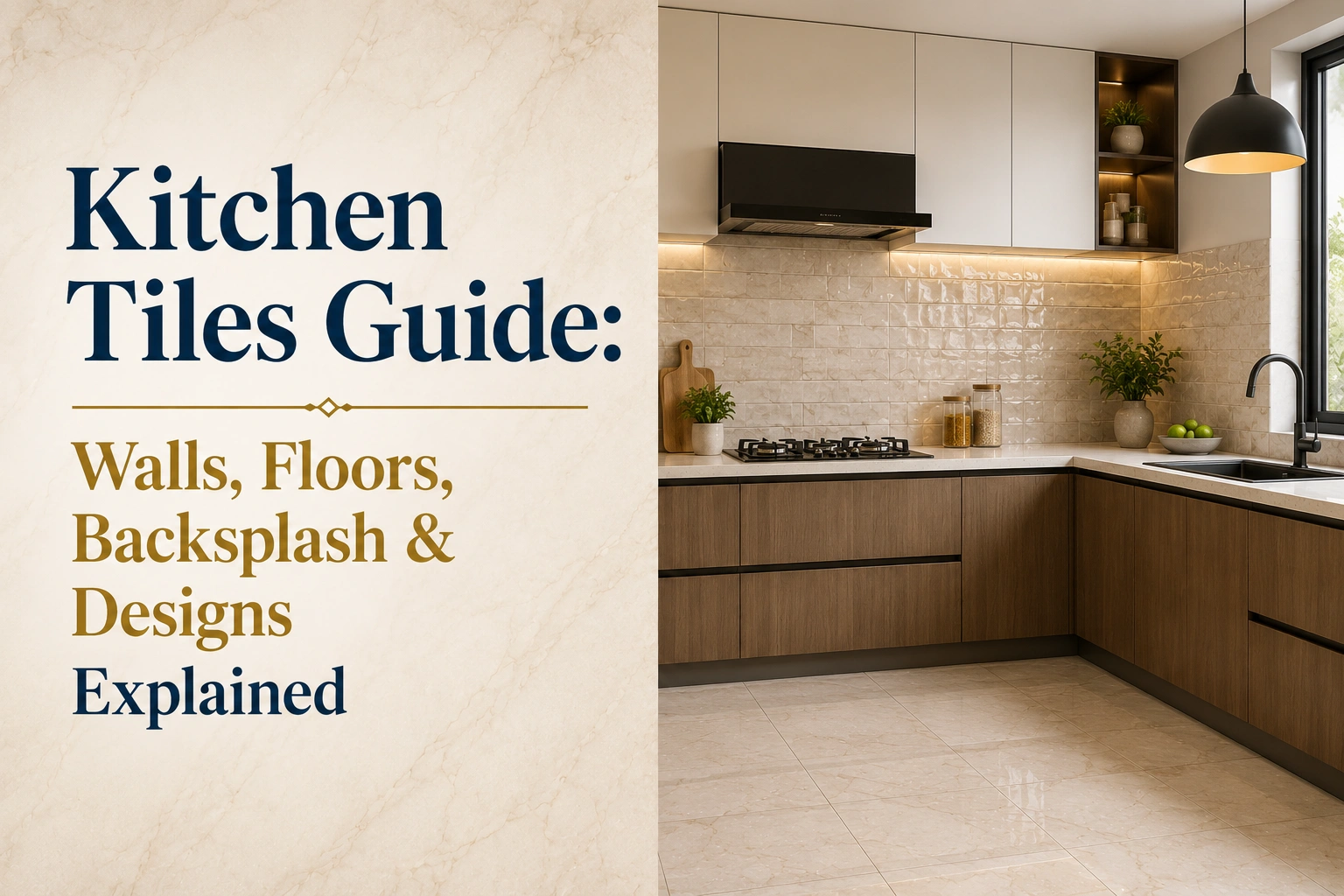
Kitchen Tiles Guide: Walls, Floors, Backsplash & Designs Explained
Master your kitchen renovation. Learn why vitrified matte floors and glossy walls are the secret ...
Read More