Vitrified Tiles Complete Guide: GVT, PGVT, Double Charge & Full Body
Confused by GVT, PGVT, and Double Charge? This guide decodes vitrified tiles, helping you pick the right finish and material for every room while balancing durability, safety, and modern style.
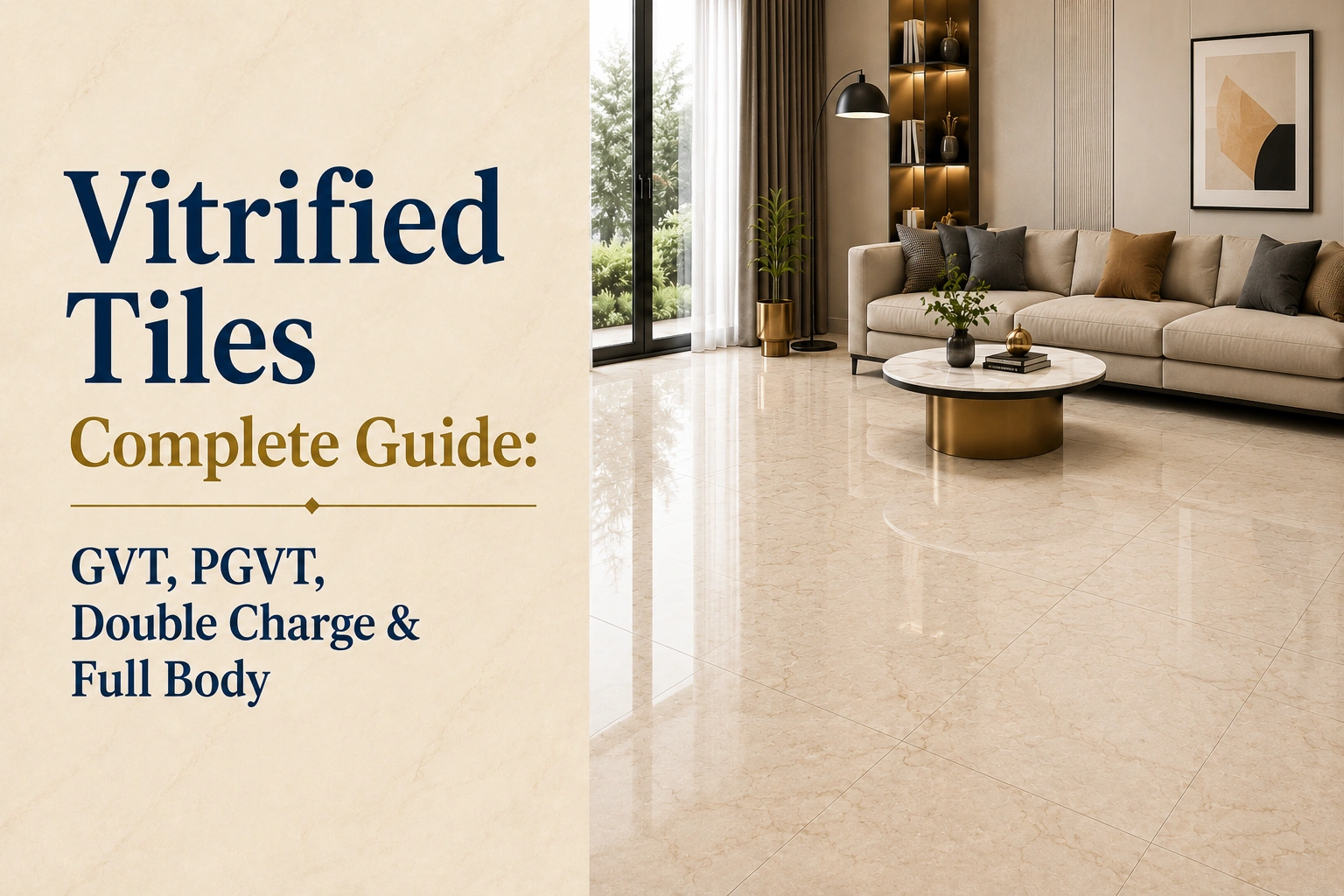
Vitrified tiles have become one of the most widely used flooring options in Indian homes.
From compact apartments to commercial buildings, these tiles are now used across living rooms, kitchens, bathrooms, parking areas, and office spaces because they offer durability, low maintenance, and a wide variety of finishes.
But choosing between GVT, PGVT, nano, double charge, and full-body vitrified tiles can quickly become confusing.
Many homeowners end up selecting tiles only based on showroom appearance without understanding where each type actually performs best.
This guide explains the different types of vitrified tiles clearly, including their uses, strengths, limitations, and buying considerations for Indian homes.
What Are Vitrified Tiles?
Vitrified tiles are manufactured using clay, silica, quartz, and other minerals fused at high temperatures to create a dense and low-porosity tile body.
This vitrification process reduces water absorption and improves durability, making vitrified floor tiles suitable for both residential and commercial use.
One reason vitrified tiles became so popular in India is their ability to handle heavy daily usage with relatively low maintenance.
Compared to many traditional flooring materials, vitrified tiles:
- resist stains better
- absorb less moisture
- handle scratches more effectively
- require less polishing
- offer better design consistency
Modern vitrified tiles are also available in marble-inspired, stone-inspired, matte, glossy, and textured finishes.
That design flexibility makes them suitable for modern Indian interiors.
Why Vitrified Tiles Are Popular in Indian Homes
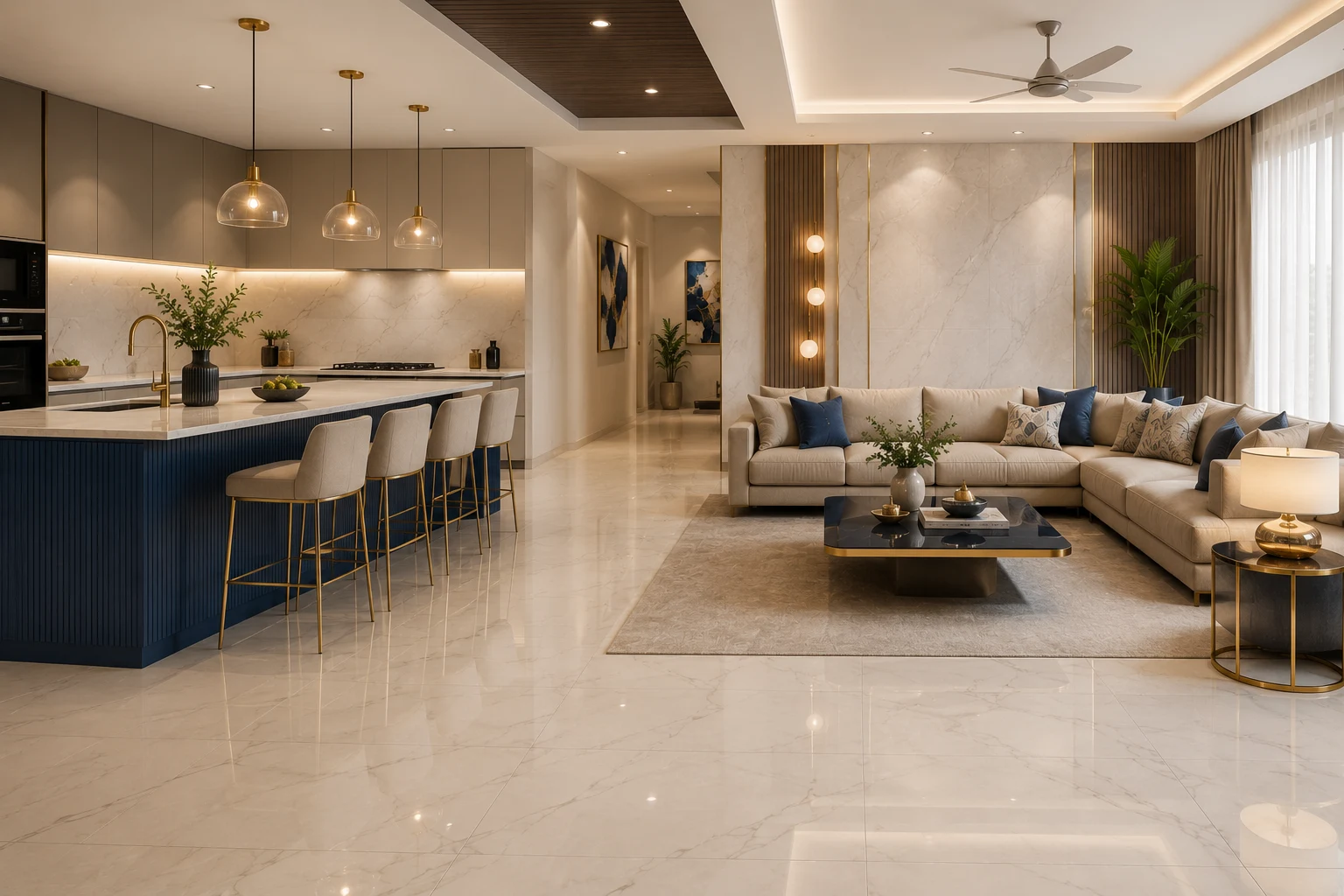
Indian homes experience conditions that can quickly damage weaker flooring materials.
Dust, hard water, heavy foot traffic, cooking stains, and frequent cleaning all affect flooring performance over time.
Vitrified floor tiles work well in these conditions because they combine durability with easier maintenance.
Another major reason is design versatility.
Today, homeowners can find:
- marble look vitrified tiles
- wood finish vitrified tiles
- concrete-inspired finishes
- glossy luxury surfaces
- matte anti-skid textures
Large-format vitrified tiles also help create cleaner-looking interiors with fewer grout lines.
That modern seamless look has become especially popular in apartments and contemporary homes.
Different Types of Vitrified Tiles Explained
Understanding the types of vitrified tiles is important because each category performs differently.
A tile suitable for a living room may not work well in bathrooms or parking areas.
GVT Tiles (Glazed Vitrified Tiles)
0.5% water absorption
Glazed vitrified tiles, commonly called GVT tiles, feature a glazed digital surface layer printed with different designs and textures.
These tiles are widely used in residential interiors because they offer:
- modern designs
- marble-inspired finishes
- easier maintenance
- good stain resistance
- lower water absorption
GVT tiles are commonly installed in:
- living rooms
- bedrooms
- wall applications
- moderate-traffic flooring areas
They are available in matte, glossy, satin, and textured finishes.
PGVT Tiles (Polished Glazed Vitrified Tiles)
Polished glazed vitrified tiles, or PGVT tiles, are similar to GVT tiles but include an additional polished surface finish.
This polishing process creates a smoother and shinier appearance.
PGVT tiles are popular in luxury residential interiors because they:
- reflect light effectively
- create a premium appearance
- enhance marble-look designs
- make spaces feel brighter
They work especially well in:
- living rooms
- hotel-style interiors
- feature spaces
- premium residential flooring
Highly polished surfaces, however, may show scratches, footprints, and water spots more easily.
Nano Vitrified Tiles
Nano vitrified tiles include an additional nano coating applied to the surface.
This coating helps improve:
- stain resistance
- surface smoothness
- shine retention
Nano vitrified tiles were extremely popular for glossy flooring during earlier design trends.
However, many modern homeowners now prefer matte or satin finishes because they require less maintenance visually.
Highly glossy nano surfaces can become slippery when wet.
That makes them less suitable for bathrooms and moisture-prone spaces.
Double Charge Vitrified Tiles
Double-charged vitrified tiles are manufactured using two layers of pigment pressed into the tile body.
This creates thicker surface patterns and improves durability under heavy traffic conditions.
These tiles are commonly used in:
- commercial buildings
- offices
- shopping areas
- high-traffic flooring zones
Double-charged vitrified tiles are known for:
- long-term durability
- strong wear resistance
- thicker surface layer
- better performance in heavy-use spaces
Their design variety is usually more limited compared to digitally printed GVT and PGVT tiles.
Full Body Vitrified Tiles
Full body vitrified tiles contain the same material and colour throughout the entire tile thickness.
Even if the surface experiences wear or scratches, the inner body maintains a similar appearance.
That makes full-body vitrified tiles highly suitable for:
- industrial spaces
- airports
- parking areas
- commercial flooring
- heavy-load applications
These tiles are extremely durable and designed primarily for performance rather than decorative aesthetics.
Quick Comparison: Which Vitrified Tile Should You Choose?
| Tile Type | Best Use | Finish Options | Durability | Slip Resistance | Maintenance | Design Variety |
| GVT | Homes | Matte/Glossy | Good | Moderate | Easy | High |
| PGVT | Premium interiors | High Gloss | Good | Lower when wet | Moderate | High |
| Nano | Glossy flooring | Ultra Glossy | Moderate | Lower | High maintenance | Moderate |
| Double Charge | Commercial spaces | Semi-gloss | Very High | Moderate | Easy | Limited |
| Full Body | Parking/industrial | Functional | Extremely High | Good | Easy | Limited |
Which Vitrified Tile Works Best for Different Spaces?
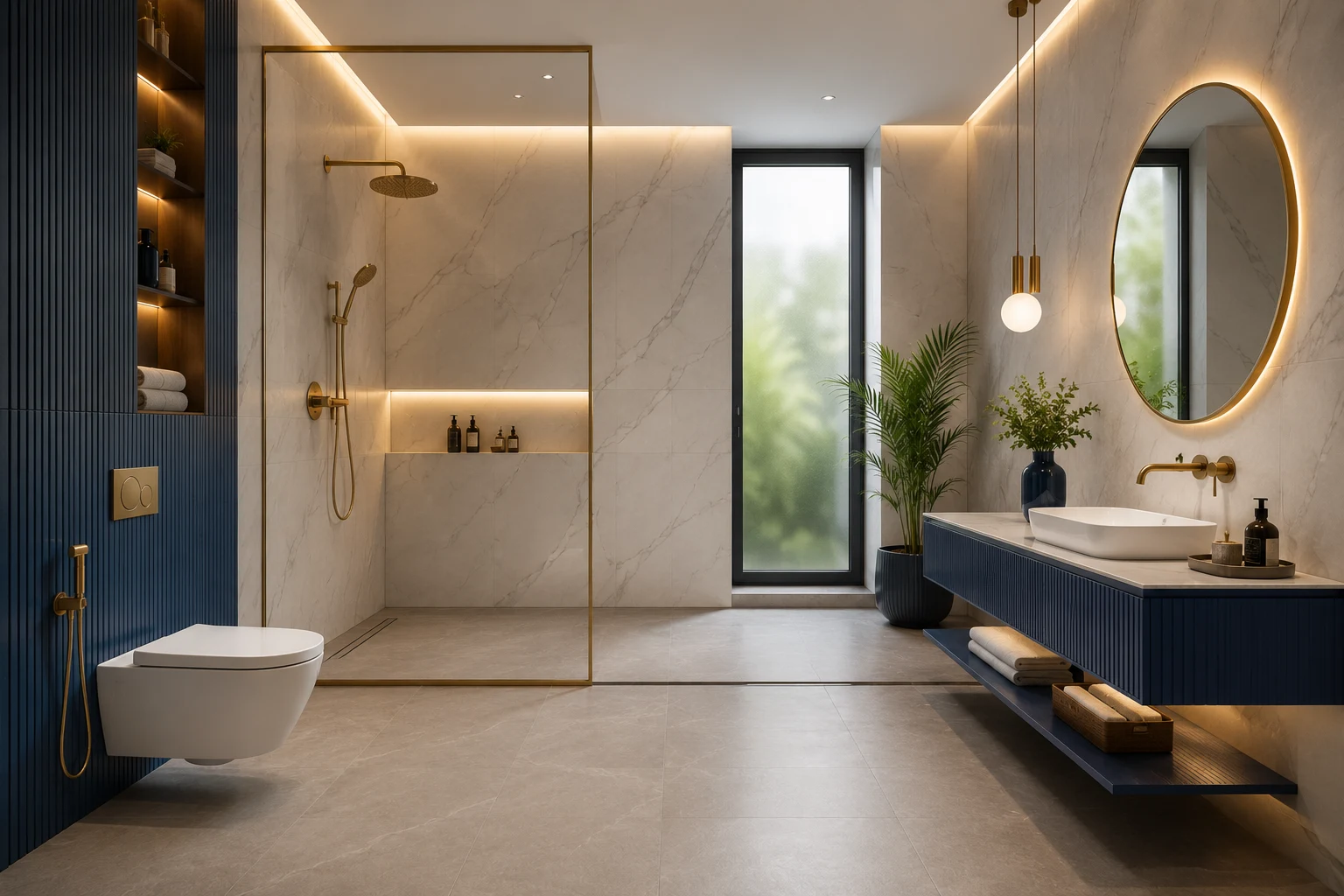
Choosing the correct vitrified tile depends heavily on room usage.
The wrong finish or tile category can create maintenance and safety issues later.
Living Rooms
Living rooms usually benefit from:
- PGVT tiles
- marble look vitrified tiles
- large-format GVT tiles
These surfaces create a cleaner and more premium visual effect.
Glossy finishes work well here because living rooms usually experience lower moisture exposure.
Bathrooms
Bathrooms require better slip resistance.
Anti-skid vitrified tiles for bathrooms usually perform better in matte or textured finishes.
Highly polished glossy flooring can become slippery after water exposure.
For bathroom walls, glossy glazed vitrified tiles still work well because they are easier to clean.
Kitchens
Kitchens experience:
- oil splashes
- food spills
- frequent cleaning
- heavy movement
Matte or satin vitrified tiles generally work better than ultra-glossy surfaces because they hide stains and scratches more effectively.
Parking Areas
Vitrified parking tiles require:
- high strength
- abrasion resistance
- heavy-load durability
Double-charged and full-body vitrified tiles are commonly preferred for these spaces because they handle wear more effectively.
Textured anti-skid surfaces also improve safety.
Commercial Spaces
Commercial flooring experiences constant movement.
For high-traffic areas such as showrooms, offices, and retail stores, double-charged and full-body vitrified tiles generally perform better than decorative glossy tiles.
Durability matters more than aesthetics in these spaces.
GVT vs PGVT vs Double Charge vs Full Body
Here is a simplified comparison.
| Tile Type | Best For | Surface Style | Durability | Design Variety |
| GVT | Homes | Matte/Glossy | Good | High |
| PGVT | Luxury interiors | Polished | Good | High |
| Double Charge | Commercial flooring | Limited patterns | Very High | Moderate |
| Full Body | Industrial/Parking | Functional | Extremely High | Limited |
The right choice depends on where the tile will actually be used.
A showroom recommendation alone is not enough.
Vitrified Tiles vs Porcelain Tiles: What’s the Difference?
The terms vitrified tiles and porcelain tiles often create confusion because their definitions vary across manufacturers and markets.
Technically, porcelain tiles are also manufactured using dense clay materials fired at high temperatures, which gives them low water absorption and high durability.
In India, however, the term “vitrified tiles” is commonly used as a broader flooring category that includes:
- GVT tiles
- PGVT tiles
- double charge tiles
- full-body vitrified tiles
Porcelain tiles are often marketed separately for:
- premium wall applications
- refined decorative finishes
- designer interiors
Instead of relying only on category names, homeowners should compare:
- water absorption
- finish type
- slip resistance
- thickness
- intended usage area
- manufacturer specifications
Performance matters more than terminology alone.
Sizes, Finishes & Design Trends in Vitrified Tiles
Modern vitrified floor tiles now come in multiple sizes and finishes.
The right combination affects maintenance, lighting, and overall room appearance.
Matte Finishes
Matte vitrified tiles:
- hide dust better
- reduce glare
- offer a better grip
- show fewer scratches
They work especially well in Indian homes with high daily usage.
Glossy Finishes
Glossy vitrified tiles create a brighter and more reflective appearance.
They are commonly used in:
- living rooms
- premium interiors
- luxury-style spaces
But glossy surfaces require more frequent cleaning because footprints and watermarks become more visible.
Large Format Tiles
Large vitrified tiles, such as 600x1200 mm and 800x1600 mm, create a cleaner and more seamless look.
Fewer grout lines make rooms appear visually larger.
However, oversized tiles can increase cutting wastage in compact apartments.
Marble Look Vitrified Designs
Marble-look vitrified tiles remain one of the most popular choices in India.
They provide:
- marble-inspired aesthetics
- easier maintenance
- better stain resistance
- lower upkeep compared to natural marble
Soft white, beige, and grey marble patterns continue dominating modern residential interiors.
How to Choose the Right Vitrified Tiles
Choosing vitrified tiles should involve more than selecting a design from a catalogue.
Usage conditions matter just as much.
Choose Based on Usage
Different areas require different performance levels.
For example:
- PGVT works well for premium living spaces
- Full-body tiles work better for heavy-use areas
- Anti-skid matte tiles suit bathrooms better
Understand Slip Resistance
Many homeowners prioritise shine over safety.
That often becomes a mistake later.
Bathrooms, balconies, and parking spaces should always prioritise grip and texture.
Match Finish with Lighting
Glossy surfaces reflect more light.
Matte surfaces absorb light and create a softer appearance.
A tile that looks luxurious under showroom lighting may behave completely differently inside a naturally lit apartment.
Always test samples in actual lighting conditions.
Consider Maintenance Before Design
Some designs require more cleaning than others.
Ultra-glossy dark flooring usually shows:
- dust
- scratches
- footprints
- water spots
more quickly than matte neutral finishes.
Practicality matters long-term.
Questions to Ask Before Buying Vitrified Tiles
Before finalising tiles, ask the dealer:
- What is the tile water absorption rate?
- Is the tile suitable for high-traffic flooring?
- Does the finish become slippery when wet?
- What tile thickness is recommended?
- Is batch consistency guaranteed?
- What grout colour works best?
- How much extra material should be ordered?
- Is the tile suitable for outdoor use?
These questions help avoid common installation and maintenance problems later.
Common Mistakes People Make While Buying Vitrified Tiles
Choosing Glossy Tiles for Wet Areas
Highly polished flooring can become slippery after water exposure.
Matte anti-skid surfaces are usually safer for bathrooms and utility spaces.
Ignoring Tile Thickness
Different spaces require different durability levels.
Thin decorative tiles may not perform well under heavy furniture or commercial movement.
Selecting Only by Design
Many homeowners buy tiles based entirely on appearance.
But flooring performance depends on:
- finish
- strength
- slip resistance
- maintenance requirements
not just aesthetics.
Ordering Exact Quantity
Tile cutting and breakage always create wastage.
Ordering 5% to 10% extra material helps avoid future batch-mismatch issues.
Expert Tips Before Finalising Vitrified Tiles
- Compare tiles under daylight instead of relying only on showroom LEDs.
- Walk on matte and glossy surfaces before choosing.
- Check whether the tile edge finishing is even.
- Use lighter grout shades for marble-look flooring.
- Ask about slip resistance before buying bathroom flooring.
- Prioritise durability for high-traffic areas instead of only visual design.
A balanced flooring decision almost always performs better than a purely trend-driven one.
Final Thoughts
The best vitrified tiles are not always the glossiest or most expensive ones.
Good flooring should suit your lifestyle, cleaning habits, lighting conditions, and usage requirements. A tile that looks impressive inside a showroom may not always perform well inside a busy Indian home.
Before finalising anything, compare finishes carefully, test tile samples under actual lighting, and focus equally on durability, maintenance, and safety.
You can also explore India’s growing tiles marketplace to compare different vitrified tile categories, finishes, and supplier options more efficiently before making a final decision.
You can also explore different vitrified tile styles, compare finishes, and connect with trusted tile dealers through Tiles Finders to make the selection process easier and more informed.

FAQs
GVT tiles have a glazed printed surface, while PGVT tiles include an additional polished finish that creates a shinier and more reflective appearance.
The best vitrified tile depends on usage. PGVT tiles work well for premium living spaces, while double charge and full-body vitrified tiles are better suited for heavy-traffic areas.
Yes. Matte and textured anti-skid vitrified tiles provide better grip and improve safety in wet bathroom areas.
Double-charged and full-body vitrified tiles are generally preferred for high-traffic areas because of their stronger wear resistance and durability.
Both categories offer good durability and low water absorption. The better option depends on usage, finish preference, and manufacturer specifications.
Matte and satin vitrified tiles are generally easier to maintain because they hide dust, water spots, and scratches better than highly glossy surfaces.
Glossy vitrified tiles can become slippery when wet, especially in bathrooms and utility areas. Matte or textured anti-skid tiles are usually safer for moisture-prone spaces.
Most residential vitrified floor tiles range between 8 mm and 10 mm thickness. Heavy-duty commercial and parking areas may require thicker and stronger tiles.
High-quality vitrified tiles can last for decades when properly installed and maintained.
Matte or satin vitrified tiles are often preferred for kitchens because they provide better grip and hide stains and scratches more effectively.

See our tile guides first
Set TilesFinders as a preferred source and our buying guides surface ahead of the rest for you.
Add as preferred sourceTakes one tap. Nothing to install.
What Readers Say
I was about to redo my parking area with the wrong tile size until I read this. The layout comparisons saved me from a costly mistake.
We reference TilesFinders guides while briefing clients on material selection. The size and pattern breakdowns are accurate and easy to explain visually.
On site, I get asked about grout spacing all the time. This article gave me a solid reference I now share with my team before every job.
Finally a guide that doesn't just push generic advice. The oil stain removal steps actually worked on our clubhouse driveway tiles.
I run a small construction firm and now send this link to clients directly when they ask about entrance tile sizing. Saves me an hour of explaining.
Good practical detail, though I wish there were more examples for compact apartment entrances specifically, not just villas.
My mother-in-law wanted marble, I wanted vitrified. This blog gave us the neutral comparison we needed to actually decide together.
Detailed without being overwhelming. I appreciated that it covered both cost and maintenance, not just the aesthetics.
Used the algae and hard water removal tips on our terrace tiles after the monsoon. Worked better than what our regular cleaner was doing.
As someone who sources tiles for multiple builder projects, I find these comparisons genuinely useful for vendor conversations, not just consumer content.
Recommended this to a client who kept second-guessing the entrance design. The small vs large layout section settled the debate instantly.
Straightforward and honest, no unnecessary jargon. Would like to see a similar breakdown for outdoor pool-deck tiles next.
We've bookmarked several TilesFinders guides for our design handbook. Reliable source when clients want data, not just opinions.
Two paths, one marketplace.
Get free quotes from verified suppliers.
Share your room, budget, and style. Suppliers in Morbi respond within hours.
Get Free QuotesList your business, reach real buyers.
Put your showroom in front of homeowners searching for tiles right now.
List Your Business