

Stylish Kitchen Backsplash Ideas That Are Easy to Clean
Upgrade your kitchen with beautiful, practical, easy-clean backsplash ideas—from glossy classics ...


Loading designs...
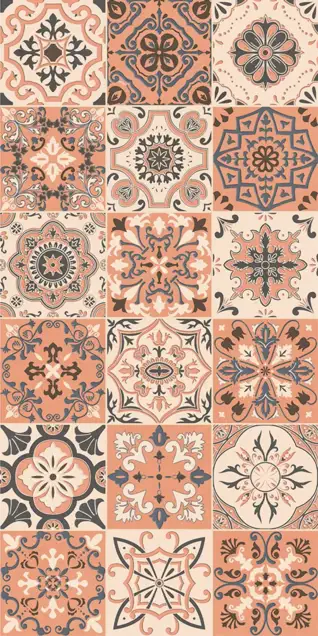
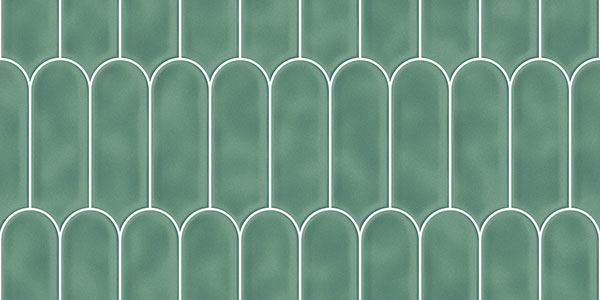
A Moroccan tile backsplash is one of the most impact-per-rupee decisions in a kitchen or bathroom renovation. A 15 sq.ft splashback panel behind the hob changes the entire character of a kitchen at a material cost of Rs. 975 to Rs. 6,000, depending on the body and pattern chosen.
A Moroccan tile splashback in a bathroom, behind the vanity mirror or above the bath surround, adds a geometric pattern without tiling every surface. This page covers everything specific to backsplash and splashback applications: which body type cleans easily, which finish resists grease, how to cut around socket cutouts and pipe penetrations, and which colour palettes work in Indian kitchens and bathrooms.
Use this reference before reading the full page. Match your surface to the correct tile specification in one read.
Kitchen hob wall (steam zone): GVT gloss, 200x200 mm, epoxy grout, C2 heat-resistant adhesive. Rs. 95 to Rs. 180 per sq.ft.
Kitchen sink wall (wet, not steam): GVT matte or gloss, 150x150 to 200x200 mm, epoxy grout, C2 adhesive. Rs. 75 to Rs. 160 per sq.ft.
Bathroom vanity wall (dry zone): Ceramic or GVT, any finish, 150x150 to 300x300 mm, cement or epoxy grout. Rs. 65 to Rs. 350 per sq.ft.
Bathroom behind bath surround: GVT gloss only, 200x200 mm, epoxy grout, C2 waterproof adhesive. Rs. 95 to Rs. 180 per sq.ft.
Mosaic backsplash (any surface): Mesh-backed mosaic sheet, 300x300 mm sheet, GVT or glass body, epoxy grout. Rs. 150 to Rs. 400 per sq.ft.
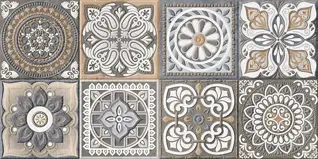
Moorish tile backsplash (feature panel): Ceramic or hand-painted, dry zone only, any size, cement grout + sealer. Rs. 120 to Rs. 600 per sq.ft.
Pro tip: Print or screenshot the quick-decision reference above and share it with your contractor before work starts. Most backsplash tile failures in India come from the wrong adhesive type, not the wrong tile. A contractor who uses standard sand-cement adhesive on a hob wall steam zone instead of C2 heat-resistant adhesive will produce a job that looks fine for 6 months and then starts to fail as tiles hollow-sound and eventually fall.
The backsplash panel is a wall surface, not a floor, so slip resistance is not a concern. The two things that matter for a Moroccan tile backsplash are the ease of cleaning of the glazed surface and the water absorption of the body behind it.
| Body Type | Water Absorption | Glazed Surface | Cleans Easily? | Safe for Steam Zone? | Price (Rs./sq.ft) |
| Ceramic (IS 13630) | 12% to 16% | Gloss or matte glaze | Yes (gloss) | Dry zone only, not steam zone | Rs. 65 to Rs. 130 |
| GVT | 0.5% to 3% | Gloss, matte, sugar | Yes (all finishes) | Yes, with C2 adhesive | Rs. 95 to Rs. 180 |
| Full body vitrified (IS 15622:2006) | 0.05% | Gloss or matte | Yes | Yes | Rs. 130 to Rs. 220 |
| Zellige (fired clay) | 6% to 12% | Reactive glaze (uneven) | Moderate | No | Rs. 300 to Rs. 700 |
| Hand-painted ceramic | 10% to 14% | Gloss over painting | Yes (gloss layer) | Dry zone only | Rs. 200 to Rs. 600 |
| Glass mosaic | 0% | Smooth glass | Very easy | Yes | Rs. 180 to Rs. 400 |
| Moroccan eggshell backsplash (encaustic) | 4% to 8% | Matte cement | Moderate, needs sealing | No | Rs. 180 to Rs. 350 |
Note: Zellige and encaustic Moroccan tile backsplash options (the Moroccan eggshell backsplash category) are not safe for the steam zone directly above the hob. Steam penetrates the reactive glaze and uneven surface of zellige and works into the body, which has 6 to 12% water absorption. The grease from cooking also penetrates the matte cement surface of encaustic tiles over time. Both are suitable for dry zone backsplash panels and feature walls only.
The finish choice on a Moroccan tile splashback is more important than on any other tile surface because the backsplash is where cleaning frequency is highest. Indian kitchens produce cooking oil aerosol from frying and tadka that lands on the splashback panel daily. The finish determines how easily this cleans off.
Gloss glaze on a Moroccan tile splashback wipes clean with a damp cloth in one pass. The smooth gloss surface has no micro-pores for oil splatter to enter. Over 5 years of daily cooking, a gloss Moroccan backsplash tile looks the same as the day it was fixed, assuming normal wiping. The trade-off is that water marks and fingerprints show on gloss more clearly than on matte.
Matte glaze on a Moroccan tile splashback is harder to keep clean. The micro-porous matte surface absorbs a microscopic layer of oil residue with each cooking session. Over 12 to 18 months, a matte Moroccan splashback behind a busy hob develops a slightly yellowed appearance in the cooking zone that is very difficult to remove without abrasive cleaning, which then damages the matte glaze further. Matte Moroccan tile splashback panels work in bathrooms (where there is no cooking oil exposure) and in low-use kitchens.
Pro tip: If you want the matte look on a kitchen Moroccan tile backsplash, choose a tile with a sugar finish rather than true matte. Sugar finish has the same visual texture as matte but a harder, denser glaze surface that resists oil penetration better. It costs Rs. 5 to Rs. 15 per sq.ft more than standard matte GVT but saves significant cleaning effort over the life of the backsplash.
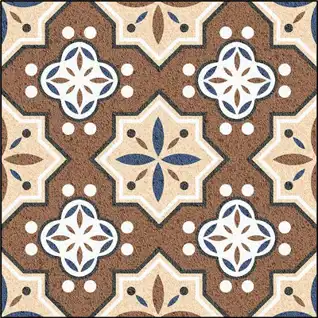
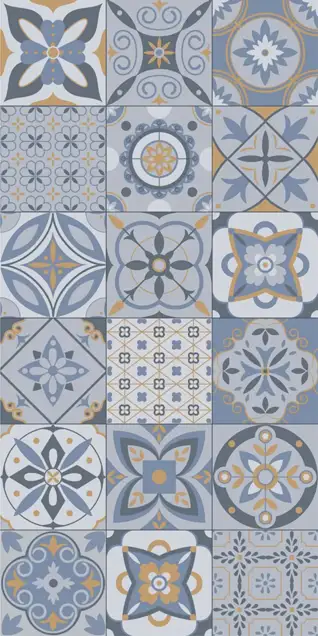
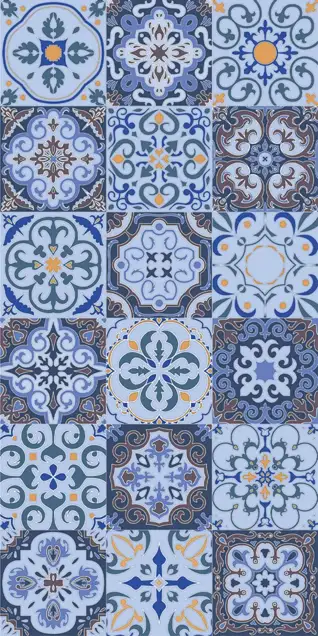
Blue Moroccan tile backsplash is the most searched colour combination for this application in India. The blue-and-white star-and-cross or arabesque motif on a kitchen splashback panel pairs with white, grey, and natural wood cabinetry, which covers most of the Indian modular kitchen market. A 15 sq.ft splashback panel in GVT gloss blue Moroccan tile backsplash costs Rs. 1,425 to Rs. 2,700 in material at Rs. 95 to Rs. 180 per sq.ft.
The shade of blue matters more on a backsplash panel than on any other surface because the splashback sits at eye level and is the most viewed surface in the kitchen. Deep cobalt reads strongly against white cabinetry and suits kitchens with good natural light. A blue Moroccan backsplash tile in turquoise or mid-blue suits kitchens facing north or west with limited natural light, where deep cobalt would make the cooking zone feel dark. The blue Moroccan tile backsplash kitchen application also works in bathrooms: the same 200x200 mm GVT gloss blue arabesque tile used on a kitchen hob wall reads equally well above a bathroom vanity.
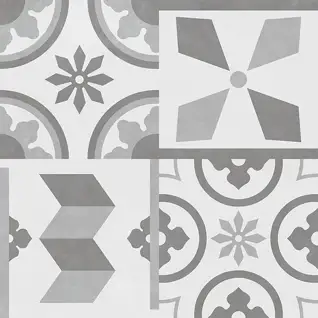
A white Moroccan tile backsplash uses the pattern as the only visual element, with no colour contrast between tile body and grout. The star-and-cross or arabesque repeat tile shows through the three-dimensional relief of the glaze surface and the grout joint rather than through colour contrast. Moroccan white tile backsplash panels suit kitchens with strong colour elsewhere (coloured cabinetry, patterned countertops) where a blue or coloured backsplash would compete.
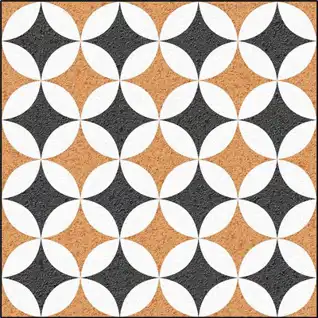
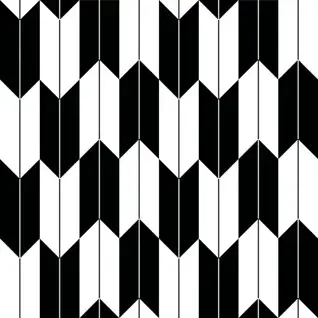
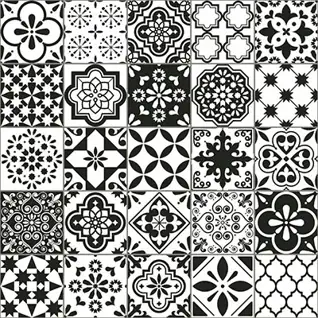
The black and white Moroccan tile backsplash is the highest-contrast option and the one that reads most clearly in photographs. It suits white or light grey cabinetry where the pattern needs to carry the visual weight of the kitchen design on its own. White grout on a black-and-white Moroccan backsplash emphasises each tile boundary and sharpens the geometric pattern. Dark charcoal grout softens the boundary and makes the whole backsplash panel read as a textured surface rather than individual tiles. Both contrast grout choices are used in Indian kitchens; the choice depends on whether you want the individual geometric pattern or the overall surface texture to dominate.
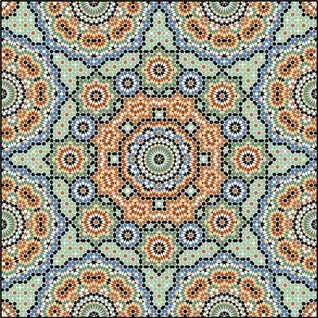
A Moroccan mosaic tile backsplash uses mesh-backed tile sheets of 300x300 mm, each carrying small pieces (2 cm to 5 cm) in a geometric or star pattern. The sheet format installs like a single tile but creates a very fine-grained geometric surface that no single-tile format can match at this scale. The Moroccan mosaic tile backsplash is the most practical format for:
Backsplash panels with inside corners, curved edges, or irregular shapes. The mesh-backed sheet cuts easily with a grout cutter or scissors at the grout joint, and individual pieces re-position before the tile adhesive sets. Splashback areas around sink taps and pipe penetrations, where standard 200x200 mm tiles produce large off-cuts, are also better served by the mosaic format. A single mosaic sheet cut around a tap fitting produces almost no wastage compared to a 200x200 mm tile cut to fit the same aperture.
The tile sheet format does create far more grout joints per square foot than single tiles, which is why epoxy grout is not optional on a Moroccan mosaic tile backsplash in a kitchen. Cement grout in the fine joints of a mosaic kitchen splashback stains with cooking grease within 4 to 8 weeks of use and is nearly impossible to clean without removing the grout entirely.
Pro tip: When ordering a Moroccan mosaic tile backsplash, buy from one box run. Mosaic tile sheets are more colour-sensitive between production batches than single tiles because the small piece size amplifies any glaze variation. Two sheets from different batch numbers can look identical in the showroom under fluorescent light and show a clear colour line on the wall under natural light. Always check the batch number on every box before accepting delivery.
The geometric pattern of a Moroccan tile backsplash creates specific installation challenges that plain tile splashbacks do not have. These are the points to check with your contractor before work starts.
Setting out the pattern repeat: Find the horizontal centre of the backsplash panel and set out from the centre outward. A star-and-cross repeat tile cut asymmetrically at both sides of a panel looks like a mistake. A centred layout with equal cut tiles at both edges looks planned. This step takes 20 minutes before fixing begins and prevents an unfixable visual problem.
Socket cutouts: Electrical socket cutouts on a backsplash panel must be marked on the tile face before cutting. For a 200x200 mm Moroccan tile, a standard 86x86 mm socket box cutout falls within a single tile. For 150x150 mm tiles, the cutout may span two tiles and must be planned in the dry-lay stage.
Substrate preparation: The wall surface must be plumb and flat to within 3 mm over a 1-metre straight edge. Moroccan geometric pattern tiles show any deviation from flat as a broken pattern repeat. Skimming the wall before tiling on a plasterboard or older plaster wall costs Rs. 15 to Rs. 25 per sq.ft, but prevents a visually failed backsplash.
Tile border and trim: The edge of the backsplash panel where the tile meets the worktop, the window frame, or the wall needs a tile border or bullnose edge tile. A raw cut tile edge at the worktop junction collects cooking grease and looks unfinished. Matching pencil trim or bullnose border tile for most Moroccan tile splashback ranges costs Rs. 40 to Rs. 80 per linear metre.
Grout joint width: Use 1.5 mm to 2 mm spacers on all Moroccan tile backsplash installations. The geometric pattern in a star-and-cross or arabesque motif requires consistent joint width. Any variation in joint width breaks the pattern alignment and is visible from across the room.
Note: Do not use standard sand-cement adhesive for a Moroccan tile backsplash in the steam zone above the hob. The repeated steam and heat exposure from cooking softens standard adhesive over time. Tiles fixed with standard adhesive in the steam zone will sound hollow within 12 to 24 months and eventually fall. Specify C2 grade heat-resistant tile adhesive to your contractor for all backsplash tile within 400 mm of the hob.
GVT Moroccan tile backsplash options with gloss finish absorb 0.5% to 3% water, well within the safe range for kitchen and bathroom splashback walls. Full body vitrified backsplash tiles certified to IS 15622:2006 absorb 0.05% and are the most water-resistant choice for bathroom bath surround backsplash panels. The 200x200 mm (200x200 mm) format is the most widely stocked Moroccan backsplash tile size by Morbi manufacturers in Gujarat, priced from Rs. 95 per sq.ft for standard GVT gloss to Rs. 150 per sq.ft for sugar finish. Gujarat's tile production cluster means matching batch runs are consistently available for backsplash panels up to 30 sq.ft without custom ordering.
Indian kitchen conditions create a specific challenge for backsplash grout that buyers often overlook until after installation. Monsoon humidity in cities like Mumbai, Chennai, and Ahmedabad keeps kitchen surfaces at 35 to 42 degrees Celsius and 80% to 90% humidity for four to five months of the year. During this period, cement grout in a Moroccan tile splashback absorbs moisture and releases it repeatedly, which causes staining and grout cracking at the joint edge over time. Morbi and the broader Gujarat tile market supply GVT Moroccan tile backsplash in 150x150 mm (150x150 mm) format from Rs. 75 to Rs. 130 per sq.ft, which is the standard size for mosaic-style backsplash panels in Indian compact kitchens where the splashback height is fixed at 450 mm to 600 mm between worktop and overhead cabinet.
From a gloss GVT blue arabesque backsplash at Rs. 95 per sq.ft to a hand-painted zellige feature panel at Rs. 600 per sq.ft, every Moroccan tile splashback option by body type, finish, colour, and size is listed with verified Indian pricing on TilesFinders, India's dedicated tile marketplace. Use the surface-type filter to view only steam-zone-safe GVT options or browse the full backsplash range, compare the pattern scale of different repeat tiles at the correct viewing distance, and request a physical sample before committing to an order.
Full body vitrified Moroccan outdoor tiles to IS 15622:2006 at 0.05% water absorption and Moroccan porcelain outdoor tiles at below 0.5% water absorption are the only safe options for exposed terraces in India. Ceramic, GVT, zellige, and encaustic Moroccan tiles all fail on exposed outdoor floors in Indian monsoon wet-dry cycling. Specify GHR or rock finish with R11 anti-slip rating for all outdoor terrace floors.
Moroccan outdoor tiles in India cost Rs. 110 to Rs. 180 per sq.ft for GVT options on covered verandas and Rs. 130 to Rs. 250 per sq.ft for full body vitrified options on exposed outdoor floors. Large Moroccan outdoor tiles in 600x600 mm format cost Rs. 160 to Rs. 220 per sq.ft. Moroccan porcelain outdoor tiles for pool surrounds cost Rs. 150 to Rs. 250 per sq.ft. Morbi manufacturers in Gujarat supply most of the outdoor-rated range.
Blue Moroccan outdoor tiles with a UV-stable glaze can be used on south-facing terraces. Without a UV-stable glaze specification, the blue colour fades on surfaces exposed to direct sun for 6 to 8 hours daily within 2 to 3 years. Always ask your supplier for the UV stability rating on any coloured Moroccan-style outdoor tiles before ordering. Full body vitrified blue Moroccan outdoor tiles from Morbi manufacturers in Gujarat are produced with UV-stable glaze as standard for outdoor applications.
300x300 mm is the most practical size for garden paths in Moroccan outdoor tiles. This size cuts cleanly around curved edges, level changes, and stepping stone gaps. Large Moroccan outdoor tiles at 450x450 mm and 600x600 mm require a perfectly level concrete sub-base and are not suited to garden paths with irregular sub-bases or slopes greater than 1-in-20.
R11 anti-slip finish (GHR or rock finish) is required for all exposed outdoor Moroccan floor tiles. Pool surrounds and garden paths need R11 as a minimum. Covered verandas with limited rain exposure can use R10 (sugar or GHR finish). Matte finish at R9 is not safe for any outdoor Moroccan floor tile. Never use gloss, polished, or semi-polished finish on any outdoor floor.
Full-body vitrified Moroccan outdoor tiles do not need sealing. The 0.05% water absorption body is non-porous and does not absorb water, algae, or staining. GVT Moroccan tiles on covered verandas benefit from a penetrating surface sealer applied after installation to slow algae growth on the matte surface during monsoon months. Reapply every 3 to 4 years. Never seal vitrified body outdoor tiles with a surface film sealer; it traps moisture under the glaze.
Outdoor epoxy grout is the correct choice for exposed outdoor Moroccan tile joints. Cement grout outdoors absorbs monsoon rain, develops efflorescence, and grows algae within one monsoon season. Outdoor epoxy grout costs Rs. 200 to Rs. 280 per kg. Fill movement joints with polyurethane or silicone sealant rated for outdoor use, not grout. Grout in a movement joint cracks and pops out as the tile field expands in Indian summer heat.
Yes, but only full body vitrified or Moroccan porcelain outdoor tiles with R11 rock finish and 0.05% water absorption. Pool surrounds need the strictest combination of slip resistance and water resistance of any outdoor surface. The tile must be non-porous (chlorine-resistant) and anti-slip at R11 when wet. 300x300 mm is the most practical size for pool surrounds as it cuts around curves and pool inlets cleanly.