



Outdoor Wall & Floor Tile Designs for Indian Climate
Transform your outdoors with durable wall and floor tiles. From rustic brick elevations to stylis...


Loading designs...
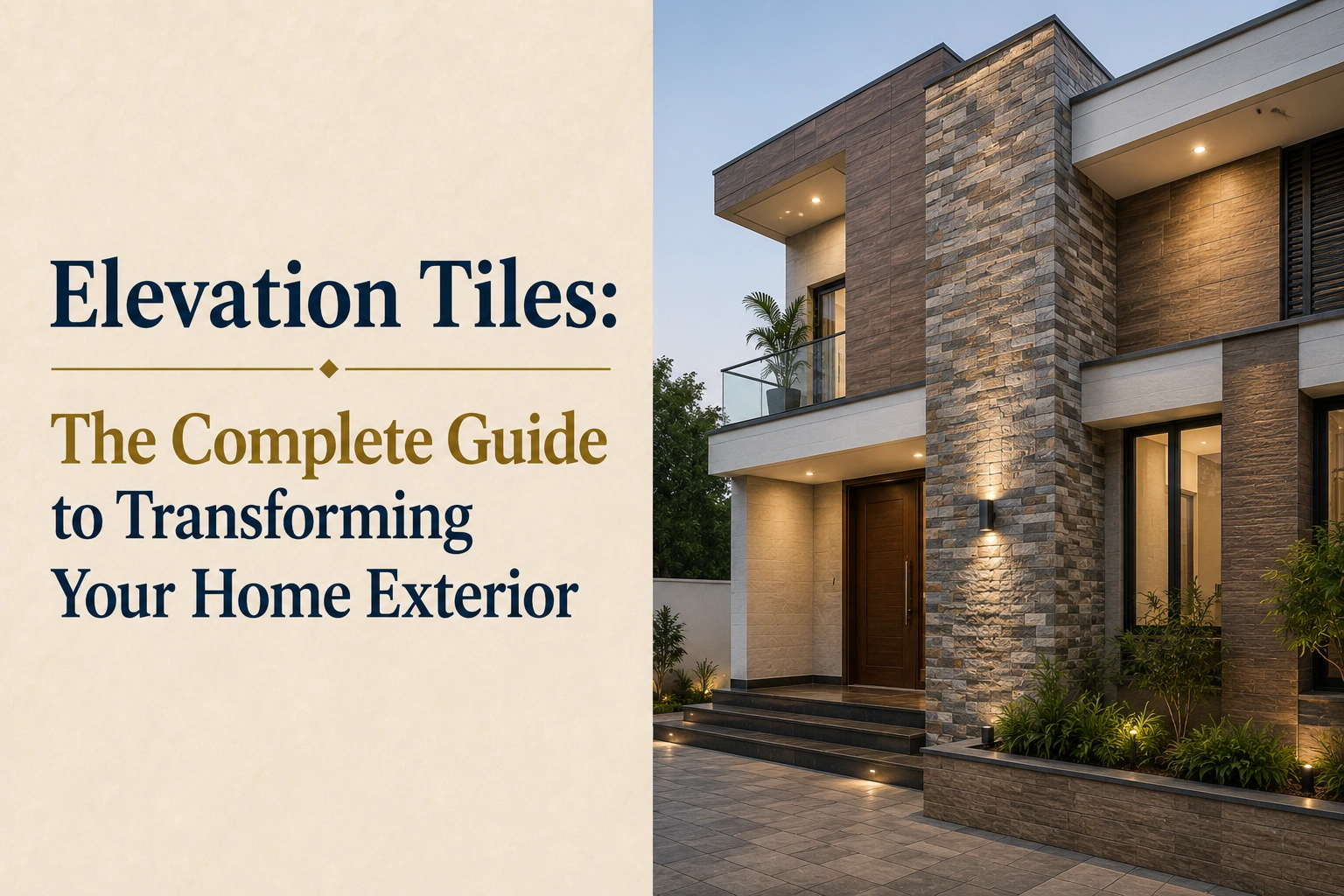
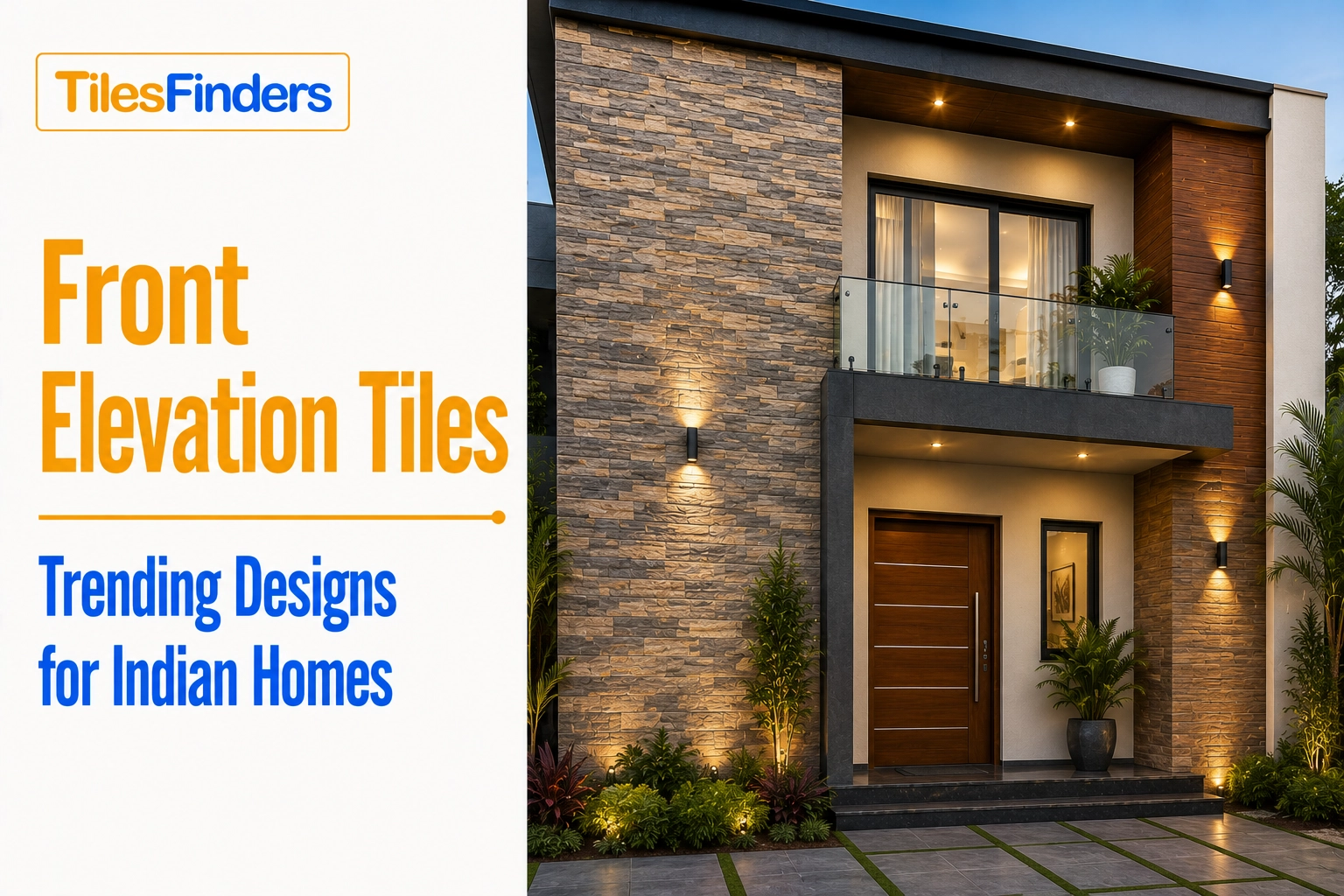
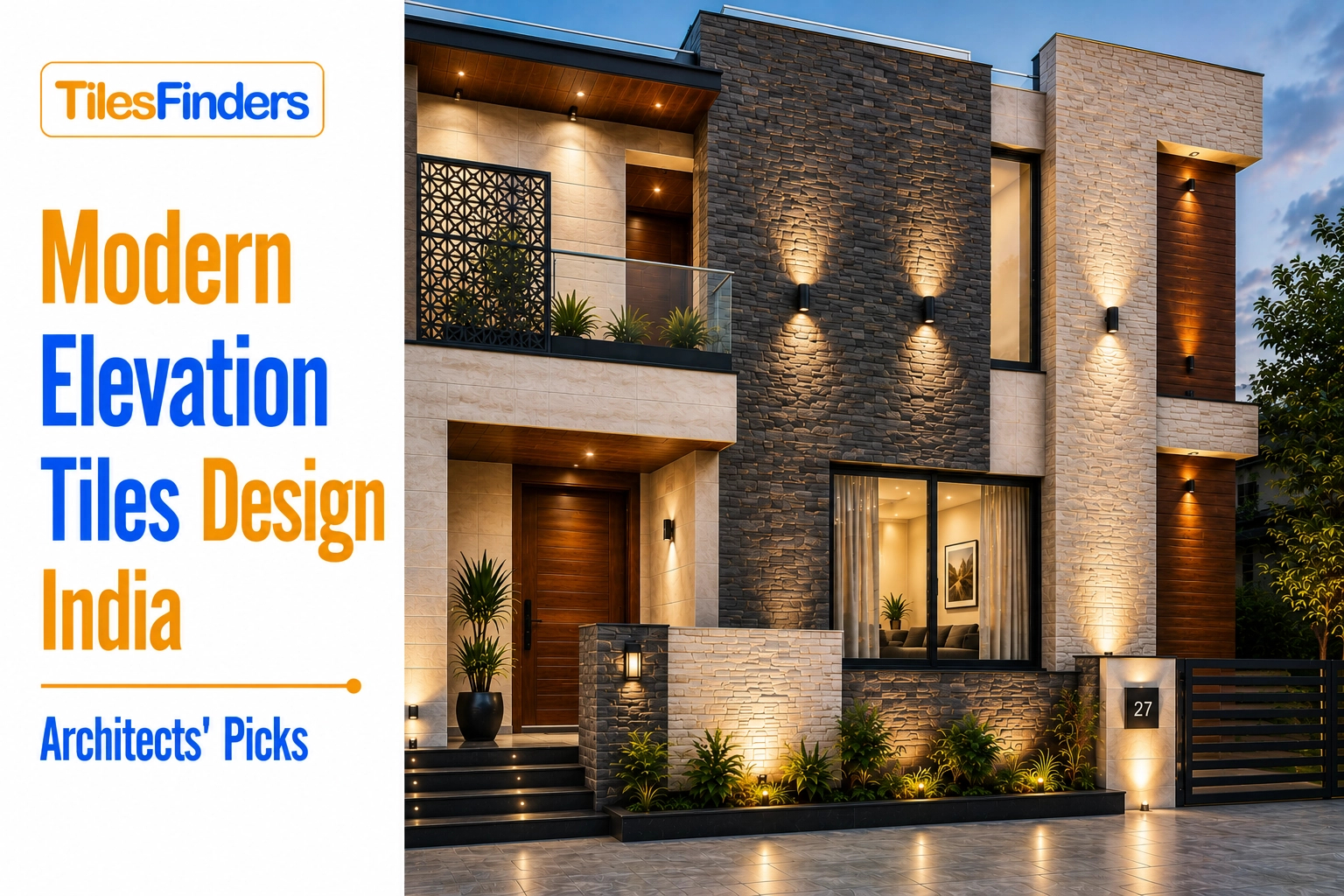
The front of a building is the only face that every visitor, neighbour, and passerby sees every time they pass. Front elevation tiles are chosen differently from any other cladding surface because they carry the full visual identity of a home from the street. Where general elevation tiles cover any exterior vertical surface, front elevation tile selection concentrates on four specific zones: the main facade wall, the entry portico, the pillars flanking the front door, and the boundary panel facing the road.
The front elevation tile design that works for one building rarely transfers unchanged to another. A G+2 bungalow in Ahmedabad with a 20-foot-wide street face needs a different tile scale and texture than a row house with a 10-foot front panel or a commercial building with a double-height lobby wall. Getting this right starts with the wall dimensions, the direction the wall faces, how much rain it receives, and what impression the owner wants from 15 feet away.
This page covers the front-specific tile decisions: how to pick the right design approach for your front facade, what tile formats and textures read best at street distance, which zones need different tile treatments, and what prices to expect for front elevation tiles in the Indian market.
Side walls and rear walls of a building are usually seen from close range and are often partially blocked by boundary walls or adjacent structures. The front elevation is seen from a distance, in direct sun, and in the context of the full building height. These viewing conditions change what tile design approach actually works.
At a distance of 15 to 30 feet, fine surface textures flatten, and the dominant effect comes from the tile colour and the grout joint width. A stone-look GVT tile with a 2mm grout joint reads very differently from the same tile with a 5mm joint when seen from across the street. Large-format tiles in 600x600mm or 600x1200mm with tight joints give a clean, unbroken surface read from the road. Smaller 300x600mm tiles in a brick-bond pattern give a layered, textured appearance that works well on shorter facade widths.
Front walls facing south and west in India accumulate dust and pollution deposits faster than north or east-facing walls. Mid-grey, warm beige, and dark charcoal tile surfaces show less accumulated grime than white or cream tiles on a busy road-facing wall. Matte finishes also collect less visible mineral deposits from rain runoff than glossy surfaces on the same outdoor wall, which reduces how often the facade needs cleaning.
The largest tile area on a front elevation is the main wall run between the ground level and the top of the parapet or terrace edge. This is where the choice of stone, wood, or solid-colour tile sets the overall character of the building.
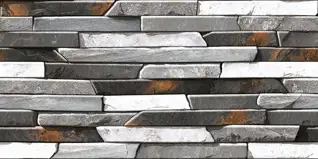
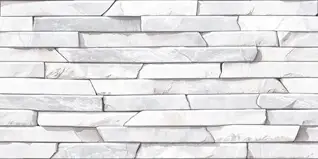
Stone-look GVT panels are the most used option for main facade walls in India. Stone front elevation tiles in sandstone-grain beige, dark slate, or limestone ivory give a building weight and permanence from the road. In 600x600mm or 600x1200mm sizes, the large surface area of each tile reduces visible joint lines, which reads as a cleaner wall from a distance. Price range: Rs. 55 to Rs. 95 per sq ft for GVT stone-look matte panels.
Grey tiles for front elevation are the most popular colour choice for contemporary homes today. A mid-grey or charcoal GVT tile in matte finish is neutral enough to work with any window frame colour or gate design, weathers well in the Indian climate, and stays visually clean in both morning and evening light. Sizes most used for grey elevation runs: 600x600mm and 600x1200mm.
The portico zone sits between the main front door and the uncovered facade. It is typically the most visually complex part of a front elevation because it combines a ceiling soffit, side walls, columns, and sometimes steps.
Front portico wall tiles design often uses a contrasting tile to the main facade. If the main wall runs a matte stone-look grey, the portico inner walls might carry a cream or white GHR-finish tile to lighten the covered entry area. Outdoor tiles with an anti-slip textured finish are the correct specification for any portico floor that gets occasional rain splash or morning dew. The portico inner walls, being sheltered from direct rain, can take a GHR or even a polished tile without the rain streaking concern that applies to the open facade walls.
House front pillar tiles design is one of the most searched elevation topics in India because pillars are a concentrated visual element seen clearly from the road. A pillar is a narrow surface, typically 12 to 18 inches wide on each face. Small tile formats read poorly on pillars because they introduce too many grout lines across a narrow surface. The standard approach uses 300x600mm tiles in a vertical stack bond on each pillar face, or wraps the pillar with a 3D relief tile that creates shadow depth.
For square or rectangular pillars on a front elevation, GVT matte or GHR tiles in 300x600mm vertical format are the standard. Pillar tile pricing: Rs. 50 to Rs. 90 per sq.ft for GVT options from Morbi manufacturers.
Main door elevation tiles cover the panel area immediately surrounding the front door frame: the side jamb panels, the overhead band, and sometimes a feature panel above the door. This is one of the highest-visibility zones on the front elevation because every visitor looks directly at it up close.
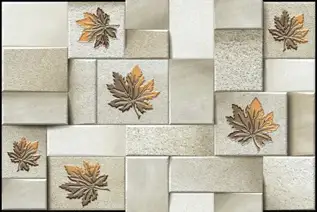
Common approaches for main door elevation tiles in India: a dark stone-look GVT panel that frames the door opening against a lighter main wall; a 3D carved or textured tile band above the door lintel; or a motif tile cluster with a floral or geometric design centred above the door frame. Sizes: 300x600mm for jamb panels, 600x600mm for feature panels above the door. Price range: Rs. 55 to Rs. 110 per sq.ft.
| Design Approach | Tile Type | Best Format | Finish | Visual Effect from the Road | Price (Rs./sq.ft) |
| Stone look, neutral | GVT | 600x600mm, 600x1200mm | Matte or GHR | Heavy, permanent, classic | Rs. 55 to Rs. 95 |
| Grey contemporary | GVT | 600x600mm, 600x1200mm | Matte | Clean, minimal | Rs. 50 to Rs. 90 |
| Wood grain facade strip | GVT | 300x1200mm, 200x1200mm | Matte or GHR | Warm, linear, modern | Rs. 60 to Rs. 100 |
| 3D textured feature panel | GVT | 300x600mm, 600x600mm | Matte Carving | Strong shadow depth, focal point | Rs. 65 to Rs. 115 |
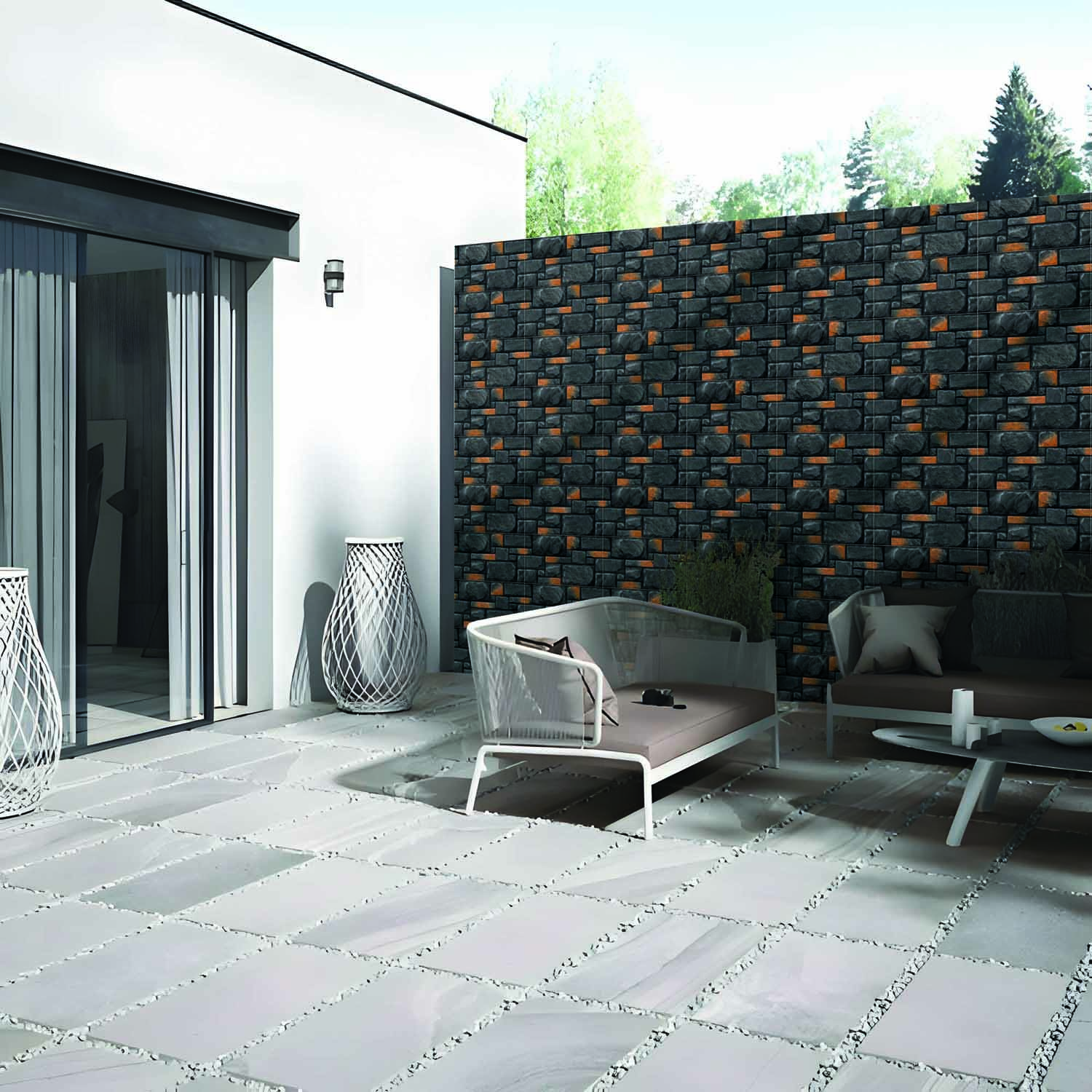
| Brick-pattern elevation | GVT | 300x600mm stack or bond | Matte or GHR | Rustic, handcrafted character | Rs. 40 to Rs. 80 |
| Simple single-colour run | GVT | 600x600mm | Matte | Understated, suits any style | Rs. 45 to Rs. 80 |
GVT stone-look tiles replicate sandstone, granite, and quartzite grain patterns at water absorption below 0.05%, with no sealing requirement and consistent thickness across every tile. The look range for stone-effect front elevation is wide: sandy brown and ivory for a traditional appearance, dark anthracite slate-look for a contemporary facade, or split-face texture panels in terracotta and rust tones for a craftsman aesthetic.
For south and west-facing front walls that receive direct afternoon sun and monsoon rain simultaneously, full-body vitrified tiles in stone textures are the strongest specification, with zero water absorption across the full tile body depth.
House front wooden tiles design uses GVT panels with a wood-grain surface to create horizontal or vertical timber-plank effects on a facade. The front elevation wooden tiles that read best at street distance are those with strong grain contrast, where the difference between lighter and darker grain lines is clearly visible. Most used wood-look sizes for elevation: 200x1200mm and 300x1200mm in vertical orientation. Price range: Rs. 60 to Rs. 100 per sq ft from Morbi.
Front elevation grey tiles range from light dove grey with fine limestone grain to deep charcoal with a rough quartzite face. Light grey lifts the facade in overcast monsoon light; mid-grey holds its value in both morning and afternoon sun; charcoal gives the building a grounded, high-contrast presence from the road. On an open-to-sky front wall, matte or GHR grey GVT is the correct specification. Rain runoff on a polished grey tile leaves visible streaking and white mineral deposits that require regular cleaning to keep the facade looking clean.
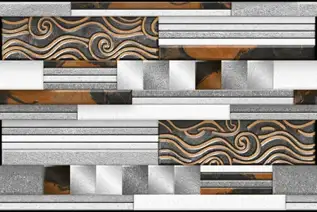
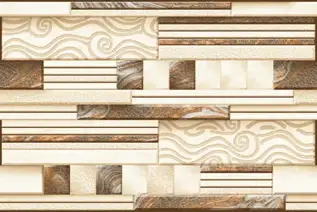
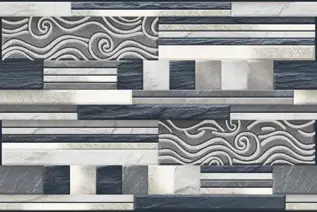
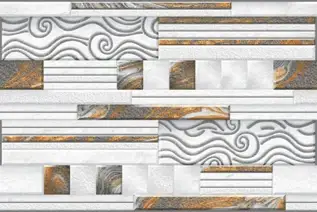
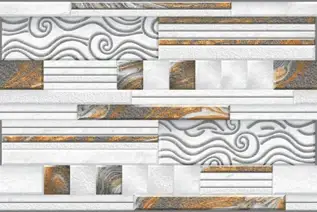
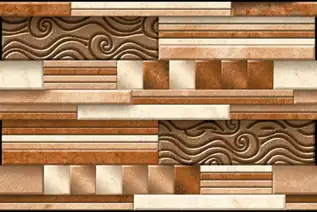
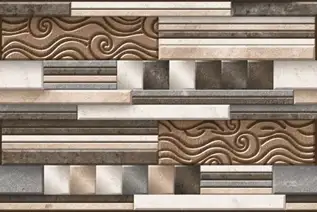
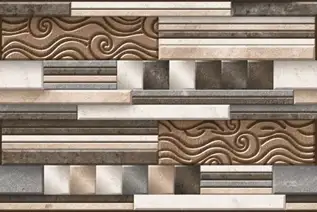
3D front elevation tiles design uses tiles with a pronounced surface relief to create shadow depth on a wall. This is not a surface print. The 3D effect is pressed or carved into the tile body during manufacturing. When light hits the wall at an angle in the morning or late afternoon, the relief pattern creates visible shadow lines that change with the time of day.
The practical rule for 3D tiles on a front elevation is to use them as accent zones rather than full-facade coverage. A full facade run of 3D tiles creates visual noise from the road. One or two panels of 3D textured tiles flanking the main door, framing the portico entry, or running vertically between window bays give the building character without competing with the overall facade read. Best formats: 300x600mm in a stack bond with Matte Carving finish. Price range: Rs. 65 to Rs. 115 per sq ft.
| Size | Trade Alias | Best Placement on Front Elevation | Joint Pattern from Road |
| 300x600mm | 1x2 foot | Pillars, portico walls, feature panels, main door surround | Visible grid adds texture and rhythm |
| 600x600mm | 2x2 foot | Main facade wall runs, boundary panels | Square grid, balanced, readable at a distance |
| 600x1200mm | 2x4 foot | Large unbroken wall runs, contemporary facades | Minimal joints, slab-like, modern |
| 200x1200mm or 300x1200mm | Plank format | Vertical wood-look strips, facade accent bands | Linear, timber-plank read |
| 800x1600mm | Large slab | Feature walls, high-end commercial elevations | Almost no joints, architectural finish |
GVT front elevation tiles from Morbi, Gujarat, absorb less than 0.05% water under IS 15622:2006. Front walls in most Indian cities face west or south-west, the exact direction from which monsoon rain arrives. A tile that absorbs water on that wall will darken at the grout lines, grow algae in shaded zones, and eventually push away from the adhesive as absorbed water expands with temperature cycling. Epoxy grout on front elevation joints prevents water ingress at the joint and keeps the grout line colour consistent through years of monsoon exposure.
Ex-factory prices from Gujarat for stone-look and grey GVT elevation panels: Rs. 40 to Rs. 95 per sq.ft. Wood-look and 3D Matte Carving panels: Rs. 55 to Rs. 115 per sq ft. Retail prices across Indian cities are typically 25% to 40% above ex-factory, with transport from Morbi adding Rs. 3 to Rs. 8 per sq.ft, depending on destination.
Front elevation tile selection depends on the wall dimensions, orientation, and the architectural character of the building. Browse stone-look, wood-look, grey, and 3D GVT front elevation tiles on TilesFinders and filter by body type, finish, and size to build a shortlist matched to your specific wall.
GVT matte or GHR-finish tiles are best for the home front elevation in India. They absorb less than 0.05% water and hold up through monsoon rain without staining or adhesion failure. Stone-look and grey GVT panels in 600x600mm or 600x1200mm are the most used options for residential front facades. Price range: Rs. 50 to Rs. 95 per sq.ft from Morbi.
A simple house front tiles design uses one tile type across the full facade wall in a single colour and finish, typically a mid-grey or warm beige GVT matte panel in 600x600mm with uniform grout joints. No mixed sizes, no contrasting bands. This reads clean and balanced from the road and is the most cost-effective approach at Rs. 50 to Rs. 75 per sq.ft.
Glossy tiles can be used on front elevation walls. On covered portico walls and inner facade surfaces sheltered from direct rain, they work well and add light-reflective quality to the space. On open-to-sky front elevation walls, rain runoff on glossy surfaces causes streaking and mineral deposit staining, which means the wall needs more frequent cleaning to look maintained. For low-maintenance open facades, matte or GHR finish is the practical choice.
300x600mm tiles in a vertical stack bond work best for square or rectangular house front pillars. The 600mm vertical dimension matches the pillar height proportionally and keeps the number of horizontal grout lines low. Avoid 600x600mm on pillars narrower than 18 inches as it increases awkward cuts on each face.
Grey front elevation tiles are GVT panels from light dove grey to deep charcoal used on the main facade wall. They are popular because grey tones work against any gate, window, or door colour, show less road dust than white or cream, and hold their appearance through India's monsoon climate. Matte grey GVT in 600x600mm or 600x1200mm is the standard specification.
Use 3D elevation tiles as accent panels rather than full-facade coverage. One or two 3D feature panels flanking the main door or running vertically between window bays is the right amount. Keep the main wall in a flat matte tile to let the 3D panels stand out. Best format: 300x600mm in vertical stack bond with Matte Carving finish.
Front elevation tiles in India range from Rs. 40 per sq.ft for plain matte GVT panels to Rs. 115 per sq.ft for large-format stone-look or 3D carved tiles. Most residential projects spend Rs. 55 to Rs. 90 per sq.ft on tile material. Labour for elevation tile laying adds Rs. 30 to Rs. 55 per sq.ft above ground floor level.
Main door elevation tiles are typically GVT stone-look or 3D textured panels in 300x600mm for the jamb panels on either side of the door frame and a feature band above the lintel. Dark stone-look tiles against a lighter main wall create a strong frame effect. The main door area is seen up close and benefits from a tile with more surface detail than the flat main wall run.