

Subway Tile Backsplash: Kitchen Coordination and Specification Guide for Indian Homes
Loading designs...
-
 10716-D
 -
 10716-HL
 -
10716-L
-
10719-HL
-
10726-HL
-
10731-D
-
10731-HL
-
10731-L
-
10732-D
-
10732-HL
-
10732-L
-
10735-D
-
10735-HL
-
10735-L
-
10737-D
-
10737-HL
-
10737-L
-
10738-D
-
10738-HL
-
10738-L




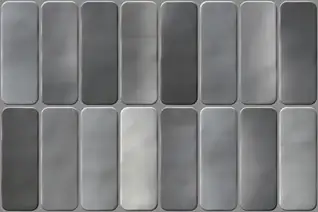
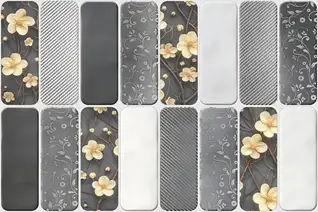
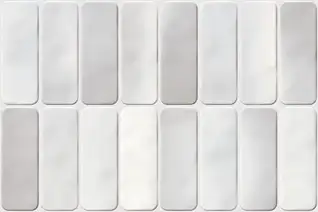








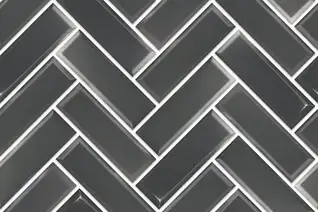
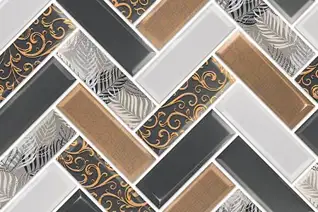

The subway tile backsplash is not simply a tile choice: it is a kitchen decision. Among all subway tile directions, the kitchen backsplash is where the format is most consistently chosen, most consistently photographed, and most consistently searched in India. The reason is simple: the subway tile proportion fits a kitchen backsplash better than almost any other tile proportion. A standard Indian kitchen backsplash runs from the worktop to the underside of the wall cabinet, a height of 450mm to 600mm. A 300x600mm subway tile in landscape orientation fills this height in exactly one to two tile courses with near-zero cuts. A 200x400mm tile in the same orientation fills it in two to three courses. The match between subway tile dimensions and Indian kitchen backsplash heights is nearly exact, which is part of why subway tile has become the default backsplash tile in Indian contemporary kitchen design.
The kitchen backsplash is also where the subway tile's secondary design quality matters most: the visible grout line. On a backsplash, the grout line between subway tiles is seen at close range and at eye level from the kitchen. It is a design element that must be chosen, not just a joint. The colour of the grout on a subway tile backsplash changes the character of the tile surface more than on any other application: white grout creates a seamless, unified surface; grey grout makes the tile grid visible; dark grout creates a graphic, high-contrast composition. Getting the subway tile backsplash right means understanding how the proportion, orientation, colour, and grout work together in the specific context of the Indian kitchen.
This page covers the subway tile backsplash from the kitchen coordination perspective: how the subway proportion fits the Indian backsplash height, how to choose the subway tile colour and orientation to coordinate with the specific cabinet and countertop in the kitchen, the hob zone and sink zone considerations that distinguish different parts of the backsplash, and the US dimension keywords that lead buyers to this page even though those specific sizes are not standard from Morbi.
How the Subway Proportion Fits an Indian Kitchen Backsplash
The standard Indian kitchen backsplash is 450mm to 600mm tall, running from the worktop surface to the underside of the wall cabinet. This is a narrow, horizontal band of wall. Most tile formats in this height range require significant cutting: a 600x600mm square tile must be cut to fit within the backsplash height, leaving a cut piece that is either very wide or very narrow, depending on the exact backsplash height. A 300x450mm tile in portrait orientation requires cutting only at the top course. A 300x600mm subway tile in landscape orientation fills the backsplash height in one or two courses with no cuts at all if the backsplash height is 300mm, 600mm, or 450mm (one course plus a 150mm cut).
| Tile Format | Orientation | Courses to Fill 450mm Backsplash | Courses to Fill 600mm Backsplash | Cuts Required | Visual Character |
|---|---|---|---|---|---|
| 300x600mm | Landscape | 1 full course plus 150mm cut | 1 full course exactly | Minimal at top | Wide horizontal bands, strong horizontal emphasis |
| 300x600mm | Portrait (vertical) | 1 full course plus 150mm cut | 1 full course exactly | Minimal at top | Tall vertical tiles, upright quality, make the backsplash feel taller |
| 200x400mm | Landscape | 1 full + 1 half course | 1 full + 1 half course | Cut at top in running bond | Fine horizontal grid, closer to the original subway proportion |
| 200x400mm | Portrait | 1 full + 1 half course | 1 full + 1 half course | Cut at top | Vertical emphasis, artisan quality |
| 150x300mm | Landscape | 1 full + 1 half course | 2 full courses exactly | None at 600mm height | Dense, fine-grid look closest to the US 3x6 subway proportion |
Subway Tile Backsplash and Indian Kitchen Cabinets
The subway tile backsplash is always seen against the cabinet face that frames it above, below, and on the sides. The cabinet colour determines which subway tile direction gives the kitchen the most composed, deliberately designed result.
White Subway Backsplash with White Cabinets
A white tile subway backsplash with white cabinets gives the kitchen a completely unified, all-white quality where the tile and cabinet read as a single continuous surface rather than two separate elements. This is the most minimal and the most forgiving white kitchen direction: the backsplash does not add a design element; it extends the white cabinet surface to the wall plane. The grout colour is the only design variable in a white-on-white kitchen: grey grout makes the tile grid appear and gives the kitchen its only pattern element; white grout makes the tile surface nearly invisible, and the kitchen reads as a clean, minimalist all-white space. This combination suits Indian kitchens with strong design elements elsewhere (a patterned floor, distinctive hardware, or pendant lighting), where the backsplash should be a quiet background rather than a statement.
White Subway Backsplash with Dark Cabinets
White subway tiles against dark cabinets (charcoal, navy, dark wood) create the highest-contrast kitchen composition available in a standard tile direction. The white tile against the dark cabinet creates a strong visual boundary that gives the backsplash area a bright, clean quality even when surrounded by dark surfaces. This combination is one of the most used in contemporary Indian modular kitchen design for exactly this reason: the dark cabinet gives the kitchen depth and weight; the white subway backsplash gives it brightness and definition. The grout for this combination is mid-grey or matching white. Dark grout on a white tile against a dark cabinet can look muddy; lighter grout keeps the backsplash reading as a bright zone against the dark cabinet mass.
Coloured Subway Backsplash with Neutral Cabinets
A coloured subway tile (grey, blue, green, terracotta) against white or light grey cabinets gives the kitchen its colour identity through the backsplash alone. The neutral cabinet provides a clean base, and the coloured subway tile is the room's primary colour statement. This is the most effective use of a coloured subway backsplash: the cabinet does not compete with the tile colour, and the tile reads clearly as the kitchen's designed element. In Indian contemporary kitchen design, sage green ceramic subway against white cabinets and a light grey countertop is the most used coloured subway backsplash direction, followed by navy blue against white, and terracotta against warm wood cabinet faces.
Subway Tile Backsplash and Countertop Coordination
The subway tile backsplash sits directly above the kitchen countertop, and the two surfaces are always seen together. The countertop material and colour set the context for the backsplash tile choice as much as the cabinet does. For the full countertop tile coordination logic, the kitchen countertop tiles guide covers how to pair backsplash and worktop tiles as a two-surface design system.
The key principle for subway tile backsplash and countertop coordination: the grout line direction of the subway tile backsplash should relate to the countertop edge. A horizontal subway tile running bond above a horizontal countertop edge creates a composition of parallel horizontal lines that reads as organised and calm. A herringbone subway tile above the same countertop edge introduces diagonal movement that contrasts with the horizontal countertop line and gives the kitchen more visual energy. A vertical subway tile backsplash above a horizontal countertop creates the strongest contrast: the vertical tile lines run perpendicular to the horizontal countertop edge and give the kitchen a tall, upright quality that increases the apparent height of the cooking zone.
Hob Zone and Sink Zone: Different Needs in One Backsplash
A standard Indian kitchen backsplash covers three distinct zones across its length: the area behind the hob (most exposed to cooking oil, splatter, and steam), the area behind the sink (most exposed to water and soap), and the general wall zone between and on either side of these two points. The subway tile is suitable for all three zones, but the practical considerations differ.
Behind the hob: A glossy ceramic or polished GVT tiles subway in this zone wipes clean of cooking oil and turmeric splatter with a damp cloth. Textured or rough-surface subway tiles behind the hob hold cooking residue in the texture pockets and require more cleaning effort. For Indian cooking with daily oil and spice use, the smooth, glossy or satin finish subway tile is the practical choice at the hob zone. Epoxy grout at the hob zone joints is strongly recommended: cooking oil and spice residue stains cement grout at the hob zone permanently within months of daily Indian cooking use.
Behind the sink: The sink zone faces daily water splash and soap. The subway tile specification for the sink zone is the same as the hob zone (smooth finish, epoxy grout), but the cleaning concern is different: at the sink, the primary maintenance challenge is hard water calcium deposits rather than cooking oil staining. Any smooth subway tile in any colour handles the sink zone adequately; the grout is the more important specification decision.
General backsplash zone: The general wall zone away from the hob and sink sees much less exposure. This zone can accommodate a more textured or decorative subway tile direction that would be harder to clean at the hob and sink. A herringbone layout, a bevelled tile, or a coloured subway tile in the general zone flanking a plain glossy tile at the hob and sink creates a considered, zone-differentiated backsplash that gives the kitchen design sophistication without sacrificing cleanliness where it matters.
Subway Tile Backsplash Colours for Indian Kitchens
White and Off-White Subway Backsplash
White subway tile backsplash in glossy ceramic or polished GVT is the most installed backsplash tile in Indian contemporary kitchens. It works with any cabinet colour, reflects kitchen light from below-cabinet LED strips, and wipes clean of Indian cooking residue as easily as any smooth tile. Off-white and warm ivory ceramic subway tiles are a softer alternative that suits kitchens with warm wood cabinet faces better than pure bright white, which can look cold against warm wood tones. Price range: Rs. 28 to Rs. 65 per sq.ft.
Grey Subway Tile Backsplash
Grey subway tile backsplash in light to mid-grey ceramic or GVT is the second most used backsplash direction in Indian kitchens after white. Light grey gives the kitchen a slight tonal variation from white without introducing a strong colour, and shows cooking oil marks and water spots less readily than white. Mid-grey in a subway proportion gives the kitchen a more deliberate colour statement. Dark grey subway backsplash tiles give a contemporary kitchen a strong, architectural quality that works particularly well against white cabinets, where the contrast is decisive. Price range: Rs. 32 to Rs. 72 per sq ft.
Black Subway Tile Backsplash
A black tile subway backsplash gives the kitchen a bold, high-contrast character. Black glossy ceramic or GVT subway tiles against white or light grey cabinets is one of the most graphic kitchen backsplash combinations in Indian contemporary design. The black subway tile backsplash requires consistent maintenance: white calcium deposits from hard Indian water show clearly on a black tile surface at the sink zone and must be descaled regularly. Matte black subway tiles hide water marks better than glossy black. Epoxy grout in black or very dark charcoal at all joints prevents white cement grout lines from disrupting the uniformity of the black backsplash. Price range: Rs. 38 to Rs. 82 per sq ft.
Blue Subway Tile Backsplash
Blue subway tile backsplash tiles from light powder blue to deep navy give the kitchen a colour identity that reads as both contemporary and classic. Navy blue ceramic subway in a horizontal running bond against white cabinets is the most precise and graphic blue backsplash direction. Powder blue or duck-egg blue gives a lighter, more coastal quality. Blue subway tiles are most effective against white or very light cabinets, where the colour contrast is clear. Blue subway tile with white grout reads as bright and patterned; with matching blue grout, it reads as a richer, more seamless surface. Price range: Rs. 35 to Rs. 78 per sq ft.
Marble Look Subway Tile Backsplash
Marble-look PGVT tiles or GVT in a subway proportion give the kitchen backsplash a premium quality that ceramic subway tiles cannot match. A white and grey-veined marble-look GVT subway in 300x600mm in horizontal running bond above a white or light grey countertop gives the kitchen a composed, hotel-quality backsplash at a tile price point. The polished surface wipes clean of cooking residue as easily as plain white glossy ceramic. Marble-look subway tiles are most effective when the countertop is a plain neutral rather than another marble-look tile: two marble-look surfaces at the countertop and backsplash compete with each other and create a busy composition. Price range: Rs. 50 to Rs. 108 per sq.ft.
Vertical Subway Tile Backsplash
The vertical subway tile backsplash, where 300x600mm tiles are installed in portrait orientation (300mm wide, 600mm tall) rather than the standard landscape, creates a distinctly different visual effect from the standard horizontal running bond. Vertical subway tiles give the backsplash a tall, upright quality that increases the perceived height of the kitchen. The joint lines run vertically rather than horizontally, which draws the eye upward rather than across the kitchen wall. In an Indian kitchen with a standard ceiling height of 2700mm and a backsplash of 450mm to 600mm, a vertical subway tile backsplash makes the distance from the worktop to the ceiling feel longer than a horizontal tile in the same colour.
The vertical subway tile backsplash is most effective in kitchens where increasing the perceived height is the design goal: compact apartments with lower ceiling heights, galley kitchens that feel narrow and low, and L-shaped kitchens where one backsplash wall is shorter than the other. In a full-size Indian modular kitchen with a 9-foot ceiling, horizontal subway tiles give the kitchen a wider, more grounded quality; vertical tiles give it a taller, more architectural quality. The choice between horizontal and vertical is a spatial decision as much as a design decision.
Subway-Look Tile Formats for Indian Kitchen Backsplash
Subway-look tiles for kitchen backsplash from Morbi are available in 200x400mm and 300x600mm formats, both of which suit the dimensions of a standard Indian kitchen backsplash exceptionally well. The 200x400mm format gives a finer, more detailed grid across the backsplash height and is available in ceramic and GVT in glossy, satin, and textured finishes. The 300x600mm format is the most produced subway-look backsplash tile from Morbi: in landscape orientation, one course of 300x600mm tiles fills a standard 600mm high backsplash exactly, with no cutting required. This clean, single-course coverage is one of the practical advantages of the Indian subway-look tile format over narrower proportions. For buyers who want a denser, finer grid on the backsplash, 150x300mm ceramic is available from select Morbi manufacturers at Rs. 30 to Rs. 68 per sq.ft. Price range for 200x400mm: Rs. 28 to Rs. 65 per sq.ft. Price range for 300x600mm: Rs. 30 to Rs. 75 per sq.ft.
Glass-Look Subway Tile Backsplash
Polished GVT in a subway proportion is the glass-look backsplash tile direction: a polished GVT subway tile in 300x600mm in white, pale blue, pale grey, or sea glass green gives the backsplash a bright, jewel-like reflective quality that amplifies kitchen lighting and makes the cooking zone feel larger. The non-porous GVT body is more durable in a kitchen environment than actual glass tiles, easy to wipe clean of cooking residue, and maintains its polished surface quality over years of daily Indian cooking use. Price range: Rs. 45 to Rs. 105 per sq.ft for polished GVT subway-look tiles.
Herringbone Subway Tile Backsplash
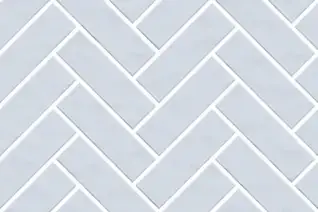
The herringbone subway tile backsplash uses 300x600mm tiles placed at 45-degree angles in a V-formation rather than the standard horizontal running bond. On a kitchen backsplash, the herringbone pattern gives the cooking zone a more dynamic, directional surface quality than the grid-like running bond. The V-pattern draws the eye across the backsplash width, emphasising the horizontal extent of the cooking zone.
The herringbone pattern on a kitchen backsplash requires 15% to 20% more tile than a running bond due to the angle cuts at the top and bottom edges where the herringbone meets the cabinet above and the worktop below. These angle cuts are more complex than the straight cuts of a running bond and increase installation labour. The visual result is worth the additional cost for a backsplash that is the kitchen's primary design element. White or grey GVT or ceramic in herringbone on the hob zone with plain running bond tiles on either side is considered a compromise: herringbone at the focal point, simpler installation on the flanking zones.
Subway Tile Backsplash Quantity and Cost for Indian Kitchens
A standard Indian apartment kitchen backsplash runs 8 to 10 feet in length and 450mm to 600mm in height. At 300x600mm tile in landscape orientation for a 600mm high backsplash, one tile covers the full height in one course. For an 8-foot (2400mm) backsplash length, 4 tiles cover the full length with no waste (4 x 600mm = 2400mm exactly). A 10-foot (3000mm) backsplash requires 5 tiles. Total tile count for an 8-foot, 600mm-high backsplash: 4 tiles at 300x600mm. At a retail price of Rs. 45 per sq. ft. and a backsplash area of 15 square feet, the tile material cost is approximately Rs. 675.
For an 8-foot kitchen with a 450mm backsplash height using 300x600mm tiles in landscape orientation: 4 tiles in one full course with a 150mm cut piece above. Tile count: 8 tiles (4 full + 4 cut pieces). At Rs. 45 per sq.ft and 12 square feet of backsplash area: approximately Rs. 540 in tile material. Add 10% for wastage. Installation cost for a standard subway tile backsplash: Rs. 20 to Rs. 38 per sq ft in addition to tile material.
Choose Your Subway Tile Backsplash
Subway tile backsplash selection starts with the cabinet colour that determines which subway tile colour creates the best coordination, then the orientation (horizontal for width, vertical for height), then the colour and finish, and finally the grout colour that defines how the tile grid reads in the kitchen. Browse ceramic and GVT subway tiles in all colours and finishes for kitchen backsplash applications on TilesFinders.
FAQs
White or off-white ceramic glossy in 300x600mm in a horizontal running bond with grey epoxy grout is the most used and most practical subway tile backsplash for Indian kitchens. It works with any cabinet colour, reflects kitchen lighting, wipes clean of Indian cooking residue easily, and is the most affordable correctly specified backsplash tile at Rs. 28 to Rs. 65 per sq ft. For a more designed backsplash, GVT in a specific colour (grey, navy, sage green) or marble-look gives a more considered result at a moderate price premium.
For a standard 8-foot (2400mm) kitchen backsplash at 600mm height using 300x600mm tiles in landscape orientation: 4 tiles cover the length and 1 tile covers the height, giving 4 tiles total for the main backsplash area plus 10% wastage allowance. For a 10-foot backsplash: 5 tiles. For a 450mm high backsplash in the same tile: each tile must be cut to 450mm height, so 8 pieces are needed (4 full tiles cut to give 4 pieces of 300x450mm each). Always order from the same production batch and keep 2 to 3 spare tiles for future repairs.
Horizontal subway tiles (landscape orientation, 300mm tall x 600mm wide in a running bond) give the kitchen backsplash a wider, grounded quality and are the standard direction for Indian modular kitchens. Vertical subway tiles (portrait orientation, 600mm tall x 300mm wide) give the backsplash a taller, more upright quality that makes the kitchen feel higher. The choice depends on the kitchen's ceiling height and proportion: low-ceiling kitchens benefit from vertical tiles; standard and high-ceiling kitchens work well with horizontal. Horizontal is the default for most Indian kitchen backsplash applications.
The 3x6 inch subway tile (75x150mm), which is the original US subway tile format, is not standard production from Morbi. The closest available Indian sizes are 150x300mm (6x12 inches) and 200x400mm (approximately 8x16 inches). The 300x600mm format (12x24 inches) is the standard Indian subway-proportion tile, but is four times the area of a 3x6 inch tile. The fine-grid, densely grouted look of a US 3x6 subway tile wall cannot be replicated with standard Indian tile production at 300x600mm.
Epoxy grout is strongly recommended for subway tile backsplash joints at the hob zone and mandatory at the sink zone. Indian cooking with daily use of turmeric, cooking oil, and tamarind permanently stains cement grout joints at the hob zone within weeks of use. Epoxy grout is non-porous and wipes clean of all cooking and cleaning residue. For the general backsplash zone away from the hob and sink, polymer-modified cement grout is acceptable. Grout colour: white grout creates a seamless white surface; grey grout makes the tile grid visible; dark grout creates a graphic high-contrast pattern.
Yes. Marble-look GVT or PGVT in polished or satin finish in a 300x600mm subway proportion is a valid and popular Indian kitchen backsplash direction. The polished GVT marble-look surface wipes clean of cooking residue as easily as plain glossy ceramic. The marble veining gives the backsplash a premium quality that plain white or coloured tiles cannot match. The countertop tile should be a plain neutral rather than another marble-look tile when the backsplash is in marble-look: two marble-look surfaces in the same kitchen zone compete, and the composition becomes busy.
Polished GVT in white or pale colours in a subway proportion gives the backsplash a bright, glass-like reflective quality. The non-porous GVT body is more durable in a kitchen environment and easier to maintain than actual glass tiles, and the polished surface gives the backsplash a jewel-like light amplification that makes the cooking zone feel larger and brighter. Price range: Rs. 45 to Rs. 105 per sq ft for polished GVT subway-look tiles.