
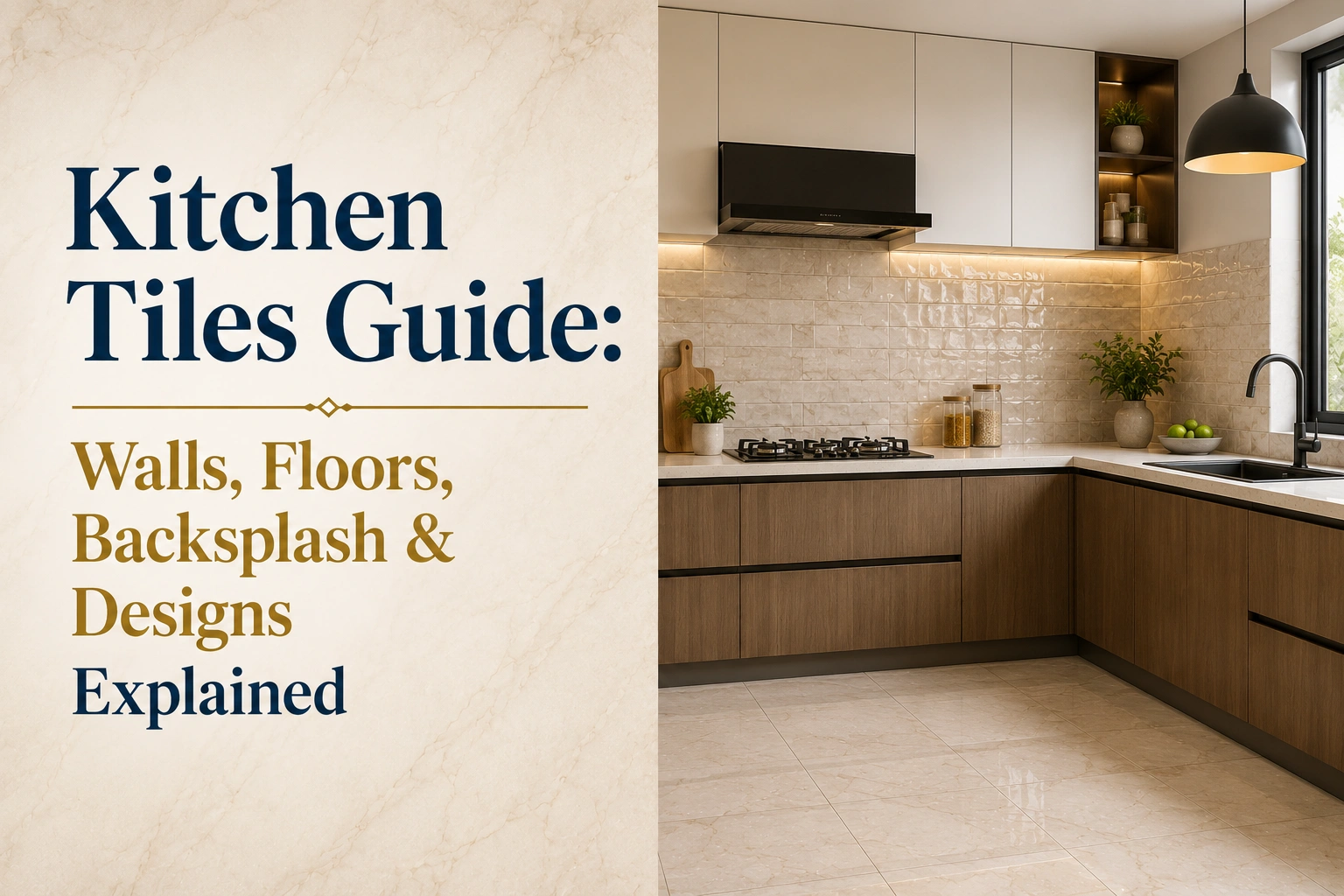
Kitchen Tiles Guide: Walls, Floors, Backsplash & Designs Explained
Master your kitchen renovation. Learn why vitrified matte floors and glossy walls are the secret ...


Loading designs...

















Yellow kitchen tiles cover a wider shade range than almost any other colour in the kitchen tile range. From a sharp lemon yellow at the bright end through amber, golden yellow, and mustard to deep ochre at the earthy end, the shades read as fundamentally different colours in a kitchen. Vivid yellow is energetic and demanding, works only on one contained surface, and needs white cabinets and good lighting to read without overwhelming. Mustard yellow kitchen tiles are earthy, warm, and significantly more forgiving in pairing and in lighting conditions. Most buyers searching for yellow kitchen tiles end up with mustard or ochre because vivid yellow is harder to source from Indian manufacturers and harder to live with in a daily cooking kitchen.
This page covers the full yellow kitchen tile shade range across every kitchen surface in the kitchen tiles range, with the specific tile body, size, and finish for each application. The dominant focus is mustard yellow kitchen tiles because that is where the most practical and most available yellow kitchen tile products sit in the Indian market today, followed by amber yellow and the lighter golden shades. Vivid yellow is addressed honestly with guidance on where it works and where it does not.
The yellow shade range in kitchen tiles from Indian manufacturers covers five distinct bands. Each sits on a different point on the warm colour scale and has a different character in a kitchen:
| Shade | Colour Character | Kitchen Visual Weight | Best Kitchen Style | Cabinet Pairing | Indian Market Availability |
| Lemon or vivid yellow | Bright, sharp, high-saturation yellow; the most intense colour in the yellow range | Very high; reads as the dominant surface in the room from any distance | Cafe-style, eclectic, designed accent kitchens only | White only; no other cabinet colour works | Limited; not standard stock from most Morbi manufacturers; may need specific sourcing |
| Golden yellow or amber | Warm yellow with an orange undertone; honey quality; less saturated than vivid | Medium-high; reads as a warm, confident accent | Transitional, warm contemporary, coastal kitchens | White, cream, or light timber | Available from a moderate range of Morbi manufacturers; confirm stock |
| Mustard yellow | Deep, warm yellow with brown and green undertones; the classic mustard shade | Medium; reads as an earthy, warm neutral at a distance; reveals yellow in direct light | Farmhouse, transitional, traditional Indian, heritage kitchens | White, cream, aged timber, terracotta accents | Most widely available yellow shade from Indian manufacturers |
| Ochre | Very warm yellow-brown; close to the colour of raw Indian turmeric | Medium-low; reads as a warm neutral on floors; warm earth colour on walls | Traditional Indian, farmhouse, rustic | Cream, off-white, aged timber, natural stone | Widely available; often stocked as standard in warm colour ranges |
| Warm amber-beige | At the boundary between yellow and beige; reads as a warm neutral rather than a yellow | Low; the most quiet yellow; reads as a warm background colour | Any kitchen style where warmth is needed without a clear colour statement | Any cabinet colour in the warm range | Very widely available from all Morbi manufacturers |
Mustard yellow is the correct starting point for most buyers searching for yellow kitchen tiles in India. It is the most stocked, the most forgiving in pairing, and the most practical in daily use. Vivid yellow and golden yellow are statement colours that require a very specific kitchen context to work. The sections below address each surface with the specific shade recommendation that works.
Yellow is the most lighting-dependent colour in the warm kitchen tile range. The shift between how yellow reads under warm LED, cool LED, and natural daylight is larger for yellow than for any other colour. This matters because most Indian kitchens use warm-white LED lighting, and the effect of that light on yellow tiles is specific and predictable:
The practical test: take a full tile sample to the kitchen in the evening with the kitchen lighting on and assess it at the same time of day when the kitchen is most used. Yellow is the colour where this test is most likely to change the shade decision.
Yellow kitchen wall tiles in ceramic are the standard specification for the backsplash and above-counter wall zone. The ceramic body in 12x18 or 12x24 in a yellow or mustard gloss or sugar finish is wall-only, cannot go on kitchen floors, and is available from manufacturers in Morbi in the mustard, ochre, and golden yellow shade family. Vivid lemon yellow is available from a smaller range of manufacturers and may need specific sourcing before committing to a large backsplash order.
Gloss finish gives yellow its full saturation on the wall and is the most practical finish for the backsplash zone near the cooktop,p where oil mist reaches the surface daily. Sugar finish gives the yellow a slightly matte quality that reads as softer and less intense, which can reduce the visual weight of vivid yellow without losing the colour. For the full zone-by-zone wall specification covering all kitchen wall surfaces, the kitchen wall tiles page covers those rules in detail.
GVT in 2x2 (600x600) in a mustard or ochre colour is the specification for a full kitchen wall in the yellow family. The GVT glaze holds colour more consistently across large production runs than ceramic, which matters on a full wall where boxes from multiple batches are needed. On the wall, a gloss finish is safe for any GVT tile. Mustard GVT in a polished glossy finish in 2x4 on one kitchen wall in a large or open-plan kitchen reads as a warm, confident feature wall without being overwhelming. GVT in mustard or ochre in 2x2 runs from Rs. 90 to Rs. 170 per sq.ft.
The backsplash is the surface where yellow kitchen tiles work best in most Indian kitchens. The zone between counter and overhead cabinets at eye level is small enough that a bold colour does not overwhelm the kitchen, but large enough to read clearly as a colour statement. Three yellow backsplash approaches that work consistently:
Mustard ceramic in 12x24 gloss, covering the full backsplash run from one end of the counter to the other, with off-white or cream grout and white or cream overhead cabinets. The mustard reads as a warm, earthy accent that pairs naturally with timber shelving or brass fixtures above. This is the most commonly specified yellow kitchen backsplash in Indian homes because mustard is available, the colour is warm without being demanding, and it works with the cream and timber materials that Indian kitchens frequently use.
Ceramic in 12x18 in a golden or mustard yellow gloss, laid in a horizontal brick bond with off-white grout. The subway format adds the horizontal line pattern of the brick bond to the colour, giving the backsplash a structured quality rather than a flat colour field. Yellow subway tiles in this format work in farmhouse, transitional, and warm-contemporary kitchen styles. The brick bond with matching or near-matching grout reads as a textured warm surface; white grout reads as a more graphic black-and-white-like pattern with the yellow tile face.
A single panel of vivid or golden yellow ceramic tiles, 600 to 900mm wide, behind the hob or behind open kitchen shelves, with plain white or cream ceramic on the remaining backsplash. The yellow panel is contained and framed by the plain surrounding tile, which gives it the character of a deliberate accent rather than a full colour commitment. This approach is the safest way to use vivid yellow in an Indian kitchen; it limits the visual weight of the colour to a zone small enough not to dominate.
Mustard yellow sits at the point where yellow becomes earthy and grounded. The brown and green undertones in mustard separate it from the brightness of vivid yellow and pull it toward the warm neutral range that is familiar and comfortable in Indian kitchens. In warm-white LED lighting, which is the standard in Indian kitchens, mustard reads as a warm golden-brown-yellow that is close to the colour of roasted spices, aged timber, and traditional Indian earthenware. That cultural familiarity is part of why mustard works in Indian kitchen design contexts where vivid yellow would feel too foreign.
Mustard yellow ceramic in 12x24 gloss for the backsplash runs from Rs. 55 to Rs. 95 per sq. ft. from manufacturers in Morbi and across Gujarat. GVT in 2x2 in mustard or ochre for the floor or full-height wall runs from Rs. 90 to Rs. 170 per sq ft. Both tile bodies carry the mustard colour as a glaze on the tile face; the GVT body gives better consistency across large areas.
A yellow kitchen floor tile is GVT in matte or matte carving finish in 2x2 (600x600) in a mustard or ochre colour. The matte surface is anti-skid, and the GVT body has water absorption of 0.05%, which handles Indian monsoon humidity and daily kitchen water on the floor without adhesive bond weakening over time.
Vivid yellow on a kitchen floor is a very bold choice that requires a very specific kitchen context: a large kitchen above 120 sq. ft., white cabinets throughout, good natural light, and a buyer who is fully committed to the colour as the dominant surface in the room. Mustard or ochre GVT matte in 2x2 is a more practical yellow floor tile for most Indian kitchens because the earthier shade reads as a warm, natural material rather than a vivid colour statement, and it coordinates with a wider range of cabinet colours and countertop materials.
Note: Gloss, high gloss, and satin matte finishes must not be used on kitchen floors. Yellow or mustard kitchen floor tiles must be in matte or matte carving finish only. Ceramic 12x18 and 12x24 are wall-only sizes and must not be placed on kitchen floors regardless of colour.
| Yellow Shade | Cabinet Colour | Countertop | Fixture Finish | Grout Colour | What It Reads As |
| Vivid or lemon yellow | White only | White or light grey quartz | Chrome or matte black | White (backsplash); off-white (floor) | Graphic and energetic; yellow is the centrepiece; everything else recedes |
| Golden yellow or amber | White, cream, or light timber | White, warm beige quartz, or light stone | Brass or chrome | Off-white or cream | Warm and confident, golden yellow reads as a rich accent rather than a vivid statement |
| Mustard yellow | White, cream, aged timber, or off-white | Warm beige quartz, travertine look, or Kota stone look | Brass, antique bronze, or matte black | Cream or off-white on backsplash; warm tan on floor | Earthy and grounded; reads as a warm material colour; the most naturally Indian interpretation of yellow in a kitchen |
| Ochre | Cream, off-white, or aged timber | Warm stone look, beige quartz, or natural slate finish | Antique bronze or copper | Cream or warm tan | Traditional and warm; close to earth and spice tones familiar in Indian kitchens |
The grout decision for mustard and ochre yellow tiles follows the same warm-tone principle as the cabinet choice: use off-white, cream, or tan grout that sits in the same warm tone family as the tile. White grout with yellow tiles creates a visible contrast grid that adds a cool-warm tension at every joint. Grey grout with yellow tiles creates a colour conflict that reads as unresolved. Epoxy grout in a warm off-white or tan shade on the backsplash resists cooking oil and turmeric staining in the grout line.
| Size | Alias | Body | Surface | Best Yellow Application | Price (Rs./sq.ft) |
| 300x450 | 12x18 | Ceramic | Wall and backsplash only; never floor | Yellow subway backsplash in horizontal brick bond | Rs. 50 to Rs. 85 |
| 300x600 | 12x24 | Ceramic | Wall and backsplash only; never floor | Full mustard or golden yellow backsplash run | Rs. 55 to Rs. 95 |
| 600x600 | 2x2 | GVT | Wall and floor (matte or GHR for floors) | Mustard or ochre floor tile; full-height yellow wall | Rs. 90 to Rs. 170 |
| 600x1200 | 2x4 | GVT | Wall and floor (matte for floors) | Mustard feature wall in open-plan kitchen; fewer joins than 2x2 | Rs. 110 to Rs. 190 |
| 600x600 | 2x2 | Porcelain (matte) | Floor | Yellow kitchen floor where lighter tile weight is preferred | Rs. 55 to Rs. 115 |
Note: 300x450 and 300x600 ceramic sizes are wall-only. They must not be used on kitchen floors regardless of colour or finish. For a yellow kitchen floor, use GVT 2x2 in matte or matte carving finish.
| Requirement | Recommended Tile | Size | Finish | Price (Rs./sq.ft) |
| Mustard backsplash, farmhouse or transitional kitchen | Mustard gloss ceramic | 12x24 | Gloss | Rs. 55 to Rs. 95 |
| Yellow subway backsplash | Golden or mustard gloss ceramic | 12x18 | Gloss | Rs. 50 to Rs. 85 |
| Vivid yellow feature panel behind the hob | Vivid yellow gloss ceramic | 12x24 | Gloss | Rs. 55 to Rs. 95 |
| Mustard kitchen floor, warm neutral | Mustard GVT matte | 2x2 | Matte | Rs. 90 to Rs. 160 |
| Ochre kitchen floor, traditional kitchen | Ochre GVT matte or matte carving | 2x2 | Matte or Matte Carving | Rs. 90 to Rs. 170 |
| Full mustard wall, open-plan kitchen | Mustard GVT matte or glossy | 2x4 | Glossy (wall only) or Matte | Rs. 110 to Rs. 190 |
| Golden yellow full backsplash, white cabinets | Golden yellow gloss ceramic | 12x24 | Gloss | Rs. 55 to Rs. 95 |
| Budget yellow backsplash | Mustard gloss ceramic, smaller size | 12x18 | Gloss | Rs. 50 to Rs. 80 |
Mustard and ochre GVT in matte finish in 2x2 carries water absorption of 0.05%, making it suitable for Indian kitchen floors that experience monsoon humidity from June to September every year. The sealed glaze on the tile face prevents cooking oil and turmeric from penetrating the body, which is the critical performance requirement in a kitchen where turmeric is used daily. The irony of a turmeric-yellow mustard tile is practical as well as visual: turmeric staining on the tile face is less visible on a mustard or ochre tile than on any other kitchen tile colour, because the yellow-orange residue blends into the warm glaze colour rather than contrasting against it. Epoxy grout at the backsplash joints resists turmeric staining in the grout line.
Ceramic in 12x24 (300x600) in mustard, golden yellow, and ochre glazes is produced by manufacturers across Morbi in gloss and sugar finish at Rs. 55 to Rs. 95 per sq.ft, meeting IS 13630 for ceramic wall tiles. GVT in 2x2 (600x600) in the mustard and ochre shade family for kitchen floors and walls runs from Rs. 90 to Rs. 170 per sq.ft from Gujarat-based producers, meeting IS 15622 for vitrified tiles. GVT in 2x4 for feature walls in the yellow family runs from Rs. 110 to Rs. 190 per sq.ft. Vivid yellow ceramic may need a specific sourcing inquiry from a Morbi manufacturer before a large order is placed.
Mustard ceramic in 12x24 for a warm backsplash, ochre GVT matte in 2x2 for a floor that reads as natural earth, and golden yellow ceramic for a subway-format accent are all stocked from verified manufacturers across Morbi and Gujarat on Tilesfinders. Ceramic yellow tiles for the backsplash start from Rs. 50 per sq ft; GVT in 2x2 in mustard and ochre for floors and walls runs from Rs. 90 to Rs. 170 per sq ft. Order a sample tile and view it in the kitchen's own lighting at the time of day the kitchen is most used before committing to any yellow shade.
Vivid yellow kitchen tiles have a bright, high-saturation glaze that reads as an energetic colour statement and works only with white cabinets and good lighting. Mustard yellow tiles have a deeper glaze with brown and green undertones, reading as an earthy warm colour rather than a vivid accent. Mustard is more widely stocked by Indian manufacturers in Morbi, pairs with more cabinet colours, and is more practical in daily kitchen use than vivid yellow.
Yes, if specified as GVT or porcelain in matte or matte carving finish. GVT 2x2 in mustard or ochre matte is the correct kitchen floor tile body for the yellow family. Glossy yellow tiles must not be used on kitchen floors. Ceramic 12x18 and 12x24 are wall-only sizes and cannot go on any floor, regardless of colour.
White cabinets work with all yellow shades. Cream and aged timber cabinets work with mustard and ochre, but not vivid yellow. Mustard tiles pair with the widest range of Indian modular cabinet colours,s including cream, off-white, timber, and terracotta accents. Avoid grey, dark, or coloured cabinets with any yellow tile; yellow and cool cabinet tones create colour conflicts that read as unresolved.
Mustard has a green undertone in its glaze. Under cool-white LED lighting (4000K to 5000K) or in a north-facing kitchen with cool diffused daylight, the warm light is not present to mask that green undertone. The result is that mustard can read as olive-green rather than warm golden-yellow. Switching the kitchen lighting to warm-white LED (2700K to 3000K) resolves this. Always view a mustard tile sample in the kitchen's actual installed lighting before ordering.
Off-white or cream grout in the same warm tone family as the tile gives the most cohesive result for mustard and ochre tiles. White grout creates a visible contrast grid. Grey grout creates a cool-warm conflict at every joint. Epoxy grout in a warm off-white or tan shade resists cooking oil and turmeric staining in the grout lines, which is important for any backsplash near an active Indian cooking zone.
Mustard, ochre, and golden yellow ceramic in 12x24 for kitchen walls is stocked by a range of manufacturers in Morbi and Gujarat at Rs. 55 to Rs. 95 per sq.ft in gloss and sugar finish. GVT in 2x2 in mustard and ochre for kitchen floors and walls runs from Rs. 90 to Rs. 170 per sq.ft. Vivid lemon yellow is available from fewer manufacturers and may need sourcing confirmation before placing a large order.
Use yellow on the backsplash strip only, not on the full wall or floor. A mustard ceramic 12x24 backsplash with white overhead cabinets and a plain neutral floor reads as a warm, considered accent in a small kitchen without making the space feel smaller. Vivid yellow on any surface in a small kitchen is not recommended; the colour's visual weight makes a small space feel enclosed.
Mustard and ochre perform better in north-facing kitchens than vivid yellow. The inherent warmth of the mustard or ochre glaze compensates partially for the cool diffused light. Vivid yellow in a north-facing kitchen can read as flat or greenish without warm light to enrich it. Switching the kitchen lighting to warm-white LED (2700K) and using mustard rather than vivid yellow is the practical solution for a north-facing kitchen where the buyer wants a yellow tile.