

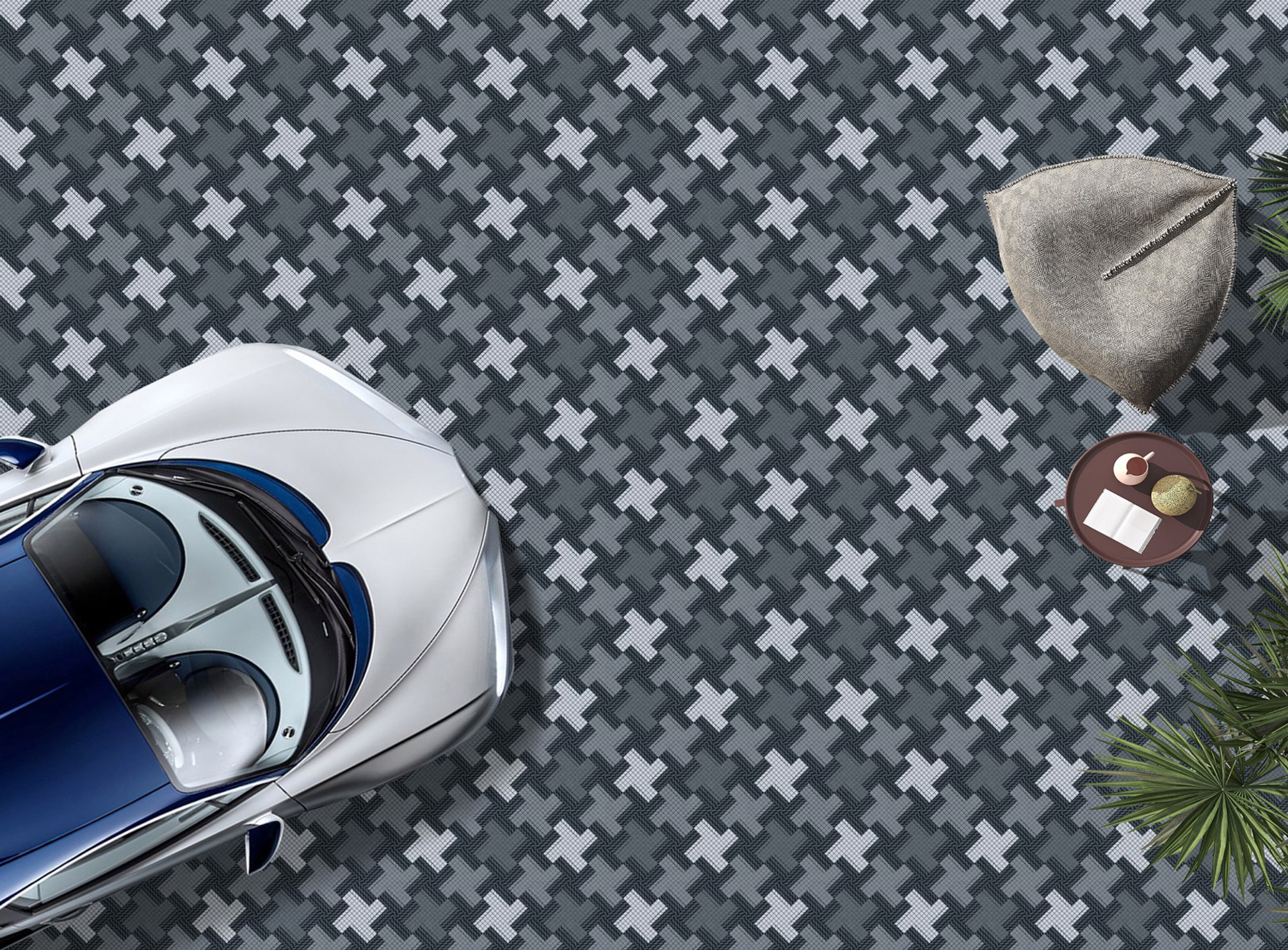
Parking Tile Design Ideas for Homes & Commercial Spaces
Transform your parking space with the right tiles. Learn about heavy-duty materials, ideal thickn...


Loading designs...





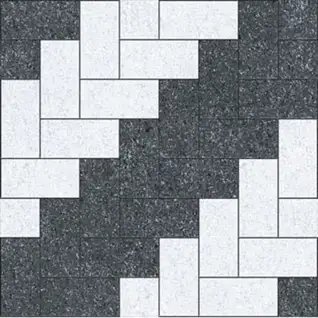
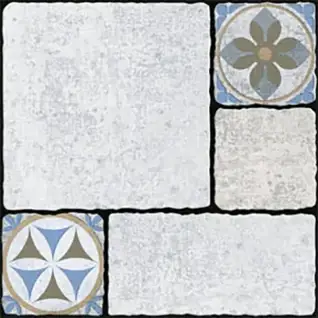
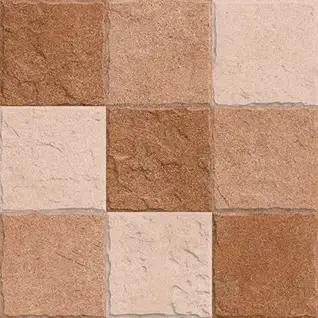

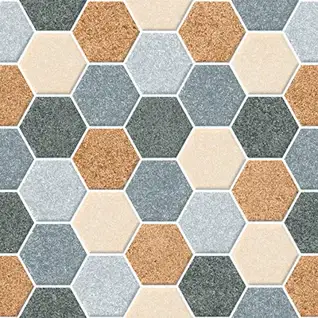
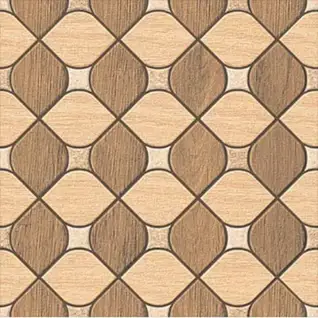
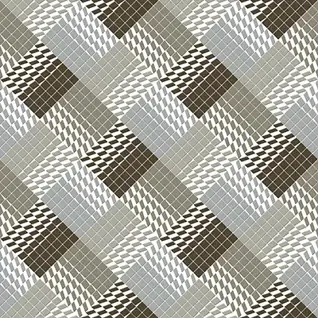

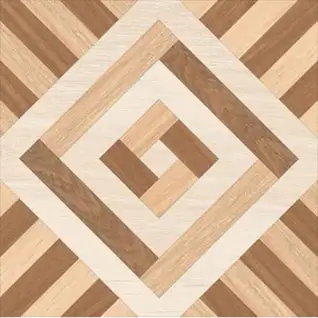

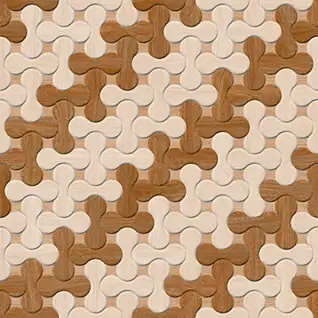


Chequered layouts are one of the most-used floor patterns in Indian home parking areas. The alternating tile pattern breaks up a plain floor and gives the car porch a clean, finished look without any extra materials. Parking chequered tiles work on covered car porches, basement car parks, open driveways, and compound boundary floors. This page covers which tile categories give the best results for chequered layouts, which sizes and anti-skid finishes are right for outdoor vehicle areas, and how to plan a dual-tone or single-colour chequered floor from measurement to laying.
Most buyers choose GVT tiles or full-body tiles for chequered parking floors because both categories meet the load, moisture, and slip resistance requirements of outdoor vehicle areas as per IS 15622:2006. The surface hardness of vitrified floor tiles outdoors ranges from 7 to 8 on the Mohs scale, which is high enough for daily car traffic and foot movement.
A chequered tile layout uses two alternating tile colours placed in a regular grid pattern. Every other tile is a different colour, producing a checkerboard floor tile effect. The tiles themselves are standard square floor tiles. The pattern comes from the layout plan, not from any special tile shape. Parking checker tiles are the same product as any standard square vitrified floor tile. The checkerboard effect comes entirely from how they are arranged on the floor.
Two approaches are common in Indian home parking tile design:
Chequered parking tiles differ from ribbed tiles, striped tiles, and paver tiles for a car porch. Ribbed and striped tiles have directional surface textures that are part of the tile itself. A chequered layout achieves its look through the two-colour or grout-contrast arrangement, using any standard anti-skid square floor tile.
Choosing the correct tile category matters more for a parking floor than for an indoor area. Outdoor car parking floor design needs tiles that resist vehicle load, water absorption, and surface wear at the same time.
| Tile Category | Water Absorption | Right for Outdoor Parking | Why |
| GVT (Glazed Vitrified) | 0.05% | Yes | 0.05% water absorption, Mohs 7+ hardness, wide colour range for dual-tone layouts |
| Full Body Vitrified | 0.05% | Yes | Chip shows the same colour as the surface; best for ramps, step edges, and high vehicle load areas. |
| Porcelain | 2% to 5% | Yes for covered areas | Higher water absorption than GVT; not for fully open driveways exposed to rain |
| PGVT (Polished Glazed Vitrified) | 0.05% | No | Polished finish is very slippery; R-rating too low for any wet outdoor surface. |
| Double Charge | 0.05% | No | Not for wet areas or outdoor flooring of any kind |
| Ceramic | 12% to 16% | No | Very high water absorption; cracks under vehicle load and monsoon wet-dry cycles |
Note: PGVT tiles must never be used on outdoor parking floors. The Polished Glossy finish has an R-rating below R9, which is unsafe for any wet outdoor surface. For anti-skid parking tiles in a chequered layout, use GVT or full-body vitrified tiles only.
Square tiles of the same size are needed for a proper chequered layout. If the two alternating tiles are different sizes, the grid will not align correctly across the floor. The sizes that work best for vitrified parking tiles in a chequered pattern are:
| Size | Alias | Best Use Case | Notes |
| 400x400 mm | 16x16 | Home car porch, covered single-car bay | Most common size for residential chequered home parking tile design |
| 500x500 mm | 20x20 | Larger home driveways, double-car porch | Fewer grout joints; the grid looks wider and cleaner |
| 600x600 mm | 2x2 | Commercial parking, wide basement floors | Large-format chequered floor tile pattern works well on big open areas |
| 600x1200 mm | 2x4 | Not for standard chequered layouts | Rectangular tiles cannot produce a square checkerboard floor tile grid |
The 16x16 (400x400 mm) size is the most used for residential car parking floor design in India. It gives a balanced grid that fits both single-car and double-car porch layouts without requiring too many cuts at the edges.
Non-slip parking tiles need the right finish. A chequered floor in the wrong finish looks correct, but becomes a safety risk in rain, morning dew, or after washing. The R-rating system measures slip resistance: parking floors need an R10 or above for safe outdoor use.
| Finish | R-Rating | Anti-Skid | Right for Parking Floor | Notes |
| GHR (Glaze High Resistance) | R11 | Yes | Yes | Stone-like texture; best grip in monsoon and wet conditions |
| Matte | R10 | Yes | Yes | Good Mohs scratch resistance; hides tyre marks and oil spots well |
| Rain Drops | R11 | Yes | Yes | Raised glaze drops give excellent grip on wet outdoor surfaces |
| Texture (0.3 to 1 mm depth) | R10 | Yes | Yes | Slate or fabric-feel surface; durable underfoot for daily vehicle movement |
| Matte Carving | R10 | Yes | Yes | Matte base with glossy veins; strong grip, good for covered car porches |
| Glossy | R7 | No | Never | Slippery when wet; never on any outdoor parking floor |
| Satin Matte | R8 | No | Never | High slip risk in rain or morning dew; not for outdoor floors |
| Polished Glossy (PGVT) | R6 | No | Never | Dangerous on all wet outdoor surfaces, including covered areas |
The two most-used colour pairings for dual-tone parking tiles in Indian homes are grey-and-beige and black-and-white. Both work across GVT and full-body vitrified categories. Some buyers also choose charcoal-and-off-white for a less sharp contrast, or concrete-grey-and-sand for a raw outdoor finish. The pairing affects how much tyre rubber marks, oil drips, and monsoon dust show up over time. Browse the GVT parking tile range for the full colour selection in anti-skid finishes.
| Colour Pairing | Dust and Mud Visibility | Tyre Mark Visibility | Oil Mark Visibility | Best For |
| Grey + Beige | Low on beige, medium on grey | Medium | Low | Covered home car porch, general residential use |
| Black + White | High on white | Very low on black, high on white | Low on black | Basement parking with good lighting |
| Charcoal + Off-White | Medium | Very low | Low | Open driveway, heavy vehicle areas |
| Concrete Grey + Sand | Low | Low | Low | Sloped ramp, commercial vehicle lots |
| Two shades of grey | Low | Very low | Low | Subtle chequered pattern without sharp contrast; suits minimalist home exteriors |
A correct dual-tone car parking floor design needs careful planning before ordering. Small errors in tile matching cause visible joint problems throughout the finished floor.
Two tiles sold as 16x16 by different manufacturers may have slightly different finished sizes after kiln firing. A 1 mm gap between the two tiles in a chequered parking tile pattern creates uneven grout joints across the whole floor. Always order both colours from the same manufacturer or verify finished dimensions with a physical sample before buying. This is the single most common mistake in dual-tone parking floors across India.
If one tile has a GHR finish and the other has a plain matte finish, the two tiles reflect light differently, and the floor looks uneven. Both tiles in a chequered car parking floor design must share the same finish type. For outdoor parking areas, both should be GHR, both matter, or both raindrops. Mixing anti-skid finishes also changes the grip profile in different parts of the floor.
A chequered layout on a car porch needs more cuts at edges, corners, and around drain points than a single-colour floor. Standard wastage for a plain parking tile floor is 10%. For a chequered parking tile pattern, calculate 15% wastage across both tile colours. Ordering short on either colour and reordering mid-project risks a batch mismatch.
Tile colours vary slightly between production batches. If one colour is reordered from a later batch, it may not match the original exactly. Order the full quantity of both tile colours together at the start of the project. Check that both carry the same batch number on the tile box before sending them to the site. This rule applies to all anti-stain parking tiles and vitrified floor tiles outdoors, not just chequered layouts.
Grout colour in a chequered layout has a clear effect on how the finished floor looks. A grout matching one tile colour makes the other colour stand out more. A mid-tone grout between the two tile colours creates a balanced result.
| Tile Colour Pairing | Recommended Grout Colour | Visual Effect |
| Grey + Beige | Mid warm grey | Softens the contrast between the two tiles |
| Black + White | Mid grey | Reduces the sharp black-and-white contrast to a more balanced look |
| Charcoal + Off-White | Stone grey | Ties the two tones together without favouring either colour |
| Concrete Grey + Sand | Natural grey | Keeps the raw outdoor look consistent across the floor |
| Two shades of grey | Matching darker grey | Creates a subtle grid without strong visible lines |
Use epoxy grout for all outdoor parking floors, including chequered layouts. Standard cement grout absorbs vehicle oil, fuel, and cleaning chemicals and stains permanently over time. Epoxy grout for parking resists all vehicle fluids and washes clean after monsoon mud. The upfront cost is higher, but cleaning time drops significantly over the life of the floor.
Chequered patterns work on flat covered porches, open driveways, and basement car parks. The most common use is a single-car or double-car covered porch where the home parking tile design is visible from the entrance.
Buyers who want a chequered open driveway should use full-body vitrified tiles on sloped sections because the edge chip on a full-body tile matches the surface colour, which matters when cut tiles sit at a ramp edge or step nosing.
| Area | Right Size | Right Category | Notes |
| Covered single-car porch | 16x16 or 20x20 | GVT | Best area to use a chequered pattern; highly visible from the entrance |
| Open double-car driveway | 20x20 or 2x2 | GVT or full body | Larger tiles mean fewer cuts; good for dual-tone parking tiles |
| Sloped ramp | 16x16 or 20x20 | Full body only | Chip colour matches the surface at the cut edges on the ramp slope |
| Basement car park floor | 20x20 or 2x2 | Full body | High vehicle load; full body gives uniform load distribution |
| Compound boundary floor | 16x16 or 20x20 | GVT | Lower vehicle load; GVT anti-skid parking tiles are sufficient |
1. Measure the parking floor area in sq.ft. For a dual-tone layout, each colour covers roughly 50% of the total floor area. Calculate the quantity of each colour separately.
2. Choose the size: 16x16 tile for single-car porches, 20x20 or 2x2 for double-car driveways or open lots. Match the finished size between both tile colours before ordering.
3. Select the finish: GHR, matte, or raindrops for any outdoor or wet parking surface. Check the R-rating on the tile box: parking floors need R10 or above. Do not use glossy, satin, matte, or polished finishes on any car parking floor.
4. Pick the colour pairing and confirm both tiles are in the same finished size from the same manufacturer. Request a sample of each colour before placing the full order.
5. Check batch numbers on both tile boxes. Both colours must carry the same production batch to avoid shade variation.
6. Add 15% to your total tile count as cutting wastage for a chequered parking tile pattern. Order both colours at the same time.
7. Order epoxy grout in a mid-tone between the two tile colours. Confirm the grout colour against physical tile samples in natural light before ordering the full grout quantity.
Sizes from 16x16 to 2x2 in GVT and full body vitrified categories, with matte, GHR, raindrops, and texture finishes, are listed on Tilesfinders with verified water absorption, Mohs hardness, and IS 15622:2006 compliance data. Use the filters on this page to narrow by tile category, size, finish, and colour, and browse the parking tiles collection for all floor options right for vehicle areas.
Chequered parking tiles are standard square floor tiles laid in an alternating two-colour pattern. The checkerboard floor tile effect comes entirely from the laying pattern, not from any special tile shape. GVT and full-body vitrified tiles in 16x16 or 20x20 are the most common choice for Indian car parking floor design.
GHR, matte, and raindrop finishes are right for outdoor anti-skid parking tiles. All three give R10 or R11 slip resistance, which is the minimum for outdoor wet surfaces as per IS 15622:2006. Glossy, satin matte, and polished finishes have low R-ratings and must not be used on any outdoor parking floor.
Mixing brands for a chequered parking tile layout is risky. Two tiles sold as the same size by different manufacturers can have slightly different finished dimensions after kiln firing. Even a 1 mm gap causes uneven grout joints across the full floor. Buy both colours from the same manufacturer and check the finished dimensions from the same production batch.
Order 15% extra across both tile colours for a chequered parking tile pattern. Standard single-colour floors need 10% wastage. The extra cuts at edges, corners, and drain points in a chequered layout bring wastage to 15%. Order both colours in the same batch at the start of the project to avoid shade variation on any reorder.
A 2x2 (600x600 mm) tile works well in open double-car driveways or basement car parks. For a single-car covered porch, a 16x16 or 20x20 vitrified parking tile gives a better-scaled checkerboard grid. Very large tiles in a small space make the chequered pattern look unbalanced. Compare tile size to floor dimensions before ordering.
Use epoxy grout for all outdoor parking floors. Epoxy grout for parking resists oil, vehicle fluids, and monsoon mud staining that standard cement grout cannot handle over time. Pick a grout colour in a mid-tone between the two tile colours for the most balanced finish. Cement grout needs sealing in covered parking areas if epoxy is not used.
No. PGVT tiles have a Polished Glossy finish with an R-rating below R9, which is unsafe on any wet outdoor floor. PGVT tiles must never be used on outdoor parking floors, whether the layout is chequered or plain. Use GVT tiles in a matte, GHR, or raindrops finish for all outdoor non-slip parking tiles in a chequered pattern.
GVT tiles in 16x16 or 20x20 for chequered car parking floor design range from Rs. 35 to Rs. 90 per sq ft, depending on finish and brand. Full body vitrified tiles range from Rs. 55 to Rs. 120 per sq.ft. These are indicative estimates only. Actual prices vary by region, dealer, batch size, and finish type.