

Stylish Kitchen Backsplash Ideas That Are Easy to Clean
Upgrade your kitchen with beautiful, practical, easy-clean backsplash ideas—from glossy classics ...


Loading designs...
Moroccan tiles kitchen applications cover three distinct surfaces: the kitchen floor, the splashback wall behind the hob and sink, and the remaining wall area above the counter. Each surface has different exposure to heat, steam, cooking splatter, and foot traffic, and each needs a different tile specification.
Moroccan tiles in the kitchen range from a simple geometric tile repeat on the floor, in matte GVT, at Rs. 65 per sq.ft to a hand-painted arabesque splashback tile at Rs. 400 per sq.ft. This page covers all three surfaces, the right body type and finish for each, and the most common Moroccan kitchen tile design choices in Indian homes.
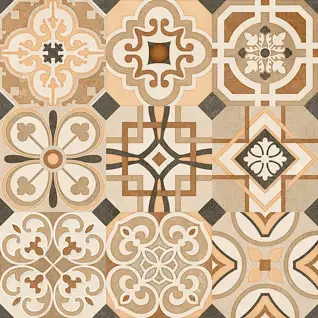
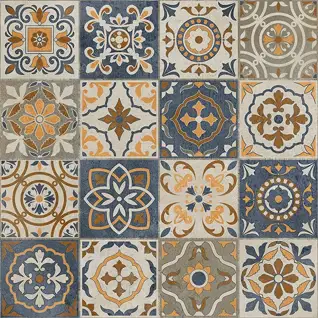
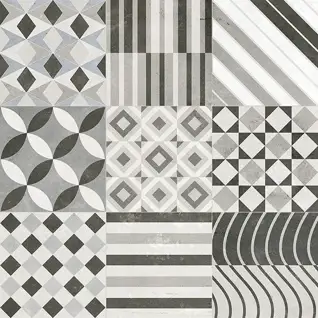
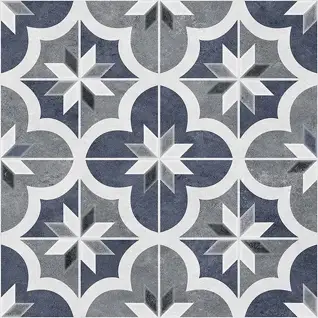
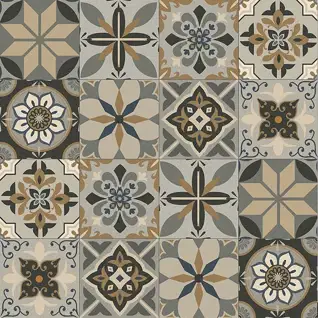
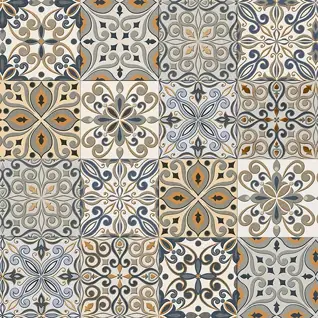
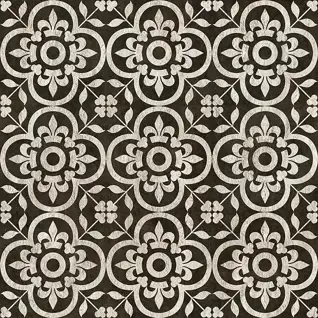
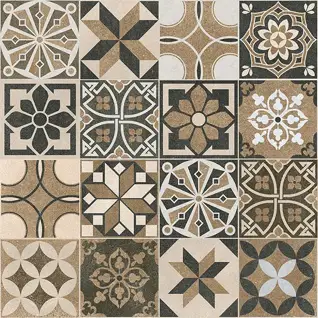
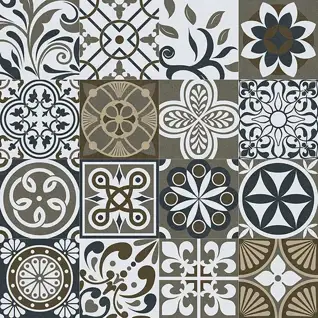
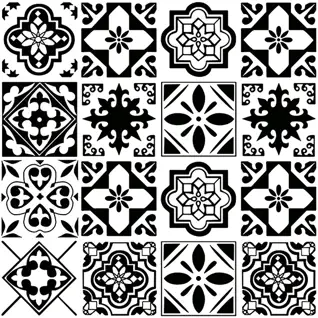
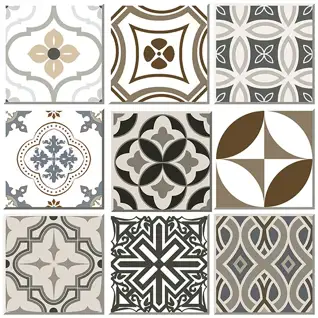
The star-and-cross repeat motif and arabesque interlocking design of Moroccan kitchen tiles suit Indian kitchen spaces for reasons beyond appearance. The geometric tile pattern draws the eye along a fixed axis, which makes narrow galley kitchens feel wider and square kitchens feel more structured. The colour palette of blue-and-white and black-and-white Moroccan tiles pairs naturally with white, grey, and wood-finish modular kitchen cabinetry, which covers most of the Indian residential market.
The glazed surface of ceramic and GVT Moroccan tiles handles oil residue and cooking splatter well on walls. On kitchen floors, the matte or GHR finish of a well-specified Moroccan kitchen floor tile holds up against daily foot traffic, dropped utensils, and water from sink splashes. The grout joint in a star-and-cross pattern is narrow (1.5 to 2 mm), which means less grout surface area exposed to kitchen grime compared to a plain tile laid with 3 mm joints.
Pro tip: Plan your Moroccan kitchen tile layout on paper before ordering. Mark out where the hob, sink, window, and electrical points sit on the splashback wall. A geometric tile with a 20x20 cm repeat looks very different from one with a 30x30 cm repeat when cut around a socket. Dry-lay one row of tiles before mixing the adhesive on any kitchen surface.
Moroccan kitchen floor tiles take more punishment than any other kitchen surface. They carry foot traffic, absorb thermal shock from dropped hot vessels, and get wet repeatedly from sink splashes and mopping. Only two body types are fit for purpose on Indian kitchen floors:
| Body Type | Water Absorption | Slip Resistance | Scratch Resistance | Price (Rs./sq.ft) |
| GVT (Glazed Vitrified) | 0.5% to 3% | R9 matte, R7 polished | Mohs 6 to 7 | Rs. 95 to Rs. 175 |
| Full Body Vitrified (IS 15622:2006) | 0.05% | R10 to R11 (GHR) | Mohs 7 to 8 | Rs. 130 to Rs. 220 |
| Ceramic (IS 13630) | 12% to 16% | R9 matte | Mohs 5 to 6 | Rs. 65 to Rs. 110 |
| Encaustic / Moroccan Concrete | 4% to 8% | R9 | Mohs 3 to 4 | Rs. 180 to Rs. 400 |
Note: Do not use ceramic Moroccan kitchen floor tiles (IS 13630) on a kitchen floor that gets wet regularly. The 12 to 16% water absorption of the ceramic body leads to hairline cracks within 2 to 3 years in Indian kitchens, where mopping is daily. Use GVT or full-body vitrified Moroccan kitchen floor tiles only. Encaustic and concrete Moroccan tiles have scratch resistance of only Mohs 3 to 4 and scuff visibly under chair legs and heavy foot traffic.
Finish rules for Moroccan kitchen floor tiles:
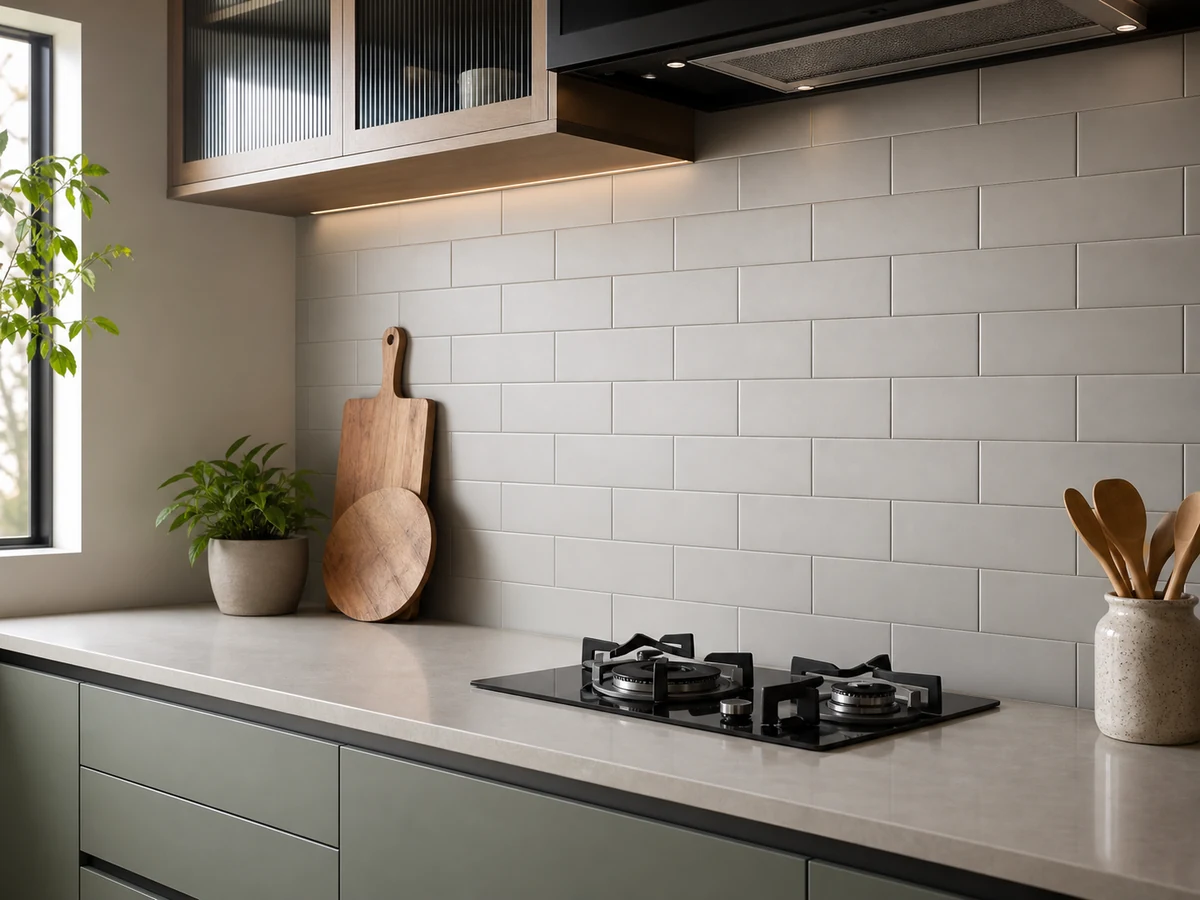
The Moroccan tiles kitchen splashback application is the most searched kitchen use case for this tile look in India. The splashback sits behind the hob and sink, takes direct cooking splatter and steam exposure every day, and must clean easily without absorbing oil into the tile surface.
Unlike the kitchen floor, the splashback wall does not carry foot traffic, so slip resistance is not a concern. The key specifications for a Moroccan kitchen backsplash are:
Body: GVT for all kitchen splashback applications. The GVT body absorbs 0.5% to 3% water and handles steam exposure without the tile body swelling or the tile adhesive bond weakening. Ceramic Moroccan tiles are also acceptable on dry splashback walls away from the direct steam zone above the hob.
Finish: Gloss glaze or high-gloss finish works well on a kitchen splashback wall (unlike kitchen floors). The smooth gloss surface on a splashback wipes clean of oil residue in one pass with a wet cloth. Matte Moroccan tiles on a splashback wall trap cooking grease in the micro-pores of the matte surface and are harder to clean over time.
Size: 200x200 mm (20x20 cm) is the most practical size for a Moroccan tile splashback kitchen. It cuts cleanly around hob cutouts, socket boxes, and pipe penetrations. The 150x150 mm format works for narrower splashback panels. Large 300x300 mm Moroccan tiles are harder to cut to the non-standard heights of most Indian kitchen splashback panels.
Grout: Epoxy grout in 1.5 to 2 mm joints throughout the splashback. Cement grout in a kitchen splashback behind the hob stains with cooking grease within 4 to 8 weeks of use. Epoxy grout costs Rs. 180 to Rs. 250 per kg but does not stain and cleans with standard kitchen degreasers.
Note: The direct steam zone on a Moroccan tile splashback kitchen is the 300 mm area directly above the hob. Tile adhesive in this zone must be C2 grade heat-resistant adhesive, not standard cement adhesive. Standard adhesive in the direct steam zone softens over time and tiles can pull away from the wall. Specify C2 grade adhesive to your contractor before laying begins.
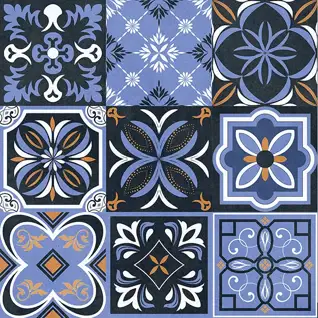
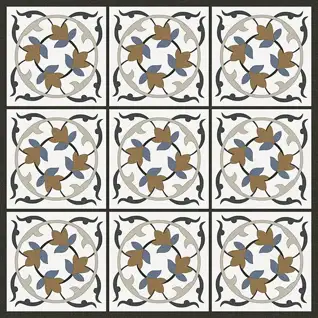
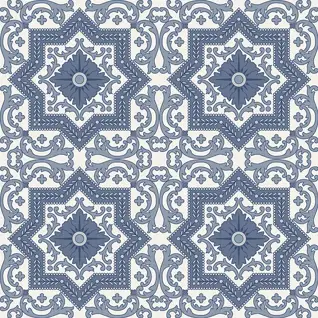
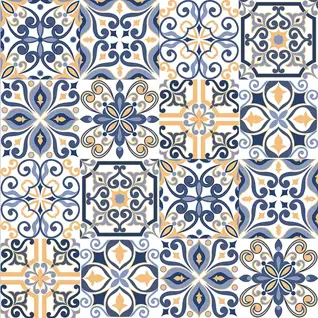
Blue Moroccan tiles in a kitchen setting are the most common single-colour choice for this look across Indian residential projects. The blue-and-white colour palette of a star-and-cross or arabesque backsplash tile reads cleanly against white cabinets, stainless steel appliances, and grey stone countertops that are standard in most Indian modular kitchens.
| Blue Shade | Works Best With | Surface | Visual Weight |
| Deep cobalt | White cabinets, light countertops | Splashback only (not full floor) | High |
| Royal blue | Grey or white cabinets, wood countertop | Splashback or feature floor section | Medium-high |
| Mid-blue and teal | Any cabinet colour | Floor or splashback | Medium |
| Turquoise | White or cream cabinets | Floor or splashback | Low to medium |
| Blue and white | Any cabinetry finish | Floor, splashback, wall | Variable by ratio |
Blue Moroccan kitchen tiles in a dark shade (cobalt, navy) on a full kitchen floor create a very high visual weight. This works in large open kitchens above 120 sq. ft. with white cabinetry and good natural light.
In a semi-open kitchen under 80 sq.ft, a dark blue Moroccan floor pattern makes the space feel closed. The practical approach in a smaller kitchen is blue Moroccan tiles on the splashback only, with a plain grey or white floor tile to keep the visual weight balanced.
| Kitchen Type | Recommended Size | Pattern Style | Finish | Why |
| Galley kitchen (under 60 sq.ft) | 200x200 mm | Star, hexagon | Matte GVT | Small pattern avoids visual clutter in a narrow space |
| L-shaped kitchen (60 to 100 sq.ft) | 250x250 mm or 300x300 mm | Star-and-cross, arabesque | Matte or sugar GVT | Medium repeat fills the floor without overwhelming |
| Open kitchen (100 to 200 sq.ft) | 300x300 mm or 450x450 mm | Large arabesque or patchwork | Sugar or GHR GVT | Large format reads well across a bigger floor area |
| Kitchen with dining area (above 200 sq.ft) | 450x450 mm or 600x600 mm | Bold geometric repeat | Matte full body vitrified | Large tile reduces grout lines and cuts labour cost |
Pro tip: Order 12% extra Moroccan kitchen floor tiles over your measured area. Geometric patterns cut at more angles than plain tiles, which increases cutting waste at room edges, doorways, and kitchen island corners.
Running a short mid-project and ordering from a different batch creates a visible tile colour difference that cannot be corrected without re-laying the entire floor. Always record the batch number from your original order.
Each kitchen surface needs a different Moroccan tile specification. Using the same tile on all three surfaces is a common mistake that creates safety and maintenance problems. Here is the complete specification table for all three surfaces:
| Surface | Safe Body Types | Finish | Size Range | Grout | Price Range (Rs./sq.ft) |
| Kitchen floor | GVT, full body vitrified | Matte, sugar, GHR only | 200x200 to 600x600 mm | Epoxy | Rs. 95 to Rs. 220 |
| Splashback (hob/sink wall) | GVT, ceramic (dry zone) | Gloss or matte | 150x150 to 300x300 mm | Epoxy | Rs. 65 to Rs. 180 |
| Wall above counter | Ceramic, GVT | Gloss, matte, any | 100x200 to 300x600 mm | Epoxy or cement | Rs. 65 to Rs. 180 |
| Dado band | Ceramic, GVT, hand-painted | Gloss or matte | 100x200 to 200x200 mm | Cement + sealer | Rs. 65 to Rs. 400 |
Note: Never use a polished, gloss, or semi-polished finish on any kitchen floor surface. Oil residue from cooking lands on kitchen floors during use. A gloss or polished floor tile with cooking oil on the surface has an effective slip resistance of R4 to R5, well below the R9 minimum for kitchen floor safety. This applies to all Moroccan kitchen floor tiles regardless of body type.
Moroccan kitchen tiles with epoxy grout need very little maintenance beyond regular cleaning. These are the practical rules for keeping both the tile surface and the grout joint clean in an Indian kitchen:
Daily cleaning: Wipe the splashback tile with a damp cloth after cooking. The gloss glaze on a GVT Moroccan splashback wipes clean without any cleaning product. Do not leave oil residue on the splashback overnight as it bakes onto the glaze under residual heat.
Floor cleaning: Mop Moroccan kitchen floor tiles with a mild pH-neutral cleaner. Avoid acidic cleaners (vinegar, lemon-based products) on glazed Moroccan tiles as they etch the glaze surface over time. Sweep before mopping to remove grit that scratches the glaze.
Grout maintenance: Epoxy grout needs no sealing and no special maintenance. If cement grout was used (an error on a kitchen splashback), apply a penetrating grout sealer every 12 months. Dark grout stains less visibly than white or cream grout on kitchen floor tiles.
Tile border and trim: The tile trim at the edge of the splashback panel collects cooking grease at the joint between the tile and the trim. Clean this joint weekly with a stiff brush and a mild degreaser.
GVT Moroccan kitchen floor tiles certified to IS 15622:2006 absorb 0.05% water, which makes them safe for Indian kitchen floors that get wet daily from sink splashes and mopping. The 300x300 mm (300x300 mm) format is the most widely produced size for Moroccan kitchen tiles by Morbi manufacturers in Gujarat, priced from Rs. 95 per sq.ft for standard GVT matte to Rs. 175 per sq.ft for GHR anti-slip finish. Gujarat's tile cluster stocks a wide range of blue-and-white, black-and-white, and arabesque repeat patterns in consistent batch quantities, which matters when ordering enough tiles to cover a full kitchen floor and splashback from the same production run.
Indian kitchen conditions are harder on tiles than most buyers expect. Kitchen surface temperatures in Gujarat, Maharashtra, and Rajasthan reach 38 to 44 degrees Celsius in summer months, and monsoon humidity above 85% affects the grout joint in any kitchen without adequate ventilation. This is why epoxy grout is not optional for Moroccan kitchen tiles: it is the only grout type that maintains its colour and structure through the thermal and moisture cycling of an Indian kitchen over 25 to 30 years of use. Morbi and the broader Gujarat manufacturing base produce an expanding range of 200x200 mm (200x200 mm) GVT Moroccan kitchen floor tiles from Rs. 95 to Rs. 140 per sq.ft in this format for smaller kitchens and bathroom floors.
From a blue arabesque splashback tile at Rs. 65 per sq.ft to a full-body vitrified star-and-cross kitchen floor at Rs. 220 per sq.ft, the complete range of Moroccan tiles kitchen options by body type, finish, and size is catalogued with verified pricing on TilesFinders, India's dedicated tile marketplace. Use the surface filter to separate floor-safe tiles from wall and splashback options, compare the repeat motif scale side by side across different sizes, and request a sample before committing to a full order.
Moroccan kitchen tiles in India range from Rs. 65 per sq.ft for ceramic splashback options to Rs. 220 per sq.ft for full body vitrified kitchen floor tiles. GVT Moroccan kitchen floor tiles cost Rs. 95 to Rs. 175 per sq.ft. Hand-painted arabesque splashback tiles cost Rs. 250 to Rs. 400 per sq.ft. Prices vary by body type, size, finish, and pattern complexity. Morbi manufacturers in Gujarat supply most of the competitively priced GVT range.
Matte, sugar, and GHR finish are the only safe finishes for Moroccan kitchen floor tiles. Matte gives R9 slip resistance, sugar gives R10, and GHR gives R11. Gloss, polished, and semi-polished finishes are not safe on any kitchen floor. Cooking oil on a gloss Moroccan tile reduces effective slip resistance to R4 to R5, far below the safe threshold for kitchen floors.
No. The splashback needs a gloss or matte GVT tile that wipes clean easily. The floor needs a matte or GHR finish for slip resistance. A gloss tile safe on a splashback is dangerous on the floor. Specify two different Moroccan tiles: a gloss GVT for the splashback and a matte or GHR GVT for the kitchen floor. The pattern can match; the finish must not.
200x200 mm Moroccan tiles are the most practical size for a kitchen splashback in India. This size cuts cleanly around sockets, hob cutouts, and pipe penetrations. The 150x150 mm format works for narrow panels under 600 mm wide. Avoid 300x300 mm Moroccan tiles on splashbacks with interruptions: the larger size produces large off-cuts and higher cutting waste around fittings.
Blue Moroccan tiles work in small kitchens when used on the splashback only, not the floor. A blue arabesque or star-and-cross splashback on the hob wall adds the geometric pattern without the visual weight of a full floor in dark blue. Keep the kitchen floor in a plain grey or white matte tile to balance the pattern. Full blue Moroccan kitchen floor tiles suit open kitchens above 100 sq.ft with good natural light.
Epoxy grout is the correct choice for all Moroccan kitchen tiles on both floors and splashbacks. Cement grout stains within 4 to 8 weeks on a kitchen splashback behind the hob. On kitchen floors, cement grout collects cooking grease in the grout joint and grows mould in Indian monsoon humidity. Epoxy grout costs Rs. 180 to Rs. 250 per kg, is stain-resistant, and does not need sealing.
GVT Moroccan tiles are fired at above 1,100 degrees Celsius and can handle the radiant heat from a domestic hob without cracking. The tile itself is heat resistant. The risk is in the tile adhesive: standard cement adhesive in the direct steam zone above the hob softens with repeated steam and heat exposure. Specify C2 grade heat-resistant tile adhesive for all Moroccan tiles kitchen splashback areas within 300 mm of the hob.
Measure the floor area (length x width in sq.ft) and each wall panel separately. Add all areas together. Add 12% for cutting waste on geometric patterns. Place your order from one batch number. Moroccan kitchen tiles with star-and-cross and arabesque patterns cut at more angles than plain tiles at room edges and around kitchen fittings, which is why the 12% wastage buffer is higher than the 8% to 10% standard for plain floor tiles.