

How to Choose the Right Bathroom Tile Size for Every Space
Don’t shrink your bathroom with the wrong tiles! Here’s how to pick the best size for more space ...


Loading designs...
| Surface | Mosaic Body | Sheet Size | Piece Size | Finish | Price (Rs./sq.ft) |
| Shower floor | Vitrified or glass | 300x300 mm | 2 to 3 cm | GHR R11 | Rs. 150 to Rs. 300 |
| Pool surround | Vitrified or glass | 300x300 mm | 2 to 3 cm | Rock R11 | Rs. 180 to Rs. 350 |
| Kitchen backsplash | GVT or glass | 300x300 mm | 3 to 5 cm | Gloss | Rs. 150 to Rs. 400 |
| Bathroom feature wall | Ceramic, GVT or zellige | 300x300 mm | 3 to 5 cm | Any | Rs. 110 to Rs. 600 |
| Shower niche / alcove | Vitrified or glass | 300x300 mm | 2 to 3 cm | Matte or gloss | Rs. 150 to Rs. 350 |
| Moroccan mosaic floor tiles (dry indoor) | GVT or ceramic | 300x300 mm | 3 to 5 cm | Matte R9 | Rs. 110 to Rs. 200 |
| Feature wall (dry) | Any incl. zellige | 300x300 mm | 2 to 5 cm | Any | Rs. 110 to Rs. 650 |
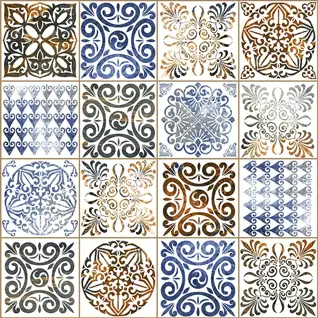
Moroccan mosaic tiles are the small-format, mesh-backed version of the Moroccan tile look. Each tile sheet carries dozens of tesserae (individual mosaic pieces) in 2 cm to 5 cm sizes, fixed to a 300x300 mm mesh-backed sheet that installs like a single tile.
The sheet format makes Moroccan mosaic tiles the right choice for surfaces that full-size tiles cannot cover cleanly: curved pool walls, shower niches with inside corners, backsplash panels interrupted by pipe penetrations, and bathroom feature walls with irregular shapes. Moroccan mosaic tiles in India come in ceramic, GVT, glass, zellige, and natural stone body types, at prices from Rs. 110 per sq.ft for ceramic Moroccan mosaic tiles to Rs. 650 per sq.ft for hand-cut zellige mosaic sheets.
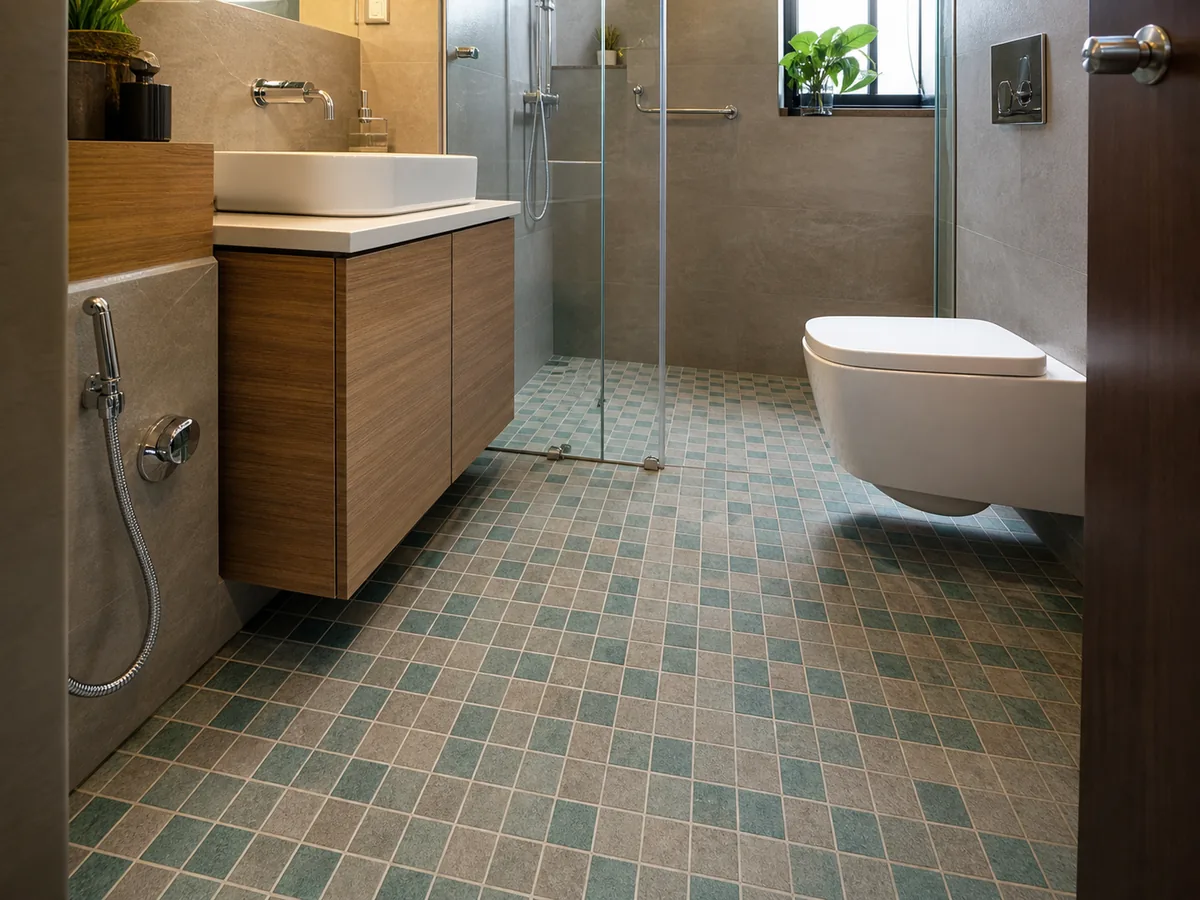
The shower floor is the most technically demanding surface for Moroccan mosaic tiles. The floor is wet every day, must drain quickly, and must provide R11 slip resistance even when covered with soap. The mosaic sheet format is the standard choice for shower floors because the high grout joint density (many more joints per square foot than standard tiles) gives better grip underfoot than a large flat tile with fewer joints.
Shower floor spec: Vitrified mosaic body (IS 15622:2006, 0.05% water absorption) or glass mosaic. Piece size 2 to 3 cm. GHR anti-slip finish, R11 rating. Sheet size 300x300 mm. Waterproof C2 adhesive. Epoxy grout in all joints. No ceramic mosaic on shower floors.
The 2 to 3 cm piece size creates a grout joint every 20 to 30 mm across the shower floor, which gives natural grip. A 5 cm piece size on a shower floor has fewer joints and lower effective grip. Specify the smaller piece size for any wet room mosaic or shower floor Moroccan mosaic tile application.
Pro tip: On a shower floor, lay the Moroccan mosaic tile sheet with a slight slope (1-in-80 fall) toward the drain before the adhesive sets. Mosaic sheets are flexible enough to accommodate a gentle slope across the sheet without cracking. A flat shower floor with no fall collects soap scum in the grout joints and produces permanent staining within 6 to 12 months.
Pool surround Moroccan mosaic tiles must be non-porous, chlorine-resistant, frost-resistant, and anti-slip at R11. The pool environment is one of the most chemically and physically demanding tile applications in Indian residential projects. The water is chlorinated, the surface is wet permanently, and the monsoon season adds further thermal cycling.
Pool surround spec: Vitrified body at 0.05% water absorption or glass mosaic at 0% water absorption. Rock finish, R11. Piece size 2 to 3 cm. 300x300 mm sheet. Outdoor epoxy grout rated for pool environments. Flexible C2 adhesive. Do not use ceramic or zellige mosaic at any pool surface.
Glass mosaic is the most water-resistant option for pool surrounds at 0% water absorption and complete chlorine resistance. The blue Moroccan mosaic tile look in glass mosaic is the most widely used pool surround finish in Indian residential swimming pools, priced at Rs. 180 to Rs. 350 per sq.ft. Vitrified Moroccan mosaic tiles certified to IS 15622:2006 at 0.05% water absorption are the correct alternative when glass mosaic is outside the budget.
Note: Never use ceramic Moroccan mosaic tiles (IS 13630) at 12% to 16% water absorption on any pool surface. Ceramic bodies absorb pool water and chlorine repeatedly, expand and crack, and the grout joint fails within one monsoon season on an outdoor pool. The replacement cost of re-tiling a pool surround is 4 to 6 times the material cost saving from choosing ceramic over vitrified mosaic.
A Moroccan mosaic tile backsplash works on kitchen and bathroom walls for the same reason it works in shower niches: the mesh-backed sheet format cuts around pipe penetrations, tap fittings, socket boxes, and inside corners without producing large off-cuts. The mosaic piece size for a kitchen backsplash is typically 3 to 5 cm, larger than for shower floors, because the backsplash is a visual surface viewed at 1 to 2 metres distance rather than a functional safety surface underfoot.
Kitchen backsplash mosaic spec: GVT or glass mosaic body. Gloss finish for easy cleaning of cooking grease. Piece size 3 to 5 cm. 300x300 mm sheet. Epoxy grout in all joints (cooking grease stains cement grout in fine mosaic joints within weeks). C2 heat-resistant adhesive in the 300 mm zone above the hob.
The Moroccan mosaic tile backsplash in a bathroom uses the same sheet format but with different body priorities. A bathroom backsplash behind the vanity or above the bath surround takes steam and condensation rather than cooking grease. Ceramic Moroccan mosaic tiles (IS 13630) at 12% to 16% water absorption are safe for dry zone bathroom backsplash panels. GVT mosaic is the correct choice for any direct-wet bathroom backsplash surface.
Pro tip: When fixing a Moroccan mosaic tile sheet onto a kitchen backsplash, peel the paper face off the sheet only after the tile adhesive has partially set (30 to 45 minutes after pressing). Peeling the paper too early pulls pieces out of alignment before the adhesive grips. Peel in one steady motion parallel to the wall surface. Any pieces that shift can be nudged back into position before the adhesive fully cures.
Moroccan mosaic wall tiles on feature walls and bathroom walls use the widest range of body types of any mosaic application because feature walls are typically dry zone surfaces that take no direct water contact. The zellige mosaic, hand-painted ceramic mosaic, and natural stone mosaic body types, which are not safe for shower floors or pool surrounds, are all acceptable on dry feature walls.
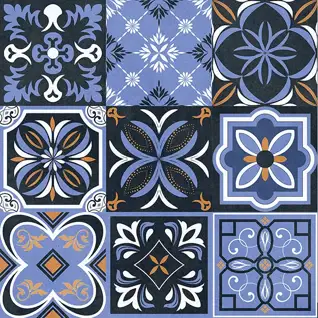
A bathroom feature wall in blue Moroccan mosaic tiles behind the vanity mirror in 3 to 5 cm piece size at 300x300 mm sheet reads differently from a single-tile Moroccan wall tile at the same location. The mosaic surface has more visible texture: each piece sits at a very slightly different angle from its neighbour, which catches light differently across the wall surface. This natural variation in angle is most pronounced in zellige mosaic and hand-cut natural stone mosaic, and least in machine-cut glass or ceramic mosaic pieces.
Feature wall mosaic spec: Any body type, including zellige and hand-painted ceramic. Any finish. Piece size 2 to 5 cm. 300x300 mm sheet. Cement grout with penetrating sealer for dry walls. Epoxy grout for walls with steam or condensation exposure. No size restriction on dry feature walls.
Note: Zellige Moroccan mosaic tiles and hand-painted ceramic mosaic sheets have colour variation within a single batch that is much higher than machine-made ceramic or GVT mosaic. This variation is part of the handmade character of the material, not a defect.
When ordering zellige or hand-painted Moroccan mosaic tiles, mix sheets from multiple boxes during installation rather than laying one box at a time. This distributes the variation evenly across the wall surface and avoids a patchy appearance.
Moroccan mosaic floor tiles for dry indoor floors (bedroom feature areas, corridor accents, living room borders) use GVT or ceramic body with matte finish at R9 slip resistance. The mosaic sheet format is less common for large indoor floor areas than for accent strips, border bands, and inlay panels within a larger plain floor. A 600 mm wide border strip of Moroccan mosaic tiles around the perimeter of a plain-tiled living room creates a frame effect that reads clearly from the doorway at room scale.
Moroccan style mosaic tiles in a star or hexagon pattern at 3 to 5 cm piece size work at this border-strip scale in a way that a single 300x300 mm tile cannot, because the fine-grained geometric repeat remains visible at the 600 mm width of a typical border strip. A single 300x300 mm tile at 600 mm width shows only two tiles and does not allow the pattern to repeat enough to read as a border. The mosaic sheet format gives 6 to 8 full pattern repeats in the same 600 mm width.
Pro tip: For a Moroccan mosaic floor tile border strip in a living room, specify a matte GVT sheet with 5 cm piece size rather than 2 to 3 cm. The larger piece size on a floor border reduces the grout joint frequency, which means less grout to clean in an area that takes foot traffic and furniture placement. Fine 2 cm piece mosaic is better suited to walls and shower floors where grout joint density adds grip or visual texture rather than a maintenance burden.
Epoxy grout for all wet surfaces: Moroccan mosaic tiles have far more grout joint surface area per square foot than any other tile format. A 300x300 mm sheet with 3 cm pieces has roughly 25 to 30 linear cm of grout joint per sheet. Cement grout in this density of joints stains rapidly in wet areas. Epoxy grout at Rs. 180 to Rs. 250 per kg is the only grout that holds its colour and resists mould in the high grout joint density of a Moroccan mosaic tile installation.
Grout haze removal: Epoxy grout haze on mosaic pieces is harder to remove than cement grout haze because epoxy cures chemically and bonds to the glaze surface if left for more than 30 to 45 minutes. Wipe each sheet with a damp sponge immediately after grouting and before the epoxy begins to cure. Do not grout more sheets than can be cleaned within 30 minutes of application.
Adhesive coverage: Apply tile adhesive to the wall or floor substrate with a notched trowel and also back-butter the back of each mosaic sheet before pressing. Mosaic sheets have an uneven back surface compared to single tiles. Full adhesive coverage prevents hollow spots under individual pieces that crack under point load.
Batch consistency: Moroccan mosaic tile sheets are more sensitive to batch colour variation than single tiles because the small piece size amplifies any glaze difference between production runs. Order all sheets for a single surface from the same batch number and open every box to check colour consistency before fixing begins.
Vitrified Moroccan mosaic tiles certified to IS 15622:2006 absorb 0.05% water, which qualifies them for shower floors, pool surrounds, and all wet area mosaic applications. The 300x300 mm (1x1 ft) mesh-backed sheet is the standard format produced by Morbi manufacturers in Gujarat, with piece sizes from 2 cm to 5 cm in star, hexagon, and arabesque mosaic patterns. Prices from Gujarat-based GVT mosaic producers start at Rs. 150 per sq.ft for standard geometric repeat sheets and Rs. 200 to Rs. 300 per sq.ft for glass mosaic options in blue and mixed colour palettes. Consistent batch production from Morbi suppliers makes large-area feature wall installations of 50 sq.ft and above achievable without colour variation across the surface.
Indian monsoon conditions create a specific challenge for Moroccan mosaic tile grout that is more acute than for large-format tiles. Mumbai, Chennai, Kochi, and Mangalore experience 80% to 95% humidity for 4 to 6 months per year, and indoor bathroom walls without ventilation maintain near-saturation humidity throughout this period. The high grout joint density of a 300x300 mm (1x1 ft) mosaic sheet (25 to 30 linear cm of joint per sheet) means far more grout surface is exposed to this humidity than in a standard tile installation. Gujarat mosaic tile manufacturers have responded to this market need by supplying epoxy-grouted mosaic sheet panels pre-filled at the factory, priced at Rs. 220 to Rs. 380 per sq.ft, which eliminate the on-site grouting challenge for residential bathroom feature walls.
From a 2 cm vitrified GHR shower floor sheet at Rs. 150 per sq.ft to a hand-cut zellige feature wall panel at Rs. 650 per sq.ft, the complete range of Moroccan mosaic tiles by body type, piece size, surface application, and colour is catalogued with verified Indian pricing on Tilesfinders, India's dedicated tile marketplace. Use the surface filter to view only shower-safe or pool-rated sheets, compare blue mosaic, white mosaic, and mixed colour palette options at the correct scale, and request a physical sample with the water absorption certificate before placing an order.
Moroccan mosaic tiles in India start from Rs. 110 per sq.ft for ceramic mosaic sheets on dry walls and go up to Rs. 650 per sq.ft for hand-cut zellige mosaic panels. GVT vitrified Moroccan mosaic tiles for shower floors and wet areas cost Rs. 150 to Rs. 280 per sq.ft. Glass mosaic for pool surrounds and kitchen backsplashes costs Rs. 180 to Rs. 400 per sq.ft. Morbi manufacturers in Gujarat supply the most competitively priced GVT mosaic range.
Yes, but only vitrified or glass body Moroccan mosaic tiles with GHR anti-slip finish at R11 and 0.05% water absorption. Ceramic Moroccan mosaic tiles (IS 13630) absorb 12% to 16% water and are not safe for shower floors. Use 2 to 3 cm piece size on shower floors for maximum grout joint density and grip. Fix with waterproof C2 adhesive and epoxy grout throughout.
They are the same product. Moroccan mosaic tile sheets are the format in which Moroccan mosaic tiles are sold and installed. Each sheet is a 300x300 mm mesh-backed panel carrying multiple mosaic pieces (2 to 5 cm each). The sheet installs as one unit on the wall or floor. The term 'mosaic tiles' refers to the product; 'mosaic tile sheets' refers to the installed format.
Epoxy grout is the correct choice for all Moroccan mosaic tiles in wet areas including shower floors, pool surrounds, bathroom walls, and kitchen backsplashes. The high grout joint density of a mosaic sheet (25 to 30 linear cm of joint per 300x300 mm sheet) means far more grout surface is exposed to moisture and grease than in a standard tile installation. Epoxy grout costs Rs. 180 to Rs. 250 per kg and holds colour and resists mould for the life of the tile.
Yes. Blue Moroccan mosaic tiles in glass or vitrified body with rock finish at R11 and 0.05% water absorption are safe for pool surrounds. Glass mosaic is the most common choice for Indian pool surrounds due to its complete chlorine resistance and 0% water absorption. Blue glass Moroccan mosaic tile for pools costs Rs. 180 to Rs. 350 per sq.ft from Gujarat-based suppliers.
2 to 3 cm pieces for shower floors, pool surrounds, and wet room floors (higher grout joint density means more grip). 3 to 5 cm pieces for kitchen backsplashes, bathroom walls, and feature walls (larger pieces read more clearly at 1 to 2 metres viewing distance). 5 cm pieces for indoor floor border strips where grout maintenance is a concern and visual clarity at room scale is the priority.
Yes. Moroccan-style mosaic tiles and Moroccan mosaic tiles describe the same product in the Indian tile trade. Both names refer to mesh-backed mosaic sheets in geometric patterns (star, hexagon, arabesque) that follow the Moroccan tile design tradition. The specification, body type, and installation rules are identical. Choose the name your supplier uses and confirm the body type and water absorption figure on the product sheet.
Press the sheet firmly with a grout float immediately after placing it on the adhesive. Apply tile adhesive to the substrate with a notched trowel and also back-butter the mosaic sheet back before pressing. Allow 30 to 45 minutes for the adhesive to partially set before peeling the paper face off. Peel in one smooth motion parallel to the wall. Any shifted pieces can be nudged back into position before the adhesive fully cures at 24 hours.
-c1c8f337-bdf9-4ae7-a497-a62c8680ea62.png)