


















Modern Wall Tile Designs for Living Room, Bedroom & Kitchen
Transform your walls with modern designs. Explore monolithic living room slabs, cosy bedroom wood...


Loading designs...
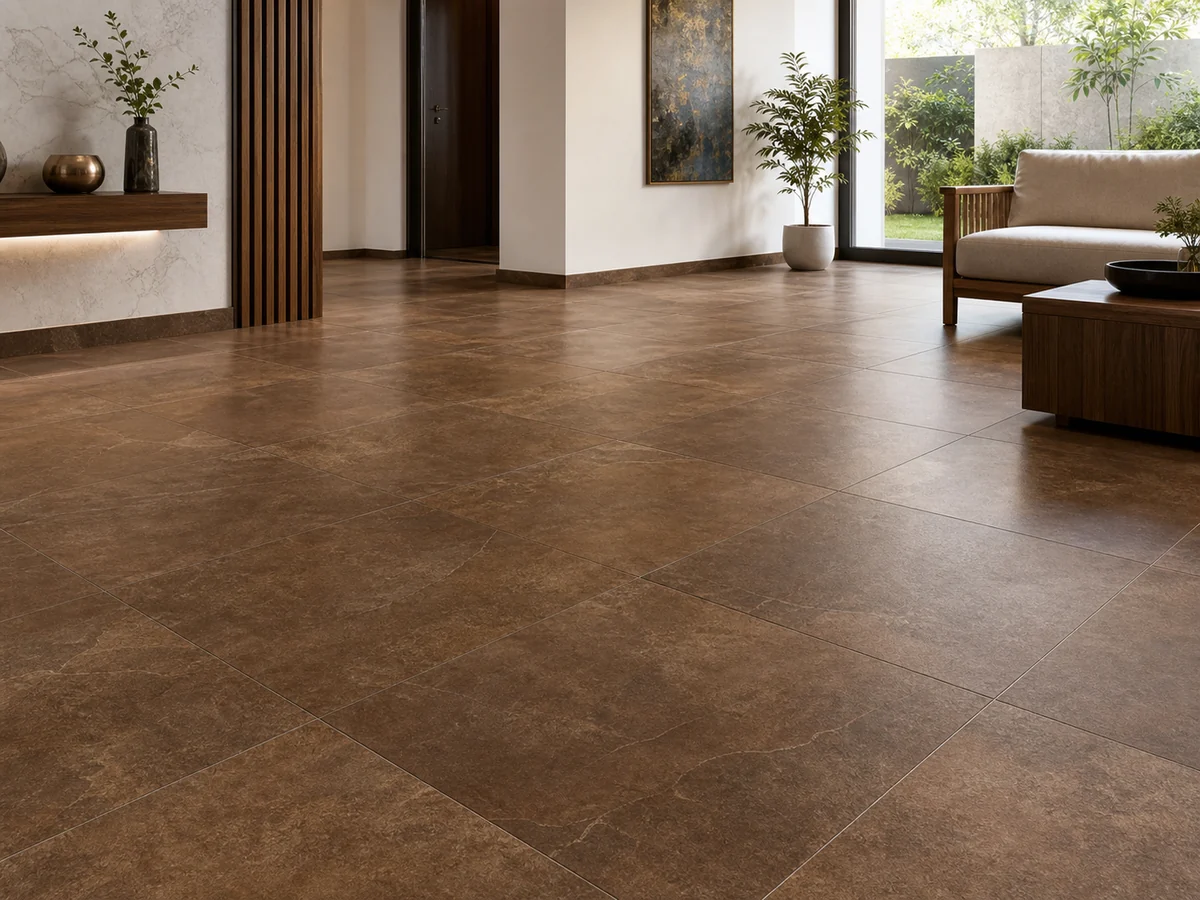
Wall tiles behave differently from floor tiles in every technical sense: they carry no load, face no foot traffic, and allow a far wider range of body types and finishes than floors permit. Brown wall tiles are one of the most commonly chosen colour categories for Indian homes because the warm earthy tone works across kitchens, bathrooms, living room accent walls, and exterior elevations without demanding a significant change to the rest of the room's colour scheme.
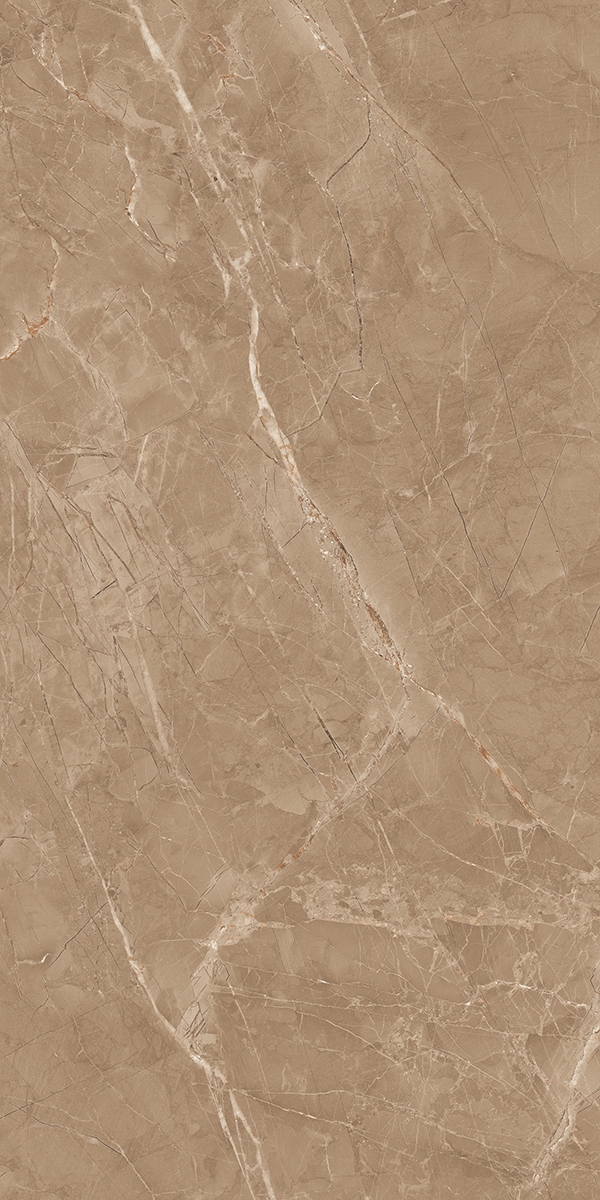
This page covers everything specific to wall use: body type options, finish safety on walls, size and laying pattern decisions, and how to combine brown colour tiles for wall applications across different rooms. Brown tiles as a colour family run from pale sand and light wheat tones through coffee and walnut shades to deep chocolate and near-espresso, giving wall applications across every room a wide shade range to draw from without stepping outside a single cohesive palette.
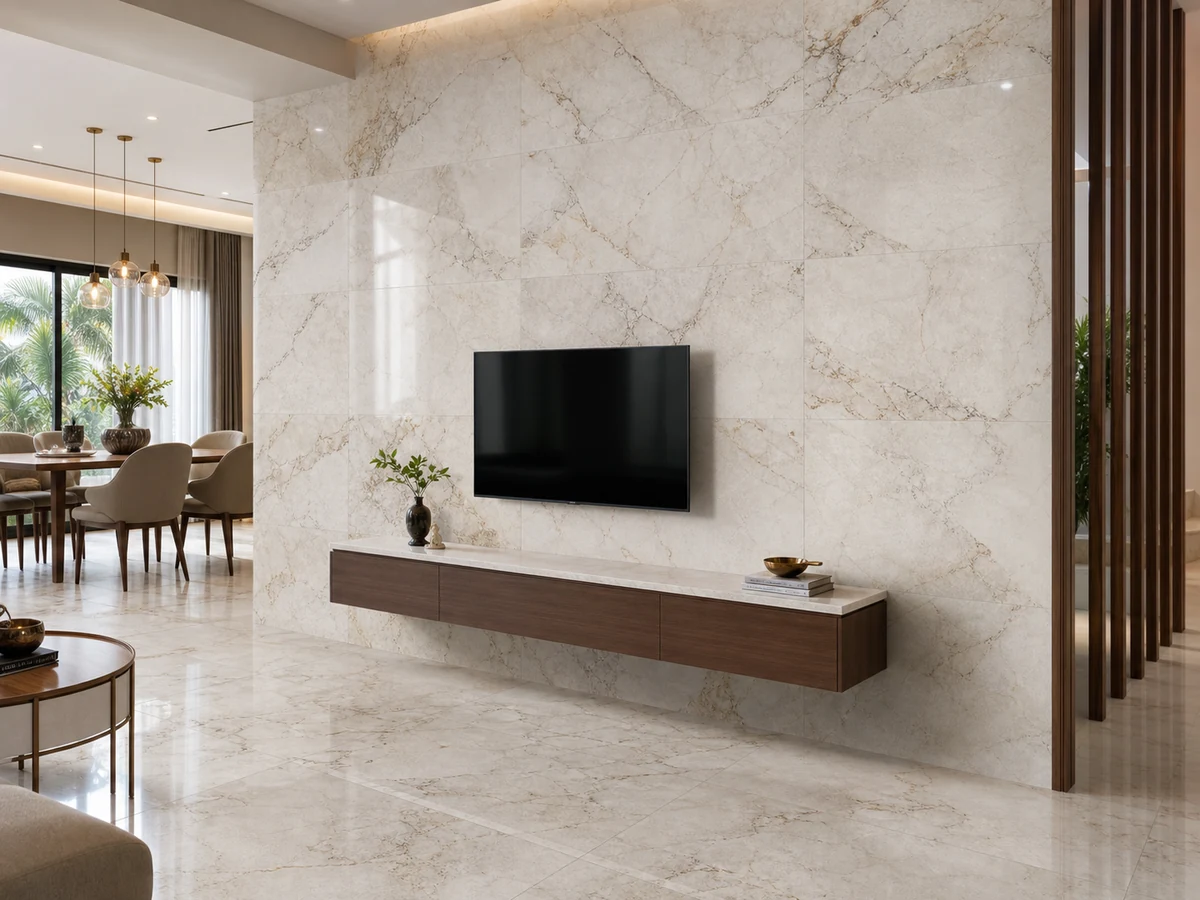
The single most common mistake buyers make with brown tiles is applying the same tile to both floor and wall without checking whether the finish is safe for both surfaces. Wall tiles are not subject to the same safety constraints as brown floor tiles: a glossy or high-glossy finish that would be a slip hazard on a wet floor is perfectly appropriate on a vertical surface. PGVT in polished high-glossy finish, which is restricted from any floor application, is one of the most popular choices for brown bathroom wall tiles because the reflective surface bounces light across a small room and gives a marble-like effect at a lower price than natural stone.
Water absorption rules are also more relaxed on walls. Brown ceramic wall tiles absorbing 12% to 16% water are entirely safe on interior bathroom and kitchen walls. Porcelain wall tiles absorbing 2% to 5% water work on all interior walls and on covered exterior walls not exposed to direct rain. For exterior wall cladding that receives direct rain and UV exposure, GVT with water absorption below 0.05% is the minimum standard.
The one constraint that applies equally to walls and floors is size compatibility. Certain sizes, specifically 300x450mm (12x18) and 300x600mm (12x24), are wall tiles only and must never appear on floors. High Depth punch tiles in these sizes are for wall cladding and elevation only.
GVT brown wall tiles in glossy or matte finish work on all interior walls and on exterior walls with direct weather exposure. Water absorption below 0.05% makes GVT tiles the right pick for kitchen splashbacks, bathroom walls in the shower zone, and outdoor elevation cladding. Available sizes for GVT wall tiles run from 600x600mm (2x2) through 600x1200mm (2x4), 800x1200mm (32x48), and 800x1600mm (32x64) up to large-format slabs. GVT is also the body type behind most brown colour tiles for wall applications that carry wood, stone, or concrete print designs. Price range: Rs. 65 to Rs. 180 per sq.ft.
PGVT brown wall tiles in polished glossy or polished high-glossy finish are the best choice for bathroom feature walls, bedroom accent panels, and living room back walls where the goal is a reflective, premium surface. The polished surface amplifies the depth of brown tones, turning a coffee brown tile into a rich, lustrous surface that reads as expensive without the cost of imported stone. PGVT tiles are available in sizes from 600x600mm (2x2) to 800x1600mm (32x64). Price range: Rs. 90 to Rs. 210 per sq.ft.
Note: PGVT tiles must never be used on any floor surface, wet or dry. PGVT is wall use only on TilesFinders and in all standard tile safety guidelines.
Brown ceramic wall tiles are the most affordable option for interior walls. Standard ceramic absorbs 12% to 16% water and is available in 300x300mm (1x1), 300x450mm (12x18), and 300x600mm (12x24). Brown ceramic wall tiles in glossy finish in 300x600mm (12x24) are the default choice for budget bathroom and kitchen walls across India. A dark brown ceramic wall tile in 300x450mm (12x18) glossy finish laid in a vertical brick pattern gives a practical, low-cost wall that holds up well to daily cleaning. IS 13630 governs ceramic tile testing standards in India. Price range: Rs. 40 to Rs. 85 per sq.ft.
Brown porcelain wall tiles absorb 2% to 5% water and work on all interior walls and on sheltered exterior walls not exposed to direct rain. Porcelain tiles are available in sizes up to 600x1200mm (2x4), which allows for a larger-format brown wall tile at a lower cost than GVT. A brown porcelain tile in matte finish in 600x1200mm (2x4) on a bedroom wall gives a clean, contemporary result without the price premium of a vitrified tile. Price range: Rs. 50 to Rs. 120 per sq.ft.
The size of the wall tile and the pattern it is laid in change how the room reads more than the colour does. A small brown ceramic wall tile in 300x300mm (1x1) laid in a standard grid makes a bathroom feel dated. The same room with a 300x600mm tile(12x24) laid vertically in a brick-lay offset reads as a considered design decision.
| Size | Alias | Body Options | Best Laying Pattern | Best Wall Use |
| 300x300mm | 1x1 | Ceramic, GVT, porcelain | Grid, diagonal | Bathroom accent, dado match |
| 300x450mm | 12x18 | Ceramic | Grid, vertical stack | Budget bathroom and kitchen wall |
| 300x600mm | 12x24 | Ceramic, GVT, porcelain | Vertical brick, grid, herringbone | Full bathroom wall, kitchen splashback |
| 600x600mm | 2x2 | GVT, PGVT, porcelain | Grid, diagonal | Large bathroom wall, living room feature |
| 600x1200mm | 2x4 | GVT, PGVT, porcelain | Vertical stack, horizontal grid | Floor-to-ceiling bathroom, bedroom feature |
| 800x1200mm | 32x48 | GVT, PGVT | Vertical or horizontal grid | Hotel lobby, large living room feature wall |
| 800x1600mm | 32x64 | GVT, PGVT | Vertical grid | Statement wall, master bedroom, office |
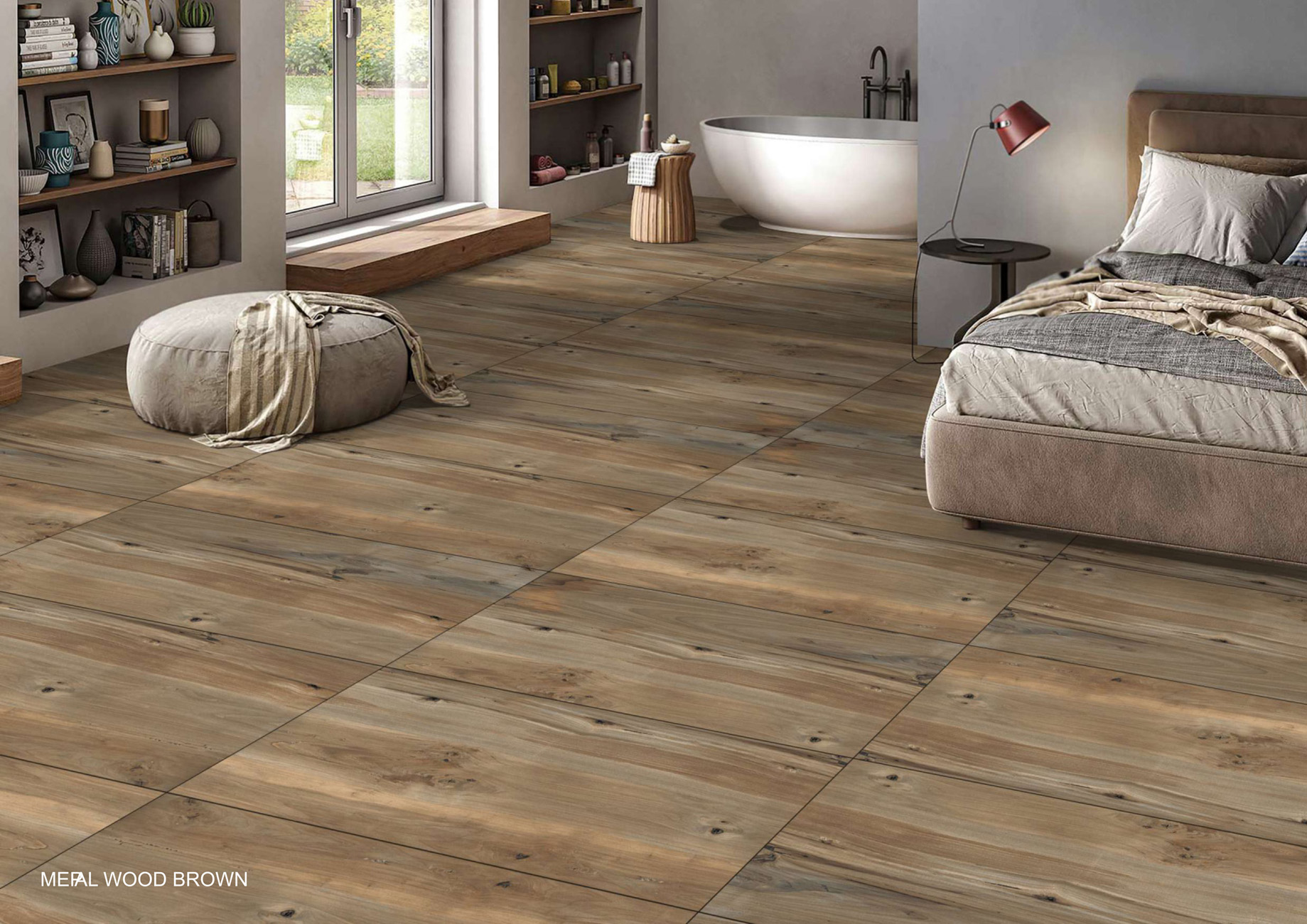
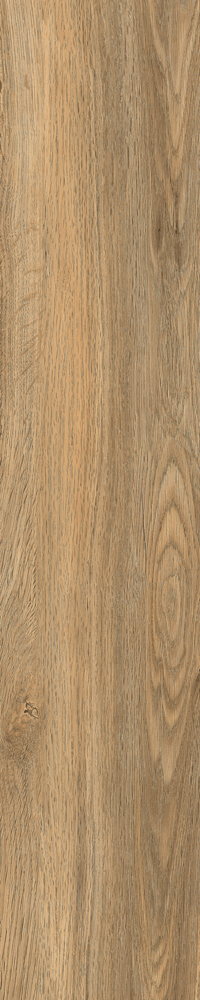
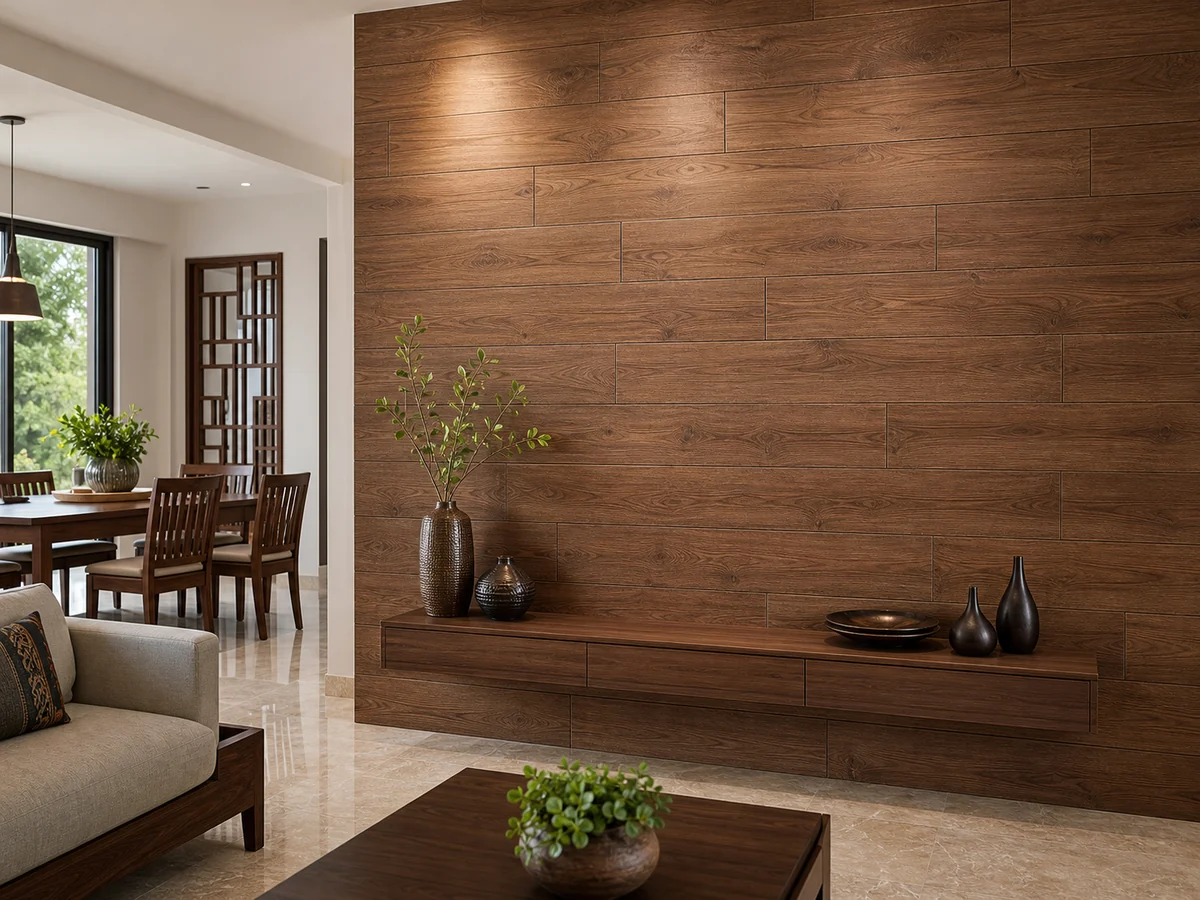
| 200x1200mm | 8x48 | GVT | Running bond (horizontal) | Wood-plank accent wall, living room feature |
For bathroom walls in Indian homes, vertical laying of any rectangular brown wall tile makes the ceiling feel taller. This is particularly useful in standard Indian apartment bathrooms with 9 ft or 10 ft ceiling heights, where horizontal-laid tiles at 300x600mm (12x24) make the room feel shorter than it is. A floor-to-ceiling vertical stack of 600x1200mm (2x4) brown wall tiles with 1mm grout lines gives the maximum sense of height.
Brown subway tiles are rectangular wall tiles, typically in 75x150mm, 100x200mm, or the adapted 300x600mm (12x24) format, with a glazed surface laid in horizontal brick-lay offset. The subway format became popular in Indian bathrooms and kitchens because it gives a clean geometric structure to the wall without the neutral flatness of a plain square tile. A brown subway tile in matte finish on a kitchen splashback behind the cooking hob gives the wall a defined visual zone without a dramatic colour statement.
The most common subway tiles in the Indian market come in ceramic body in 300x450mm (12x18) or 300x600mm (12x24) in glossy finish, or in GVT body for areas that need better water resistance. Coffee brown tiles in the subway format with white grout give a warm, brasserie-style kitchen wall that photographs well and is easy to wipe clean. Dark brown subway tiles with charcoal or near-black grout give a more contemporary, dramatic result.
Laying pattern for brown subway tiles: standard horizontal brick-lay with one-third offset is the most widely used. Vertical herringbone with 300x600mm (12x24) brown subway tiles on a bathroom feature wall gives a contemporary alternative that is more demanding to lay but visually stronger. Always use epoxy grout in brown subway tile applications in bathrooms and kitchens to prevent grout staining from cooking grease and soap residue.
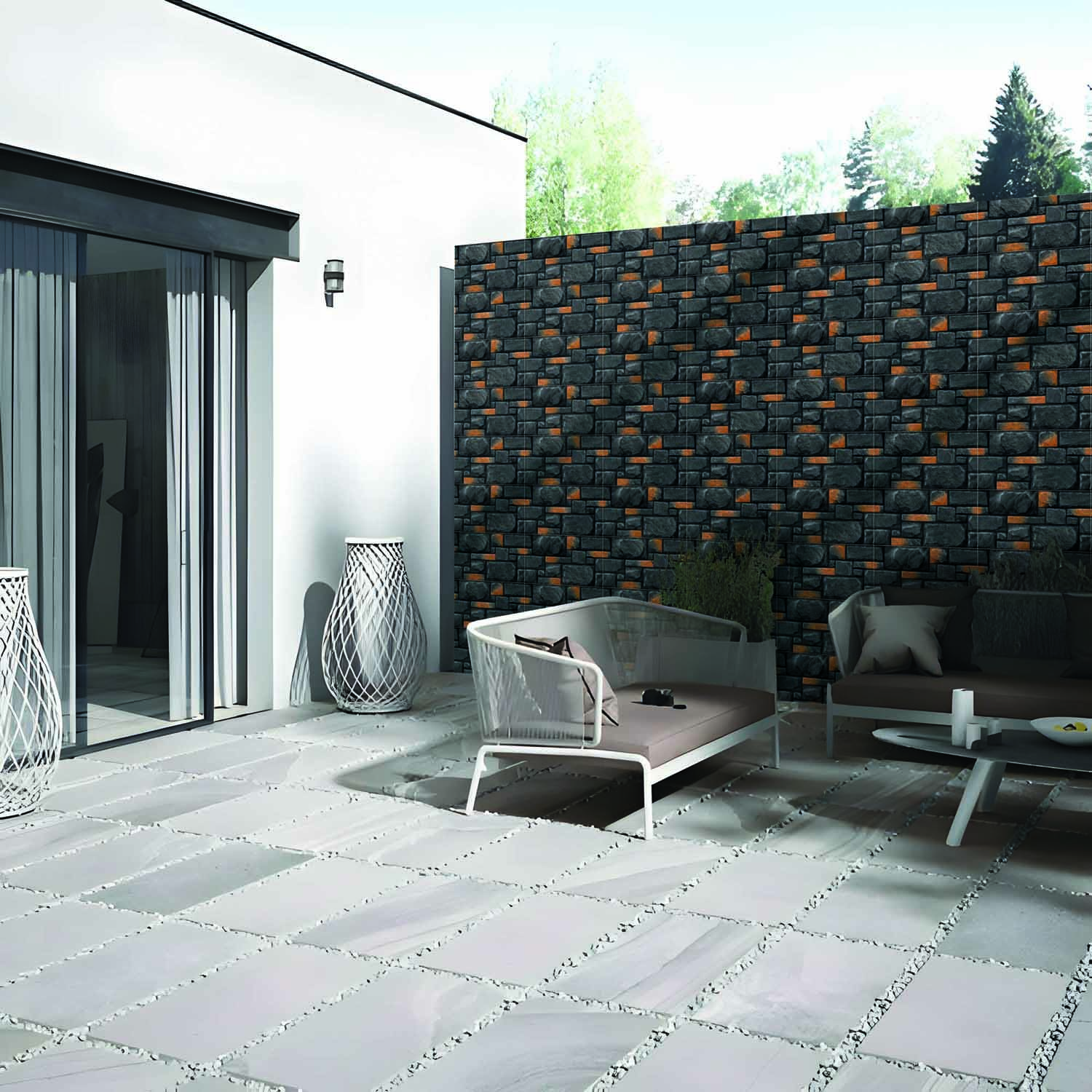
Brown brick tiles are GVT or ceramic tiles with a moulded brick-face texture and a warm brown, red-brown, or terracotta-adjacent colour. They are used on interior feature walls in living rooms and dining areas, on kitchen walls as a rustic accent, and on exterior building elevations and boundary walls. The tactile surface of a brown brick tile cannot be replicated by a flat tile with a brick print, which is why the High Depth punch format in 300x450mm (12x18) or 300x600mm (12x24) is specifically made for wall cladding and elevation use.
For interior use, brown brick tiles in High Depth punch format in 300x600mm (12x24) on a living room feature wall give a warm, industrial-rustic look that pairs well with exposed concrete ceilings, wooden shelving, and black metal fixtures. The textured surface catches and diffuses light differently at different times of day, which changes the character of the wall between morning and evening.
For exterior elevation use on boundary walls and building facades, GVT brown brick tiles with water absorption below 0.05% handle UV exposure and monsoon rain without fading or cracking. Do not use High Depth ceramic brick tiles on exterior walls exposed to direct rain; ceramic at 12% to 16% water absorption absorbs too much water and will crack after one or two monsoon cycles.
Note: High Depth punch tiles in 300x450mm (12x18) and 300x600mm (12x24) are for wall cladding and elevation use only. They must never be used on any floor surface.
Brown tiles for outside wall use face conditions that interior wall tiles never encounter: direct UV radiation, monsoon rain, temperature cycling between summer heat and monsoon cool, and in coastal cities, salt air. The tile body and its water absorption determine whether it survives these conditions or begins to crack and loosen within one to two years.
GVT with water absorption below 0.05% is the correct choice for brown tiles for outside wall applications that receive direct rain and sun. The low water absorption prevents the freeze-thaw and wet-dry cycling that cracks high-absorption tiles. Brown GVT in matte or GHR finish in 300x600mm (12x24) or 600x600mm (2x2) is the most common format for exterior boundary walls and building elevation cladding in Indian residential projects. Prices for exterior-grade brown GVT wall tiles run from Rs. 65 to Rs. 155 per sq.ft.
Brown ceramic wall tiles must not be used on exterior surfaces exposed to direct rain. Ceramic absorbs 12% to 16% water; repeated saturation and drying cracks the tile and loosens the adhesive bond. For sheltered exterior walls under a deep overhang where direct rain exposure is minimal, porcelain at 2% to 5% absorption is acceptable.
Finish choice for brown tiles for outside wall: matte and GHR finish for all exterior surfaces. Glossy and polished finishes on exterior walls develop a chalky surface stain from mineral deposits in monsoon water within one to two seasons, which is very difficult to remove without acid washing.
Brown and white wall tiles are the most searched combination in the brown colour category for walls. The contrast is high enough to give the wall visual structure but does not require a complex design decision. Three versions of the combination work in Indian homes. First: a full brown wall with white grout lines, where the white joint creates a clean grid that prevents the wall from feeling monotone. Second: brown dado tiles (floor to about 900mm) with white tiles above, used in bathrooms and kitchens for practical stain resistance at splash height. Third: alternating brown and white tiles in a checkerboard or herringbone pattern for small accent sections behind a wash basin or hob.
Coffee brown tiles sit in the warm mid-tone range between light sand and deep chocolate. They pair naturally with cream or off-white walls, brushed brass fittings, and warm-toned wood furniture. A coffee brown tile in 600x1200mm (2x4) PGVT polished high-glossy finish on a bathroom feature wall with a brushed brass shower fitting and a cream ceiling gives a cohesive, hotel-quality result. Coffee brown tiles in matte ceramic 300x600mm (12x24) on a kitchen wall behind the cooking zone with white metro tiles on the other walls gives a grounded, unpretentious kitchen that is easy to live with.
Dark brown wall tiles work as a full-wall colour in rooms with good light and ventilation. In a bathroom, dark brown bathroom wall tiles from floor to ceiling with white fittings, a white mirror frame, and chrome fixtures create a strong, considered palette. In a living room, one full dark brown feature wall behind a sofa with warm white walls on the other three sides gives the room a focal point without a dramatic commitment to colour throughout.
| Finish | Safe for Interior Walls | Safe for Exterior Walls | Best Brown Wall Tile Use |
| Matte | Yes | Yes | Kitchen walls, exterior elevation, rustic feature wall |
| GHR | Yes | Yes | Exterior wall cladding, exposed boundary walls |
| Glossy | Yes | Not recommended | Bathroom walls, kitchen splashback, ceramic brown wall tiles |
| High Glossy | Yes | No | PGVT bathroom feature wall, bedroom accent panel |
| Polished Glossy (PGVT) | Yes -- wall only | No | Brown bathroom wall tiles, marble-effect wall cladding |
| Polished High Glossy (PGVT) | Yes -- wall only | No | Premium feature wall, master bathroom wall |
| Sugar | Yes | Yes | Contemporary living room feature wall |
| Matte Carving | Yes | Yes | Textured feature wall, stone-look brown wall accent |
| Stucco | Yes | Yes | Concrete-look brown colour tiles for wall, industrial interiors |
| Glitter | Yes | No | Accent strip, niche insert, decorative brown wall panel |
Grout colour on a wall tile is more visible than on a floor tile because walls are at eye level. The wrong grout colour on a brown wall tile changes the room's character completely. White grout with a dark brown wall tile creates a strong grid pattern that divides the wall into individual tiles. The same tile with a brown or charcoal grout reads as a nearly continuous brown surface.
Epoxy grout is mandatory for brown bathroom wall tiles and brown kitchen wall tiles. In bathrooms, cement grout at grout joints absorbs soap, shampoo, and water minerals and begins to discolour within six months of use. In kitchens, cooking grease and steam stain cement grout joints even faster. Epoxy grout in a shade matching the tile colour adds Rs. 150 to Rs. 350 per kg over cement grout but eliminates the staining problem entirely.
For exterior brown tiles for outside wall applications, use weatherproof epoxy grout regardless of the colour choice. Standard cement grout on exterior walls erodes through UV exposure and repeated rain saturation within two to three monsoon cycles.
In Indian coastal and high-rainfall cities including Mumbai, Kochi, and Chennai, exterior wall tiles face sustained monsoon rain for three to four months each year. A brown GVT wall tile with water absorption below 0.05%, tested under IS 15622:2006, maintains its adhesive bond and surface integrity through repeated saturation cycles without cracking or discolouring. Brown ceramic wall tiles at 12% to 16% water absorption are safe only on interior walls in these cities; exterior use in high-rainfall areas will cause the tile to crack and the adhesive to fail within one to two monsoon seasons. Brown porcelain wall tiles at 2% to 5% absorption are acceptable on sheltered exterior walls not exposed to direct rain but must not be used on open facade cladding in high-rainfall zones.
Morbi, Gujarat is the manufacturing centre for the majority of brown wall tiles sold in India. GVT brown wall tiles in sizes from 300x600mm (12x24) to 800x1600mm (32x64), PGVT polished brown wall tiles in 600x1200mm (2x4) and 800x1600mm (32x64), brown ceramic wall tiles in 300x300mm (1x1) to 300x600mm (12x24), and brown brick tiles in High Depth punch format are all produced in the Morbi tile belt in Gujarat. Factory prices for brown GVT wall tiles run from Rs. 65 to Rs. 180 per sq.ft. PGVT brown wall tiles range from Rs. 90 to Rs. 210 per sq.ft. Brown ceramic wall tiles start from Rs. 40 per sq.ft.
Body type, water absorption, finish classification, size alias, and punch depth are shown on every product so wall tile buyers can compare accurately without calling a supplier. Brown ceramic wall tiles in 300x300mm (1x1) to 300x600mm (12x24), brown GVT in glossy and matte finish from 600x600mm (2x2) to 800x1600mm (32x64), PGVT polished brown wall tiles, brown subway tiles in brick-lay format, brown brick tiles in High Depth punch, and coffee brown tiles in polished and matte finishes are all listed on TilesFinders with verified specifications from Morbi manufacturers. Use the finish filter to narrow to glossy options for bathroom walls, or matte and GHR for exterior wall cladding.
GVT (Glazed Vitrified Tiles) with water absorption below 0.05% is the right choice for Indian bathroom floors. Full body vitrified tiles are equally safe. Brown porcelain floor tiles, absorbing 2% to 5% water, are not recommended for bathroom floors in India because of repeated wet exposure through monsoon months. Always choose matte, GHR, or sugar finish for bathroom floor safety.
Brown porcelain tile is not the best choice for kitchen floors. Kitchen floors get wet regularly from cooking and cleaning, and porcelain at 2% to 5% water absorption is not built for consistent wet contact. A brown GVT tile with matte or GHR finish in 600x600mm (2x2) or 600x1200mm (2x4) is the safer and more durable option for Indian kitchen floors.
600x600mm (2x2) in a light brown floor tile shade works best in a small bedroom. Large-format tiles like 600x1200mm (2x4) can feel overpowering in rooms under 120 sq.ft. A lighter shade reflects more light and makes the room feel open. Avoid dark brown floor tiles in rooms with only one window, as they absorb light and reduce the sense of space.
No. Mahogany tile flooring is a GVT or porcelain tile printed with a mahogany wood-grain pattern. It looks like mahogany but is made of fired clay and glaze. The benefit over real mahogany wood is that the tile does not warp, swell, or scratch with Indian monsoon humidity. Water absorption in GVT mahogany tile flooring is below 0.05%, versus real timber which absorbs water readily and deforms over time.
Brown GVT floor tiles range from Rs. 60 to Rs. 150 per sq.ft. Full body vitrified brown floor tiles run from Rs. 85 to Rs. 190 per sq.ft. Brown porcelain floor tiles start from Rs. 55 per sq.ft. Brown mosaic floor tile prices start from Rs. 130 per sq.ft. Teak and mahogany tile flooring in 200x1200mm plank format runs from Rs. 70 to Rs. 160 per sq.ft. Prices vary by brand, size, and finish.
Epoxy grout is the only practical choice for bathroom brown floor tiles. Cement grout absorbs water, stains from soap and shampoo, and turns dark grey or black within one to two years in wet conditions. Epoxy grout resists water, staining, and mould. For brown floor tiles in bathrooms, charcoal or mid-grey epoxy grout hides dirt effectively between cleans and does not discolour the tile joints.
Dark brown floor tiles in a small room can make the space feel enclosed if wall colours are also dark. To make dark brown floor tiles work in a small room, use white or very light grey walls, keep the ceiling light, and ensure good artificial lighting. Dark brown floor tiles work best in rooms of 150 sq.ft or more with at least two windows.
Teak tile flooring is a GVT floor tile with a teak wood-grain glaze printed on the surface. It replicates the warm amber-brown tones and grain lines of real teak timber. Unlike real teak, teak tile flooring does not require oiling, does not swell in humidity, and does not scratch from normal foot traffic. The 200x1200mm (8x48) plank size gives the closest resemblance to a real teak floor. Prices start from Rs. 70 per sq.ft.