Exterior Wall Tiles Design: 25+ Inspirations for Modern Homes
Discover 25+ exterior wall tile designs for modern Indian homes. Compare elevation, facade, stone, wood, and textured tiles with size, finish, and buying recommendations.
- Why the Exterior Wall Matters More Than Most Homeowners Think
- Types of Tiles for Exterior Walls: What Works in Indian Conditions
- 25+ Exterior Wall Tiles Design Ideas for Modern Indian Homes
- Recommended Tile Sizes for Exterior Walls
- Best Finishes for Exterior Wall Tiles
- Expert Tips Before You Buy Exterior Wall Tiles
- Common Mistakes When Choosing Exterior Wall Tiles
- Finding the Right Exterior Wall Tiles for Your Home
The outside of your home speaks before you open the door. Most homeowners spend months getting the interior right, then rush through the exterior. The facade tiles end up as an afterthought, chosen for price or whatever the contractor suggests. That almost always shows.
Exterior wall tile design is not just about looks. The wrong material cracks after two monsoons, absorbs water and grows mildew, or fades badly under the Indian sun. Fixing it costs far more than choosing right the first time.
This guide covers 25+ design ideas for modern Indian homes, along with the tile categories that actually hold up outdoors, the right sizes, finishes that work in our climate, and the mistakes most buyers make before the first tile goes up.
Why the Exterior Wall Matters More Than Most Homeowners Think
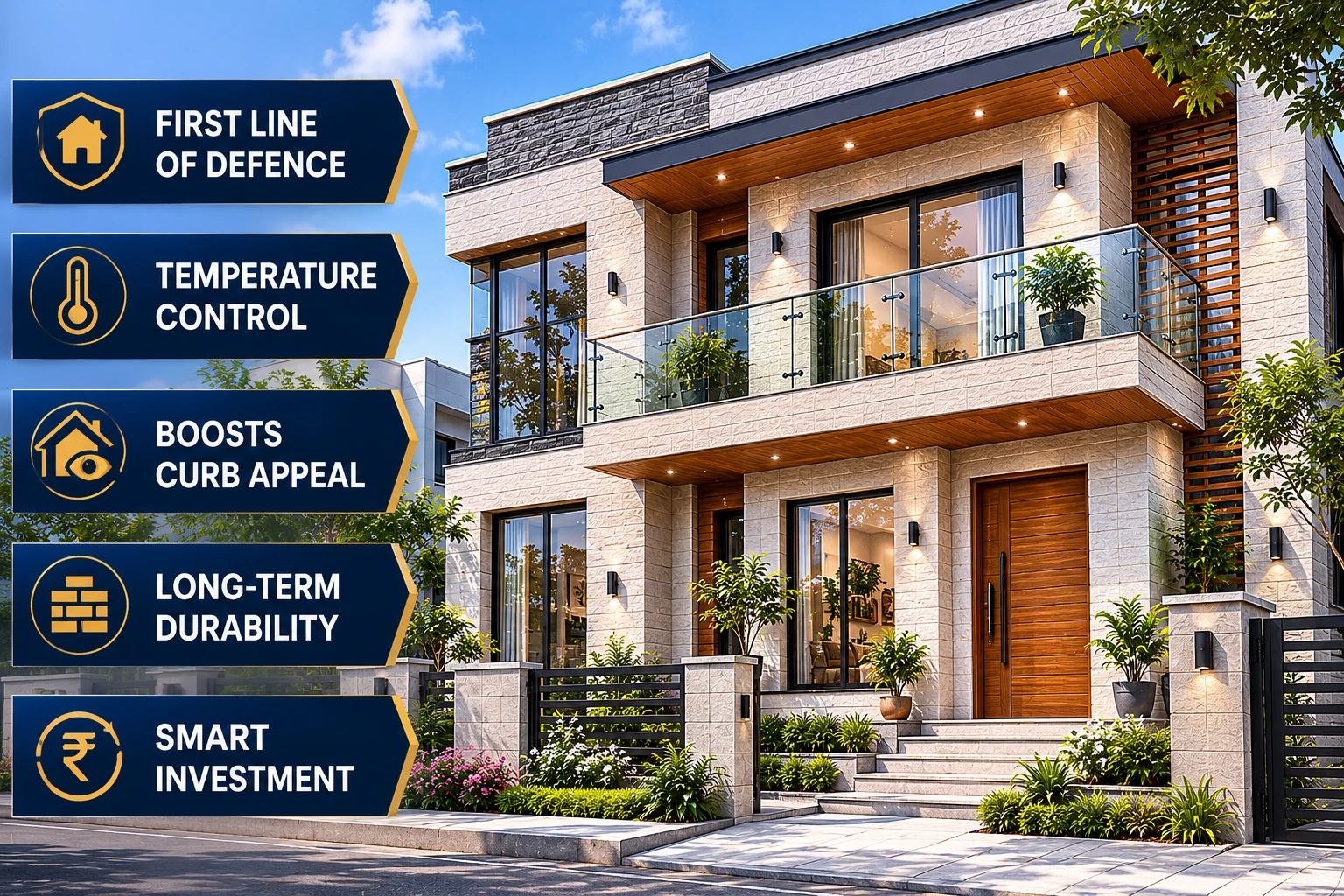
A house's exterior is exposed to rain, UV radiation, dust, and temperature swings every single day. In Mumbai, coastal salt air corrodes surfaces fast. In Ahmedabad or Jaipur, peak summer heat can cause thermal expansion in cheaper tiles. In hilly regions, freeze-thaw cycles test the grout and tile body over time.
Tiles chosen without accounting for these conditions begin to show damage within two to three years. Cracks appear near grout lines. Colour fades unevenly. Moss and algae settle in textured surfaces that were not treated with an anti-fungal finish.
Getting the exterior wall tiles design right from the start saves on upkeep, adds to the home's worth, and keeps the facade looking clean for a decade or longer. The categories and finishes available from Indian manufacturers today, particularly from Morbi-based plants, have improved significantly. Buyers have real options across every budget.
Types of Tiles for Exterior Walls: What Works in Indian Conditions
Not every tile sold in a showroom suits outdoor use. Ceramic tiles with 12 to 16% water absorption, for instance, should not go on exterior walls in rain-prone zones. The categories below are the ones that work.
| Tile Category | Water Absorption | Outdoor Suitability | Approx. Price (per sq. ft.) |
| GVT (Glazed Vitrified) | 0.05% | Wall and floor, all-weather | ₹60 to ₹150 |
| Full Body Vitrified | Less than 0.5% | Wall and floor, all-weather | ₹90 to ₹200 |
| Porcelain | 2% to 5% | Wall and floor, most weather | ₹90 to ₹220 |
| High Depth Elevation | 0.05% (GVT body) | Wall cladding only | ₹120 to ₹350 |
| Ceramic (300x300 only) | 12% to 16% | Sheltered walls only, limited | ₹30 to ₹80 |
GVT (Glazed Vitrified Tiles) for Exterior Walls
GVT tiles have a water absorption rate of just 0.05%, which makes them one of the most reliable choices for Indian exterior walls. They handle monsoon moisture, UV exposure, and temperature fluctuation well. Available in sizes from 400x400 mm up to large 800x1600 mm slabs, GVT covers a wide range of design options.
The glazed surface holds colour well outdoors, and digital printing technology means realistic stone, wood, brick, and concrete looks are available at a fraction of natural material costs.
Full Body Vitrified Tiles
Full Body tiles have a homogeneous body where the colour runs through the entire thickness of the tile. This matters outdoors because chips and edge wear are less visible. If a corner cracks after an impact, the damage is less noticeable than on a surface tile with a printed glaze on top of a different body colour.
These tiles suit elevation work, boundary walls, gate pillars, and any exterior surface that takes knocks. Sizes go up to 1200x2400 mm for large facade applications. Approximate pricing sits between ₹90 and ₹200 per sq. ft., depending on size and finish.
Porcelain Tiles for Outdoor Walls
Porcelain is denser than ceramic and absorbs less water, typically 2% to 5%. For exterior walls in sheltered or partially covered areas like verandahs, porch columns, or under-roof cladding, porcelain works well. Available sizes include 300x300 mm, 600x600 mm, and 600x1200 mm.
Porcelain usually comes in a matte finish in the Indian market, which suits exterior use because it does not show weathering the way polished surfaces do.
High-Depth Elevation Tiles
These are a separate product category made for wall cladding and facade work. The tile surface has a depth of 2.5 to 5mm, creating a stone, brick, or textured look with physical dimension. The three-dimensional surface catches light differently at different times of day, giving the exterior visual interest without adding decorative elements.
High-depth elevation tiles are available only in 300x450 mm (12x18 inch) and 300x600 mm (12x24 inch) sizes and are strictly for wall applications. They should never go on flooring surfaces. These tiles suit boundary walls, gate pillars, the lower half of a front facade, and accent strips on elevation designs.
High-depth elevation tiles are ideal for facades, boundary walls, and gate pillars. For a deeper understanding of styles, finishes, and applications, explore our Elevation Tiles Guide.
Terracotta and Natural Stone-Look Tiles
Natural terracotta, sandstone, and slate tiles have been used on Indian facades for generations. They stay cool in summer, age gracefully, and fit well with traditional architectural styles. The downside is maintenance. Natural stone needs sealing every few years, and porous varieties absorb water in monsoon-heavy regions.
Tile manufacturers now produce GVT and Full Body tiles with accurate terracotta, sandstone, and slate surface textures. These give the same visual warmth with far lower upkeep. Worth considering if you want the look of natural stone without the long-term maintenance cost.
25+ Exterior Wall Tiles Design Ideas for Modern Indian Homes
Group 1: Natural & Timeless Finishes
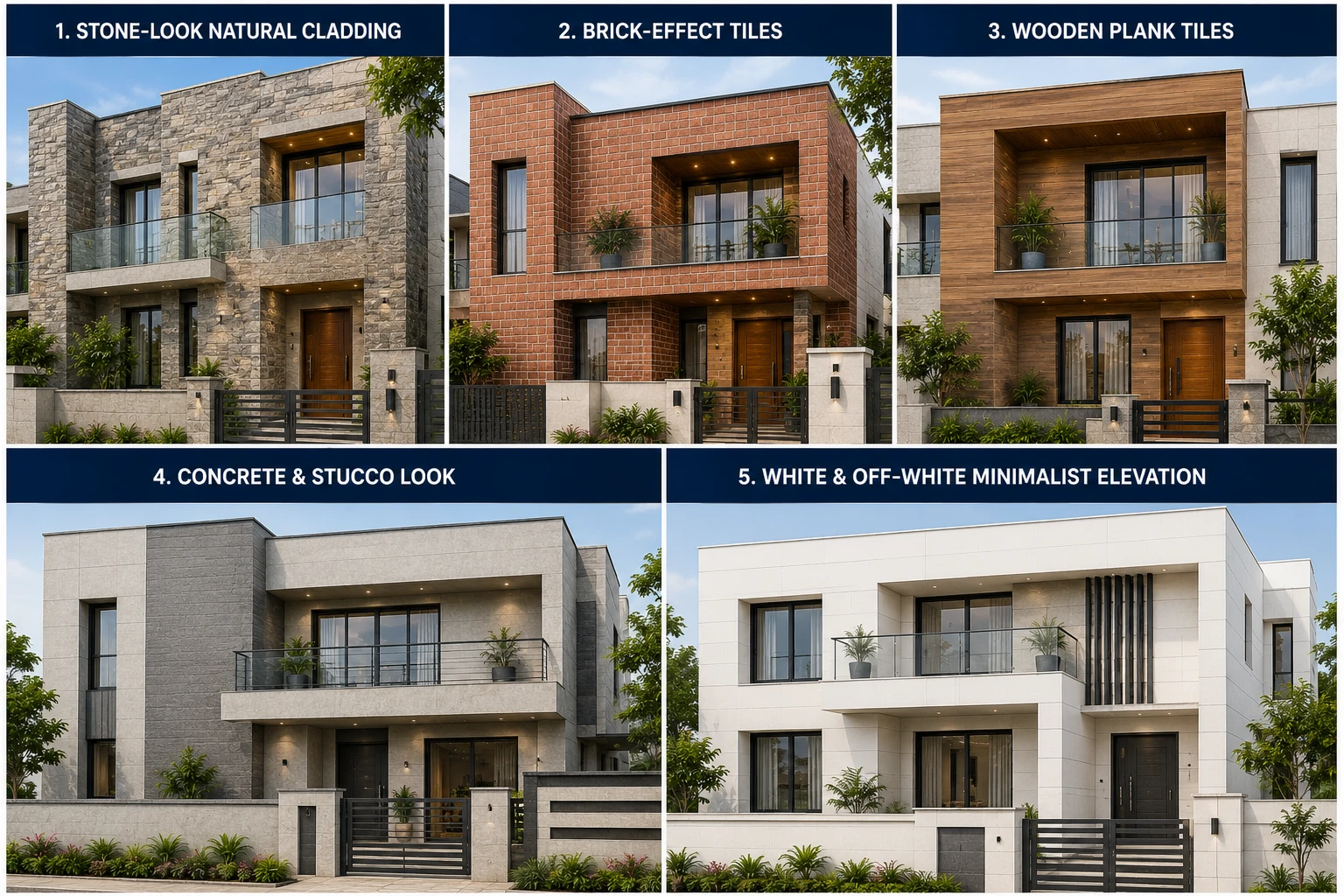
1. Stone-Look Natural Cladding: Stone-textured GVT tiles in grey, brown, or beige tones give an elevation the weight and solidity of real stone. The textured surface hides dust and rain marks far better than smooth tiles. Works well for full-height front wall cladding and boundary walls. Choose a matte or GHR (Glaze High Resistance) finish for outdoor use.
2. Brick-Effect Tiles for an Urban Façade: Brick-look tiles in terracotta red, warm grey, or whitewashed tones are popular across Indian metros. Available in rectangular formats on a GVT or Full Body body, these give the appearance of exposed brick without the structural constraints. Pair with black-frame windows for a contemporary result.
3. Wooden Plank Tiles on the Elevation: The 200x1200 mm (8x48 inch) wooden plank format in warm oak, walnut, or teak tones works well as accent strips across a front facade or as full cladding on a feature wall section. GVT wooden plank tiles are water-resistant and termite-proof, solving the core problems of actual timber on exteriors. The warm tone softens modern concrete homes considerably.
4. Concrete and Stucco Finish Tiles: Concrete-look tiles in light grey, mid-grey, or warm beige work well on modern flat-roof homes. The Stucco finish, which replicates cement plaster texture, gives a clean contemporary look without the maintenance that actual cement render requires. Popular in Pune, Bangalore, and Hyderabad, new constructions.
5. White and Off-White Minimalist Elevation: A full white or cream tile facade reads as clean and considered from the street. Choose a matte or Posh finish in a large 600x1200 mm or 800x1600 mm size. Fewer grout lines on larger tiles keep the look unbroken. Works best where landscaping or a coloured gate adds contrast.
Looking for more façade inspiration? Browse our collection of Front Elevation Tiles Designs to discover trending styles for modern Indian homes.
Group 2: Modern & Sleek Elevations
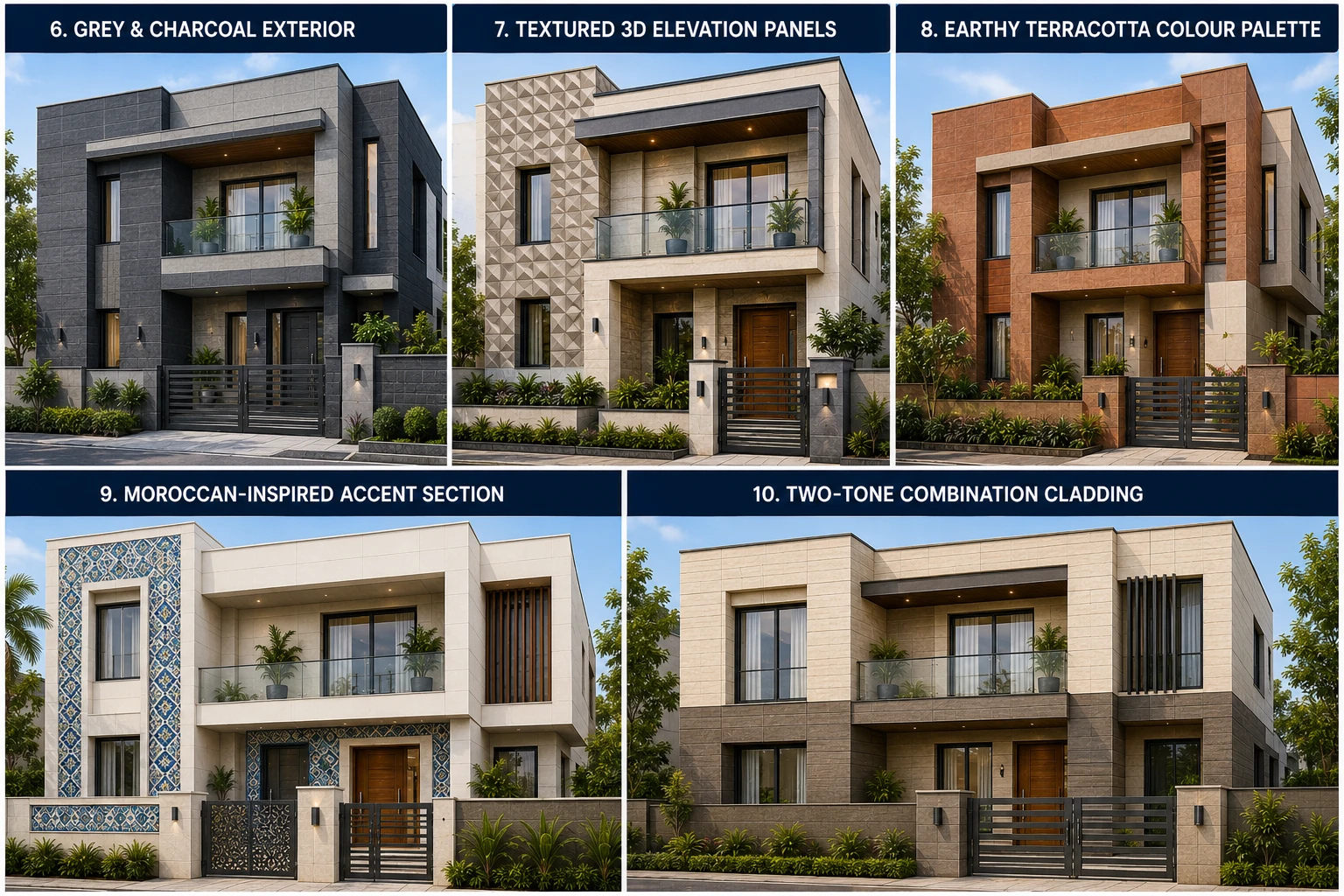
6. Grey and Charcoal Exterior for a Sleek Look: Dark grey and anthracite-coloured tiles create a striking facade that reads as deliberately modern. These tones show water marks less during the monsoon and hide dust between cleaning cycles. Pair a charcoal base tile with a lighter grey accent strip to add depth without using multiple materials.
7. Textured 3D Elevation Panels: High-depth tiles with geometric cutouts, wave patterns, or lattice-style designs create visual movement on an otherwise flat facade. These work best as accent sections rather than full-wall applications. Ideal for gate pillars, the wall alongside a main door, or a feature section beside the garage. The physical depth catches shadow and changes character from morning to afternoon light.
8. Earthy Terracotta Colour Palette: Terracotta, rust, and warm brown tile tones suit Indian architectural traditions. They hold colour well under UV exposure and blend naturally with landscaping elements like plants and wood. GVT tiles with terracotta-look surfaces in a matte finish resist fading and stay low-maintenance across seasons.
9. Moroccan-Inspired Accent Section: Geometric pattern tiles in navy, teal, or warm amber work well as a focused accent section rather than all-over cladding. Use them as a border strip around the main door, on a feature niche beside the entrance, or as a half-wall band. The pattern stands out without overwhelming the facade. Choose tiles with a glazed surface rated for outdoor use.
10. Two-Tone Combination Cladding: Combining two complementary tile colours or textures across a facade gives depth that single-material designs lack. A common approach in Indian society apartments: Full Body tiles in light beige on the upper half, darker textured tiles on the lower half. The lower section hides splash marks from rain more effectively.
Group 3: Stone & Textured Expressions
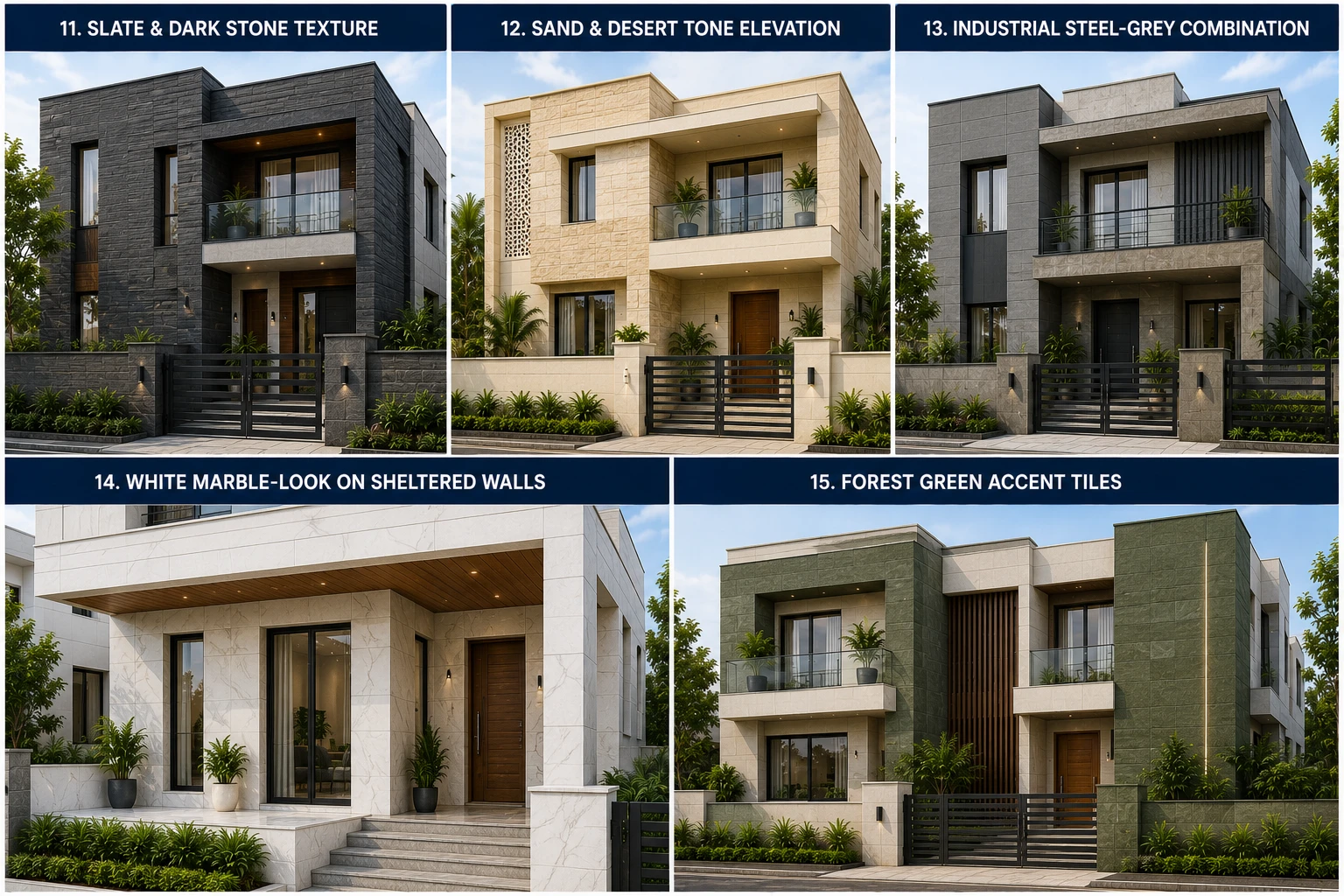
11. Slate and Dark Stone Texture: Dark slate-look tiles in charcoal or greenish-grey tones add a distinctive finish to modern homes. The textured surface reads as carefully chosen and holds up well in outdoor conditions. Available in GVT with matte or GHR finish, these suit independent bungalows and row houses equally well.
12. Sand and Desert Tone Elevation: Sandy beige and warm cream tones reflect heat and work particularly well in Rajasthan, Gujarat, and other high-summer regions. Light colours keep the surface cooler and complement the natural light in these states. Choose lighter shades with matte finishes to reduce glare and hide dust between cleaning cycles.
13. Industrial Steel-Grey Combination: Pairing a steel-grey tile body with black window frames and exposed concrete elements creates an industrial-modern look popular with younger homeowners in Bangalore and Hyderabad. Use a GVT matte tile in 600x1200 mm format for clean horizontal runs across the elevation.
14. White Marble-Look on Sheltered Walls: Marble-look tiles work well on sheltered exterior sections, covered verandahs, and under-roof porch walls. For unsheltered outdoor use, natural marble fades with UV exposure. A full-body tile with marble veining holds colour longer and needs significantly less maintenance across monsoon seasons.
15. Forest Green Accent Tiles: Deep green or olive-toned tiles used as accent sections alongside a neutral base create a contemporary look that connects the home to its landscaping. These work well when paired with natural planting near the entrance. Available in GVT with matte finish, they age gracefully outdoors.
Group 4: Warm & Earthy Exterior Styles
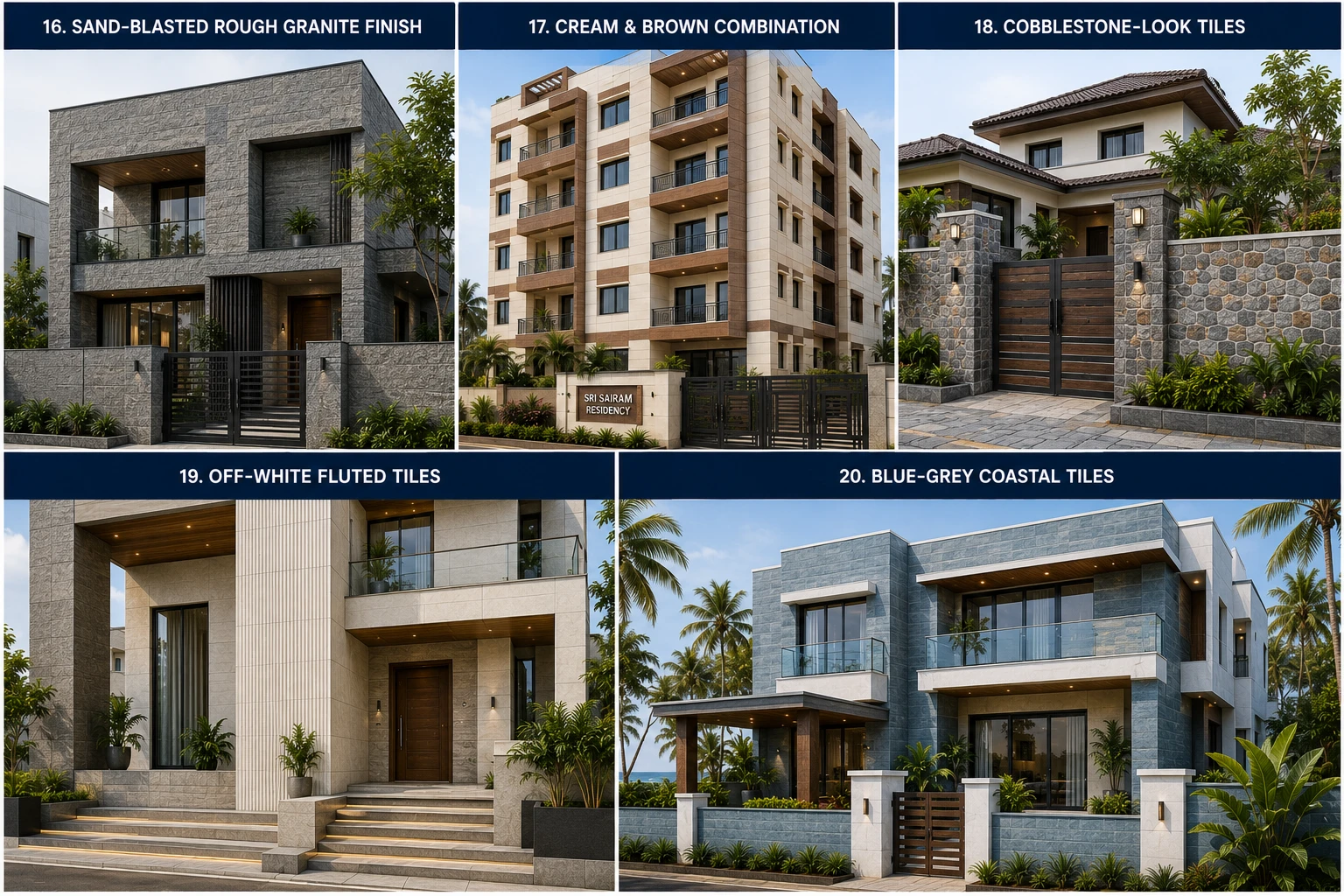
16. Sand-Blasted Rough Granite Finish Tiles: Sand-blasted GVT tiles with a rough granite-like surface give a raw, contemporary finish popular in architect-designed homes. The unpolished look ages naturally and requires almost no upkeep. Works well on compound walls and features sections of independent houses.
17. Cream and Brown Combination on Apartment Towers: Society apartment elevations often use a neutral cream base tile with brown accent bands at balcony edges or window borders. This combination reads as warm and residential rather than commercial. Full Body tiles in these tones hold colour evenly across large repeated surfaces.
18. Cobblestone-Look Tiles for Boundary Walls: Cobblestone-pattern tiles bring a traditional, almost European charm to compound and boundary walls. Available in GVT with textured finish, they suit bungalows with garden setups and add character to gate entrance sections without looking overdone.
19. Off-White Fluted Tiles as Vertical Accent Panels: Fluted or ribbed tile panels in off-white or light grey placed vertically beside the main entrance create a strong architectural statement. The vertical lines draw the eye upward and make entrances feel taller and more considered. Available in Full Body tiles in the 600x1200 mm format.
20. Blue-Grey Coastal Tiles for Seafacing Homes: Homes near the sea in Kerala, Goa, or coastal Maharashtra benefit from blue-grey-toned tiles that complement the coastal setting. GVT tiles with anti-fungal treatment in these tones resist salt air and algae growth far better than lighter or glossier alternatives.
Group 5: Heritage & Regional Inspirations
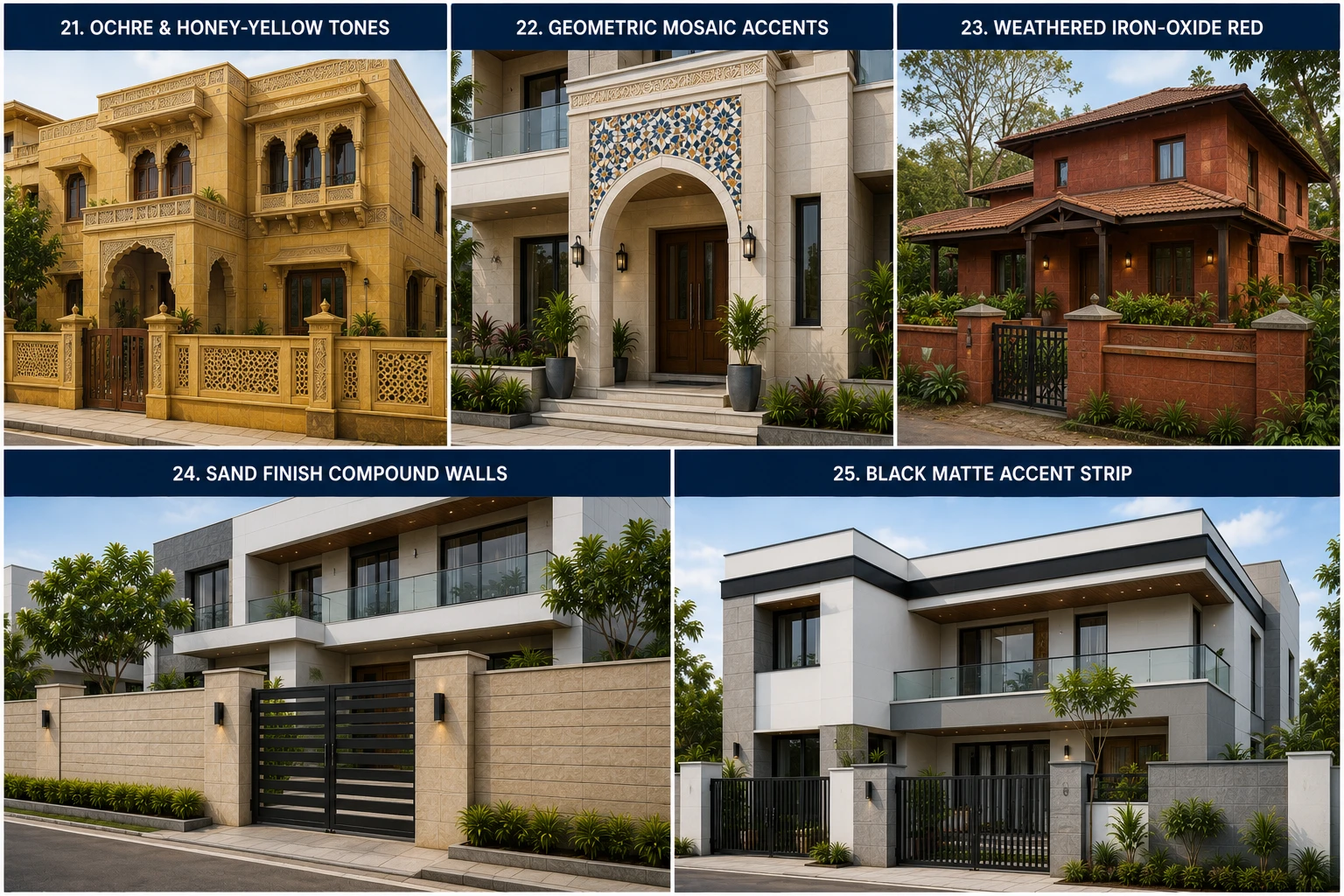
21. Ochre and Honey-Yellow Tones for Heritage-Inspired Homes: Ochre, mustard, and honey-yellow tile tones echo the traditional colour palettes of Rajasthani havelis and South Indian homes. These warm shades look good in both strong sunlight and overcast weather, making them reliable across Indian seasons. Pair with carved stone-look border tiles for a layered look.
22. Geometric Mosaic Accents Above the Main Door Arch: Small geometric mosaic tiles in contrasting colours placed above a main door arch or within an entrance niche add a handcrafted quality to the facade. This works best as a restrained accent against a neutral base, not as an all-over pattern. Choose an outdoor-rated glazed tile body.
23. Weathered Iron-Oxide Red for Farmhouse and Bungalow Styles: Deep iron-oxide red tiles with a slightly weathered or aged surface finish suit farmhouse, weekend home, and large bungalow exteriors. The colour connects naturally with red soil landscapes in Karnataka, Maharashtra, and Goa. A matte or rough-textured finish in this tone stays presentable across monsoon cycles.
24. Full Body Tiles in Sand Finish for Zero-Maintenance Compound Walls: Compound and boundary walls take more abuse than the main facade. Full Body tiles in a sand or raw stone finish, where the colour runs through the entire tile body, show chips and edge wear far less than surface-printed alternatives. A practical and clean choice for long boundary stretches.
25. Black Matte Tiles as a Stark Accent Strip at Parapet Height: A narrow band of black matte tiles at the parapet or terrace edge level creates a clean frame around the roofline. This detail gives flat-roof modern homes a finished look that reads as considered from the street. Black tiles at height also hide water staining from roof drainage far better than light colours.
Group 6: Unique Accents & Architectural Details
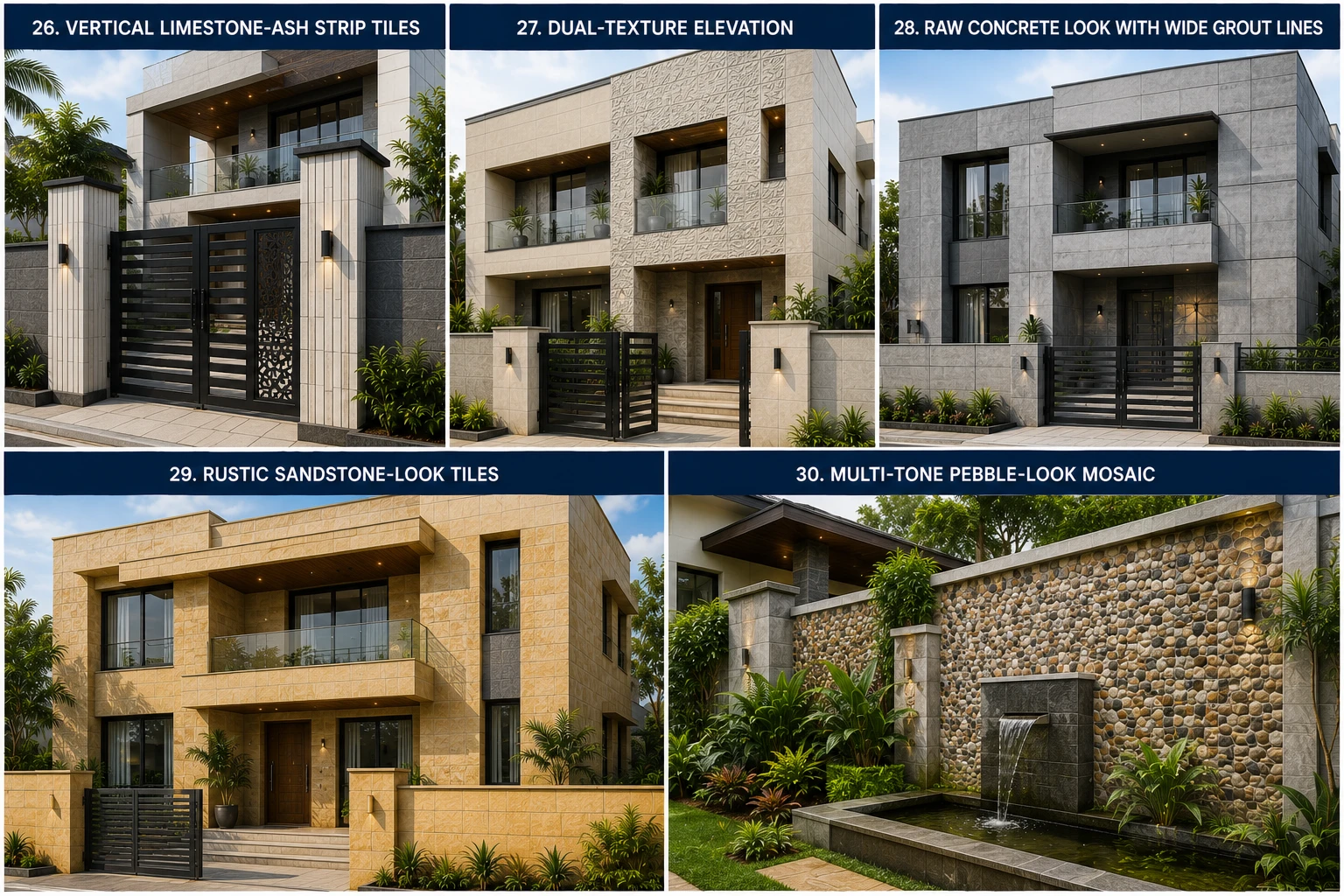
26. Vertical Limestone-Ash Strip Tiles on Gate Pillars: Limestone ash-coloured tiles with a soft, chalky texture placed vertically on gate pillars create an entry that feels distinct from the main facade. The lighter tone stands out against a darker base wall. GVT with matte carving finish in this colour holds detail well outdoors.
27. Dual-Texture Elevation Using Matte and Embossed Tiles: Combining a plain matte tile on the larger wall area with an embossed pattern tile on accent sections creates visual contrast without introducing additional colour. Both tiles in the same beige or grey tone keep the facade cohesive. A straightforward way to add character to builder-finish homes.
28. Raw Concrete Look with Wide Grout Lines: Large-format GVT tiles in a smooth concrete grey finish, laid with deliberately wider grout lines in a contrasting dark grey, replicate the look of raw shuttered concrete. Popular in architect-led projects across Mumbai and Delhi. The wide joint makes the tile grid a visible design element rather than something to minimise.
29. Rustic Sandstone-Look Tiles for South-Facing Walls: South-facing exterior walls receive the most direct sun through the day. Sandstone-look GVT tiles in warm tan or amber tones absorb and release heat gradually, reducing surface temperature variation. The rustic texture also hides dust and rain splash marks better than smooth surfaces on these high-exposure walls.
30. Multi-Tone Pebble-Look Mosaic for Accent Garden Walls: Small pebble-look mosaic tiles in mixed earthy tones work well on garden retaining walls, water feature surrounds, or low compound wall sections that border planting areas. The variation in tone across tiles hides moss and dirt naturally, and the textured surface adds a natural, organic quality that suits garden settings.
Recommended Tile Sizes for Exterior Walls
Size selection affects both the visual scale of the facade and the practical ease of installation. Larger tiles mean fewer grout lines, which helps on unbroken flat walls. Smaller tiles suit areas with irregular shapes, curves, or decorative sections.
| Size (mm) | Preferred Name | Best Use on Exterior |
| 300x450 | 12x18 | High-depth elevation tiles on pillars and accent sections |
| 300x600 | 12x24 | High-depth cladding on boundary walls and lower facade sections |
| 600x600 | 2x2 | General exterior wall cladding, boundary walls |
| 600x1200 | 2x4 | Large flat facade sections, society apartment exteriors |
| 800x1600 | 32x64 | Feature wall sections on independent bungalows |
| 200x1200 | 8x48 | Wooden plank format for accent elevation strips |
One practical note: for exterior walls that include corners, pillars, and irregular sections, a 600x600 mm (2x2) tile is easier to cut and fit than larger formats. Large-format tiles like 800x1600 mm look very clean on long flat runs but need a skilled setter and proper surface preparation.
Best Finishes for Exterior Wall Tiles
The finish determines how the tile handles weather, how it looks over time, and how easy it is to clean after the monsoon.
| Finish Type | Outdoor Suitability | Notes |
| Matte | Excellent | Anti-skid, hides dust and water marks, most versatile |
| GHR (Glaze High Resistance) | Excellent | Stone-like texture, best for high-traffic outdoor |
| Matte Carving | Very good | Matte with textured veins, visually rich |
| Texture / Embossed | Very good | Physical depth, suits wall cladding |
| High Depth (Punch) | Very good (wall only) | 3D cladding should never be used on floors |
| Glossy | Not recommended outdoors | Fades with UV, shows marks, slippery when wet |
| Polished Glossy (PGVT) | Not recommended outdoors | Prone to wear, UV exposure dulls the surface |
For most Indian homes, a matte or GHR finish on a GVT or Full Body gives the best balance of weather resistance and low upkeep. Glossy and polished surfaces look very good in showroom lighting, but show wear, dust, and water marks outdoors within months.
Expert Tips Before You Buy Exterior Wall Tiles
1. Always Check the Outdoor Use Rating
Not every tile sold in a showroom is rated for exterior use. Ask specifically for tiles suitable for outdoor wall cladding. GVT and full-body tiles with a matte or textured finish are the standard recommendation for Indian exteriors.
2. Test the Tile with Water Before Finalising
Pour a small amount of water on a tile sample and observe how fast it absorbs. Tiles with 0.05% water absorption bead the water immediately. High absorption means the tile will hold moisture against the wall, which leads to seepage issues over time.
3. Choose UV-Resistant Finish in High-Sun Regions
If the facade faces west or south in states like Gujarat, Rajasthan, or Maharashtra, choose a finish specifically described as UV-resistant by the manufacturer. Glossy finishes lose their sheen fastest under direct sun exposure.
4. Anti-Fungal Coating for Coastal and Humid Regions
Homes in Kerala, coastal Karnataka, Goa, and Mumbai receive a lot of moisture. In these regions, ask specifically for tiles with an anti-fungal or anti-mould surface treatment. Standard tiles grow algae on the surface within a year in humid climates without this feature.
5. Buy 10% Extra Quantity for Wastage and Future Repairs
Exterior wall installation involves cuts around windows, doors, and corners. Always add 10% to your calculated area for wastage. Keep additional tiles from the same batch for future repairs. Tile shades can vary slightly between production batches, and a mismatch on a facade repair stands out badly.
6. Use Rectified Tiles for Tight Grout Lines
Rectified tiles have precisely cut edges that allow for very thin grout joints of 2 to 3mm. On a large exterior wall, tight grout lines look far cleaner and more modern than wide joints. Ask the dealer specifically for rectified tiles in the size you choose.
7. Hire a Setter with Exterior Tile Experience
Exterior tile installation is different from interior work. The adhesive type, grouting compound, and joint filler all need to be rated for outdoor conditions. An inexperienced setter using interior-grade adhesive on an exterior wall leads to tiles loosening after the first rain season.
Common Mistakes When Choosing Exterior Wall Tiles
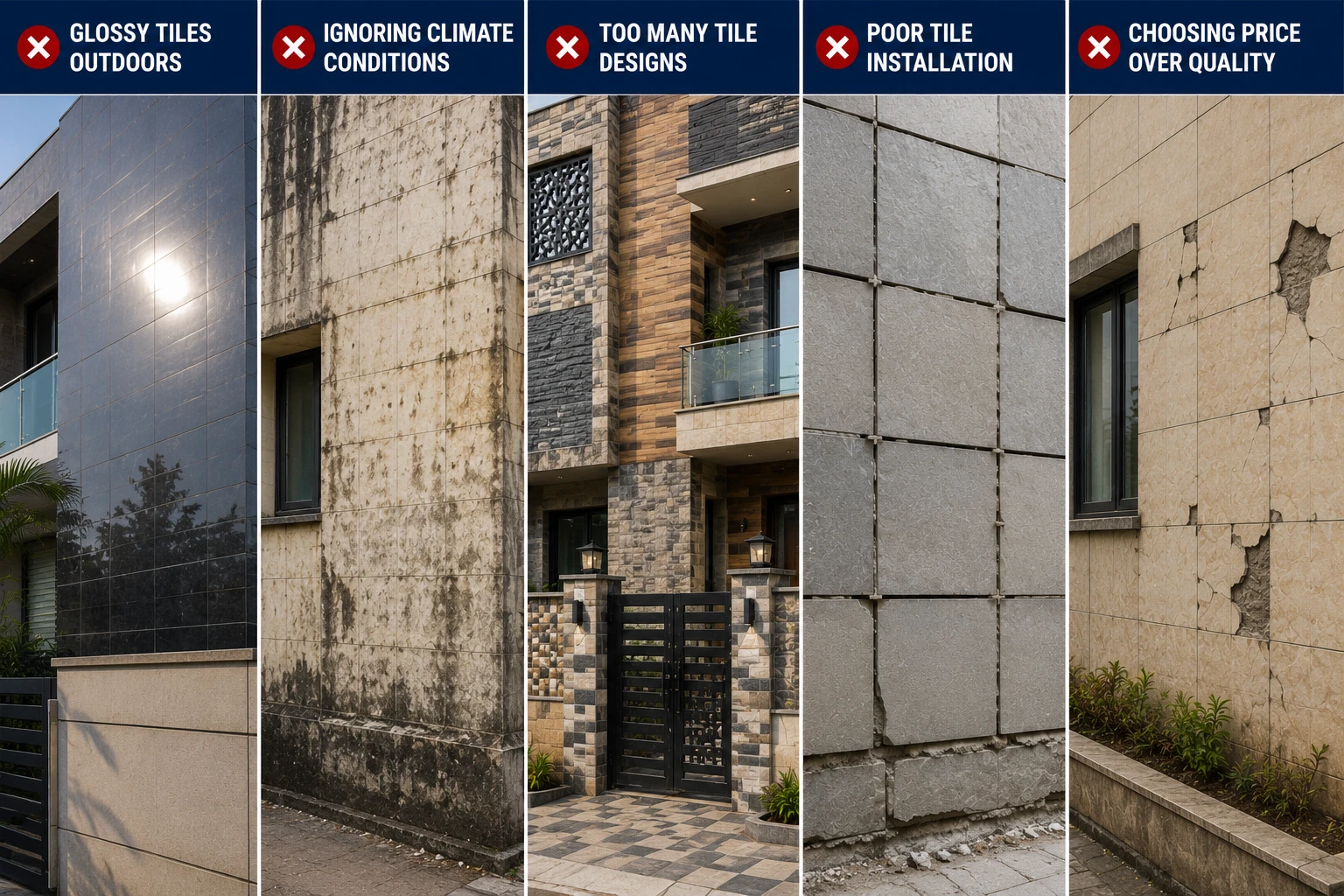
Using Interior Tiles Outdoors: Many homeowners do not realise that tiles sold as wall tiles in showrooms are often designed for interior use. Ceramic tiles in 300x600 mm size, for example, have water absorption rates of 12% to 16% and should not be used on exposed exterior walls. Always confirm outdoor suitability before purchase.
Choosing Glossy Finish for the Facade: Glossy tiles look very appealing in the showroom. Outdoors, they show every watermark, lose their shine in direct sun, and show moss growth faster than matte alternatives. For exterior wall tiles design, matte and textured finishes consistently perform better.
Ignoring Regional Climate: A tile that works perfectly in Bangalore may perform poorly in coastal Chennai or in the high heat of Bikaner. Consider your city's rainfall levels, humidity, and average temperature before selecting the category and finish.
Underestimating the Grout: The tile is only as good as the grout around it. Many homeowners choose their tiles carefully and then use the cheapest available grout. For exteriors, use a polymer-modified or epoxy grout rated for outdoor use. Grout cracks are the most common entry point for water seepage.
Skipping Surface Preparation: Exterior walls need proper cleaning, levelling, and priming before tiling. Skipping this step leads to tiles that do not bond well and crack or detach within the first monsoon.
Placing High-Depth Tiles on the Floor: High-depth elevation tiles are popular for facade cladding. Some homeowners try to use them on approach paths or porch floors for a matching look. High-depth tiles are strictly wall-only products. On floors, the raised surface profile collects water and dirt and becomes a slip hazard.
Finding the Right Exterior Wall Tiles for Your Home
An exterior wall tile design is one of the more visible decisions in any home project. The tiles face the street every day, take the weather across every season, and set the tone for what visitors see first.
The best approach is to start with the right category for your region and climate, then choose a design that fits your home's architecture. Confirm the finish suits outdoor use, check the water absorption rating, and always ask for rectified tiles if you want clean, tight joints.
You can explore a wide range of facade tiles, elevation tiles, and outdoor wall cladding options on TilesFinders to compare sizes, finishes, and categories from verified Indian manufacturers. Most Indian homeowners find that having three or four physical samples against their actual wall, in real daylight, makes the final choice much easier.
FAQs
GVT and full-body vitrified tiles with matte or GHR finish are the most reliable choice for Indian exterior walls. They have very low water absorption (0.05%), handle monsoon conditions well, and stay low-maintenance over the years. High-depth elevation tiles work well for accent sections and pillars.
Elevation tiles, particularly the High Depth category, have a physical surface depth of 2.5 to 5mm that creates a three-dimensional look. Regular wall tiles have a flat or lightly textured surface. Elevation tiles are made specifically for outdoor facade work on a vitrified body, while many regular wall tiles are ceramic and suited only for sheltered interior walls.
Choose tiles with a water absorption rate of 0.5% or lower. GVT and Full Body tiles meet this standard. Look specifically for anti-fungal or anti-mould surface treatment if the property is in a coastal or high-humidity area. Use a matte or textured finish rather than glossy. Pair with an outdoor-rated adhesive and polymer-modified grout.
Natural marble should be avoided on unsheltered exterior surfaces because UV exposure fades the stone, and acid rain can damage it. Marble-look GVT or Full Body tiles give the same visual result with significantly better weather resistance. For covered porch walls and verandah cladding, marble-look tiles work well.
For large flat facade sections, 600x1200 mm (2x4) tiles give a clean, contemporary look with minimal grout lines. For accent sections, High Depth tiles in 300x600 mm (12x24) or 300x450 mm (12x18) create visual depth. For boundary walls and gate pillars, 600x600 mm (2x2) is easier to handle and cut during installation.
Tile costs alone range from approximately ₹60 to ₹350 per sq. ft., depending on category and design. Installation charges, including adhesive, grouting, and labour, add another ₹30 to ₹80 per sq. ft. in most Indian cities. High-depth 3D elevation tiles cost more to install because of the additional care needed during installation.
Matte and textured exterior tiles need very little ongoing maintenance. Clean with a mild detergent and a soft brush once a year. Check grout lines every two to three years and reseal if cracks appear. Anti-fungal tiles in humid regions need only a surface wash to remove algae growth. Glossy tiles on exterior walls require more frequent cleaning to keep the surface looking presentable.

See our tile guides first
Set TilesFinders as a preferred source and our buying guides surface ahead of the rest for you.
Add as preferred sourceTakes one tap. Nothing to install.
What Readers Say
I was about to redo my parking area with the wrong tile size until I read this. The layout comparisons saved me from a costly mistake.
We reference TilesFinders guides while briefing clients on material selection. The size and pattern breakdowns are accurate and easy to explain visually.
On site, I get asked about grout spacing all the time. This article gave me a solid reference I now share with my team before every job.
Finally a guide that doesn't just push generic advice. The oil stain removal steps actually worked on our clubhouse driveway tiles.
I run a small construction firm and now send this link to clients directly when they ask about entrance tile sizing. Saves me an hour of explaining.
Good practical detail, though I wish there were more examples for compact apartment entrances specifically, not just villas.
My mother-in-law wanted marble, I wanted vitrified. This blog gave us the neutral comparison we needed to actually decide together.
Detailed without being overwhelming. I appreciated that it covered both cost and maintenance, not just the aesthetics.
Used the algae and hard water removal tips on our terrace tiles after the monsoon. Worked better than what our regular cleaner was doing.
As someone who sources tiles for multiple builder projects, I find these comparisons genuinely useful for vendor conversations, not just consumer content.
Recommended this to a client who kept second-guessing the entrance design. The small vs large layout section settled the debate instantly.
Straightforward and honest, no unnecessary jargon. Would like to see a similar breakdown for outdoor pool-deck tiles next.
We've bookmarked several TilesFinders guides for our design handbook. Reliable source when clients want data, not just opinions.
Two paths, one marketplace.
Get free quotes from verified suppliers.
Share your room, budget, and style. Suppliers in Morbi respond within hours.
Get Free QuotesList your business, reach real buyers.
Put your showroom in front of homeowners searching for tiles right now.
List Your Business