IS-certified, sourced from MorbiChecked against IS 15622/13630, direct from Gujarat's tile hub
200+ verified dealersAcross India, checked and listed by TilesFinders
Free sample bookingHold the tile in your hand before you order
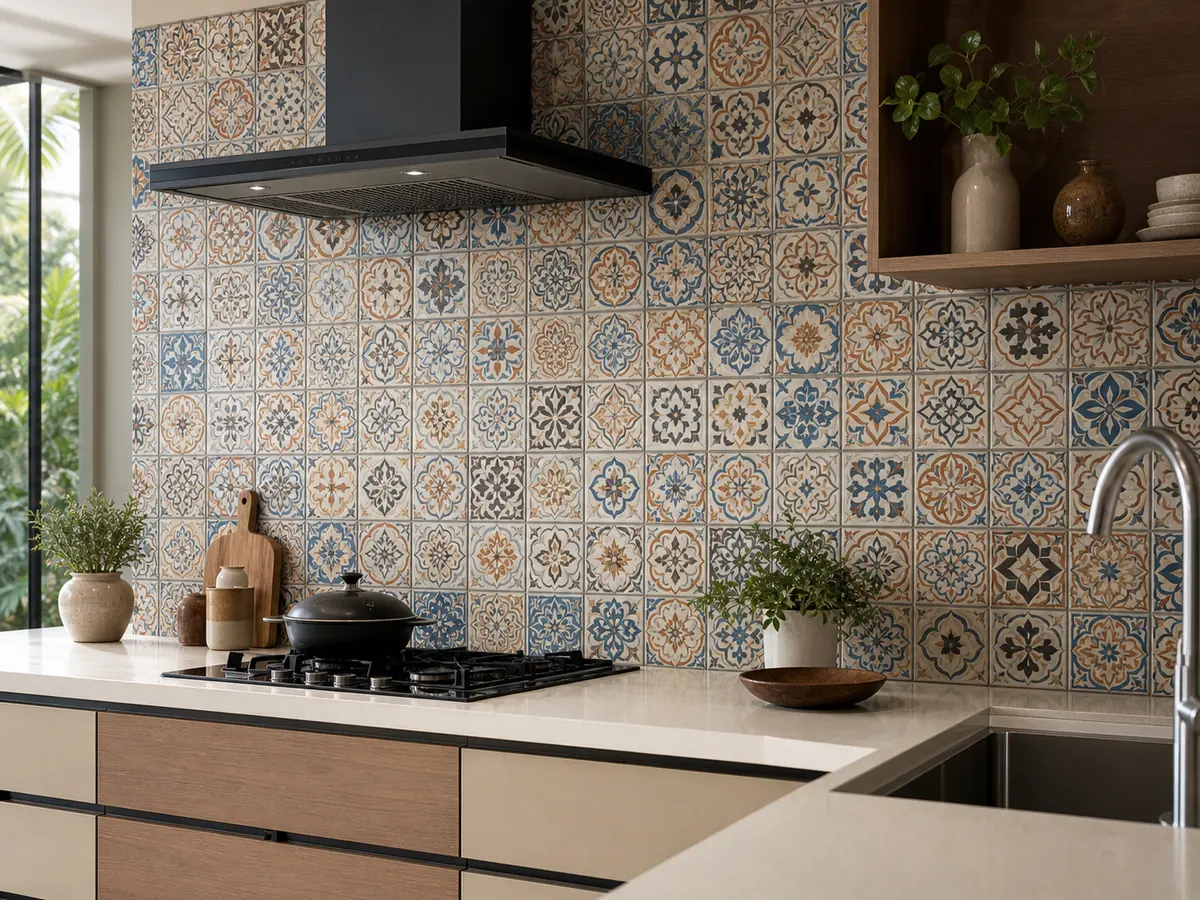
Moroccan kitchen tiles draw from one of the most distinctive tile traditions in the world: the geometric zellige patterns of North African architecture, the blue and white azulejo-influenced designs of Andalusian interiors, and the encaustic motifs that appear across Moroccan riads and market floors. In Indian homes, Moroccan-style kitchen tiles translate this visual language onto the kitchen backsplash and wall, where bold patterns and rich colour read most effectively in a cooking space.
The Moroccan look tile available in India is a ceramic or GVT tile with a Moroccan-inspired geometric pattern printed on the glaze as a digital design. These are standard manufactured tiles from producers in Morbi and Gujarat, not imported handmade products. The glaze carries the pattern; the tile body is ceramic for wall and backsplash use or GVT for full-height wall cladding. Across the kitchen tiles range, Moroccan-style tiles sit in the decorative pattern category alongside encaustic look and geometric tiles. This page covers which formats, colours, and kitchen zones work best for the Moroccan kitchen design.
What Moroccan Style Kitchen Tiles Look Like
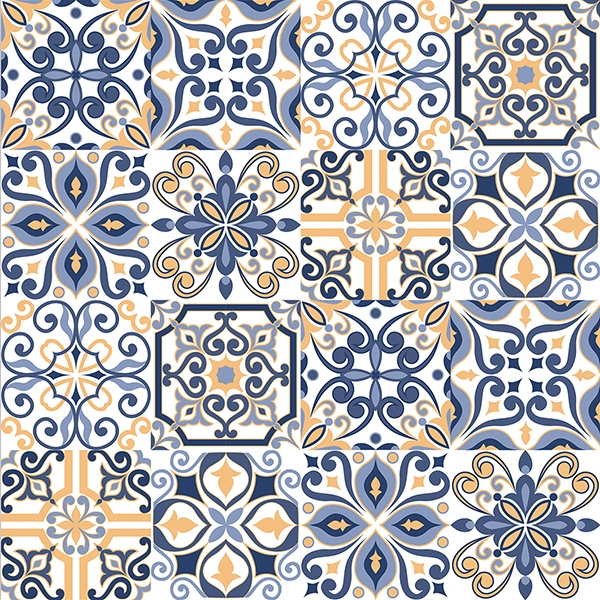
The Moroccan look in kitchen tiles covers three visual families, each with a different character and a different pairing logic:
Pattern Family
Visual Description
Colour Palette
Kitchen Character
Best Application
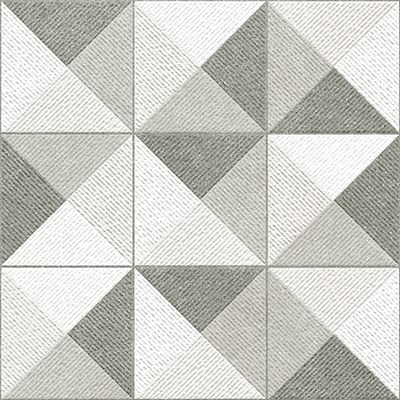
Geometric zellige-inspired
Interlocking star and polygon shapes in a repeating geometric grid, the defining Moroccan pattern
Deep cobalt blue and white; terracotta and cream; black and ivory
Bold and architectural; strong visual presence from across the room
Backsplash feature panel; single feature wall in open-plan kitchen
Blue and white encaustic
Floral or geometric motifs in cobalt or navy on a white ground; references Portuguese and Andalusian tilework
Cobalt blue and white; navy and off-white
Classic and formal; reads as Mediterranean or heritage Indian
Full backsplash run; heritage or transitional kitchen
Multicolour patchwork
Irregular shapes in four to six colours mimicking the varied glaze of hand-cut zellige pieces
Turquoise, cobalt, terracotta, ivory, green, and gold in the same tile
Exuberant and warm, the richest visual of the three families
Small feature panel; accent strip; contained splash zone only
In the Indian market, geometric zellige-inspired and blue and white encaustic are the two most available Moroccan look patterns from manufacturers in Morbi and Gujarat. Multicoloured patchwork is available from a narrower range of producers and may need stock confirmation before specifying in large quantities.
Moroccan Kitchen Wall Tiles: Tile Body and Size Options
Moroccan-style kitchen wall tiles in India are available in two tile bodies for wall applications: ceramic for standard wall and backsplash sizes, and GVT for larger format full-height cladding. The body determines what size is possible and what surface the tile can be used on.
Ceramic in 12x18 and 12x24
Ceramics in 12x18 (300x450) and 12x24 (300x600) carry the Moroccan pattern as a glossy digital glaze print. These are wall-only sizes and must not be used on kitchen floors under any circumstances. The glossy finish on ceramic gives Moroccan colours their full saturation: the cobalt blue in a zellige-pattern tile reads at maximum depth in gloss, and the white ground reflects light to lift the pattern off the wall. Sugar finish is an alternative that gives a softer surface character without reducing colour depth significantly. These sizes are the most widely stocked Moroccan look formats from Indian ceramic manufacturers.
GVT in 2x2
GVT in 2x2 (600x600) with a Moroccan-inspired geometric pattern gives the same look at a larger scale with fewer grout joints across the wall. At this size, the geometric pattern on each tile reads as a near-complete composition rather than a repeating fragment, which gives the Moroccan motif a more monumental quality on the wall. For a full kitchen wall from dado to ceiling in a Moroccan style, GVT 2x2 in a geometric pattern gives a cleaner result with fewer grout lines than ceramic 12x24. The kitchen wall tiles page covers the surface-by-surface rules for all kitchen wall applications, including patterned tile formats.
Kitchen Backsplash Tile Moroccan Style: Getting the Containment Right
The backsplash is where Moroccan kitchen tiles make the strongest impression in an Indian home. Contained between the counter and the overhead cabinets, the geometric or blue and white pattern reads as a complete visual statement rather than a repeating field. A Moroccan-style backsplash in a kitchen with plain white or cream cabinets transforms the central visual plane of the kitchen without committing to a pattern across the full room.
Three decisions determine whether a Moroccan backsplash reads as designed or as overwhelming:
Area: limit the Moroccan pattern to the backsplash strip only. Extending it to the full wall above the dado in a small kitchen risks making the space feel busy. A feature panel width of 600 to 900mm behind the hob is the most contained and impactful option.
Grout colour: white or off-white grout with blue and white Moroccan tiles lets the pattern read as a continuous composition. Matching-colour grout makes the joins near-invisible. Dark grey grout with a multicoloured patchwork tile creates a strong visual frame that reads as intentional.
Cabinet colour: Moroccan pattern tiles need a quiet cabinet to read clearly. White, cream, and light timber cabinets work. Patterned or highly grained cabinet doors compete with the Moroccan tile, and the combination reads as visually busy.
Moroccan Blue Tile Backsplash: The Most Searched Moroccan Kitchen Look
The Moroccan blue tile backsplash is the most requested Moroccan kitchen tile specification in India. The combination of cobalt or navy blue geometric or encaustic patterns on a white or off-white ground reads as both classic and bold: the white reflects kitchen light, the blue carries the pattern, and the geometric repeat gives the backsplash a visual rhythm that plain tiles do not have.
Ceramic in 12x24 in a cobalt blue and white geometric or encaustic pattern in gloss finish is the standard specification. The 12x24 size covers the backsplash height in one to two tile rows with minimal joins, and the gloss surface wipes clean from cooking oil and splashes. White grout at 2mm joints lets the blue and white pattern read continuously across the backsplash run. With a white ceramic tile above the Moroccan strip and white cabinets on both sides, the blue backsplash reads as a deliberate colour zone within an otherwise neutral kitchen.
For a larger-scale cobalt blue backsplash, GVT in 2x2 with a blue and white geometric print gives the same colour family at a format where each tile shows a larger portion of the pattern. The result is a different visual from the ceramic version: the GVT 2x2 reads as a bold geometric surface, where the ceramic 12x24 reads as a fine decorative strip.
Moroccan Kitchen Design: Cabinets, Countertops, and Fixtures
A successful Moroccan kitchen design in India balances the visual weight of the patterned tile with the restraint of every other surface in the kitchen. The tile is the centrepiece; everything around it should recede:
Moroccan Tile Style
Cabinet Colour
Countertop
Fixture Finish
Remaining Wall Tile
What It Reads As
Blue and white geometric or encaustic
White or off-white only
White quartz or light grey stone
Chrome, brass, or matte black
Plain white ceramic 12x24 on the remaining wall
Mediterranean farmhouse; clean, graphic, and confident
Geometric zellige in terracotta and cream
Cream or aged timber
Warm beige quartz or Kota stone look
Antique bronze or brass
Plain cream or off-white ceramic on the remaining wall
Heritage Indian; warm and richly layered
Multicoloured patchwork panel
White cabinets exclusively
White or light grey quartz; keep it neutral
Matte black
Plain white ceramic on all other wall surfaces
Bohemian modern; the patchwork reads as an artwork rather than a tile
Blue and white full backsplash run
White cabinets; no other colour
White or light grey countertop only
Chrome or matte black
No additional patterned tile; plain white above if the wall extends higher
Bold and graphic, the blue backsplash is the entire colour statement in the kitchen
The consistent rule across all Moroccan kitchen designs is the isolation principle: one patterned surface surrounded by plain surfaces on all sides. The moment a second pattern or a strong cabinet colour is introduced alongside a Moroccan tile, the visual hierarchy breaks, and neither element reads clearly.
Moroccan Style Tiles on Kitchen Floors: What Is Possible
Moroccan-looking tiles on a kitchen floor are less common than on the wall or backsplash, but they are effective in heritage bungalow kitchens and farmhouse-style kitchen-diners where the encaustic floor tradition is part of the architectural reference. The specification constraint is firm: only GVT tiles in matte or matte carving finish in 2x2 are suitable for a kitchen floor with a Moroccan-inspired geometric or encaustic pattern. Ceramic 12x18 and 12x24 are wall-only and must not be used on kitchen floors. Glossy tiles of any body type must not be used on kitchen floors.
GVT 2x2 in a geometric or patchwork Moroccan pattern in matte finish gives the visual richness of the Moroccan look with the 0.05% water absorption and anti-skid surface that a kitchen floor requires in Indian conditions. The monsoon humidity cycle that Indian kitchens experience year-round means the tile body absorption figure matters: GVT at 0.05% handles moisture cycling without adhesive bond stress over time. For the complete kitchen floor rules covering finish and body requirements, the kitchen floor tiles page covers all kitchen floor applications.
Note: Ceramic 12x18 and 12x24 Moroccan look tiles are wall-only. Glossy finish must not be used on kitchen floors, regardless of pattern. For a Moroccan look kitchen floor, specify GVT in matte or matte carving finish in 2x2 only.
Moroccan Kitchen Tile Colour Options and What Each Reads Like
Colour Palette
Pattern Family
Kitchen Character
Cabinet Pairing
Price Range (Rs./sq.ft)
Cobalt blue and white
Geometric zellige or encaustic
Graphic and confident, the most requested Moroccan kitchen look in India
White cabinets exclusively
Rs. 65 to Rs. 130 (ceramic); Rs. 90 to Rs. 175 (GVT)
Navy and off-white
Encaustic floral or geometric
Quieter than cobalt; more formal and traditional reading
White or cream cabinets
Rs. 60 to Rs. 120 (ceramic)
Terracotta, cream, and turquoise
Patchwork or zellige-inspired
Warm and richly coloured, the most traditionally Moroccan palette
Cream or aged timber cabinets only
Rs. 70 to Rs. 140 (ceramic)
Turquoise and white
Geometric or encaustic
Fresh and bright; reads as Mediterranean rather than traditionally Moroccan
White or light grey cabinets
Rs. 65 to Rs. 125 (ceramic)
Black and white
Geometric star pattern
Graphic and bold, the most contemporary Moroccan interpretation
White cabinets only
Rs. 60 to Rs. 115 (ceramic); Rs. 85 to Rs. 165 (GVT)
Multicolour patchwork
Zellige-inspired mixed glaze
Maximum visual energy; works only in very contained zones
White cabinets only; no other pattern
Rs. 75 to Rs. 145 (ceramic)
Moroccan Style Tile Size and Body Guide for Kitchen Use
Size
Alias
Body
Surface
Moroccan Pattern Scale
Price Range (Rs./sq.ft)
300x450
12x18
Ceramic
Wall and backsplash only; never floor
Fine; suits small geometric motifs and delicate encaustic patterns
Rs. 55 to Rs. 105
300x600
12x24
Ceramic
Wall and backsplash only; never floor
Standard, the most common Moroccan tile size, pattern reads clearly at backsplash height
Rs. 60 to Rs. 130
300x300
1x1
Ceramic
Wall; floor in dry areas only
Square unit; suits symmetric encaustic motifs that tile edge-to-edge
Rs. 55 to Rs. 100
600x600
2x2
GVT
Wall and floor (matte finish for floors)
Large; each tile shows a full geometric composition; fewer grout joins across the surface.
Rs. 90 to Rs. 175
Note: 300x450 and 300x600 sizes are wall-only. They must never be placed on kitchen floors regardless of the pattern on the tile. For a Moroccan look kitchen floor, use GVT 2x2 in matte or matte carving finish.
Grout and Laying Alignment for Moroccan Look Kitchen Tiles
Moroccan look tiles require more attention to grout and alignment than plain tiles. Because the pattern on the tile face continues across tile edges in many geometric designs, the laying bond and grout joint width affect whether the pattern reads as a unified composition or as a grid of individual tiles.
Grid bond (straight alignment): the correct laying bond for any Moroccan look tile where the geometric pattern is designed to continue from tile edge to tile edge. Confirm with the supplier whether the specific tile requires a grid bond or a brick bond. Most Moroccan geometric patterns require a grid bond.
Grout joint: 2mm for ceramic Moroccan tiles in 12x24; 1.5 to 2mm for the finest patterns. Wider joints interrupt the pattern continuity at every join. Use unsanded grout for joints under 3mm.
Pattern direction: Some zellige-inspired patterns have a rotational symmetry that reads the same in any orientation. Others have a clear top and bottom. Confirm the tile orientation before the contractor begins laying; reversing the orientation after the first row is fixed is difficult to correct without removing tiles.
White or off-white polymer-modified cement grout is the standard specification for a Moroccan look ceramic wall tile. For GVT 2x2 on the floor in a Moroccan pattern, epoxy grout resists the cooking oil and turmeric staining that will reach the floor joints in an Indian cooking kitchen over time.
Choosing the Right Moroccan Kitchen Tile
Requirement
Recommended Tile
Size
Finish
Price Range (Rs./sq.ft)
Blue and white backsplash, standard kitchen
Cobalt blue and white geometric ceramic
12x24
Glossy
Rs. 65 to Rs. 130
Full Moroccan backsplash run
Blue and white encaustic ceramic
12x24
Glossy
Rs. 60 to Rs. 130
Heritage or farmhouse backsplash
Terracotta and cream zellige-inspired ceramic
12x18 or 12x24
Glossy or Sugar
Rs. 70 to Rs. 140
Feature panel behind the hob
Multicoloured patchwork ceramic
12x24 or 1x1
Glossy
Rs. 75 to Rs. 145
Full Moroccan kitchen wall, GVT
Blue and white or black and white geometric GVT
2x2
Matte (floor and wall) or Glossy (wall only)
Rs. 90 to Rs. 175
Moroccan look kitchen floor
Geometric GVT matte
2x2
Matte
Rs. 90 to Rs. 175
Contemporary black and white geometric
Black and white star pattern ceramic or GVT
12x24 or 2x2
Glossy (wall); Matte (floor)
Rs. 60 to Rs. 165
Moroccan Look Tile Performance in Indian Kitchen Conditions
The glazed surface of a Moroccan-looking ceramic tile resists turmeric and cooking oil staining in the same way as any other glossy ceramic kitchen wall tile. Water absorption of 12% to 16% in the ceramic body, as tested under IS 13630, means the tile face is sealed, but the body behind the grout line is porous. Using polymer-modified grout or epoxy grout at the joints, particularly in the backsplash zone near the cooktop, is the specification that prevents grout staining over monsoon humidity cycles and daily cooking use in Indian kitchens.
Moroccan Style Tile Sizes and Prices from Indian Manufacturers
Ceramic Moroccan look tiles in 12x18 and 12x24 are produced by a range of manufacturers across Morbi at Rs. 55 to Rs. 130 per sq.ft, depending on pattern detail and colour complexity. GVT in 2x2 with geometric or zellige-inspired patterns, which meets the IS 15622 standard for vitrified tiles, runs from Rs. 90 to Rs. 175 per sq ft from Gujarat-based producers. Multicolour patchwork patterns in ceramic are available at the Rs. 75 to Rs. 145 per sq.ft range from select Morbi manufacturers, with stock confirmation recommended before placing a large order.
Find Your Moroccan Kitchen Pattern
Geometric, blue and white, zellige-inspired, and encaustic Moroccan look kitchen tiles from verified manufacturers across Morbi and Gujarat are listed on TilesFinders in ceramic for the backsplash and wall, and in GVT for full-height walls and floors. Ceramic in 12x24 for a Moroccan-style backsplash starts from Rs. 60 per sq. ft.; GVT in 2x2 with Moroccan geometric patterns for wall and floor use runs from Rs. 90 to Rs. 175 per sq ft. Confirm pattern alignment bond requirements with the supplier before placing the order.
Tiles Near You
Detecting location...
Explore tiles available with trusted dealers near your location.
This is the fact that decides everything else on an area page. Once you know wet or dry, the finish glossary above tells you exactly which finishes are even in play.
Floor needs GHR, matte or sugar. Walls can carry any finish, including glossy and PGVT.
The whole finish range is open here. Satin matte and matte are the most-picked defaults.
Floor treated as wet-adjacent, matte or GHR. Backsplash walls can go glossy without any risk.
No slip concern at all. The decision here is warmth underfoot, satin matte or sugar over polished.
Vehicle load plus rain exposure. Heavy-duty GHR, R10 or above, thicker bedding than indoor floors.
No wet-floor concern, but the traffic load favours full body or colour body over standard GVT.
Exterior facade wall, full weather exposure. Needs a tile rated for outdoor wall use, not standard interior wall stock.
GHR or matte only, R10 minimum. Confirm the R-rating on the spec sheet before ordering, matte alone isn't a guarantee.
Same rule whether covered or open, GHR finish, R10 minimum, never a polished surface.
Full sun and rain exposure. GHR finish, and check the structural load if it's a large tiled area.
Technically indoor and dry, but rain and mud get tracked in. Matte is the safer default over polished.
Same logic as office: dry floor, but full body or colour body suits the daily footfall better than standard GVT.
Mostly dry with occasional water offerings. Matte is the practical pick, no genuine wet-floor rating needed.
Not a floor, so slip rating doesn't apply, but daily water contact still rules out anything porous. GVT or PGVT both fine here.
Utility and laundry zones see as much water as a bathroom floor. Same GHR-or-matte rule applies.
Wall-mounted, so any finish is fine. Glossy is common precisely because it wipes clean of splashes fastest.
Too broad a category for one verdict, a retail floor and a commercial kitchen have different needs. Check the specific sub-use before picking a finish.
A buying guide on tile size, finish, anti-skid choices, and how to reduce wastage before you order.
How we keep this page accurate
Pricing on this page is checked against current dealer listings and manufacturer spec sheets. Body type facts, water absorption figures and IS standard references are checked against BIS documentation, not copied from other websites. This page still won't catch a batch-specific spec, so confirm exact figures with your dealer before ordering.
PricingChecked against live dealer listings
Technical specsVerified against IS 15622 and IS 13630
Dealer listingsChecked before being added to the directory
After The Tiles Are Laid
Living with your new tile
Five habits that keep any GVT, PGVT or porcelain floor looking new for years, not just months.
Use a pH-neutral cleaner
Acidic or alkaline cleaners can dull the glaze over time. A mild, pH-neutral floor cleaner keeps the finish intact.
Skip abrasive scrubbers
Steel wool or scouring pads can scratch a polished surface permanently. A soft mop or cloth is enough for daily cleaning.
Wait before heavy use
Light foot traffic is fine after 24 to 48 hours. Hold off on moving heavy furniture back for a full 7 days.
Seal cement grout
Cement grout benefits from a sealant applied a few weeks after laying, to resist staining. Epoxy grout doesn't need this.
Mind the monsoon
A door mat at every entry cuts down on grit that scratches matte finishes over a wet season.
Moroccan-style kitchen tiles are ceramic or GVT tiles with geometric, zellige, or encaustic patterns printed on the glaze, produced by Indian manufacturers in Morbi and Gujarat. They are not imported handmade tiles. The pattern is a digital glaze print on a standard tile body, giving the Moroccan aesthetic with the maintenance and specification of a regular kitchen wall tile.
The backsplash is the most effective location for Moroccan kitchen tiles. A contained backsplash strip of Moroccan pattern against plain white or cream cabinets reads as a deliberate design statement. Full-wall Moroccan pattern in a standard-size kitchen risks making the space feel visually busy. A feature panel width of 600 to 900mm behind the hob is the most controlled and impactful application.
Yes, if specified as GVT in matte or matte carving finish in 2x2 (600x600). Ceramic 12x18 and 12x24 Moroccan look tiles are wall-only and must not be used on kitchen floors. Glossy finish must not be used on floors. GVT matte in a geometric pattern handles Indian cooking conditions with 0.05% water absorption and an anti-skid surface.
White or off-white cabinets work best with Moroccan kitchen tiles. The geometric or encaustic pattern needs a quiet background to read clearly. Grey cabinets work with blue and white Moroccan tiles. Cream or aged timber cabinets work with terracotta and cream zellige-inspired patterns. Avoid patterned, dark, or strongly coloured cabinets alongside any Moroccan tile pattern.
A Moroccan blue tile backsplash uses ceramic in 12x24 with a cobalt or navy blue geometric or encaustic pattern on a white or off-white ground. This is the most searched Moroccan kitchen tile specification in India. White grout at a 2mm joint width lets the blue and white pattern read as a continuous composition across the backsplash run. It is a wall and backsplash application only.
Ceramic Moroccan look tiles in 12x24 for kitchen walls cost Rs. 60 to Rs. 130 per sq ft from manufacturers in Morbi and Gujarat. GVT in 2x2 with geometric or zellige-inspired patterns for full-height walls and floors runs Rs. 90 to Rs. 175 per sq ft. Prices vary by pattern complexity, colour depth, and brand. Add 10% wastage to the measured area before ordering any patterned tile.
Most geometric Moroccan look patterns are designed to tile edge-to-edge in a grid bond, meaning the pattern continues from one tile to the next. Confirm the required laying bond (grid or brick) with the supplier before installation. Grid bond is required for most continuous geometric patterns. A brick bond offset will break the pattern at every other row, disrupting the Moroccan composition.
An encaustic tile has colour pigment embedded into the tile body, traditionally in a geometric or floral motif. A Moroccan look tile is a ceramic or GVT tile with an encaustic-style or zellige-inspired pattern printed as a digital glaze on the tile face. Both deliver similar visual results in a kitchen, but Moroccan-looking tiles from Indian manufacturers are more affordable, require no sealing, and perform as standard kitchen wall tiles.
What Our Customers Say
Real feedback from homeowners and contractors who found their perfect tiles
★★★★★
Found exactly the wood-look tiles I wanted for my living room. The dealer listed here had great stock and fair pricing. Saved me at least two weekends of running around showrooms.
★★★★★
Very detailed size and finish guide helped me choose anti-skid tiles for my bathroom. Wish I had found this site before my last renovation.
★★★★☆
Good comparison between vitrified and ceramic options. Contacted a dealer directly through the listing and got a quote within the hour.
★★★★★
As a contractor, I use this to quickly show clients different tile sizes and finishes on-site. The photos are high quality and load fast even on mobile data.
★★★★★
Loved how easy it was to filter by size and color together. Ended up going with 600x1200 GVT tiles for my hall, exactly what I was picturing.
★★★★☆
Solid resource for comparing tile finishes before visiting the showroom. Would like to see more price transparency, but overall a helpful first step.
★★★★★
The dealer directory saved me so much time. Called two showrooms directly from the site and had my order finalized within two days.
★★★★★
Great breakdown of PGVT vs GVT vs ceramic. I finally understood which tiles are meant for walls versus floors before making a costly mistake.
★★★★☆
Used this while renovating my kitchen backsplash. The FAQ section answered most of my questions about grout and water resistance without needing to call anyone.
★★★★★
Best part is being able to browse by room type. Picked out balcony and parking tiles in the same session without jumping between different sites.
0/4 selected
Compare Designs (0/4)
No designs added to compare yet. Open a design and tap "Compare" to add it here (up to 4).