


Luxury Living Room Tiles: Designs That Impress Guests
Elevate your living room with luxury tiles that impress. Discover seamless large-format trends, d...


Loading designs...




















Living room wall tiles serve a fundamentally different purpose from living room floor tiles. The floor is a functional surface that the room sits on. A tiled wall is a design choice: it creates a focal point, adds texture or depth, defines a zone, or gives the room a finish that paint alone cannot deliver. Most Indian living rooms tile only one or two walls rather than all four, which means the choice of which wall to tile, what tile to use, and how high to take the tile are all active design decisions rather than defaults. Understanding living room tiles for the wall starts with understanding the wall's role in the room before choosing the tile.
The tile specification for a living room wall is also more permissive than for a living room floor. A living room wall in an Indian home is dry, stable in temperature, and not subject to the scratch, impact, or slip considerations that govern floor tile choices. This means every tile body type and every finish is available for a living room wall: ceramic, GVT, porcelain, and PGVT are all valid; polished glossy, matte, GHR, satin matte, sugar finish, and Matte Carving are all usable. The choice is driven by appearance and the wall's role in the room, not by performance specifications.
This page covers the main living room wall tile decisions: which wall to tile and why, how accent walls and feature panels work architecturally, half-wall and dado tiling in a living room, the specific tile types most used for each wall design direction, large-format wall tile installation, and pricing for living room wall tiles sourced from Morbi.
In a typical Indian living room, there are two walls that are most often chosen for tile treatment: the wall behind the TV unit and the wall behind the primary seating. These are the two surfaces that define the room visually: the TV wall is the focal point when seated, and the sofa back wall is what every visitor sees when they enter the room. Tiling either one or both with coordinated tiles gives the living room a composed interior quality that flat paint on all four walls cannot.
The TV wall is the most common accent wall tile in Indian homes because it benefits the most from a surface with depth and texture. A 3D Matte Carving GVT tile, a stone-look panel, or a large-format PGVT slab on the TV wall creates a backdrop that makes the television unit read as part of a designed composition rather than a box mounted on a plain surface. The tile is seen from the primary seating distance of 8 to 12 feet, which is close enough to read surface texture clearly.
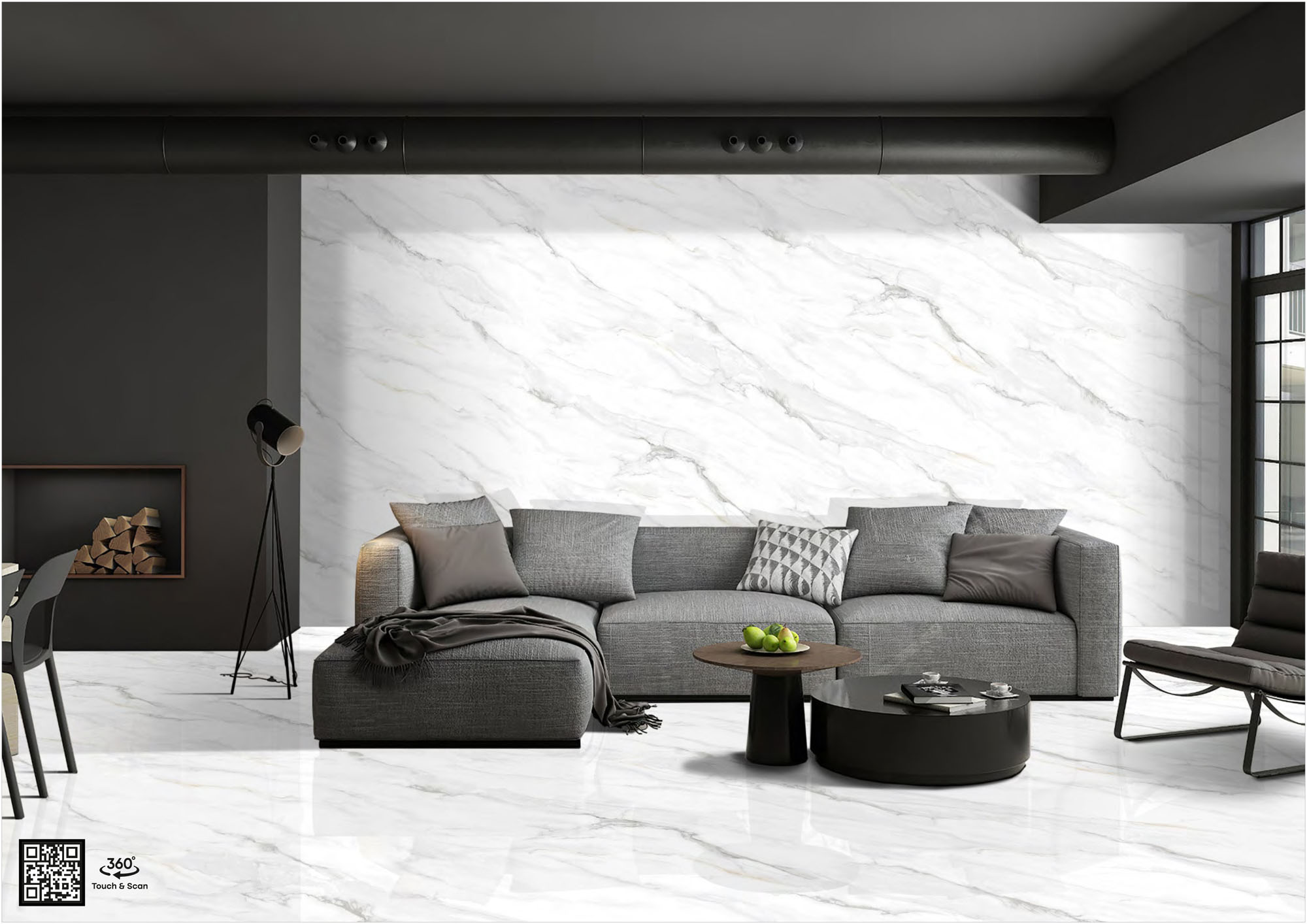
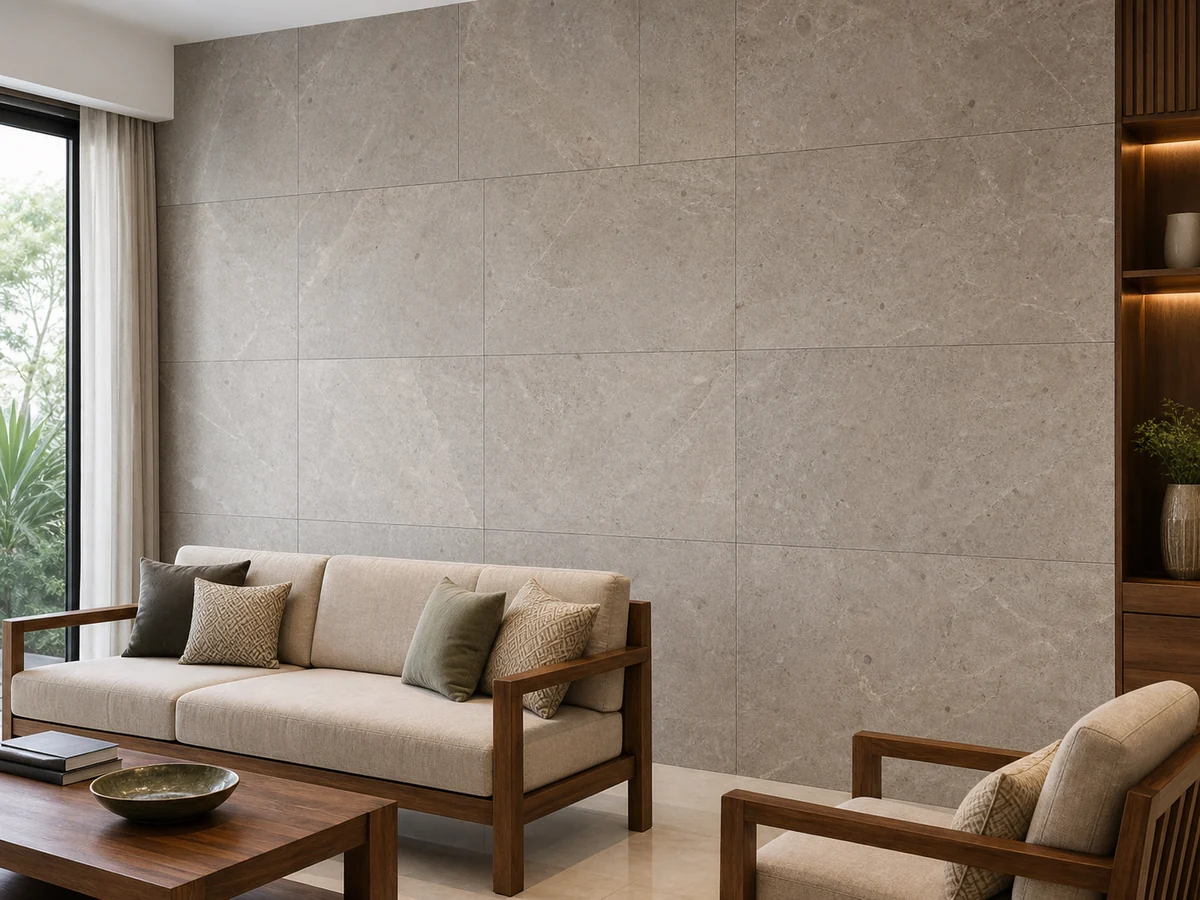
The sofa back wall is a longer expanse and is seen at a slightly greater distance by visitors entering the room. Large-format PGVT marble-look panels in 800x1600mm or 1200x1800mm on the sofa back wall give the room an immediate sense of quality and scale. Brick-look or stone-look GVT on the sofa back wall gives a warmer, more textural quality. The choice between these depends on whether the room is intended to feel formal and refined or warm and layered.
PGVT (Polished Glazed Vitrified Tiles) is the body type most used for living room feature walls in mid-range to high-end Indian homes. PGVT absorbs less than 0.05% water, carries a polished high-gloss or satin finish, and is available in large formats up to 1200x1800mm that create a near-seamless wall surface with minimal visible joints. It is specified for walls only and must never be used on any floor. In a living room context, this specification perfectly suits the TV wall and sofa back wall: surfaces that need a high-quality finish but carry no floor load. PGVT tiles in marble-look, solid colour, and abstract vein patterns in 800x1600mm polished finish are the most used living room wall tile direction in contemporary Indian interiors. Price range: Rs. 55 to Rs. 130 per sq ft from Morbi.
The practical advantage of PGVT on a living room feature wall over paint or wallpaper is permanence and cleanability. A PGVT tile surface does not fade, does not peel, does not require repainting, and can be wiped clean with a damp cloth. In a living room that sees daily use, this is a meaningful long-term consideration.
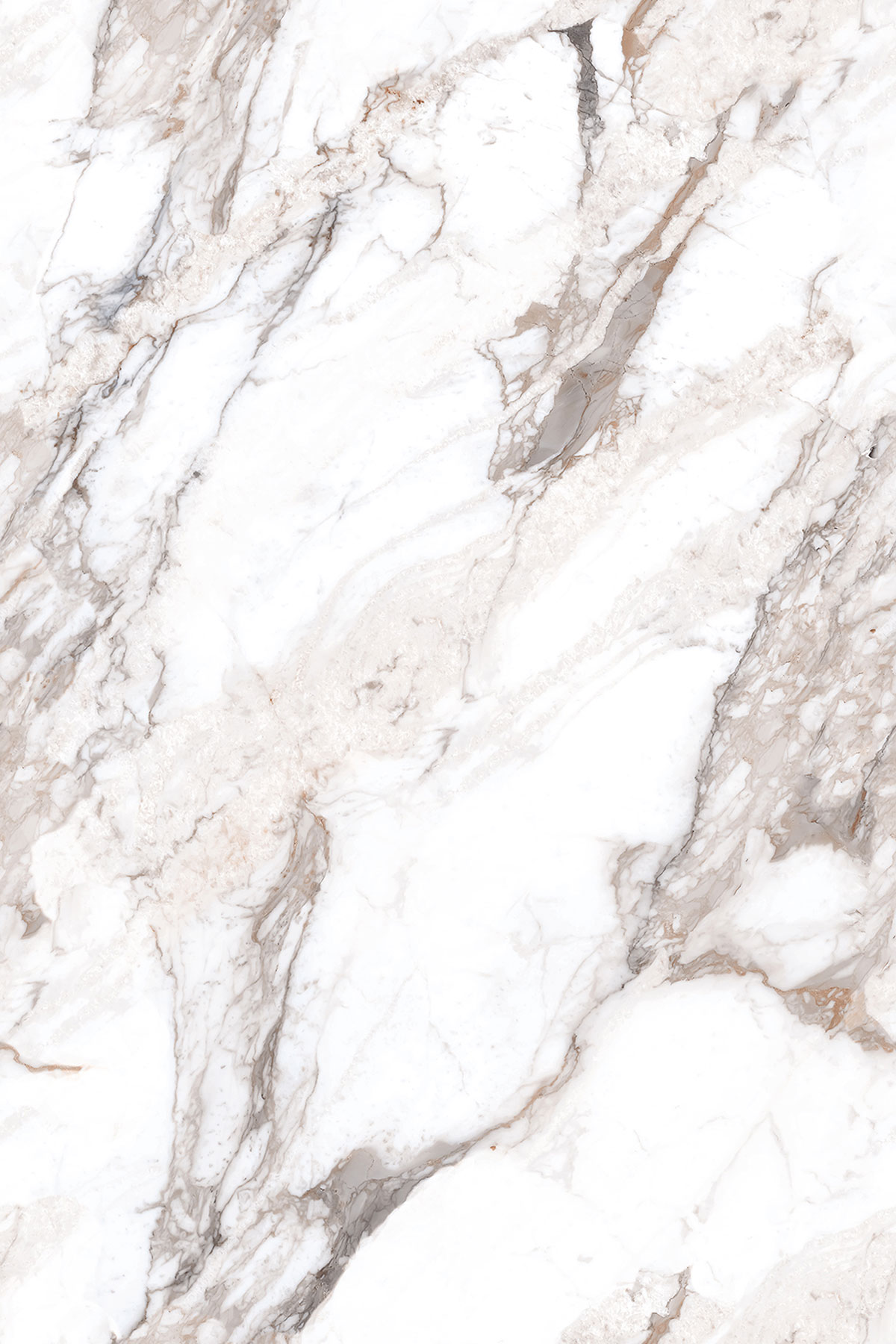
Marble wall tiles for the living room, in the Indian market, almost always mean GVT or PGVT tiles with a marble-look surface design rather than actual cut marble. The reasons are practical: actual marble on a living room wall is porous, stains from contact with cleaning products and oils, and requires periodic sealing. A GVT or PGVT marble-look tile on the same wall gives an indistinguishable visual result from 8 to 10 feet away, with none of the maintenance burden.
The marble-look tile range for living room walls includes Carrara white with fine grey veining, Statuario with bold gold and grey veining, Calacatta with thick dramatic veins, and several Indian-quarried marble appearances, including Makrana white and Ambaji gold. PGVT in 800x1600mm polished finish is the most used format for living room marble wall tiles. For a half-wall or dado marble tile treatment, 600x1200mm in polished or satin matte finish is more manageable to install and produces less waste at the chair rail height cut. Price range: Rs. 60 to Rs. 130 per sq ft.
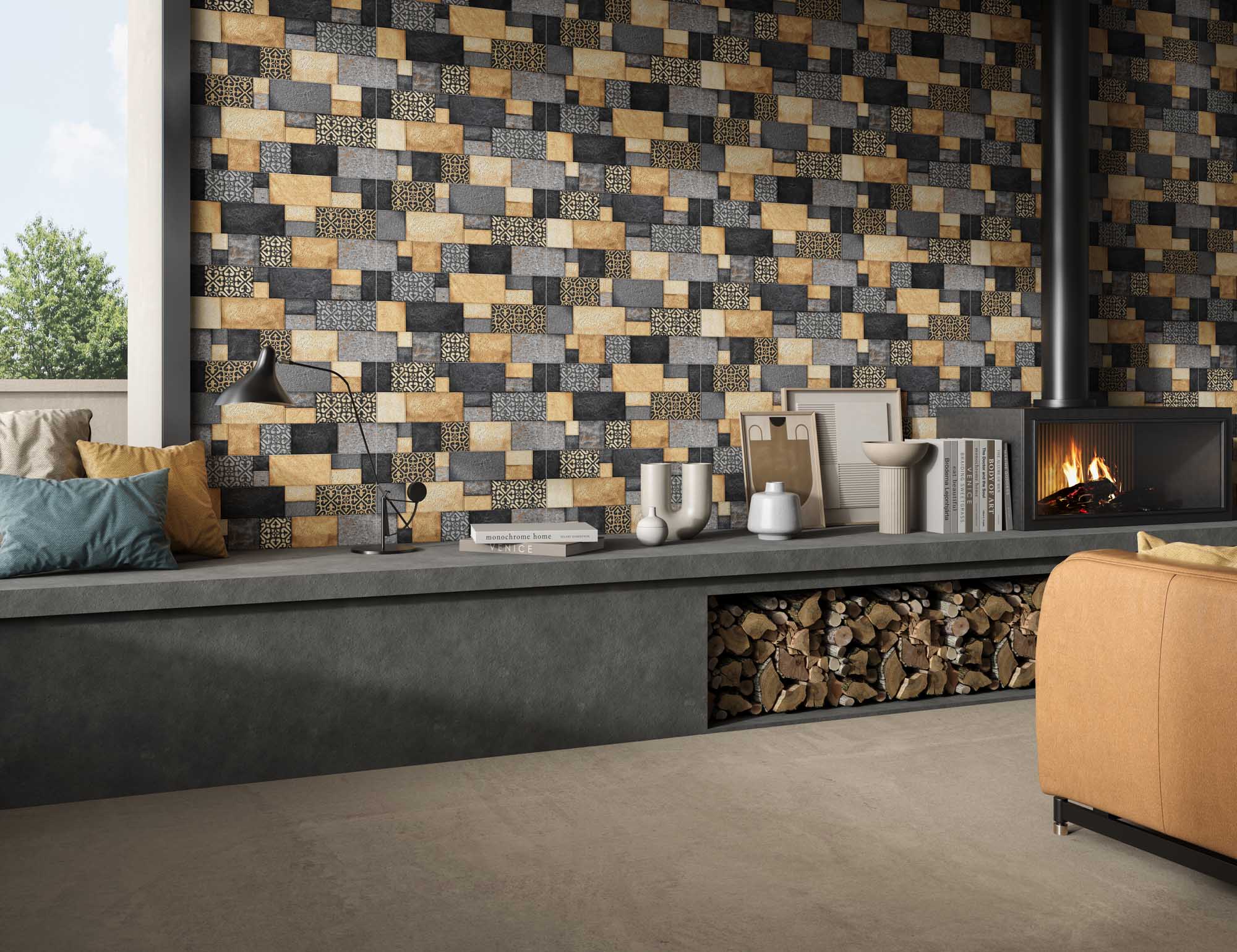
3D wall tiles for a living room are tiles with a pressed or carved surface relief that creates shadow depth on the wall. Unlike flat printed tiles, where the entire effect is visual, 3D tiles have a physical texture that changes with the room lighting: morning light from one direction, evening light from lamps, and artificial lighting from ceiling fixtures all produce different shadow line patterns across the 3D surface.
The most used 3D wall tile for Indian living rooms is GVT in Matte Carving finish in 300x600mm or 600x600mm format. Common 3D patterns include geometric lattice, wave, linear ridge, and abstract relief. A single wall of 3D Matte Carving tiles behind the TV unit or at the end of a longer living room creates a textural focal point that holds visual interest even when the television is switched off.
The scale of the 3D pattern matters in a living room context. A fine-relief tile with shallow grooves reads well from 8 to 12 feet but may look flat from further away. A bold, deep-cut relief pattern, while visually dramatic up close, can look heavy and overstated if used across a full wall in a standard Indian living room. The practical approach is to use 3D tiles on one wall or one panel and pair them with a flat matte tile on adjacent surfaces. Price range: Rs. 55 to Rs. 110 per sq.ft.
A tile accent wall in a living room works on a simple architectural principle: one surface with a different material, texture, or colour draws the eye and becomes the room's visual anchor. Every other element in the room, the furniture, the lighting, the other walls, reads against this anchor. The tile accent wall does not need to be dramatic. A large-format PGVT marble-look panel in a neutral tone can be an accent wall simply through scale and the quality of its surface finish, without any bold colour or complex pattern.
The rules for making a tile accent wall work in a living room: one accent wall per room is enough, the accent wall tile should relate in colour or tone to something else in the room (the sofa fabric, the rug, the ceiling light), and the accent wall tile should be consistent from floor to ceiling without breaking into multiple materials at different heights. A half-finished accent wall that runs from floor level to 7 feet, then switches to paint for the remaining wall height, reads as incomplete rather than designed.
For living rooms where the accent wall connects directly to a hallway or passage, the tile choice has to work from both inside the room and from the approach angle. A wall that is also a hallway terminus benefits from a tile that reads well at both 3 feet and 12 feet. The hallway tiles design guide covers end-wall tile selection for passages that lead into living spaces.
Half wall tiling, also called dado tiling, covers the lower portion of a living room wall from the floor to a defined horizontal line, typically between 36 and 48 inches from the floor. Above the dado line, the wall continues in paint or another finish. This approach has practical and aesthetic logic in a living room: the lower half of the wall is most exposed to contact from furniture, people sitting close to the wall, and cleaning, while the upper half rarely takes any physical contact.
Simple wall tiles design for a living room at half-wall height uses a plain GVT or ceramic glossy tile in a single colour, finished at the top with a chair rail or border tile strip that defines the dado line cleanly. A more considered half-wall treatment uses a tile with a textured or patterned surface on the dado portion and a complementary plain paint colour above. The border strip at the top of the dado is important: without it, the junction between the tile and the plaster looks unfinished.
The proportion of the dado to the full wall height matters. In a room with a standard 10-foot ceiling, a 36-inch dado covers roughly 30% of the wall height and reads as a dado. At 48 inches, it covers 40% and begins to read as a half-wall treatment with more visual weight. In rooms with higher ceilings, 48 to 54 inches gives a correct proportion. In compact living rooms with 9-foot ceilings, keeping the dado at 36 inches prevents the tiled lower section from visually lowering the ceiling further.
Stone wall tiles for a living room are GVT tiles with a surface design replicating slate, sandstone, limestone, or quartzite. On an interior living room wall, the stone-look tile does not need to meet any outdoor performance specification. The body type choice, GVT or ceramic, affects only the surface hardness and finish options available, not weather resistance. Stone look tiles in GHR finish in 300x600mm or 600x600mm are the most common format for living room stone feature walls. The GHR finish gives a stone-look tile depth and surface variation that a flat matte print cannot achieve. Price range: Rs. 50 to Rs. 95 per sq.ft.
A full stone-look feature wall in a living room works best behind the TV unit or on the sofa back wall in a room with a warm colour palette. Beige, sand, and terracotta stone looks suit rooms with warm-toned furniture and wooden elements. Grey and charcoal slate-look tiles suit contemporary rooms with cooler tones and minimal furniture.
Brick wall tiles for a living room are GVT or ceramic tiles with a brick-face surface design used on interior feature walls. In a living room context, brick-look tiles give the room a warm, textured, industrial-domestic quality that works particularly well in casual family living rooms and open-plan spaces. The standard format for brick-look living room wall tiles is 300x600mm in a horizontal running bond, which creates the proportions of actual brick coursing.
Brick-look GVT in matte or GHR finish in red-brown, grey, or ivory tones are the most used directions for living room brick wall tiles. A half-wall dado in brick-look tile below a plain paint above is a common approach for a living room that wants the brick texture without the heaviness of a full floor-to-ceiling brick wall. Price range: Rs. 40 to Rs. 75 per sq ft for brick-look GVT wall tiles from Morbi.
Large wall tiles in 800x1600mm and 1200x1800mm formats are increasingly used for living room feature walls in larger Indian homes. At these sizes, the tile creates a near-seamless wall surface with very few visible grout lines, which reads as a continuous material rather than individual tiles. The visual effect is close to a stone slab or a section of polished marble.
Installing large wall tiles requires specific adhesive and a back-buttering technique. A tile of 800x1600mm weighs significantly more per piece than a 300x600mm tile, and the adhesive must achieve full coverage across the entire back of the tile to prevent voids. Any unfilled void behind a large wall tile creates a hollow area that can crack the tile under thermal expansion or minor impact. Use a flexible tile adhesive with a notched trowel and apply adhesive both to the wall and to the back of the tile before fixing.
Large-format 600x1200mm tiles are the most practical entry point into large-format living room wall tiles: they are easier to handle than 800x1600mm, produce less waste on a standard wall with window and door openings, and still create a strong slab-like visual effect with fewer joints than smaller formats. For first-time large-format wall tile installations, 600x1200mm is the recommended starting size before moving to 800x1600mm.
Textured wall tiles for a living room cover several different tile types: GHR tiles with a surface relief built into the glaze, Matte Carving tiles with deep geometric or abstract cuts, sugar finish tiles with a fine granular surface that diffuses light, and fabric-look or concrete-look GVT with a subtle surface variation that gives a plain tile more visual depth than a flat gloss.
The value of texture on a living room wall is most apparent in rooms with strong directional lighting. A textured tile in a room with recessed ceiling spotlights at an angle will cast shadow lines across the relief pattern in the evening, giving the wall a completely different character from daytime. This lighting interaction is not possible with a flat paint or a flat polished tile and is one of the strongest arguments for using textured wall tiles in a living room that has considered lighting design.
Decorative wall tiles, which include hand-painted looks, abstract pattern GVT, and tiles with scenic or botanical digital prints, work best as accent inserts within a plain tile field rather than across the entire wall. A panel of five to ten decorative tiles set within a field of plain matching tiles on a living room wall reads as a deliberate design element. The same decorative tile repeated across the full wall can look busy and compete with the furniture and other room elements for visual attention.
| Tile Type and Look | Body Type | Format | Finish | Price Range (Rs./sq.ft) |
|---|---|---|---|---|
| Plain colour feature wall | GVT | 600x1200mm, 800x1600mm | Polished or Satin Matte | Rs. 50 to Rs. 100 |
| Marble-look feature wall | PGVT or GVT | 800x1600mm, 1200x1800mm | Polished or Satin Matte | Rs. 60 to Rs. 130 |
| 3D Matte Carving feature wall | GVT | 300x600mm, 600x600mm | Matte Carving | Rs. 55 to Rs. 110 |
| Stone look feature wall | GVT | 300x600mm, 600x600mm | GHR or Matte | Rs. 50 to Rs. 95 |
| Brick look feature wall | GVT or Ceramic | 300x600mm | Matte or GHR | Rs. 40 to Rs. 75 |
| Half-wall dado | Ceramic or GVT | 300x600mm, 600x600mm | Glossy or Matte | Rs. 30 to Rs. 80 |
| Decorative accent panel | GVT | 300x300mm, 300x600mm | Matte or GHR | Rs. 45 to Rs. 90 |
Note on grout for living room wall tiles: Living room wall tiles are an indoor, dry application. Standard cement grout is adequate for living room wall tile joints. Epoxy grout is not required unless the tile is adjacent to a wet area. For white or light-coloured grout joints on a polished PGVT marble-look wall, use a non-sanded cement grout with a stain-resistant additive to keep the joints clean over time.
Living room wall tile selection starts with the wall's role in the room: accent focal point, half-wall treatment, or full feature wall. Once the role is clear, the body type, finish, and size follow. Browse PGVT, GVT, and ceramic options across all living room wall tile directions on TilesFinders and compare finish, size, and body type before shortlisting for your specific wall.
PGVT in polished or satin matte finish in 800x1600mm format is the most used tile for living room feature walls in contemporary Indian homes. PGVT absorbs less than 0.05% water, is specified for walls only, and is available in marble-look, solid colour, and abstract vein patterns that give a feature wall a high-quality, permanent finish. For a textured feature wall, GVT in Matte Carving finish in 300x600mm or 600x600mm is the alternative. Price range: Rs. 55 to Rs. 130 per sq.ft from Morbi.
Yes. PGVT is the correct body type for living room feature walls and is used extensively in Indian residential interiors. PGVT must be used on walls only and must never be installed on any floor. In a living room, PGVT in large formats gives the feature wall a polished, light-amplifying quality that is distinct from the floor tile finish.
For a full feature wall, tile from floor to ceiling without breaking mid-wall. A tile that runs from floor to ceiling reads as intentional and complete. A half-wall dado treatment typically runs from the floor to 36 to 48 inches, depending on ceiling height: 36 inches in rooms with lower or standard ceilings, up to 48 to 54 inches in rooms with ceilings above 10 feet. The dado must be finished with a border or chair rail strip at the top edge to complete the junction cleanly.
In practice, the terms are used interchangeably. A feature wall or accent wall in a living room is one wall surface treated differently from the others, either through tile material, colour, or texture, to create a visual focal point. The TV wall and the sofa back wall are the two most commonly chosen surfaces. The tile on this wall is usually a different tile from the floor, in a finish and format chosen specifically for the wall's role in the room.
Yes. Ceramic tiles are a valid choice for living room walls, including feature walls and dado treatments. Living room walls are dry and do not face the water exposure that makes ceramic a weaker choice in outdoor or wet indoor applications. Ceramic wall tiles in 300x600mm or 300x450mm glossy finish are a cost-effective option for half-wall dado tiling and for simple wall tiles design in living rooms, where budget is a consideration. Price range: Rs. 25 to Rs. 70 per sq ft.
800x1600mm and 600x1200mm are the most used sizes for living room feature walls. Large formats create fewer visible grout joints, which makes the wall read as a continuous surface rather than individual tiles. For 3D and textured tiles, 300x600mm and 600x600mm are more appropriate because the 3D pattern repeat is designed to work at these formats. For half-wall dado tiling, 300x600mm in a horizontal orientation is the most practical format.
Standard cement grout is adequate for living room wall tile joints. Living room walls are dry and do not need the waterproof performance of epoxy grout, which is required for outdoor and wet indoor tile applications. For polished PGVT marble-look walls with white or light-coloured joints, use a non-sanded cement grout with a stain-resistant additive to keep the grout lines clean over time. Grout joint width for large-format wall tiles: 1.5mm to 2mm for a near-seamless appearance.
Mirror wall tiles for a living room are GVT or PGVT tiles with a highly reflective metallic or mirror-effect glaze. They are used as accent inserts within a plain tile field or as narrow highlighter strips to add a reflective element to a feature wall. Full wall coverage in mirror-effect tiles is rarely used in Indian living rooms as it creates a visually restless surface. A border or strip of mirror-look tiles within a plain marble-look or stone-look wall adds light-reflective quality without the visual overload of a fully reflective wall.