




















Best bathroom tile design for modern Indian homes
Choosing good bathroom aesthetics is just as important as styling the rest of your home. Your bat...


Loading designs...
A bathroom with a wood-grain floor reads differently from almost any other tile choice. The warmth of a timber-look surface against white fittings and a plain wall creates a contrast that plain stone or concrete-look tiles do not. The challenge in an Indian bathroom is that the tile has to handle more moisture in a single morning than a bedroom floor handles in a month.
This is where body type and finish become the whole decision. Among wood tiles, the bathroom is the one room where a single wrong specification (the wrong finish on a floor, or the wrong body type in a shower) creates a safety or durability problem that requires full re-tiling to fix. Getting those two choices right from the start is what this page is for.
Prices for wooden bathroom tiles start from Rs. 55 per sq ft for GVT matte plank tiles on a bathroom floor and go up to Rs. 160 per sq ft for large-format PGVT polished wood grain tiles on bathroom walls.
Bathrooms have two fundamentally different zones: surfaces that carry standing or flowing water, and surfaces that only carry humidity and occasional splatter. The tile specification for each zone is different, and confusing the two causes problems that no amount of grout or sealer can fix afterwards.
The most important thing to understand about bathroom tiles is that the body type and finish must be matched to the zone, not just the room. On floors, including the shower tray, GVT with matte or GHR finish is the minimum specification. GVT absorbs 0.05% water, which means the tile body stays completely stable under daily showering, mopping, and six months of monsoon humidity every year. Matte finish gives the anti-skid grip that a wet floor needs. No other tile body type meets both of these requirements at the same time for bathroom floors in India.
On bathroom walls, the zone matters. Wet shower walls that take direct water flow need GVT or PGVT with epoxy grout in all joints. Dry bathroom walls away from the shower zone can take ceramic wood grain tiles in glossy or matte finish, which is the most cost-effective wall option at Rs. 30 to Rs. 65 per sq.ft. The distinction between wet and dry wall zones determines whether ceramic is an option or whether GVT or PGVT is required.
Note: Porcelain wood tiles absorb 2% to 5% water and are not suitable for bathroom floors or shower walls. Ceramic absorbs 12% to 16% and is suitable for dry bathroom walls only. The only body type safe for all bathroom floor and shower wall applications is GVT, with full body vitrified as an alternative for heavy commercial bathrooms.
The plank format is what makes a wood look tile on a bathroom floor convincing. A 200x1200mm (8x48) plank tile laid parallel to the longest wall of the bathroom creates the same directional grain line that real timber flooring gives, scaled to a bathroom that might be 6 feet by 8 feet. The narrow proportion of the plank makes even a small bathroom feel organised and deliberate rather than randomly tiled.
For a standard Indian bathroom between 40 and 80 square feet, the 600x1200mm (2x4) board format is the most practical choice. It covers ground quickly, uses fewer grout joints than a plank tile, and works with both a straight-run and a simple offset brick laying pattern. A wooden bathroom floor in this size costs Rs. 55 to Rs. 120 per sq.ft in GVT matte.
In a small bathroom with a wood tile floor, the grain direction matters more than in a larger space. Running the long side of the tile toward the entry door pulls the eye along the length of the room and makes the floor feel longer than it is. Running it perpendicular to the entry makes the room feel wider. This decision costs nothing and changes how the room reads significantly.
The finish specification for a bathroom floor is non-negotiable. Matte GVT tiles are the standard for all bathroom floors. GHR (Glaze High Resistance) finish is the better specification for shower floors specifically, because the textured surface gives a stronger grip than standard matte under flowing water. Never use Polished Glossy, Polished High Glossy, Satin Matte, or any semi-polished finish on a bathroom floor. These finishes are extremely slippery when wet and are responsible for most bathroom slip injuries related to tiling.
The shower is the most demanding zone in a bathroom and deserves its own specification separate from the rest of the room.
A shower tile that looks like wood on the floor needs a GHR finish GVT in a size that the laying contractor can slope toward the drain. Smaller plank tiles in 200x1000mm (8x40) are easier to lay with a consistent fall toward the drain than larger 2x4 boards, which need precise sub-base preparation to slope correctly without lippage. The floor beneath the shower tray must be waterproofed with a membrane or two coats of cementitious waterproofing before any tile is laid. This step is not optional. A shower floor without a waterproofing layer beneath the tile will leak into the floor slab within one to two monsoon seasons.
Wood tile shower walls work well with GVT matte or PGVT Polished Glossy in 600x1200mm (2x4) format. The polished surface on shower walls makes cleaning soap residue straightforward and reflects the shower light to brighten the enclosed space. Wood grain shower tile in a grey or light beige tone on shower walls, combined with the same grain in matte on the shower floor, is the most common combination in contemporary Indian bathroom design.
All shower wall tile joints must be filled with epoxy grout from top to bottom with no gaps. A single missed joint in a shower wall allows water behind the tile, which saturates the wall substrate and eventually causes the tiles to hollow and come off. The industry standard is to apply a thin waterproofing coat on the shower wall substrate before fixing tiles, in addition to using epoxy grout.
Note: Do not use ceramic or porcelain tiles on shower walls. The shower enclosure is a fully wet zone and requires GVT or PGVT with 0.05% water absorption. Ceramic absorbs 12% to 16% and porcelain 2% to 5%, both of which are too high for a surface that carries direct water flow daily.
Outside the shower zone, bathroom walls have more design flexibility than the floor. The body type choice opens up from GVT-only to include PGVT for polished looks and ceramic for dry wall areas, which changes both the visual options and the cost.
Full-height tiling from floor to ceiling on all bathroom walls is the most moisture-resistant option for Indian bathrooms. Bare plaster above dado height in an Indian bathroom absorbs monsoon-season humidity and eventually develops patches, discolouration, and fungal growth. A wood-grain tile from floor to ceiling eliminates this surface entirely. Wood tiles for bathroom walls in full-height PGVT Polished Glossy finish in 600x1200mm start from Rs. 80 per sq.ft.
On the wall behind the basin and the feature wall opposite the entry, a wood grain tile in PGVT Polished High Glossy amplifies the depth of the grain pattern in a way that matte finish does not. The reflection creates a sense of depth on the wall that makes a compact bathroom feel significantly larger. This effect works best with lighter grain colours, particularly white and light grey, because darker tones absorb light rather than reflecting it.
For dry bathroom walls away from the shower and basin splash zone, wood effect bathroom wall tiles in ceramic glossy finish are the most cost-effective choice. A bathroom where GVT or PGVT is used in the shower and around the basin, with ceramic wood grain tiles on the remaining dry walls, keeps the project budget reasonable without compromising moisture safety where it matters.
The most common mistake in bathroom design with wood tiles is using the same grain tone on the floor and all four walls without variation. A bathroom where every surface is the same dark walnut grain feels enclosed regardless of its actual size. The most successful bathrooms use the wood grain on one or two surfaces and contrast it with a plain or lighter surface on the rest.
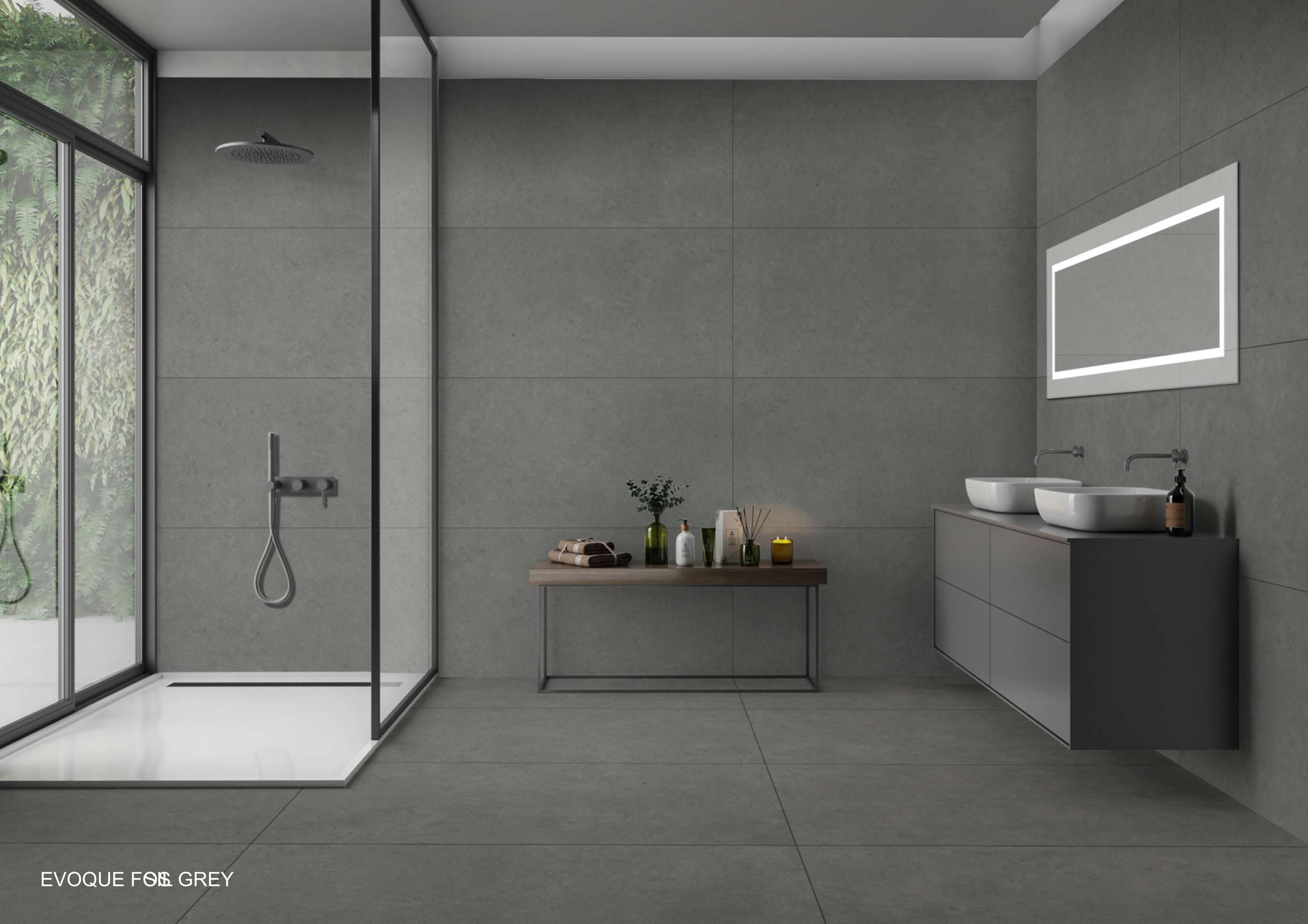
A grey wood tile bathroom floor in GVT matte with white PGVT polished walls is the most searched contemporary bathroom combination in India right now. The grey grain on the floor anchors the room. White polished walls reflect light and open the space. Chrome or brushed steel fittings complete the look. This combination works in bathrooms from 40 square feet upward and does not require a large room to read well.
A modern wood tile bathroom typically runs the wood grain on the floor only, with a white or light grey plain tile on the walls. Concealed plumbing, a wall-mounted basin, and a frameless shower screen complete the aesthetic. The wood grain floor is the focal point and every other surface defers to it. In this design, the grain direction on the floor should run toward the primary viewing angle, which is usually from the bathroom doorway.
A bathroom design with wood tiles in the same grain colour on both the floor and walls creates a tonal, spa-like feel. The key to making this work is using matte finish on the floor and polished finish on the walls. The finish difference creates enough variation between the two surfaces that the room does not feel flat. A light beige or honey grain tone works best for this approach because darker tones in a tonal bathroom can feel heavy.
A bathroom with porcelain wood tile is a workable design for dry-zone bathroom floors in bedrooms that have an attached toilet room without a shower. In this configuration, the toilet room floor takes porcelain wood tile in matte finish because the moisture exposure is limited and the porcelain body at Rs. 45 to Rs. 80 per sq.ft is more budget-friendly than GVT. The shower room floor, if separate, must use GVT regardless.
| Floor Tile | Wall Tile | Fitting Style | Overall Feel |
| Grey GVT matte plank | White PGVT polished | Chrome wall-mounted | Contemporary, clean, minimal |
| Light beige GVT matte plank | Light beige GVT matte (same grain) | Brass or gold fittings | Warm, spa-like, cohesive |
| Dark walnut GVT matte plank | White or cream PGVT polished | Matte black fittings | Dramatic, high-contrast, hotel-style |
| Grey GVT matte 2x4 | Grey PGVT polished (same tone) | Chrome concealed fittings | Tonal, architectural, seamless grain |
Ceramic is the most affordable option in the wood grain category, and it has a legitimate role in bathroom design, but only in the right zone. The dry walls of a bathroom (the wall above dado height that does not face the shower, the wall opposite the basin, or the wall beside the toilet) are the correct locations for ceramic wood grain tiles. Glossy ceramic in a wood grain pattern at Rs. 30 to Rs. 65 per sq.ft on these surfaces keeps the project budget lower without putting a water-absorbing body in a position where it will be exposed to consistent moisture.
The full breakdown of ceramic body type, IS 13630 absorption classification, rectified vs non-rectified tiles, and kitchen and bathroom wall specifications is on the wood look ceramic tiles page, which covers every practical aspect of ceramic wood grain tile use in Indian homes.
| Size (mm) | Alias | Best Bathroom Use | Body | Price Rs./sq.ft |
| 200x1200 | 8x48 | Bathroom floor, shower floor | GVT matte | Rs. 55 to Rs. 120 |
| 200x1000 | 8x40 | Small bathroom floor, shower floor | GVT matte, GHR | Rs. 50 to Rs. 95 |
| 600x1200 | 2x4 | Bathroom floor, bathroom wall | GVT or PGVT | Rs. 55 to Rs. 150 |
| 300x600 | 12x24 | Bathroom wall, shower wall | GVT, PGVT, Ceramic (dry wall only) | Rs. 30 to Rs. 100 |
| 800x1600 | 32x64 | Large bathroom floor, feature wall | GVT or PGVT | Rs. 75 to Rs. 160 |
| Bathroom Zone | Body Type | Finish | Grout | Price Rs./sq.ft |
| Bathroom floor (dry zone) | GVT | Matte, GHR | Epoxy | Rs. 55 to Rs. 120 |
| Shower floor | GVT | GHR, Matte | Epoxy (mandatory) | Rs. 55 to Rs. 120 |
| Bathroom wall (wet zone) | GVT or PGVT | Matte or Polished Glossy | Epoxy | Rs. 55 to Rs. 160 |
| Shower walls | GVT or PGVT | Polished Glossy, Matte | Epoxy (mandatory) | Rs. 65 to Rs. 160 |
| Bathroom wall (dry zone only) | Ceramic | Glossy, Matte | Epoxy recommended | Rs. 30 to Rs. 65 |
GVT wood look tiles for bathroom floors and PGVT wood grain tiles for bathroom walls are both manufactured in Morbi, Gujarat. The bathroom-relevant size range from Morbi includes 200x1200mm (8x48) and 200x1000mm (8x40) plank tiles for floors, 600x1200mm (2x4) for both floors and walls, and 300x600mm (12x24) in ceramic and GVT for bathroom walls. GVT matte wood look bathroom floor tiles from Morbi start from Rs. 55 per sq.ft. PGVT Polished Glossy wood grain bathroom wall tiles start from Rs. 80 per sq.ft. Ceramic wood grain tiles for dry bathroom walls start from Rs. 30 per sq.ft. Prices vary by brand, grain complexity, and order size. Always confirm the batch number when ordering for a full bathroom, as grain pattern shade can vary between batches from the same manufacturer.
GVT matte and GHR wood look tiles for bathroom floors, PGVT Polished Glossy wood grain tiles for shower and bathroom walls, and ceramic wood grain tiles for dry bathroom wall areas are all listed on TilesFinders with body type, water absorption rate, finish grade, and size alias on every product card. Use the finish filter to separate matte from polished, and the category filter to switch between GVT, PGVT, and ceramic based on the bathroom zone you are specifying for.
GVT (Glazed Vitrified Tiles) with matte or GHR finish is the correct specification for a wood look bathroom floor in India. GVT absorbs 0.05% water, which keeps the tile body stable through daily showering and monsoon-season humidity. The matte or GHR finish gives anti-skid traction on a wet floor. Plank sizes 200x1200mm (8x48) and 600x1200mm (2x4) are the most used formats for bathroom floors with a wood grain look. Prices start from Rs. 55 per sq.ft.
GVT and PGVT wood tiles work on shower walls. PGVT in Polished Glossy finish is the most common choice for shower walls because the polished surface is easy to clean and resists soap residue. The shower tray and shower floor must use GVT matte or GHR finish for slip safety. All shower wall tile joints must be filled with epoxy grout and the shower tray base must be waterproofed with a membrane or cement-based waterproofing coat before tiles are fixed. Do not use ceramic or porcelain tiles on shower walls in a fully enclosed wet shower area.
Wood effect tiles in matte or GHR finish are not slippery when wet and are safe on bathroom floors. Glossy, Polished Glossy, Polished High Glossy, and Satin Matte finishes are slippery when wet and must never be placed on any bathroom floor. On shower floors specifically, GHR finish gives stronger anti-skid performance than standard matte and is the recommended specification for enclosed shower areas. Always specify finish explicitly when ordering bathroom floor tiles.
A 600x1200mm (2x4) tile laid with the long side running toward the entry door makes a small bathroom feel longer. A 200x1000mm (8x40) plank laid diagonally adds width to a narrow bathroom. Avoid very large formats like 800x1600mm in a small bathroom because the number of cuts required increases waste significantly and the large tile proportion can feel out of scale in a compact space. For shower floors in small bathrooms, a 200x1000mm (8x40) plank in matte GVT is a practical choice.
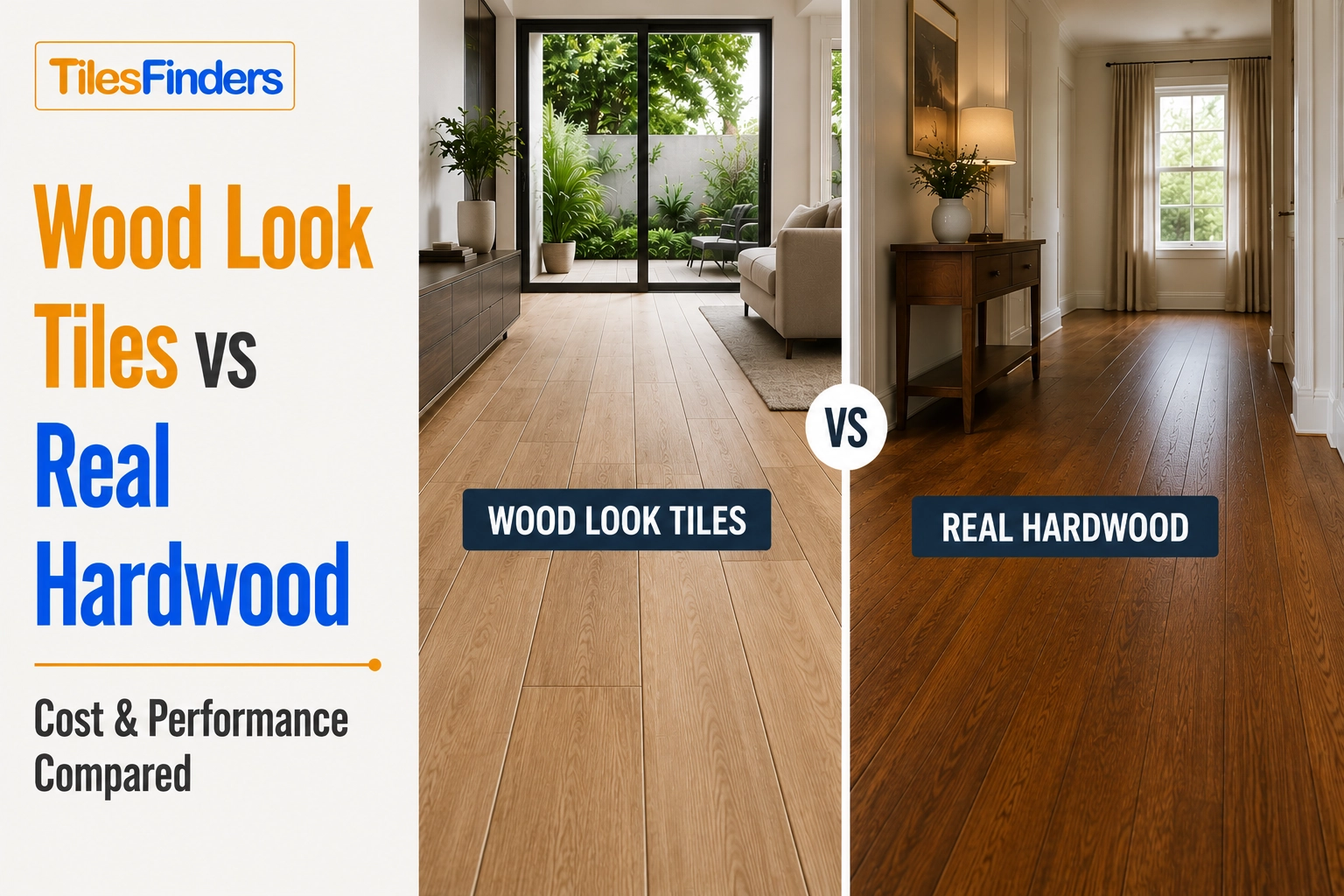
Yes, but the finish must differ between floor and wall. On the floor, use GVT matte or GHR finish for slip safety. On the wall, you can use GVT matte, PGVT Polished Glossy, or PGVT Polished High Glossy depending on the look you want. The same grain pattern and colour can run from floor to wall; specifying the same tile series in two different finishes is the standard way to achieve this. Most GVT wood tile ranges are available in both matte (floor) and polished (wall) finishes from the same manufacturer.
Epoxy grout is mandatory for bathroom floor tiles and shower tiles. It does not absorb water or cleaning chemicals, does not stain, and keeps its colour consistently over years of bathroom use. On bathroom walls away from the shower zone, cement-based grout is acceptable but epoxy is still the better long-term choice. Use a 2mm joint for 600x1200mm tiles and 3mm for larger formats. For shower floor tiles, a 2mm joint with full epoxy grout coverage prevents water from reaching the waterproofing layer beneath.
A modern wood tile bathroom typically uses grey or dark plank-format tiles on the floor with white or light-coloured walls, minimal grout joints, and wall-mounted fittings. A traditional wood tile bathroom tends to use warmer beige or honey grain tones, dado-height tiling, and more visible grout lines. The tile body and technical specification are the same in both cases. The difference is in colour selection, grout colour, fitting style, and how much of the wall surface is tiled.
Light grain tones in beige or cream work best in bathrooms with no natural light. These colours reflect artificial light more effectively than grey or dark tones and prevent the room from feeling enclosed. On the wall, white or light beige PGVT wood grain tiles in Polished Glossy finish amplify the light reflection further. On the floor, a light GVT matte plank tile keeps the room feeling open. Avoid dark walnut or charcoal grain tones in bathrooms with no windows as they absorb light and make the space feel smaller.