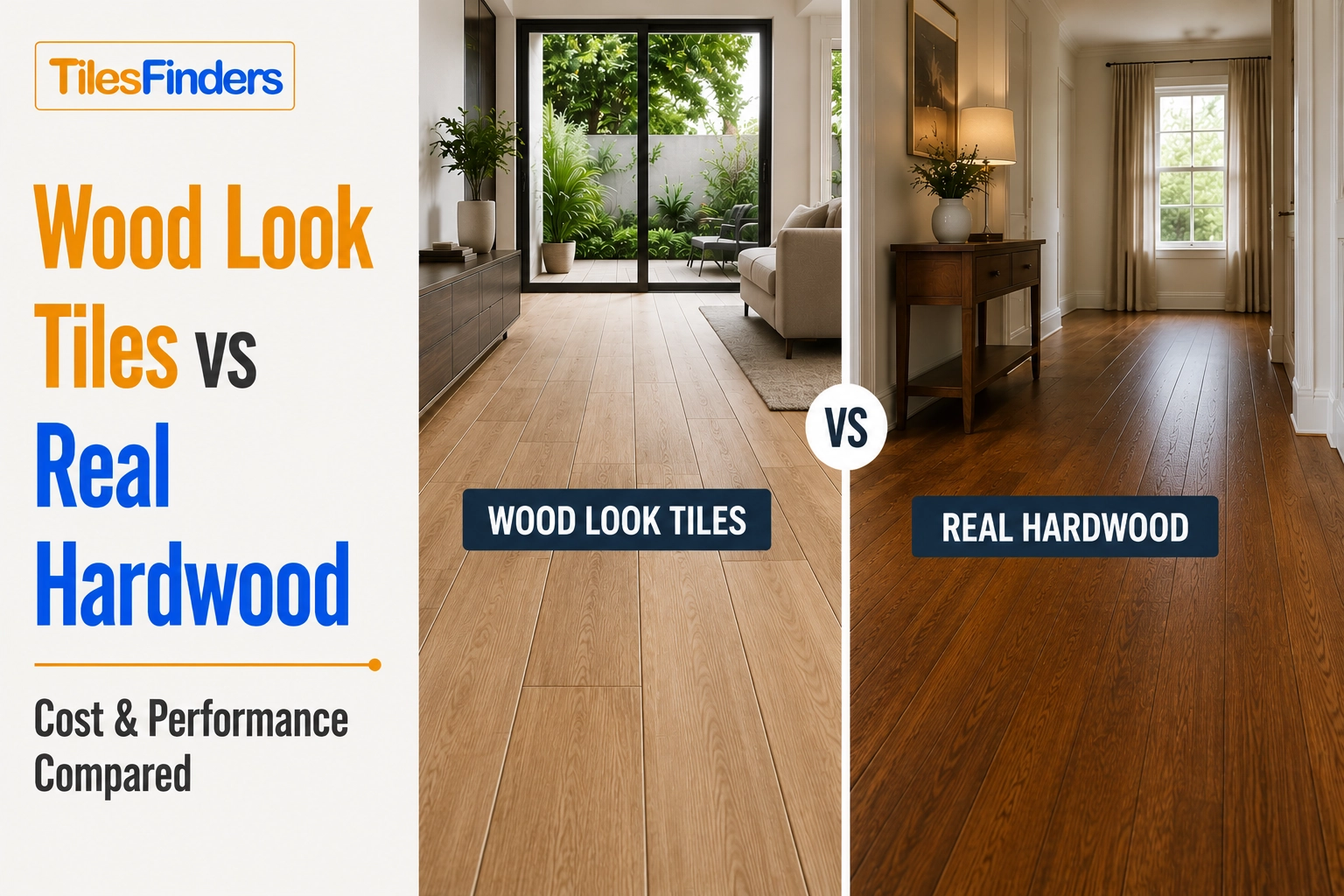
Wood Look Tiles vs Real Hardwood: Cost & Performance Compared
Compare wood-look tiles and real hardwood flooring for Indian homes. Explore costs, durability, maintenance, moisture resistance, and long-term value before you choose.
- Why This Floor Decision Carries More Weight Than Most People Expect
- What Each Option Actually Is
- Cost Comparison: What You Actually Pay in India
- Performance Compared Across What Matters in Indian Homes
- Quick Reference: Wood Look Tiles vs Real Hardwood
- Choosing the Right Wood Look Tile: Size and Finish
- Expert Tips Before You Decide
- Common Mistakes When Choosing Between Wood Look Tiles and Hardwood
- Making the Right Call for Your Home
The floor you choose stays with you for decades. Replacing it costs money, time, and weeks of disruption to daily life at home.
Most Indian homeowners today are caught between two strong options: wood-look tiles that mimic the warmth of timber floors, and real hardwood that brings the genuine article into the room. Both have loyal advocates. Both have real drawbacks. And the wrong choice for your specific home can cost lakhs to fix.
This guide breaks down wood tiles versus real hardwood across every factor that matters in Indian homes: upfront cost, long-term upkeep, how each holds up to monsoon humidity, and which one a buyer values more when you eventually sell the flat.
Why This Floor Decision Carries More Weight Than Most People Expect
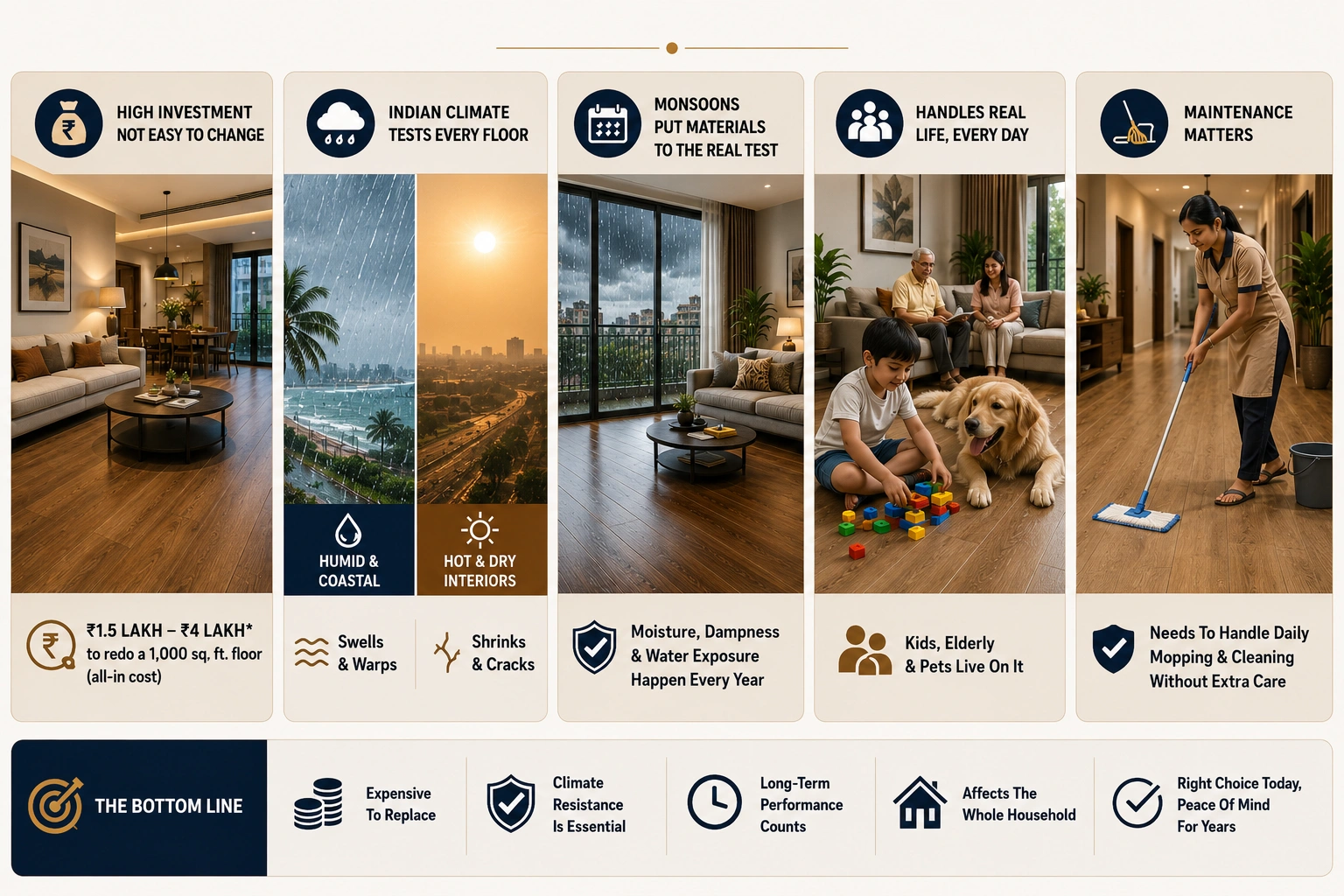
Flooring is not like paint or curtains. You cannot change your mind on a weekend. In a 1,000 sq. ft. apartment, laying new floors typically costs between ₹1.5 lakh and ₹4 lakh all-in, including materials, labour, and the chaos of furniture shifting.
The Indian climate adds its own pressure. Coastal cities like Mumbai and Kochi bring humidity that swells and warps real wood over time. Interior cities like Ahmedabad and Nagpur bring extreme dry summer heat that shrinks it. Monsoon months test every material in ways that temperate-climate flooring guides never mention.
For homeowners looking to make feature walls more expressive, combining wood-look planks with 3D Wall Tiles can add depth, shadow play, and a striking focal point in living rooms and bedrooms.
Then there is maintenance. A house with children, elderly family members, pets, or daily mopping from domestic help needs a floor that handles all of it without demanding annual refinishing or special cleaning products.
Getting this decision right the first time matters.
What Each Option Actually Is
Wood Look Tiles
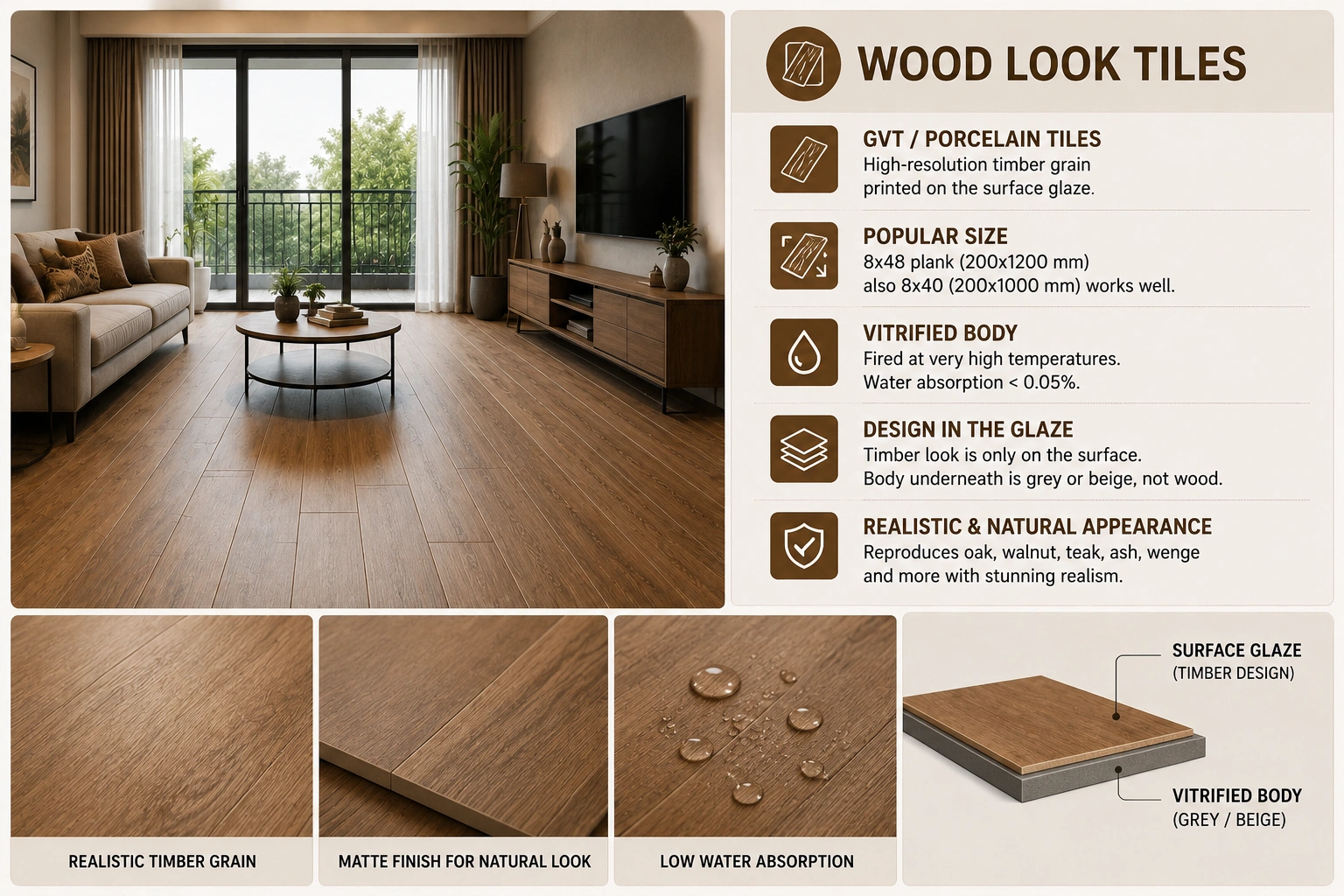
Wood look tiles are GVT (Glazed Vitrified Tiles) or porcelain tiles printed with high-resolution timber grain patterns on the surface glaze. The most popular size is the 8x48 plank tile (200x1200 mm), which replicates the long plank format of real hardwood floors. Sizes like 8x40 (200x1000 mm) also work well.
The body of the tile is vitrified, meaning it is fired at very high temperatures and absorbs virtually no water (under 0.05% for GVT). The timber appearance sits entirely in the surface glaze. Under the design, the tile body is grey or beige, not wood.
Good quality wood-effect tiles from Indian manufacturers now reproduce oak, walnut, teak, ash, and wenge patterns with enough realism that casual visitors to a room genuinely mistake them for timber boards.
Wood-look planks continue to be one of the most popular surface styles in modern interiors. Alongside wood effects, homeowners are also exploring marble, subway, bookmatch, and textured surfaces featured in our trending tile looks guide.
Real Hardwood Flooring
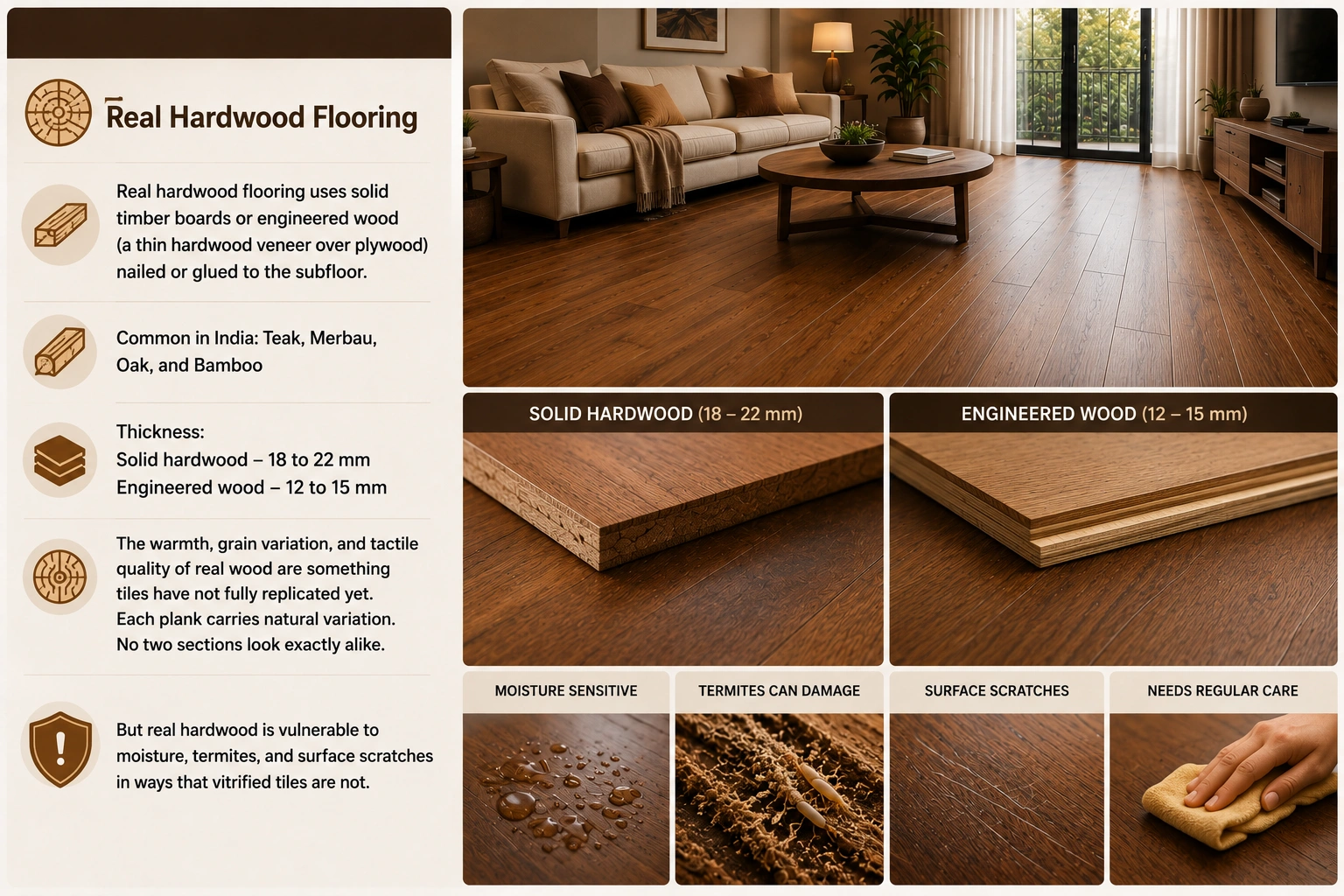
Real hardwood flooring uses solid timber boards or engineered wood (a thin hardwood veneer over plywood) nailed or glued to the subfloor. Teak, merbau, oak, and bamboo are common in India. Solid hardwood boards run 18 to 22 mm thick. Engineered wood runs thinner at 12 to 15 mm.
The warmth, grain variation, and tactile quality of real wood are something tiles have not fully replicated yet. Each plank carries natural variation. No two sections of a real hardwood floor look exactly alike.
But real hardwood is vulnerable to moisture, termites, and surface scratches in ways that vitrified tiles are not.
Cost Comparison: What You Actually Pay in India
Prices below are approximate 2026 market ranges. They vary by brand, grade, and the city you are buying in.
| Factor | Wood Look Tiles (GVT/Porcelain) | Real Hardwood (Solid/Engineered) |
| Material cost per sq. ft. | ₹60 to ₹180 | ₹150 to ₹600+ |
| Installation cost per sq. ft. | ₹25 to ₹50 | ₹60 to ₹120 |
| Total installed cost per sq. ft. | ₹85 to ₹230 | ₹210 to ₹720+ |
| Typical 1,000 sq. ft. apartment cost | ₹85,000 to ₹2.3 lakh | ₹2.1 lakh to ₹7.2 lakh |
| Refinishing/resurfacing (per 10 years) | Not required | ₹40 to ₹80 per sq. ft. |
| Replacement cost if damaged | Moderate (matching tiles can be hard) | High (imported wood is expensive) |
| GST | 18% | 18% on materials; varies on services |
The cost gap is real and significant. For a family budgeting a renovation in a 2BHK or 3BHK society apartment, wood look tiles at ₹85,000 to ₹1.5 lakh versus real hardwood at ₹2 to ₹5 lakh is a difference that changes how much budget remains for kitchen fittings, bathroom upgrades, and furniture.
Performance Compared Across What Matters in Indian Homes
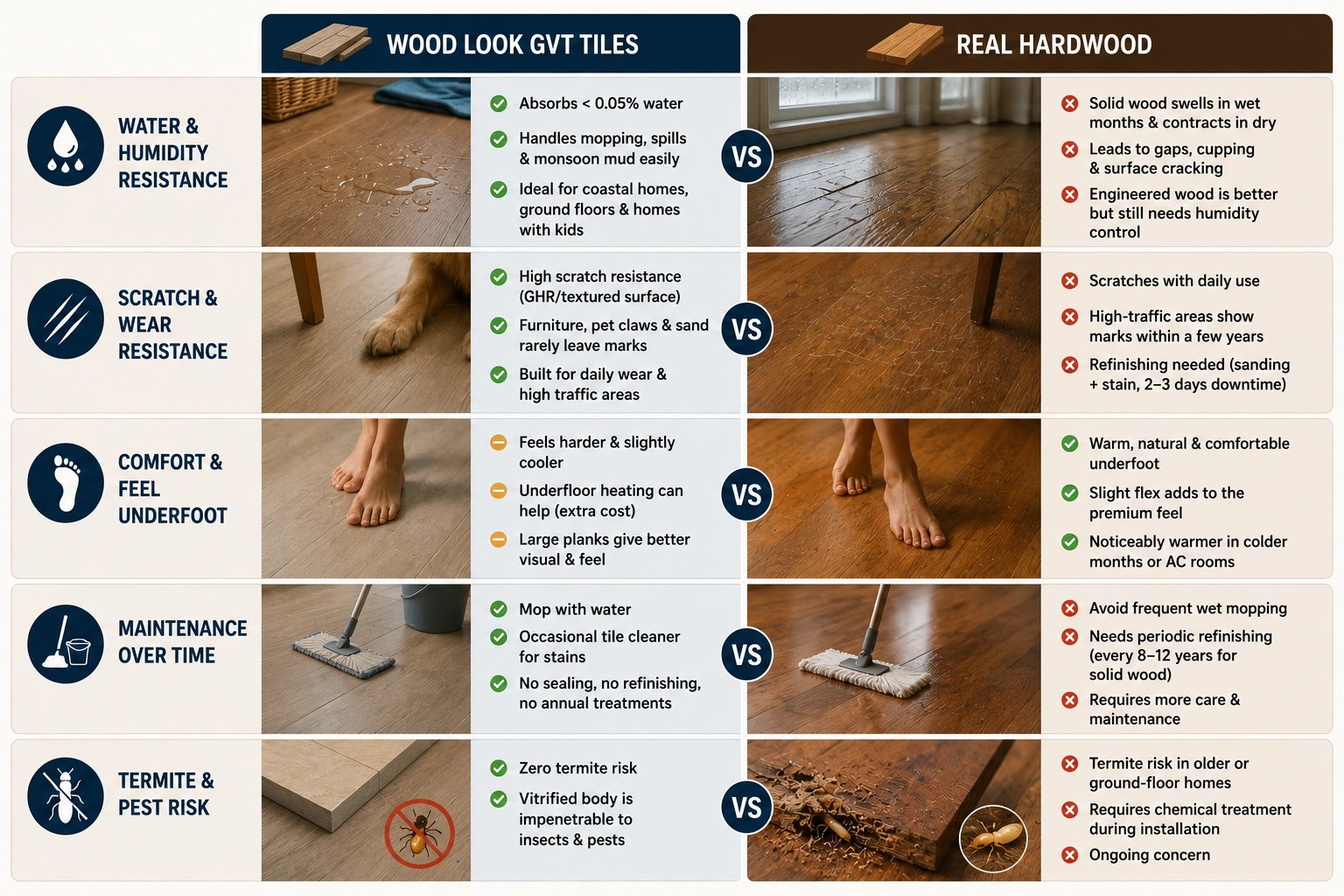
Water and Humidity Resistance
Wood looks at GVT tiles that absorb less than 0.05% water. They handle mopping, bathroom spills, and monsoon mud tracked in from outside without any surface damage. Coastal homes, ground-floor flats, and apartments with toddlers running around all benefit from this.
Real hardwood and humidity are a difficult combination in India. Solid timber swells in wet months and contracts in dry ones. Over the years, this movement causes gaps between planks, cupping (edges rising), and sometimes surface cracking. Engineered wood handles this better than solid hardwood, but even engineered wood needs careful humidity control in cities like Mumbai, Kochi, or Kolkata.
Scratch and Wear Resistance
Matte finish wood finish tiles with a GHR (Glaze High Resistance) or textured surface are scratch-resistant for daily household use. Furniture dragging, pet claws, and sand tracked in from outside rarely leave marks on a good-grade GVT plank tile.
Real hardwood scratches. This is a known fact that any honest hardwood dealer will confirm. High-traffic areas like corridors and near doorways show marks within a few years. Refinishing restores the surface, but it is a process that requires sanding the floor, applying fresh stain, and staying off the floor for two to three days.
Comfort and Feel Underfoot
This is where real hardwood genuinely wins. A timber floor has a slight flex and warmth underfoot that tiles cannot match. In the colder months, or in air-conditioned rooms, walking barefoot on real wood feels noticeably warmer and more comfortable than tiles.
Wood deck tiles, especially larger plank formats, feel harder and slightly colder. Underfloor heating systems can address the temperature gap, but that is an additional cost and not common in Indian homes yet.
Maintenance Over Time
Tile maintenance in Indian homes is simple. Mop with water. Occasional tile cleaner for stains. No annual treatment, no sealing, no refinishing. The matte finish on a wood look GVT plank handles daily mopping from a bai without losing its appearance.
Hardwood needs more attention. It should not be wet-mopped frequently. It needs periodic refinishing (typically every 8 to 12 years for solid wood). In homes with domestic help who mop aggressively, this is a genuine problem.
Termite and Pest Risk
Tiles have zero termite risk. Vitrified tile bodies are impenetrable to insects.
Real hardwood, particularly in older buildings or ground-floor flats, carries termite risk. Proper chemical treatment during installation is important, but it is an ongoing concern that tiles simply do not share.
Quick Reference: Wood Look Tiles vs Real Hardwood
| Criteria | Wood Look Tiles | Real Hardwood |
| Water resistance | Excellent (0.05% absorption) | Poor (solid) / Moderate (engineered) |
| Scratch resistance | High (matte/GHR finish) | Low to moderate |
| Warmth underfoot | Moderate | High |
| Maintenance effort | Low (mop and go) | High (refinishing needed) |
| Termite risk | None | Moderate to high |
| Cost range (installed) | ₹85 to ₹230 per sq. ft. | ₹210 to ₹720 per sq. ft. |
| Lifespan | 25 to 40+ years | 20 to 30 years (with maintenance) |
| Resale perception | Good (modern look) | Premium (aspirational) |
| Best Indian climate fit | All climates | Dry interiors only |
| Pet/child friendly | Yes | Moderate (scratches easily) |
Choosing the Right Wood Look Tile: Size and Finish
Recommended Sizes
The 8x48 plank tile (200x1200 mm) is the closest match to real hardwood plank proportions. It works on both floors and walls, giving living rooms and bedrooms the long, flowing grain lines that make wood look convincing. For smaller rooms, the 8x40 (200x1000 mm) plank also works well without overwhelming the space.
Avoid using small square tiles to mimic wood. 300x300 or 600x600 tiles in a wood print do not read as hardwood floors at a glance. The plank format is what creates the visual effect.
| Size (mm) | Common Name | Best Use |
| 200x1200 | 8x48 plank | Living room, bedroom, corridor, floors and feature walls |
| 200x1000 | 8x40 plank | Smaller rooms, bathrooms (avoid wet floor with glossy finish) |
| 600x1200 | 2x4 | Larger floor areas where full-length planks feel too long |
Best Finishes for Wood Look Tiles
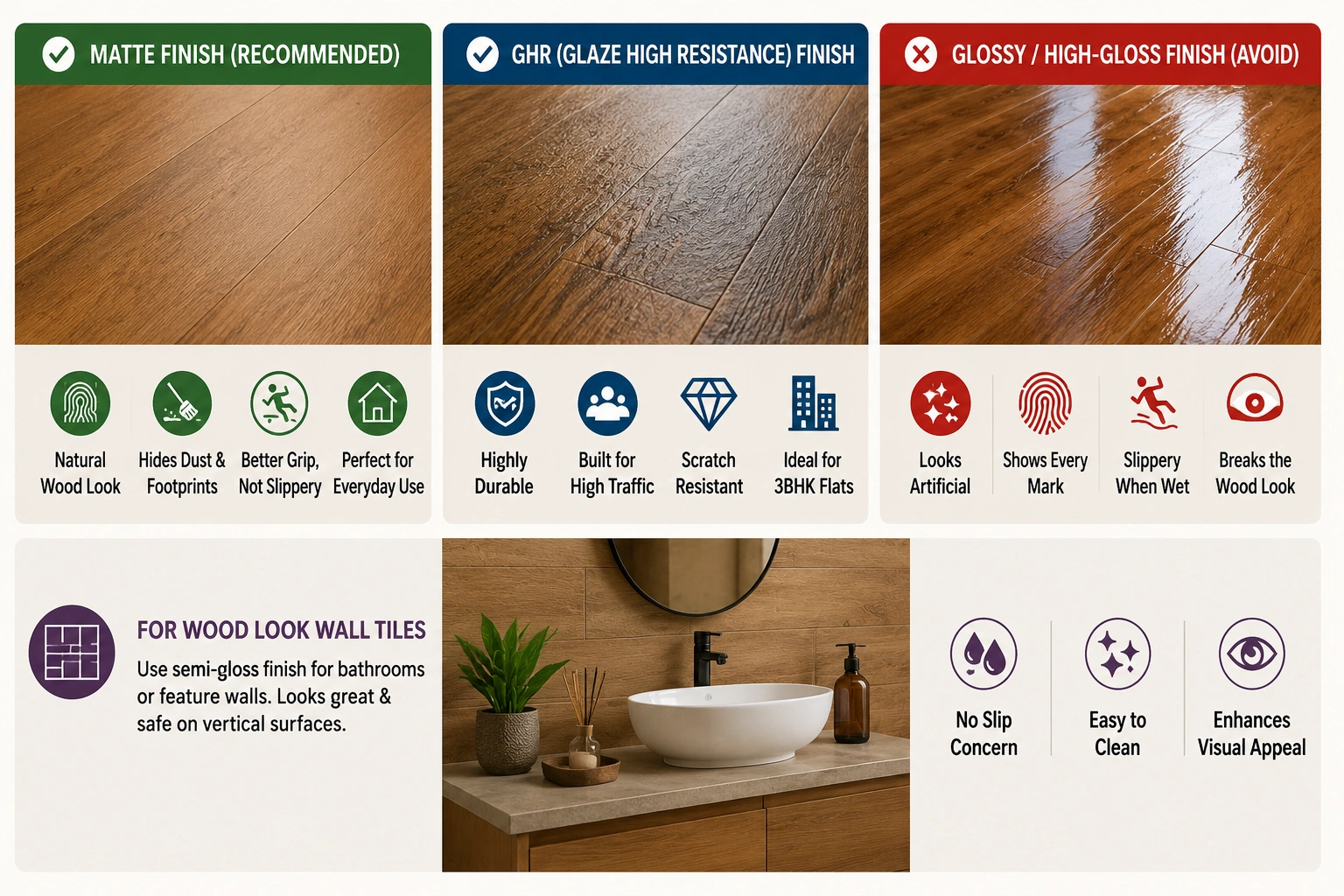
Matte finish is the right choice for most wood-look tile floors. It replicates the natural, slightly textured look of real timber without the slipperiness of polished tiles. Matte also hides dust and footprints far better than glossy, which matters in Indian homes where daily sweeping is standard.
GHR (Glaze High Resistance) finish adds a stone-like texture and works well for high-traffic areas like corridors and the hall in a 3BHK flat. Avoid glossy or high-gloss finishes on wood-look floor tiles; they betray the illusion immediately and become slippery when wet.
For wood look wall tiles in bathrooms or feature walls, a semi-gloss finish works, since slip resistance is not a concern on vertical surfaces.
If you're planning a bathroom or kitchen renovation, wood-look surfaces pair beautifully with subway tiles design on walls and backsplashes, creating a balanced mix of warmth, texture, and timeless design.
Expert Tips Before You Decide
1. Test samples at home, not in the showroom
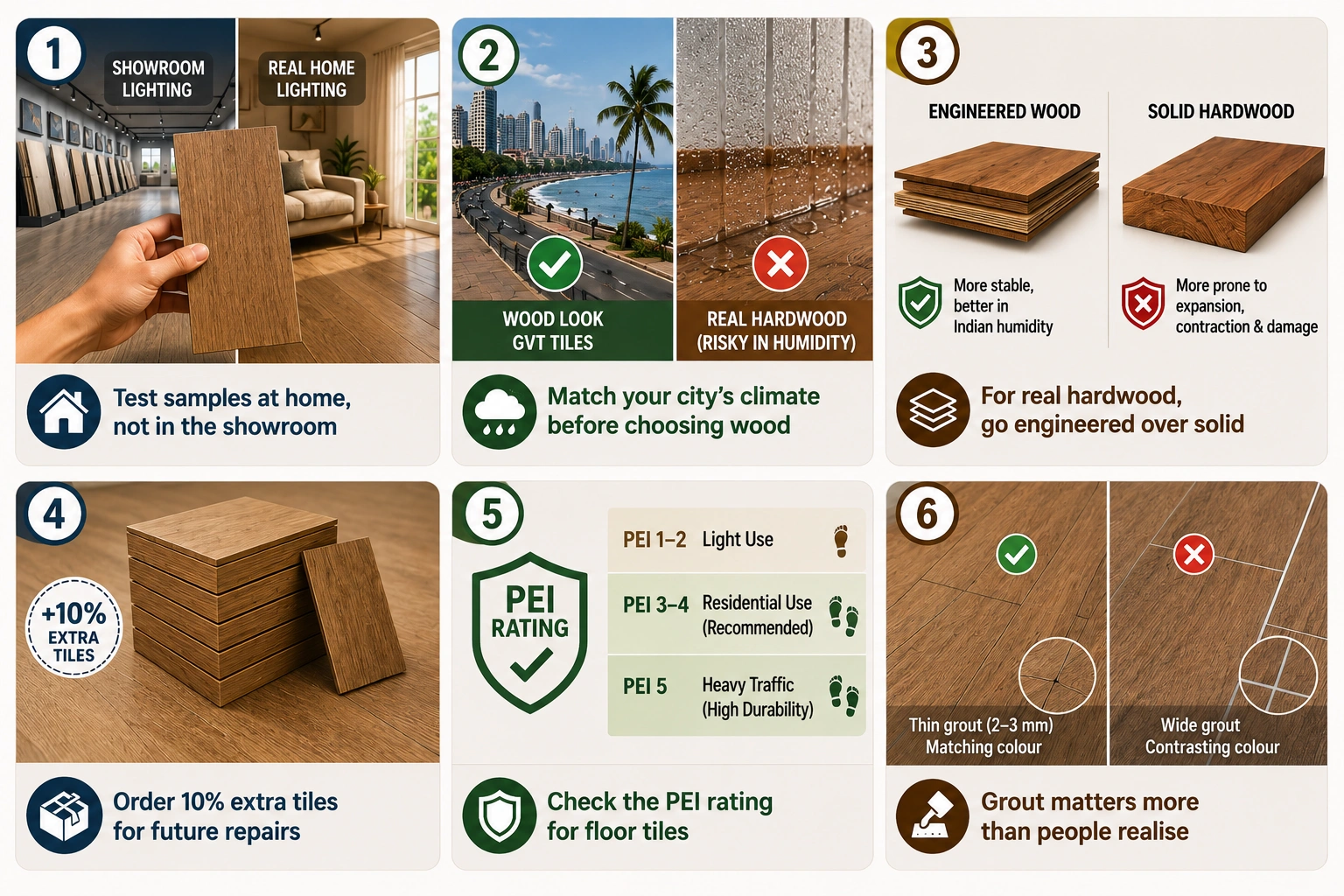
Showroom lighting is designed to make every tile look its best. Take a sample of the wood-look tile home and place it on your floor under your actual lighting. Colours, grain patterns, and finish quality look different under Indian afternoon light versus fluorescent store lights.
2. Match your city's climate before choosing wood
If you are in Mumbai, Kochi, Goa, or Chennai, real hardwood (especially solid hardwood) is a risky choice without very good air conditioning throughout the year. The humidity alone causes movement. Wood look GVT tiles are a far more practical option in coastal cities.
3. For real hardwood, go engineered over solid
If the budget allows real wood and you want the authentic feel, engineered wood handles Indian humidity better than solid hardwood. The cross-ply construction resists swelling and shrinkage more reliably.
4. Order 10% extra tiles for future repairs
Wood-look tiles from the same production batch share a consistent shade. Dye lots vary between batches. If a tile cracks or chips three years later and you need a replacement, finding an exact match from a new batch is difficult. Buy 10% extra and store it.
5. Check the PEI rating for floor tiles
The PEI (Porcelain Enamel Institute) rating tells you how much foot traffic a tile surface handles before showing wear. For wood look floor tiles, look for PEI 3 or 4 at a minimum. PEI 5 works for heavy-traffic areas like corridors and entrance halls.
6. Grout matters more than people realise
Grout colour can make or break the wood look effect. Thin grout lines (2 to 3 mm) in a colour that closely matches the tile background maintain the continuous plank illusion. Wide grout lines or contrasting colours immediately signal that the floor is tile, not wood.
Common Mistakes When Choosing Between Wood Look Tiles and Hardwood
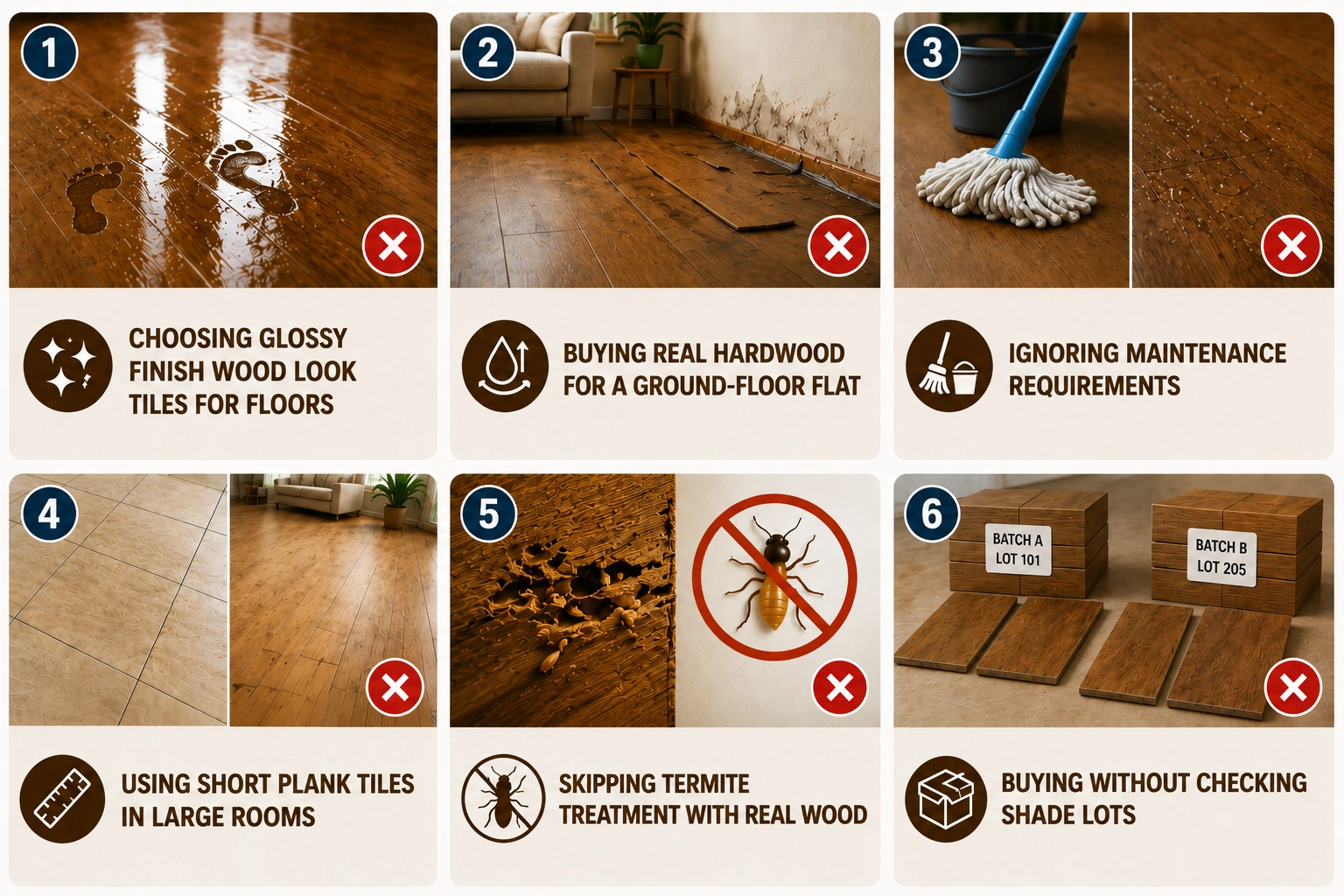
Choosing glossy finish wood look tiles for floors. Glossy tiles look nothing like real wood, and they show every footprint and scratch mark. Matte finish is the non-negotiable choice for wood look floor tiles.
Buying real hardwood for a ground-floor flat. Ground-floor apartments in India often have moisture rising from below. Without a proper moisture barrier and subfloor preparation, hardwood on a ground floor will cup and warp within a few monsoon seasons.
Ignoring maintenance requirements. Many homeowners choose real hardwood for the look, then discover they cannot wet-mop it. If your household has daily mopping as part of the routine, wood-look tiles are the far more practical option.
Using short plank tiles in large rooms. 600x600 wood-print tiles in a large drawing room look like square tiles with a wood pattern, not a hardwood floor. The 8x48 (200x1200 mm) plank format is what creates the convincing hardwood effect.
Skipping termite treatment with real wood. Termite infestation in hardwood flooring is expensive to fix and often requires complete replacement. If you choose real wood, proper termite-proofing treatment at the subfloor level is a requirement, not an option.
Buying without checking shade lots. Wood-look tiles can vary between production batches. Always buy from one lot and store extras. The same applies to engineered wood panels.
Making the Right Call for Your Home
The honest answer is that for most Indian households, wood look tiles in matte plank format deliver 80% of the visual appeal of real hardwood at 30 to 50% of the cost, with a fraction of the ongoing maintenance. The practical case for tiles is strong.
Real hardwood makes sense when the budget is comfortable, the home has excellent humidity control, and the tactile warmth of timber underfoot genuinely matters to you. Engineered wood narrows the maintenance gap considerably if you go that route.
Before finalising your choice, bring tile samples home, check your city's average humidity, and walk through the long-term maintenance each material requires from your household's actual daily routine.
You can browse a wide range of wood-look vitrified plank tiles across finishes and patterns on TilesFinders, India's growing tile marketplace, where you can compare options from leading Indian manufacturers before visiting a showroom.
FAQs
Yes, wood look tiles in GVT plank format (200x1200 mm) work very well for Indian homes across all climates. They handle humidity, daily mopping, and heavy foot traffic without the maintenance burden that real hardwood requires in India's variable climate.
Wood look tiles are significantly cheaper. Installed costs for wood look GVT tiles range from ₹85 to ₹230 per sq. ft. Real hardwood, installed, ranges from ₹210 to ₹720 per sq. ft. or more, depending on the wood species and grade. Over a 1,000 sq. ft. home, the difference can be ₹1.5 lakh to ₹5 lakh.
Good quality wood-look tiles from reputable Morbi manufacturers now print grain patterns with enough resolution and texture that the casual observer in a well-lit room does not immediately identify them as tiles. The key is choosing matte finish plank tiles (200x1200 mm) and using narrow, matching grout. Glossy-finish tiles or square-format wood prints look obviously artificial.
Real hardwood struggles with Indian monsoon conditions, especially solid timber boards. Humidity causes swelling, and the subsequent dry season causes shrinkage, which over several cycles leads to gaps, cupping, or surface cracks. Engineered wood handles this better than solid hardwood. Coastal cities are particularly harsh on real wood floors.
Matte finish is the right choice for wood-look floor tiles. It replicates natural timber's appearance, hides dust and footprints, and stays safe to walk on when wet. GHR (Glaze High Resistance) textured finish is a good option for high-traffic corridors. Avoid glossy or high-gloss finishes on floor tiles of any kind.
Real hardwood typically commands a perception of luxury and can support a marginally higher asking price in premium segments. But most mid-range Indian buyers, especially in 2BHK and 3BHK apartments, see well-installed wood look tiles as a positive feature, not a compromise. The resale gap is smaller than commonly assumed.
Yes, but only for bathroom walls or dry bathroom floors with the right finish. For bathroom floor use, choose a matte or Rain Drops finish GVT plank tile (200x1200 mm) with adequate anti-skid rating. Never use glossy-finish tiles on bathroom floors. For feature walls in bathrooms, any finish, including semi-gloss, works fine.

See our tile guides first
Set TilesFinders as a preferred source and our buying guides surface ahead of the rest for you.
Add as preferred sourceTakes one tap. Nothing to install.
What Readers Say
I was about to redo my parking area with the wrong tile size until I read this. The layout comparisons saved me from a costly mistake.
We reference TilesFinders guides while briefing clients on material selection. The size and pattern breakdowns are accurate and easy to explain visually.
On site, I get asked about grout spacing all the time. This article gave me a solid reference I now share with my team before every job.
Finally a guide that doesn't just push generic advice. The oil stain removal steps actually worked on our clubhouse driveway tiles.
I run a small construction firm and now send this link to clients directly when they ask about entrance tile sizing. Saves me an hour of explaining.
Good practical detail, though I wish there were more examples for compact apartment entrances specifically, not just villas.
My mother-in-law wanted marble, I wanted vitrified. This blog gave us the neutral comparison we needed to actually decide together.
Detailed without being overwhelming. I appreciated that it covered both cost and maintenance, not just the aesthetics.
Used the algae and hard water removal tips on our terrace tiles after the monsoon. Worked better than what our regular cleaner was doing.
As someone who sources tiles for multiple builder projects, I find these comparisons genuinely useful for vendor conversations, not just consumer content.
Recommended this to a client who kept second-guessing the entrance design. The small vs large layout section settled the debate instantly.
Straightforward and honest, no unnecessary jargon. Would like to see a similar breakdown for outdoor pool-deck tiles next.
We've bookmarked several TilesFinders guides for our design handbook. Reliable source when clients want data, not just opinions.
Two paths, one marketplace.
Get free quotes from verified suppliers.
Share your room, budget, and style. Suppliers in Morbi respond within hours.
Get Free QuotesList your business, reach real buyers.
Put your showroom in front of homeowners searching for tiles right now.
List Your Business