Subway Tiles: Classic Design for Kitchens and Bathrooms
Explore subway tiles for kitchens and bathrooms with size guides, layout patterns, grout tips, finish comparisons, design ideas, and practical buying advice for Indian homes.
- What Makes a Tile a Subway Tile
- Why Subway Tiles Have Stayed Relevant for Over a Century
- Subway Tile Sizes: Choosing the Right Format for Your Space
- Material and Finish: What Works in Indian Kitchens and Bathrooms
- Layout Patterns That Change How a Room Feels
- Grout Colour: The Detail That Changes Everything
- Colour Options Beyond White
- Subway Tiles in the Kitchen: Backsplash Placement and Sizing
- Subway Tiles in the Bathroom: Shower Walls and Feature Areas
- Buying Tips Before You Order
- Common Mistakes When Installing Subway Tiles
- Choosing Subway Tiles for Your Home
Some tile formats pass through trend cycles and disappear. Subway tiles have been on kitchen and bathroom walls for over a hundred years and still appear in newly renovated Indian homes every week. That staying power comes from something simple: they work.
The wrong choice in a kitchen backsplash shows up every time you cook. Oil splatters settle into a rough surface. Dark grout on a white tile looks great in a showroom and shows every watermark in daily use. A tile that is too large for a small bathroom wall makes the room feel boxed in rather than open.
This guide covers what subway tiles actually are, which sizes suit which Indian spaces, how layout patterns change the feeling of a room, what grout colour does to the final result, and what to confirm before placing an order.
What Makes a Tile a Subway Tile
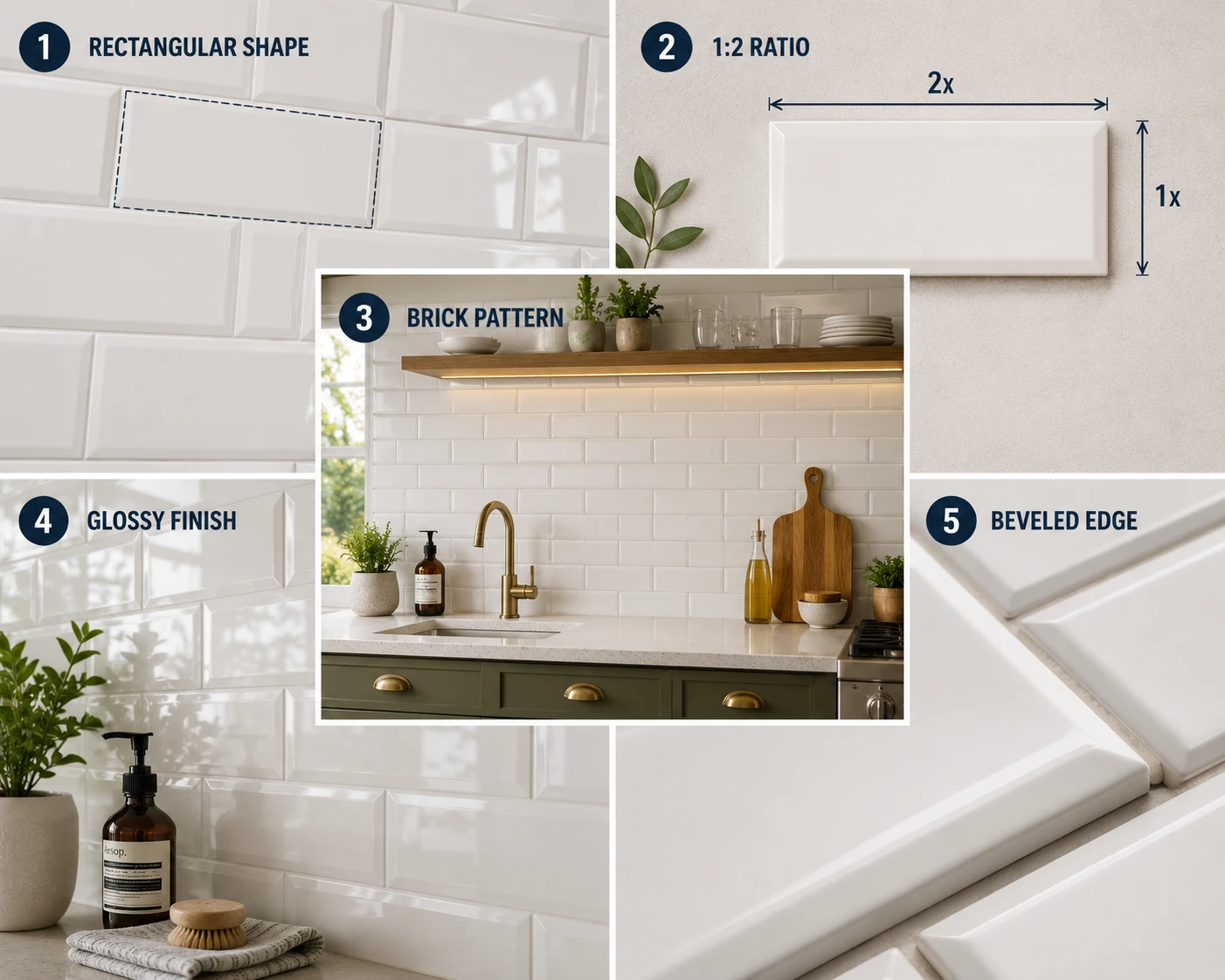
A subway tile is a rectangular wall tile with a width-to-height ratio of approximately 1:2. The classic format is 75x150 mm (3 inches by 6 inches). That proportion and the typical glossy ceramic finish are what define the subway tile style. The name comes from the New York City subway stations built in the early 1900s, where these tiles were used to cover underground walls because they were easy to clean, reflected light well, and held up to constant use.
In the Indian market, subway tiles fall within the ceramic wall tile category. The 300x450 mm (12x18 inch) and 300x600 mm (12x24 inch) ceramic formats both follow the elongated rectangular logic of subway styling, though the smaller classic formats like 75x150 mm and 100x300 mm are also widely available. All of these are wall tiles. They are not suitable for floor use except for the narrow exception of 300x300 mm ceramic on bathroom floors.
The finish is typically glossy, which gives subway tiles their characteristic light-bouncing quality. Matte and bevelled edge variations exist and have become more popular in Indian homes over the past few years. The bevelled edge adds a slight chamfer along the tile perimeter that catches light differently and adds visible depth to each joint.
Why Subway Tiles Have Stayed Relevant for Over a Century
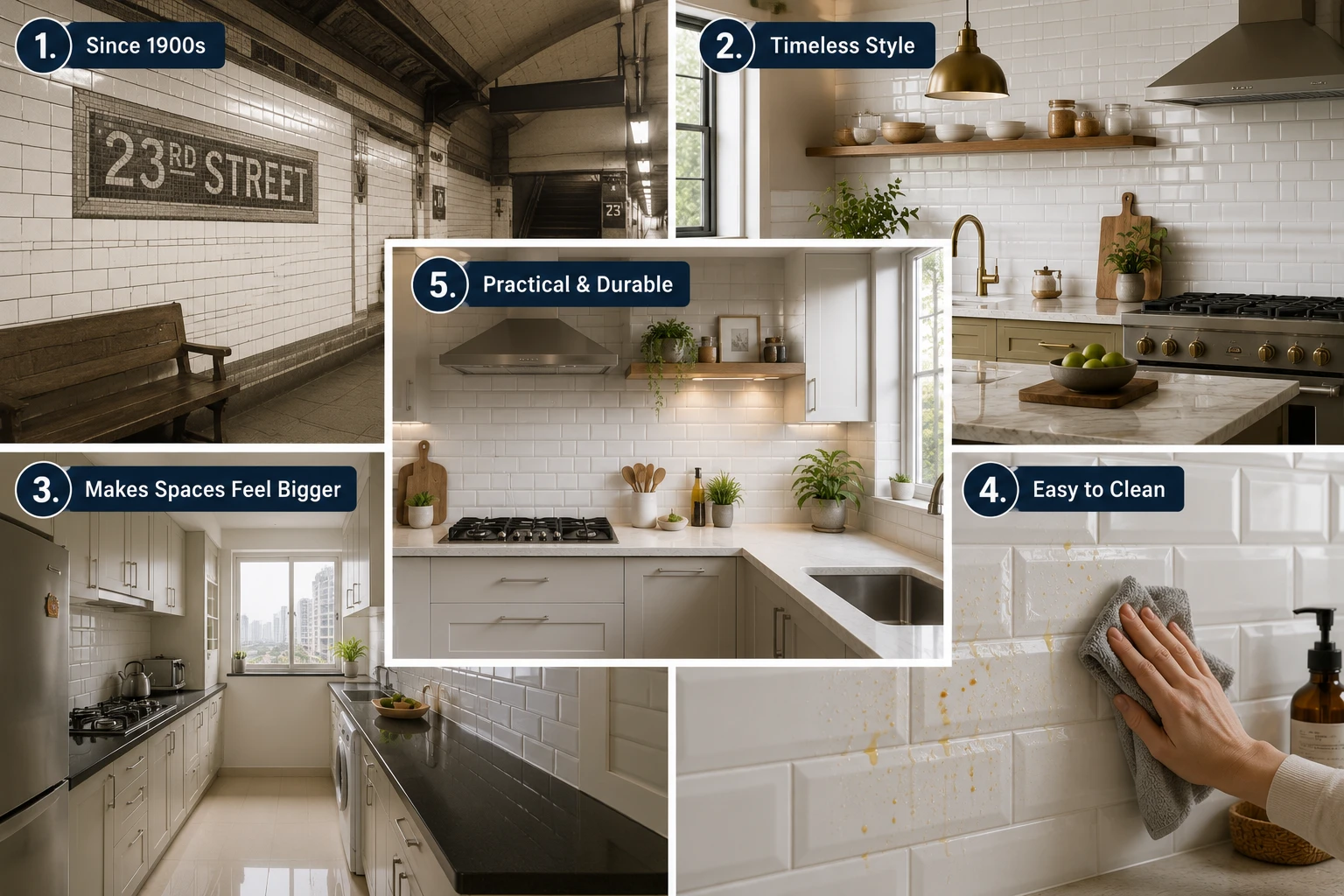
Most tile trends run for five to ten years. Subway tiles have been a consistent choice since the 1900s because their rectangular format is genuinely neutral. They do not compete with cabinetry, countertop materials, or fixtures for visual attention. Instead, they provide a clean, ordered background that makes everything else in the room read more clearly.
In Indian kitchens and bathrooms, this neutrality is practical. A 2BHK kitchen in Mumbai or Bengaluru is usually compact. A tile with a strong pattern or colour on every wall makes the space feel smaller and visually busy. Subway tiles in a simple running bond pattern with consistent grout keep the walls calm, which makes the kitchen feel more open even when the actual floor area is limited.
The other factor is maintenance. A smooth ceramic subway tile with a glazed surface resists oil, water, and cooking residue well. Wiping a kitchen backsplash of glossy subway tiles after cooking takes seconds. The same smooth surface in a bathroom wall resists soap scum and hard water deposits better than heavily textured tiles, which trap mineral build-up in their surface grooves.
Subway Tile Sizes: Choosing the Right Format for Your Space
The size of a subway tile changes how much grout line is visible, how the proportions of the room read, and how complex the installation is. Larger formats mean fewer grout lines and a cleaner, more open feel. Smaller formats mean more visible joints, which adds texture and rhythm to the wall surface.
Subway Tile Size Guide for Indian Homes
| Size (mm) | Approx. Inches | Best Suited For |
| 75x150 | 3x6 | Classic backsplash, small bathroom walls, traditional or retro style kitchens |
| 100x200 | 4x8 | Modern kitchens and bathrooms, slightly larger scale with the same classic ratio |
| 100x300 | 4x12 | Contemporary feel, statement walls, make ceilings appear taller when laid vertically |
| 150x300 | 6x12 | Large kitchen backsplash behind the ob, spacious bathroom with feature walls |
| 300x600 | 12x24 | Modern full-height bathroom walls, open-plan kitchen splash areas, and fewer grout lines |
| 300x450 | 12x18 | Mid-scale bathroom walls work well in both traditional and modern Indian home styles |
300x600 mm and 300x450 mm are wall-only sizes. Never use them on floors.
For a compact Indian bathroom in a 2BHK flat, the 75x150 mm or 100x200 mm format gives the wall more visual rhythm and avoids the risk of large tile cuts around fittings and fixtures. For a larger master bathroom or an open kitchen with a long backsplash wall, the 150x300 mm or 300x600 mm format covers more area with fewer joints and gives a cleaner, more contemporary result.
Material and Finish: What Works in Indian Kitchens and Bathrooms
Subway tiles in India are primarily ceramic. Ceramic absorbs 12 to 16 percent water, which makes it suitable for wall use but not for floor applications. The glazed surface on a ceramic subway tile is what makes it water-resistant on walls. The glaze is a glass-like coating fired onto the tile body during manufacturing, creating a sealed surface that resists moisture and staining at the wall level.
The two main finish choices are matte and glossy tiles.
Glossy finish is the classic subway tile surface. It reflects light, which makes a kitchen or bathroom feel brighter. In smaller Indian bathrooms or kitchens that rely on artificial lighting, a glossy white subway tile wall visibly opens the space. The surface is very easy to clean. Oil and water wipe off cleanly without leaving residue behind in the glaze.
Matte finish gives a softer, more contemporary look. It does not reflect light the same way, which suits bathrooms where the design intent is calm and spa-like rather than bright and clinical. Matte subway tiles show water spots more readily than glossy ones and need slightly more attention during cleaning, particularly in kitchens near the cooking area.
Bevelled edge subway tiles have a narrow, angled edge around the perimeter that adds shadow definition at each joint. The bevelled profile makes grout lines appear more three-dimensional. This finish has become popular in Indian homes looking for a traditional or artisan feel, particularly in heritage-style apartments in cities like Kolkata or Pune.
Finish Comparison for Subway Tiles
| Finish | Light Effect | Best For | Cleaning Ease |
| Glossy | High reflection brightens the pace | Small kitchens, compact bathrooms | Very easy, wipes clean |
| Matte | Soft, diffused light | Calm bathrooms, modern style | Good, shows water spots |
| Bevelled Edge | Shadow at joints, textured depth | Heritage, artisan, classic interiors | Easy, slight edge catch |
Layout Patterns That Change How a Room Feels
The same subway tile looks like four different walls depending on how it is laid. Pattern is one of the most underused tools in Indian home renovation because most homeowners default to what they see first at the showroom. Understanding what each layout does to a space helps make a more deliberate choice.
Running Bond (Brick Pattern)
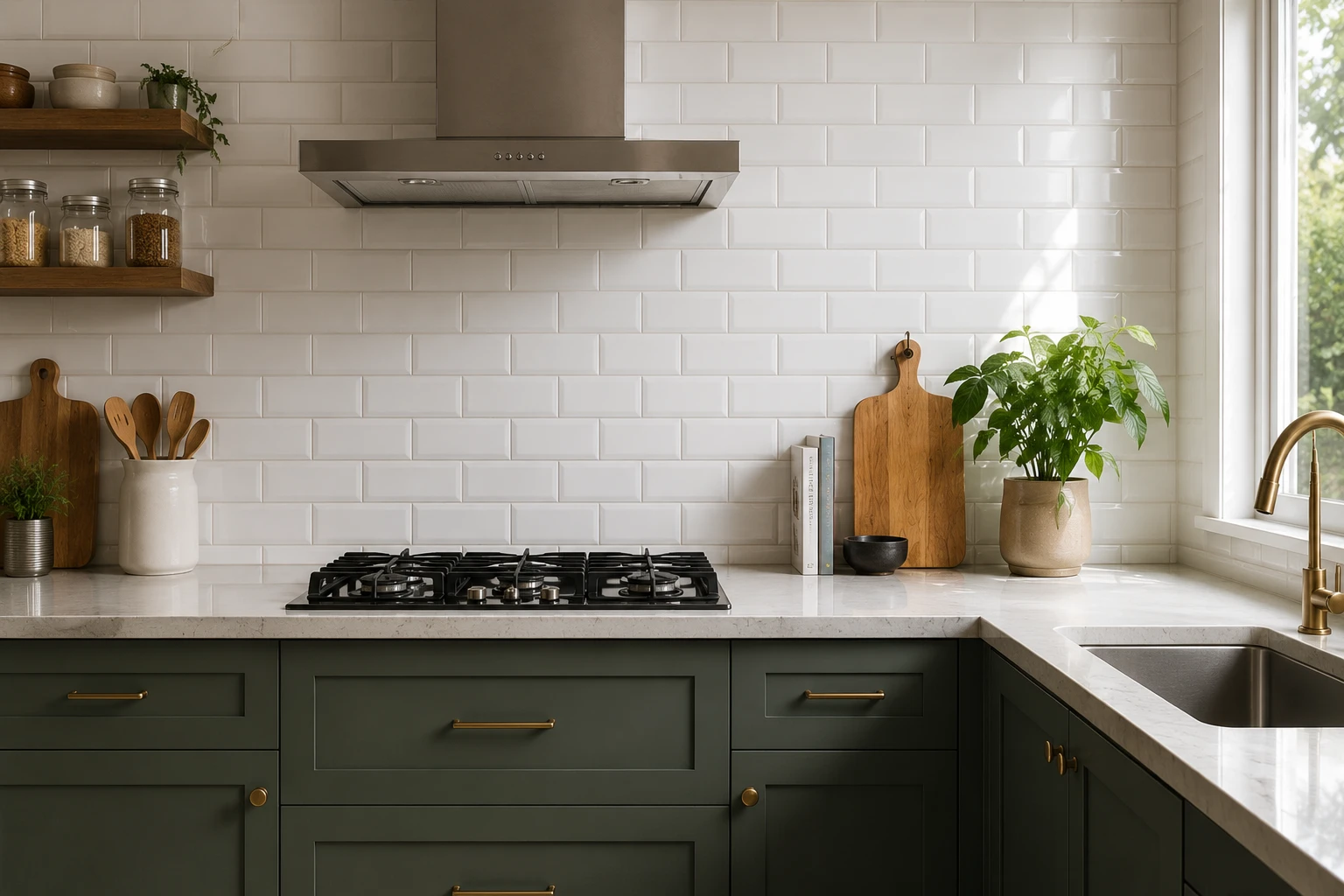
This is the original subway tile layout. Each row is offset by half a tile from the row above, replicating the way bricks are laid. The running bond creates a steady horizontal rhythm that makes walls feel wider, and rooms feel grounded. It is the most forgiving layout to install because small variations in tile positioning are less visible than in a stacked arrangement.
For a standard Indian kitchen backsplash or bathroom wall, the running bond in 75x150 mm or 100x200 mm tiles is the most practical and visually reliable starting point.
Vertical Stack
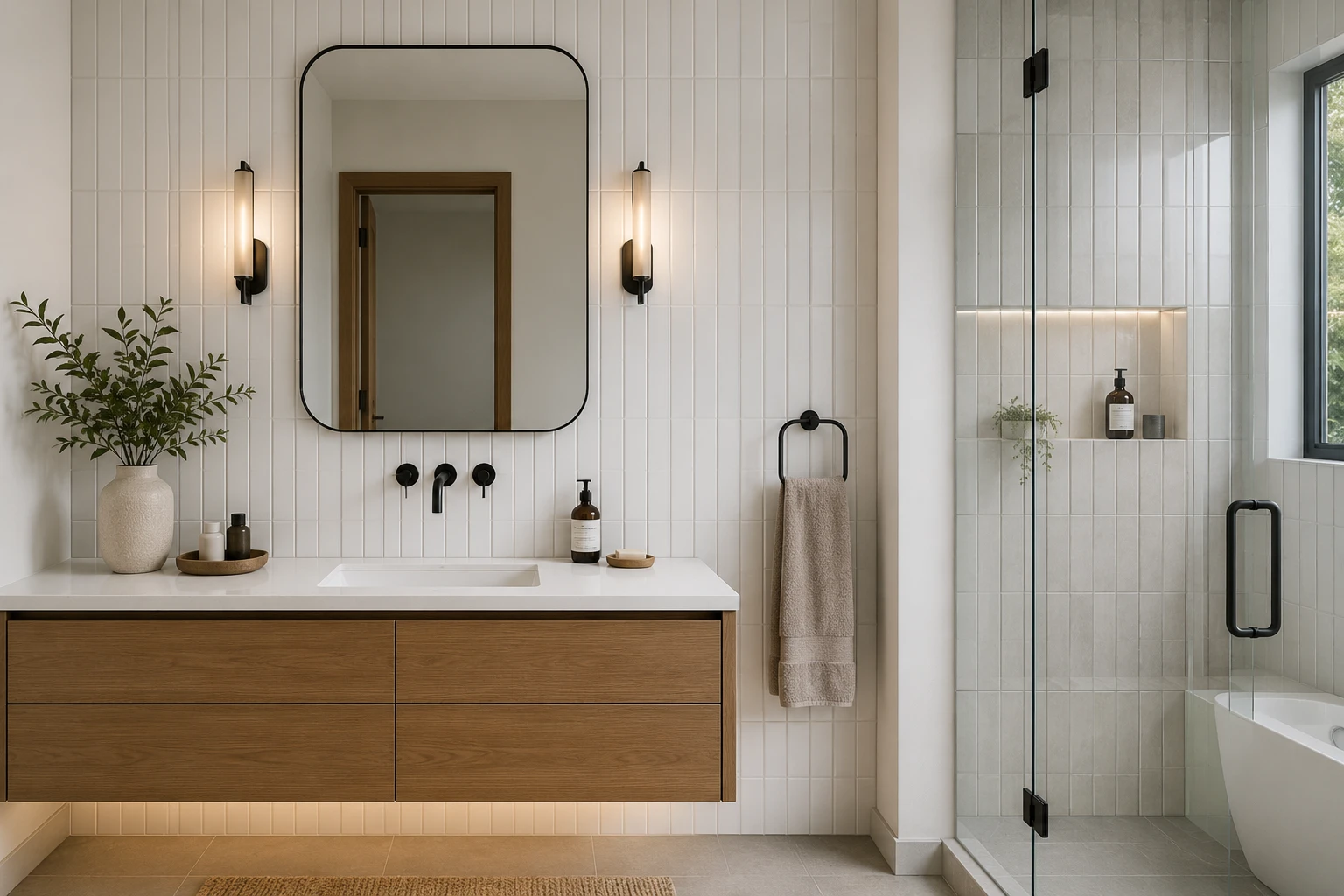
Tiles are laid directly above each other with aligned grout lines running both horizontally and vertically. The vertical orientation of the tiles (tall side up) makes walls appear taller. This works particularly well in Indian bathrooms with standard 9-foot ceilings, where a vertical stack of 100x300 mm subway tiles draws the eye upward and makes the ceiling feel higher than it is.
Vertical stack requires more precise installation than running bond. The aligned grout lines highlight any slight variation in tile placement, so the surface preparation and setting-out must be accurate before laying begins.
Herringbone
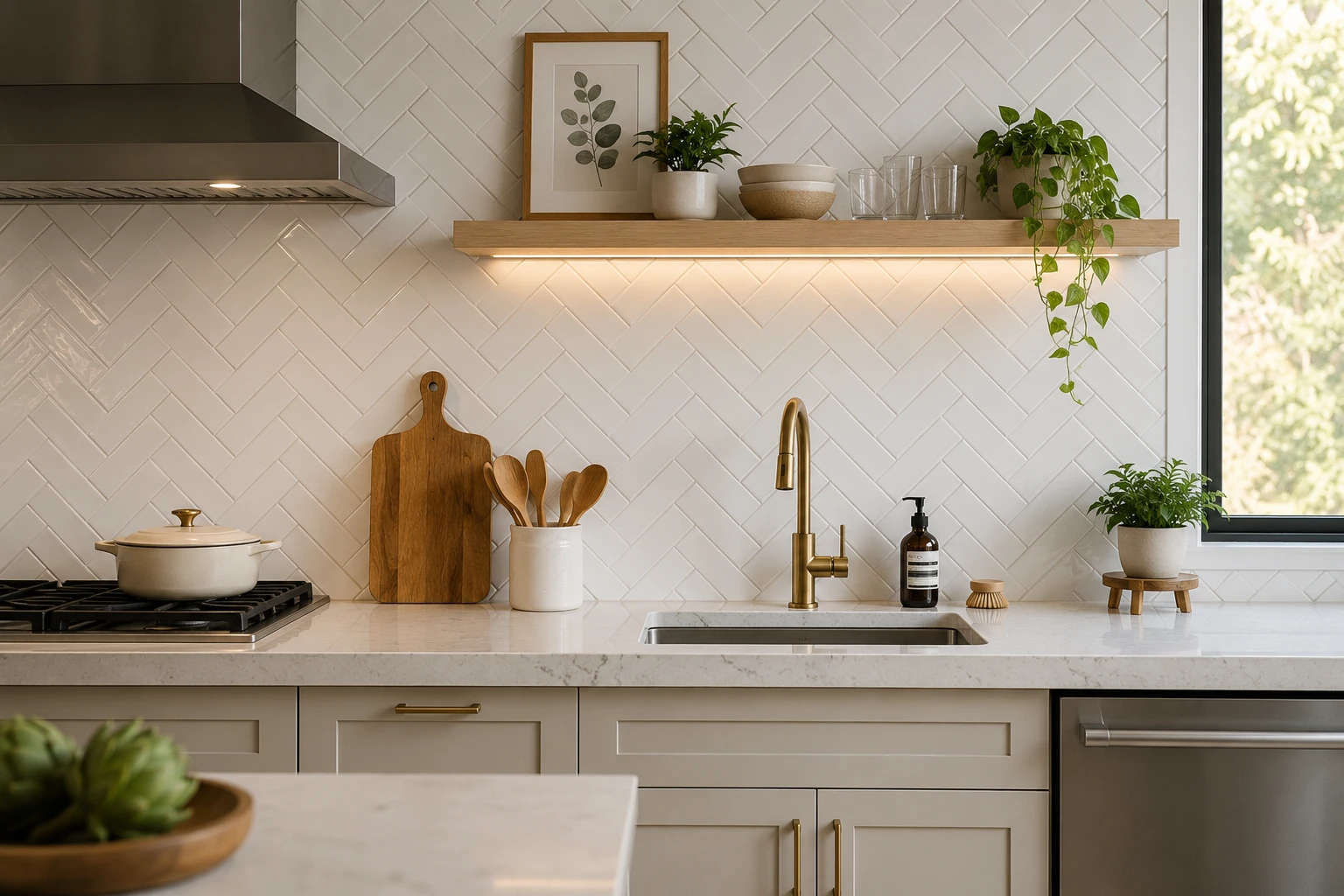
Tiles are placed at 45-degree angles in a zig-zag arrangement. Herringbone creates strong visual movement and is the most design-forward of the common subway tile patterns. It is popular for kitchen backsplashes behind the cooking hob, where a shorter section of feature wall benefits from added visual interest.
The herringbone pattern requires more careful cutting at edges and corners and generates more material wastage than a running bond. Budget approximately 15 percent extra tiles when using this layout. Installation takes longer, so labour costs are also higher than for a straight brick pattern.
Horizontal Stack
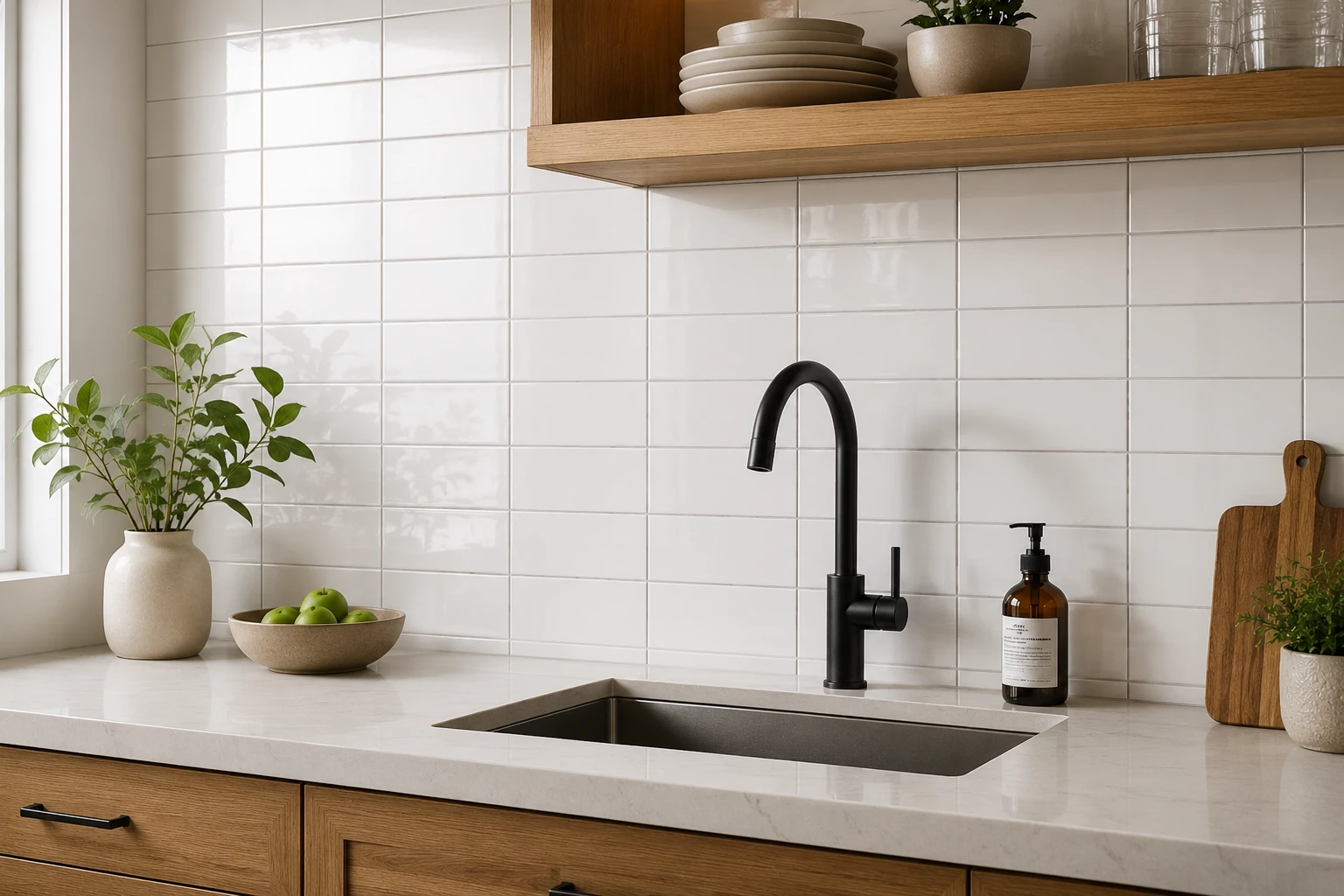
Tiles are laid with grout lines aligned in both directions, in horizontal orientation (wide side facing up). This creates a clean, minimalist grid that suits contemporary Indian interiors and apartments with a Scandinavian or industrial design direction. The horizontal stack makes walls feel wider, which helps in narrow bathrooms with one tiled feature wall.
Like the vertical stack, this pattern requires accurate setting-out because misaligned grout lines are immediately visible. It suits tiles with a consistent colour and finish rather than tiles with visible surface variation.
Grout Colour: The Detail That Changes Everything
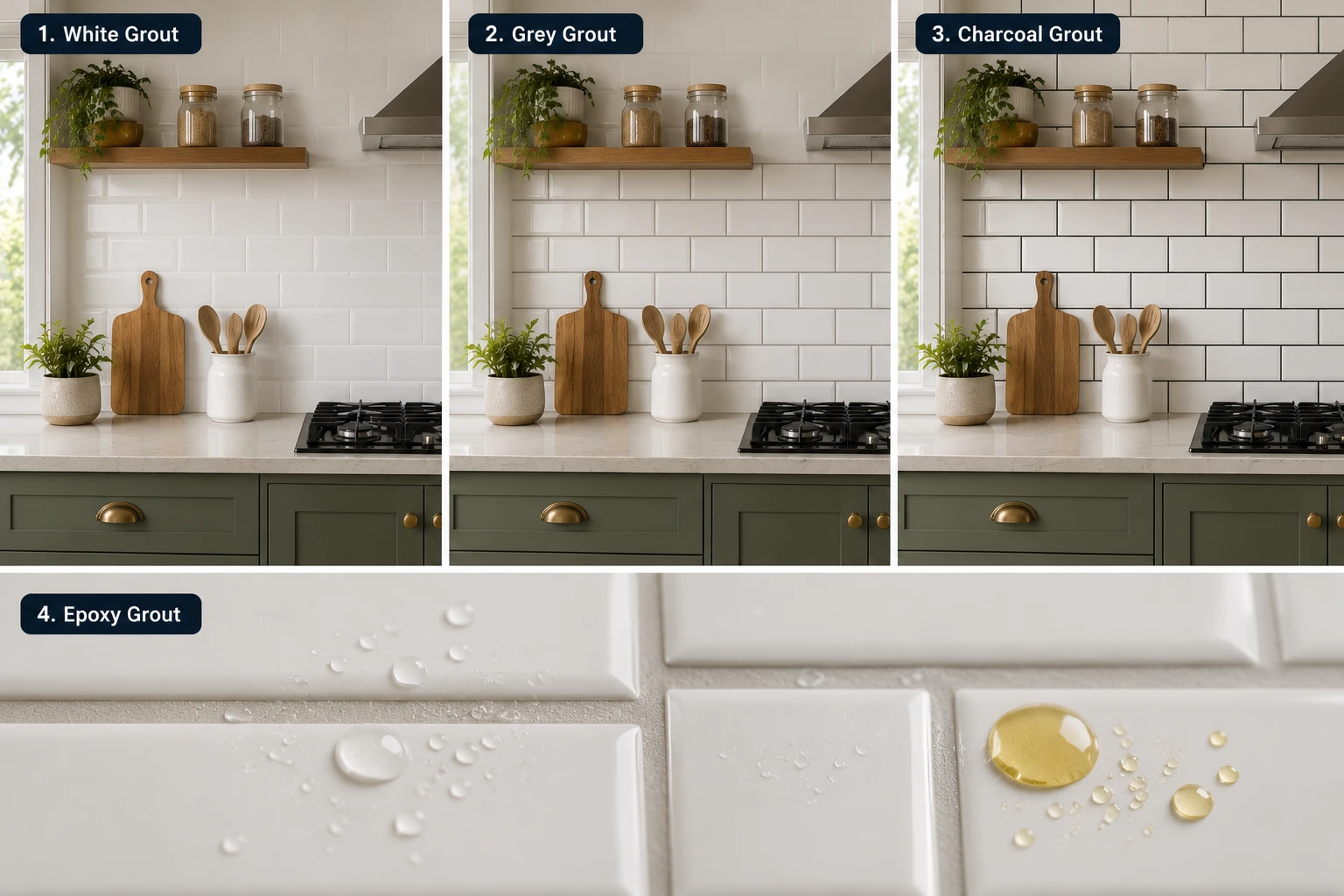
Grout colour is the single most overlooked variable in a subway tile installation. The same white glossy tile with white grout, grey grout, and black grout looks like three different finishes. Getting the grout choice wrong after the tiles are laid is an expensive correction.
White or off-white grout with white subway tiles creates a seamless, uniform surface. The tile joints are barely visible from a normal standing distance. This is the choice for a clean, understated look where the tile pattern recedes, and the fixtures and fittings take centre stage. The downside in an Indian kitchen is maintenance: white grout near the cooking area collects oil residue and stains over time, even with regular cleaning.
Grey grout with white subway tiles shows the tile joints clearly, giving the wall a more visible structure. The contrast makes the brick pattern or herringbone layout more legible. Grey grout is also much easier to keep clean in a kitchen because slight discolouration is not as obvious as it would be on white.
Dark grout, charcoal or near-black, with white tiles, creates the maximum contrast and makes the layout pattern a strong visual statement. This works well in a bold modern bathroom or as a feature backsplash in an industrial-style kitchen. The joint lines become a graphic element. In a compact Indian bathroom where only one wall is fully tiled, dark grout on white subway tiles can be a confident design decision without overwhelming the space.
A practical note: Use epoxy grout for kitchen backsplashes and wet bathroom walls. Epoxy grout is stain-resistant, does not absorb oil or moisture, and holds its colour far better than standard cement grout over the years of kitchen use. The upfront cost is higher, but the long-term cleaning and appearance benefit is significant in an Indian kitchen.
Grout Colour Effect Guide
| Grout Colour | Visual Effect | Maintenance | Best Context |
| White / Off-white | Seamless, tiles nearly disappear | Stains are visible near the cooking area | Bathrooms, low-splash kitchen walls |
| Light grey | Joints visible, clean contrast | Easy to maintain | Kitchen backsplash, general bathroom walls |
| Mid grey | Strong pattern definition | Very easy to maintain | Feature walls, herringbone layouts |
| Charcoal / Black | Bold graphic contrast | Easiest: dark hides staining | Modern kitchens, statement bathroom walls |
For kitchen backsplash and wet bathroom walls, epoxy grout is recommended over standard cement grout for better stain resistance and colour retention.
Colour Options Beyond White
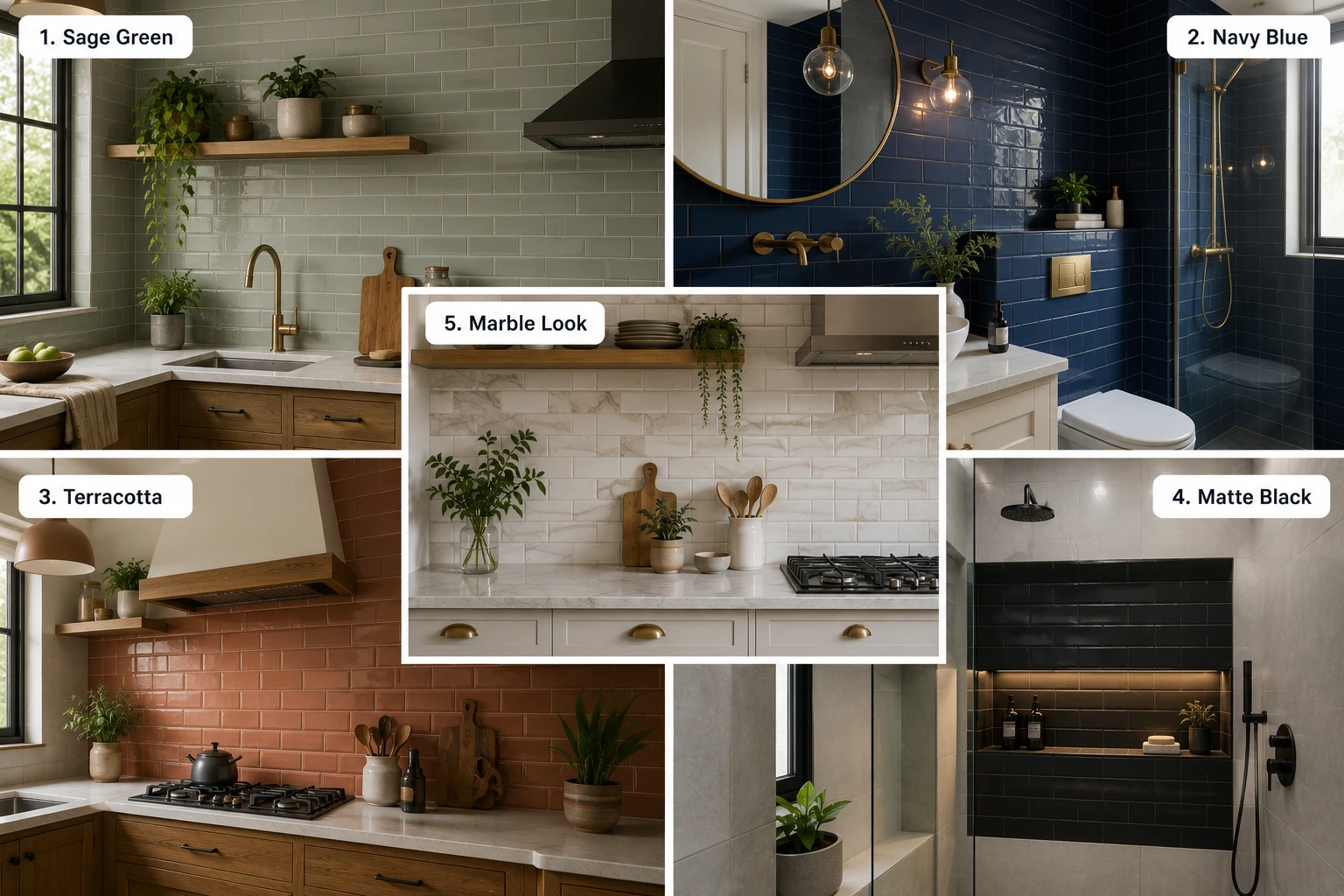
White is the classic subway tile choice, but the Indian market has shifted noticeably in the past two years. Homeowners renovating kitchens and bathrooms in 2025 and 2026 are choosing coloured subway tiles as a deliberate design statement, not just as a neutral background.
Sage green subway tiles on a kitchen backsplash have become particularly popular in urban Indian apartments, especially in cities like Bengaluru and Hyderabad, where the kitchen often opens into the dining or living area. The green connects the kitchen visually to indoor plants and the natural materials used in the rest of the apartment's decor.
Deep navy and midnight blue tiles work in compact bathrooms where the homeowner wants a strong, enclosed feeling rather than an open, airy one. Paired with warm brass fittings and white sanitaryware, navy subway tiles read as deliberate and considered rather than dark.
Warm terracotta and rust tones have made a comeback in Indian kitchen design, drawing inspiration from the same earthy palette that has been featured in textiles, furniture, and homewares over the past few years. A terracotta subway tile backsplash in a kitchen with natural wood cabinetry and a white stone counter creates a warm, grounded composition that feels distinctly Indian without being traditionally patterned.
Similar earthy finishes, marble looks, wood-inspired surfaces, and textured patterns are also part of the broader tile design trends for Indian homes.
Matte black subway tiles are used as a feature element rather than a full-wall treatment. A black tiled niche inside a shower area, or a short section of black backsplash tiles between floating shelves, gives the space a graphic accent without committing the full room to a heavy colour.
Subway Tiles in the Kitchen: Backsplash Placement and Sizing
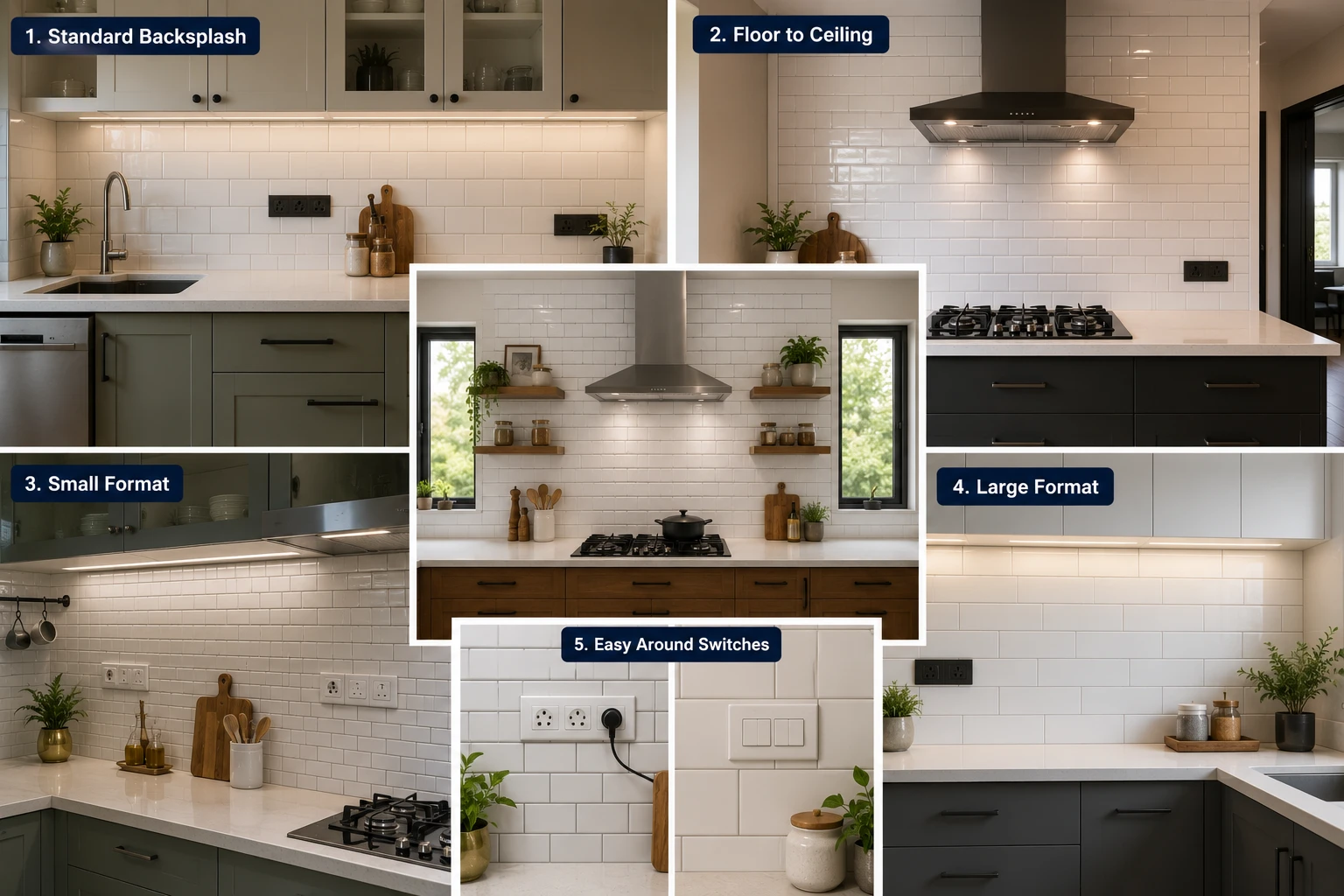
A kitchen backsplash in an Indian home typically runs from the countertop surface to the underside of the wall cabinet above. In most Indian modular kitchen layouts, this zone is between 450 mm and 600 mm in height. A full running bond of 75x150 mm tiles in this space fits three to four horizontal rows with minimal cutting.
For a more impactful result, carry the tile from the countertop to the ceiling behind the cooking hob. This full-height treatment on just the hob wall makes the kitchen feel more considered and is practical because the hob area generates the most oil splash. Tiling to ceiling height behind the hob and keeping the remaining backsplash lower elsewhere creates a focal point without tiling every wall.
Glossy white or light grey subway tiles with mid-grey grout work reliably in most Indian kitchen contexts, from a compact flat kitchen in Chennai to a large open kitchen in a Pune independent home. The reflective surface makes artificial kitchen lighting more effective, which matters in Indian kitchens that are often enclosed or have limited window area.
The 150x300 mm or 300x600 mm formats work well on longer uninterrupted backsplash walls. The larger tile means fewer cuts around plug points and switches, less grout line to maintain, and a cleaner overall appearance on a wide wall. For a kitchen with many interruptions, outlets, and switches breaking up the wall, the 75x150 mm or 100x200 mm format is easier to cut and fit accurately.
Subway Tiles in the Bathroom: Shower Walls and Feature Areas
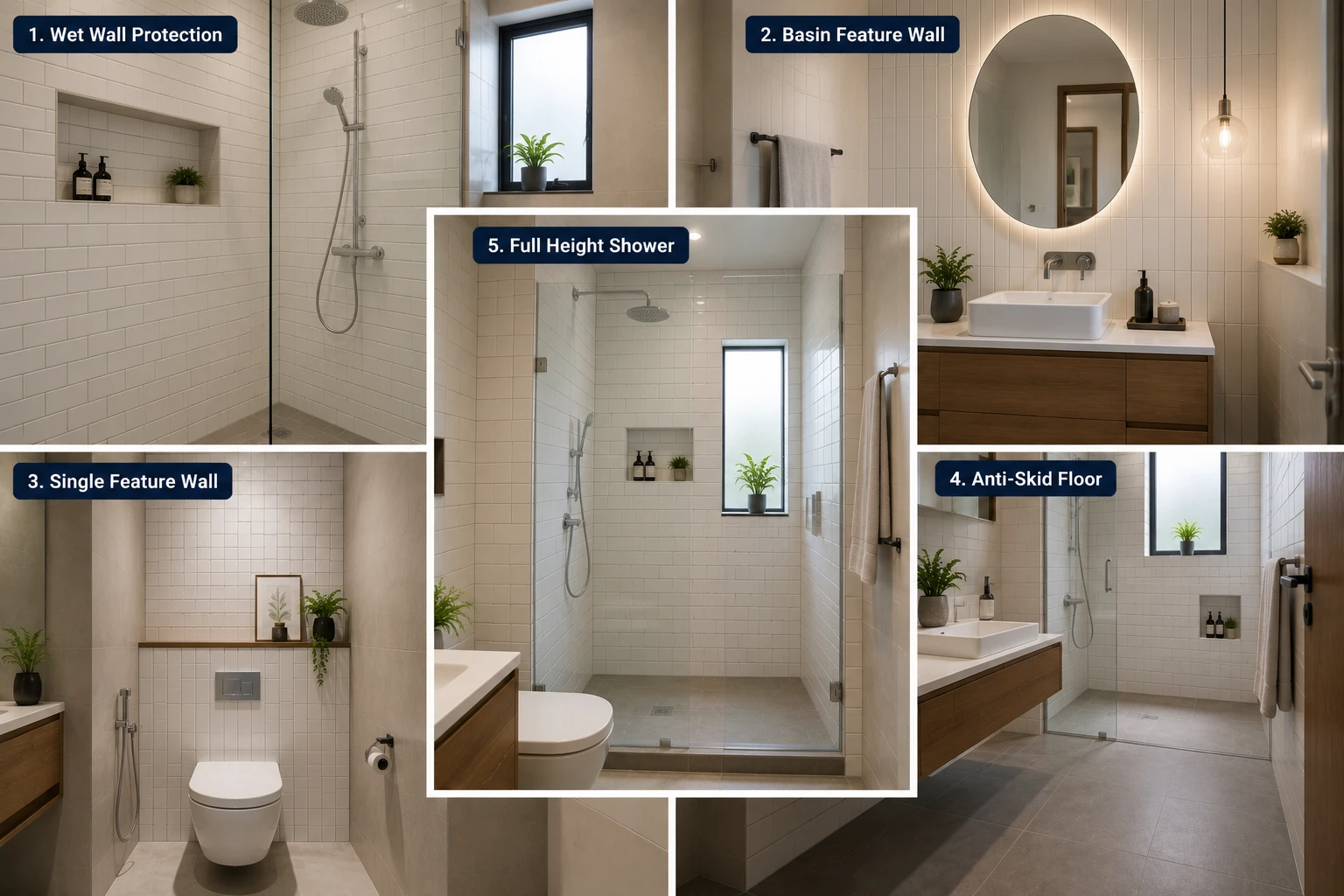
In a bathroom, subway tiles work best on wet walls: the shower area, the wall behind the basin, and any wall adjacent to the bathtub. These are the areas that face regular water contact and need a tile surface that resists moisture at the joint level as well as the tile face.
For a shower cubicle or wet room area, use tiles across the full height of the wet walls: floor to ceiling or at a minimum to showerhead height plus 300 mm. Stopping the tile at a low height in a shower area creates a joint between the tiled and painted surfaces that is prone to moisture ingress over time.
In a compact Indian bathroom, a single feature wall in subway tiles, with the remaining walls in plain paint or a simpler tile, is a practical approach. Tiling all four walls in a small bathroom can feel enclosed. Choosing one wall, typically the wall behind the toilet or the wall opposite the entrance, and laying it floor to ceiling in 100x300 mm subway tiles in a vertical stack gives the room a strong visual anchor without making it feel smaller.
For bathrooms where family members include young children or elderly parents, the floor tile should be anti-skid (matte finish floor tile, separate from the subway wall tile). Subway tiles on the wall do not affect floor safety, but the choice of floor tile alongside subway wall tiles should be deliberate. A matte floor tile in a complementary colour to the subway wall tile gives a complete and considered bathroom result.
Buying Tips Before You Order
Confirm the tile is wall-rated
Subway tiles are wall tiles. Before placing any order, confirm the tile you have chosen is rated for wall use, not floor use. Ceramic subway tiles in sizes like 300x450 mm and 300x600 mm are wall-only. Never use them on a floor.
Calculate quantity with 10 to 15 percent extra.
For a running bond layout, order 10 percent more than your measured wall area. For herringbone or diagonal patterns, order 15 percent extra because of the angled cuts at the edges. Always buy from a single batch to avoid shade variation between boxes.
Check the price per sq. ft. and per box.
Ceramic subway tiles in India are priced approximately in the range of ₹30 to ₹80 per sq. ft. for standard white glossy options. Coloured, textured, or bevelled edge variants sit in the ₹60 to ₹150 per sq. ft. range, varying by design complexity and brand. Always confirm with your dealer. Prices for the same tile can vary significantly between Morbi-sourced supply and branded showroom pricing.
Request a physical sample before ordering the full quantity
Tile colours and finishes look different under showroom lighting versus your home's lighting. A white tile can appear warm, cool, or slightly grey depending on the ambient light temperature. Ask for a sample and hold it against your actual kitchen wall or bathroom surface in normal home lighting before committing to the full order.
Plan grout before tile installation begins.
Decide on grout colour before the tile goes up, not after. Once the tiles are laid and set, changing the grout colour means removing and replacing all the grout, which is time-consuming and risks chipping the tile edges. If using epoxy grout, inform your contractor before installation begins because epoxy requires different mixing and application methods than standard cement grout.
Common Mistakes When Installing Subway Tiles

Using floor tiles on the wall or confusing the format with other categories. Subway tiles are ceramic wall tiles. Any product described as a subway tile should be confirmed as wall-rated. Do not use glossy ceramic wall tiles on bathroom floors as they create a slip hazard.
Choosing white grout for a kitchen backsplash. White grout near a cooking hob collects oil and stains faster than any other colour. A light to mid grey grout gives the same clean look as white grout from a distance, but holds its appearance far longer with regular cleaning.
Not leaving an adequate grout joint width. A joint of 1.5 mm to 3 mm is standard for subway tiles. Joints narrower than 1.5 mm are difficult to grout cleanly and do not allow for slight variation in tile size. Joints wider than 3 mm change the aesthetic of the pattern and make the grout more prominent than the tile.
Stopping the tile too low in a shower area. Any wet wall in a shower cubicle needs to be tiled to at least showerhead height plus 300 mm. A tile line that ends mid-wall in a wet area creates a joint where the wall is still regularly splashed, leading to moisture ingress, mould growth, and eventual wall damage behind the finish.
Buying from different batches. Ceramic tiles have a slight shade variation between production batches. Two boxes of the same tile code from different batches can have a visible difference in tone when laid next to each other. Always check the batch number on each box before installation and separate any boxes that differ.
Choosing Subway Tiles for Your Home
Subway tiles work because they solve a specific problem well: a clean, washable, light-reflecting wall surface that fits alongside almost any cabinetry, fitting, or colour scheme without competing with it. That is why they have remained in production and in use for over a century.
The choice that matters most is not the tile itself but the combination: size suited to your wall, finish suited to the light in your room, layout pattern suited to the shape of the space, and grout colour chosen for both appearance and maintenance before the tiles go up.
You can browse ceramic wall tiles, rectangular formats, and subway tile options across sizes, colours, and finishes on TilesFinders, where Indian homeowners compare verified tile choices by category, finish, and price before visiting a dealer.
FAQs
Subway tiles are rectangular wall tiles with a typical width-to-height ratio of 1:2. They take their name from the early 1900s New York City subway station,s where they were first widely used as wall cladding. Their glossy ceramic surface was chosen for practical reasons: easy to clean, reflective enough to brighten underground spaces, and resistant to the moisture of public transit environments. The same properties make them a reliable choice for kitchen and bathroom walls today.
The 75x150 mm (3x6 inch) or 100x200 mm (4x8 inch) sizes work best in a compact Indian bathroom. Smaller tiles fit the scale of a tight space more naturally, wrap corners and cut around fittings more easily, and create more grout lines that add visual texture rather than making the wall feel like a single blank surface. Larger formats like 300x600 mm are better suited to bathrooms with at least one long, uninterrupted wall.
It depends on the context and how much contrast you want. White grout gives the cleanest, most seamless look, but stains near kitchen cooking areas. Light to mid grey grout is the most practical choice for kitchens: it shows the tile pattern clearly and is forgiving to clean. Charcoal or black grout creates a strong contrast and makes the layout pattern a deliberate design statement. For bathroom walls, any of these work, but choose epoxy grout for wet areas.
No. Ceramic subway tiles are wall tiles and should not be used on any floor. The glazed ceramic surface is slippery, and the ceramic body absorbs more water than floor-rated tile categories. The only exception in the ceramic category is a 300x300 mm ceramic tile used on bathroom floors to coordinate with wall tiles, and that specific exception does not apply to the elongated subway tile format.
Glossy subway tiles have a high-shine glazed surface that reflects light, brightens enclosed spaces, and wipes clean very easily. Matte subway tiles have a flat finish with no light reflection, giving a softer, more contemporary look. Matte surfaces show water spots and fingerprints more than glossy, but suit bathrooms designed for a calm or spa-like feel. In Indian kitchens, glossy is the more practical choice near the cooking area because grease and oil wipe off more completely.
Standard white glossy ceramic subway tiles are approximately ₹30 to ₹80 per sq. ft., depending on brand and size. Coloured, textured, or bevelled edge options range from approximately ₹60 to ₹150 per sq. ft. Add approximately ₹20 to ₹40 per sq. ft. for installation and adhesive, plus ₹10 to ₹20 per sq. ft. for grout. Epoxy grout costs more than standard cement grout but is recommended for kitchen and wet bathroom applications. All figures are approximate 2026 market ranges and vary by city and dealer.
The herringbone pattern places each tile at 45 degrees in a zig-zag arrangement and suits a shorter, focused section of wall, such as the backsplash behind a cooking hob. It adds strong visual interest to a small area without needing to run across the full kitchen wall. For a full-length backsplash across all countertop sections, a running bond or horizontal stack pattern is more practical because herringbone generates more edge cuts and higher material wastage over longer runs.

See our tile guides first
Set TilesFinders as a preferred source and our buying guides surface ahead of the rest for you.
Add as preferred sourceTakes one tap. Nothing to install.
What Readers Say
I was about to redo my parking area with the wrong tile size until I read this. The layout comparisons saved me from a costly mistake.
We reference TilesFinders guides while briefing clients on material selection. The size and pattern breakdowns are accurate and easy to explain visually.
On site, I get asked about grout spacing all the time. This article gave me a solid reference I now share with my team before every job.
Finally a guide that doesn't just push generic advice. The oil stain removal steps actually worked on our clubhouse driveway tiles.
I run a small construction firm and now send this link to clients directly when they ask about entrance tile sizing. Saves me an hour of explaining.
Good practical detail, though I wish there were more examples for compact apartment entrances specifically, not just villas.
My mother-in-law wanted marble, I wanted vitrified. This blog gave us the neutral comparison we needed to actually decide together.
Detailed without being overwhelming. I appreciated that it covered both cost and maintenance, not just the aesthetics.
Used the algae and hard water removal tips on our terrace tiles after the monsoon. Worked better than what our regular cleaner was doing.
As someone who sources tiles for multiple builder projects, I find these comparisons genuinely useful for vendor conversations, not just consumer content.
Recommended this to a client who kept second-guessing the entrance design. The small vs large layout section settled the debate instantly.
Straightforward and honest, no unnecessary jargon. Would like to see a similar breakdown for outdoor pool-deck tiles next.
We've bookmarked several TilesFinders guides for our design handbook. Reliable source when clients want data, not just opinions.
Two paths, one marketplace.
Get free quotes from verified suppliers.
Share your room, budget, and style. Suppliers in Morbi respond within hours.
Get Free QuotesList your business, reach real buyers.
Put your showroom in front of homeowners searching for tiles right now.
List Your Business