Trending Tile Looks for 2026: Subway, Marble, Wood, 3D, and Bookmatch for Indian Homes
Upgrade your interiors with 2026's top 5 tile trends! From classic subway to bold bookmatch, explore styling tips and technical specs to make the right choice on TilesFinders.
- Why Tile Trends Matter in Indian Interiors Right Now
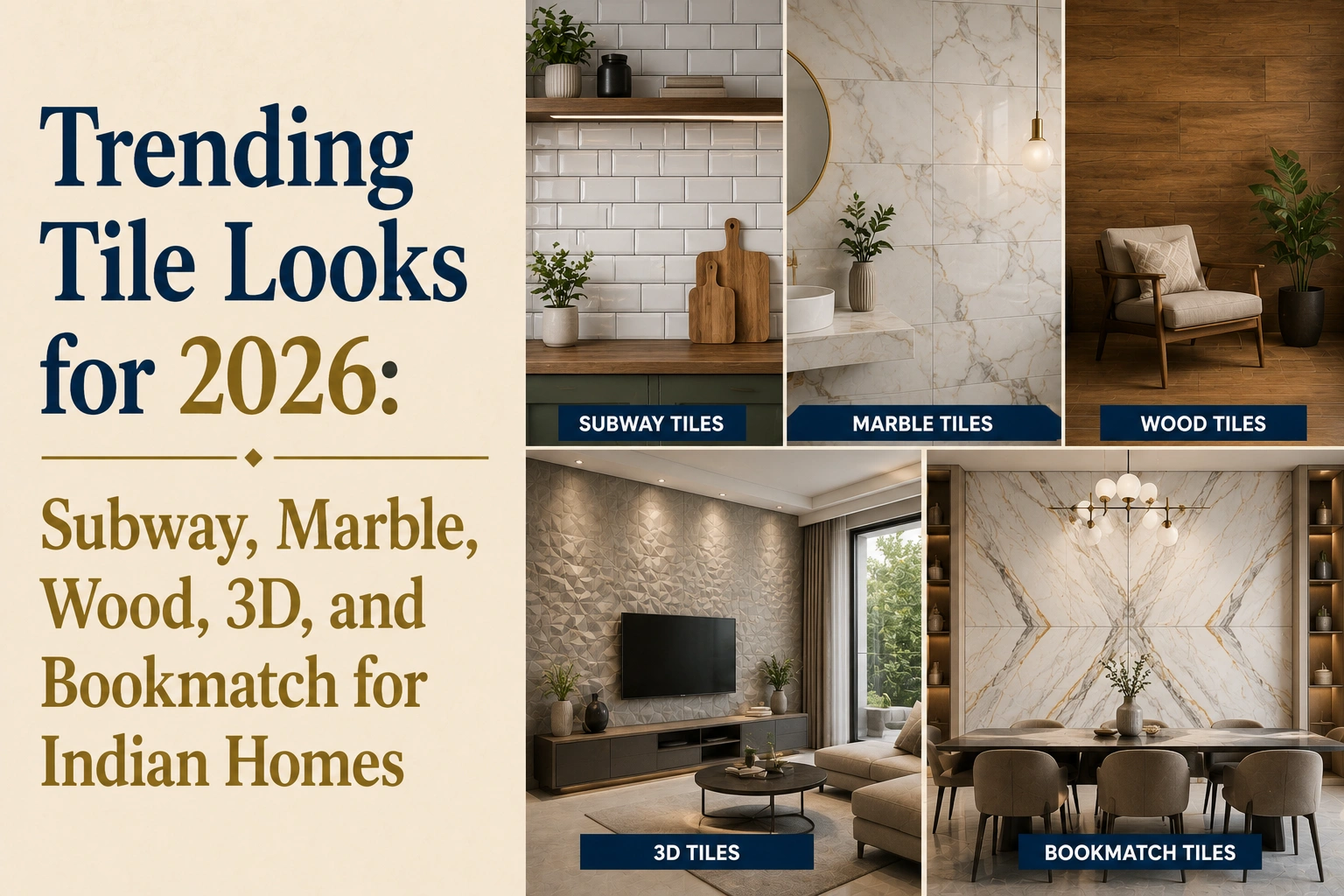
- Look 1: Subway Tiles
- Look 2: Marble-Look Tiles
- Look 3: Wood-Look Tiles
- Look 4: 3D and Fluted Tiles
- Look 5: Bookmatch Tiles
- Quick Comparison: 5 Trending Tile Looks for India 2026
- Buying Tips for Trending Tile Looks in India 2026
- Common Mistakes When Following Tile Trends in India
- Picking the Right Look for Your Home in 2026
Tile design in India moved fast in 2025. And 2026 is not slowing down. Indian homeowners are asking smarter questions at showrooms. Architects and interior designers are specifying materials by look and technical performance together, not just by price per sq. ft.
Five tile looks are dominating Indian interiors right now: subway, marble-look, wood-look, 3D and fluted, and bookmatch. Each carries a distinct visual identity. Each fits certain rooms and lifestyles better than others. And each has technical requirements that affect how well it holds up in Indian homes over time.
This guide covers all five. For each look, you get the technical category behind it, which rooms it works for, what sizes make sense in Indian spaces, price ranges, and what to watch out for.
Why Tile Trends Matter in Indian Interiors Right Now
Tiles used to be a background decision. You picked white or cream, bought what the contractor suggested, and moved on. That thinking has changed.
Indian homeowners now spend more time in their homes, invest more in interior quality, and renovate more frequently than a decade ago. Across Mumbai, Bangalore, Pune, Hyderabad, and Delhi, 3BHK and 4BHK apartments are being done and redone with the same attention to detail that used to be reserved for premium bungalows.
Tiles are one of the highest-visual-impact finishes in any room. They stay for ten to fifteen years. Getting the look right the first time matters both for daily satisfaction and for the home's resale value.
That said, trends can mislead. Following a look without understanding the technical reality behind it leads to maintenance headaches, poor room fit, or expensive replacements. This guide links each trend to real technical facts so you can make the right call for your home.
Look 1: Subway Tiles
Subway tiles are back. They never really left, but 2026 is bringing them into modern Indian kitchens and bathrooms in ways that look nothing like the plain white bathroom tiles of fifteen years ago.
What Makes Subway Tiles Work in Indian Spaces
A subway tile is a rectangular ceramic wall tile with a 1:2 or 1:3 length-to-width ratio. The standard format is 300x600 mm (12x24 inch), which is wall-only by technical specification. The 300x150 mm and 75x300 mm smaller formats are also classified as subway-style.
Ceramic subway tiles have water absorption between 12% and 16%, which is why they are wall-use only. Their smooth, slightly reflective surface makes kitchens and bathrooms feel brighter and more open. In smaller Indian apartments where natural light is limited, this optical effect is a real advantage.
In 2026, the design shift is away from plain white subway tiles toward coloured, textured, and bevelled variants. Sage green, slate grey, dusty blue, off-white, and terracotta tones are appearing in Indian kitchens and bathrooms alongside minimalist and Japandi-influenced interiors.
How to Use Subway Tiles in Indian Kitchens and Bathrooms
In kitchens, subway tiles work best as backsplash walls behind the cooking platform and prep counter. A single course of 300x600 mm tiles in a brick-offset layout from counter to upper cabinet keeps the space clean and easy to wipe down after daily cooking.
In bathrooms, a full 300x600 mm subway wall in a stacked or brick-offset layout pairs well with a contrasting matte floor tile. The combination of a reflective wall tile and a matte floor tile creates natural visual balance without competing patterns.
Grout colour choice makes or breaks subway tile installations. Dark or contrasting grout (charcoal with white tiles, cream with grey tiles) defines the grid pattern and gives the look more character. Matching grout creates a quieter, more seamless effect that suits smaller bathrooms.
Subway Tile Layouts Trending in 2026
| Layout | Direction | Effect | Best For |
|---|---|---|---|
| Brick Offset | Horizontal | Classic, timeless, safe | Backsplashes, bathroom walls |
| Stacked (Grid) | Horizontal or Vertical | Modern, structured, minimal | Feature walls, tall narrow spaces |
| Herringbone | 45-degree angled | Dynamic, adds movement | Kitchen backsplash accent panel |
| Vertical Stack | Upright | Makes ceilings feel higher | Small bathrooms, compact kitchens |
Price range: ₹30 to ₹80 per sq. ft. for ceramic subway tiles. Coloured or bevelled variants range from ₹60 to ₹150 per sq. ft. All prices are approximate and vary by brand and dealer.
Look 2: Marble-Look Tiles
Marble has always been aspirational in Indian homes. The problem is the real maintenance reality of marble: staining from oil and turmeric, scratching, and the cost of professional polishing every few years. Marble-look vitrified tiles solve this.
Why Marble-Look Vitrified Is Beating Real Marble in Indian Homes
Marble-look GVT and PGVT tiles use high-resolution digital printing to replicate the veining, variation, and depth of real marble. Water absorption is 0.05%, compared to natural marble's 0.2% to 0.5%. They resist staining from kitchen oil, haldi, and daily cleaning chemicals far better than polished natural stone.
PGVT marble-look tiles carry a polished glossy finish that closely mimics Italian marble. They are an indoor-only option: the polished surface is slippery in wet areas, so they suit living rooms, drawing rooms, dining spaces, and dry bedroom floors.
GVT marble-look tiles with matte or Posh finish carry similar visual depth with better practical performance in bathrooms and semi-wet areas. The Posh finish in particular gives a smooth, near-zero-reflection surface that looks very close to Italian marble without the slip risk of polished surfaces.
Best Rooms for Marble-Look Tiles in Indian Homes
Living rooms and drawing rooms see the most use of large-format marble-look PGVT tiles. A 2x4 (600x1200 mm) or 32x48 (800x1200 mm) marble-look tile in white Carrara or Calacatta style creates the clean, open feel that works well in both 2BHK compact spaces and larger 4BHK living areas.
Bedroom floors in marble-look Posh or matte GVT feel calmer and warmer than high-gloss options. Lighter tones like cream and off-white work better in bedrooms than stark white, which can feel cold under warm LED lighting.
Feature walls in living rooms and master bedrooms are seeing marble-look tiles used vertically as a statement panel behind the TV unit or bed headboard. At 800x1600 mm or 1200x1800 mm sizes, fewer tile joints create a cleaner slab-like appearance.
Choosing the Right Marble Look for Your Home
| Marble Style | Base Colour | Vein Character | Best Used In | Finish to Choose |
|---|---|---|---|---|
| Calacatta | Bright white | Bold, dramatic gold or grey veins | Living rooms, feature walls | PGVT Polished or Posh |
| Carrara | Cool white with grey | Fine, subtle grey veins | Bedrooms, bathrooms | GVT Matte or Posh |
| Statuario | White, high contrast | Deep grey to charcoal veins | TV walls, lobby areas | PGVT Polished |
| Beige Marble | Warm cream and beige | Light veining, soft look | Bedrooms, pooja rooms, kitchens | GVT Matte or Posh |
| Green Marble-Look | Sage to deep forest green | Gold or white veining | Powder rooms, accent walls | PGVT Polished |
Price range: Marble-look GVT or PGVT tiles cost approximately ₹80 to ₹250 per sq. ft. depending on format size, brand, and finish quality. Large-format 1200x1800 mm and 1200x2400 mm sizes sit at the higher end.
Look 3: Wood-Look Tiles
Real wood flooring in Indian homes comes with real problems. Termites, humidity warping during monsoon, scratching, and the cost of periodic sanding and finishing make timber a high-maintenance choice. Wood-look vitrified tiles give the warmth of wood without any of that.
Why Wood-Look Tiles Work Better Than Real Wood in India
Wood-look GVT tiles with a matte or light texture finish replicate the grain, knot patterns, and tone variation of natural timber. Water absorption at 0.05% means they handle Mumbai monsoon humidity and occasional water spills without warping or swelling. They clean with a simple mop and need no special treatment.
The visual effect has improved significantly. Digital printing at higher resolutions now produces wood-look tiles where multiple tiles in the same box carry slightly different grain patterns, reducing the repetitive appearance that older wood-look tiles had.
Best Spaces for Wood-Look Tiles in Indian Homes
Bedrooms are the primary home for wood-look tiles in Indian interiors. The warmth of wood tones under warm LED lighting makes bedrooms feel more comfortable than cool grey or white floors. An 8x48 (200x1200 mm) plank tile laid lengthways in a bedroom creates a clean, linear look that makes the room feel longer.
Study rooms and home offices also work very well with wood-look tiles. The warm visual tone of timber reduces the clinical feeling of a work-from-home setup without the maintenance concerns of real wood flooring.
Covered balconies and verandahs in Indian homes, where outdoor tiles must be practical but interior warmth is desired, use wood-look GVT with GHR or matte finish. This brings the indoor-outdoor connection that modern Indian interiors favour without compromising durability.
Choosing the Right Plank Size and Tone
| Plank Size | Common Name | Room Fit | Visual Effect |
|---|---|---|---|
| 200x1200 mm | 8x48 plank | Bedrooms, study rooms, corridors | Long lines, makes room feel larger |
| 200x1000 mm | 8x40 plank | Smaller bedrooms, covered balconies | Compact but still warm linear look |
| 200x600 mm | 8x24 strip | Small areas, feature accent floors | More pattern repeat, cosy feel |
| 600x600 mm (wood-look) | 2x2 wood | Hallways, utility areas | Squarer, more traditional feel |
For tone, warm oak and walnut shades suit traditional and contemporary Indian interiors. Lighter ash and bleached pine look work well in minimalist and Japandi-influenced spaces. Dark wenge or ebony wood looks can be overpowering in smaller Indian rooms; use them for single accent walls or study areas rather than full floors.
Price range: Wood-look GVT tiles cost approximately ₹60 to ₹150 per sq. ft. The 8x48 plank format sits at the mid-to-upper end of this range. Prices vary by brand and printing quality.
Look 4: 3D and Fluted Tiles
Flat walls are no longer enough for Indian homeowners who want a living room or bedroom to feel designed rather than just finished. 3D and fluted tiles are the strongest answer to that in 2026.
What 3D and Fluted Tiles Are
3D tiles carry surface relief: raised or recessed patterns that create physical depth on a wall. The design depth ranges from 0.3 mm for light texture looks to 2.5 to 5 mm for the High Depth category used in elevation cladding and feature walls.
Fluted tiles are a specific 3D format with parallel vertical or horizontal ridges, similar to a corrugated surface. They interact dramatically with light, creating shifting shadow patterns as the light angle changes through the day. This makes them one of the most photographed tile formats in Indian interior design right now.
Technically, High Depth tiles (2.5 to 5 mm depth) are available only in 300x450 mm and 300x600 mm sizes and are wall-only. Standard texture and embossed 3D look tiles in larger formats work for both wall feature panels and some floor applications, depending on the specific product.
Best Rooms and Placements for 3D Tiles in Indian Homes
TV feature walls in living rooms are the most popular placement for fluted 3D tiles in Indian homes right now. A full-height fluted panel in light grey, cream, or sage green behind a floating TV unit creates a strong architectural statement without needing additional wall decoration.
Bedroom headboard walls are the second most common placement. A single accent wall in fluted or textured tile in a soft warm tone frames the bed and gives the bedroom a designed look that hotel-inspired Indian interiors favour.
Bathroom accent walls, specifically behind mirrors or in shower niches, work well with smaller 3D tile formats in 300x600 mm. The depth and shadow play adds character to spaces where tile choice is the primary design element.
Foyer and entrance lobby walls of independent houses and larger society apartments also suit 3D tile panels as a first visual impression.
What to Avoid with 3D Tiles
Covering all walls in a room. 3D tiles work as accent walls, not full-room cladding. A room with 3D tiles on every wall feels heavy and claustrophobic. One feature wall carries the design weight.
Placing High Depth tiles in wet areas. High Depth wall tiles are elevation and dry wall cladding products. Water sits in the grooves of very deep tile textures and encourages mould. In bathrooms, use lighter texture formats (0.3 to 1 mm depth) or choose glossy surfaces in those zones for easy cleaning.
Using dark 3D tiles in rooms with limited natural light. Deep relief tiles in dark grey or charcoal look great in well-lit showrooms. In a north-facing bedroom with limited daylight, they make the room feel much smaller. Lighter tones in cream, off-white, and sage green carry the 3D effect without absorbing available light.
Price range: 3D and fluted GVT wall tiles cost approximately ₹120 to ₹350 per sq. ft. depending on relief depth, format, and brand. The Matte Carving finish on larger format tiles typically sits at ₹120 to ₹180 per sq. ft. High-end fluted slab formats run higher.
Look 5: Bookmatch Tiles
Bookmatch is the most visually dramatic of the five looks and the least understood. When it works, it stops people at the door of a room. When it goes wrong, it is just expensive tile laid without thinking.
What Bookmatch Tiles Are and How They Work
Bookmatch tiles come in matched pairs or sets where the veining or pattern of adjacent tiles mirrors each other, like the pages of an open book. When two tiles are placed side by side with matching edges, their vein patterns continue and reflect across the joint, creating a symmetrical, almost organic composition.
In Indian tile production from Morbi, bookmatch is achieved through digital printing calibration: tiles within the same box or matched batch are printed so that specific edges align when placed together. Premium bookmatch GVT and PGVT tiles in 1200x1800 mm, 1200x2400 mm, and 800x2400 mm slab formats create the most dramatic effect.
The effect mimics what happens when a natural marble slab is cut and opened like a book: the natural veining creates a butterfly or fountain-like symmetrical pattern across the stone face. Tile manufacturers replicate this at a fraction of real marble slab cost.
Where to Use Bookmatch Tiles in Indian Homes
Feature walls in living rooms are the primary use case for bookmatch tiles in India. A 1200x2400 mm or 1200x1800 mm bookmatch panel on the TV wall or behind a sofa creates an architectural focal point that requires no additional art, accessories, or wallpaper.
Master bedroom headboard walls with bookmatch tiles in warm Calacatta or beige marble-look create a luxurious backdrop that suits high-end independent house and premium apartment interiors.
Lobby and entrance areas of commercial spaces, hotels, and premium housing societies increasingly use bookmatch panels for their architectural impact. When matched panels run floor-to-ceiling in a reception area, the effect reads as premium stone without the cost or weight of real stone slabs.
Getting Bookmatch Right: Planning Tips
Bookmatch tiles require planning before purchase. The installer needs to confirm which edges match (left-right or top-bottom mirroring), the correct installation sequence, and tile orientation before laying begins. Starting from the centre of the composition outward gives the symmetrical pattern its best frame.
Order extra tiles from the same batch. Bookmatch effect depends on specific print calibration within a production batch. Replacing a damaged tile from a different batch will break the pattern entirely.
Keep the surrounding design simple. Bookmatch tiles are visually strong. Complex furniture, heavy accessories, or competing patterns on adjacent walls dilute the effect. Clean, minimal surroundings let the bookmatch panel do its job.
Price range: Bookmatch GVT and PGVT tiles in large slab formats cost approximately ₹150 to ₹400 per sq. ft. depending on size, finish, and brand. The full wall installation including adhesive and levelling system adds installation cost on top of tile cost.
Quick Comparison: 5 Trending Tile Looks for India 2026
| Look | Category | Primary Rooms | Key Finish | Approx. Price/sq.ft. | Avoid In |
|---|---|---|---|---|---|
| Subway | Ceramic (wall only) | Kitchen backsplash, bathroom walls | Glossy or matte (wall use) | ₹30 to ₹150 | Any floor application |
| Marble-Look | GVT / PGVT | Living room, bedroom, feature wall | Posh / PGVT Polished | ₹80 to ₹250 | Outdoor floors (PGVT) |
| Wood-Look | GVT | Bedroom, study, covered balcony | Matte / light texture | ₹60 to ₹150 | Open outdoor wet areas |
| 3D / Fluted | GVT (wall feature) | TV wall, headboard wall, foyer | Matte Carving / High Depth | ₹120 to ₹350 | Full-room cladding; wet areas |
| Bookmatch | GVT / PGVT slab | Feature walls, premium lobbies | PGVT Polished or Posh | ₹150 to ₹400 | Small rooms; broken-batch orders |
Buying Tips for Trending Tile Looks in India 2026
1. See Large Format Tiles Installed, Not Just as Single Samples
A 300x600 mm subway tile sample looks very different to a full wall of them in a kitchen. When evaluating marble-look, wood-look, or bookmatch tiles, ask the showroom to show you a photo of the same tile installed across a full wall or floor. Many showrooms now maintain installed reference panels for popular formats.
2. Test Tiles in Your Actual Room Lighting
Showroom lighting is usually warm and controlled. Marble-look tiles that appear cream in a showroom can look stark white under cool LED lighting in a north-facing Mumbai apartment. Take samples home and place them in the actual room before finalising.
3. Match the Technical Category to the Application
Subway tiles are wall-only: do not use them for floors. PGVT marble-look tiles are indoor-only: do not use them for outdoor or wet zone floors. Wood-look GVT with matte finish can go outdoors in covered areas. Know which category you are buying, not just the visual look.
4. For Bookmatch and Large Format Tiles, Buy in One Order
Print calibration changes between production batches. If you run short on bookmatch tiles and reorder from a later batch, the veining will not match. Order all tiles for the project in a single purchase and buy 8 to 10% extra for cuts and future replacement.
5. Ask About Rectification
Rectified tiles have precisely ground edges that allow very tight 1 to 2 mm grout joints. This matters most for large-format tiles like 2x4, 32x48, and slab formats. Tight joints reduce the grid line visibility and give large-format tile installations a cleaner, more seamless appearance. Confirm rectification with the dealer before purchasing large-format marble-look or bookmatch tiles.
Common Mistakes When Following Tile Trends in India
Choosing a look without checking the room's natural light. 3D fluted tiles and dark marble-look tiles look dramatic in sunny showrooms. In apartments with limited natural light, they absorb what little light there is and make rooms feel smaller. Test samples at different times of day in your actual space.
Using PGVT tiles in wet or outdoor areas. PGVT (Polished Glazed Vitrified) carries a polished surface that is extremely slippery when wet. Marble-look PGVT for bathroom floors, outdoor terraces, or balconies is a safety risk. Use matte GVT or Posh finish alternatives in those areas.
Mixing too many trending looks in one space. 3D fluted TV wall, wood-look floor, and marble-look kitchen backsplash all in one open-plan living-dining-kitchen creates visual conflict. Pick one trending look as the hero element per room or connected space. Support it with neutral tiles elsewhere.
Buying bookmatch tiles without a clear installation plan. Bookmatch tiles ordered without a pre-planned layout often get installed without activating the mirror effect. The tiles look like normal marble-look tiles rather than the dramatic symmetrical pattern the category is capable of. Brief your installer on the pattern and starting point before any tiles are laid.
Confusing ceramic wall tile with vitrified floor tile. Subway tiles are ceramic wall-only products. Using them on floors causes rapid wear, staining, and breakage. Similarly, a floor vitrified tile cannot be installed on walls without a structural adhesive rated for that use. Always confirm wall or floor use with your tile supplier.
Picking the Right Look for Your Home in 2026
The five tile looks in this guide cover a wide range of budgets, rooms, and interior styles. Not every trend suits every home. Subway tiles belong in kitchens and bathrooms. Bookmatch tiles earn their place on feature walls in spaces large enough to let them breathe.
Before you buy, carry samples home. Look at them in your room's actual lighting. Know the technical category behind the visual look so you choose the right tile for the right application. And keep the surrounding design simple enough to let the tiles do their job.
You can compare tile designs, categories, and finishes across all five of these looks on TilesFinders, where verified manufacturers and dealers list products by look, material, size, and finish. It is a practical starting point before visiting showrooms or finalising orders.

FAQs
Marble-look GVT and PGVT tiles lead the trend conversation for Indian living rooms and bedrooms. Wood-look tiles in plank format are the top choice for bedroom tiles. 3D fluted tiles are dominant for TV feature walls. Subway tiles are seeing a revival in Indian kitchens as coloured and bevelled variants replace plain white.
Bookmatch tiles come in calibrated pairs where adjacent tile edges carry mirrored vein patterns. When placed side by side, the veining reflects across the joint creating a symmetrical composition. Regular marble-look tiles are printed with natural vein patterns that do not necessarily align or mirror with adjacent tiles. Bookmatch requires specific installation sequencing and is intended as a feature wall statement.
Light-texture 3D tiles (0.3 to 1 mm depth) work well as bathroom accent walls, especially behind mirrors or in shower niches. High Depth tiles (2.5 to 5 mm depth) should stay in dry wall applications: the deep grooves trap moisture and promote mould growth in wet bathroom environments. Always choose a lighter texture depth for any bathroom placement.
Yes, wood-look GVT tiles in matte or light texture finish are well suited for Indian bedroom floors. The 8x48 plank format (200x1200 mm) gives the most authentic visual impression. They handle humidity better than real wood, are easy to clean, and add warmth without the maintenance requirements of natural timber flooring.
For living room floors, PGVT Polished or Posh finish gives the closest look to polished Italian marble. For feature walls, both PGVT Polished and Matte Carving marble-look tiles work well depending on the level of sheen preferred. Avoid Glossy or High Glossy finishes for floors as they show footprints and require constant maintenance.
Light marble-look tiles in cream or white with a Posh or matte finish are the most forgiving choice for small apartments. Light tones reflect more light and make rooms feel larger. Large format tiles in 2x2 or 2x4 with fewer grout lines also read as more spacious than small-format tiles with dense joint patterns.
Subway ceramic tiles range from ₹30 to ₹150 per sq. ft. Wood-look GVT tiles cost approximately ₹60 to ₹150 per sq. ft. Marble-look GVT or PGVT tiles range from ₹80 to ₹250 per sq. ft. 3D and fluted tiles cost ₹120 to ₹350 per sq. ft. Bookmatch slab-format tiles range from ₹150 to ₹400 per sq. ft. All prices are approximate, vary by brand and dealer, and do not include installation or GST.

See our tile guides first
Set TilesFinders as a preferred source and our buying guides surface ahead of the rest for you.
Add as preferred sourceTakes one tap. Nothing to install.
What Readers Say
I was about to redo my parking area with the wrong tile size until I read this. The layout comparisons saved me from a costly mistake.
We reference TilesFinders guides while briefing clients on material selection. The size and pattern breakdowns are accurate and easy to explain visually.
On site, I get asked about grout spacing all the time. This article gave me a solid reference I now share with my team before every job.
Finally a guide that doesn't just push generic advice. The oil stain removal steps actually worked on our clubhouse driveway tiles.
I run a small construction firm and now send this link to clients directly when they ask about entrance tile sizing. Saves me an hour of explaining.
Good practical detail, though I wish there were more examples for compact apartment entrances specifically, not just villas.
My mother-in-law wanted marble, I wanted vitrified. This blog gave us the neutral comparison we needed to actually decide together.
Detailed without being overwhelming. I appreciated that it covered both cost and maintenance, not just the aesthetics.
Used the algae and hard water removal tips on our terrace tiles after the monsoon. Worked better than what our regular cleaner was doing.
As someone who sources tiles for multiple builder projects, I find these comparisons genuinely useful for vendor conversations, not just consumer content.
Recommended this to a client who kept second-guessing the entrance design. The small vs large layout section settled the debate instantly.
Straightforward and honest, no unnecessary jargon. Would like to see a similar breakdown for outdoor pool-deck tiles next.
We've bookmarked several TilesFinders guides for our design handbook. Reliable source when clients want data, not just opinions.
Two paths, one marketplace.
Get free quotes from verified suppliers.
Share your room, budget, and style. Suppliers in Morbi respond within hours.
Get Free QuotesList your business, reach real buyers.
Put your showroom in front of homeowners searching for tiles right now.
List Your Business