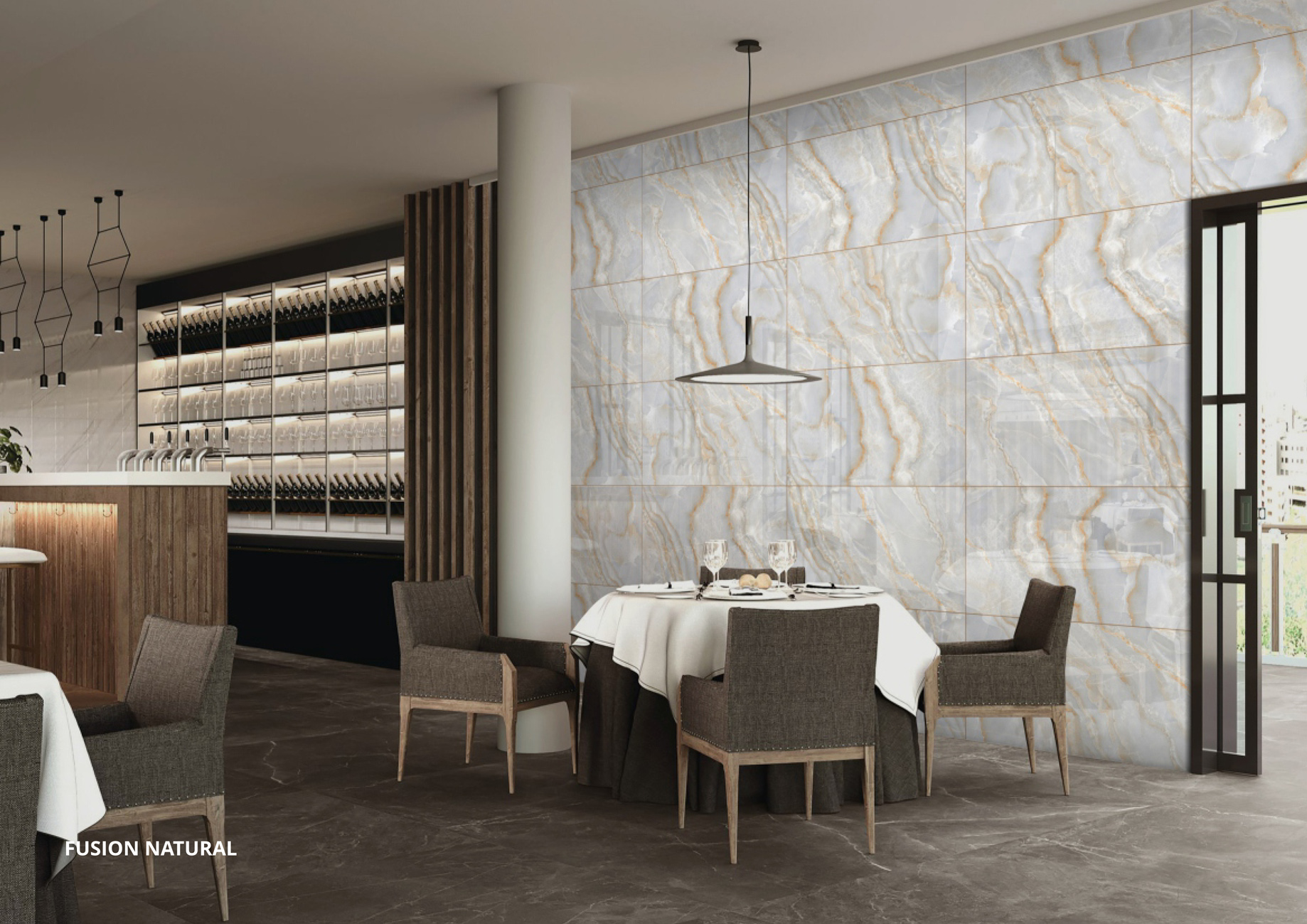
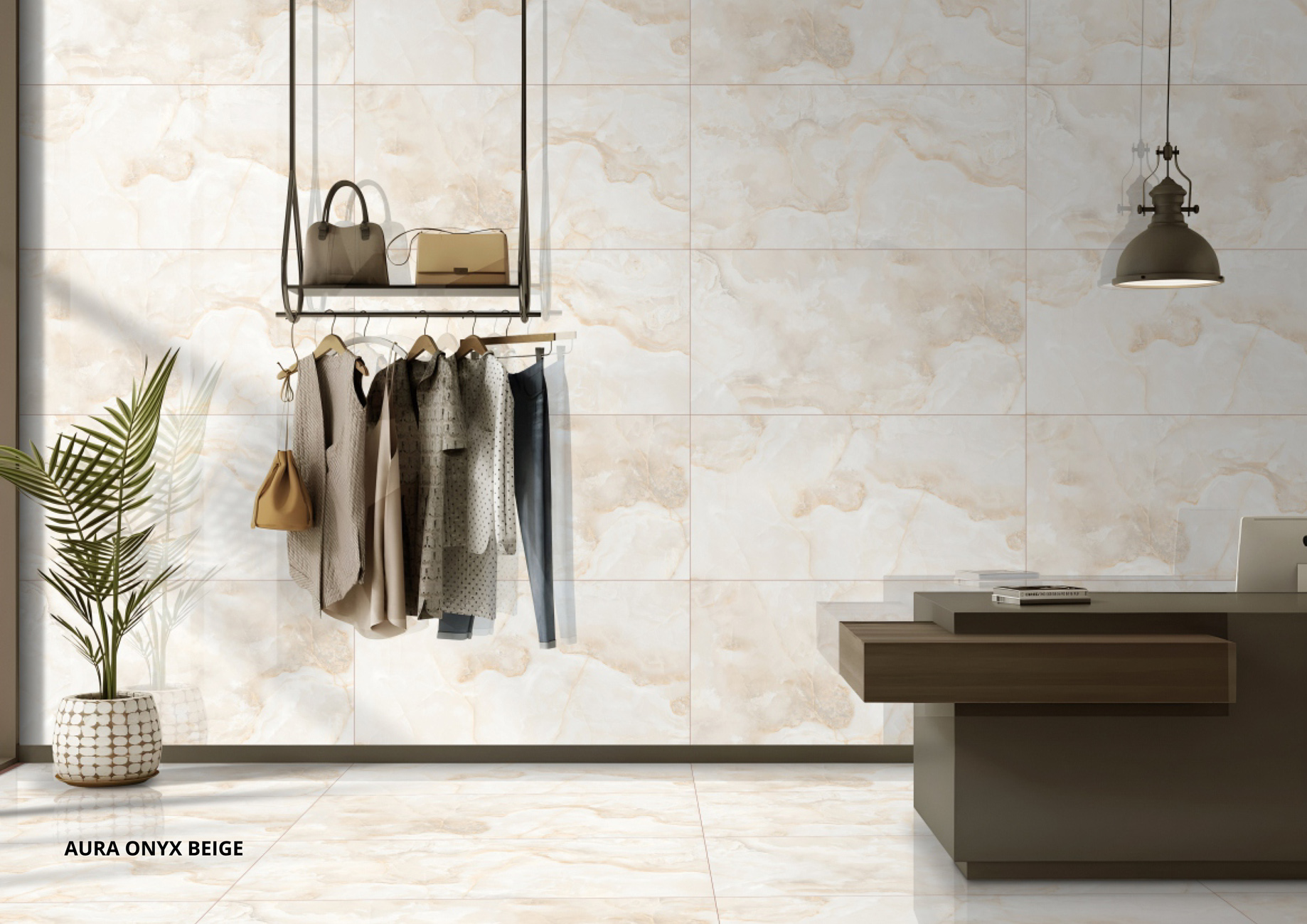
IS-certified, sourced from MorbiChecked against IS 15622/13630, direct from Gujarat's tile hub
200+ verified dealersAcross India, checked and listed by TilesFinders
Free sample bookingHold the tile in your hand before you order
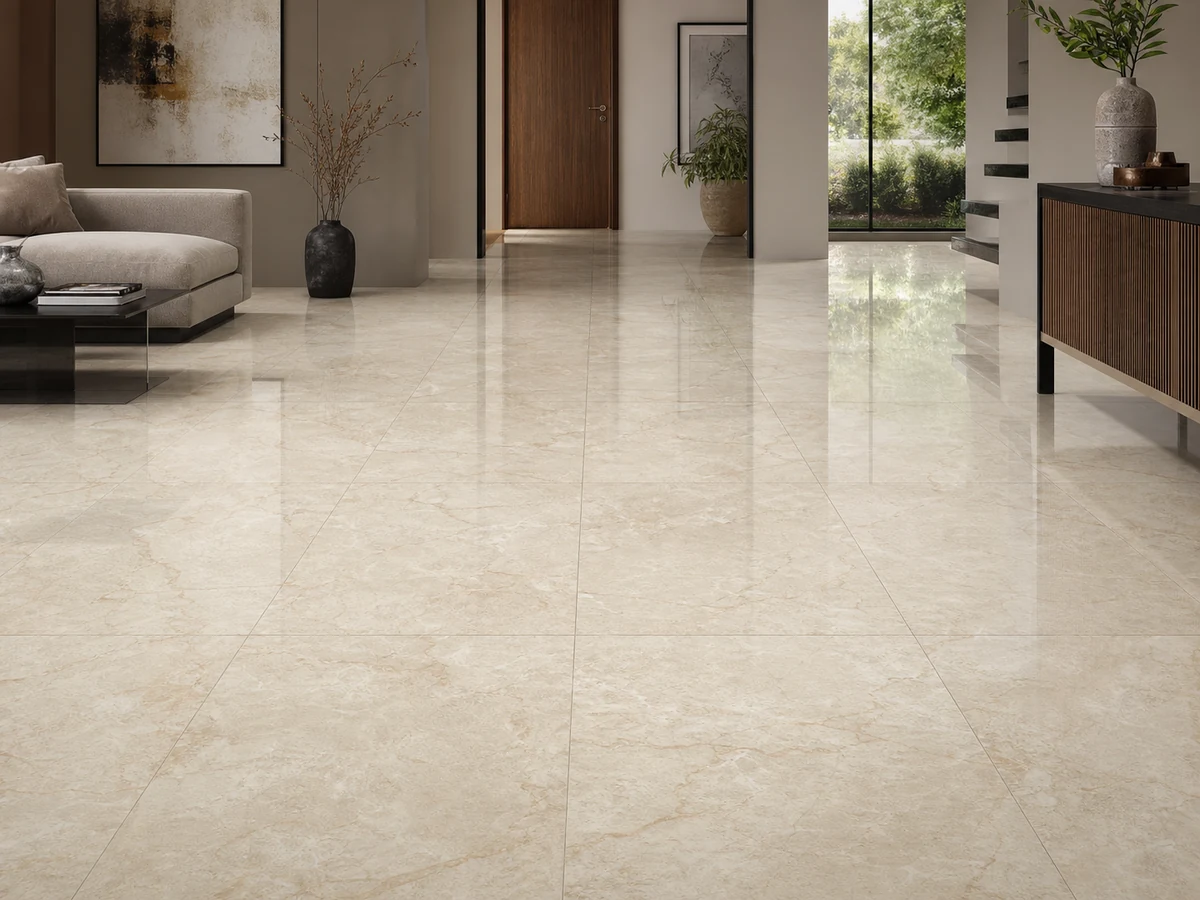
Glossy floor tiles are the most requested floor finish in Indian showrooms and the most misused tile in Indian homes. The high-gloss, mirror-like surface that reads as premium and spacious in a tile showroom under track lighting is a safety hazard in any room that gets wet, and a maintenance burden in any room with heavy foot traffic. Glossy floor tiles work in specific rooms under specific conditions. Outside those conditions, the same tile that looks exceptional in a showroom produces a floor that is dangerous, difficult to clean, or both.
This page covers glossy floor tiles in the context of the full glossy tiles finish category, with the specific room-by-room guidance, tile body and size recommendations, and the safety constraints that must be understood before ordering any gloss or high gloss tile for a floor application. White glossy floor tiles, black gloss floor tiles, large format gloss floor tiles, and gloss porcelain floor tiles are all covered, with the correct specification for each application and the rooms they must never be used in.
The One Rule That Governs All Glossy Floor Tiles
Every specification, size, and colour decision for glossy floor tiles is secondary to one structural rule: glossy floor tiles must only be used in dry indoor rooms that do not get wet. This is not a preference or a style recommendation. It is a safety requirement. A glossy or high-gloss tile surface becomes dangerously slippery when any amount of water, cleaning liquid, or even condensation reaches the floor.
Room or Area
Glossy Floor Tiles Safe?
Reason
Living room
Yes
Dry indoor room; foot traffic without wet conditions; no water ingress in normal use
Bedroom
Yes
Dry indoor room; no wet conditions under normal use
Dry corridor or lobby (indoor)
Yes
Dry indoor use; no direct water contact
Entrance foyer (covered, no rain ingress)
Yes with caution
If rain-driven splash can reach the floor, use matte or GHR instead
Kitchen floor
Never
Cooking water, cleaning water, and oil reach the floor daily; gloss is a fall hazard
Bathroom floor
Never
Constant wet conditions; gloss is extremely dangerous underfoot when wet
Balcony or terrace
Never
Rain and damp conditions; gloss is unsafe outdoors or in rain-exposed zones
Outdoor area
Never
All outdoor floors need an anti-skid matte or GHR finish only
Poolside or wet zone
Never
Highest slip risk; gloss tiles are absolutely prohibited in wet zones
Note: PGVT (Polished Glazed Vitrified Tiles) is a wall-only product under all conditions. It must never be used on any floor, wet or dry. PGVT has a mirror-like polished surface applied after firing; the polishing process makes it more reflective than standard GVT gloss but also means it provides zero slip resistance on any floor surface.
Glossy, High Gloss, and Polished: What Each Finish Actually Is
Three distinct finish categories appear under the broad term glossy floor tiles in Indian tile searches. They are not the same product and have different applications:
Finish Name
Surface Character
Floor Use
Wall Use
Available Body
Price Range (Rs./sq.ft)
Glossy (standard gloss)
Reflective surface with moderate shine; reflects overhead lighting clearly but not mirror-like
Dry indoor floors only (living room, bedroom, lobby)
Yes, all wall applications
GVT
Rs. 70 to Rs. 180
High Gloss
Higher reflectance than standard gloss; approaches mirror-like quality in large format tiles
Dry indoor floors only; extra caution on slipperiness, even in dry conditions
Low-reflectance finish that reads as gloss-adjacent; smooth surface but not fully matte.
Dry indoor rooms only; not safe in wet conditions, despite the matte name
Yes, all wall applications
GVT or Ceramic
Rs. 75 to Rs. 175
The practical rule for any buyer ordering a glossy floor tile: check whether the product description says GVT in gloss or high gloss finish. If the product is PGVT or has 'polished' in the name from a post-firing process, it is a wall-only tile regardless of what the showroom tile is displayed on.
Where Glossy Floor Tiles Work: Room-by-Room Guide
Living room floor
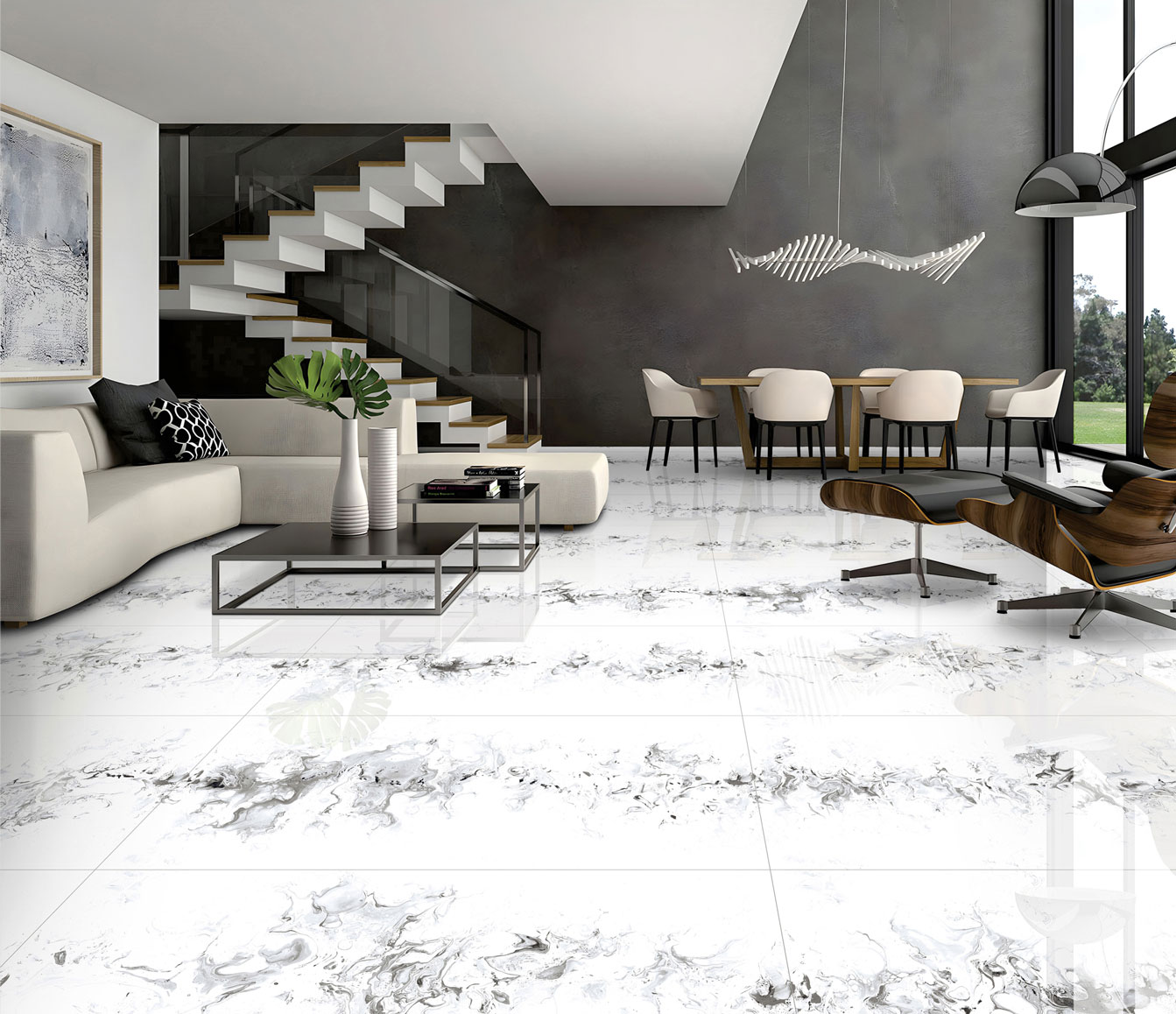
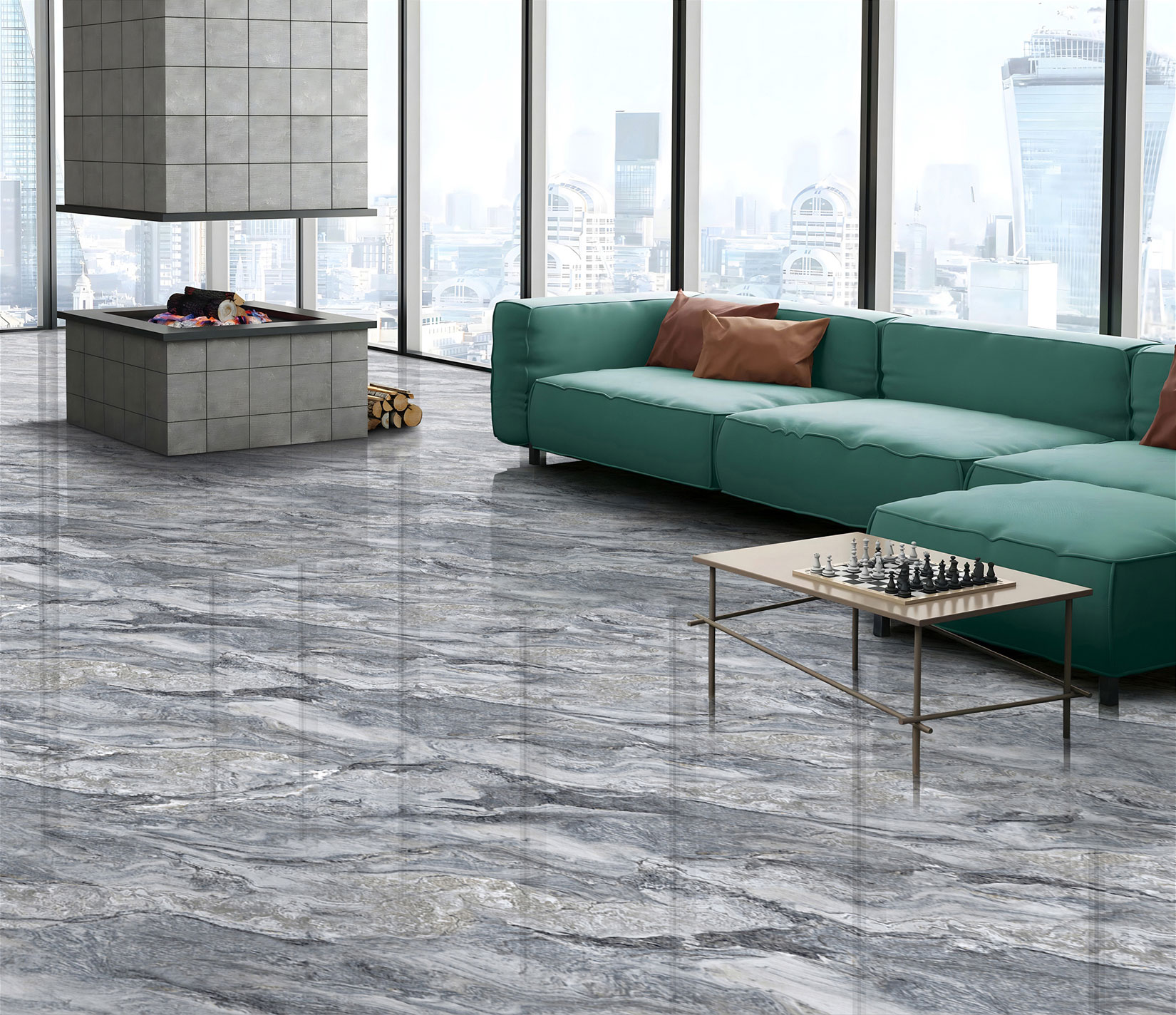
The living room is the primary application for glossy floor tiles in Indian homes. A dry room with controlled foot traffic and no wet conditions, the living room gives gloss floor tiles the best possible conditions: the reflective surface multiplies the available light from ceiling fixtures and windows, making the room feel brighter and more spacious than a matte floor would. GVT in high gloss finish in 2x4 (600x1200) or larger in a white or light grey marble look tiles is the most specified glossy floor tile in Indian living rooms. Price: Rs. 85 to Rs. 200 per sq.ft.
Bedroom floor
A bedroom in standard Indian residential use is a dry room. GVT in standard gloss or high gloss in 2x2 or 2x4 in any colour from white to dark grey or wood look tiles is safe on a bedroom floor. The slip risk in a bedroom is lower than in a living room because foot traffic is lower and shoes are typically not worn. The main decision in a bedroom gloss floor is colour: high gloss in a light colour (white, light grey, cream) reflects ceiling light and lifts a dark room; high gloss in a dark colour (charcoal, dark grey, black) gives a dramatic reading but requires more cleaning frequency to maintain.
Building lobby and commercial entrance
Building lobbies, hotel reception areas, and commercial entrances in India are among the most common applications for large-format high-gloss floor tiles. The high-traffic, high-visibility nature of these spaces suits large format gloss or high gloss GVT in 2x4, 32x48, or 48x48 in a marble look or plain colour. The cleaning regime in commercial spaces is more frequent and more systematic than in residential homes, which manages the slip and maintenance requirements of a gloss finish more effectively. Large gloss floor tiles in 2x4 or above for commercial lobbies run from Rs. 100 to Rs. 250 per sq.ft.
Dry corridor and staircase landing
Indoor corridors and staircase landings in residential buildings are dry areas where gloss floor tiles are acceptable. The caution in staircase areas: the step treads themselves must be in matte or GHR finish with a nosing tile or anti-slip strip at the tread edge, regardless of the landing finish. The landing platform can be in gloss; the step tread cannot.
White Glossy Floor Tiles: The Most Specified Gloss Floor Colour in India
White glossy floor tiles are the most ordered gloss floor tile specification in Indian residential projects. The combination of a white reflective surface and a high-gloss finish delivers the maximum light multiplication effect: a white gloss floor in a living room reads as significantly brighter than the same room with a white matte floor, because the gloss reflects both natural light from windows and artificial light from ceiling fixtures into the room.
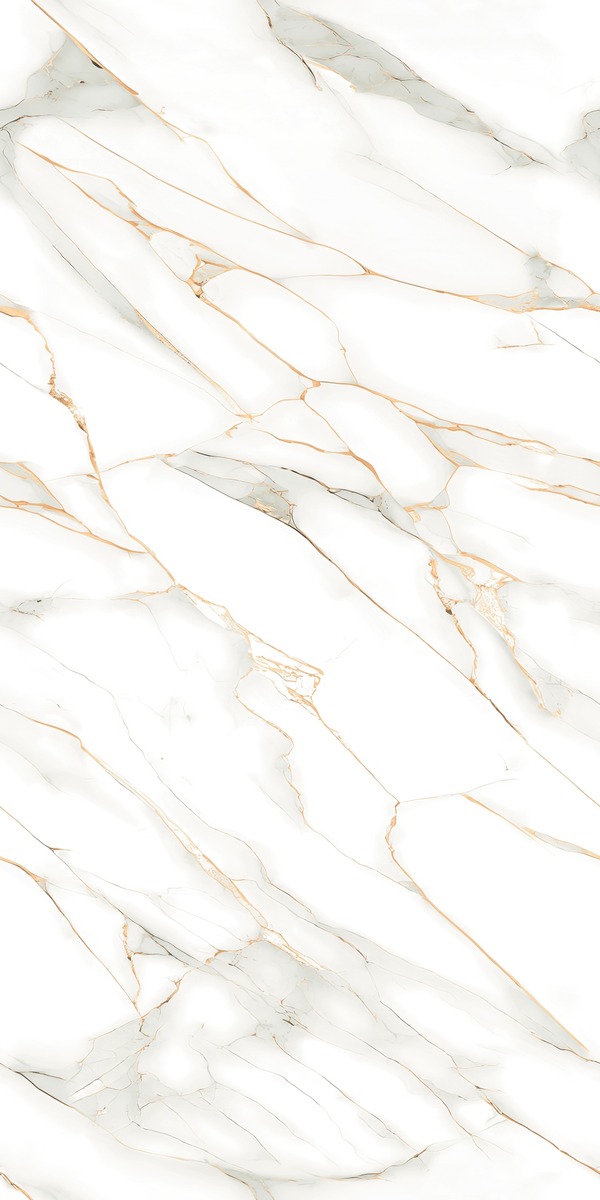
GVT in high gloss finish in 2x4 (600x1200) in plain white tiles or white Carrara marble look is the standard white glossy floor tile specification for an Indian living room. The 2x4 format gives fewer visible grout lines than 2x2, which makes the floor read closer to a continuous white plane. A 2mm white grout joint at this scale reads as nearly invisible, giving the maximum reflective effect from the floor surface.
Maintenance reality for white glossy floor tiles: white gloss shows every footprint, dust particle, and cleaning streak more clearly than any other floor specification. In a home with children, pets, or heavy foot traffic, white gloss is the highest-maintenance floor finish available. In a formal living room with controlled foot traffic, it is manageable with daily dry mopping and weekly damp mopping. In a kitchen, white gloss tiles are completely unsuitable regardless of how appealing they look in a showroom.
Gloss Black Floor Tiles: Drama and Discipline
Gloss black floor tiles are the boldest floor specification in the Indian tile range. In a dry living room or lobby with good lighting, a black high gloss GVT floor reads as a deep, reflective surface that gives the space a high-design, luxury character. In a space with inadequate lighting, a black gloss floor reads as flat and heavy.
GVT in high gloss finish in 2x4 in a true black or near-black shade for a living room floor runs from Rs. 100 to Rs. 210 per sq.ft. The maintenance challenge specific to black gloss: white calcium deposits from cleaning water, dust, and footprints are highly visible against a black surface. A black gloss floor requires daily dry mopping and a final clean-water rinse after every damp mop to prevent white marks from drying on the surface. In cities with hard municipal water, such as Ahmedabad, Jaipur, and Delhi, the calcium content of cleaning water makes white marks on black gloss floors a daily management task.
On a gloss black floor, grout colour is a specific decision: matching dark grey or anthracite grout makes the joins invisible, and the floor reads as a continuous dark plane. White grout on a black gloss floor creates a very visible white grid that competes with the dramatic black surface.
Large Gloss Floor Tiles: Format Guide for Indian Rooms
Large format gloss floor tiles (600x1200 and above) give the gloss floor its maximum reflective impact because fewer grout lines mean more continuous mirror-like surface. The visual of a large format gloss floor is fundamentally different from the same colour in a smaller format: in 2x2, the grid of joins is visible, and the floor reads as a tiled surface that reflects light; in 2x4 or 32x48, the floor reads as a reflective plane that happens to have a tile material.
Near-slab gloss; significantly fewer joins; reads as a large reflective panel
Rs. 90 to Rs. 210
800x1600
32x64
GVT
Yes (dry indoor only)
Very large format; 4 to 6 tiles across a standard living room; maximum light reflection
Rs. 120 to Rs. 260
1200x1200
4x4
GVT
Yes (dry indoor only)
Square large format; reads as monolithic; used in premium lobbies and large living rooms
Rs. 130 to Rs. 270
1200x2400
4x8
GVT (NOT to be called porcelain)
Yes (dry indoor only)
Near-seamless floor; maximum format; minimum joins; used in premium residential and commercial
Rs. 160 to Rs. 320
Note: 1200x1800mm and 1200x2400mm format tiles must not be described as porcelain tiles in any product description or content. These are large-format GVT tiles. All large-format gloss floor tiles listed above are for dry indoor floors only. None is suitable for kitchen floors, bathroom floors, or any wet or outdoor area.
Gloss Porcelain Floor Tiles: What the Term Actually Means
Gloss porcelain floor tiles is a term used in Indian searches that describes two different products depending on the context. In the technical tile specification, porcelain is a tile body with water absorption of 0.5% to 5% under IS 13630. In the Indian market, the term porcelain is often used loosely to refer to any vitrified tile, including GVT. This distinction matters when buying:
True gloss porcelain: a tile with a porcelain body (2% to 5% water absorption) with a glossy glaze surface. Suitable for dry indoor floors. Lighter weight per sq. ft. than GVT tiles, which can matter in high-rise apartments.
GVT described as gloss porcelain: a vitrified tile body (0.05% water absorption) with a glossy glaze. This is what most Indian tile retailers mean when they say gloss porcelain floor tile. More durable and lower absorption than true porcelain, but heavier.
Both are acceptable for dry indoor floor use in a glossy finish. Neither is suitable for kitchen floors, bathroom floors, or outdoor use. When ordering, confirm the actual water absorption of the tile from the product data sheet rather than relying on the marketing name alone.
White Gloss Kitchen Floor Tiles: Why the Specification Does Not Work
White gloss kitchen floor tiles are one of the most searched glossy floor tile terms in India, and it describes a product that must not be installed on a kitchen floor. This is the most important safety point on this page,e and it applies to every glossy tile regardless of colour, body type, format, or price point.
A kitchen floor is a wet surface in regular use. Cooking water splashes from the cooktop and sink. Cleaning water from regular mopping sits on the floor until it evaporates or dries. Oil from cooking reaches the floor near the cooking zone. Any one of these conditions makes a gloss tile surface dangerously slippery. All three together make a gloss kitchen floor a serious fall hazard in daily use.
The correct specification for a white kitchen floor that reads as bright and spacious is GVT in matte or GHR (Glaze High Resistance) finish in white or near-white in 2x2 or 2x4. The matte surface provides the anti-skid property that a kitchen floor requires. The white colour gives the same light-lifting effect as white gloss in the kitchen. The difference between a white matte GVT kitchen floor and a white gloss GVT kitchen floor is safety; the visual difference from a viewing distance is minimal.
Note: White gloss tiles in any body type must not be used on kitchen floors. The correct kitchen floor specification is GVT in matte or GHR finish. This applies equally to all other gloss colours on kitchen floors: black gloss, grey gloss, beige gloss, and all other gloss finishes are kitchen floor safety hazards.
Maintaining Glossy Floor Tiles in Indian Homes
Glossy floor tiles in dry rooms require a cleaning routine that is different from matte floor tiles because the high-reflectance surface makes every mark, streak, and footprint more visible:
Daily: dry mop or dust mop to remove fine dust and particles. A microfibre dry mop is the most effective tool for a gloss floor because it picks up particles without leaving streaks.
Weekly: damp mop with a diluted mild floor cleaner. Use the minimum amount of water. Excess water pools in grout lines and dries as white mineral marks on the gloss surface. Follow immediately with a second pass using a clean, dry mop to remove moisture before it dries.
Hard water cities (Ahmedabad, Jaipur, Delhi, Nagpur): rinse with a clean-water final mop pass after every damp clean. Hard water leaves calcium deposits as it dries. On a white gloss floor, they read as white smears; on a dark gloss floor, they read as white circles. A clean rinse prevents this.
Avoid acidic or alkaline cleaners: high-acid or high-alkali cleaning products can dull the gloss finish on GVT over time. Use a pH-neutral floor cleaner designed for polished tile surfaces.
Epoxy grout between glossy floor tiles in a living room is not mandatory, but it is worth specifying in high-traffic areas where the grout joints will be walked on frequently. Epoxy grout resists staining and does not absorb the fine dust that standard cement grout accumulates in a living room setting.
Choosing the Right Glossy Floor Tile for Your Room
Room or Application
Recommended Tile
Size
Finish
Colour
Price (Rs./sq.ft)
Living room, standard Indian apartment
White or marble look GVT
2x4
High Gloss
White, cream, or light grey marble look
Rs. 90 to Rs. 200
Living room, premium or large
White or stone look GVT
32x48 or 4x4
High Gloss
White, grey, or Calacatta marble look
Rs. 120 to Rs. 270
Bedroom, standard
Plain or marble look GVT
2x2 or 2x4
Gloss
White, cream, grey, or wood look
Rs. 70 to Rs. 185
Building lobby or commercial entrance
Plain or marble look GVT
2x4 or 4x4
High Gloss
White, grey, or black
Rs. 100 to Rs. 260
Dry indoor corridor
Plain GVT
2x2 or 2x4
Gloss
Any colour; light colours preferred for light reflection
Rs. 70 to Rs. 185
Gloss black floor, living room
Black or dark grey GVT
2x4
High Gloss
Black or near-black
Rs. 100 to Rs. 210
Kitchen floor (CORRECT specification)
GVT matte or GHR
2x2
Matte or GHR
White, cream, or any neutral
Rs. 85 to Rs. 165
GVT Gloss Floor Tiles and Indian Building Conditions
GVT in gloss or high gloss finish carries water absorption of 0.05%, which qualifies it under IS 15622 for vitrified tiles. In Indian residential and commercial buildings, this absorption level means the tile body is stable through the monsoon season humidity from June to September and does not expand or contract with humidity cycling. For dry indoor floor applications, the low body absorption means adhesive bond failure from moisture is not a risk over the building's lifespan. The gloss finish itself does not affect the body's moisture performance; the constraint on wet areas comes from the surface slip risk, not from the tile body's water resistance.
Glossy Floor Tile Sizes and Prices from Morbi and Gujarat
GVT in standard gloss and high gloss finish in 2x2 (600x600) for living room and bedroom floors is produced by manufacturers across Morbi at Rs. 70 to Rs. 165 per sq.ft. GVT in 2x4 (600x1200) in high gloss for living rooms and lobbies runs from Rs. 90 to Rs. 210 per sq ft from Gujarat-based producers. Large format GVT in 32x48 and 4x4 in high gloss for premium living rooms and commercial lobbies runs from Rs. 120 to Rs. 270 per sq.ft. GVT in matte finish for kitchen floors (the correct alternative where gloss is not safe) runs from Rs. 85 to Rs. 165 per sq.ft, also from manufacturers across Morbi meeting IS 15622.
Bring Light Into Your Living Spaces
GVT in gloss and high gloss finish in 2x2, 2x4, 32x48, and 4x4 for dry indoor floors in white, grey, marble look, black, and plain colours from verified manufacturers across Morbi and Gujarat are listed on TilesFinders with finish, size, water absorption, and body clearly shown for every product. Standard gloss GVT in 2x2 for living room and bedroom floors starts from Rs. 70 per sq ft; large format high gloss in 2x4 and above runs from Rs. 90 to Rs. 270 per sq ft. Confirm the room is a dry indoor area before ordering any gloss finish floor tile.
Tiles Near You
Detecting location...
Explore tiles available with trusted dealers near your location.
A buying guide on tile size, finish, anti-skid choices, and how to reduce wastage before you order.
How we keep this page accurate
Pricing on this page is checked against current dealer listings and manufacturer spec sheets. Body type facts, water absorption figures and IS standard references are checked against BIS documentation, not copied from other websites. This page still won't catch a batch-specific spec, so confirm exact figures with your dealer before ordering.
PricingChecked against live dealer listings
Technical specsVerified against IS 15622 and IS 13630
Dealer listingsChecked before being added to the directory
After The Tiles Are Laid
Living with your new tile
Five habits that keep any GVT, PGVT or porcelain floor looking new for years, not just months.
Use a pH-neutral cleaner
Acidic or alkaline cleaners can dull the glaze over time. A mild, pH-neutral floor cleaner keeps the finish intact.
Skip abrasive scrubbers
Steel wool or scouring pads can scratch a polished surface permanently. A soft mop or cloth is enough for daily cleaning.
Wait before heavy use
Light foot traffic is fine after 24 to 48 hours. Hold off on moving heavy furniture back for a full 7 days.
Seal cement grout
Cement grout benefits from a sealant applied a few weeks after laying, to resist staining. Epoxy grout doesn't need this.
Mind the monsoon
A door mat at every entry cuts down on grit that scratches matte finishes over a wet season.
Glossy floor tiles are safe on dry indoor floors only: living rooms, bedrooms, and dry indoor corridors. They must not be used on kitchen floors, bathroom floors, balconies, terraces, or any area that gets wet. A gloss surface provides zero slip resistance when wet. In a kitchen or bathroom where water reaches the floor regularly, a gloss tile is a serious fall hazard.
No. Kitchen floors are wet surfaces in regular use from cooking water, cleaning water, and cooking oil. Gloss tiles on a kitchen floor are a fall hazard. The correct kitchen floor specification is GVT in matte or GHR (Glaze High Resistance) finish, which provides the anti-skid surface that a wet cooking environment requires. This applies to all gloss colours, including white, black, grey, and marble look.
Standard gloss GVT has a reflective surface that reflects light clearly but is not mirror-like. High gloss GVT has a higher reflectance that approaches mirror quality in large format tiles. Both are suitable for dry indoor floors only. High gloss reads more dramatically and shows marks and footprints more visibly than standard gloss. PGVT is a post-firing polished finish that is walls-only; it must never be used on any floor.
GVT in high gloss finish in 2x4 (600x1200) in a white, cream, or marble look is the most specified glossy floor tile for Indian living rooms. The 2x4 format gives fewer grout lines, and the high gloss surface reflects light to make the room appear larger and brighter. White or Carrara marble look in high gloss 2x4 from manufacturers in Morbi runs from Rs. 90 to Rs. 200 per sq.ft.
Dull or smeared appearance after mopping is caused by hard water leaving calcium and mineral deposits as the water dries on the gloss surface. In cities with hard municipal water, mop water and rinse water that dries on the tile leaves a visible film. The solution is to follow every damp mop with a final clean-water rinse pass, then dry the floor with a clean dry mop immediately. Using a pH-neutral floor cleaner rather than soap-based cleaners also prevents streaking.
No. PGVT (Polished Glazed Vitrified Tiles) is a wall-only product under all conditions. The post-firing polishing process gives PGVT its mirror-like finish but removes all slip resistance. PGVT must not be used on any floor, whether wet or dry. If a buyer wants the look of PGVT on a floor, specify standard GVT in a high-gloss finish, which is a floor-safe alternative for dry indoor rooms.
Large format glossy floor tiles in 2x4 (600x1200) or 32x48 make a small room appear larger because the fewer visible grout lines reduce the visual grid that interrupts the eye's reading of the floor as a continuous surface. A white or light grey high gloss GVT in 2x4 in a small living room gives the maximum space-expanding effect available from a floor tile specification.
Dry mop daily with a microfibre mop to remove dust and particles. Damp mop weekly with a diluted mild cleaner. Follow every damp mop immediately with a clean-water rinse pass and a dry mop to prevent calcium deposits from hard water drying as white marks on the black surface. In hard water cities, this rinse step is essential after every wet clean. Use dark grey or anthracite grout with black gloss tiles to prevent white grout lines from reading as a bright grid against the dark surface.
What Our Customers Say
Real feedback from homeowners and contractors who found their perfect tiles
★★★★★
Found exactly the wood-look tiles I wanted for my living room. The dealer listed here had great stock and fair pricing. Saved me at least two weekends of running around showrooms.
★★★★★
Very detailed size and finish guide helped me choose anti-skid tiles for my bathroom. Wish I had found this site before my last renovation.
★★★★☆
Good comparison between vitrified and ceramic options. Contacted a dealer directly through the listing and got a quote within the hour.
★★★★★
As a contractor, I use this to quickly show clients different tile sizes and finishes on-site. The photos are high quality and load fast even on mobile data.
★★★★★
Loved how easy it was to filter by size and color together. Ended up going with 600x1200 GVT tiles for my hall, exactly what I was picturing.
★★★★☆
Solid resource for comparing tile finishes before visiting the showroom. Would like to see more price transparency, but overall a helpful first step.
★★★★★
The dealer directory saved me so much time. Called two showrooms directly from the site and had my order finalized within two days.
★★★★★
Great breakdown of PGVT vs GVT vs ceramic. I finally understood which tiles are meant for walls versus floors before making a costly mistake.
★★★★☆
Used this while renovating my kitchen backsplash. The FAQ section answered most of my questions about grout and water resistance without needing to call anyone.
★★★★★
Best part is being able to browse by room type. Picked out balcony and parking tiles in the same session without jumping between different sites.
0/4 selected
Compare Designs (0/4)
No designs added to compare yet. Open a design and tap "Compare" to add it here (up to 4).