Glossy tiles vs polished Glossy tiles - Key difference
April 11, 2026 261
Glossy or polished glossy? Standard glossy tiles offer an affordable shine for walls, while polished tiles deliver a smooth, mirror-like reflection perfect for luxury floors and large spaces.
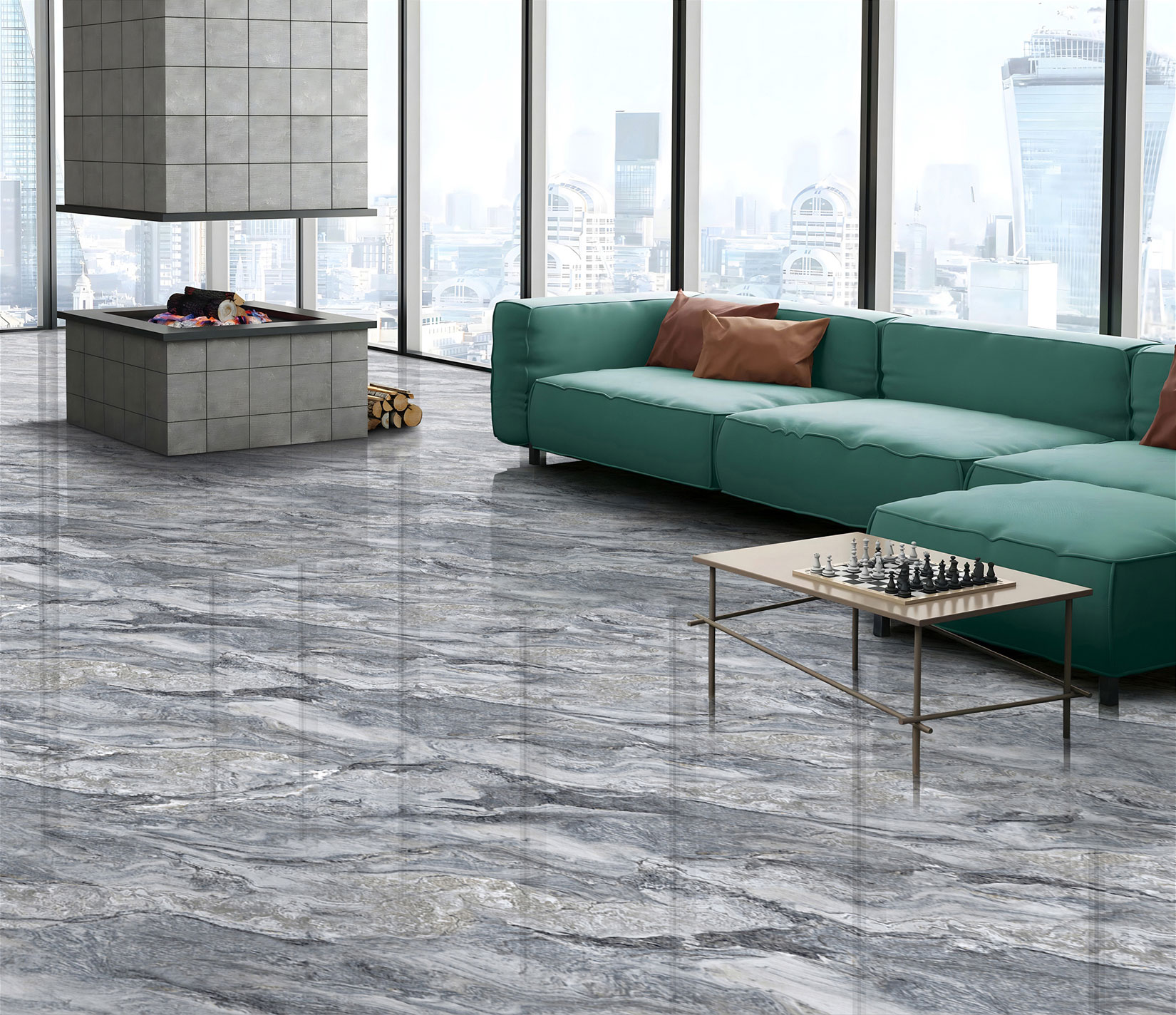
Both glossy and polished glossy tiles offer a shiny appearance, but the difference becomes clear under light. A standard glossy tile can appear slightly wavy because of its glazed surface, while polished glossy tiles are mechanically ground after manufacturing, creating a flatter, smoother, and more mirror-like finish.
The Difference Between Glossy Tiles and Polished Tiles
The biggest difference between these two finishes becomes visible when sunlight or LED lights hit the surface.
A glossy tile finish is created by applying a layer of glaze to the tile and then firing it in a kiln. During this process, the surface can develop slight waviness or an “orange peel” effect. This is not usually visible from a distance, but under direct light, the reflection can look slightly uneven.
Polished glossy tiles are made differently. After the tile is manufactured, the surface is polished using heavy, resin-bond diamond abrasives with different grits, and then it is polished by nano-chemicals. This extra process makes the tile look flatter and smoother.
Because of this, polished glossy floor tiles create a cleaner and more mirror-like reflection, especially across larger surfaces.
Glossy Tiles Surface vs Polished Vitrified Tiles Finish
The difference between these two tiles is not just about shine. The entire surface behaves differently.
| Feature | Glossy Tiles Surface | Polished Glossy Tiles |
| Surface Flatness | Slight waviness may appear under strong light | Surface appears flatter and more reflective |
| Manufacturing | Glaze applied and kiln-fired | Surface polished after manufacturing |
| Reflection | Bright finish with mild distortion | More mirror-like and sharper reflection |
| Best Use | Walls and decorative areas | Floors and premium spaces |
This is why polished glossy tiles are usually chosen when the goal is to create a seamless, premium-looking floor.
Glossy Wall Tiles vs Polished Glossy Floor Tiles
These two finishes are usually used in different parts of the home.
Glossy Wall Tiles
Glossy wall tiles are lighter, more affordable, and better suited for vertical surfaces.
- Bathrooms, utility areas, and compact kitchens often use 300x450 glossy wall tiles because they are easy to install and suit smaller surfaces.
- For modern bathrooms, a 300x600 glossy wall tile design works well because the larger size reduces grout lines and creates a cleaner look.
- Glossy wall tiles help bounce light around smaller rooms, making them appear brighter.
Because the surface is vertical, the slight waviness of glossy wall tiles is rarely a problem.
Polished Glossy Tiles
Polished glossy tiles are more versatile because they can be used on both floors and walls.
- In bedrooms and compact living rooms, 600x600 polished glossy floor tiles are widely used because they balance coverage and easy installation.
- For larger spaces, 600x1200 polished glossy tiles create a more continuous surface with fewer grout lines. These are commonly used not only on floors, but also on bathroom walls, TV unit backdrops, and feature panels.
- In premium interiors, 800x1600 polished glossy large format tiles give both floors and walls a broader and more luxurious appearance.
- Their flatter and more reflective surface helps create a seamless and more premium look across larger areas.
These larger polished tiles reduce grout lines and make the floor appear more seamless.
Which is Better: Glossy or Polished Glossy Tiles?
The better choice depends on where the tile will be installed, what finish you want, and how much you want to spend.
Glossy tiles are usually the more economical option because they do not go through the extra polishing process after manufacturing. They are affordable, lightweight, and work especially well on walls.
Polished glossy tiles cost more because the surface goes through additional grinding and polishing to create a flatter, more mirror-like finish. They can be used on both floors and walls where a more premium appearance is required.
Choose Glossy Tiles If:
- You are tiling bathroom walls or kitchen backsplashes
- You want a cost-effective shiny finish
- You need lightweight wall tiles
- You prefer a softer reflection rather than a sharp mirror effect
Choose Polished Glossy Tiles If:
- You want a flatter and more reflective surface
- You are designing a premium floor or feature wall
- You prefer thinner grout lines and a more seamless appearance
- You want to use the same polished tile across both walls and floors
In many homes, both finishes are used together. Glossy tiles are commonly used for bathroom and kitchen walls, while polished glossy tiles are often chosen for living room floors, feature walls, and premium spaces where a more luxurious look is needed.
FAQs
It is possible, but not ideal for large floor areas. Standard glossy tiles may show slight waviness and are usually less resistant to scratches than polished glossy floor tiles.
Yes. Because they are very smooth and flat, polished glossy tiles can become slippery when water is present. They work best in dry areas such as living rooms and bedrooms.
Both are easy to clean, but polished glossy tiles are slightly easier because their surface is flatter and smoother, giving dust and dirt fewer places to settle.
