
Staircase Tile Design Ideas: 20+ Riser and Landing Looks for Indian Homes
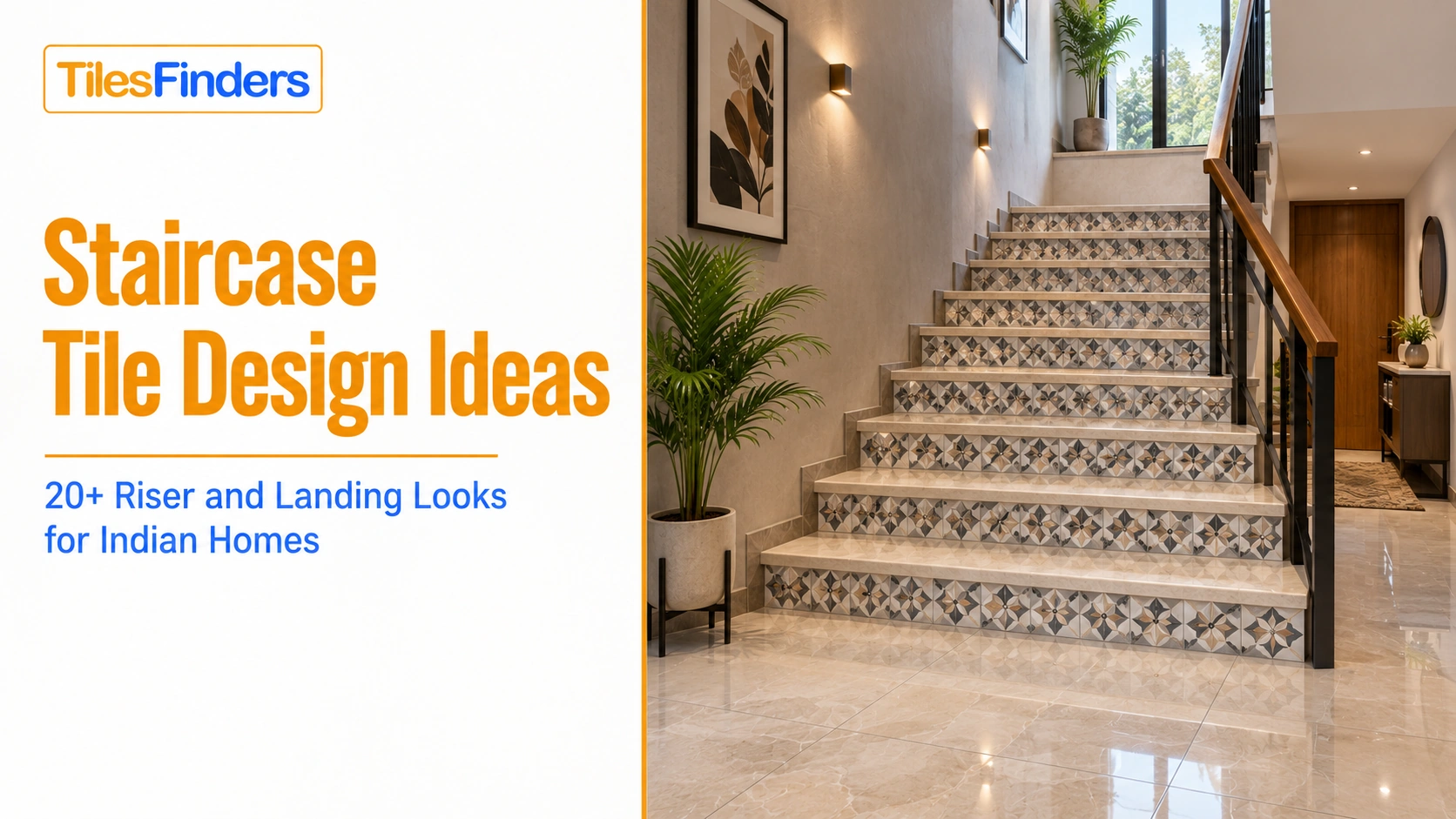
A staircase splits into two surfaces with opposite briefs: the tread needs grip and restraint, the riser carries no slip risk and is free for design. 22 looks organised that way.
- A Staircase Is Two Surfaces With Opposite Jobs
- The Nosing Detail Most Design Guides Skip
- Riser Looks: Where the Design Actually Lives
- Tread Looks: Restraint With Real Reasons
- Landing Looks: The Transition Moment
- Stringer and Side-Panel Looks
- Outdoor and Utility Staircases
- Purpose-Made Step Tiles vs Cut-to-Size Stone
- Practical Planning Before You Order
- Designing Where Safety and Style Actually Meet
A staircase splits into two surfaces with genuinely opposite briefs, the tread is walked on and belongs to safety, while the riser is never touched underfoot and is free to carry the design. This gallery covers 22 looks organised that way, plus the nosing detail most design guides skip entirely.
A staircase is the one surface in a home where a design decision is also directly a fall-safety decision. That sounds like a reason to play it safe everywhere, but it is actually the opposite, because a staircase is not one surface. It is two, and they have genuinely opposite briefs.
The tread is walked on. It carries every step, gets wet feet, and is where a slip actually happens, so it belongs to safety and should stay plain, grippy, and consistent. The riser is vertical. Nobody ever stands on it, it carries no slip risk whatsoever, and it is fully visible from below as you climb. That makes the riser the free surface, and it is exactly why the most common piece of staircase design advice, splurge on the risers, is sound rather than arbitrary. This gallery is organised around that split.
A Staircase Is Two Surfaces With Opposite Jobs
| Surface | Walked On? | Design Freedom | What It Needs |
| Tread | Yes, every step | Low, safety leads | Anti-skid rating, matte or textured finish, visual consistency |
| Riser | Never | High, effectively unlimited | Durability against shoe scuffs, matte to avoid glare |
| Landing | Yes, but flat | Moderate | Same grip as treads, room for a pattern moment |
| Stringer/side panel | Never | High | Purely visual, often overlooked entirely |
Read that table before choosing anything. Most staircase design mistakes come from applying one brief to all four surfaces, either making everything safe and ending up with something visually dead, or making everything decorative and ending up with treads that are genuinely unsafe.
The Nosing Detail Most Design Guides Skip
The nosing is the rounded or chamfered edge where the tread meets the riser, and it does three jobs simultaneously. It gives the eye a visual cue for where the step edge actually is; it takes the concentrated structural load of every footfall, and its rounded profile reduces injury from glancing contact.
There is a specification worth knowing here, because getting it wrong creates a hazard rather than a design flaw. A typical nosing projects 20 to 30mm with a roughly 3mm rounded radius. Push the projection past about 40mm, and it starts catching heels on the way down, which causes trips. A staircase that looks elegant in a photo and catches your heel every time you descend is a genuinely worse outcome than a plain one.
This is also where purpose-made step tiles earn their place. Products like the double bull-nosed full-body vitrified step tiles now available in India build the nosing profile and tread grip lines directly into the tile, which removes the on-site cutting and shaping that marble and granite staircases traditionally required.
Popular tiles right now



Riser Looks: Where the Design Actually Lives
1. Patterned encaustic-look risers with plain treads
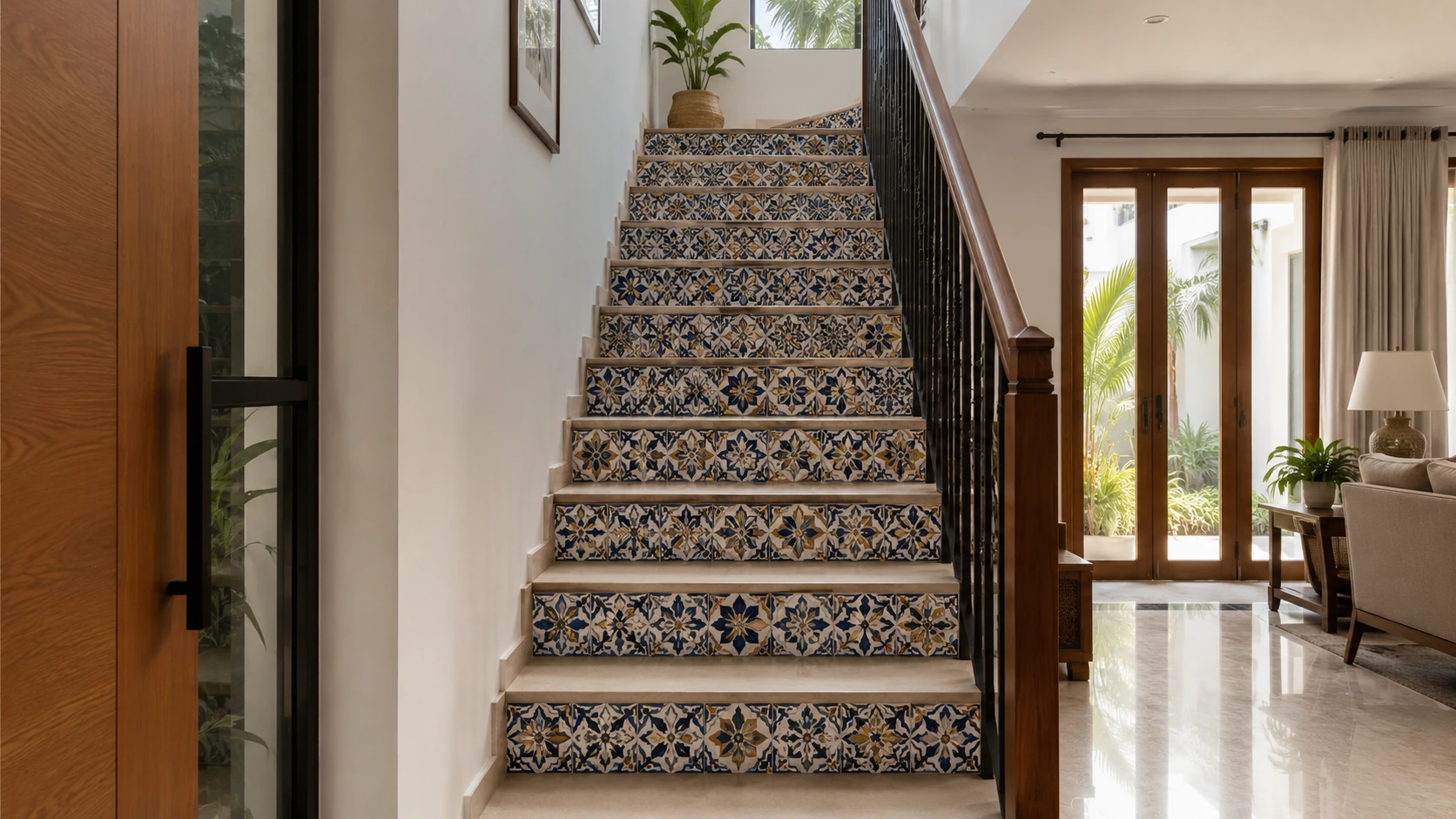
The single most reliable staircase design move. Bold patterned risers against neutral treads give strong character exactly where it is seen from below, while the walking surface stays consistent and safe.
Best for: Almost any staircase, the default high-impact choice.
2. Graduated colour risers
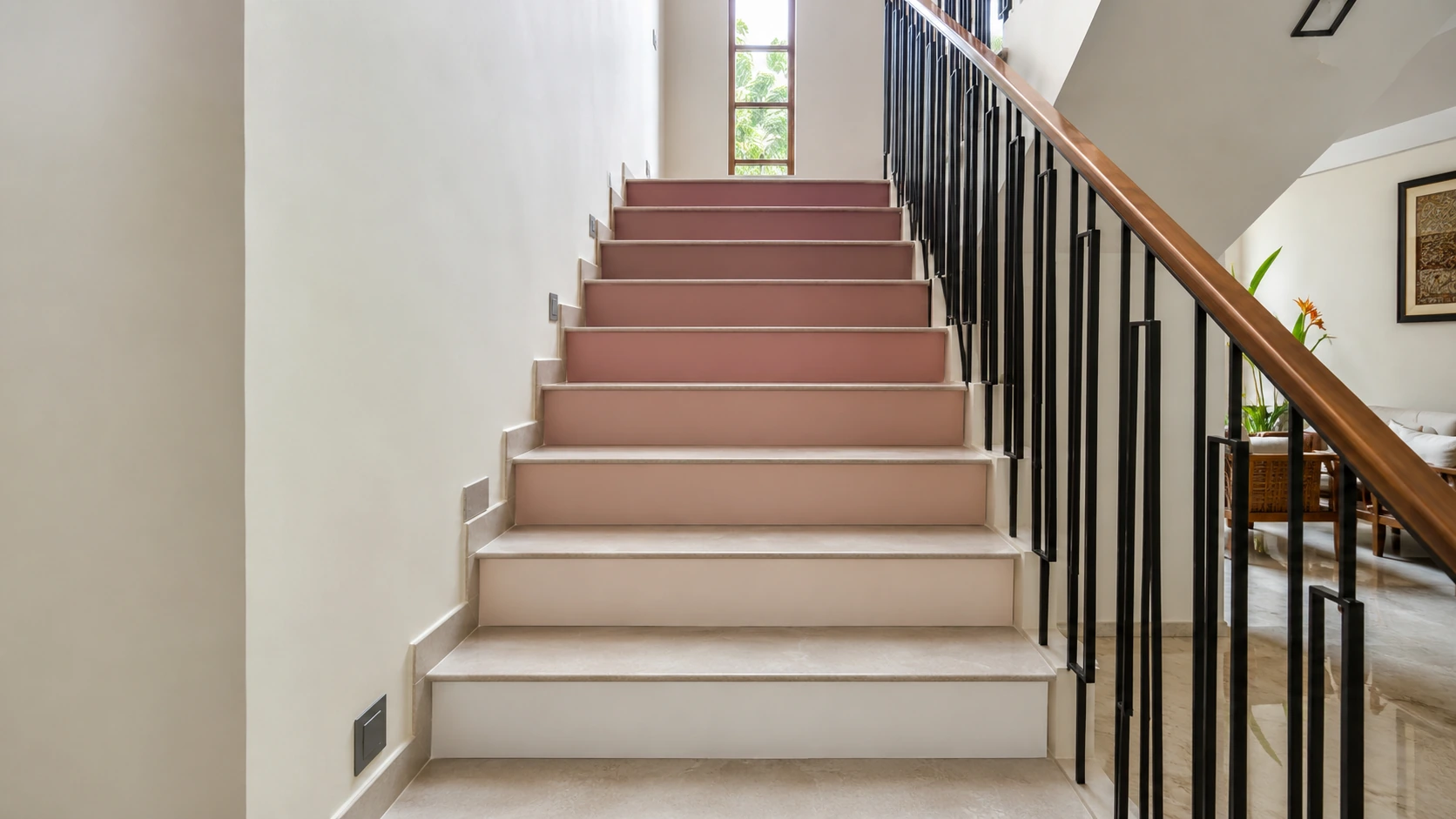
A tonal gradient running through the riser sequence, pale at the bottom, deepening toward the top, giving the staircase movement without any pattern at all.
Best for: Modern homes wanting subtlety over motif.
3. Single-colour bold accent risers
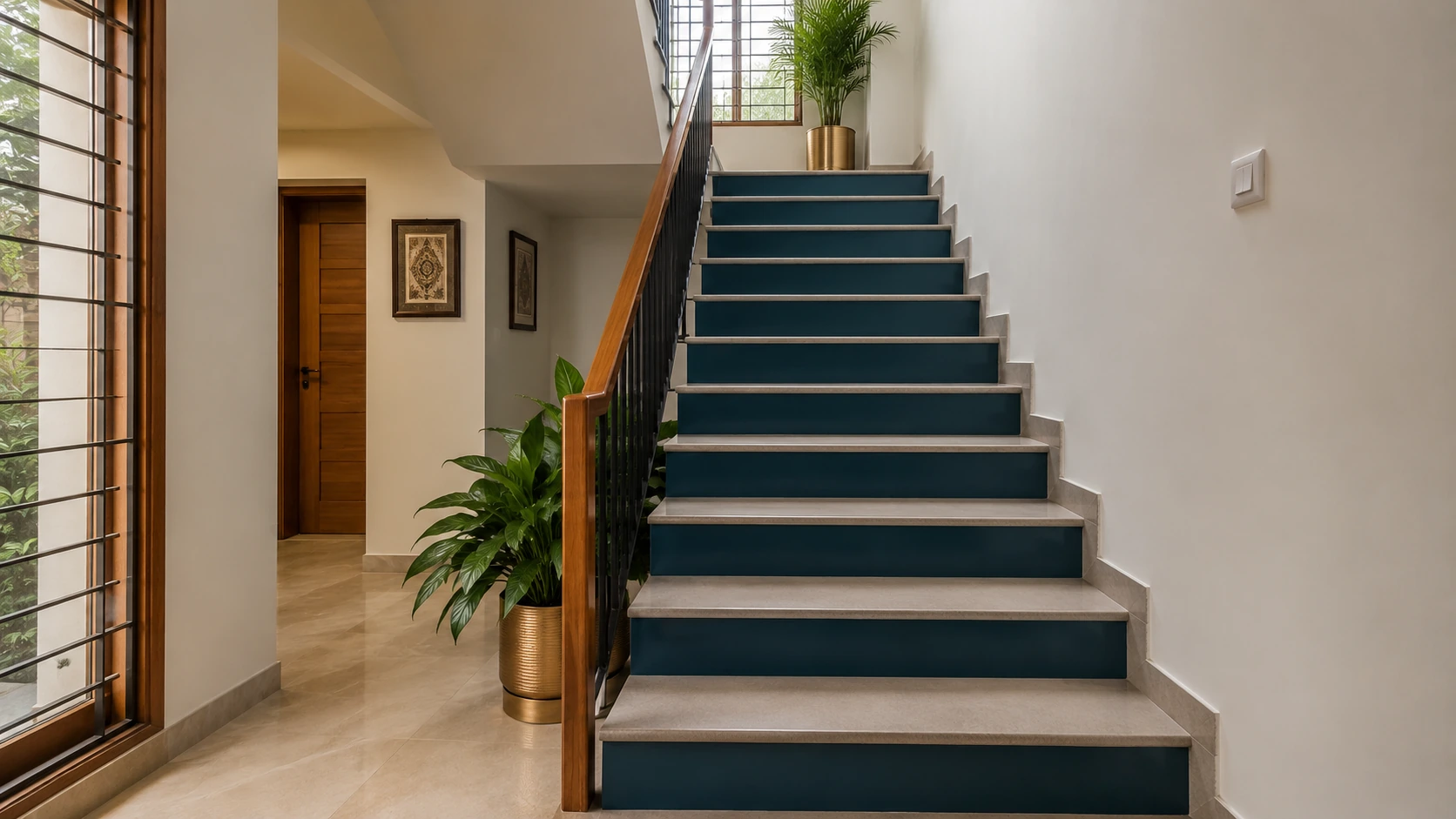
One saturated colour, deep teal, terracotta, or navy, across every riser against a neutral tread, a simpler and cheaper alternative to patterned tile with much of the impact.
Best for: Budget-conscious projects wanting a strong statement.
4. Mismatched patchwork risers
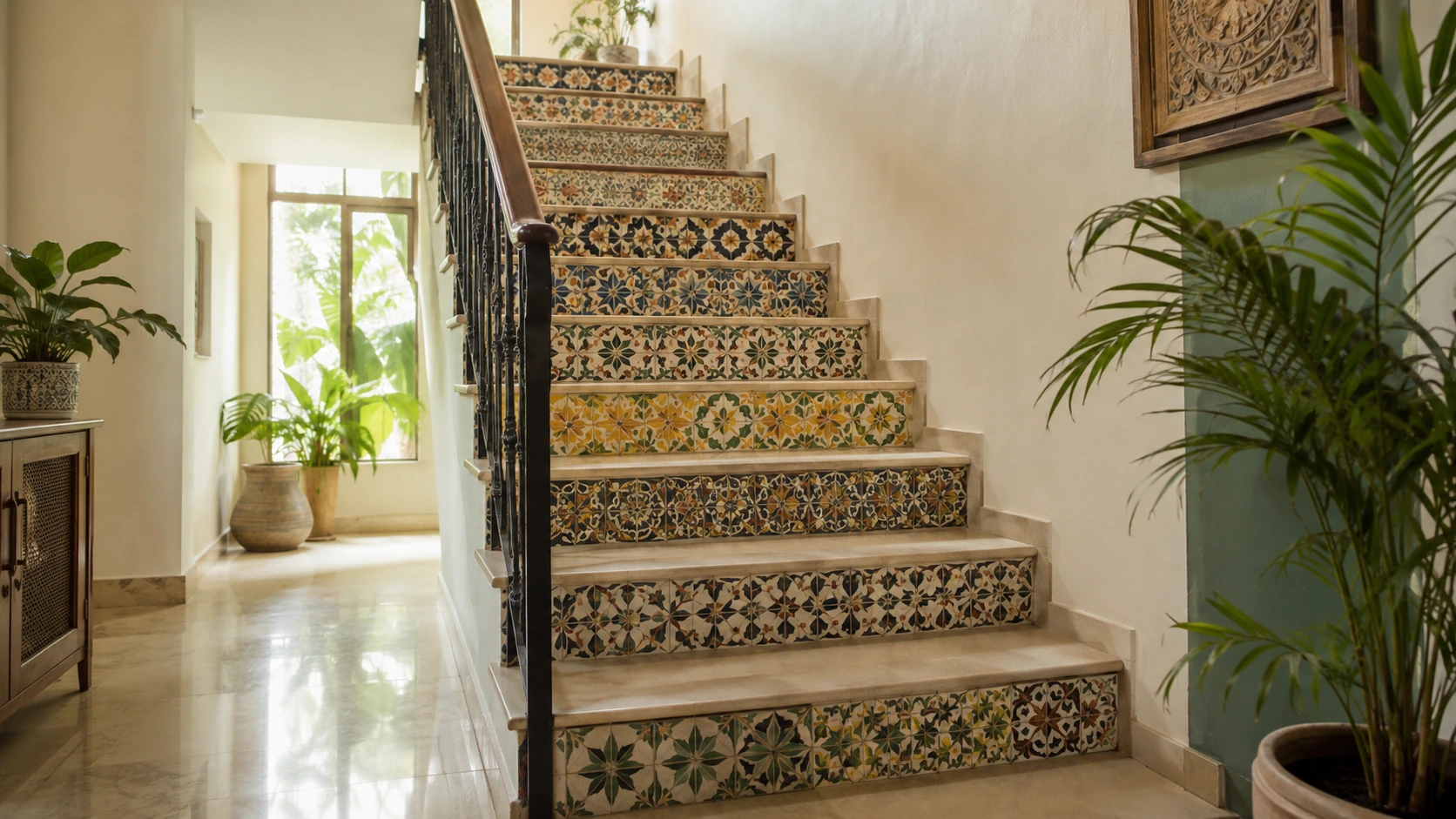
Deliberately different patterned tiles on each riser, drawing on the collected, eclectic character of boho and Mediterranean interiors.
Best for: Eclectic and boho schemes, staircases as a deliberate feature.
5. Wood-look risers with stone-look treads
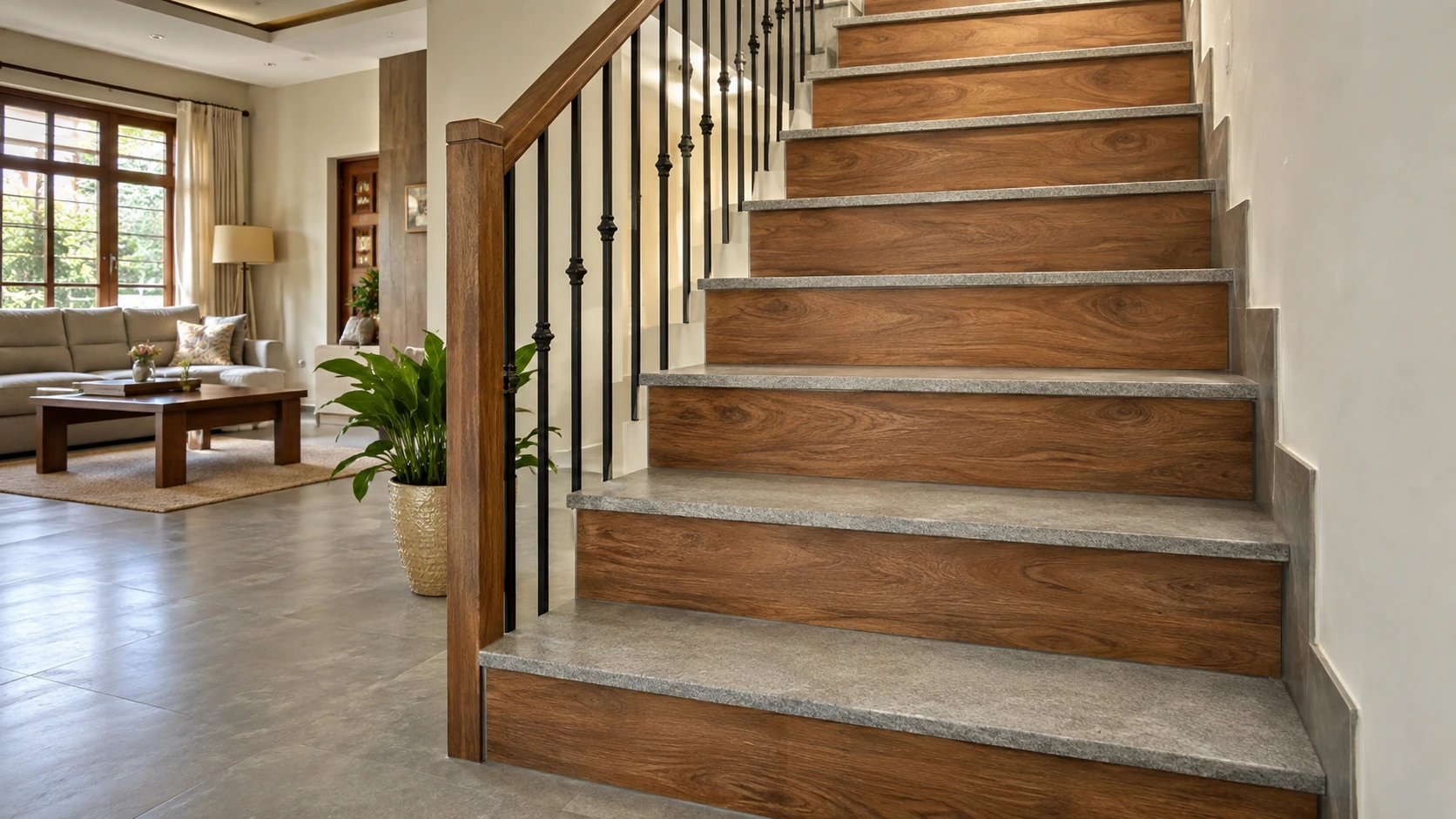
Warm wood-look tile on the vertical face against a cooler stone-look tread, a material contrast that reads richer than a single-finish staircase.
Best for: Transitional interiors mixing warm and cool materials.
6. Jaali or geometric motif risers
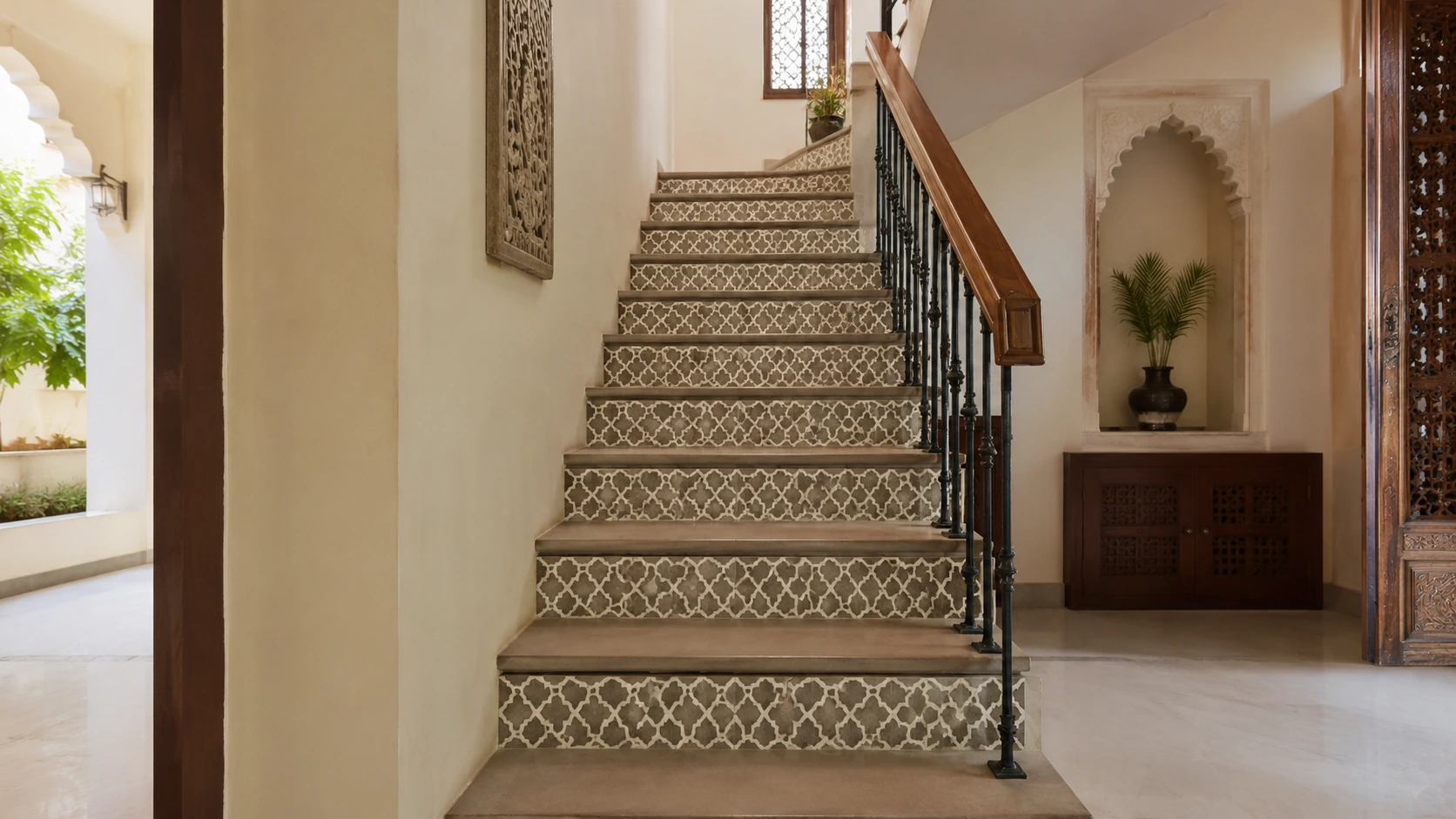
Perforated-look jaali geometry or interlocking geometric motifs printed on the riser, referencing Indian architectural tradition in a genuinely appropriate place.
Best for: Heritage-leaning and Indian-contemporary homes.
7. Metallic accent strip risers
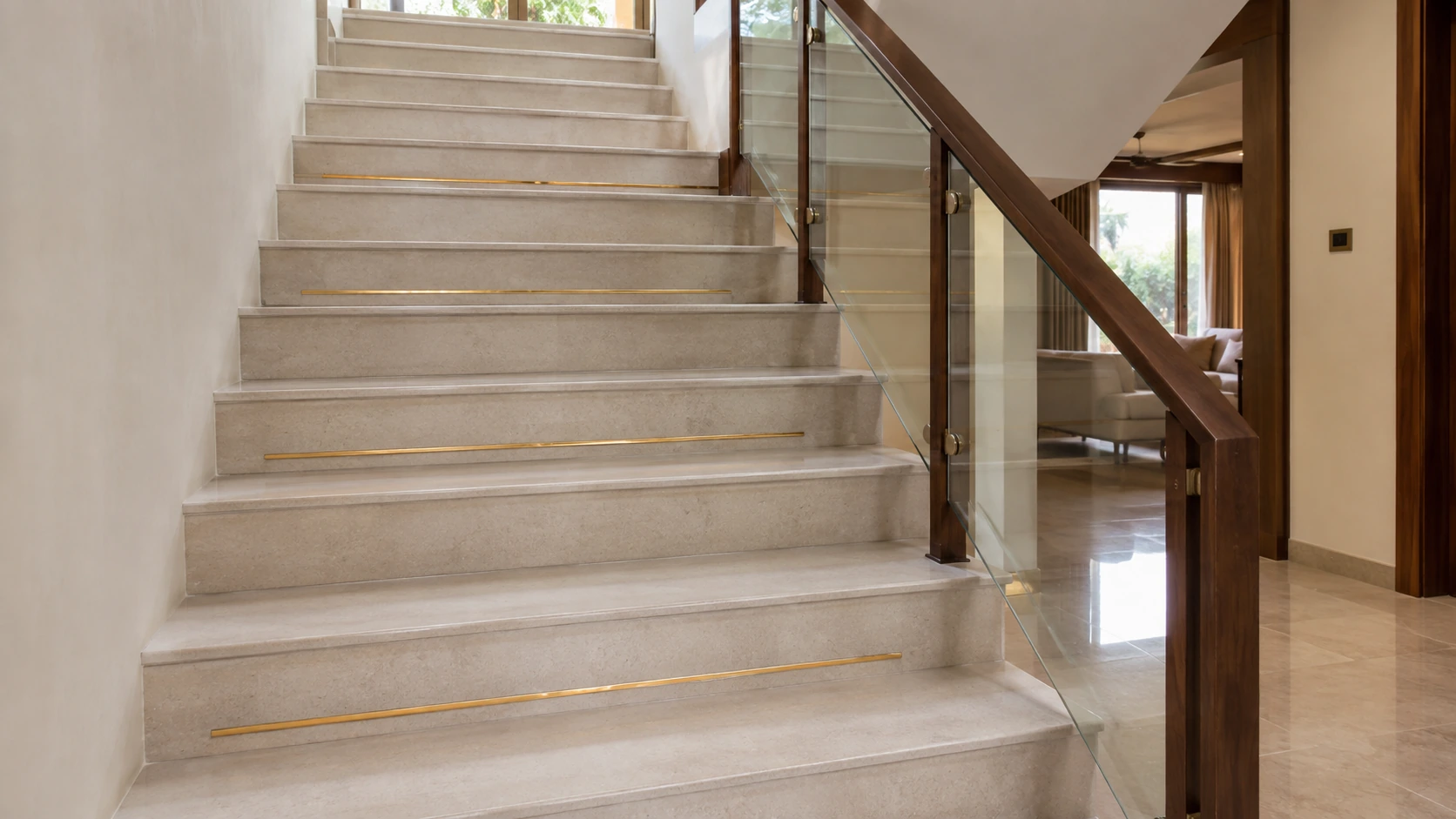
A slim metallic or brass-toned strip inset within an otherwise plain riser, catching light as you climb without committing to a full pattern.
Best for: Premium interiors wanting restraint with a detail.
8. Text or numbered risers
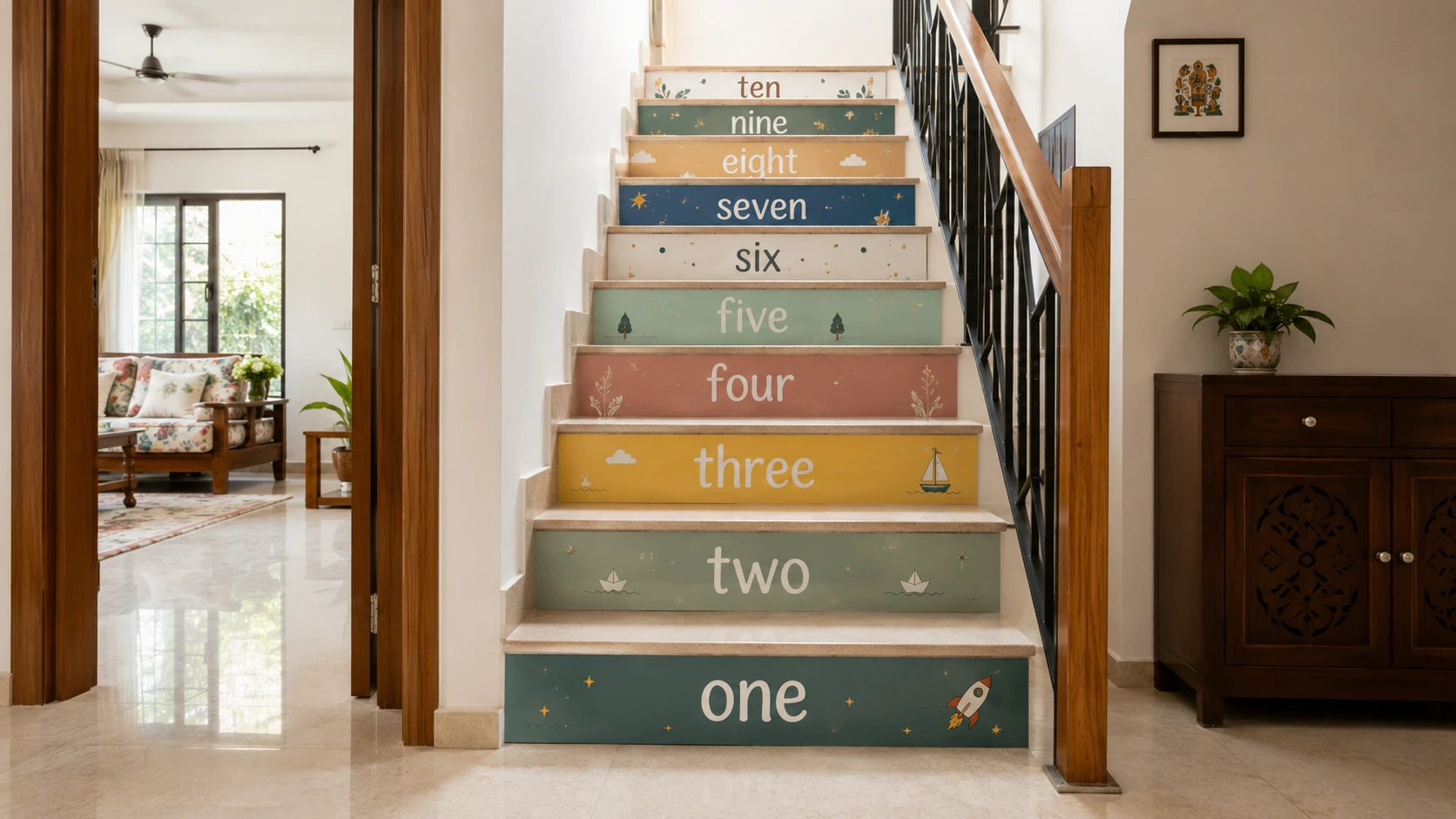
Numerals or lettering across risers, a graphic approach that works in playful or child-focused homes and reads clearly from the bottom of the flight.
Best for: Children's areas, playful and personality-led interiors.
Tread Looks: Restraint With Real Reasons
9. Full-body vitrified in matte grey
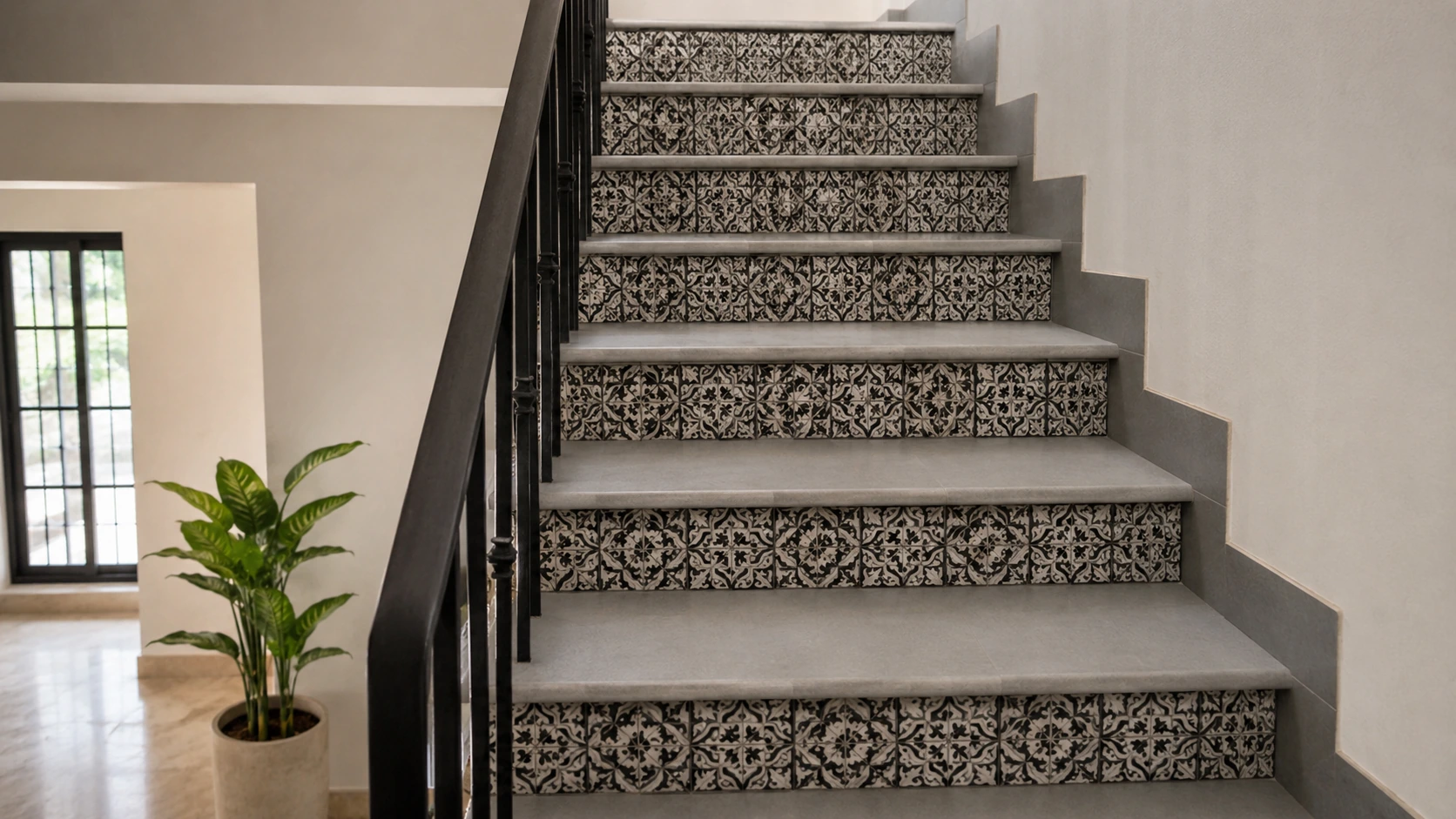
A plain matte full-body vitrified tread in a mid-grey is the workhorse choice, offering genuine grip, hiding wear well, and letting the risers carry all the visual interest.
Best for: Almost every staircase, the reliable default.
10. Stone-look textured tread
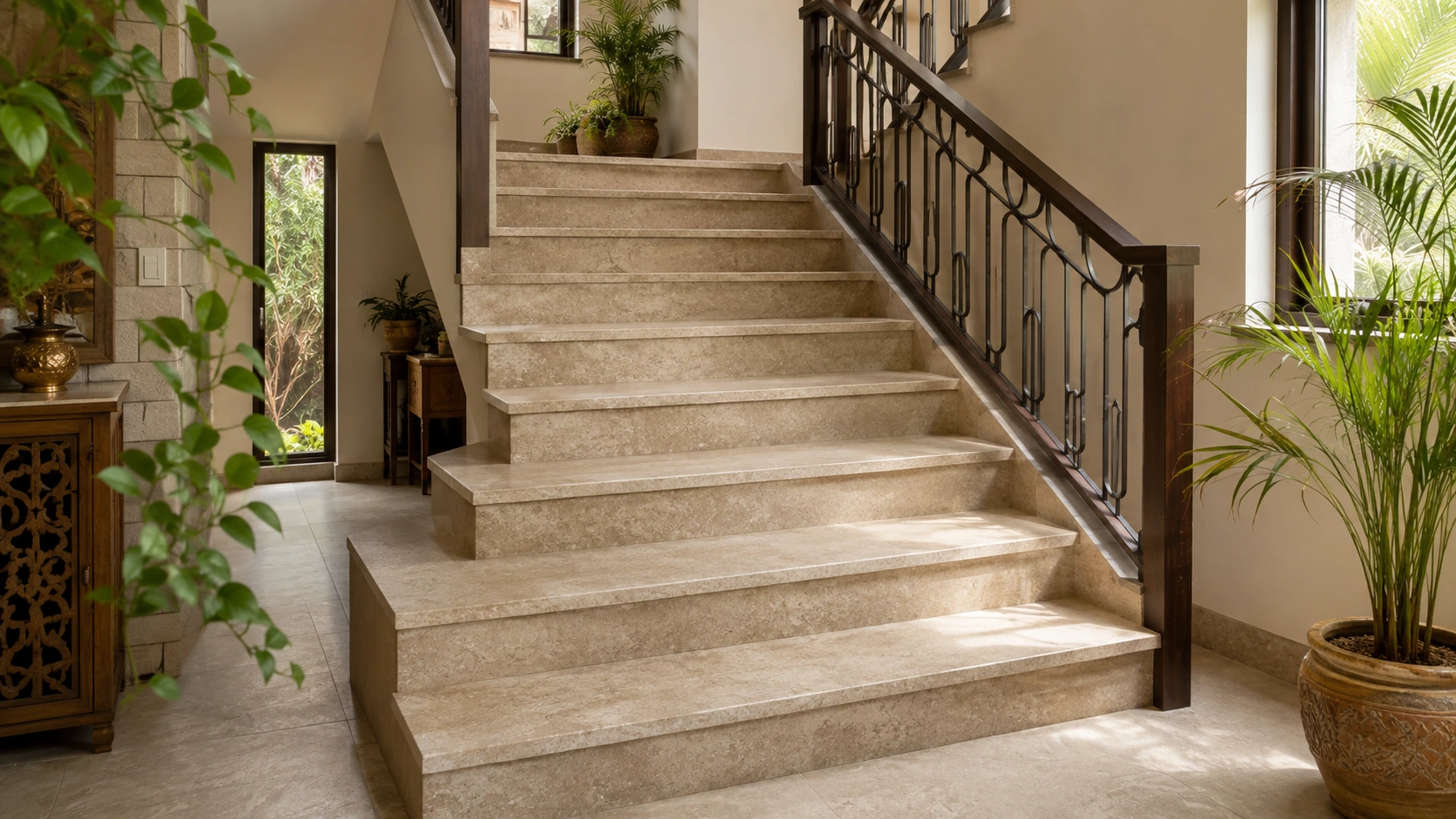
A lightly textured stone-look tile adds tactile grip and visual warmth to the tread without introducing pattern that would compete with a decorative riser.
Best for: Homes wanting natural material character underfoot.
11. Wood-look tread with grain texture
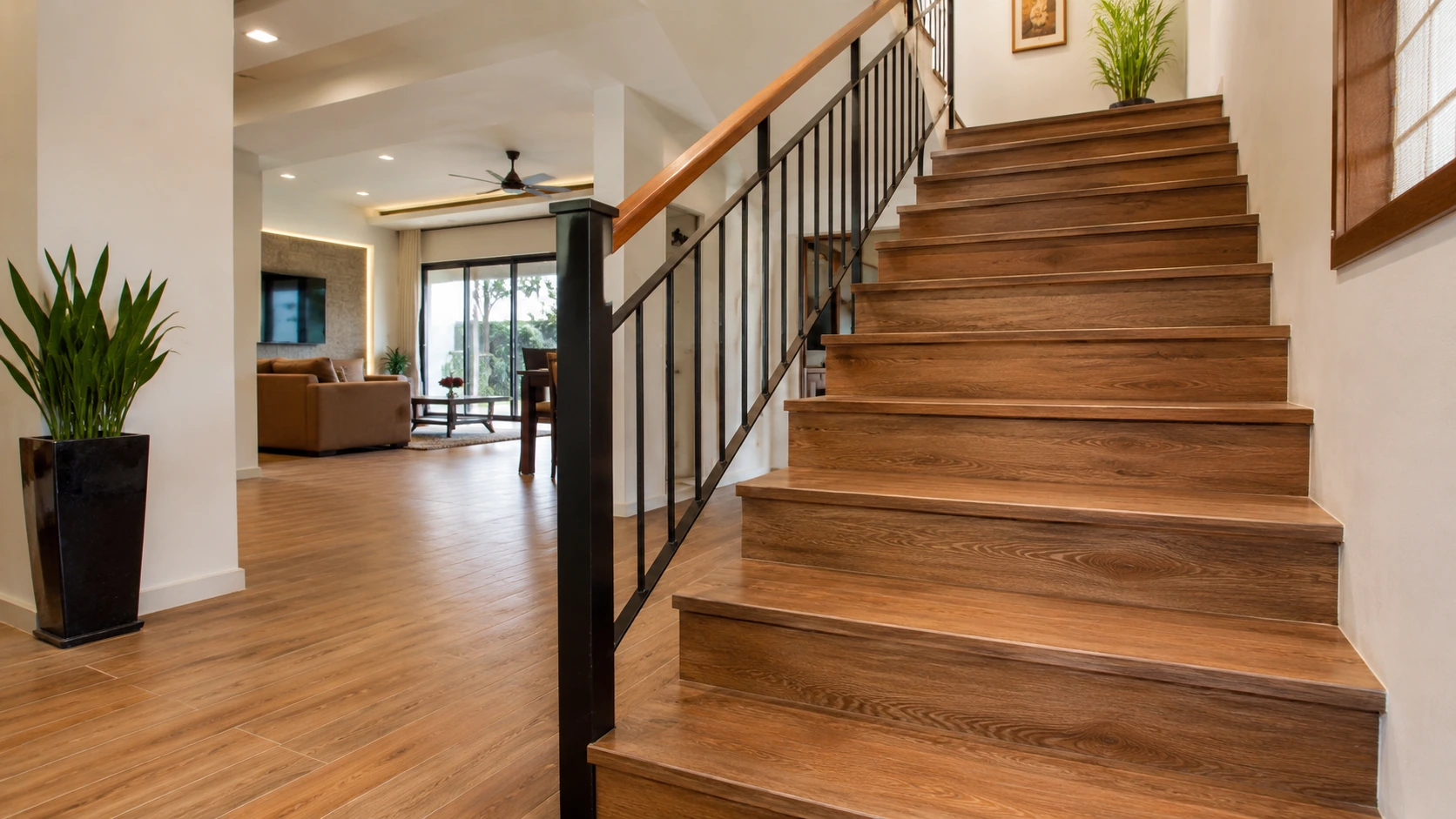
A wood-look tread with genuine registered grain texture reads warm underfoot while the texture itself contributes to grip, a rare case where aesthetics and safety align neatly.
Best for: Warm-toned interiors, staircases adjoining wood-look flooring.
12. Contrast nosing strip on a neutral tread
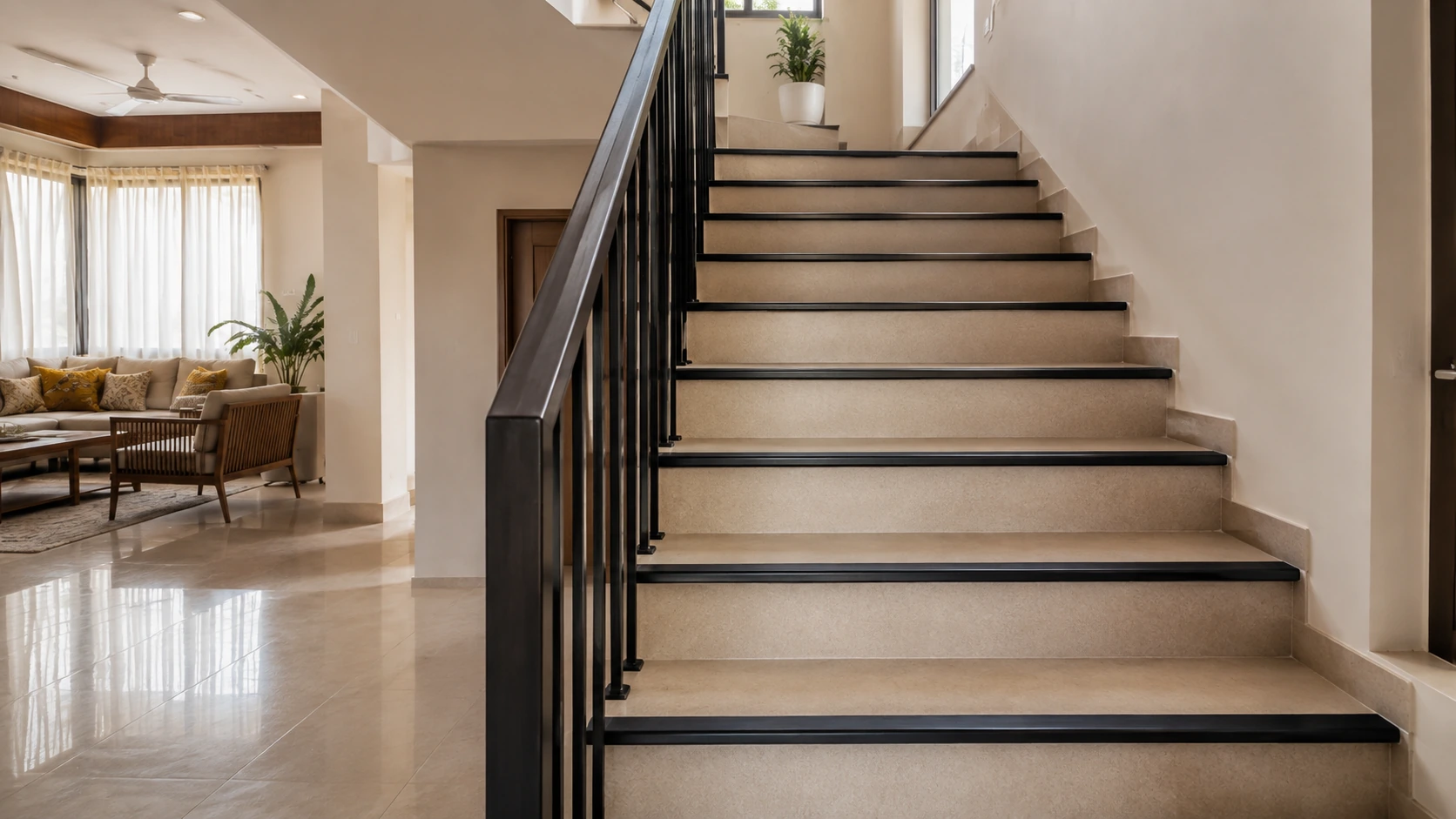
A tread in a neutral tone with a deliberately contrasting nosing edge, which is genuinely the most useful safety-plus-design move available, since the contrast makes each step edge visible.
Best for: Households with elderly members or young children.
13. Double bull-nosed purpose-made step tile
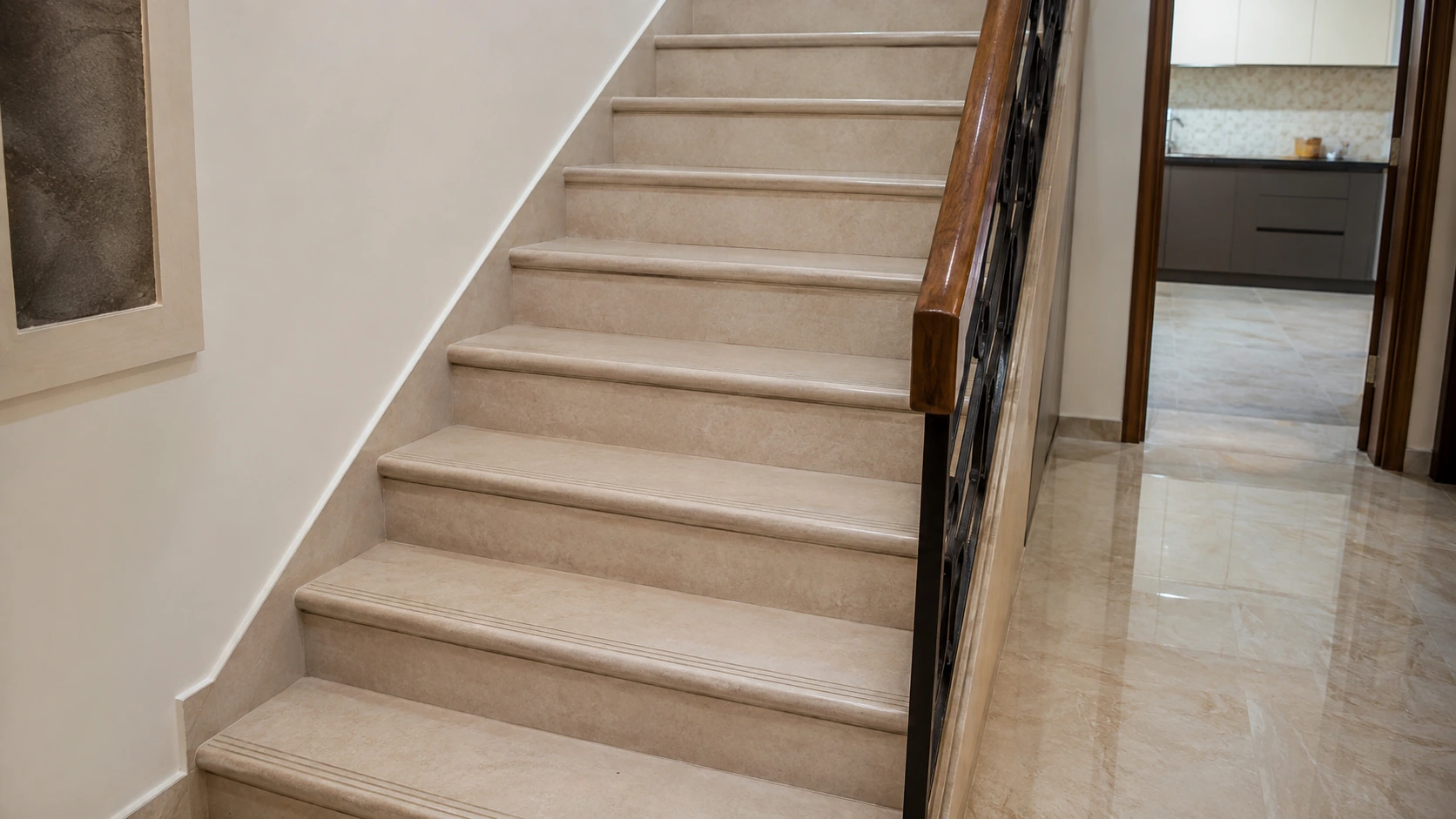
A ready-made step tile with the nosing profile and grip lines manufactured in, removing on-site cutting and delivering a consistent edge across every step.
Best for: New builds and full staircase renovations.
Landing Looks: The Transition Moment
14. Patterned landing inset
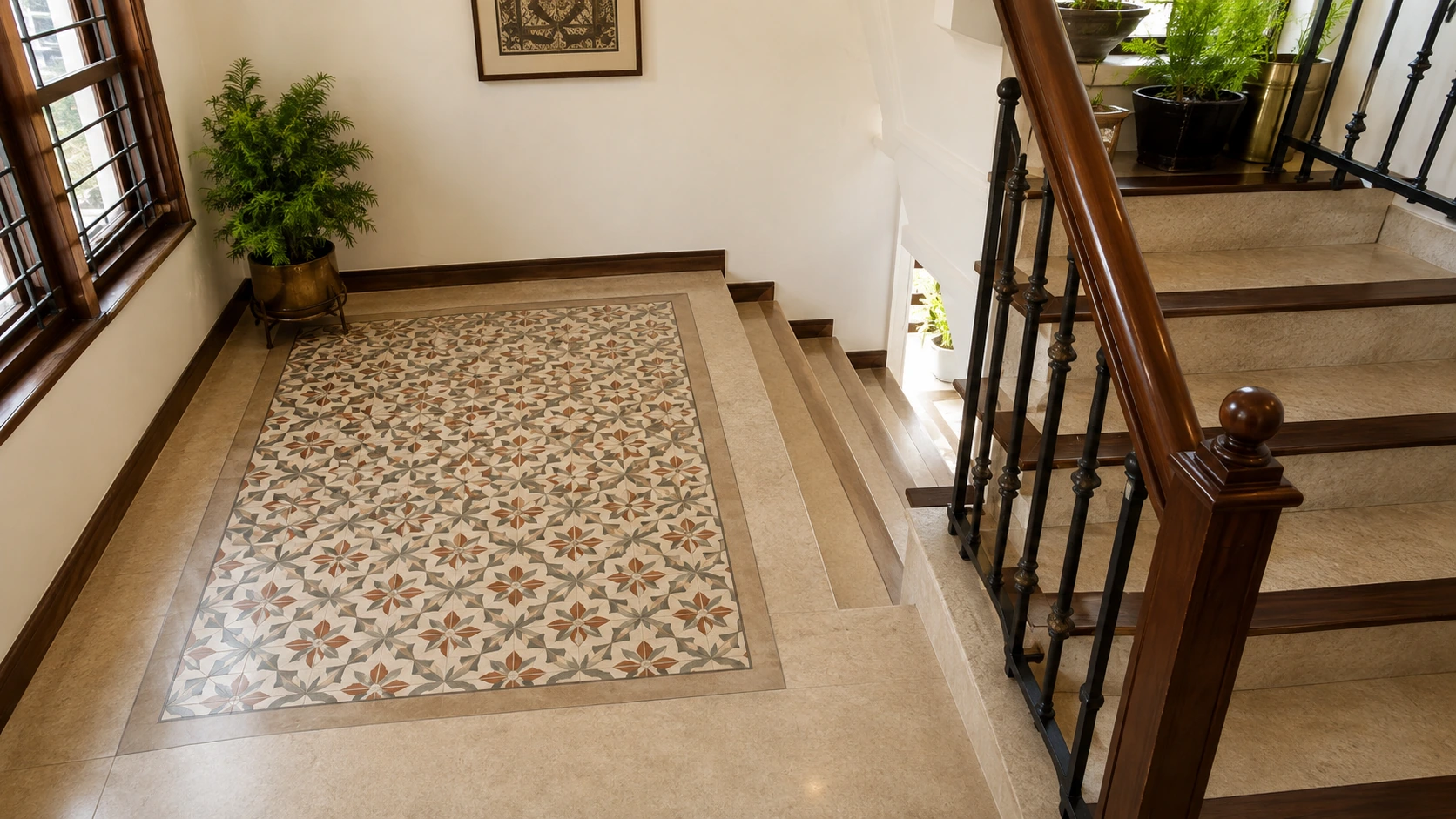
A patterned tile panel confined to the landing, framed by plain tile, treating the landing as a deliberate pause point in the climb rather than dead space.
Best for: Larger landings on a half-turn staircase.
15. Continuation of the riser pattern
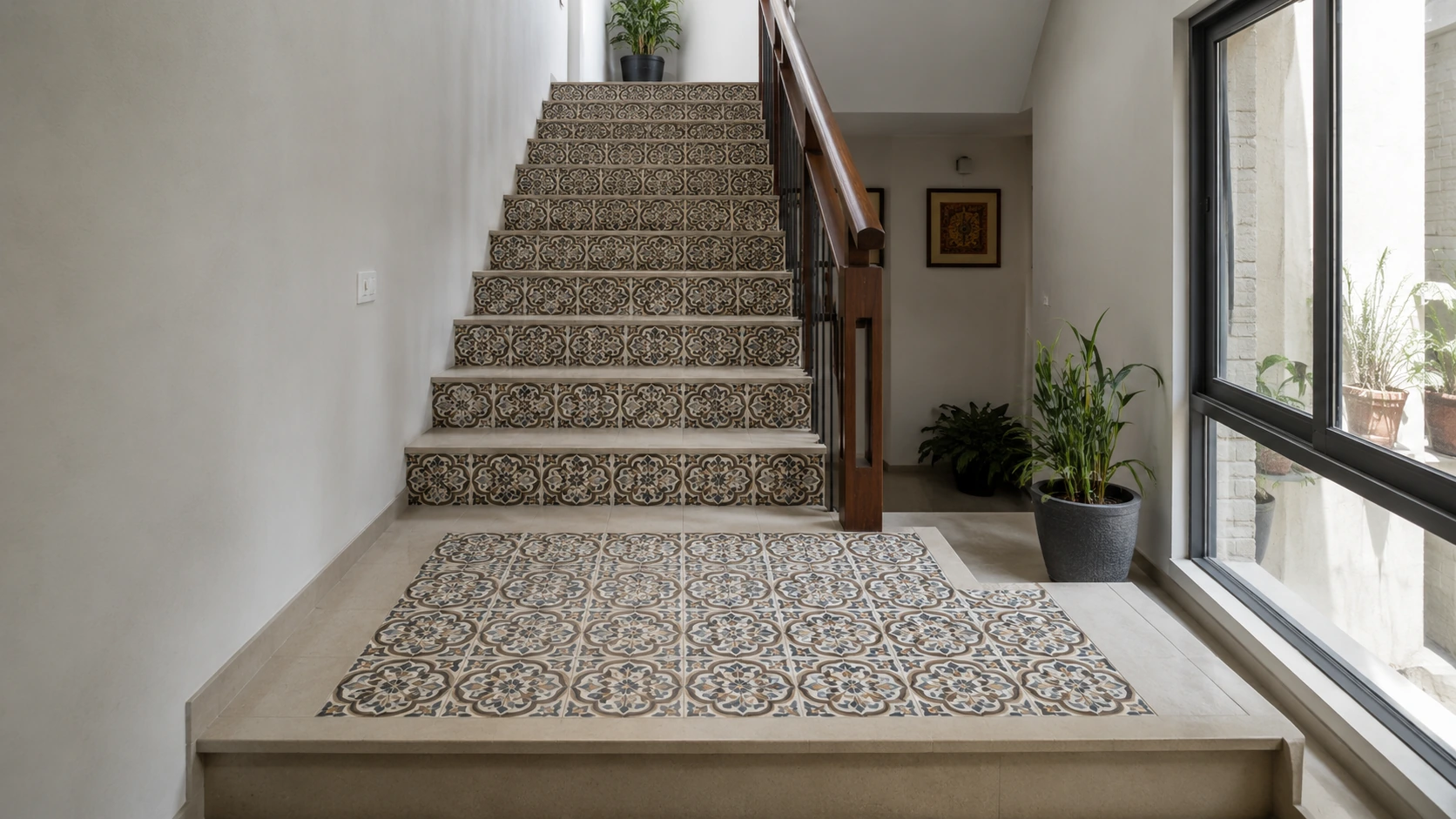
Carrying the riser's pattern onto the landing floor ties the staircase together as one composition rather than reading as steps plus an unrelated flat area.
Best for: Staircases with a strong riser design already chosen.
16. Contrasting landing tone
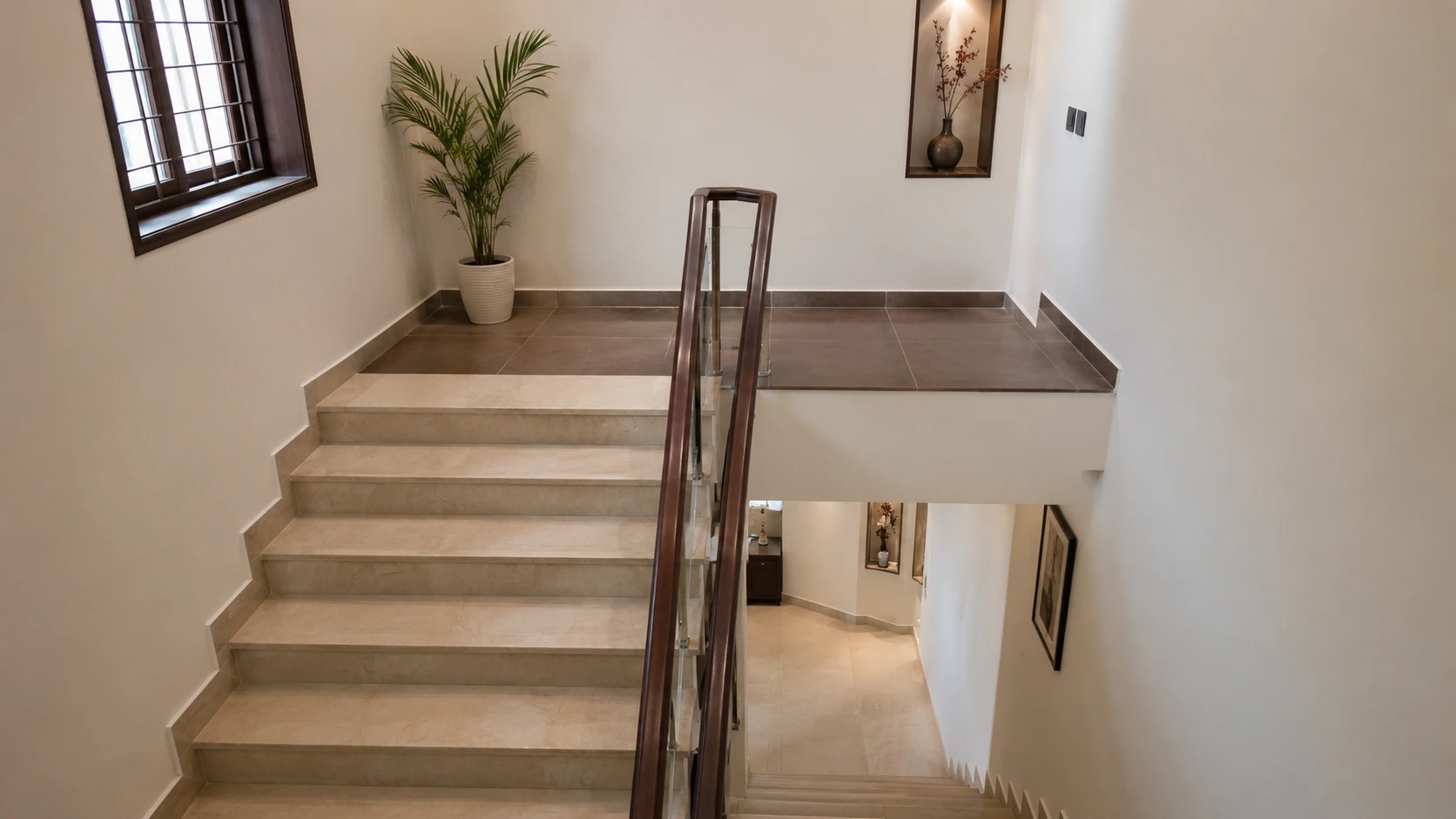
A deliberately different tone on the landing, deeper or lighter than the treads, marking the transition visually and helping people register the change from stepping to walking.
Best for: Safety-conscious households, longer flights with mid-landings.
17. Large-format landing slab
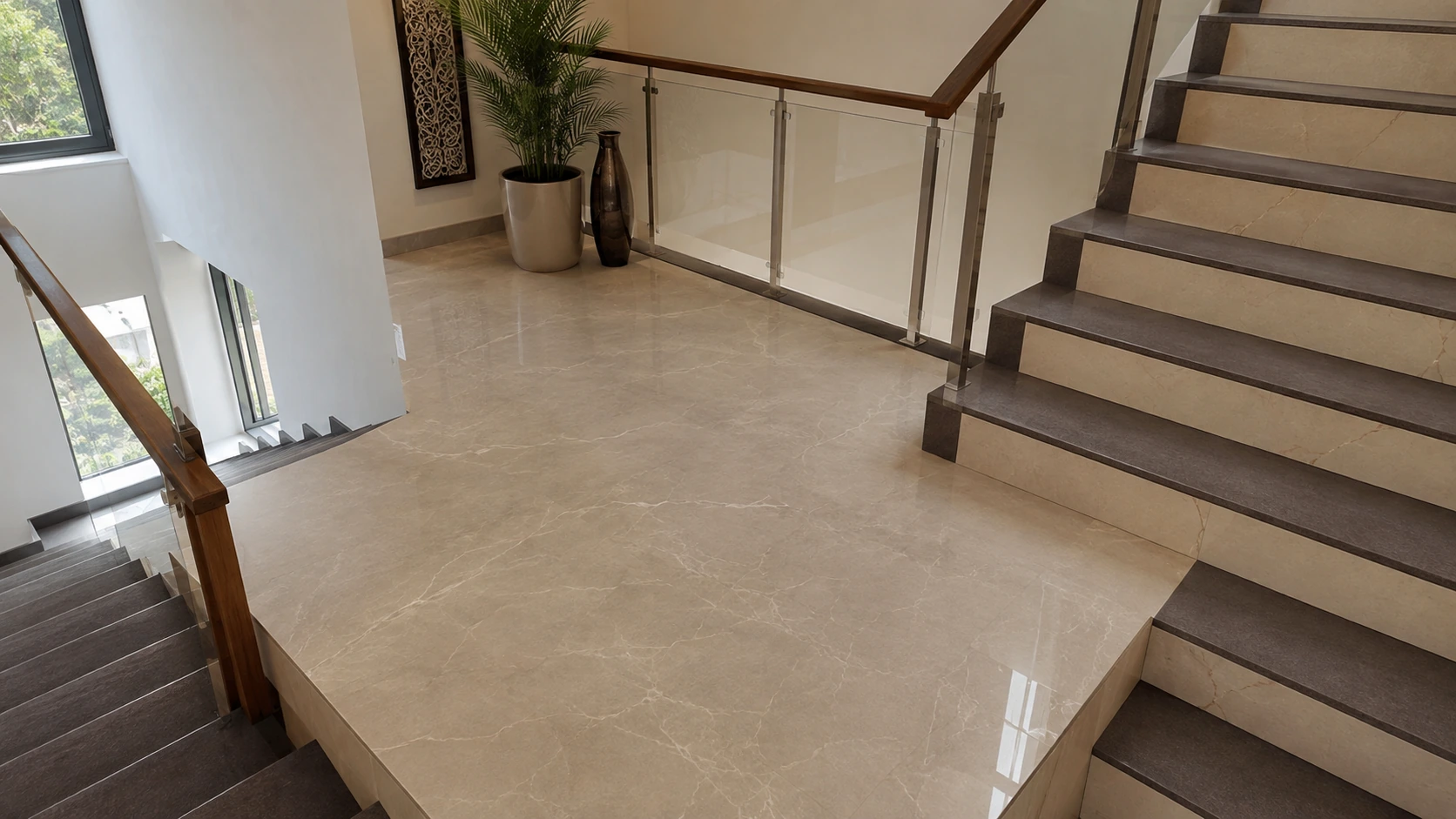
A single large-format tile or minimal-joint layout on the landing, contrasting with the necessarily segmented tread and riser sequence above and below it.
Best for: Contemporary interiors, generous landings.
Stringer and Side-Panel Looks
18. Tiled stringer face
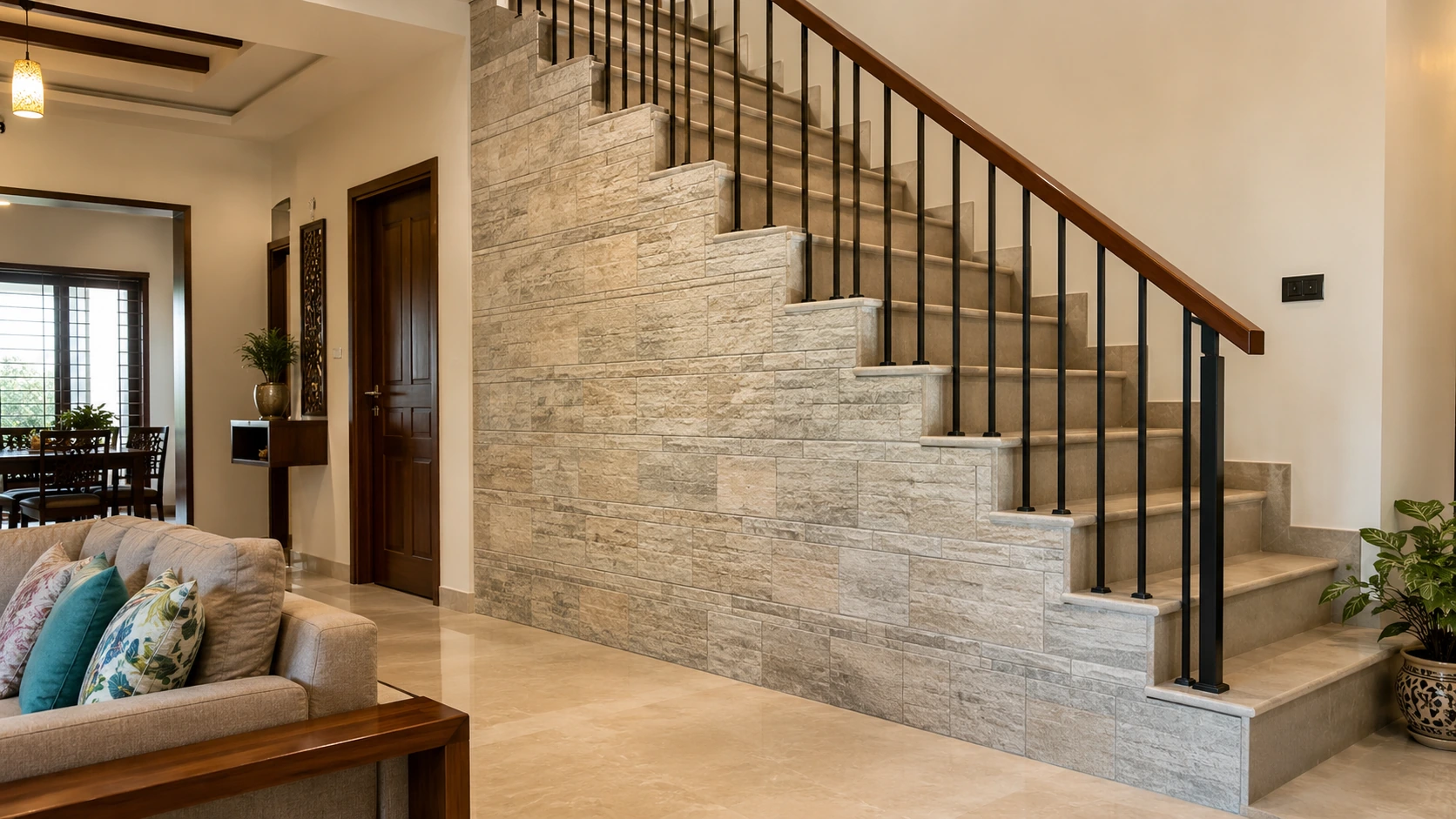
The exposed side face of a staircase, often left plain plaster, tiled in stone or textured tile gives the whole structure a finished, architectural quality that most Indian staircases never get.
Best for: Open and semi-open staircases visible from a living area.
19. Contrasting side-border strip
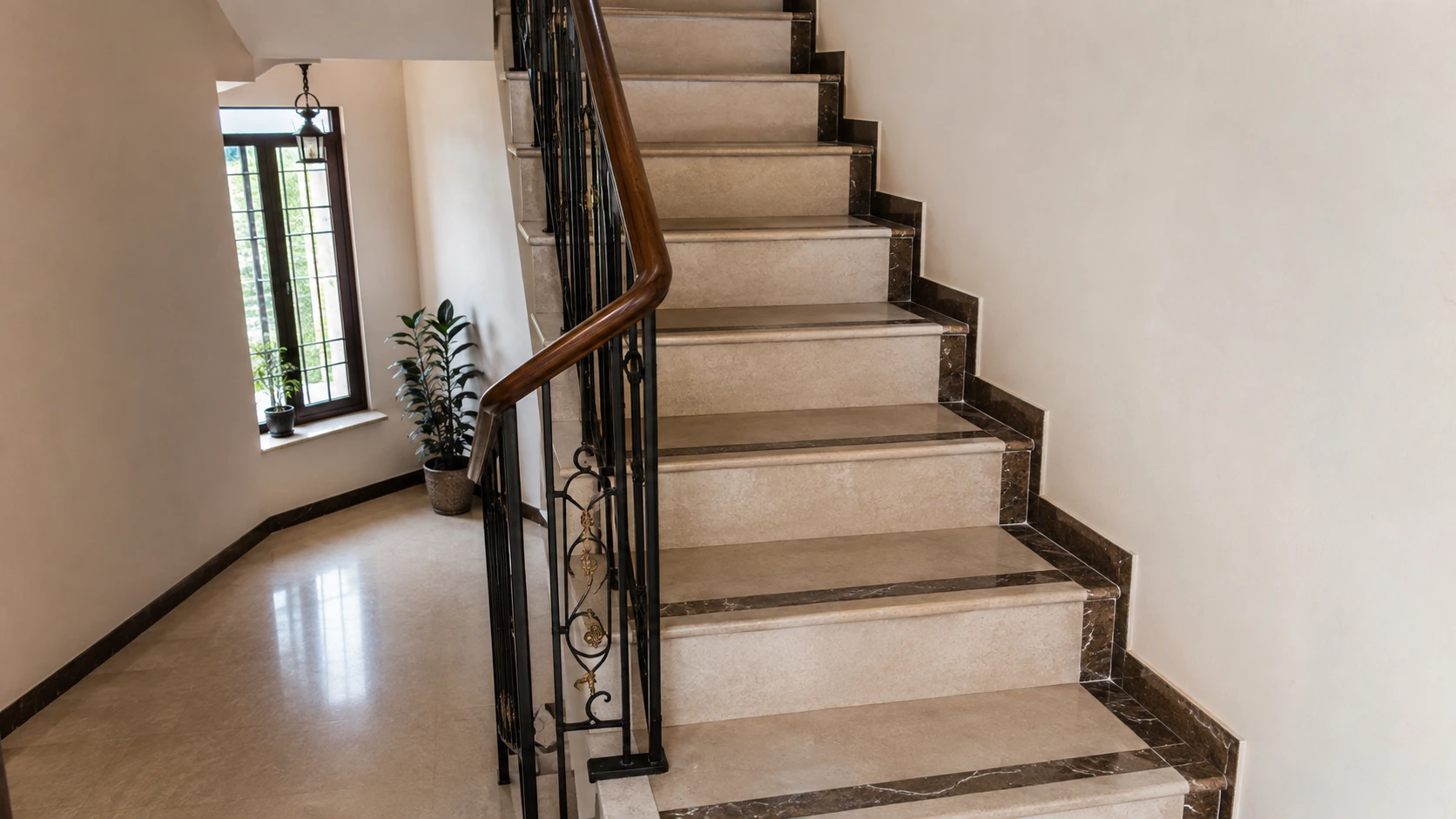
A narrow contrasting tile border running along the outer edge of the treads, framing the staircase and adding definition without altering the walking surface.
Best for: Staircases against a wall, adding definition cheaply.
20. Under-stair accent panel
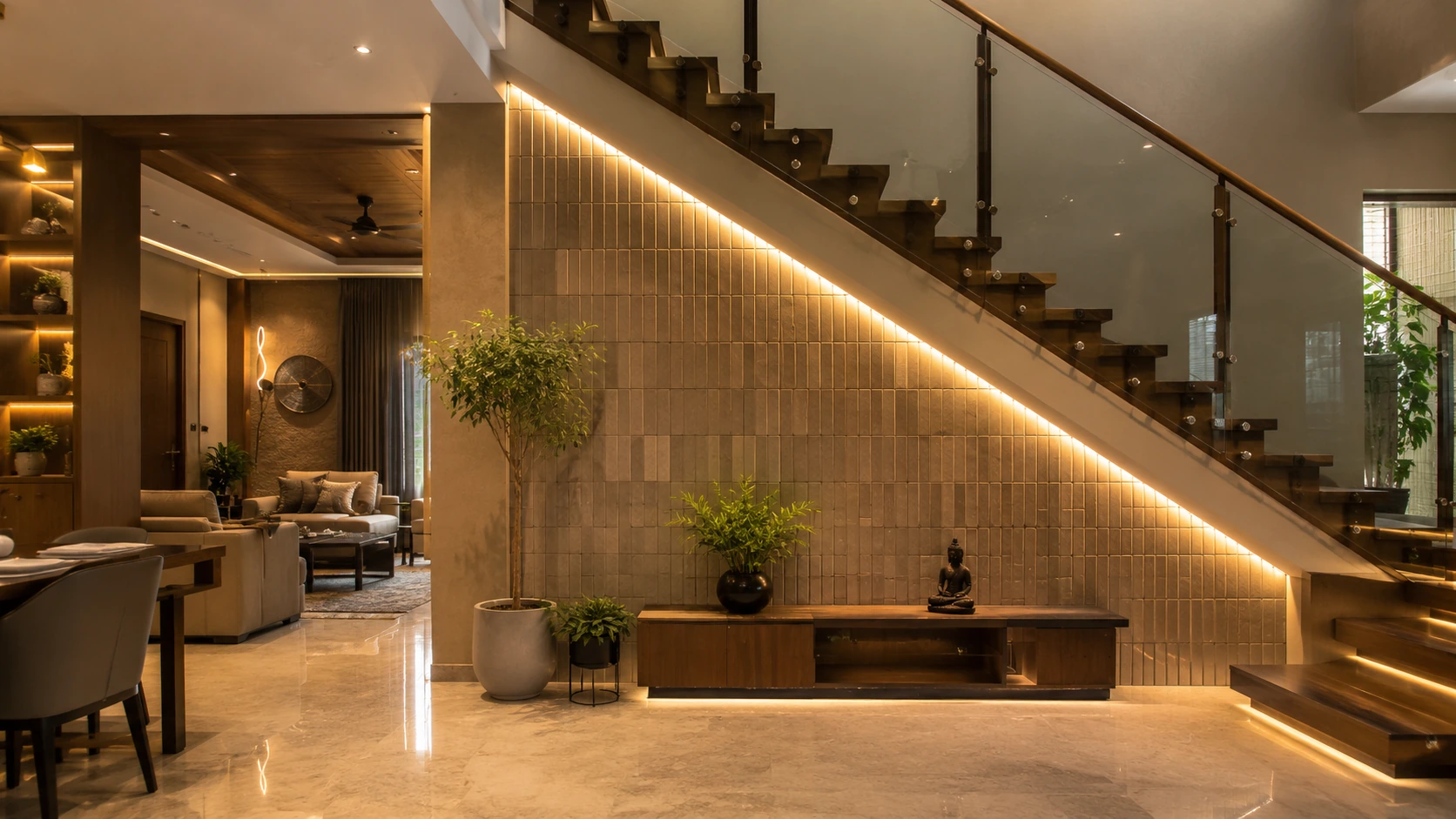
Tiling the wall or panel beneath an open staircase, turning otherwise ignored space into a deliberate design surface, particularly effective under a floating flight.
Best for: Open-plan homes with a visible under-stair area.
Outdoor and Utility Staircases
21. Rustic jeena-style textured steps
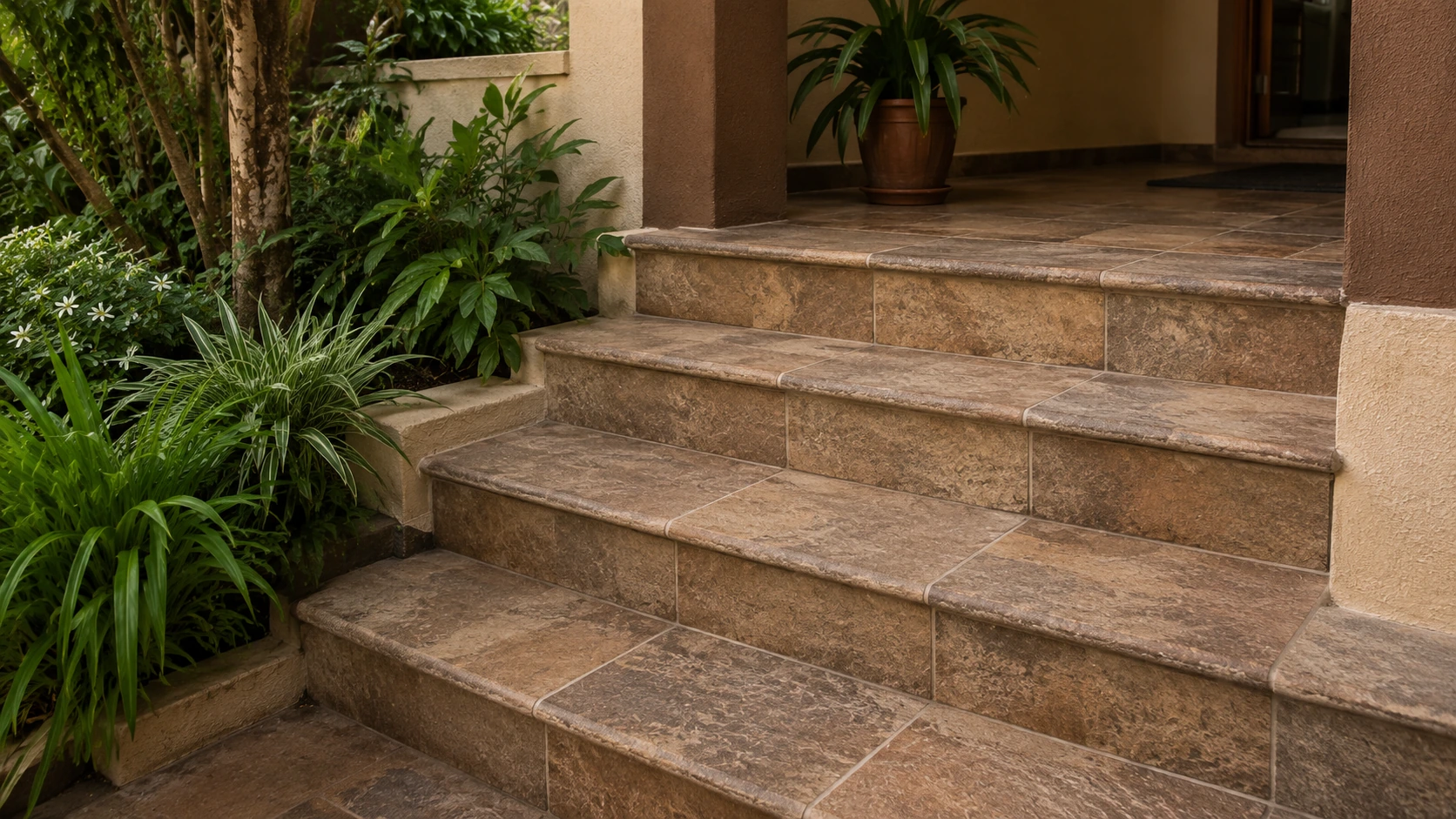
Textured stone or rustic-finish tile for outdoor steps into a garden, courtyard, or veranda, where earthy tones blend with the surroundings and the texture delivers grip in wet weather.
Best for: Garden steps, verandas, entrance flights.
22. High-grip R11 exterior flight
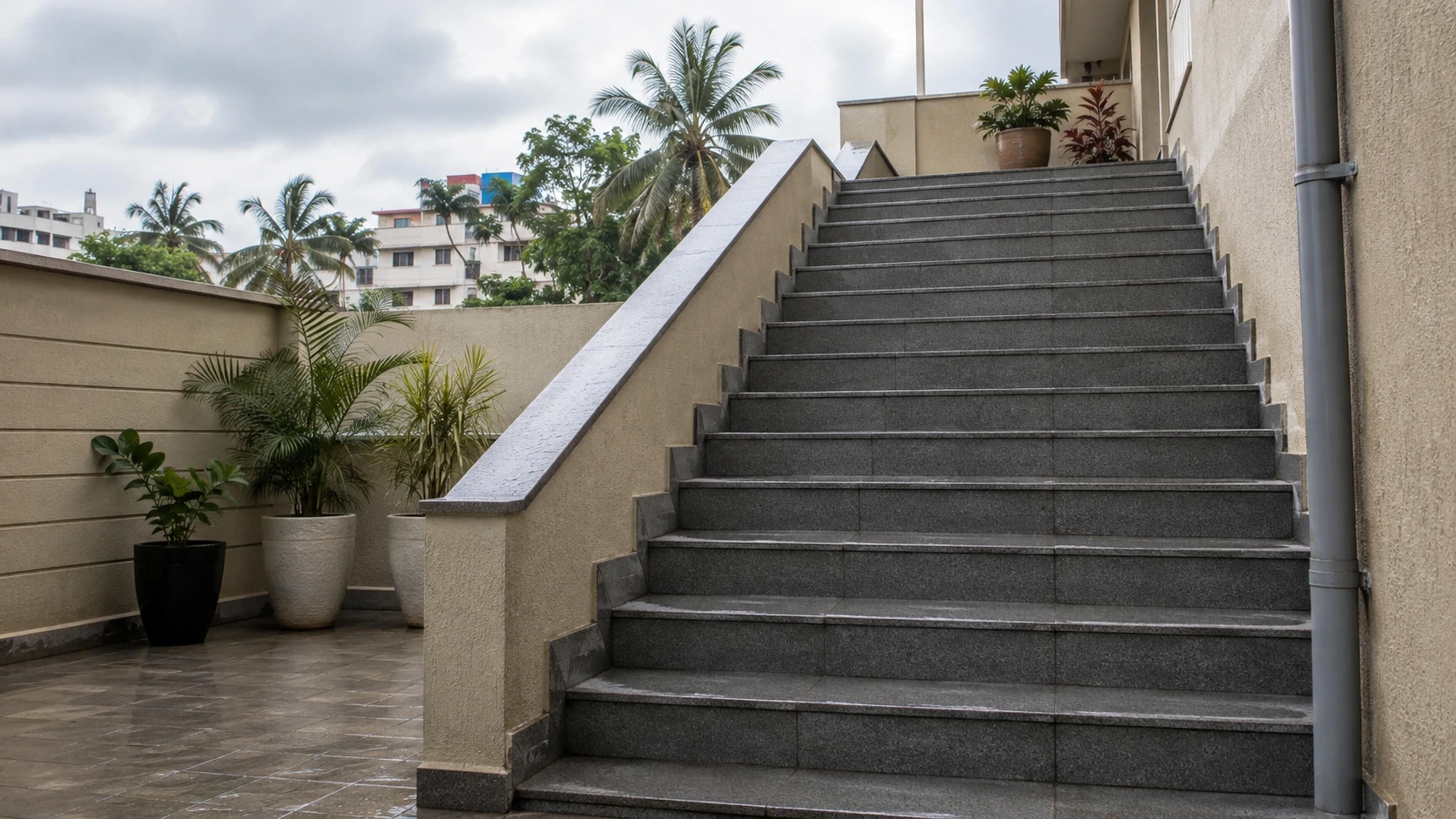
A genuinely high anti-skid rated tile for any exterior staircase exposed to monsoon rain, where slip risk is materially higher than indoors, and the tile specification should reflect that.
Best for: Terrace access stairs, external entrance flights.
Purpose-Made Step Tiles vs Cut-to-Size Stone
Indian staircases were traditionally built in marble or granite, cut and finished on site. That approach still delivers a genuinely premium result, but it carries real costs, significant on-site cutting, considerable material wastage, heavy manual handling, and a finished edge quality that depends entirely on the fabricator's skill.
Purpose-made step tiles changed the calculation. Full-body vitrified step tiles arrive with the nosing profile and tread grip lines already manufactured in, install far faster, and deliver a consistent edge across every step in the flight. Available in large formats up to 80x240cm at 15mm thickness, they also allow proportions that were difficult to achieve with cut stone. For most residential staircases, this is now the more practical route unless the project specifically wants natural stone character.
Practical Planning Before You Order
- Count risers and treads correctly; a flight always has one more riser than tread, which is the single most common quantity calculation error on a staircase order.
- Confirm the anti-skid rating for treads specifically, R10 as a working minimum indoors and R11 or higher for any exterior flight exposed to rain.
- Check the nosing projection; 20 to 30mm is the working range, and anything approaching or exceeding 40mm risks catching heels on descent.
- Order riser and tread tile together from matched batches if the design relies on them coordinating, since sourcing them separately later invites a tonal mismatch.
- Budget extra wastage beyond a standard floor order, since a staircase involves many cuts across a small total area, which pushes the wastage percentage up considerably.
- Never specify a glossy finish for treads. It is the one absolute rule on a staircase, regardless of how good the tile looks in a showroom.
Designing Where Safety and Style Actually Meet
The most useful thing to understand about staircase tiling is that the constraint only applies to half the surfaces. Treads genuinely need restraint, grip, and consistency. Risers, landings' accent zones, stringers, and under-stair panels are all fair game for whatever the rest of the home's design language calls for.
If you are planning a staircase tiling project, you can browse step tiles, patterned riser options, and anti-skid ranges by finish and price, and connect with verified dealers on TilesFinders.

FAQs
They do not need to, and often should not. The tread is a safety surface needing grip and consistency, while the riser is never walked on and carries no slip risk, which makes contrasting the two both safe and visually stronger than matching them.
R10 is a reasonable working minimum for an indoor flight, with R11 or higher advisable for any exterior staircase exposed to monsoon rain, where slip risk is materially higher.
The nosing is the rounded edge where the tread meets the riser. It provides a visual cue for the step edge, takes the concentrated load of each footfall, and its rounded profile reduces injury on glancing contact. A projection of 20 to 30mm is typical, and exceeding roughly 40mm risks catching heels during descent.
On risers, yes, without any safety concern, since risers are never walked on. On treads, pattern is better avoided, both because it can obscure the step edge visually and because the finish needs to prioritise grip over decoration.
For most residential staircases, yes, on practical grounds. Full-body vitrified step tiles arrive with the nosing profile and grip lines built in, install faster, waste less material, and deliver a more consistent edge than on-site cut stone, though natural stone retains its own material appeal.
A flight always has one more riser than tread, which is the most common counting error on staircase orders. Beyond that, budget a higher wastage percentage than a standard floor, since a staircase involves many cuts across a comparatively small total area.


See our tile guides first
Set TilesFinders as a preferred source and our buying guides surface ahead of the rest for you.
Add as preferred sourceTakes one tap. Nothing to install.
What Readers Say
I was about to redo my parking area with the wrong tile size until I read this. The layout comparisons saved me from a costly mistake.
We reference TilesFinders guides while briefing clients on material selection. The size and pattern breakdowns are accurate and easy to explain visually.
On site, I get asked about grout spacing all the time. This article gave me a solid reference I now share with my team before every job.
Finally a guide that doesn't just push generic advice. The oil stain removal steps actually worked on our clubhouse driveway tiles.
I run a small construction firm and now send this link to clients directly when they ask about entrance tile sizing. Saves me an hour of explaining.
Good practical detail, though I wish there were more examples for compact apartment entrances specifically, not just villas.
My mother-in-law wanted marble, I wanted vitrified. This blog gave us the neutral comparison we needed to actually decide together.
Detailed without being overwhelming. I appreciated that it covered both cost and maintenance, not just the aesthetics.
Used the algae and hard water removal tips on our terrace tiles after the monsoon. Worked better than what our regular cleaner was doing.
As someone who sources tiles for multiple builder projects, I find these comparisons genuinely useful for vendor conversations, not just consumer content.
Recommended this to a client who kept second-guessing the entrance design. The small vs large layout section settled the debate instantly.
Straightforward and honest, no unnecessary jargon. Would like to see a similar breakdown for outdoor pool-deck tiles next.
We've bookmarked several TilesFinders guides for our design handbook. Reliable source when clients want data, not just opinions.
Two paths, one marketplace.
Get free quotes from verified suppliers.
Share your room, budget, and style. Suppliers in local area respond within hours.
Get Free QuotesList your business, reach real buyers.
Put your showroom in front of homeowners searching for tiles right now.
List Your BusinessMore Blogs
See all
How to Calculate Tile Quantity and Wastage for Staircases
Tiling a staircase? Master the exact formula to calculate tread, riser, and landing quantities, a...
Read More
Terrazzo Tiles in India: Complete Guide to the Speckled-Surface Trend
From mid-century homes to modern design: compare genuine aggregate terrazzo with printed vitrifie...
Read More
Terrace Garden Tile Design Ideas: 15+ Looks for Indian Rooftops
Elevate your rooftop! Explore 18 terrace garden tile ideas, from modular WPC decking to cooling r...
Read More