Terrazzo Tiles in India: Complete Guide to the Speckled-Surface Trend
From mid-century homes to modern design: compare genuine aggregate terrazzo with printed vitrified tiles, top uses, and 2027 pricing.
- Terrazzo Was Your Grandparents' Floor Before It Was a Trend
- Three Ways to Get a Terrazzo Floor Today
- Terrazzo vs Mosaic: A Genuine Technical Distinction
- Where Terrazzo Actually Works Well in an Indian Home
- Real Terrazzo vs Printed Terrazzo-Look: The Honest Trade-Off
- Terrazzo Price Guide for 2027
- A Buying Checklist
- A Trend That Was Already Home
Long before terrazzo became a design trend, its marble-chip mosaic precursor was the standard floor in Indian homes built between the 1940s and 1980s. This guide separates genuine poured and precast terrazzo from printed terrazzo-look tile, covers where each works best, and gives 2027 pricing.
Walk into almost any Indian house built between the 1940s and the 1980s, and there is a real chance you are standing on an early version of what showrooms are now selling as a design trend. That smooth, cool, speckled floor with marble chips set into cement, ground flat and polished, was simply how homes were floored for decades before vitrified tile took over. Terrazzo's current comeback is not really a new idea reaching India for the first time, it is India's own flooring history being sold back with better marketing.
This guide traces that history briefly, then works through the three genuinely different ways to get a terrazzo floor today, a real technical distinction worth understanding, where the material actually earns its keep in a modern Indian home, and current 2027 pricing.
Terrazzo Was Your Grandparents' Floor Before It Was a Trend
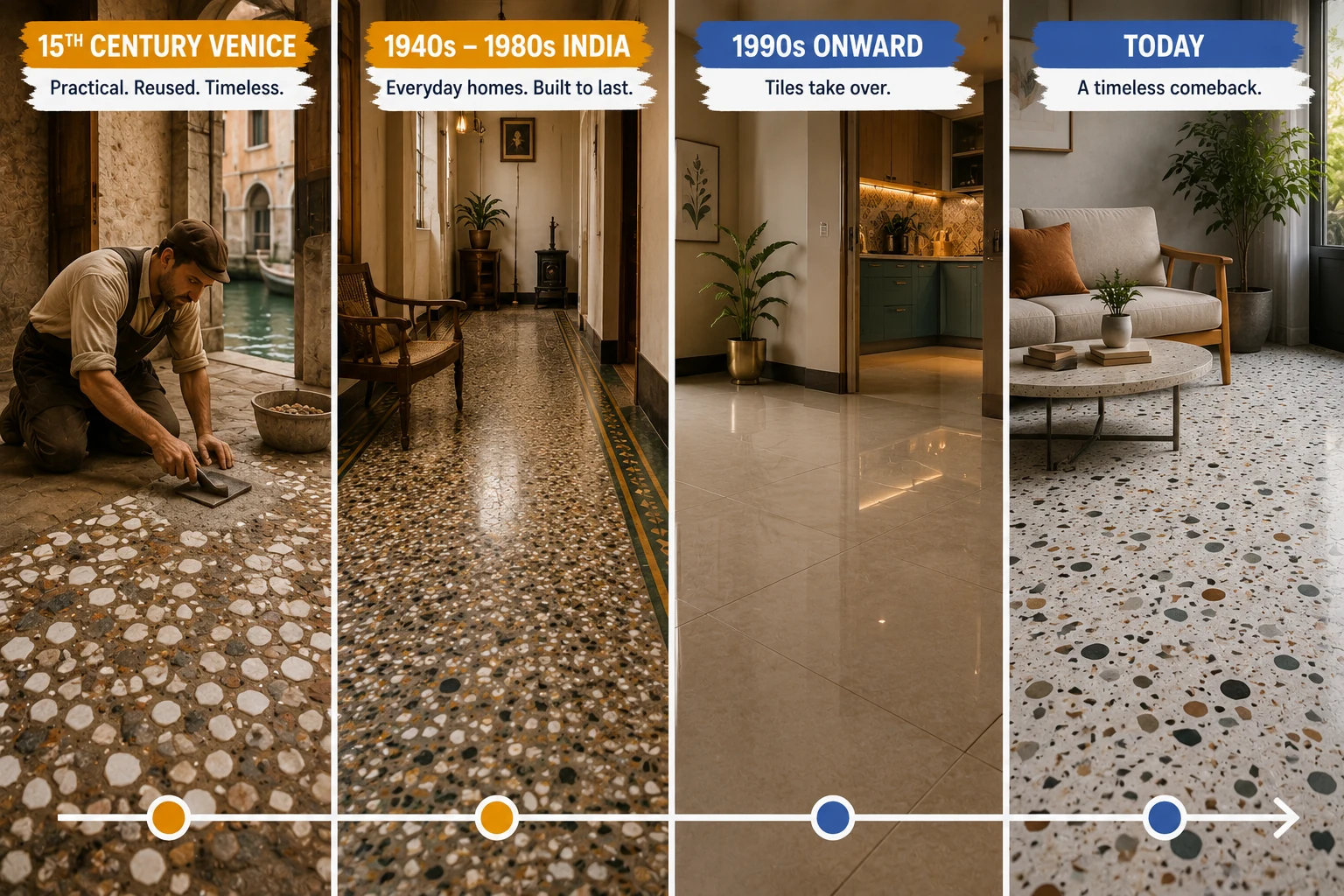
Terrazzo as a technique traces back to 15th-century Venice, where workers embedded leftover marble offcuts into cement flooring as a practical way to reuse waste material, then ground and polished the surface smooth. That same basic idea, marble chips in a cement binder, ground flat on site, arrived in India and became genuinely widespread, not as a boutique material but as ordinary residential flooring across the country from the 1940s through the 1980s.
This in-situ marble-chip flooring, often simply called mosaic flooring in Indian households regardless of the technical distinction from true mosaic tile work, is the direct ancestor of today's terrazzo trend. It fell out of fashion as vitrified and ceramic tile became more affordable and easier to install from the 1990s onward, and its recent return is best understood as a genuine revival of a material Indian homes already knew intimately, not an import.
Three Ways to Get a Terrazzo Floor Today
| Method | How It Works | Best For |
| In-situ poured terrazzo | Marble or stone chips mixed into cement or resin, poured on site, ground and polished after curing | A genuine seamless field with no grout lines, premium residential and commercial projects |
| Precast terrazzo tiles or slabs | Same chip-in-binder composition, factory-manufactured into tiles, installed like standard tile | Real terrazzo material without the on-site grinding and polishing labour |
| Printed terrazzo-look vitrified or porcelain | Digitally printed speckled pattern on a standard ceramic or vitrified base, no actual aggregate | Budget-friendly terrazzo look, faster and simpler installation |
All three are marketed under the same terrazzo label, which is exactly where buyer confusion sets in. Knowing which one a specific product actually is, before comparing price, matters more than the price comparison itself.
Terrazzo vs Mosaic: A Genuine Technical Distinction
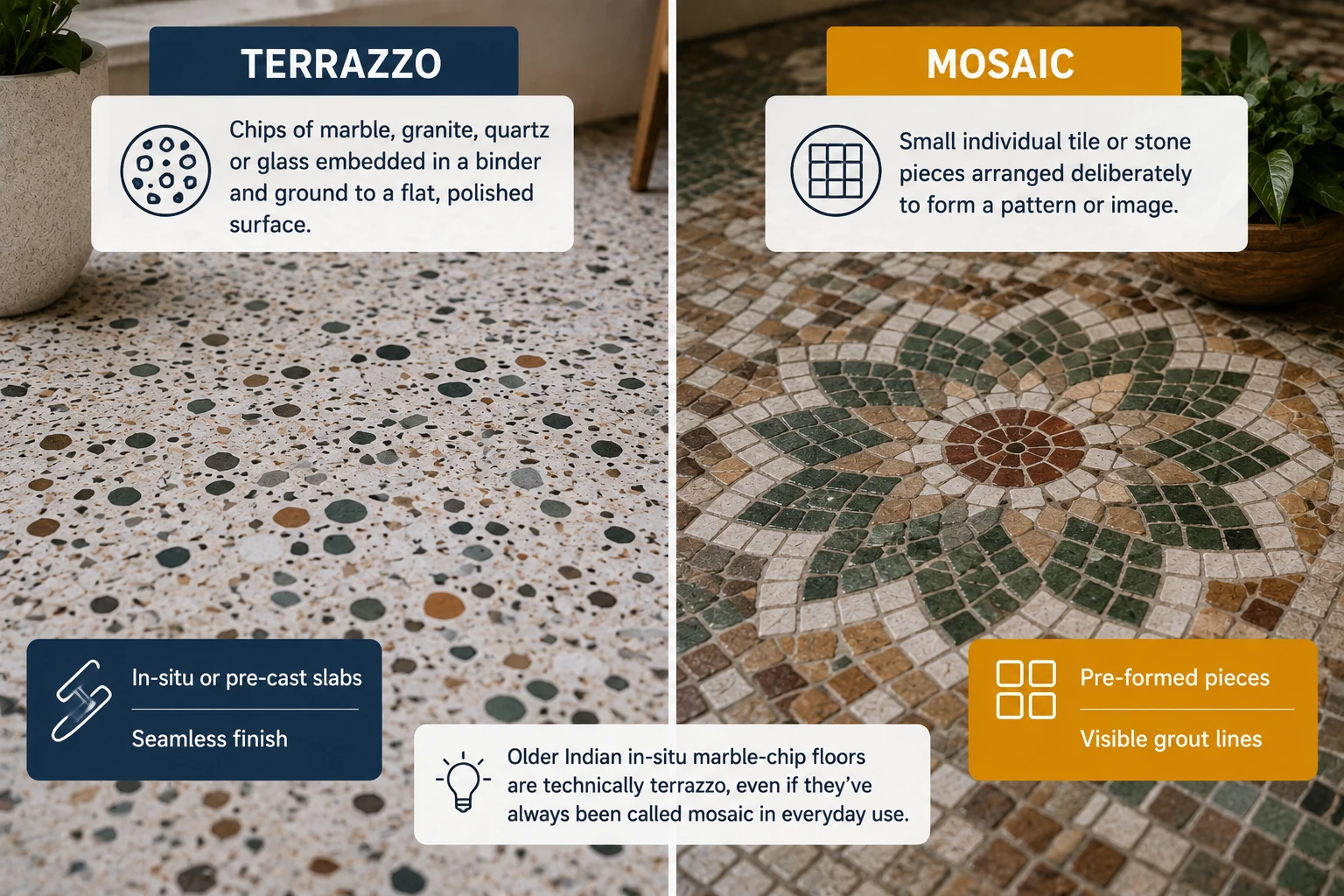
The two terms get used interchangeably in casual conversation, particularly among Indian homeowners who grew up calling their in-situ marble-chip floor mosaic flooring, but they describe different things technically. Terrazzo is chips of marble, granite, quartz, or glass embedded in a binder and ground to a flat, polished surface. Mosaic, in the strict sense, refers to small individual tile or stone pieces arranged deliberately to form a pattern or image, a different manufacturing and installation technique entirely.
In practice, older Indian in-situ marble-chip flooring genuinely sits closer to terrazzo's technical definition than to mosaic's, even though it has long been called mosaic flooring in everyday use. Worth knowing when discussing a project with a contractor or dealer, since the terminology mismatch is a common source of miscommunication about what is actually being ordered.
Where Terrazzo Actually Works Well in an Indian Home
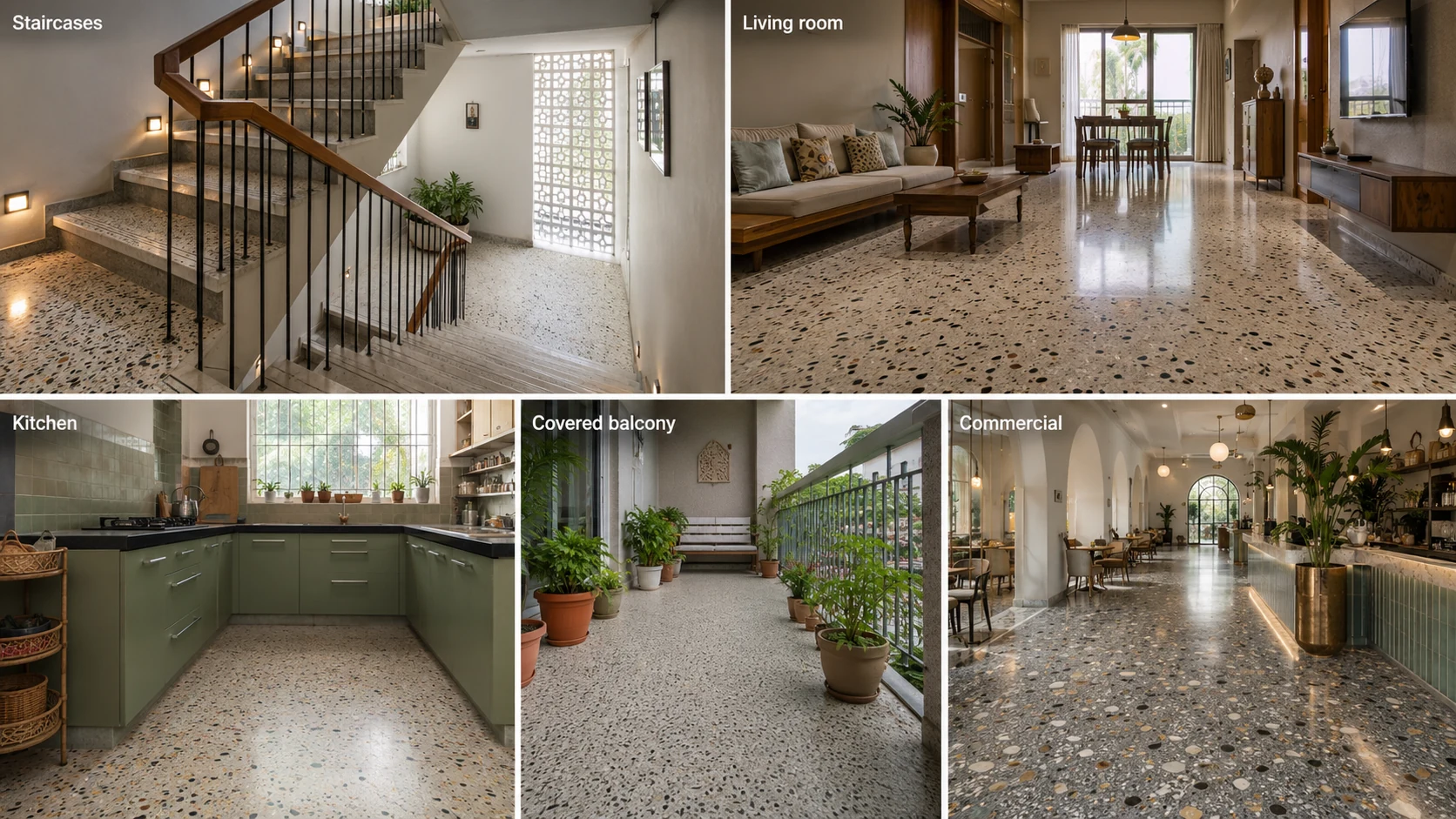
- Staircases and landings: terrazzo's inherent grip, particularly in a textured or grip-finish variant, makes it a genuinely strong choice for stair treads, a use case terrazzo has served reliably in Indian buildings for decades.
- Living rooms and open floor areas: the speckled surface hides everyday dirt and foot traffic marks better than a plain solid-colour floor, a practical advantage for busy, high-traffic Indian households.
- Kitchens: the same dirt-hiding quality, combined with terrazzo's durability, makes it a reasonable kitchen floor choice, particularly in precast tile form for easier maintenance than an in-situ poured floor.
- Covered balconies and semi-exposed sit-outs: cement-based terrazzo with an anti-slip finish can work in covered outdoor areas, though full outdoor exposure needs a specifically outdoor-rated anti-slip terrazzo product, not a standard interior finish.
- Commercial and hospitality spaces: epoxy-resin terrazzo, chemical and stain-resistant, is increasingly used in high-traffic commercial, industrial, and institutional Indian projects specifically because it combines decorative appeal with genuinely low maintenance under heavy use.
Real Terrazzo vs Printed Terrazzo-Look: The Honest Trade-Off
A genuine terrazzo floor, whether in-situ poured or precast tile, carries real embedded aggregate and can be reground and repolished if it dulls over years of use, a maintenance option a printed tile simply does not have once its surface wears. It also carries a cooler, denser underfoot feel that many buyers specifically associate with authentic terrazzo.
Printed terrazzo-look vitrified or porcelain tile trades that authenticity for cost and installation speed. It is manufactured and installed exactly like any standard tile, with none of the on-site grinding and polishing labour genuine terrazzo requires, and the printed pattern gives a visually convincing speckled look at a meaningfully lower price point, particularly at the budget end of the category.
Neither is the wrong choice. A heritage renovation or a premium project with the budget for genuine material and finishing labour suits real terrazzo. A standard residential renovation wanting the look without the installation timeline and cost genuinely suits a well-made printed alternative.
Terrazzo Price Guide for 2027
| Type | Price Range (Rs. per sq.ft.) | Notes |
| Printed terrazzo-look vitrified tile (budget) | Rs. 40 to Rs. 90 | Digitally printed, standard tile installation |
| Printed terrazzo-look tile (premium design) | Rs. 90 to Rs. 200 | Large format, more detailed speckle patterns |
| Precast terrazzo tile (genuine aggregate) | Rs. 65 to Rs. 180 | Real marble or stone chip content, factory-made |
| In-situ poured terrazzo | Rs. 100 to Rs. 250+ (material and labour combined) | True seamless field, highest labour cost given on-site grinding and polishing |
In-situ poured terrazzo costs meaningfully more than either tiled option primarily due to labour; the grinding and polishing process is skilled, time-intensive work, but it is also the only method that delivers a genuinely seamless floor with zero grout lines across an entire room.
A Buying Checklist
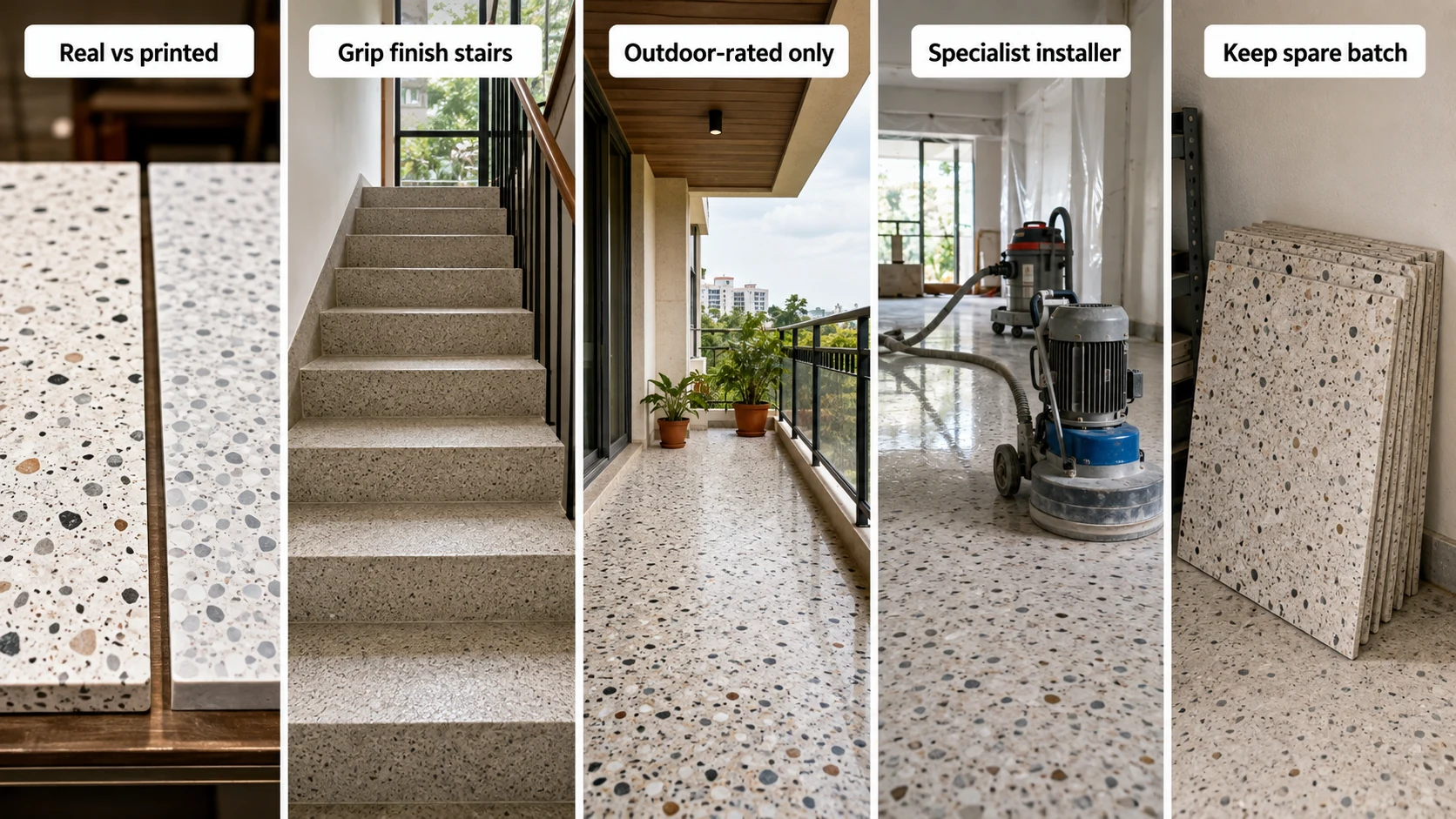
- Confirm explicitly whether a product is genuine aggregate terrazzo or a printed terrazzo-look tile, since both are marketed under the same name and the price difference should reflect which one you are actually buying.
- For staircases, request a textured or grip-finish terrazzo variant rather than a fully polished one, given the genuine slip risk a smooth polished surface carries on stair treads.
- For any outdoor or semi-exposed application, confirm the specific product is rated for that use, standard interior terrazzo is not automatically suited to full outdoor exposure.
- If choosing in-situ poured terrazzo, confirm your installer has genuine grinding and polishing experience, since this is a specialised skill distinct from standard tile laying.
- Order a small surplus of precast terrazzo tile from the same batch for future repairs, since matching an exact chip pattern and colour later is genuinely difficult, more so than matching a standard printed tile.
A Trend That Was Already Home
Choosing terrazzo for an Indian home in 2027 is less about following an imported design trend and more about deciding which version of a genuinely familiar material fits the project, real aggregate for authenticity and long-term refinishing potential, or a printed alternative for cost and installation speed.
If you are planning a terrazzo or terrazzo-look flooring project, you can browse designs across printed and precast terrazzo categories, compare indicative pricing, and connect with verified dealers on TilesFinders.

FAQs
Yes, genuinely so. India's own mid-century in-situ marble-chip flooring, terrazzo's direct predecessor, remained in good condition in many homes for decades, a track record that speaks to the material's real durability.
Terrazzo is chips of marble, granite, or glass embedded in a cement or resin binder and ground to a polished surface, while mosaic refers to small individual tile or stone pieces arranged into a pattern. The terms are often used interchangeably in casual Indian conversation, particularly for older in-situ marble-chip flooring, though they describe technically different processes.
Yes, particularly in a textured or grip-finish variant, which offers firm footing and long-lasting durability; a use case terrazzo has served reliably in Indian buildings for decades.
Genuine terrazzo carries real embedded aggregate visible and tactile across the surface, and can be reground and repolished if it dulls, while a printed tile has a flat digital pattern that cannot be refinished the same way once worn. Ask the dealer directly and request to see the product specification if you are unsure.
Printed terrazzo-look tile runs Rs. 40 to Rs. 200 per sq.ft. Depending on design complexity, precast genuine terrazzo tile runs Rs. 65 to Rs. 180 per sq.ft., and in-situ poured terrazzo, including labour, typically runs Rs. 100 to Rs. 250 or more per sq.ft.
Cement-based terrazzo with an anti-slip finish can work in covered or semi-exposed outdoor areas like balconies, but full outdoor exposure needs a specifically outdoor-rated, anti-slip terrazzo product rather than a standard interior finish.


See our tile guides first
Set TilesFinders as a preferred source and our buying guides surface ahead of the rest for you.
Add as preferred sourceTakes one tap. Nothing to install.
What Readers Say
I was about to redo my parking area with the wrong tile size until I read this. The layout comparisons saved me from a costly mistake.
We reference TilesFinders guides while briefing clients on material selection. The size and pattern breakdowns are accurate and easy to explain visually.
On site, I get asked about grout spacing all the time. This article gave me a solid reference I now share with my team before every job.
Finally a guide that doesn't just push generic advice. The oil stain removal steps actually worked on our clubhouse driveway tiles.
I run a small construction firm and now send this link to clients directly when they ask about entrance tile sizing. Saves me an hour of explaining.
Good practical detail, though I wish there were more examples for compact apartment entrances specifically, not just villas.
My mother-in-law wanted marble, I wanted vitrified. This blog gave us the neutral comparison we needed to actually decide together.
Detailed without being overwhelming. I appreciated that it covered both cost and maintenance, not just the aesthetics.
Used the algae and hard water removal tips on our terrace tiles after the monsoon. Worked better than what our regular cleaner was doing.
As someone who sources tiles for multiple builder projects, I find these comparisons genuinely useful for vendor conversations, not just consumer content.
Recommended this to a client who kept second-guessing the entrance design. The small vs large layout section settled the debate instantly.
Straightforward and honest, no unnecessary jargon. Would like to see a similar breakdown for outdoor pool-deck tiles next.
We've bookmarked several TilesFinders guides for our design handbook. Reliable source when clients want data, not just opinions.
Two paths, one marketplace.
Get free quotes from verified suppliers.
Share your room, budget, and style. Suppliers in Morbi respond within hours.
Get Free QuotesList your business, reach real buyers.
Put your showroom in front of homeowners searching for tiles right now.
List Your BusinessMore Blogs
See all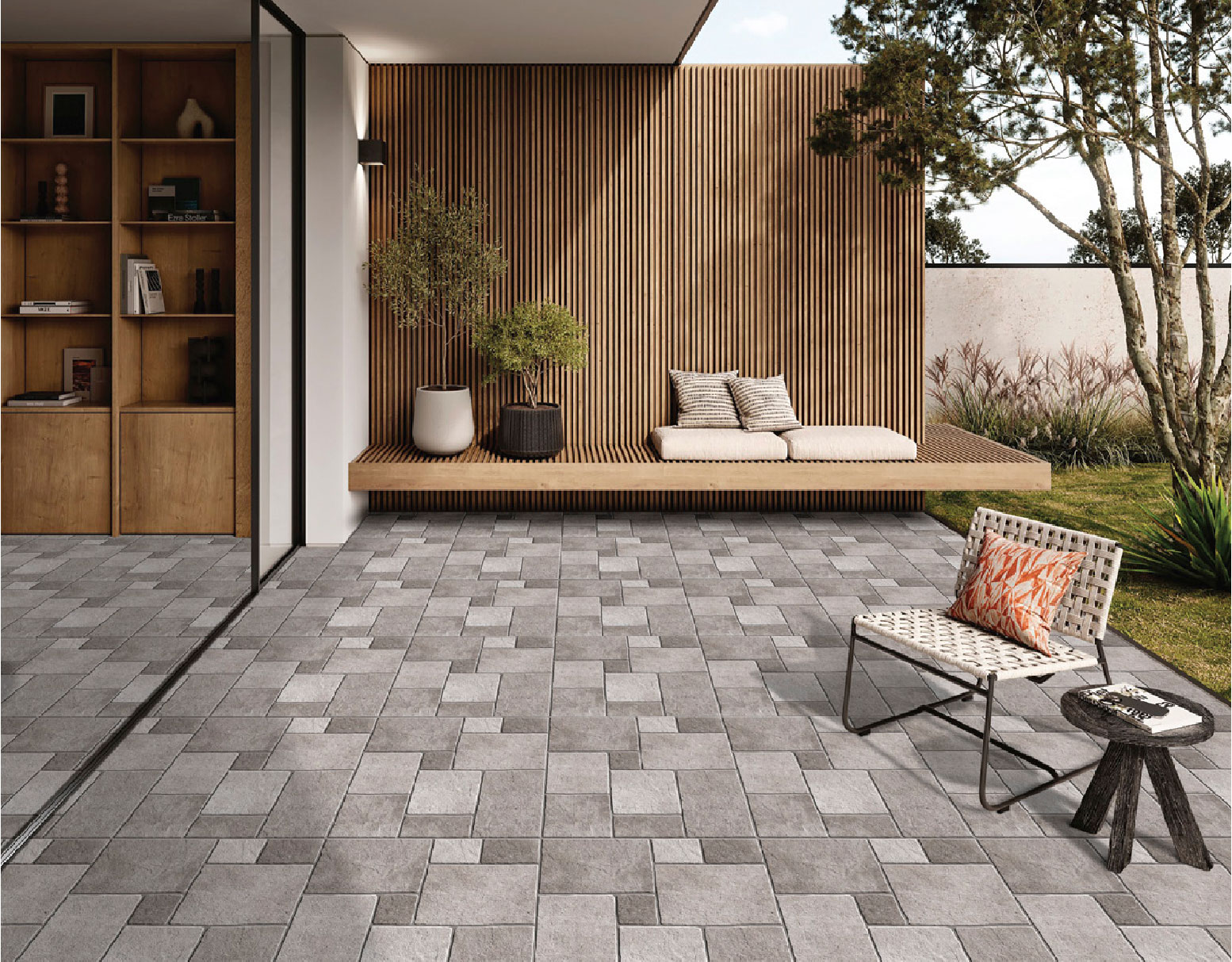
Stone Look Outdoor Tiles vs Natural Stone
Natural stone or stone-look tiles? Find out why vitrified tiles are the ultimate choice for durab...
Read More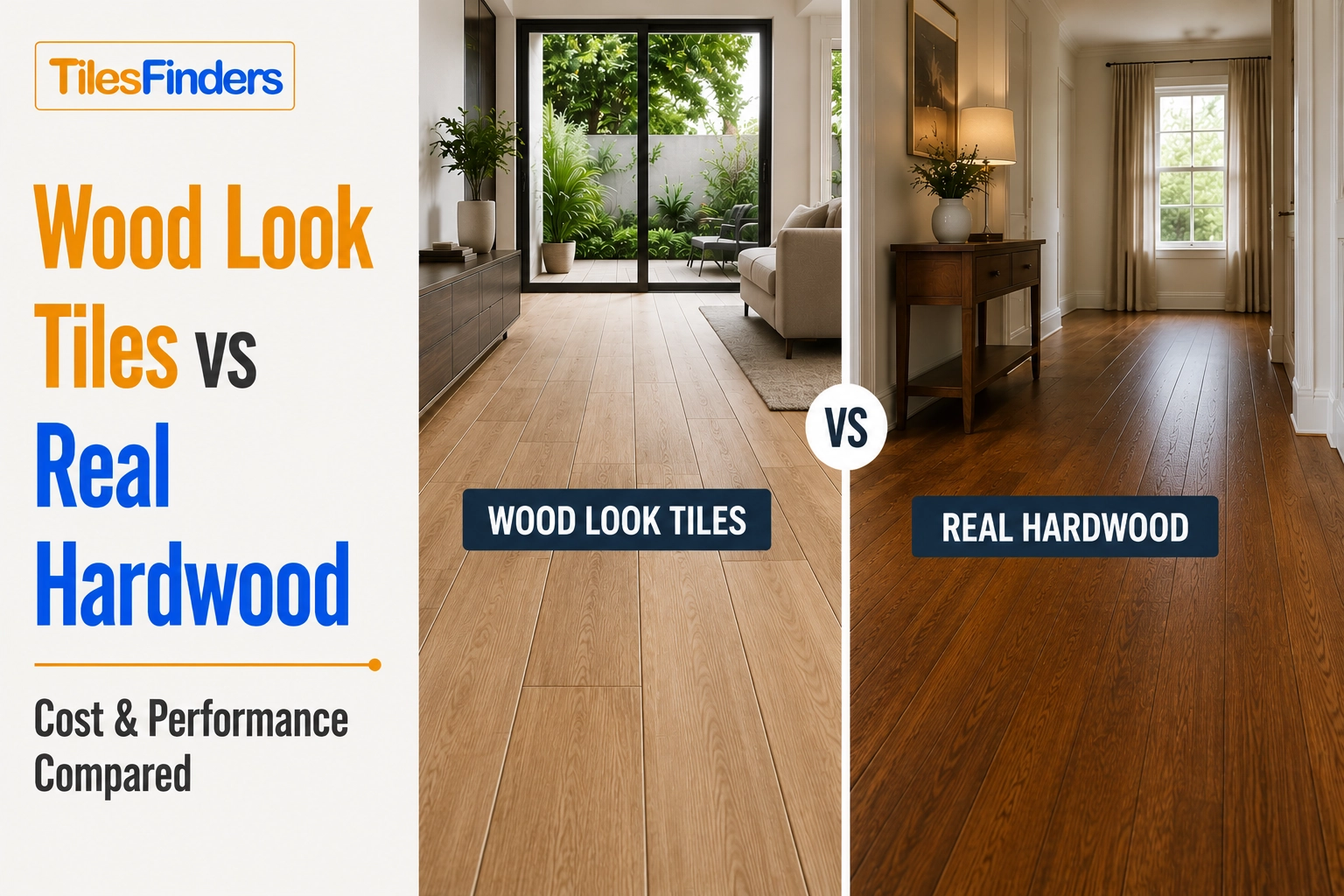
Wood Look Tiles vs Real Hardwood: Cost & Performance Compared
Compare wood-look tiles and real hardwood flooring for Indian homes. Explore costs, durability, m...
Read More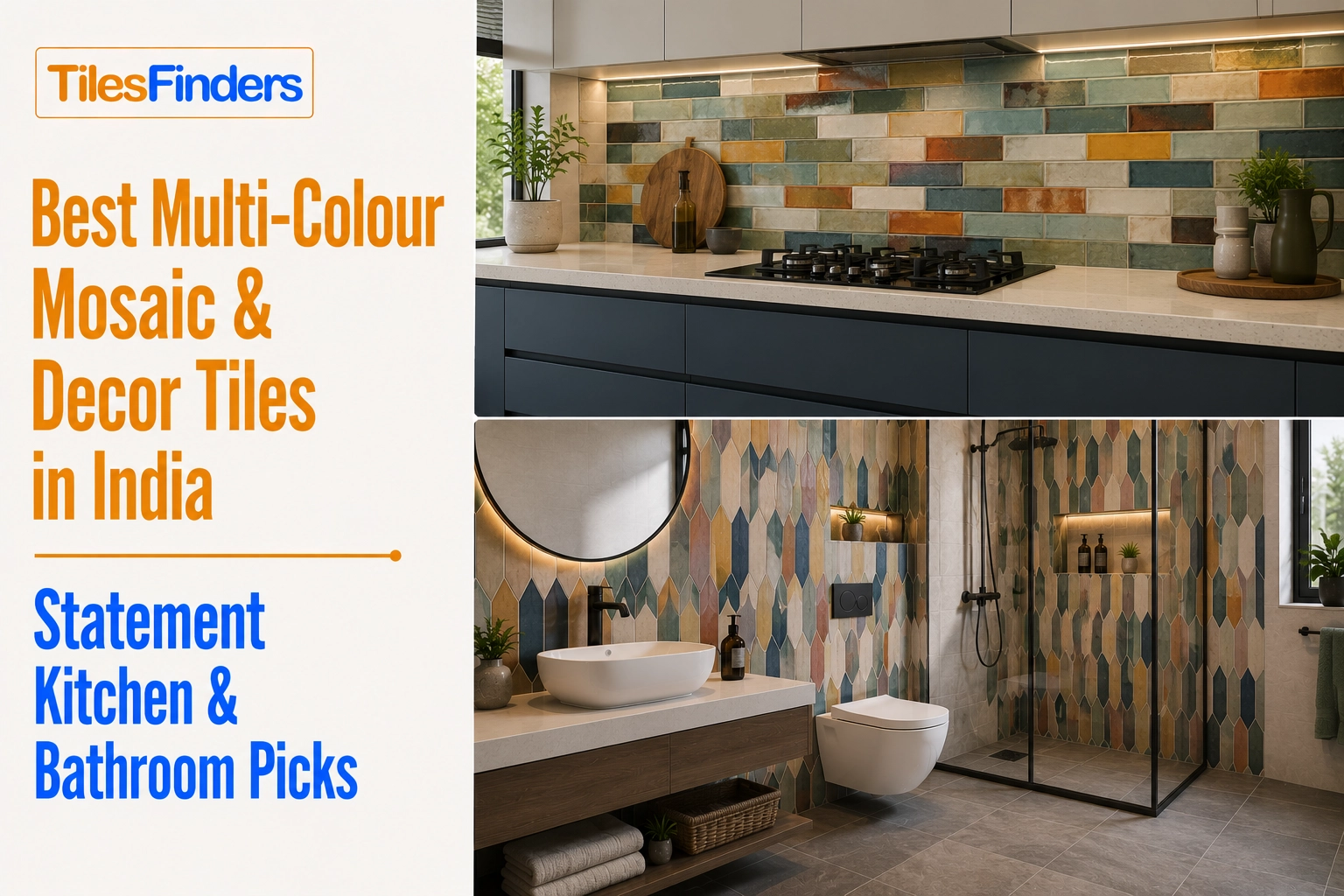
Best Multi-Colour Mosaic and Decor Tiles India 2027: Statement Kitchen and Bathroom Picks
Compare the best multi-colour mosaic and decor tiles for Indian kitchens and bathrooms, from affo...
Read More