Stone Look Outdoor Tiles vs Natural Stone
Natural stone or stone-look tiles? Find out why vitrified tiles are the ultimate choice for durable, anti-skid, and low-maintenance outdoor spaces like driveways and balconies.
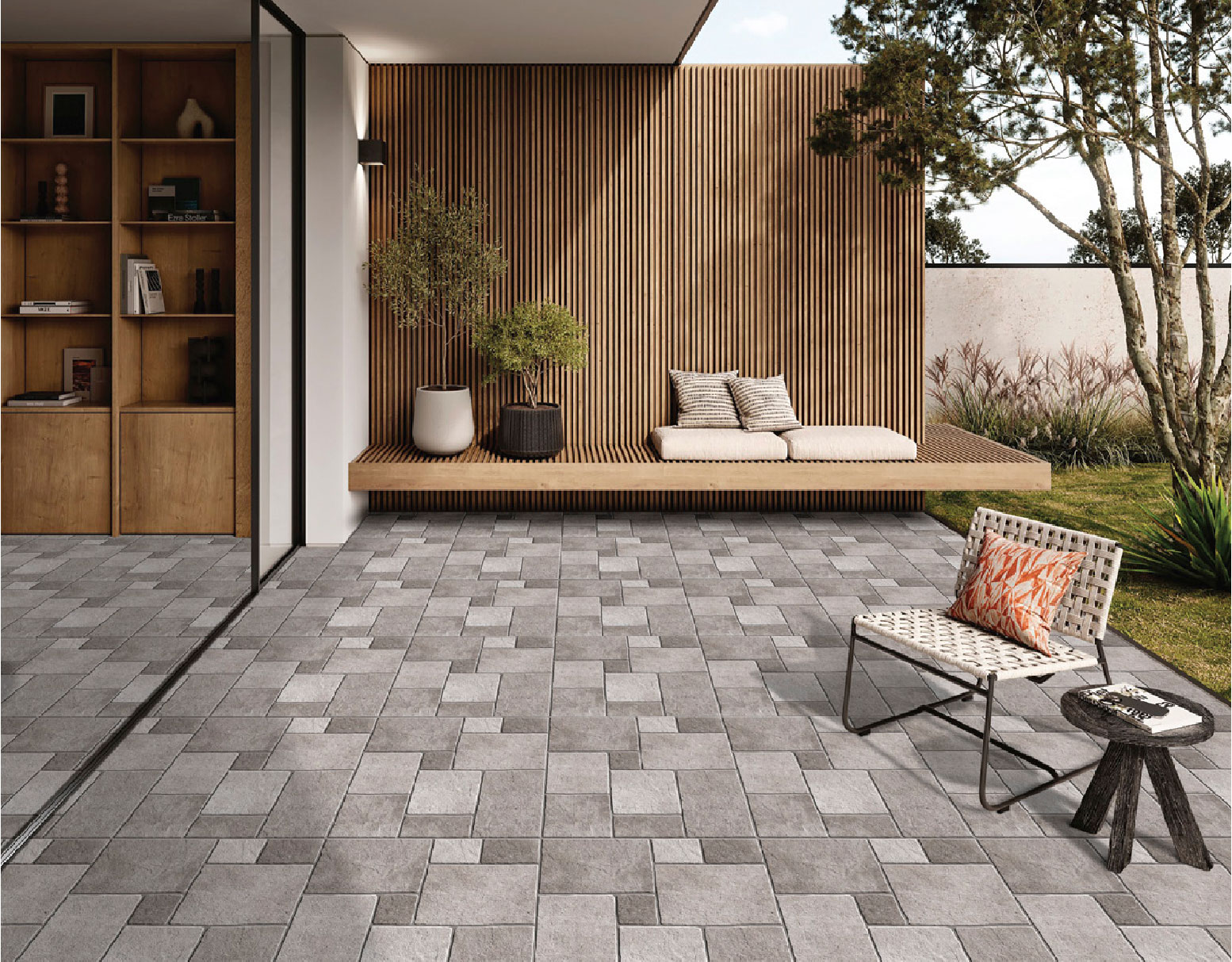
Natural stone offers raw, authentic charm but demands regular sealing, polishing, and weather protection. Stone-look vitrified tiles deliver the same aesthetic with engineered strength, zero water absorption, R10+ anti-skid safety, and high load-bearing capacity, making them more practical for modern terraces, balconies, and parking areas.
What are the key performance differences between stone-look tiles and natural stone?
Natural stone comes straight from the quarry. That means beauty, but also unpredictability. Thickness varies, porosity differs, and performance depends heavily on the specific slab.
Stone-look vitrified tiles, on the other hand, are engineered products. They are designed to eliminate the weaknesses of natural rock while retaining its texture and visual depth.
Material Comparison
| Feature | Stone-Look Tiles (vitrified) | Natural Stone |
| Durability | Highly resistant to scratches, chips, and chemicals. | Strong for granite; softer stones like limestone scratch easily. |
| Maintenance | Low; mild soap and water is enough. | High; needs sealing and special cleaners. |
| Weathering | UV-resistant, fade-proof, and handles freeze-thaw cycles well. | Can fade, crack, or discolour if not sealed properly. |
| Safety | Available in R10+ anti-skid ratings. | Grip depends on finish; polished surfaces are slippery. |
| Installation | Uniform thickness and weight. | Irregular thickness makes levelling difficult. |
For Indian exteriors, performance often outweighs nostalgia.
Why do vitrified stone-look tiles outperform natural stone in monsoon conditions?
The answer lies in physics.
Natural stones like sandstone and limestone have tiny pores. When rainwater enters these pores, it brings dirt and salts with it. Over time, this moisture leads to green algae, dark stains, and white powdery marks forming on the surface.
Full-body vitrified and GVT stone finish tiles are manufactured to achieve less than 0.5% water absorption (as per ISO 13006 standards). That level of density makes them practically immune to moss penetration. Water stays on the surface instead of entering the body of the tile.
This is why stone look tiles for terrace installations perform better during heavy monsoon cycles compared to unsealed natural stone.
How does Digital printing technology replicate the exact V-rating of natural slate and granite?
One concern buyers have is whether vitrified looks artificial.
Natural stone has random shade variation, sometimes too random. You may receive uneven batches or overly dark slabs that disrupt the layout.
PGVT stone look tiles use advanced inkjet printing technology to achieve controlled V3 or V4 shade variation. This means the pattern looks organic and layered but remains balanced across the surface.
Tiles in bigger dimensions, such as 800x1600 large-format outdoor tiles, showcase this technology far more effectively. The extended surface gives the texture and shade variation space to unfold naturally, closely resembling real slate or granite, without cracks, uneven veining, or surface flaws.
Why is the 12mm to 16mm thickness upgrade mandatory for tile driveways?
Outdoor parking areas demand structural strength.
Standard 9mm tiles are not built for the concentrated point load of SUVs or heavy vehicles. For parking areas, you must specify 12mm or 16mm heavy-duty vitrified tiles to achieve a high Modulus of Rupture (MOR).
For driveways, 600x600 parking tiles are commonly preferred because they distribute vehicle load evenly and are easier to align during installation.
Natural stone can also support vehicles, but typically only when cut to 20–25mm thickness. That increases weight, transport cost, and installation complexity.
For driveways, parking areas, stone finish tiles in vitrified form provide similar strength at reduced thickness and better uniformity.
Maintenance Guide: How to preserve the R10+ anti-skid friction on outdoor floors
Outdoor floors must remain safe even during rain.
Stone-look tiles with “Sugar Finish” or “Punch Effect” textures can be cleaned using pressure washers or mild acidic cleaners without degrading their R10+ anti-skid rating.
Natural stone behaves differently. Acidic cleaners cause chemical etching, permanent surface burns that destroy the polished finish and compromise sealants. Once etched, restoration becomes expensive.
This is why many homeowners prefer vitrified options for exposed areas like balconies and terraces. When selecting outdoor tiles for balcony flooring, it’s important to choose surfaces that maintain friction and colour even after years of weather exposure.
Buyer’s Checklist: What specific technical checks guarantee outdoor longevity?
Outdoor flooring fails not because of looks, but because of overlooked technical details. Before finalising a material, check the following:
- Deep Abrasion Resistance: Opt for PEI Class 4 or 5 in parking zones to handle tyre friction.
- Mohs Hardness: A rating above 7 prevents scratches from gravel and vehicle movement.
- Adhesive Standard: Since vitrified tiles have very low porosity, polymer-modified outdoor adhesives are mandatory. Traditional sand-cement mortar alone may not bond effectively.
- Thickness Requirement: For driveways, select 12mm or thicker heavy-duty variants.
- Appropriate Size: Formats like 600x600 outdoor stone look tiles are widely used for structured layouts, while 600x1200 stone finish floor tiles create a more expansive appearance on terraces and open areas.
Ignoring these factors often leads to premature cracking, surface loosening, or debonding within a few seasons.
FAQs
Raw Kota stone may appear cheaper per square foot, but polishing, sealing, and skilled labour significantly increase the total cost. Vitrified stone-look tiles come pre-finished and ready to lay, reducing installation time and long-term maintenance expense.
Some darker shades can absorb heat. However, lighter tones and tiles with higher Solar Reflectance Index (SRI) values reduce surface temperature. Many terrace-grade tiles are specifically designed for heat control.
No. Unlike thick paver blocks, vitrified tiles must be installed over a levelled concrete screed with proper adhesive to prevent cracking and movement.

See our tile guides first
Set TilesFinders as a preferred source and our buying guides surface ahead of the rest for you.
Add as preferred sourceTakes one tap. Nothing to install.
What Readers Say
I was about to redo my parking area with the wrong tile size until I read this. The layout comparisons saved me from a costly mistake.
We reference TilesFinders guides while briefing clients on material selection. The size and pattern breakdowns are accurate and easy to explain visually.
On site, I get asked about grout spacing all the time. This article gave me a solid reference I now share with my team before every job.
Finally a guide that doesn't just push generic advice. The oil stain removal steps actually worked on our clubhouse driveway tiles.
I run a small construction firm and now send this link to clients directly when they ask about entrance tile sizing. Saves me an hour of explaining.
Good practical detail, though I wish there were more examples for compact apartment entrances specifically, not just villas.
My mother-in-law wanted marble, I wanted vitrified. This blog gave us the neutral comparison we needed to actually decide together.
Detailed without being overwhelming. I appreciated that it covered both cost and maintenance, not just the aesthetics.
Used the algae and hard water removal tips on our terrace tiles after the monsoon. Worked better than what our regular cleaner was doing.
As someone who sources tiles for multiple builder projects, I find these comparisons genuinely useful for vendor conversations, not just consumer content.
Recommended this to a client who kept second-guessing the entrance design. The small vs large layout section settled the debate instantly.
Straightforward and honest, no unnecessary jargon. Would like to see a similar breakdown for outdoor pool-deck tiles next.
We've bookmarked several TilesFinders guides for our design handbook. Reliable source when clients want data, not just opinions.
Two paths, one marketplace.
Get free quotes from verified suppliers.
Share your room, budget, and style. Suppliers in Morbi respond within hours.
Get Free QuotesList your business, reach real buyers.
Put your showroom in front of homeowners searching for tiles right now.
List Your Business