
Easy-to-Clean Tiles for Ganesh Chaturthi: Handling Heavy Foot Traffic and Festival Spills
Discover easy-to-clean tiles for Ganesh Chaturthi, with practical tips for turmeric, kumkum, oil spills, heavy foot traffic, grout protection and safer festival flooring.
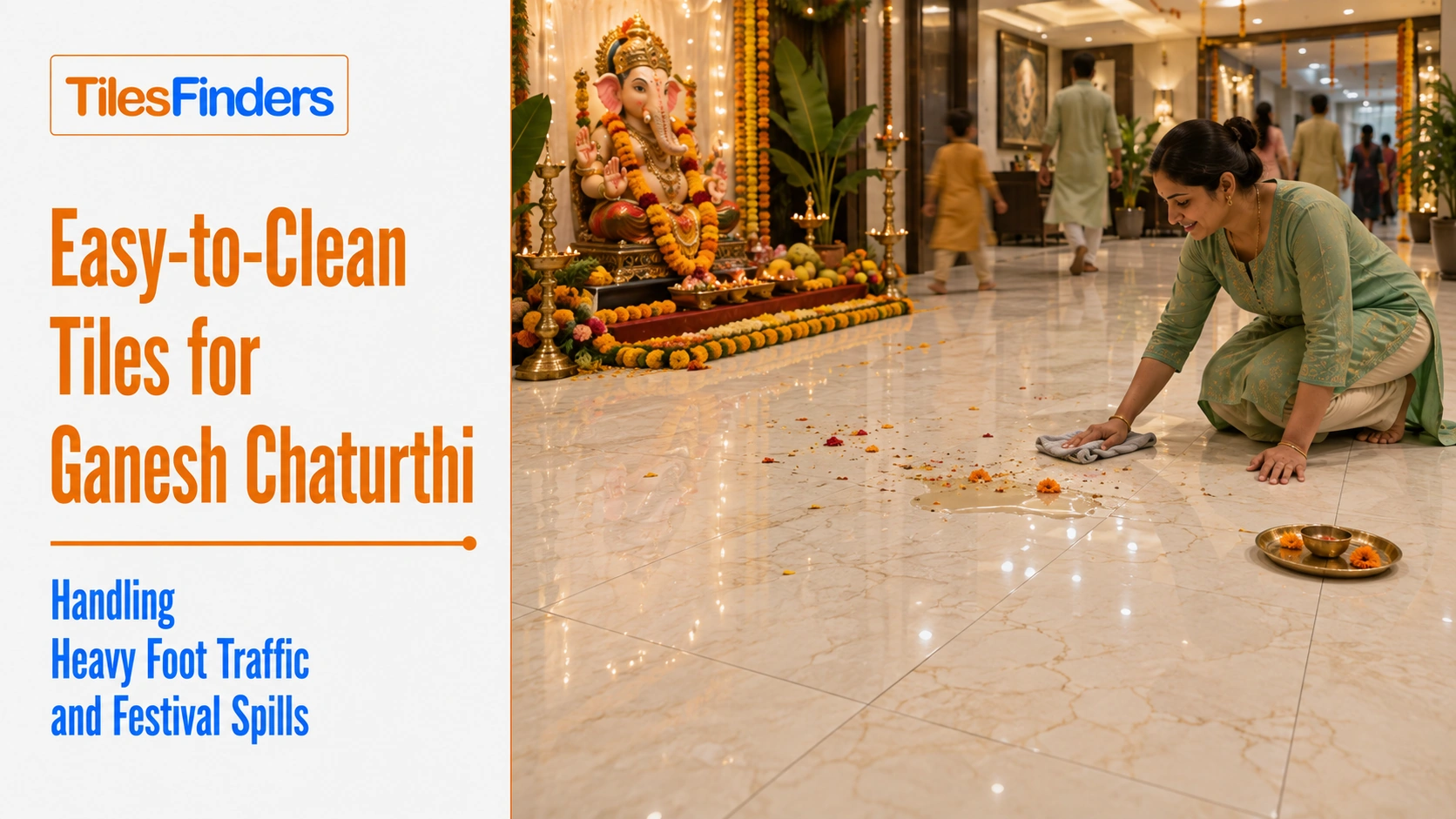
- What Actually Reaches the Floor During Ganesh Chaturthi
- Which Floor Finishes Handle Festival Traffic Best
- Before the Festival: Protecting the Floor You Already Have
- During the Festival: Daily Floor Care Without Disruption
- After Visarjan: The Deep Clean
- If You Are Buying Tiles Before the Festival
- Buy Easy-Clean Pooja Room and Entrance Tiles on TilesFinders
Ganesh Chaturthi floors face turmeric, kumkum, oil, water, ash and heavy foot traffic, making grout protection, easy-clean finishes and slip resistance especially important. For existing floors, seal cement grout, use mats and clean spills quickly; for new floors, choose matte tiles, epoxy grout, anti-skid surfaces and mid-tone colours.
For ten days, a home that normally sees a handful of people a day receives a continuous stream of visitors, and the floor takes everything that comes with them: flower water, lamp oil, haldi, prasad, and the dust of dozens of feet. Most advice about easy-clean flooring is written for everyday life. This guide is written for the specific things that actually reach the floor during Ganesh Chaturthi, what each one does to a tile and its grout, and what removes it before it becomes permanent.
What Actually Reaches the Floor During Ganesh Chaturthi
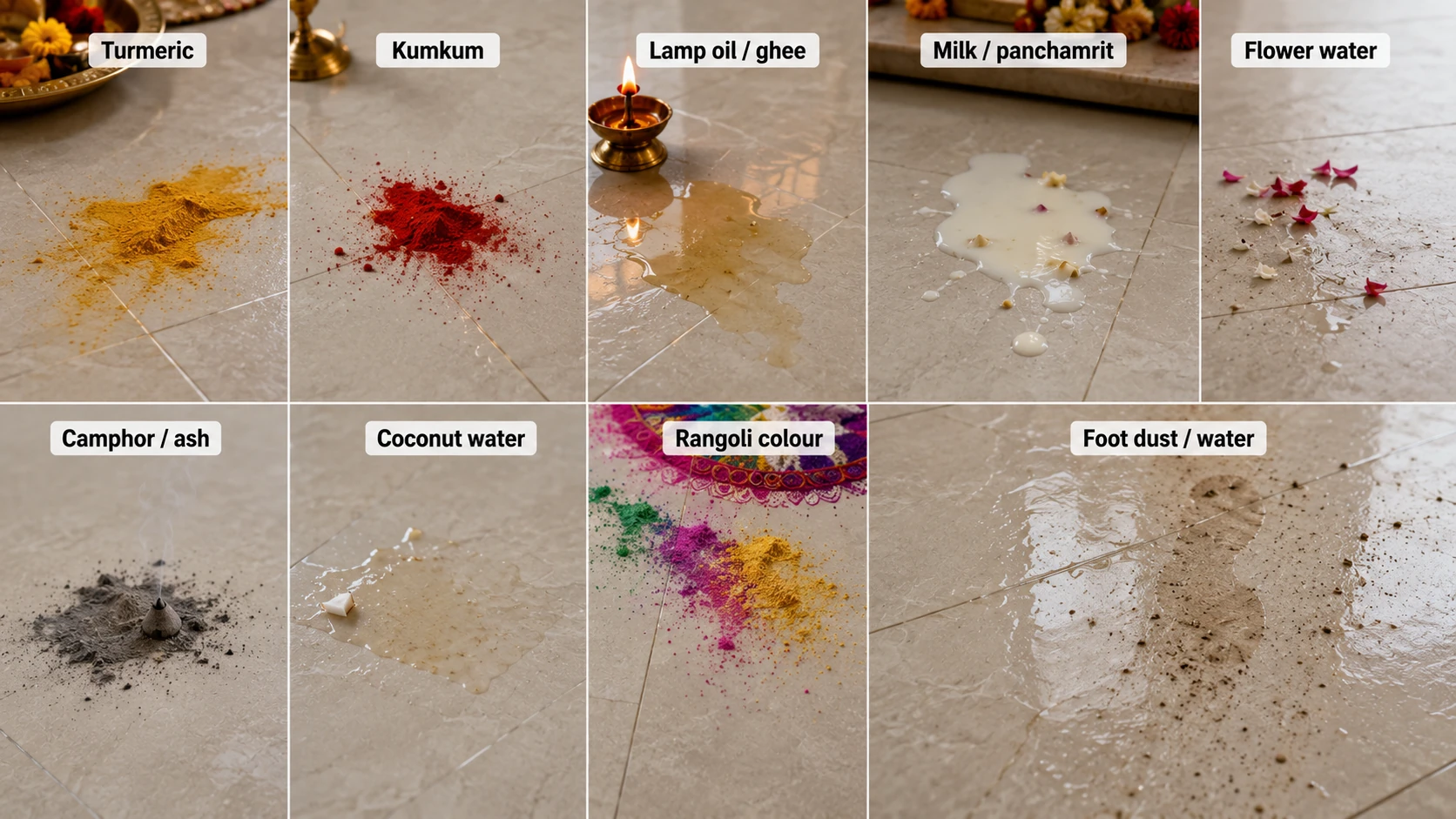
Different substances behave completely differently on a floor tile. Some wipe away, some need immediate attention, and two of them stain grout permanently if left overnight.
| What Spills | What It Does | How Urgent |
| Turmeric and haldi | Stains grout yellow, often permanently | Immediate, within minutes |
| Kumkum | Stains grout red, hard to reverse | Immediate, within minutes |
| Lamp oil and ghee | Leaves a slippery film, attracts dust | Same day, and a slip risk meanwhile |
| Milk and panchamrit | Turns sticky, then sour, attracts insects | Same day |
| Flower water and petals | Petals stain pale grout as they decay | Clear petals daily |
| Camphor and incense ash | Fine, spreads, and turns muddy when wet | Dry sweep before mopping |
| Coconut water and prasad | Sugary, dries sticky, attracts ants | Same day |
| Rangoli colour | Can stain grout depending on pigment | Before it gets wet |
| Foot dust and water | Constant, and the main slip risk | Continuous through the day |
The thing that gets damaged is rarely the tile: A glazed vitrified tile is essentially impervious. Turmeric, kumkum, oil and milk sit on its surface and come off it. What they get into is the grout, which is porous unless it is epoxy, and grout is where every permanent festival stain in an Indian home actually lives. This is worth knowing because it changes what you protect and what you can relax about. Wiping the tile is easy and can wait an hour. Getting turmeric out of a cement grout joint is a different problem entirely, and after a night it is frequently not solvable at all. If you remember one thing from this guide, it is that the joints matter more than the surface. |
Popular tiles right now



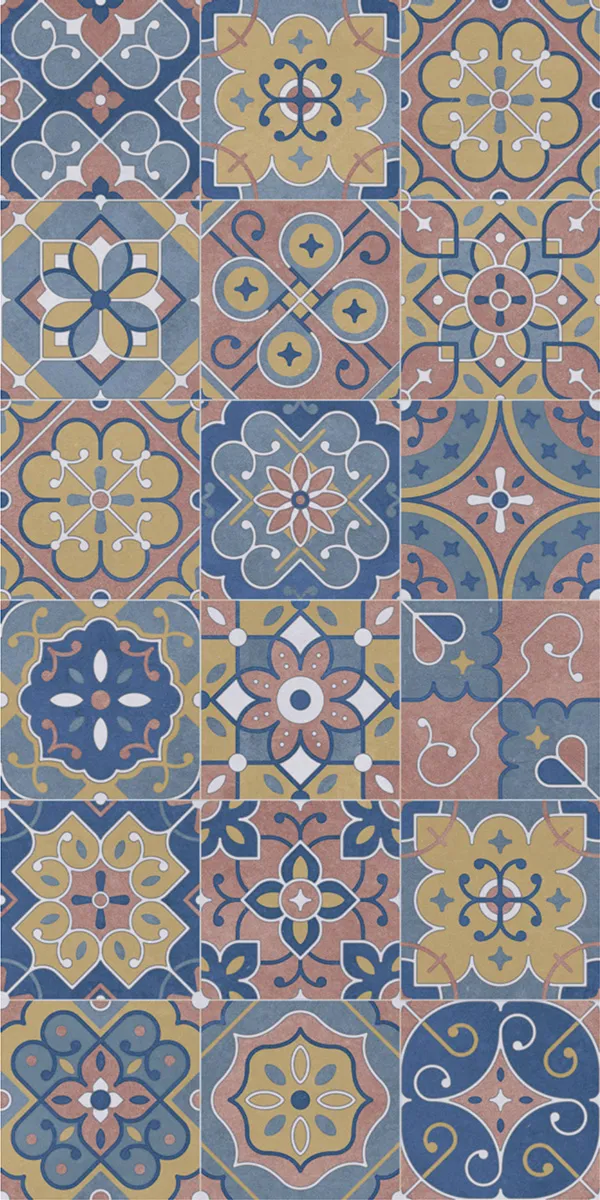
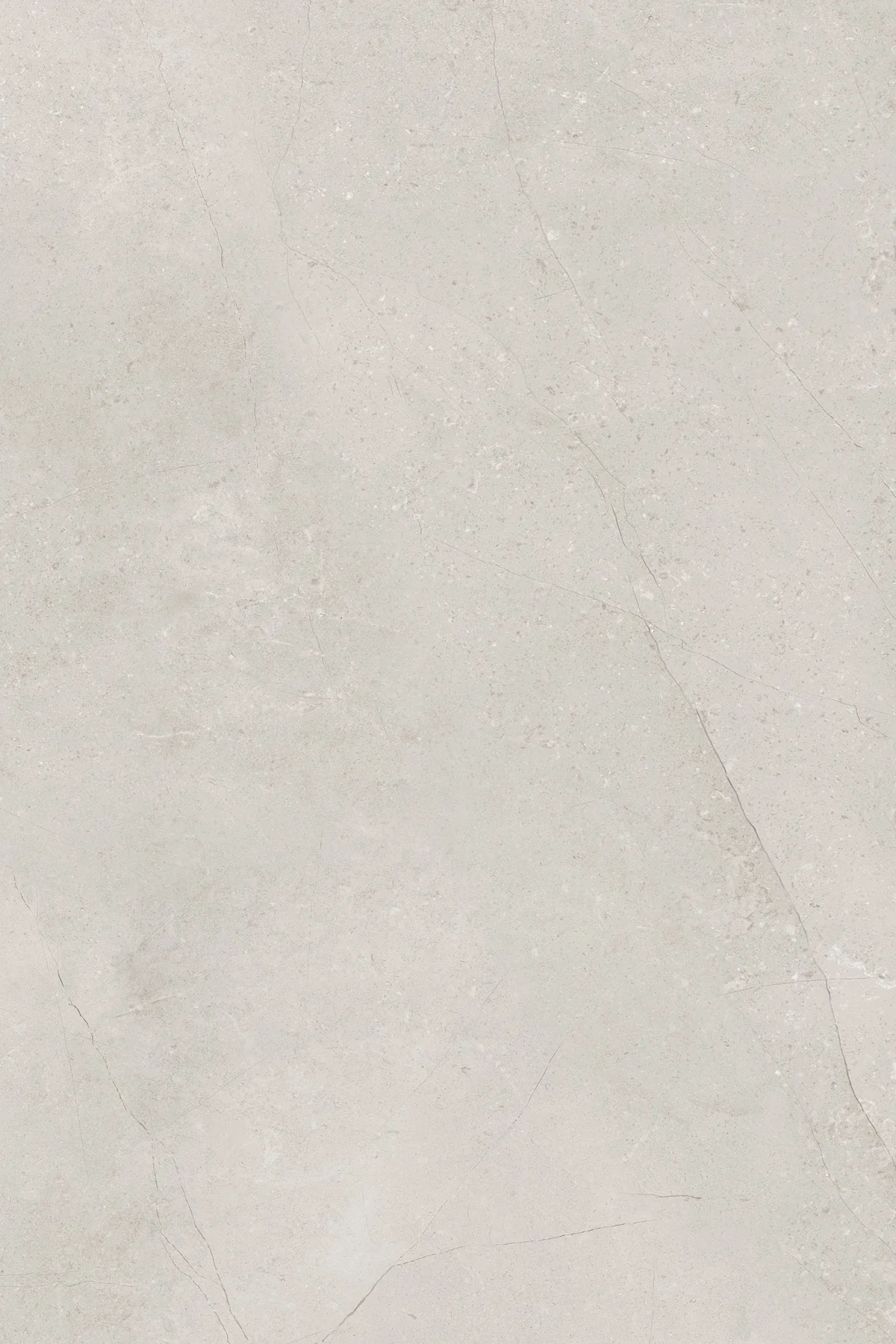




Which Floor Finishes Handle Festival Traffic Best
| Finish | Festival Performance | Why |
| Matte and satin matte | Best all-round | Hides dust and footprints between cleans, and stays safe when wet from washed feet |
| Anti-skid matte | Best where water reaches the floor | Entrance areas and near the abhishek zone, where wet feet and spilt water concentrate |
| Glossy and polished | Worst for the occasion | Shows every footprint within minutes and becomes genuinely slippery with wet feet and lamp oil |
| Textured and punch | Good for grip, more effort to clean | Holds oil and ash in the texture, so needs brushing rather than mopping |
The safety point that matters most during the festival: Lamp oil or ghee on a floor that also has water from washed feet is considerably more slippery than either on its own, and this combination occurs most often exactly where visitors gather closely around the murti. If your floor there is glossy or polished, put down a mat or a durrie for the ten days rather than relying on care alone. This is not a reason to replace a floor, but it is a reason to cover it while a large number of people, including elderly relatives and children, are moving around a small area. |
Before the Festival: Protecting the Floor You Already Have
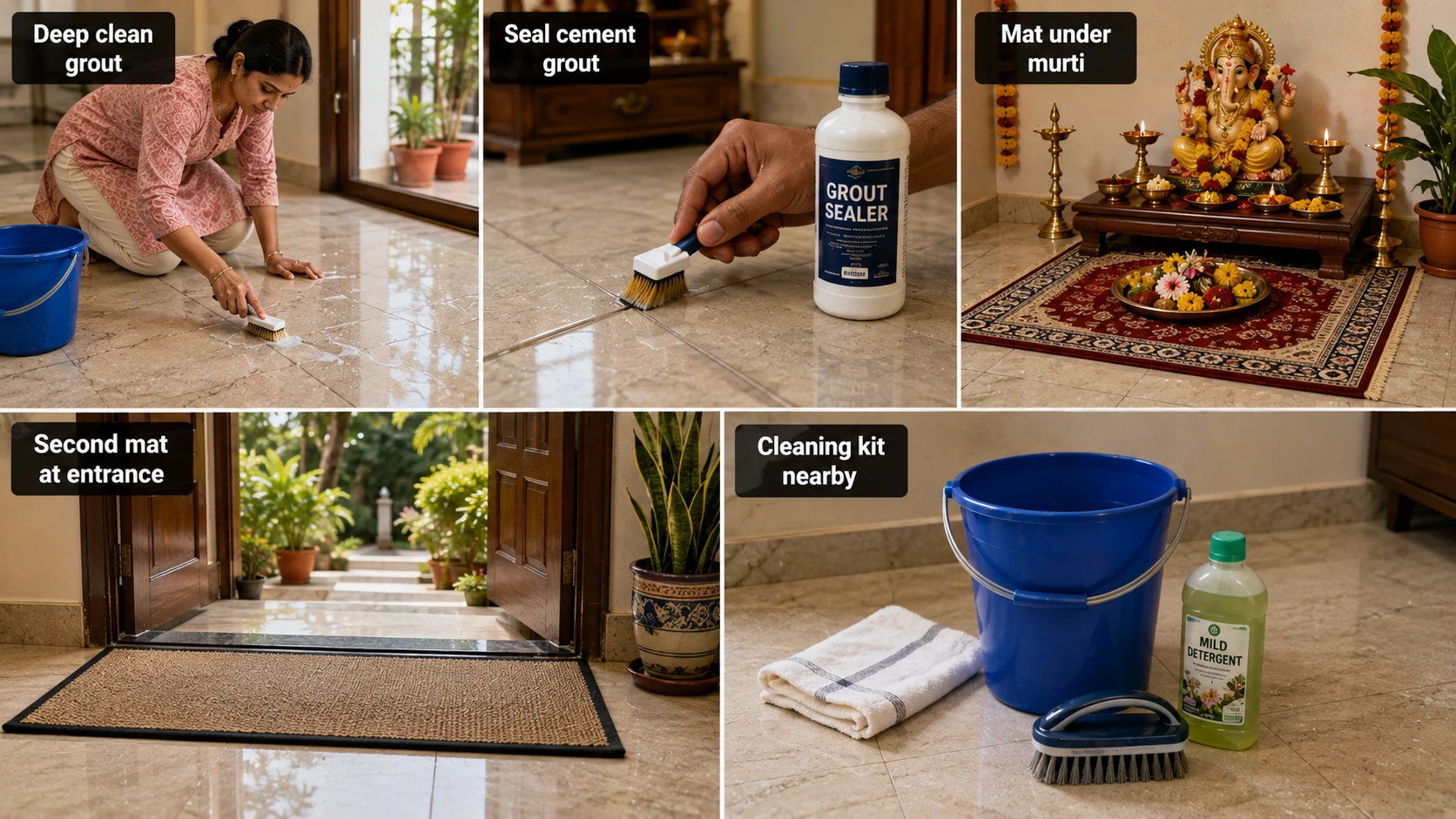
Most of the work that prevents permanent staining happens before the murti arrives rather than after.
- Deep clean the grout first, because clean grout resists staining better than grout already carrying a film of old residue, and because you will not be able to do this properly again for ten days.
- Seal cement grout in the pooja and entrance areas if it has never been sealed, since a grout sealer applied a few days ahead is the single most effective preventive measure available to someone who is not relaying their floor.
- Place a washable mat or durrie under the murti platform, extending beyond where oil lamps, flowers and offerings are placed.
- Put a second mat at the entrance, since visitor foot dust is the largest single contributor to how the floor looks by day three.
- Keep a bucket, soft brush and mild detergent nearby, so a haldi spill can be dealt with in the moment rather than after the guests leave.
The five-minute preparation that saves the most trouble: Mix a small amount of mild detergent in water and keep it ready with a soft cloth before the festival begins. Turmeric and kumkum are removable from grout in the first few minutes and progressively harder after that, so the difference between a permanent stain and no stain is usually whether cleaning materials were already within reach. Hunting for them under the sink while guests are arriving is how spills end up waiting until midnight. |
During the Festival: Daily Floor Care Without Disruption
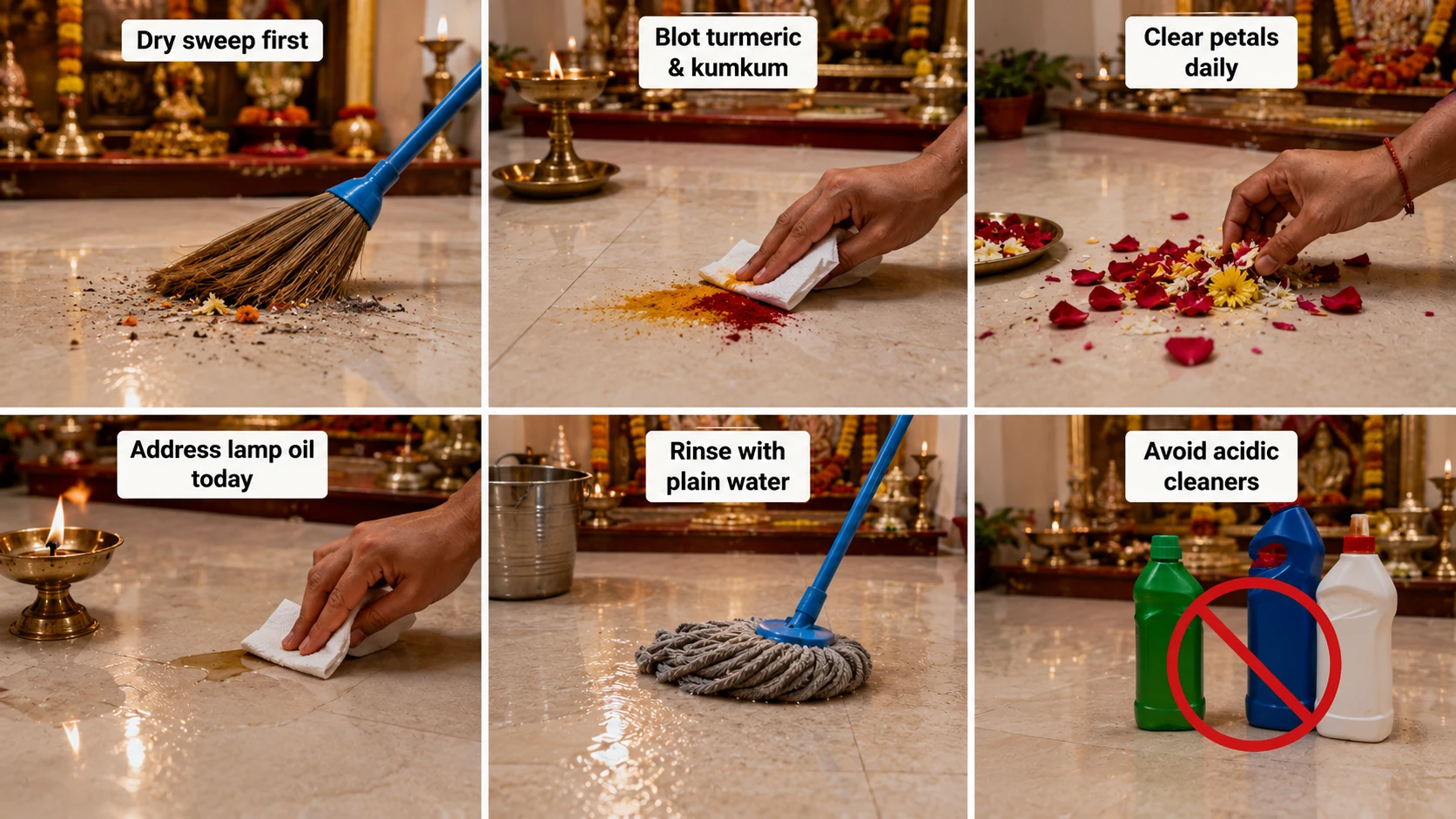
- Dry sweep before mopping, every time. Camphor ash, incense ash and flower debris turn muddy when wet, so mopping a floor that has not been swept spreads a grey film rather than cleaning it.
- Deal with turmeric and kumkum immediately, blotting rather than wiping so the pigment is lifted rather than spread further into surrounding joints.
- Clear flower petals daily, because petals left on a damp floor overnight bleed colour into pale grout as they decay.
- Address lamp oil the same day, both because it attracts dust and because it is the main slip contributor during the festival.
- Rinse with plain water after any detergent cleaning, since detergent residue on an anti-skid floor reduces the grip you specified it for.
- Avoid acidic cleaners entirely, which can dull glazed surfaces and damage any metallic or decorative tile in a pooja space.
After Visarjan: The Deep Clean
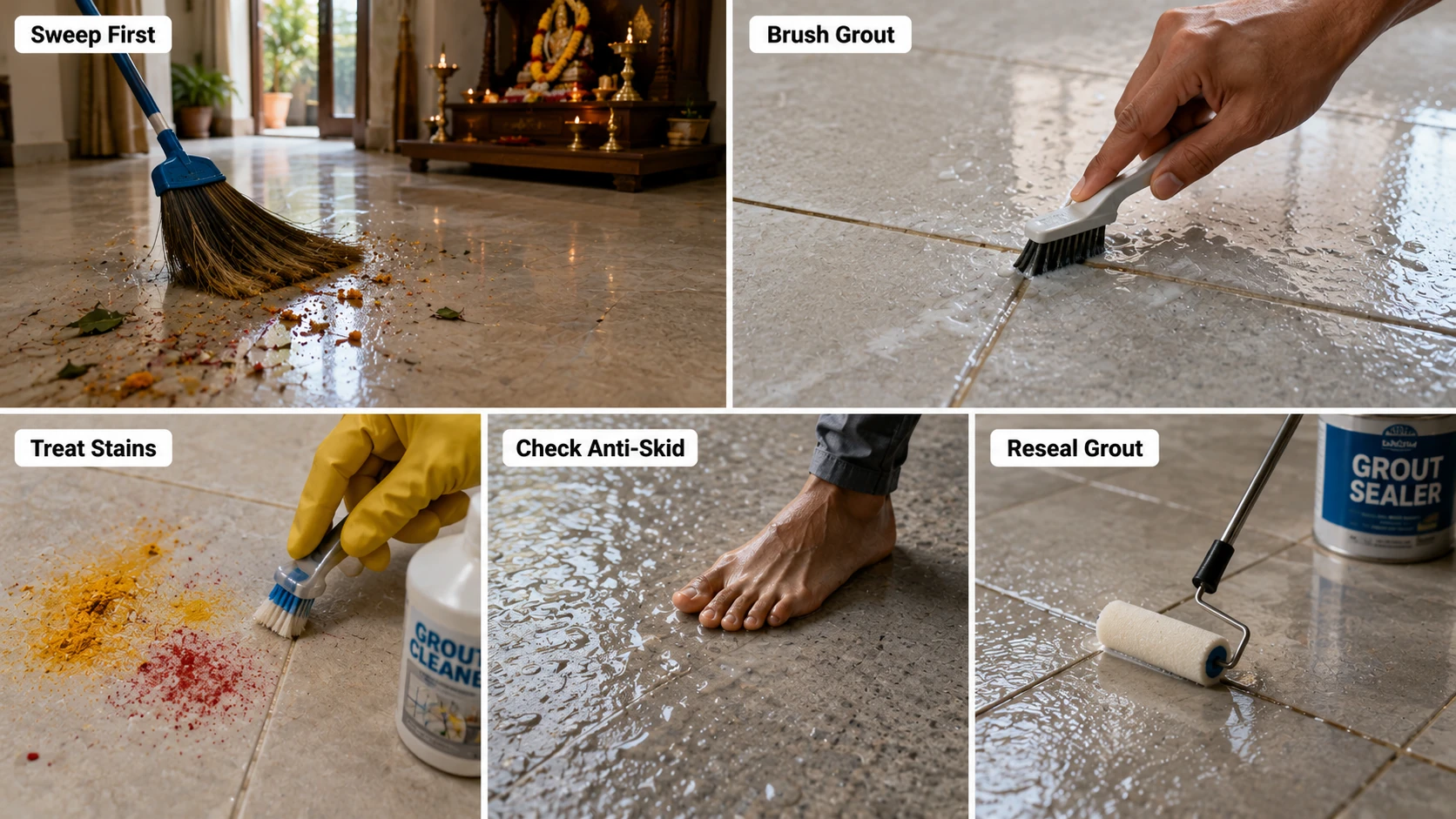
Immersion day brings its own mess, with water carried through the house and mud or moisture tracked back in, and it is also the right moment for the thorough clean the floor has been waiting for.
- Sweep thoroughly before any water touches the floor, since ten days of accumulated ash and dried petal debris will otherwise become a paste.
- Brush the grout lines rather than mopping across them, because a flat mop passes over joints and the residue that matters has settled into them.
- Treat any remaining turmeric or kumkum marks with a gentle grout cleaner, and accept that some may have set, which is information for next year rather than a failure now.
- Check the anti-skid areas specifically, since oil and detergent film accumulated over ten days reduce grip and a plain water rinse restores a surprising amount of it.
- Reseal cement grout after the deep clean if it was sealed before, since the sealer will have taken a beating.
If You Are Buying Tiles Before the Festival
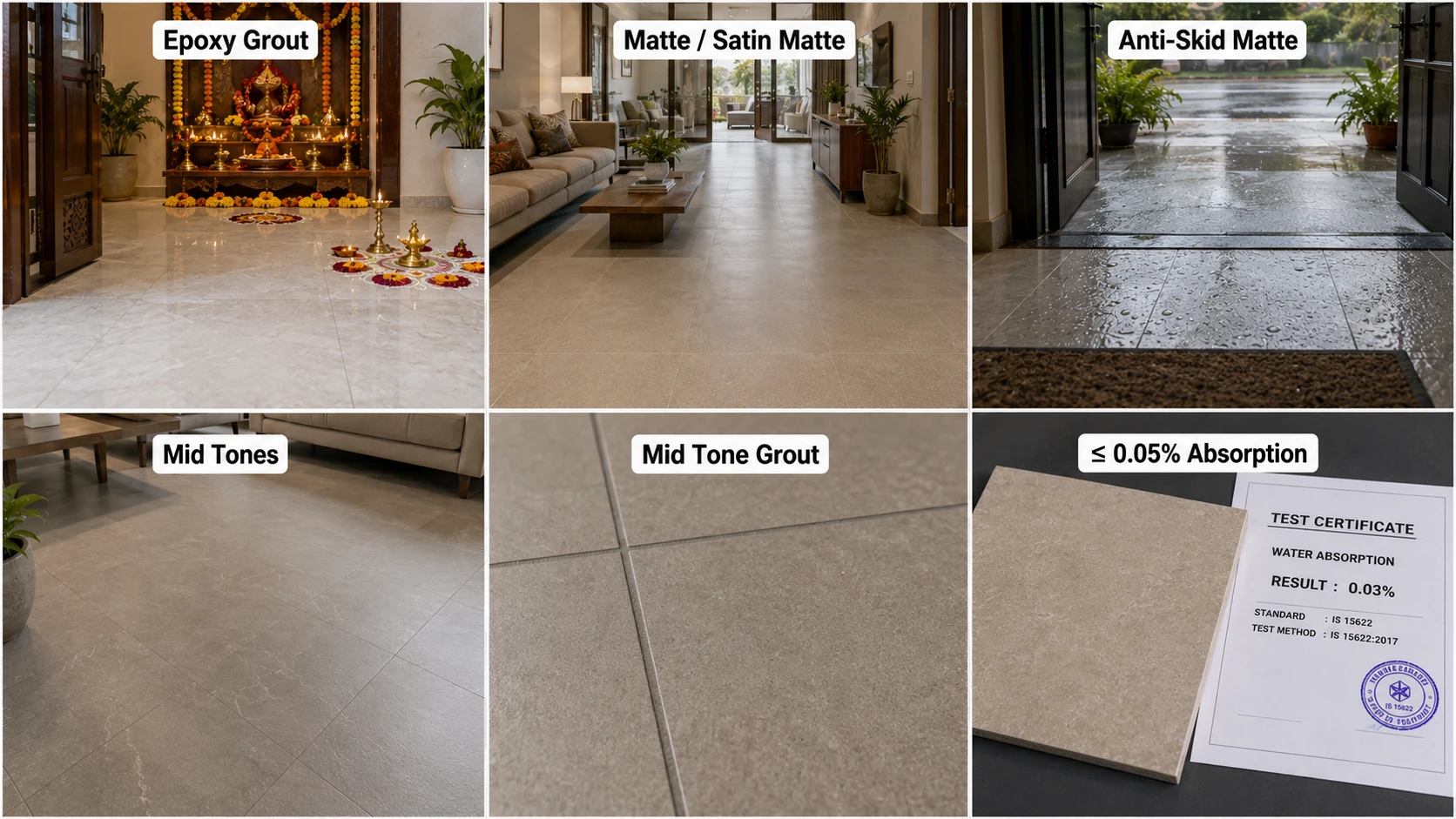
For anyone renovating a pooja room, entrance or living area ahead of the season, these are the specifications that make the next ten years of festivals easier rather than just this one.
- Epoxy grout in the pooja room and entrance, without exception. This single choice eliminates the majority of permanent festival staining, because it removes the porous material the stains actually live in.
- Matte or satin matte floors in areas that will see heavy visitor traffic, which hide dust and footprints between cleans far better than gloss.
- Anti-skid matte with a confirmed wet coefficient of friction of 0.4 minimum at the entrance and anywhere water reaches the floor.
- Mid tones rather than very pale or very dark, since pale shows every mark and dark shows every footprint and dust film.
- Grout in a mid tone close to the tile, because white grout in an Indian home that celebrates with turmeric is a decision you will regret within one season.
- Water absorption of 0.05% or below for vitrified tile, the benchmark set by the Bureau of Indian Standards under IS 15622, with the test certificate requested.
The realistic summary for most households: You are probably not relaying a floor before the festival, and you do not need to. Sealing the grout, putting mats where offerings and visitors concentrate, and keeping cleaning materials within reach will handle almost everything. Save the specification decisions for whenever the room is next renovated, and make epoxy grout the non-negotiable when that happens. |
Buy Easy-Clean Pooja Room and Entrance Tiles on TilesFinders
Matte, anti-skid and easy-clean ranges suited to pooja rooms, entrances and high-traffic living areas can be compared on TilesFinders by finish and rating, with epoxy grout options available alongside.

FAQs
Turmeric and kumkum, and what they stain the grout rather than the tile. A glazed vitrified tile is essentially impervious to both, while cement grout is porous and holds the pigment. Left overnight, these are frequently not fully removable.
Immediately, blot rather than wipe so the pigment lifts rather than spreads into surrounding joints, using mild detergent and a soft cloth. The removal window is minutes rather than hours, which is why having cleaning materials ready in advance matters more than any product.
Matte or satin matte, which hides dust and footprints between cleanings and stay safer underfoot when visitors arrive with washed feet. Glossy and polished floors show every footprint within minutes and become slippery with the combination of water and lamp oil.
It can be where lamp oil and water from washed feet meet, which is usually exactly where people gather closely around the murti. Putting down a mat or durrie for the ten days is a reasonable precaution, particularly with elderly relatives and children moving around a small area.
If it is cement grout and has never been sealed, yes. A grout sealer applied a few days ahead is the most effective preventive step available to anyone not relaying their floor, and it directly addresses the porous material where festival stains actually settle.
Camphor ash, incense ash and flower debris turn muddy when wet. Mopping an unswept floor spreads a grey film across the surface rather than removing anything, and it works the residue further into grout joints.
Epoxy grout above everything else, since it removes the porous material where permanent staining lives. Then use matte or satin matte tile in a mid-tone, anti-skid where water reaches the floor, and grout in a tone close to the tile rather than white.
Temporarily, yes. Ten days of lamp oil and detergent residue build a film that fills the texture the grip depends on. A thorough brush clean and a plain water rinse after visarjan restores most of it, which is worth doing rather than assuming the floor has worn.


See our tile guides first
Set TilesFinders as a preferred source and our buying guides surface ahead of the rest for you.
Add as preferred sourceTakes one tap. Nothing to install.
What Readers Say
I was about to redo my parking area with the wrong tile size until I read this. The layout comparisons saved me from a costly mistake.
We reference TilesFinders guides while briefing clients on material selection. The size and pattern breakdowns are accurate and easy to explain visually.
On site, I get asked about grout spacing all the time. This article gave me a solid reference I now share with my team before every job.
Finally a guide that doesn't just push generic advice. The oil stain removal steps actually worked on our clubhouse driveway tiles.
I run a small construction firm and now send this link to clients directly when they ask about entrance tile sizing. Saves me an hour of explaining.
Good practical detail, though I wish there were more examples for compact apartment entrances specifically, not just villas.
My mother-in-law wanted marble, I wanted vitrified. This blog gave us the neutral comparison we needed to actually decide together.
Detailed without being overwhelming. I appreciated that it covered both cost and maintenance, not just the aesthetics.
Used the algae and hard water removal tips on our terrace tiles after the monsoon. Worked better than what our regular cleaner was doing.
As someone who sources tiles for multiple builder projects, I find these comparisons genuinely useful for vendor conversations, not just consumer content.
Recommended this to a client who kept second-guessing the entrance design. The small vs large layout section settled the debate instantly.
Straightforward and honest, no unnecessary jargon. Would like to see a similar breakdown for outdoor pool-deck tiles next.
We've bookmarked several TilesFinders guides for our design handbook. Reliable source when clients want data, not just opinions.
Two paths, one marketplace.
Get free quotes from verified suppliers.
Share your room, budget, and style. Suppliers in local area respond within hours.
Get Free QuotesList your business, reach real buyers.
Put your showroom in front of homeowners searching for tiles right now.
List Your Business