Terrace Tiles: Heat-Resistant and Waterproof Options Explained
Discover heat-resistant and waterproof terrace tiles for Indian homes. Compare GVT, Full Body, and porcelain options, anti-skid finishes, sizes, prices, and expert buying tips for 2026.
- Why Terrace Tiles Fail in Indian Climates
- Best Types of Terrace Tiles for Indian Weather
- Heat Resistance and Waterproofing: What the Numbers Mean
- Recommended Tile Sizes for Terrace Flooring
- Best Finishes for Terrace Tiles.
- GVT vs Full Body vs Porcelain: Which Works Best on a Terrace?
- Expert Tips Before Buying Terrace Tiles
- Common Mistakes When Selecting Terrace Tiles
- Finding the Right Terrace Tiles
A terrace in an Indian home is not just extra square footage. It is where families sit on winter evenings, where children play after school, and where monsoon evenings turn peaceful. Getting the tile choice wrong turns that space into a liability.
Pick a tile that cannot handle Indian heat, and you will see surface cracks within two summers. Pick one without proper waterproofing, and water seeps through to the slab, causing leakage in rooms below. The repair costs far outweigh the savings from cutting corners on tile selection.
This guide covers the right categories of terrace tiles for Indian conditions, the finishes that hold up outdoors, the sizes that work, and what to watch out for when buying. If you also want broader guidance on outdoor tiles for balconies, parking areas, gardens, pathways, and Indian weather conditions, read our complete outdoor tiles guide.
Why Terrace Tiles Fail in Indian Climates
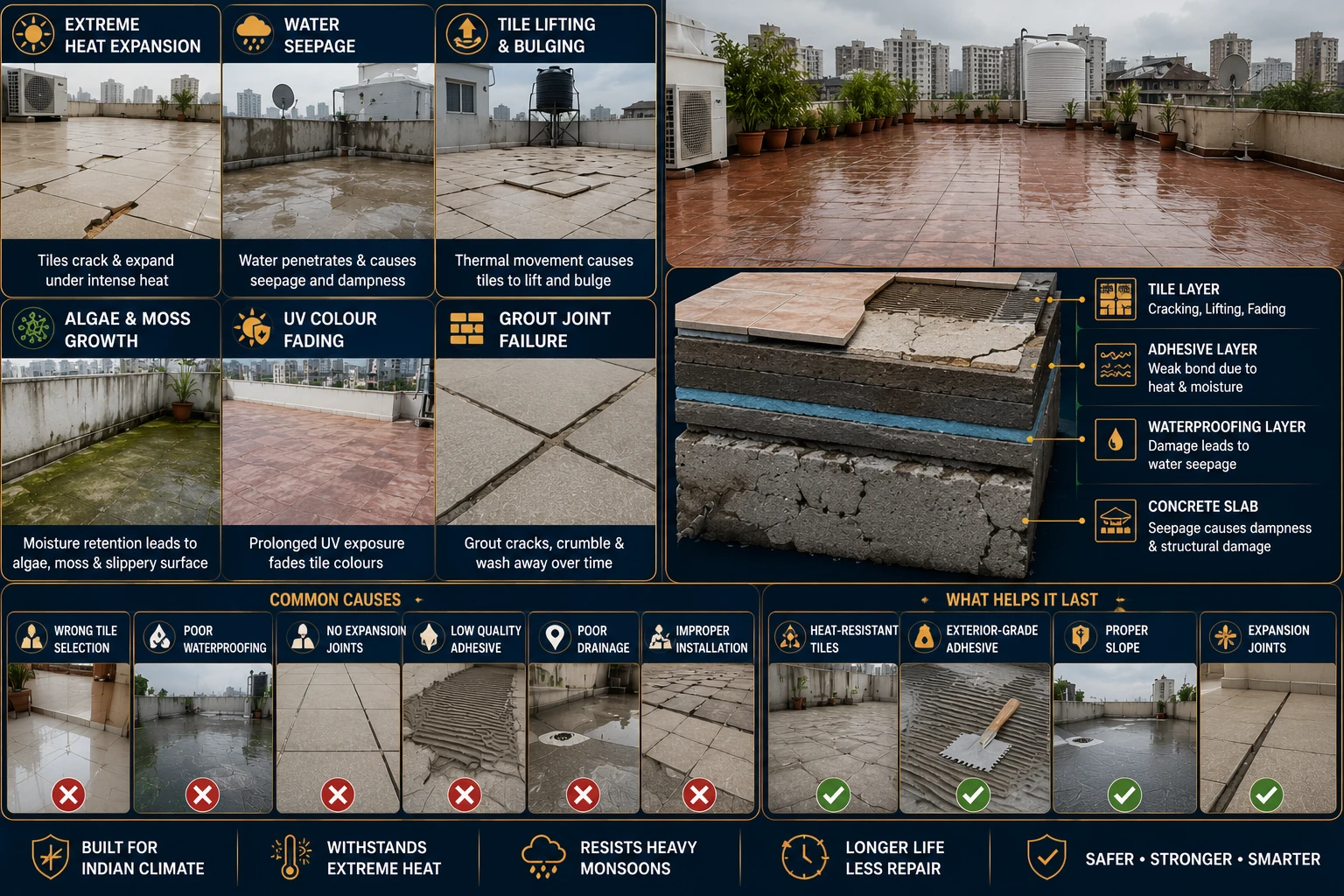
Most terrace tile failures in India come from one of three causes: the tile absorbs too much water, it expands and contracts under heat until it cracks, or its surface becomes dangerously slippery when wet. None of these is unavoidable if you buy the right category.
Indian terraces face a combination that few climates match. Summers push surface temperatures above 55 degrees Celsius in cities like Ahmedabad, Nagpur, and Jaipur. The monsoon then brings weeks of standing water. A tile that handles one but not both will fail faster than expected.
Water absorption is the most important number to check. Tiles with high water absorption rates swell when wet and dry when hot. That repeated cycle breaks the bond between tile and adhesive, causing tiles to lift, crack, or hollow out within a few years. The fix is straightforward: choose tiles with very low water absorption, and pair them with proper waterproofing under the tile layer.
Best Types of Terrace Tiles for Indian Weather
Not every tile category works for a terrace. Ceramic tiles absorb 12 to 16 pper centwater. They work for bathroom walls and kitchen walls, not for outdoor floors. PGVT (Polished Glazed Vitrified Tiles) have a polished, glossy surface that becomes slippery when wet. They belong in living rooms and bathroom walls, not terraces. The three categories that genuinely hold up outdoors are GVT, full-body vitrified tiles, and porcelain.
GVT (Glazed Vitrified Tiles)
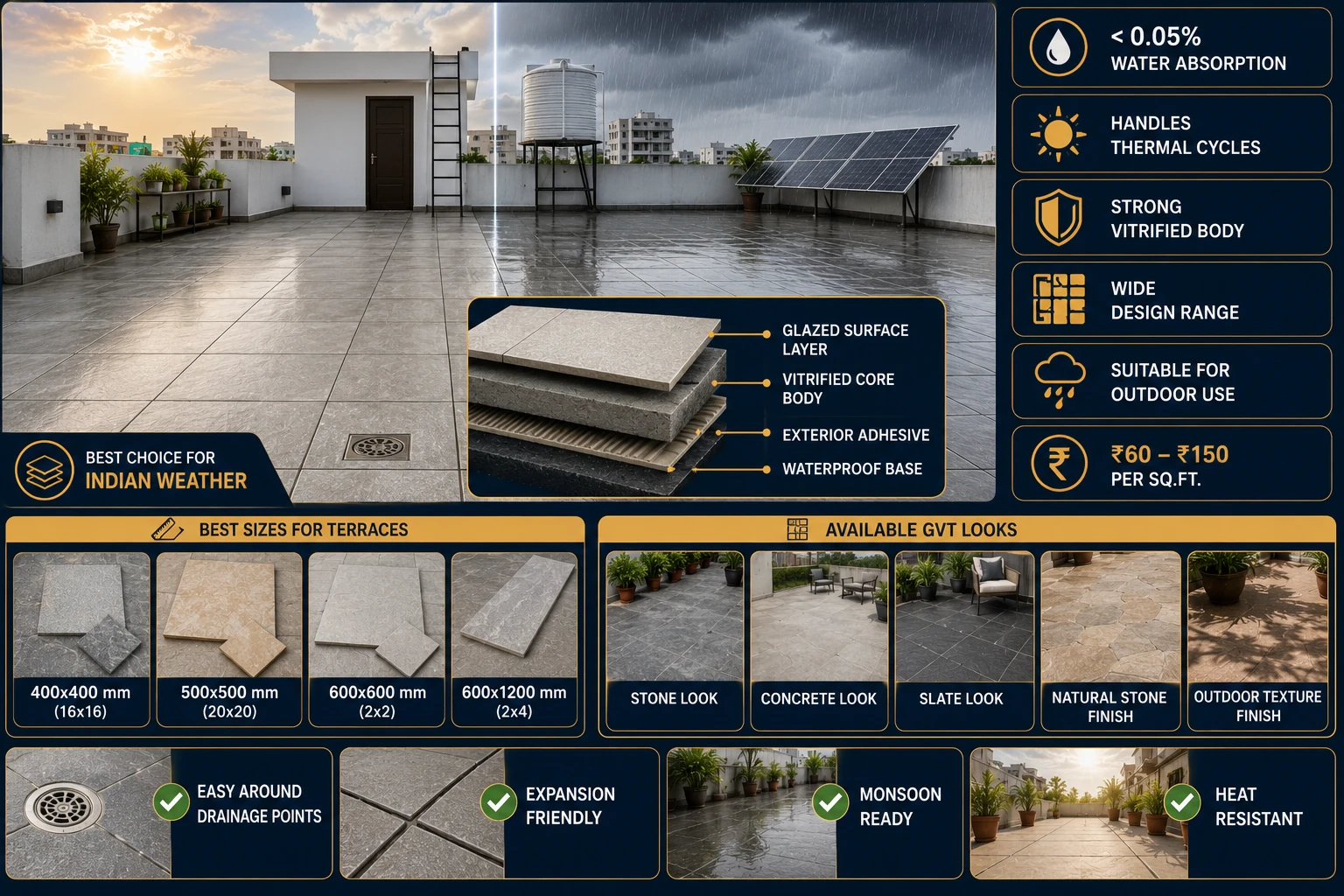
GVT tiles absorb less than 0.05 per cent water. That near-zero absorption makes them one of the strongest choices for terrace flooring. The glazed surface layer carries the design, while the vitrified body handles structural stress from thermal cycles.
GVT comes in sizes that work well outdoors: 400x400 mm (16x16), 500x500 mm (20x20), and 600x600 mm (2x2). For a standard residential terrace, the 16x16 and 20x20 sizes are the most practical. They are easier to cut around drainage points and give grout lines more flexibility to handle expansion. Larger sizes like 2x4 (600x1200 mm) can work on wide flat terraces but need careful slope planning.
Prices for GVT tiles range from approximately ₹60 to ₹150 per sq. ft., varying by brand and design. Always confirm with your dealer whether the specific GVT tile is rated for outdoor use, since some GVT designs are made for indoor floors only.
Full Body Vitrified Tiles
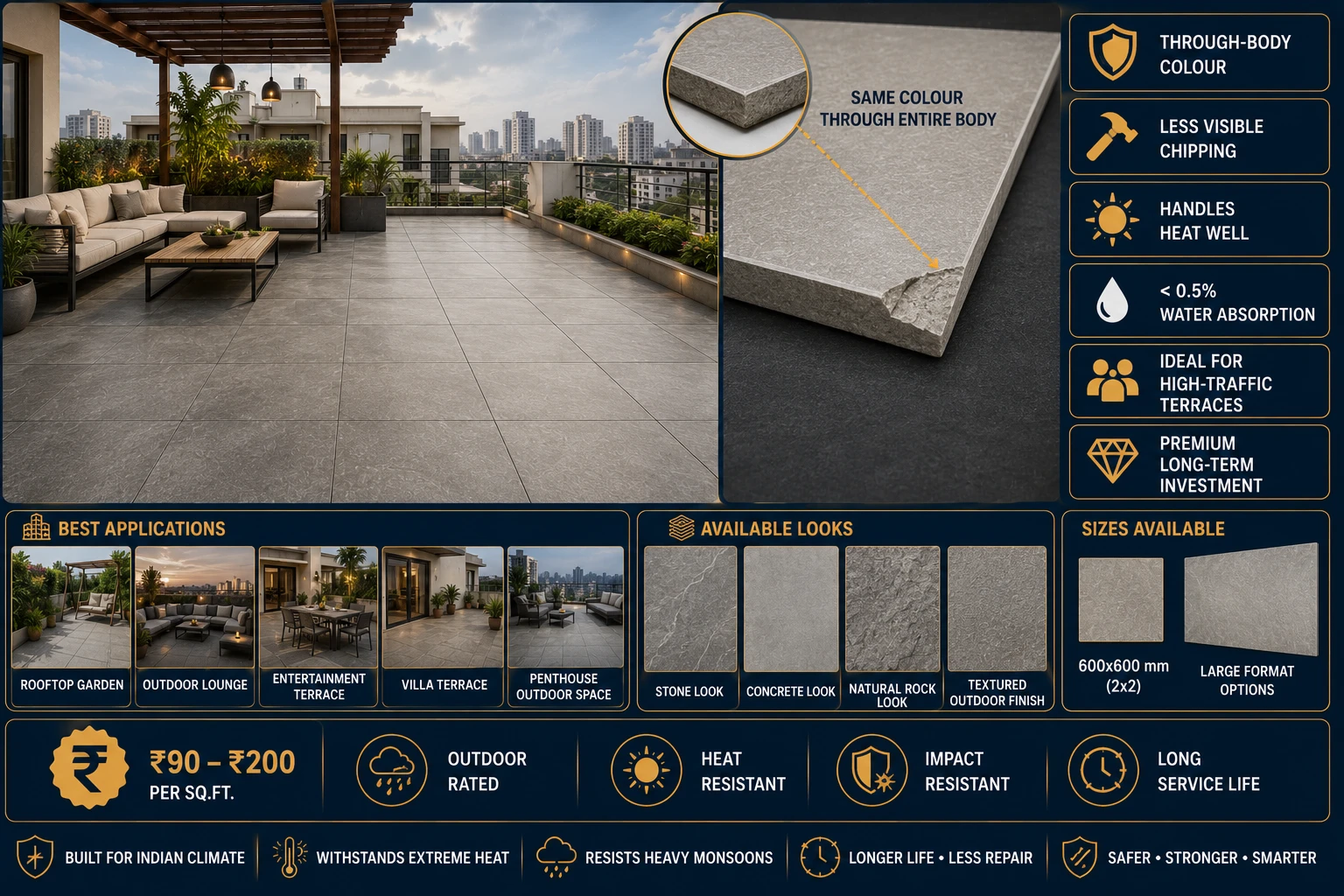
Full Body tiles have colour and pattern running through the entire body of the tile, not just the surface. This matters on a terrace because chipping from heavy objects, furniture legs, or dropped items does not show a different-coloured core underneath. The tile looks consistent even after years of outdoor use.
Full-body tiles handle heat well. Their dense composition keeps water absorption below 0.5 per cent, and they are rated for outdoor use. Available in sizes from 600x600 mm (2x2) up to larger slabs, they work on terraces that double as garden spaces or entertainment areas in 3BHK and 4BHK homes where the outdoor area is a genuine living space.
Price range is approximately ₹90 to ₹200 per sq. ft. They are a stronger investment than basic GVT for high-traffic terraces.
Porcelain Tiles
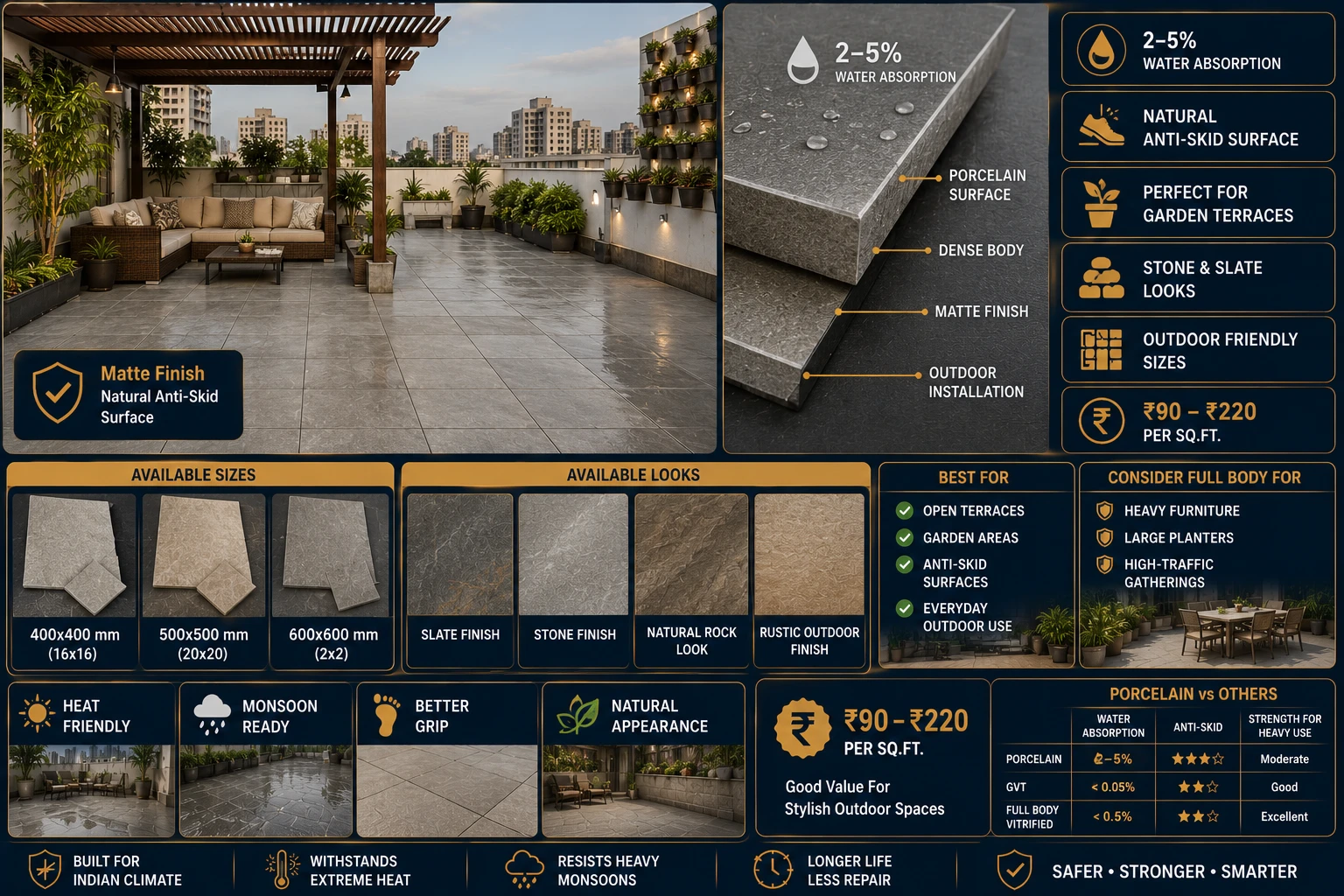
Porcelain tiles, the actual category (not vitrified tiles), absorb between 2 and 5 per cent water. That is higher than GVT and Full Body, but still significantly lower than ceramic. Porcelain comes mostly in matte finish in India, which gives it a natural anti-skid quality that suits terraces.
Porcelain is available in sizes including 400x400 mm (16x16), 500x500 mm (20x20), and 600x600 mm (2x2), all of which are good for terrace flooring. The stone-finish and slate-finish options in porcelain look well on open terraces and garden floors. Prices range from ₹90 to ₹220 per sq. ft. approximately.
One thing to note: porcelain body strength is moderate compared to vitrified. For heavy-use terraces with furniture, planters, or frequent gatherings, Full Body vitrified tiles hold up better over time.
Terrace Tile Category Comparison
| Category | Water Absorption | Outdoor Rated? | Price (per sq. ft.) |
| GVT | Less than 0.05% | Yes (confirm with dealer) | Rs. 60 to Rs. 150 |
| Full Body Vitrified | Less than 0.5% | Yes | Rs. 90 to Rs. 200 |
| Porcelain | 2% to 5% | Yes | Rs. 90 to Rs. 220 |
| PGVT | Less than 0.05% | No (slippery when wet) | Rs. 60 to Rs. 150 |
| Ceramic | 12% to 16% | No | Rs. 30 to Rs. 80 |
Prices are approximate 2026 market ranges. Confirm with your dealer.
Heat Resistance and Waterproofing: What the Numbers Mean
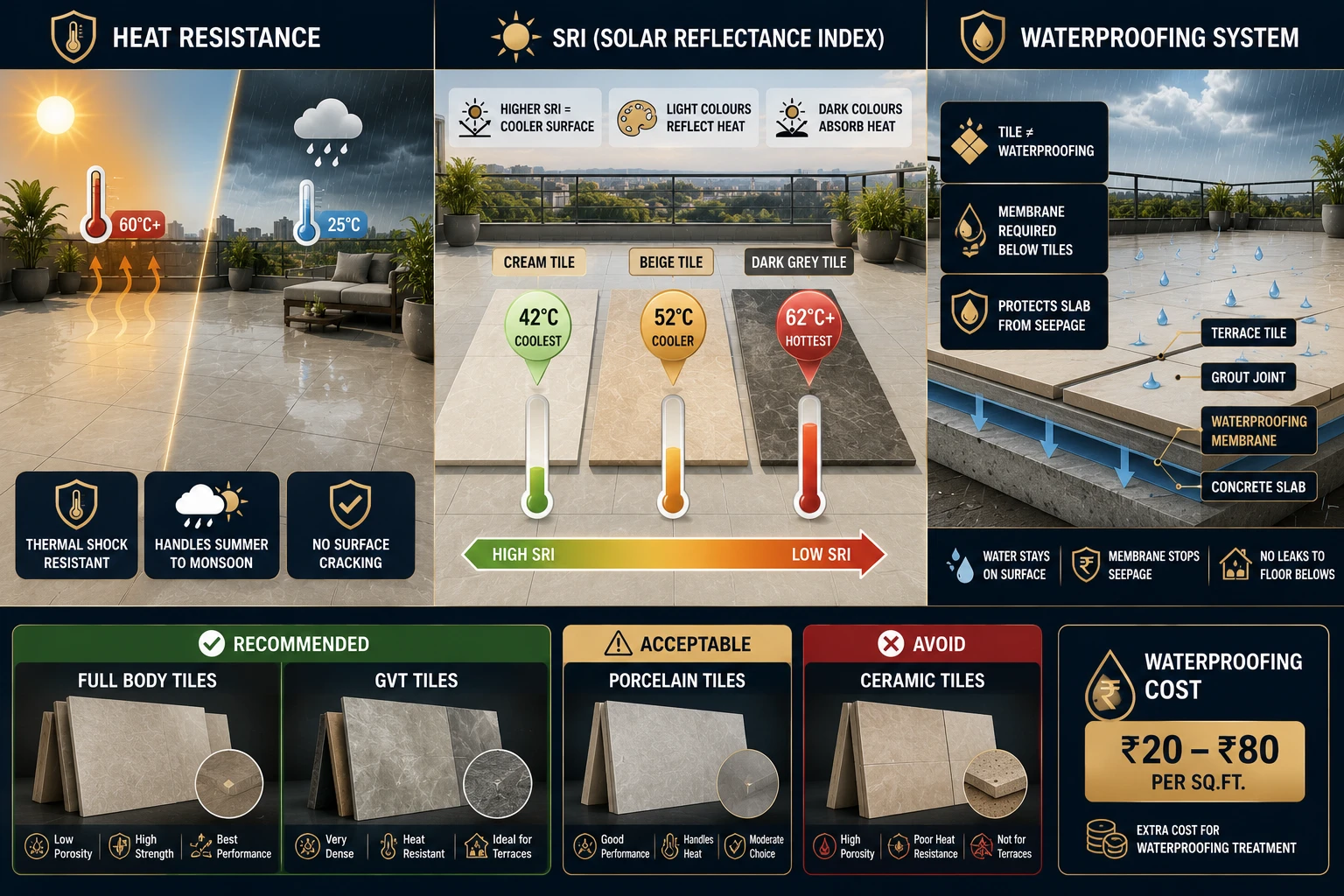
When tile manufacturers or dealers say a tile is heat resistant, they usually refer to two properties: the tile's ability to withstand thermal shock and its Solar Reflectance Index (SRI) value.
Thermal shock resistance means the tile does not crack when it moves rapidly from high heat (sun-baked surface in May) to sudden cool (first monsoon rains). GVT and Full Body vitrified tiles handle this well because of their dense, low-porosity body. Porcelain handles it reasonably. Ceramic does not, which is why it is not recommended for terraces.
SRI measures how much solar energy a tile reflects rather than absorbs. Tiles with higher SRI values stay cooler in direct sunlight. Light-coloured tiles in cream, beige, or off-white shades naturally have higher SRI values than dark tiles. If your terrace gets harsh afternoon sun and you want it usable during summer, choose lighter tile colours in GVT or Full Body categories. This keeps the surface temperature more manageable.
Waterproofing is separate from the tile category. Even a tile with near-zero water absorption needs a waterproofing membrane applied to the slab before tile installation. The tile itself stops water at the surface, but grout joints are still potential entry points. A waterproofing layer below the tile prevents any seepage from reaching the slab and dripping into the floor below. Budget approximately ₹20 to ₹80 per sq. ft. extra for waterproofing treatment, depending on the method and material used.
Recommended Tile Sizes for Terrace Flooring
Size choice affects how the terrace looks, how water drains, and how much cutting and wastage happen during installation.
Terrace Tile Size Guide
| Size (mm) | Common Name | Best For |
| 400x400 | 16x16 | Small terraces, balconies, and areas with drainage points |
| 500x500 | 20x20 | Medium terraces are practical for most residential use |
| 600x600 | 2x2 or 24x24 | Large open terraces, garden areas, flat rooftops |
| 600x1200 | 2x4 | Wide flat terraces with good slope planning |
The 300x600 mm (12x24) and 300x450 mm (12x18) sizes are wall-only and should never be used on terrace floors.
For most residential terraces in Indian apartments and independent homes, the 16x16 (400x400) and 20x20 (500x500) sizes are the most practical. Smaller tiles handle slope better, are easier to cut around drain pipes and corners, and stay more stable under heavy planters or furniture.
Larger tiles like 2x2 (600x600) suit wide, flat terraces where the slope is already well engineered, and drainage is not a concern. They give a cleaner look for terrace garden spaces in larger 4BHK homes. The 2x4 (600x1200) format is an option for very wide terraces but requires more precise slope planning and a more experienced tile-layer.
Best Finishes for Terrace Tiles.
The finish choice directly affects safety. A wrong finish on a terrace becomes dangerous the moment the first rain falls. These finishes work for outdoor terrace floors:
Matte
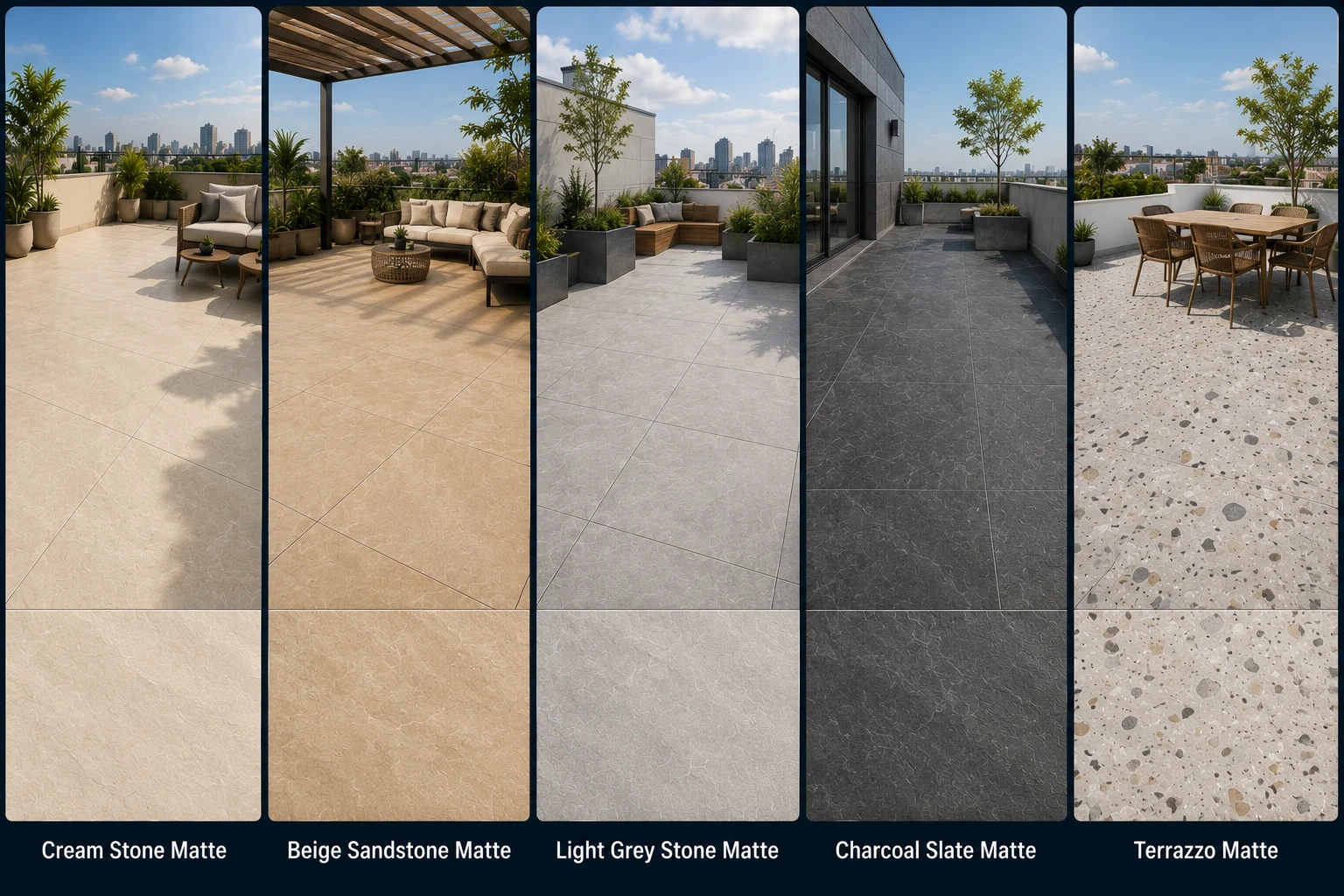
Matte finish is the most practical for terraces. It has good scratch resistance and natural anti-skid properties. Water does not cause it to become slippery the way glossy does. Most outdoor-rated GVT and Full Body tiles come in a matte finish. If you are unsure, matte is always the safe choice.
GHR (Glaze High Resistance)
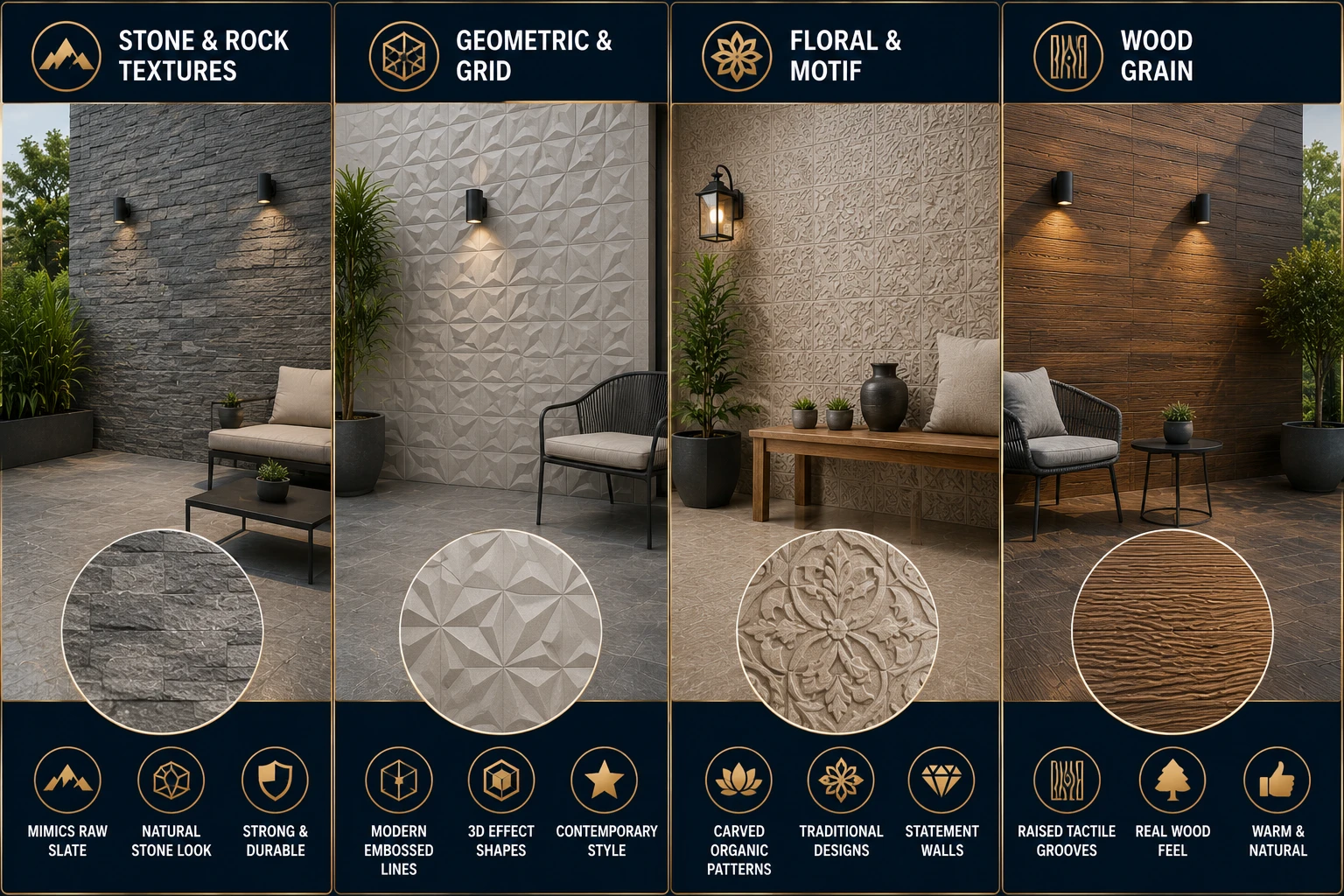
GHR finish has a stone-like texture with micro-grooves that give it excellent grip even when wet. It looks close to natural stone and suits terraces that function as garden spaces or outdoor dining areas. It handles heavy foot traffic and outdoor furniture well.
Rain Drops
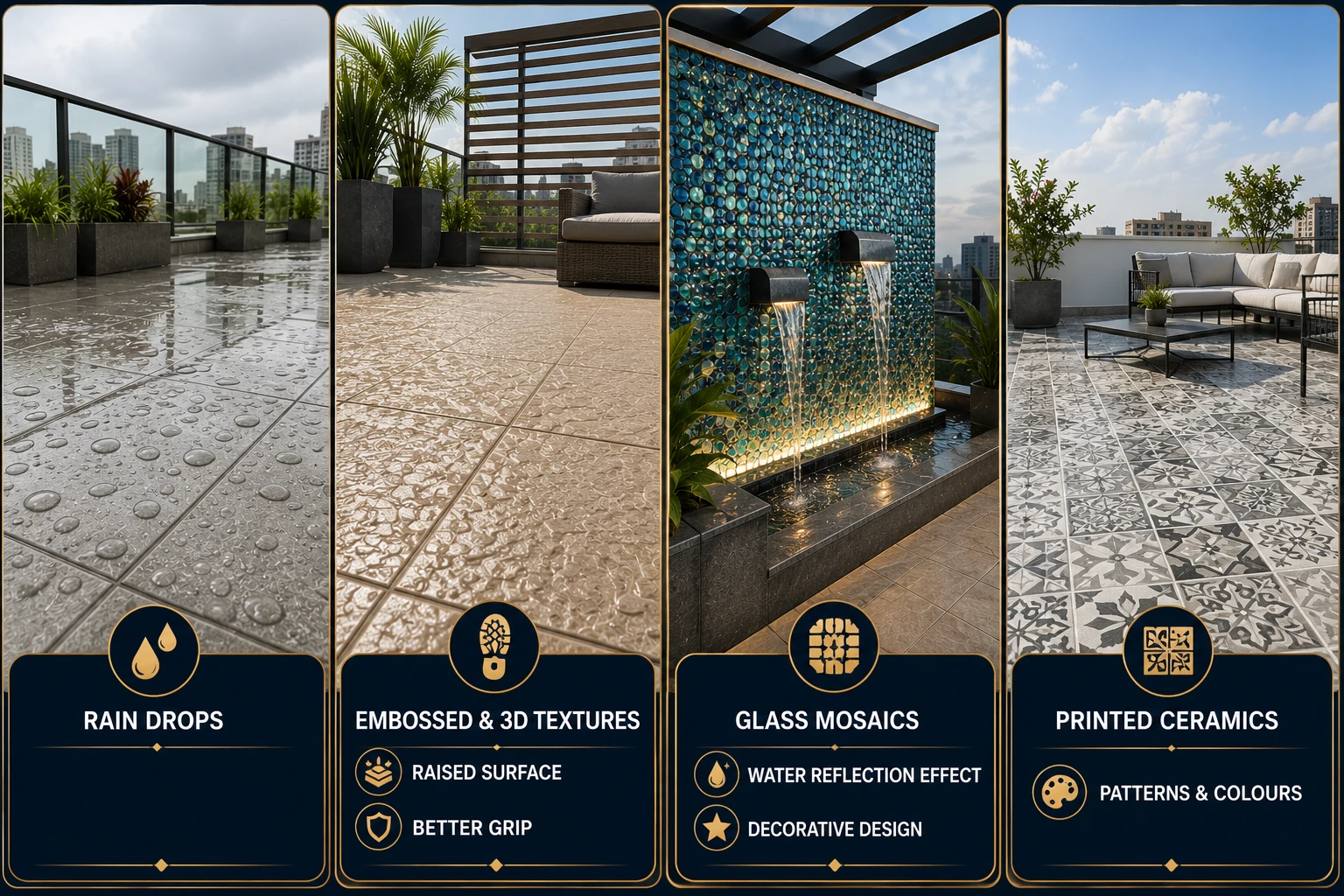
Rain Drops tiles have small raised glossy dots on a matte base. The texture creates an anti-skid grip, and the pattern looks good on outdoor floors. These work particularly well on terraces and balconies in coastal cities like Mumbai, Kochi, or Chennai, where rain is frequent.
Texture
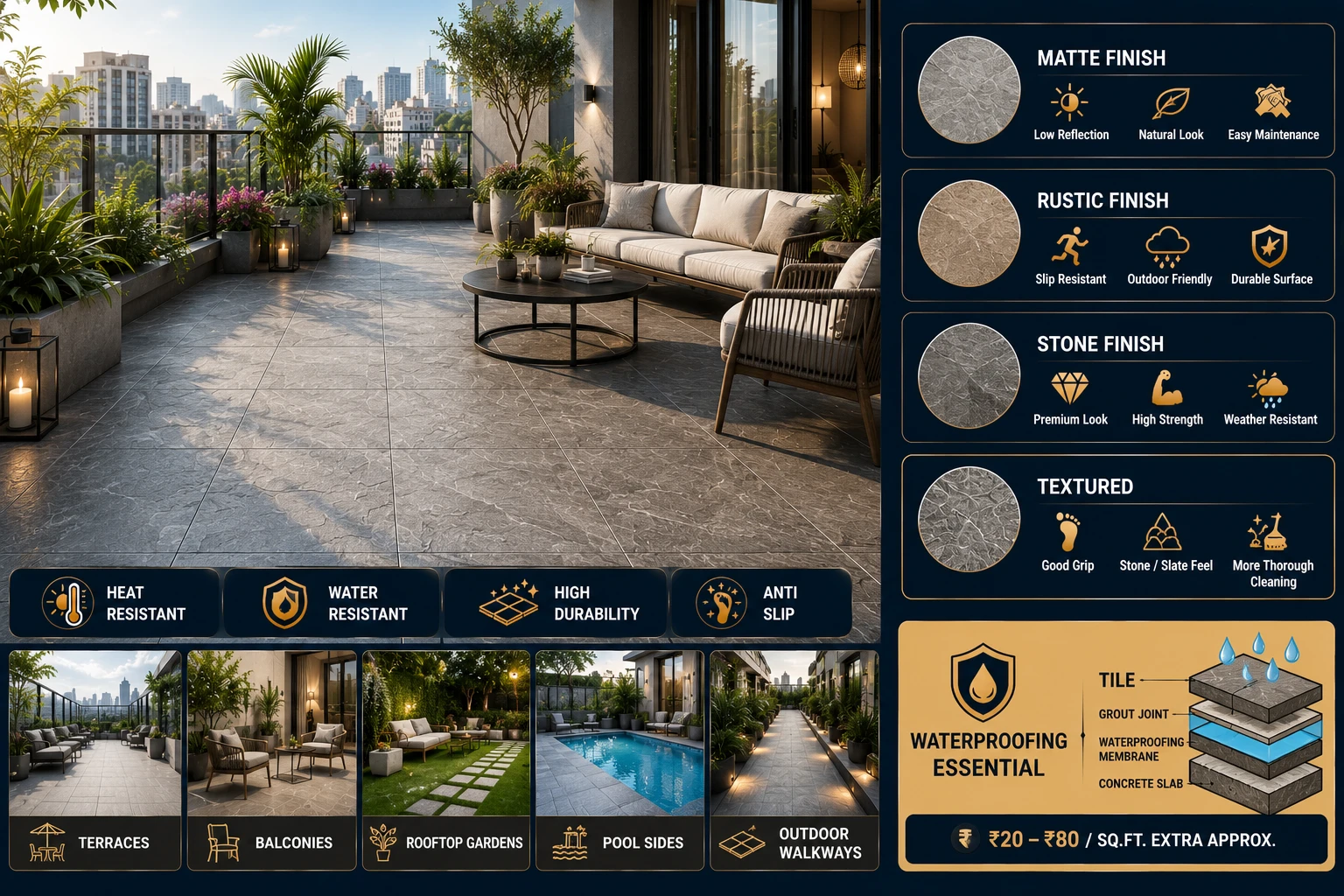
Textured tiles with 0.3 to 1mm depth give a fabric, slate, or stone feel. They provide good grip and work on terraces that see regular foot traffic. The texture means dirt and grime settle into the grooves, so they need more thorough cleaning compared to flat matte tiles.
Finishes to Avoid on Terraces
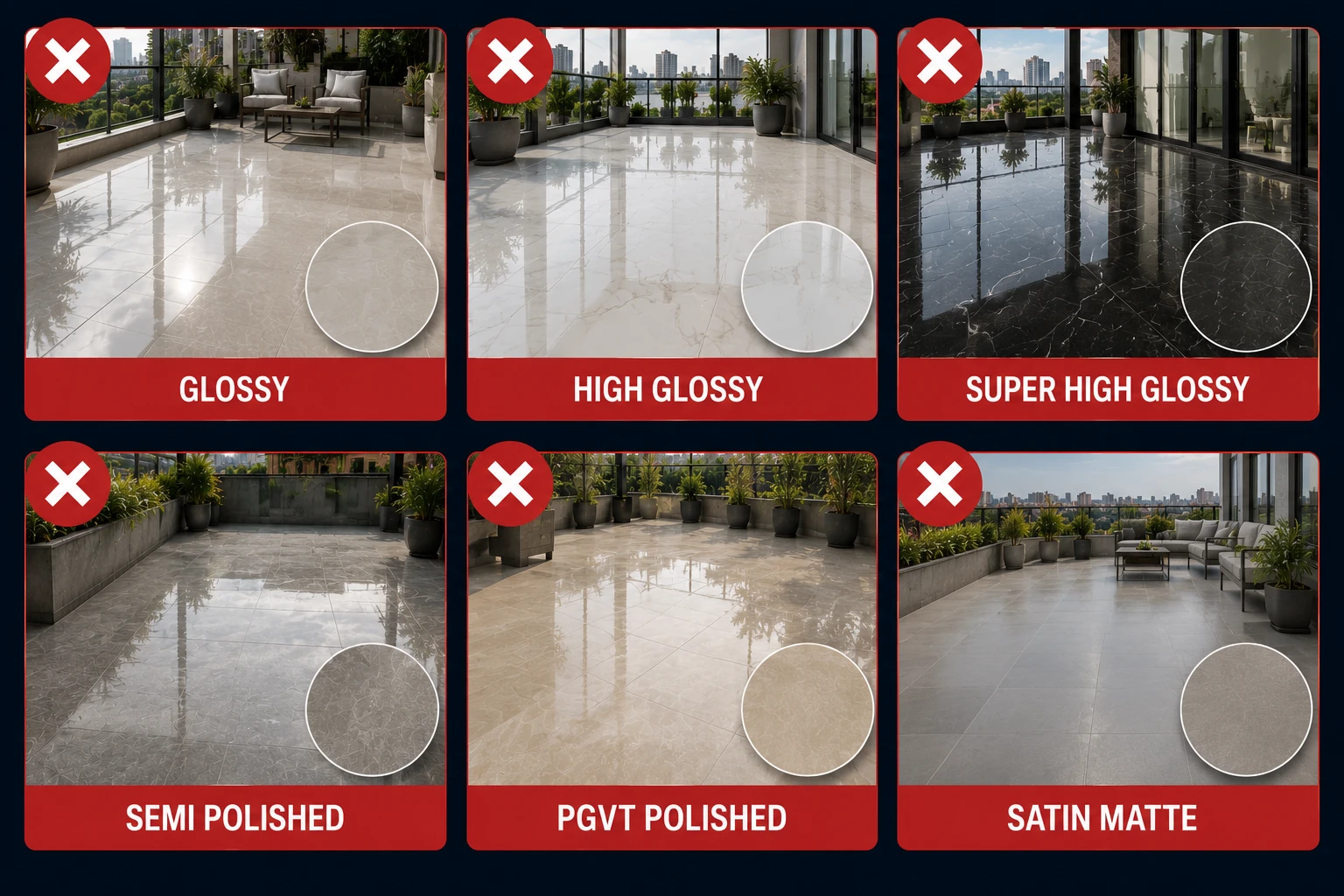
Glossy, High Glossy, Super High Glossy, Semi Polished, PGVT Polished, and Satin Matte finishes are all slippery when wet. None of these should be used on terrace floors. They belong on interior walls, not outdoors.
GVT vs Full Body vs Porcelain: Which Works Best on a Terrace?
| Factor | GVT | Full Body Vitrified | Porcelain |
| Water Absorption | Less than 0.05% | Less than 0.5% | 2% to 5% |
| Scratch Resistance | Good | Very Good (colour through body) | Moderate |
| Chipping Visibility | Shows a lighter core | Matches body colour | Shows a lighter core |
| Heat Handling | Excellent | Excellent | Good |
| Available Finishes | Matte, GHR, Texture, Rain Drops | Matte, GHR, Texture | Mostly Matte |
| Price Range | Rs. 60 to Rs. 150 | Rs. 90 to Rs. 200 | Rs. 90 to Rs. 220 |
| Best For | Standard residential terrace | High-use terrace, garden space | Budget terrace, stone-look |
Expert Tips Before Buying Terrace Tiles
1. Check the outdoor rating specifically
Ask your dealer whether the exact tile SKU is rated for outdoor use. Within the GVT category, some designs are manufactured for indoor use only. The outdoor rating comes from a combination of the tile body, finish, and glaze formulation. Do not assume all GVT tiles are outdoor-ready.
2. Check the slip rating
Look for R-rating data from the manufacturer. Tiles for wet outdoor areas should have an R10 or higher slip rating. R9 is the minimum for interior wet areas. Terraces exposed to rain need R10 minimum; sloped terraces near pools or water features should use R11 or R12.
3. Plan waterproofing before tile installation
Tiles go on top of a waterproofed surface. The sequence is: slab preparation, waterproofing membrane application and curing, then tile installation. Applying tiles directly on an unprotected slab and expecting the tiles to waterproof the terrace is a common and expensive mistake.
4. Match grout to outdoor conditions
Use epoxy grout or polymer-modified grout for terrace tiling. Standard cement grout absorbs water over time and can crack. Good grout joints are as important as a good tile category when keeping a terrace weatherproof long-term.
5. Plan slope and drainage before tiling
A terrace should slope at 1 to 2 per cent toward drain points so water does not pool. Confirm this with your contractor before tile installation begins. Once tiles are laid, correcting the slope is a full re-tiling job.
6. Buy 10 per cent extra
Factor in 8 to 10 per cent extra tiles for cuts, wastage, and future replacement. Terrace tiles from the same batch match in shade and finish. A tile from a new batch six months later may not match exactly. Keep spares stored dry.
7. Test a sample in real conditions
Take a sample tile and pour water on it. Check how slippery it becomes when wet, and whether water beads off or soaks in. This quick test is more reliable than a brochure specification for confirming real-world performance.
Common Mistakes When Selecting Terrace Tiles
Choosing ceramic tiles for the terrace floor. Ceramic absorbs too much water for outdoor floors. It is a wall material (with the sole exception of 300x300 mm in bathrooms). Using ceramic on a terrace leads to tile lifting within two to three monsoon seasons.
Using PGVT or a glossy finish outdoors. PGVT is beautiful in living rooms. On a terrace, after the first rain, it becomes a slip hazard. The polished surface has no grip. Never use polished or high-gloss tiles on any outdoor floor.
Skipping waterproofing to save money. Waterproofing adds ₹20 to ₹80 per sq. ft. to the project cost. Skipping it risks seepage damage to the room below, which costs ten times more to repair. It is not optional on a terrace.
Choosing dark tiles without thinking about heat. Dark grey and black tiles absorb more heat from direct sunlight. The surface temperature in peak summer can make the terrace uncomfortable to walk on without footwear. Light beige, cream, or off-white tiles stay cooler and are more comfortable on an open rooftop.
Buying the cheapest available option without checking water absorption data. The price per sq. ft. is not the right number to optimise for a terrace. The cost of tile replacement after failure, plus waterproofing repair, is always higher than the savings from buying an unsuitable tile.
Finding the Right Terrace Tiles
The best terrace tiles are not always the most expensive or the most decorative. They are the ones matched to your specific climate, terrace use, and structural conditions.
Before you finalise any tile, note down your terrace area in sq. ft., the drainage point locations, whether the terrace is sheltered or fully open, and how much foot traffic it gets. These details help narrow down the right size, category, and finish quickly.
You can explore a wide range of outdoor and heat-resistant terrace tile options on TilesFinders, where you can compare GVT, Full Body, and porcelain tile options by size, finish, and price range to find what fits your project and budget.
FAQs
GVT (Glazed Vitrified Tiles) and Full Body vitrified tiles are the best choices for Indian terraces. Both have water absorption below 0.5 per cent, handle thermal cycles from summer heat to monsoon rain, and come in matte and textured finishes that provide grip when wet. Confirm with your dealer that the specific tile is outdoor-rated.
Yes, but only the right types. GVT and full-body vitrified tiles work well on terraces. PGVT (Polished GVT) is not suitable because its polished surface becomes slippery when wet. Always check whether the vitrified tile subtype and finish are rated for outdoor wet areas before purchase.
Tiles alone do not waterproof a terrace. You need a waterproofing membrane applied and cured on the slab before tiling. The standard approach is: clean the slab, apply liquid membrane waterproofing (or bituminous membrane), allow it to cure for 24 to 72 hours, then lay tiles using polymer-modified adhesive and epoxy grout. This layered approach keeps water from reaching the slab.
Matte finish, GHR (Glaze High Resistance), Rain Drops, and Texture finishes all give good anti-skid properties. Matte is the most straightforward choice. GHR gives the best grip for terraces that see frequent rain or wet feet. Avoid glossy, high-glossy, PGVT polished, and satin matte finishes on any outdoor floor.
The 400x400 mm (16x16) and 500x500 mm (20x20) sizes work best for most residential terraces in India. They handle slope, drainage points, and cutting better than larger formats. The 600x600 mm (2x2) size works on wide, flat terraces with good drainage planning. Never use 300x600 mm or 300x450 mm tiles on floors since these are wall-only sizes.
Not much, but regular cleaning helps. Matte and textured finishes collect dust and monsoon grime faster than glossy indoor tiles. A mild detergent wash once a month and a more thorough scrub after the monsoon season keep them in good condition. Check grout lines annually and re-grout any cracks before the next monsoon season.
For a basic residential terrace, budget approximately ₹60 to ₹150 per sq. ft. for the tile (GVT range), ₹20 to ₹80 per sq. ft. for waterproofing, and ₹30 to ₹60 per sq. ft. for installation and adhesive. Total cost typically ranges from ₹110 to ₹290 per sq. ft., depending on tile category, waterproofing method, and local labour rates.

See our tile guides first
Set TilesFinders as a preferred source and our buying guides surface ahead of the rest for you.
Add as preferred sourceTakes one tap. Nothing to install.
What Readers Say
I was about to redo my parking area with the wrong tile size until I read this. The layout comparisons saved me from a costly mistake.
We reference TilesFinders guides while briefing clients on material selection. The size and pattern breakdowns are accurate and easy to explain visually.
On site, I get asked about grout spacing all the time. This article gave me a solid reference I now share with my team before every job.
Finally a guide that doesn't just push generic advice. The oil stain removal steps actually worked on our clubhouse driveway tiles.
I run a small construction firm and now send this link to clients directly when they ask about entrance tile sizing. Saves me an hour of explaining.
Good practical detail, though I wish there were more examples for compact apartment entrances specifically, not just villas.
My mother-in-law wanted marble, I wanted vitrified. This blog gave us the neutral comparison we needed to actually decide together.
Detailed without being overwhelming. I appreciated that it covered both cost and maintenance, not just the aesthetics.
Used the algae and hard water removal tips on our terrace tiles after the monsoon. Worked better than what our regular cleaner was doing.
As someone who sources tiles for multiple builder projects, I find these comparisons genuinely useful for vendor conversations, not just consumer content.
Recommended this to a client who kept second-guessing the entrance design. The small vs large layout section settled the debate instantly.
Straightforward and honest, no unnecessary jargon. Would like to see a similar breakdown for outdoor pool-deck tiles next.
We've bookmarked several TilesFinders guides for our design handbook. Reliable source when clients want data, not just opinions.
Two paths, one marketplace.
Get free quotes from verified suppliers.
Share your room, budget, and style. Suppliers in Morbi respond within hours.
Get Free QuotesList your business, reach real buyers.
Put your showroom in front of homeowners searching for tiles right now.
List Your BusinessMore Blogs
See all
Waterproof Terrace Tiles: Why Monsoon-Ready Tiles Matter
Build a monsoon-ready terrace with the right waterproofing, drainage, screed, adhesive, and tile ...
Read More
Best Tiles for Terrace in India: Heat-Resistant Top Picks
Find the best terrace tiles for Indian homes. Compare heat-resistant GVT, Full Body vitrified, an...
Read More
Top 10 Outdoor and Exterior Tiles Manufacturers in India
Beat 60°C summers and monsoons! Compare India's top 10 outdoor tile manufacturers for 2026. Find ...
Read More