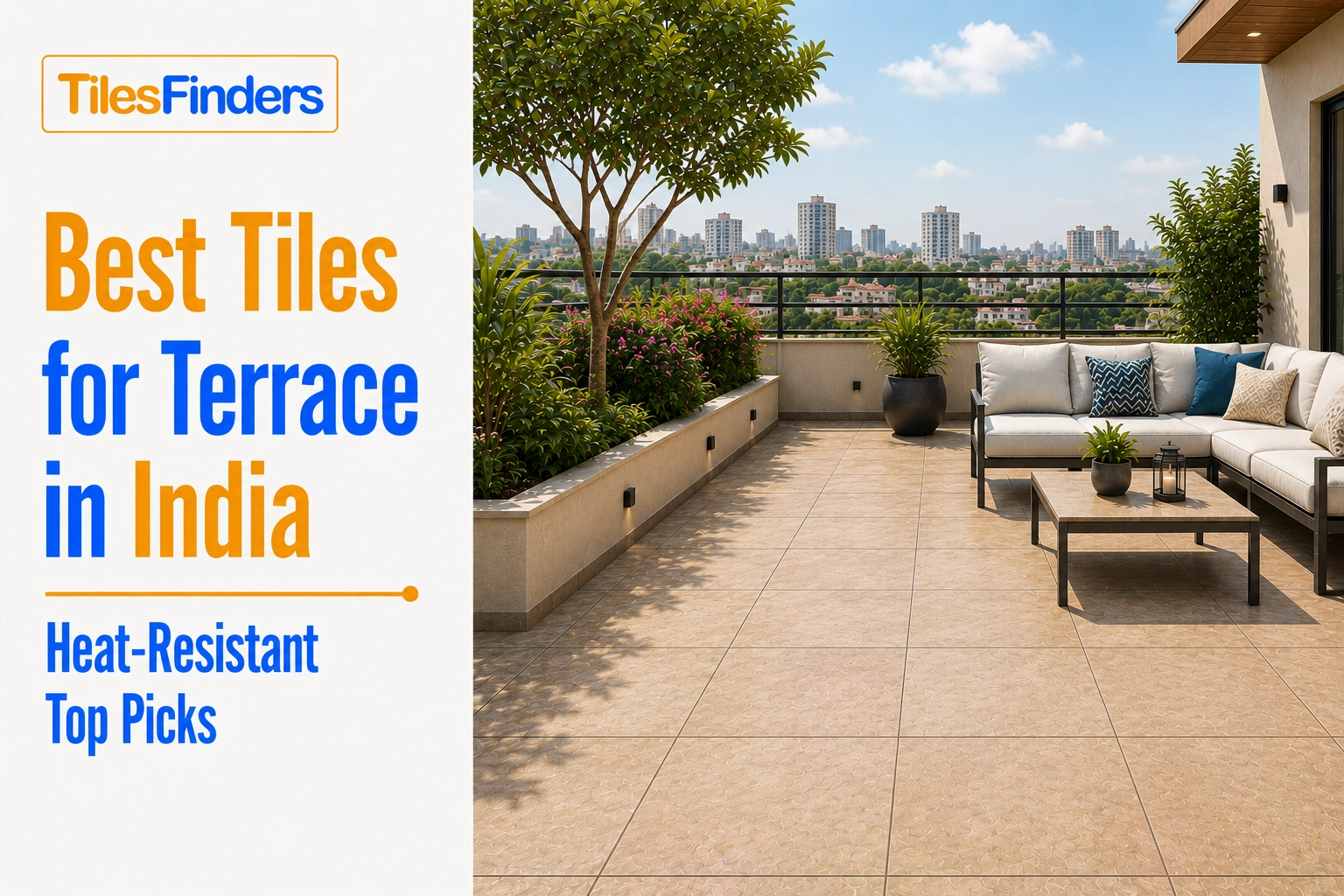
Best Tiles for Terrace in India: Heat-Resistant Top Picks
Find the best terrace tiles for Indian homes. Compare heat-resistant GVT, Full Body vitrified, and porcelain options by terrace type, climate, size, durability, and budget.
- Why Heat Resistance Is the Starting Point, Not the Finish Line
- The Three Properties a Terrace Tile Must Have in India
- Top Picks by Tile Category
- Matching Your Pick to Your Terrace Type
- Colour Choice and SRI: The Heat You Cannot See
- Size Guide for Different Terrace Layouts
- Price Ranges for 2026 and What They Buy
- Five Things to Confirm Before You Buy
- Tiles That Do Not Belong on a Terrace Floor
- Finding the Right Match for Your Terrace
Not every terrace is the same. A 300 sq. ft. open rooftop in Nagpur facing afternoon sun is a different problem from a semi-covered garden terrace in Bengaluru. A top-floor flat in a Mumbai high-rise loses more heat through the slab than a ground-floor independent home. The right tile for one situation is the wrong tile for another.
Most terrace tile guides in India give you a general category and move on. This guide goes further. It matches specific tile picks to specific terrace types and tells you what to look for based on your city, your terrace layout, and how you actually use the space.
If you're still comparing materials, finishes, and performance factors, explore our Terrace Tiles Guide for a detailed breakdown of heat-resistant and waterproof options for Indian terraces.
Heat resistance is the starting point. Water resistance, grip, and long-term outdoor performance complete the picture. All four are covered here, along with practical terrace tiles recommendations and updated prices for 2026.
For a deeper look at waterproofing systems, tile performance during monsoon conditions, and preventing terrace leakage, read our Waterproof Terrace Tiles Guide.
Why Heat Resistance Is the Starting Point, Not the Finish Line
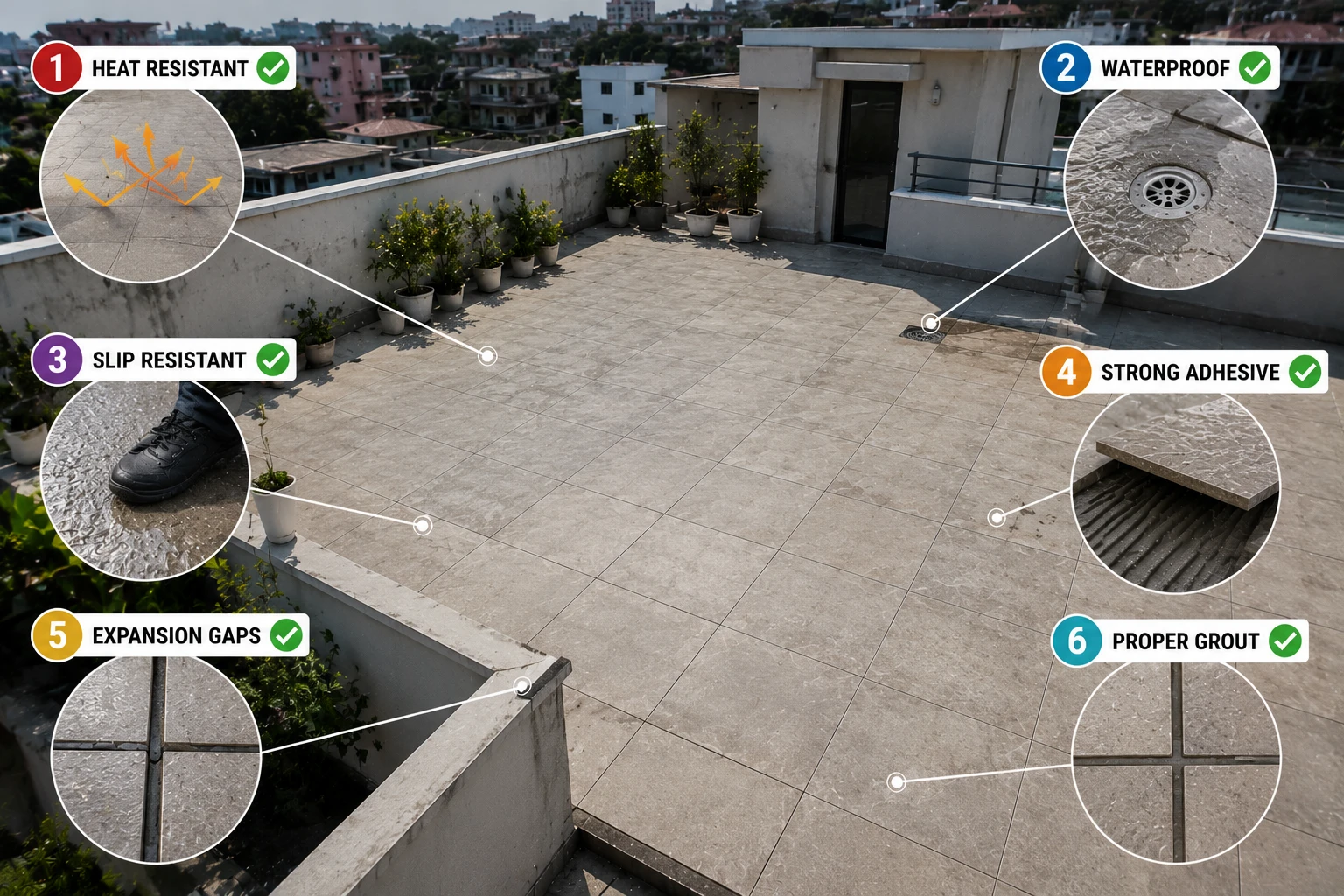
A tile that handles Indian summer heat but lifts in the first monsoon has not solved your problem. A tile that stays cool underfoot but cracks from thermal shock within two years has not solved it either. Heat resistance in a terrace tile means three things working together, not just one.
The first is low thermal absorption. Tiles that absorb solar heat stay hot for hours after the sun moves. A terrace with high-absorption tiles in Jaipur or Hyderabad can reach surface temperatures above 55 degrees Celsius in May. Light-coloured tiles with a higher Solar Reflectance Index (SRI) absorb less heat and stay cooler underfoot. This is colour science, not just aesthetics.
The second is thermal shock resistance. Indian terraces swing between peak summer heat and sudden monsoon downpours. A tile that cannot handle that rapid temperature drop will develop micro-cracks over two to three years, which then allow water to enter. Dense, low-porosity tile bodies, specifically vitrified categories and porcelain, handle this cycle far better than higher-absorption materials.
The third is UV stability. Tiles on an open terrace face direct ultraviolet radiation for eight or more hours a day through summer. A tile glaze that is not UV-stable will fade or chalk, changing both the surface colour and the finish texture over time. Always confirm UV resistance with your dealer for any tile going on an open terrace.
If you also want broader guidance on choosing outdoor tiles for Indian heat, monsoon exposure, anti-skid safety, and long-term climate durability, read our complete outdoor tiles.
The Three Properties a Terrace Tile Must Have in India
Before any tile makes the top picks list, it must satisfy three non-negotiable conditions for Indian outdoor use.
Water absorption below 0.5 per cent. This is the threshold for outdoor-rated performance in Indian monsoon conditions. Tiles with higher absorption swell during wet months and crack during dry months. GVT tiles sit below 0.05per centt. Full-body vitrified tiles sit below 0.5 per cent. Porcelain tiles absorb 2 to 5 per cent, which is manageable for covered terraces but higher than vitrified tiles for fully open rooftops.
Finish that gives grip when wet. Matte, GHR (Glaze High Resistance), Texture, and Rain Drops finishes all meet this requirement. Glossy, High Glossy, Satin Matte, and PGVT Polished finishes do not. No amount of SRI value or outdoor rating compensates for a slippery surface finish in the monsoon.
Confirmed outdoor rating. Not all tiles within a category carry the same outdoor approval. A GVT tile from one product line may be outdoor-rated, while a similar GVT from the same brand's indoor collection is not. Ask for the technical data sheet and confirm outdoor approval specifically, not just the category name.
Top Picks by Tile Category
Three categories make the top picks list for Indian terrace floors. Each has a different strength profile that suits different terrace situations.
Pick 1: GVT with GHR or Matte Finish
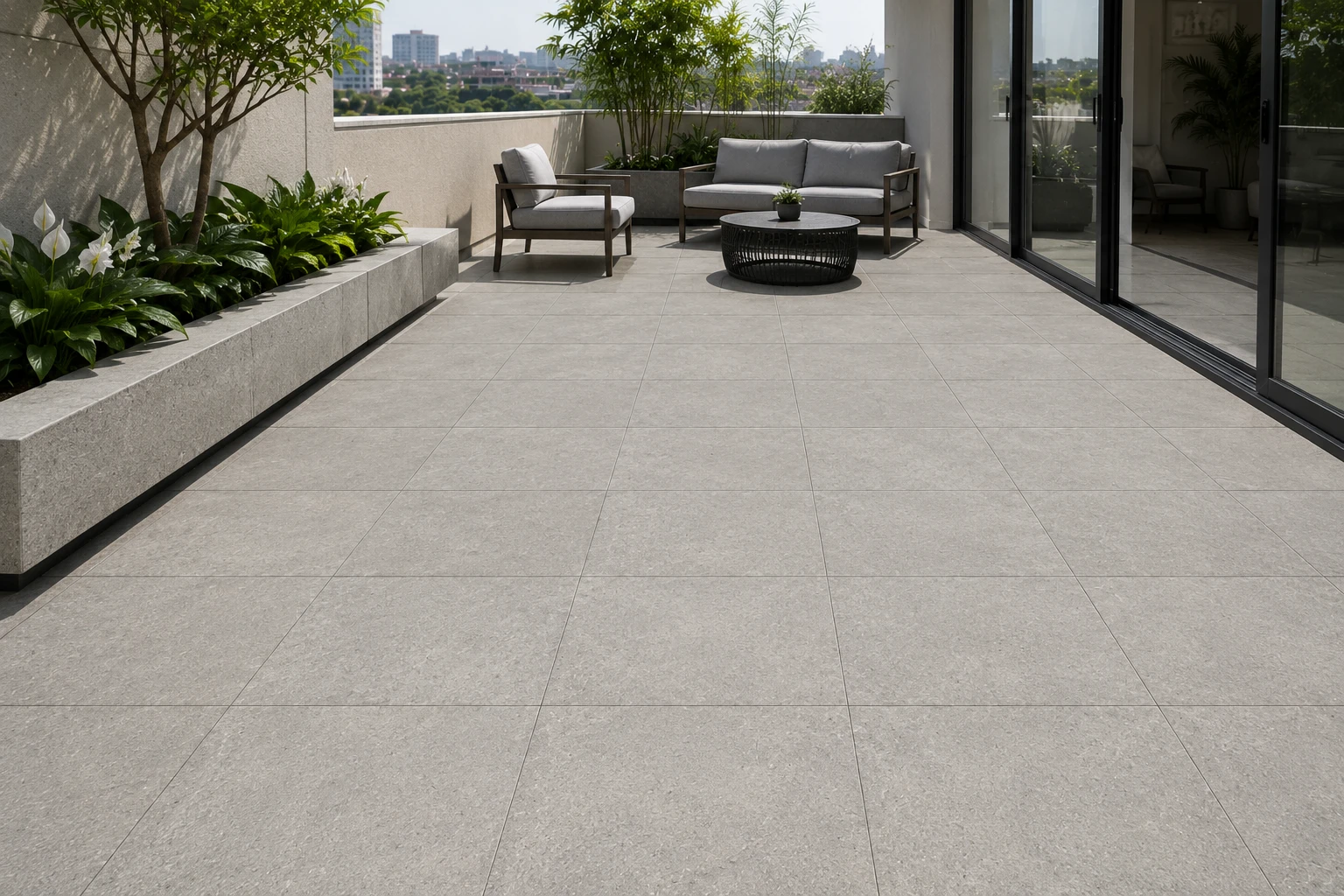
GVT (Glazed Vitrified Tiles) with GHR or matte finish is the strongest all-round pick for open Indian terraces. Water absorption sits below 0.05per centt, making it virtually impervious to moisture cycling. The glazed surface layer carries the design, the vitrified body handles structural stress, and the GHR finish givea s stone-like grip that holds even on a wet, sloped surface after heavy rain.
GVT tiles suited for terrace floors come in 400x400 mm (16x16), 500x500 mm (20x20), and 600x600 mm (2x2) sizes. The 16x16 and 20x20 sizes are the easiest to manage around drainage points, parapet corners, and irregular terrace shapes. The 2x2 format works well on larger flat terraces with clean, straight edges.
In Indian light-coloured shades such as sandstone, cream, beige, and light grey, outdoor GVT in GHR finish combines the lowest heat absorption with the best grip. Price range: approximately ₹60 to ₹150 per sq. ft., varying by brand and design. Always confirm the specific tile is outdoor-rated before ordering.
Pick 2: Full Body Vitrified Tiles
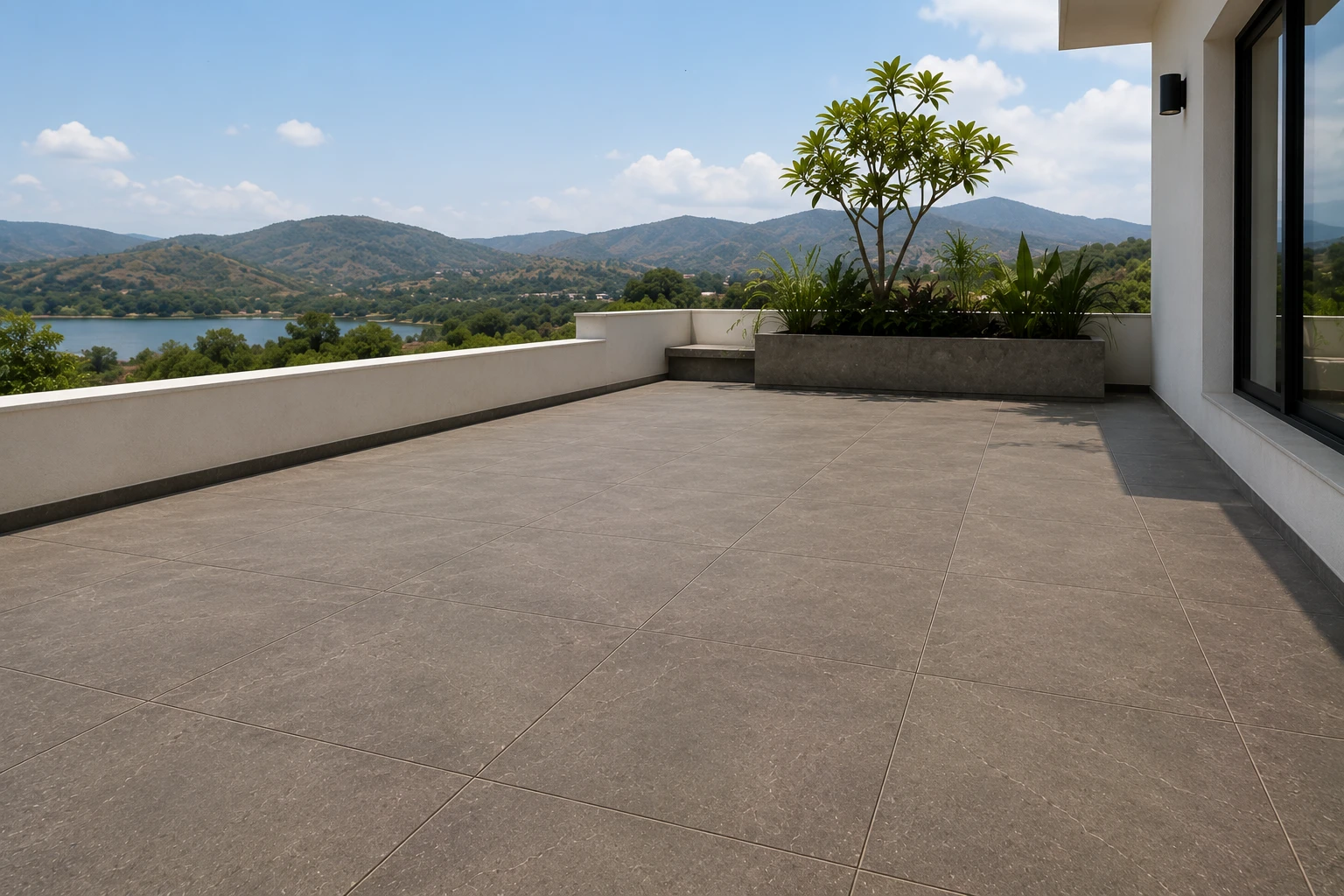
Full-body vitrified tiles suit terraces that see heavier use: families with children, large planters, outdoor dining furniture, or frequent social gatherings. Because the colour and pattern run through the full tile body, chips from dropped heavy objects or furniture legs do not expose a differently coloured core. The tile holds its appearance even under consistent wear.
Full Body tiles are fully outdoor-rated, absorb below 0.5 per cent water, and come in matte and GHR finishes for safe outdoor use. Available from 600x600 mm (2x2) upward. They suit wider, flat terrace areas rather than narrow terraces with many drainage cuts. Approximate price: ₹90 to ₹200 per sq. ft.
For a terrace garden in an independent bungalow in cities like Pune, Coimbatore, or Indore, where the outdoor space genuinely functions as a living area, full-body tiles earn their higher price point through a longer visible lifespan under real use.
Planning a landscaped outdoor space? Our Garden & Patio Tiles Guide covers style, durability, and tile selection for patios, garden walkways, and outdoor seating areas.
Pick 3: Porcelain Tiles (Covered or Semi-Covered Terraces)
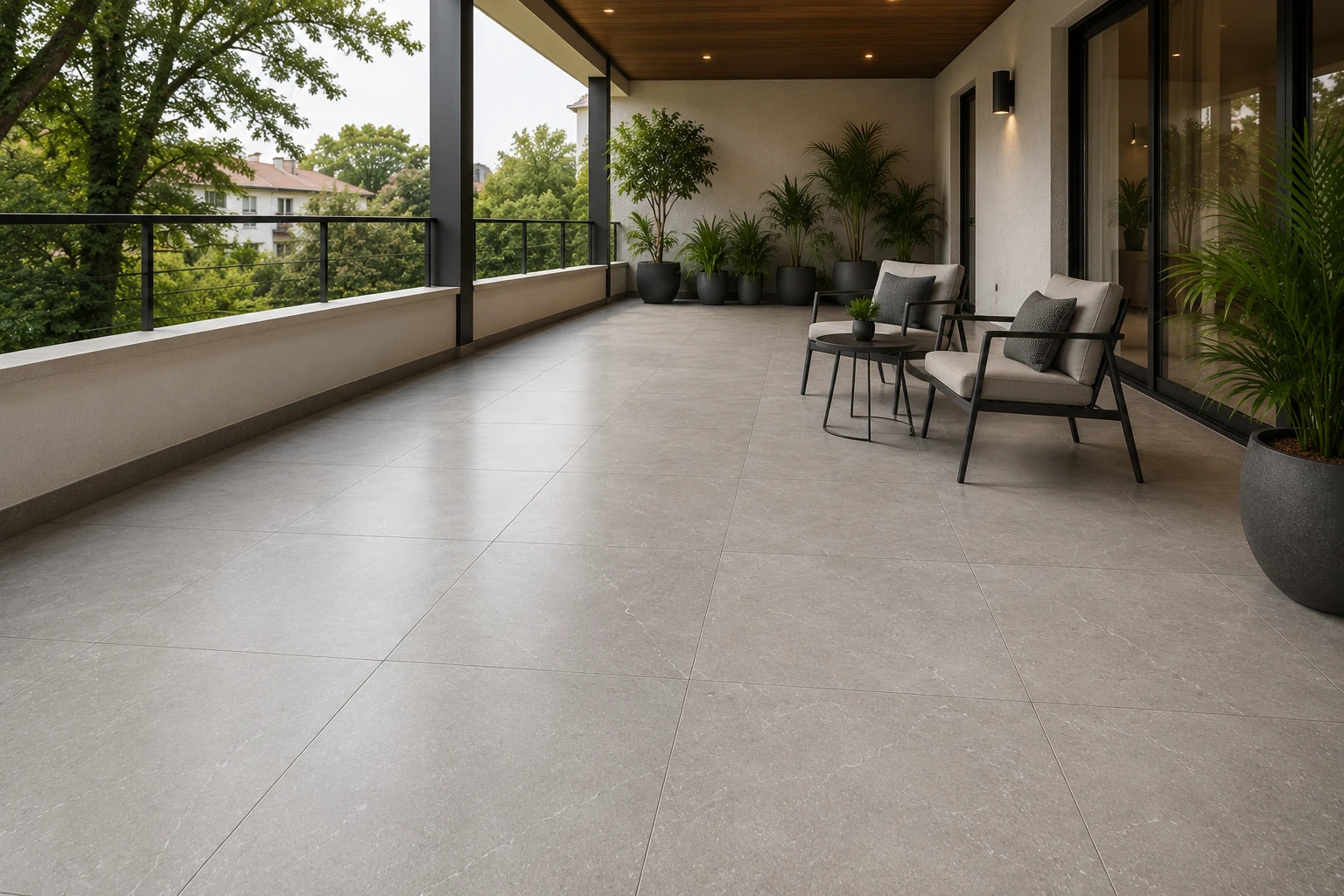
Porcelain tiles absorb 2 to 5 per cent water, which is higher than vitrified tiles but still well within outdoor use for covered or semi-covered terraces. They come predominantly in matte finish in India, which gives them a natural grip without any extra treatment. Their moderate body strength is adequate for residential use with normal foot traffic and standard outdoor furniture.
Porcelain suits terraces where a pergola, shade net, or roof overhang limits direct rain exposure. It also suits homeowners who want a stone or slate look at a price point that sits slightly under premium vitrified. Available in 400x400 mm (16x16), 500x500 mm (20x20), and 600x600 mm (2x2) for terrace floors. Approximate price: ₹90 to ₹220 per sq. ft.
For fully open terraces in cities with heavy monsoons, such as Mumbai, Kochi, or Mangaluru, Full Body or GVT handles the extended wet season more reliably than porcelain.
Matching Your Pick to Your Terrace Type
The table below matches tile picks to five real Indian terrace situations. Use it to narrow your choice before speaking to a dealer.
Tile Picks by Terrace Type
| Terrace Type | Recommended Pick | Key Reason |
| Top-floor flat in Mumbai, Chennai, Kochi (heavy rain, open slab) | GVT with GHR or Matte finish, 16x16 or 20x20 | Near-zero absorption handles extended monsoon. Small sizes manage roof slope and drainage cuts. |
| Open rooftop in Jaipur, Nagpur, Ahmedabad (peak summer heat) | GVT in light cream or sandstone, Matte or GHR finish, 20x20 | Light colour lowers SRI heat absorption. GHR grip stays safe after surprise rainfall. |
| Family garden terrace with planters and furniture (heavy daily use) | Full Body Vitrified, Matte or GHR finish, 2x2 | Body-through colour handles chips and edge wear. Strong enough for an outdoor furniture load. |
| Semi-covered patio or pergola terrace (moderate rainfall exposure) | Porcelain, Matte finish, 20x20 or 2x2 | Covered from direct rain. Matte porcelain provides a grip and a stone look at a comfortable price. |
| Budget terrace renovation (2BHK flat, small area) | GVT with Matte finish, 16x16, light tone | Entry-level price band with outdoor rating. Light colour reduces heat. Smaller format = less wastage. |
All picks above assume the tile is confirmed as outdoor-rated by the manufacturer or dealer. Category alone does not guarantee outdoor approval for every product in that range.
Colour Choice and SRI: The Heat You Cannot See
Colour is the most visible factor in terrace tile selection, but its effect on surface temperature is what matters most for an open Indian terrace. SRI (Solar Reflectance Index) measures how much solar energy a surface reflects versus absorbs. The higher the SRI, the cooler the surface stays in direct sunlight.
Light colours have naturally higher SRI values. A cream, off-white, sandstone, or light beige tile absorbs significantly less heat than a charcoal grey or dark brown tile of identical material and category. On a south-facing terrace in Hyderabad in May, the surface temperature difference between a light tile and a dark tile of the same GVT category can be 8 to 12 degrees Celsius.
This has a direct effect on the room below. A top-floor flat with a light-coloured terrace tile over a properly waterproofed slab will be measurably cooler than an identical flat with dark terrace tiles. For families relying on ceiling fans rather than air conditioning through summer, this difference is felt every day from March to June.
Colour Tone and Heat Effect Guide
| Colour Tone | SRI Effect | Best For |
| Cream, off-white, ivory | Highest SRI: reflects the most solar heat | Open terraces in hot-dry cities: Jaipur, Ahmedabad, Nagpur |
| Light beige, sandstone, warm grey | High SRI: good heat reflection | General open terraces across India, family rooftops |
| Medium grey, taupe, olive | Moderate SRI: some heat absorption | Covered or semi-covered terraces, cooler hill cities |
| Dark grey, charcoal, deep brown | Low SRI: high heat absorption | Avoid fully open terraces in Indian summer cities |
SRI values vary by glaze formulation within the same colour range. Ask your dealer for the specific tile's SRI data if precise performance matters for a top-floor flat or commercial terrace.
Size Guide for Different Terrace Layouts
Tile size affects how the terrace drains, how much cutting is needed during installation, and how the space looks once laid. Larger formats mean fewer grout joints and a cleaner look, but demand a flat, well-prepared surface and more precise slope planning.
Size Selection by Terrace Layout
| Size (mm) | Name | Best Terrace Layout |
| 400x400 | 16x16 | Small terraces, irregular shapes, multiple drain points, and budget projects |
| 500x500 | 20x20 | Medium terraces, most residential rooftops, balcony-terrace combinations |
| 600x600 | 2x2 | Wide flat terraces with clear drainage slope, bungalow gardens |
| 600x1200 | 2x4 | Large flat terraces with straight edges and a skilled installation team |
300x600 mm (12x24) and 300x450 mm (12x18) are wall-only sizes. Never use them on any terrace floor.
For terraces with multiple drainage points or curves around planters and AC units, the 16x16 or 20x20 format is far easier to work with. Cutting a 2x4 tile to fit around a drainage outlet takes time, costs more in wastage, and demands a more experienced tile installer.
Price Ranges for 2026 and What They Buy
Terrace tile budgets in India are split into three practical bands. The right band depends on the terrace area, city, and how long you plan to stay in the property.
2026 Terrace Tile Price Tiers
| Budget Band | Tile Category and Finish | What You Get |
| Rs. 60 to Rs. 90 per sq. ft. | GVT, Matte or Texture finish, 16x16 or 20x20 | Entry outdoor-rated vitrified. Good water absorption, basic SRI. Sufficient for a standard residential terrace. |
| Rs. 90 to Rs. 150 per sq. ft. | GVT (GHR finish) or Full Body Vitrified, Matte, 20x20 or 2x2 | Better grip, stronger body, GHR stone texture. Suitable for family terraces and high-use areas. |
| Rs. 150 to Rs. 220 per sq. ft. | Premium Full Body Vitrified or Porcelain, GHR or Matte, 2x2 or 2x4 | Higher chipping resistance, refined finishes, better SRI options. Good for bungalow gardens and long-term projects. |
Installation, polymer adhesive, epoxy grout, and waterproofing membrane add approximately Rs. 50 to Rs. 140 per sq. ft. beyond tile cost. Factor this into total project budgeting. All tile prices are approximate 2026 market ranges and vary by brand, region, and dealer.
Five Things to Confirm Before You Buy
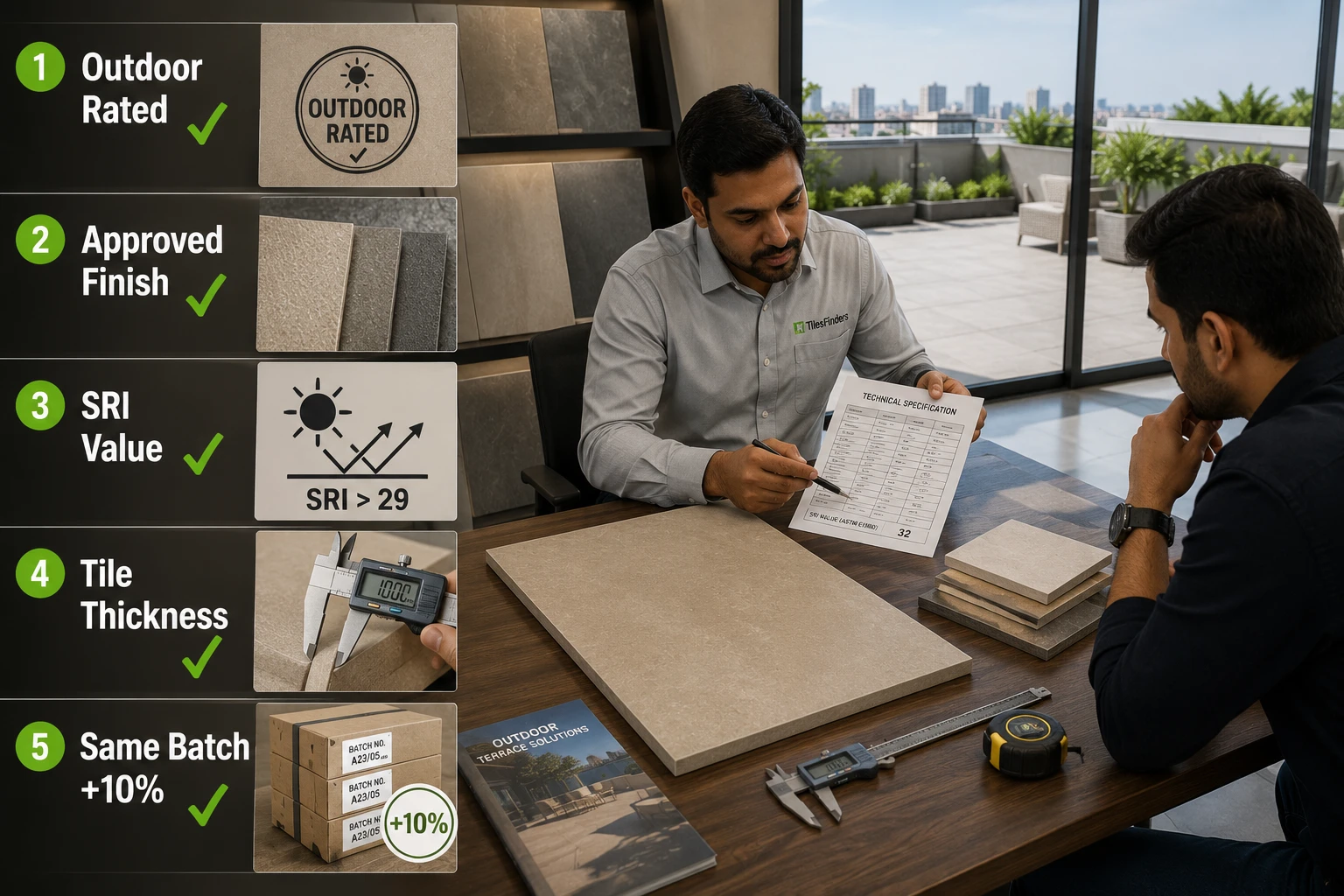
1. Outdoor rating on the specific SKU
Ask the dealer to confirm that the exact tile code is outdoor-rated. Within GVT and Full Body ranges, individual designs vary in outdoor approval. The category name is not sufficient confirmation.
2. Finish is one of the four approved outdoor finishes
Matte, GHR, Texture, and Rain Drops finishes are suitable for outdoor terrace floors. Glossy, High Glossy, Satin Matte, and PGVT Polished finishes are not. Confirm the finish before placing the order, not after delivery.
3. SRI data for open south-facing terraces
If your terrace faces south or west and is fully exposed to afternoon sun in a hot-dry city, ask for the SRI value of the tile. Anything above 29 is considered reflective. Light-coloured GVT and Full Body tiles in cream or sandstone typically achieve SRI values above 30.
4. Tile thickness for the expected load
Standard residential terrace tiles should be at least 9 to 10 mm thick. Terraces with heavy planters, outdoor furniture, or frequent gatherings benefit from 10 mm or above. Confirm tile thickness with your dealer and match it to the expected use.
5. Ten per cent extra from the same batch
Buy 8 to 10 per cent more than your measured area. Terrace installations need cuts around drains, edges, and parapet corners. Tiles from the same batch match in shade and finish. A tile from a different production batch six months later may not match. Store spares dry.
Tiles That Do Not Belong on a Terrace Floor
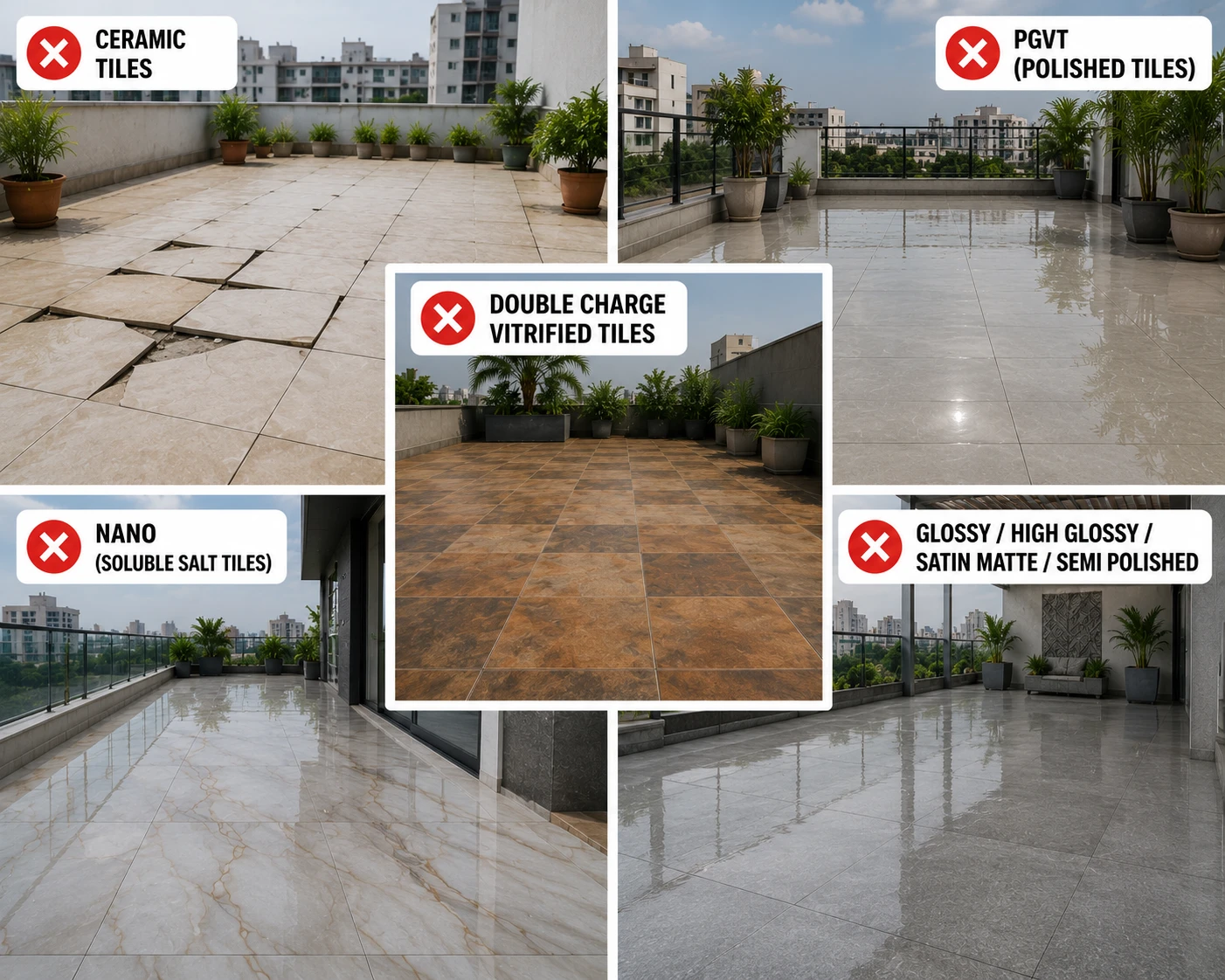
Ceramic tiles absorb 12 to 16 per cent water. They are wall tiles. Using them on a terrace floor leads to lifting and grout failure within two monsoon seasons. No exception applies to outdoor terrace floors.
PGVT (Polished Glazed Vitrified Tiles) have near-zero water absorption but a polished surface that becomes slippery when wet. No polished tile belongs on any outdoor terrace floor, regardless of the category or SRI value.
Double Charge vitrified tiles are not suitable for wet or outdoor areas. They are excellent for high-traffic indoor floors such as showrooms and lobbies, but the wet outdoor environment is outside their use rating.
Nano (Soluble Salt) tiles are only available in a polished, glossy finish. They are not outdoor-rated and should not be used on any terrace floor.
Any tile in Glossy, High Glossy, Super High Glossy, Satin Matte, or Semi Polished finish is a slip hazard outdoors. The finish disqualifies the tile regardless of the category.
Finding the Right Match for Your Terrace
The best terrace tile for your home is the one that fits your specific terrace: its size, its exposure to sun and rain, how much weight it carries, and how much you expect to spend over its lifetime.
GVT in GHR or matte finish covers most open Indian terraces reliably. Full Body vitrified is the right step up for heavy-use garden spaces. Porcelain gives a practical answer for covered patios. Light colours keep the surface cooler in summer cities. Small formats handle irregular terrace shapes with less wastage.
You can compare GVT, Full Body vitrified, and porcelain terrace tile options by size, finish, colour tone, and price range on TilesFinders, where Indian homeowners and contractors find verified outdoor-rated tile choices before making their purchase decision.
FAQs
GVT (Glazed Vitrified Tiles) in GHR or matte finish is the strongest pick for most open Indian terraces in 2026. It has near-zero water absorption, handles monsoon and summer heat cycles, and comes in outdoor-rated matte and GHR finishes in sizes that suit terrace floors. For heavy-use garden terraces, Full Body vitrified is the stronger choice. For covered or semi-covered terraces, porcelain in matte finish is a practical option at a similar price point.
Light colours with high SRI values stay coolest. Cream, off-white, ivory, light beige, and sandstone tones absorb less solar heat than grey, brown, or dark finishes. On a fully open south-facing terrace in cities like Nagpur or Ahmedabad, the surface temperature difference between a light tile and a dark tile of identical category can be 8 to 12 degrees Celsius in peak summer.
For top-floor flats, GVT in light cream or sandstone with GHR or matte finish in 16x16 (400x400 mm), or 20x20 (500x500 mm) is the strongest choice. Light colour reduces heat transfer to the slab below. Small formats manage roof slope and drainage cuts better. Near-zero water absorption keeps the terrace leak-free through extended monsoon seasons in cities like Mumbai or Chennai.
Yes, but with context. Porcelain in matte finish works well for covered or semi-covered terraces where direct monsoon exposure is limited. Its water absorption (2 to 5 per cent) is higher than vitrified categories, but is still outdoor-rated for moderate conditions. For fully open terraces in high-rainfall cities, GVT or Full Body vitrified handles the extended wet season more reliably.
The 20x20 (500x500 mm) format is the most practical for most Indian residential terraces. It handles slope, drainage cuts, and irregular edges well. The 16x16 (400x400 mm) is easier still for small or irregular terraces. Larger formats like 2x4 (600x1200 mm) look clean on wide flat terraces but need a more experienced installation team and precise slope planning.
For a standard residential terrace, the tile itself costs approximately ₹60 to ₹220 per sq. ft., depending on category and finish. Add ₹30 to ₹60 per sq. ft. for installation and polymer adhesive, ₹10 to ₹20 per sq. ft. for epoxy grout, and ₹20 to ₹80 per sq. ft. for waterproofing membrane. Total project cost typically ranges from ₹120 to ₹380 per sq. ft. All figures are approximate 2026 market ranges and vary by city, contractor, and brand.
Ask the dealer for the tile's technical data sheet. Look for water absorption below 0.5 per cent, outdoor use confirmation in the product specification, and a slip resistance rating of R10 or higher for terrace floors. Also, confirm the finish is one of the outdoor-safe options: matte, GHR, Texture, or Rain Drops. Any polished or glossy finish disqualifies the tile from outdoor terrace use, regardless of other specifications.

See our tile guides first
Set TilesFinders as a preferred source and our buying guides surface ahead of the rest for you.
Add as preferred sourceTakes one tap. Nothing to install.
What Readers Say
I was about to redo my parking area with the wrong tile size until I read this. The layout comparisons saved me from a costly mistake.
We reference TilesFinders guides while briefing clients on material selection. The size and pattern breakdowns are accurate and easy to explain visually.
On site, I get asked about grout spacing all the time. This article gave me a solid reference I now share with my team before every job.
Finally a guide that doesn't just push generic advice. The oil stain removal steps actually worked on our clubhouse driveway tiles.
I run a small construction firm and now send this link to clients directly when they ask about entrance tile sizing. Saves me an hour of explaining.
Good practical detail, though I wish there were more examples for compact apartment entrances specifically, not just villas.
My mother-in-law wanted marble, I wanted vitrified. This blog gave us the neutral comparison we needed to actually decide together.
Detailed without being overwhelming. I appreciated that it covered both cost and maintenance, not just the aesthetics.
Used the algae and hard water removal tips on our terrace tiles after the monsoon. Worked better than what our regular cleaner was doing.
As someone who sources tiles for multiple builder projects, I find these comparisons genuinely useful for vendor conversations, not just consumer content.
Recommended this to a client who kept second-guessing the entrance design. The small vs large layout section settled the debate instantly.
Straightforward and honest, no unnecessary jargon. Would like to see a similar breakdown for outdoor pool-deck tiles next.
We've bookmarked several TilesFinders guides for our design handbook. Reliable source when clients want data, not just opinions.
Two paths, one marketplace.
Get free quotes from verified suppliers.
Share your room, budget, and style. Suppliers in Morbi respond within hours.
Get Free QuotesList your business, reach real buyers.
Put your showroom in front of homeowners searching for tiles right now.
List Your Business