Wash Area vs Bathroom Tiles: Key Differences in Water Resistance and Slip Safety Ratings
Compare wash area and bathroom tiles with respect to water exposure, anti-skid R-ratings, grout selection, tile formats, and durability to choose the safest and most practical flooring for each space.
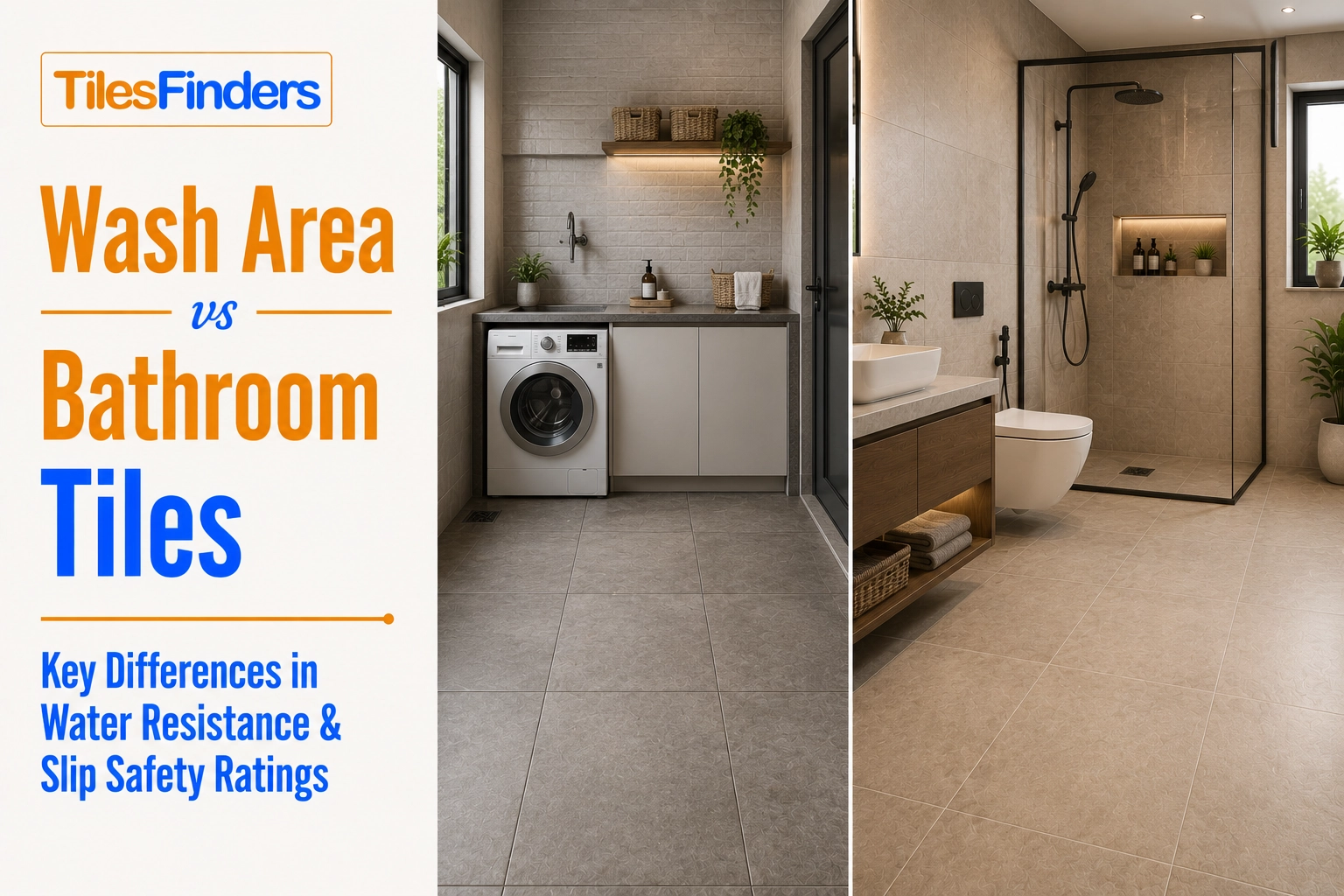
Bathrooms and wash areas require different tile specifications because wash areas experience longer standing water and greater detergent exposure. Choose R10 for standard bathrooms, R11 for wash areas, and prioritise epoxy grout and proper drainage for long-term safety and durability.
Wash areas and bathrooms are both wet rooms, and it is tempting to specify them identically. This is usually a mistake. A wash area experiences sustained standing water and concentrated detergent exposure that most bathrooms do not, which means the correct anti-skid rating, grout type, and even tile format genuinely differ between the two rooms. This guide puts the two side by side on exactly the factors that matter.
Water Exposure Compared
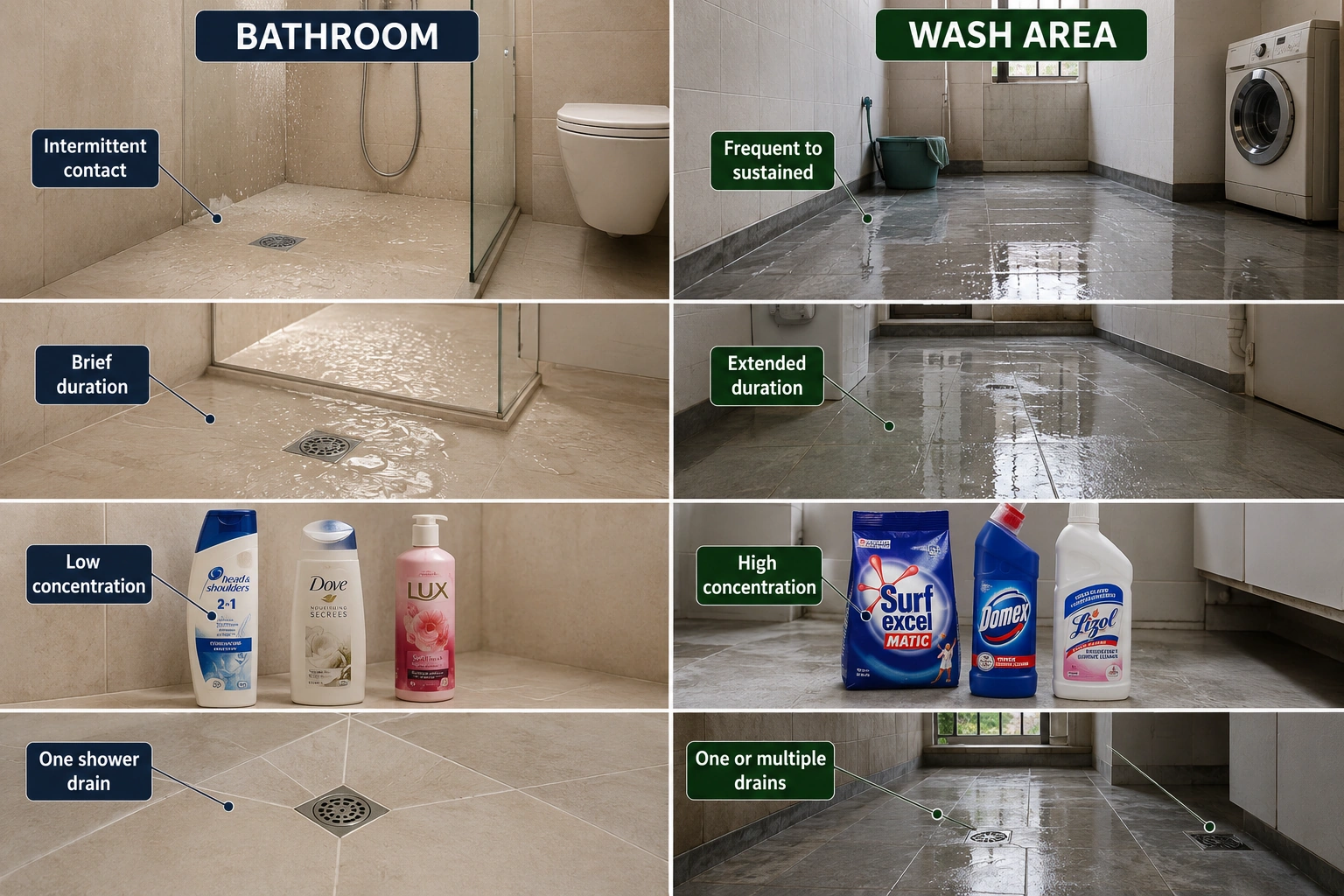
| Factor | Bathroom | Wash Area |
| Typical water contact pattern | Intermittent, concentrated mainly during showering or bathing | Frequent to sustained, standing water is common during and after wash cycles |
| Standing water duration | Usually brief, drains quickly from a single shower zone | Can persist for extended periods across a larger floor area during washing |
| Chemical exposure | Soap and shampoo, generally low concentration | Detergent, bleach, and cleaning chemicals are often at higher concentrations and more frequently |
| Drainage points | Typically, one shower drain | Often, one central drain serves a larger sloped area or multiple drainage points. |
From The Marketplace
Popular tiles right now
-b5488a42-68e1-4034-b6a6-b504f0e161bc.jpg)
-a7bc331f-ba60-41ce-834f-5a1d0c7ac3b1.jpg)
-c4e329c6-f402-4c18-8fb2-8f9b0d36419b.jpg)

Slip Safety Ratings Compared
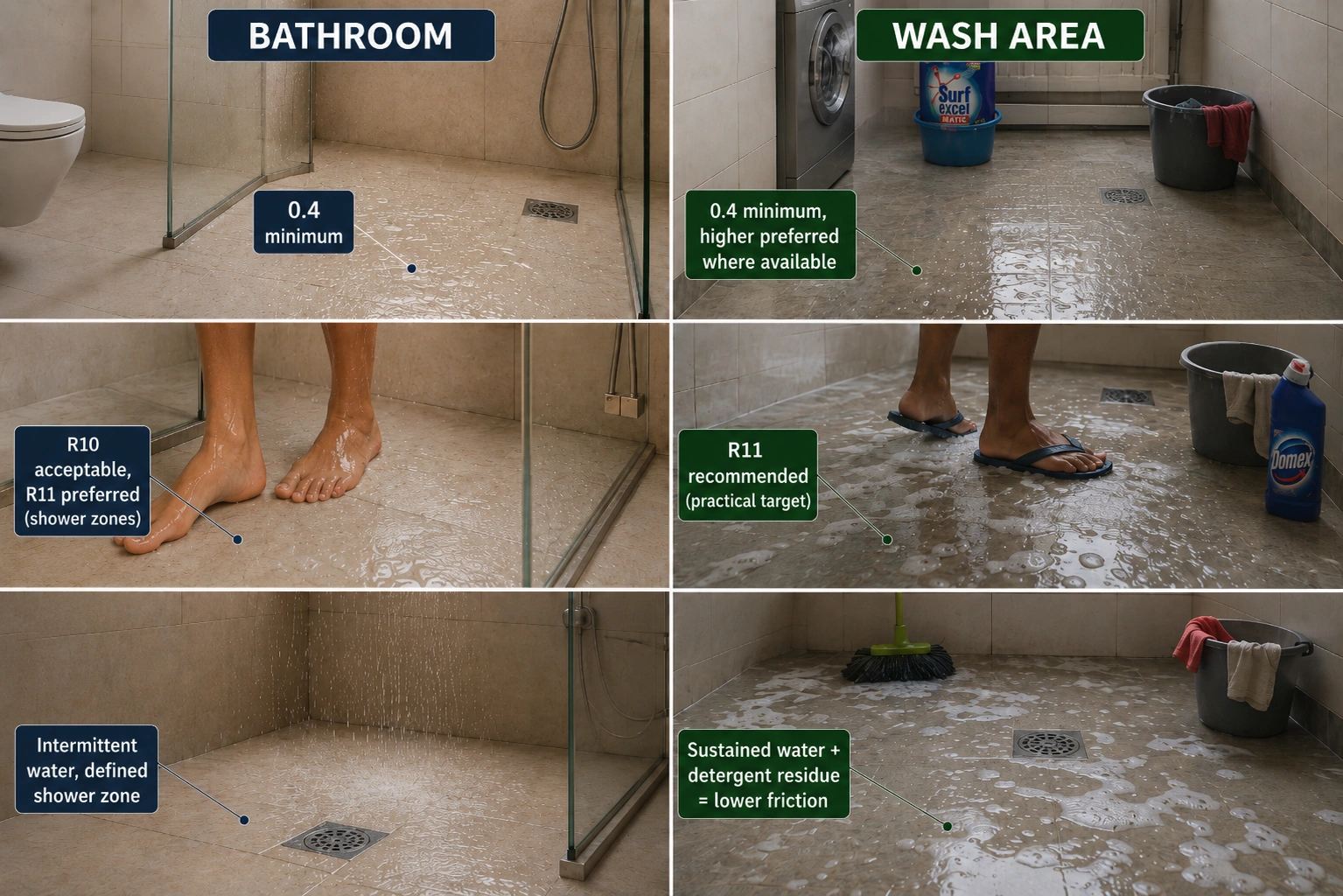
| Rating Factor | Bathroom Minimum | Wash Area Target |
| Wet COF | 0.4 minimum | 0.4 minimum, with higher preferred where available |
| R-rating | R10 acceptable, R11 preferred for shower zones | R11 recommended as the practical target, not just acceptable |
| Why the difference | Water contact is generally intermittent and confined to a defined shower zone | Sustained standing water plus detergent residue creates a lower-friction condition than plain water alone across a larger floor area |
The core distinction: A bathroom's R10 anti-skid rating is often genuinely adequate given intermittent, confined water contact. A wash area's combination of sustained standing water and detergent residue means the same R10 rating carries more risk here than in a bathroom, which is why R11 is the recommended target for wash areas specifically, not merely an optional upgrade.
Material and Format Differences
| Factor | Bathroom | Wash Area |
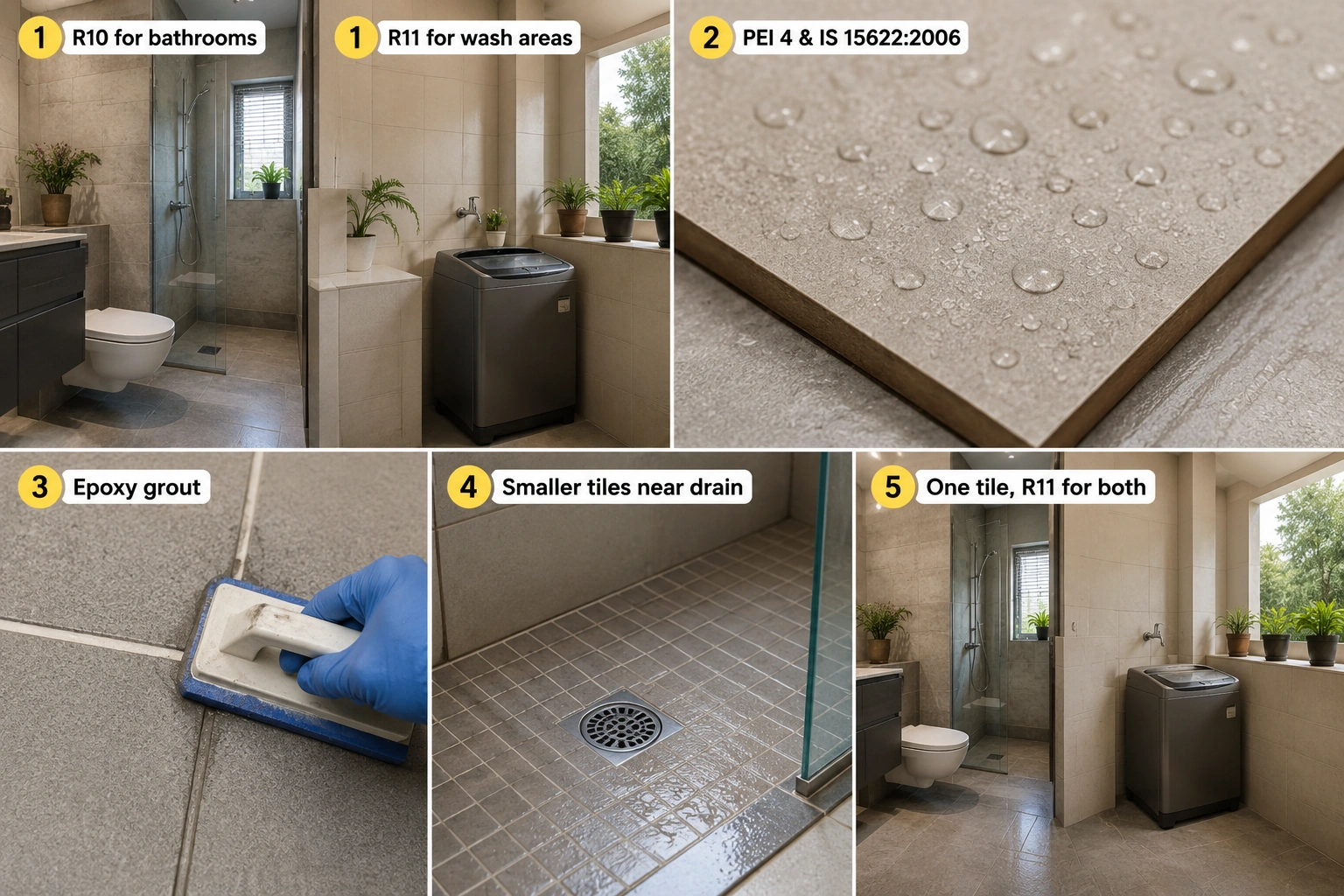
| Recommended tile size | 1x1 or 12x12 (300x300 mm) for compact bathrooms, 16x16 to 2x2 for larger ones | 16x16 (400x400 mm) as the general default, 12x12 near drainage points regardless of the main field size |
| Grout type | Cementitious with sealer acceptable outside direct spray zones, epoxy recommended for shower interiors | Epoxy is recommended throughout, given the more sustained and widespread moisture and chemical exposure |
| Chemical resistance confirmation | Not typically a primary specification concern | Worth confirming in the TDS given regular detergent and cleaning chemical contact at a higher concentration |
| Colour practicality | Any tone works given confined, drained water contact | Darker or mid-tone colours are meaningfully more practical, given the higher frequency of visible residue this room accumulates |
Can the Same Tile Be Used in Both Rooms?
Yes, provided the specific tile carries the higher R11 rating and epoxy grout is used in both applications. A tile rated only R10, adequate for a standard bathroom, should not be assumed sufficient for a wash area without separately confirming its performance under the sustained, detergent-heavy conditions this room presents. When in doubt, specify the wash area's higher standard and apply the same tile to the bathroom, rather than the reverse.
If your project includes a dedicated utility or laundry space, explore our Wash Area Tiles Guide for detailed advice on anti-skid ratings, drainage planning, tile sizes, waterproofing, and material selection designed specifically for Indian service and utility areas.
Buying Checklist for Both Rooms
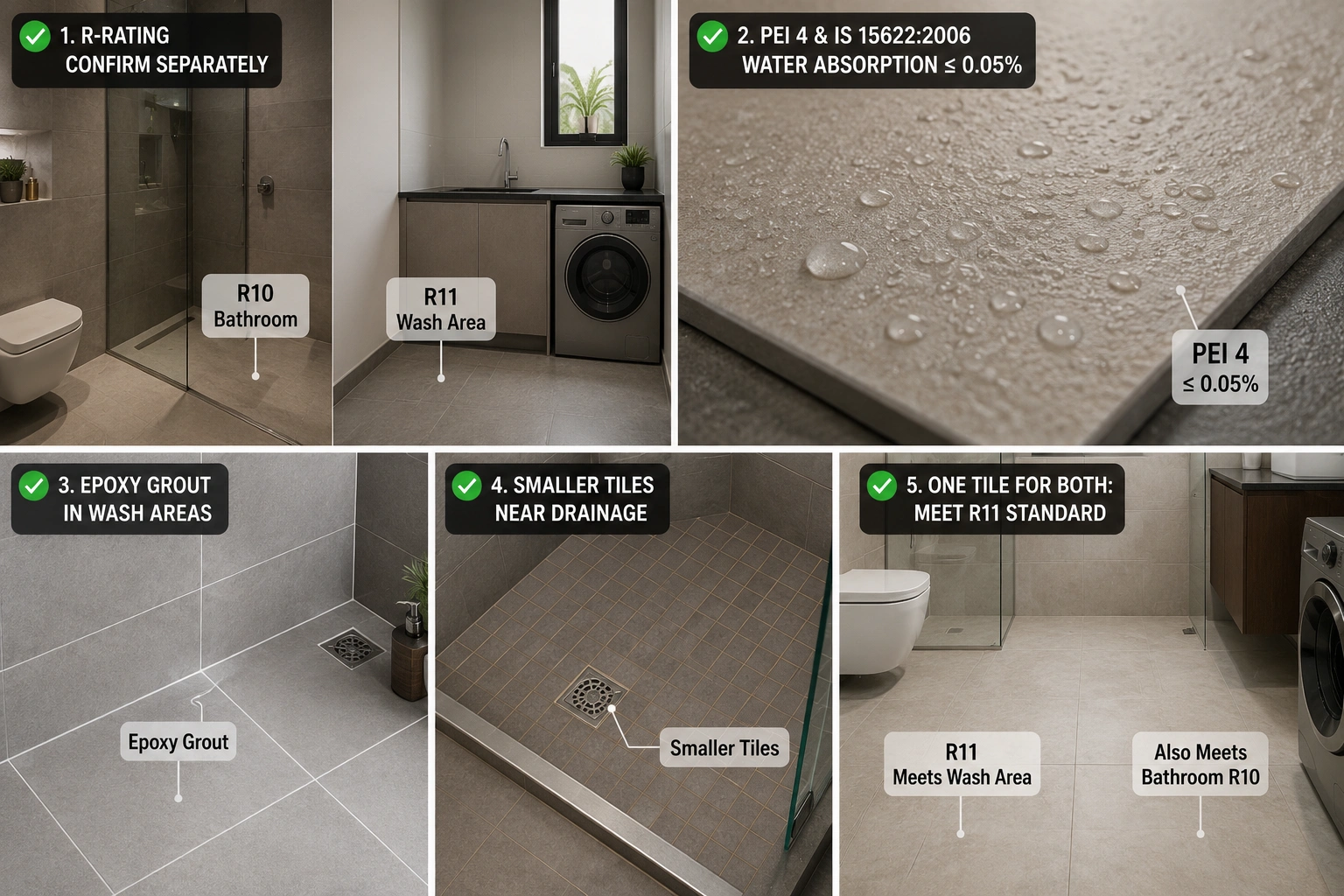
- Confirm the specific R-rating for each room separately, R10 minimum for bathrooms, R11 target for wash areas, rather than assuming one anti-skid product suits both without verification.
- Confirm PEI 4 and IS 15622:2006 compliance with water absorption at 0.05% or below for both rooms.
- Specify epoxy grout for wash areas as standard, and at a minimum for bathroom shower interiors, given both rooms' sustained moisture exposure at these specific zones.
- Use smaller tile formats near any drainage point in either room, since large-format tiles conform poorly to the sloped screed surface that a functioning drain requires.
- If specifying one tile for both rooms, confirm it meets the wash area's higher R11 standard, since this automatically satisfies the bathroom's lower R10 requirement as well.
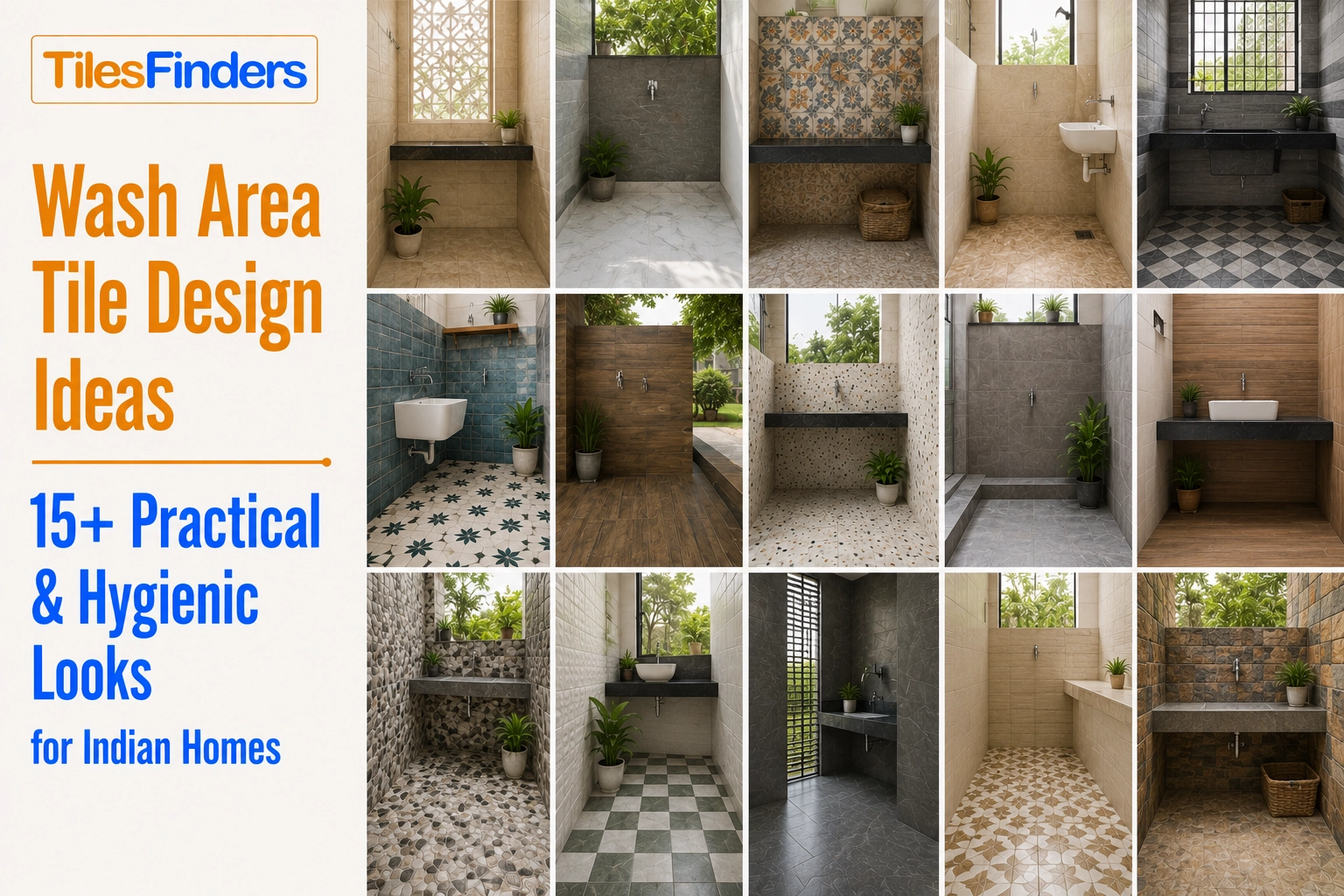
Once you've finalised the correct technical specifications, browse our Wash Area Tile Design Ideas to discover practical colour palettes, hygienic layouts, compact utility solutions, and easy-maintenance flooring styles suitable for Indian homes.
Wet-Area Tile Standards in India: 2026 Context
Both bathroom and wash area anti-skid GVT are manufactured in Morbi, Gujarat, under IS 15622:2006 at water absorption 0.05% or below, with R10 and R11 rated products generally produced within the same manufacturer ranges rather than as entirely separate categories. Confirming the specific R-rating for the intended room, rather than assuming any product labelled anti-skid is automatically suitable for both bathroom and wash area use, remains the single most important specification step across both rooms.
Compare Bathroom and Wash Area Tiles on TilesFinders
Anti-skid GVT rated R10 and R11 for bathrooms and wash areas can be filtered side by side on TilesFinders, with COF documentation available to confirm the correct rating for each specific room before you order.
FAQs
Only if it carries the R11 rating recommended for wash areas, which automatically satisfies a bathroom's lower R10 requirement as well. A tile rated only R10 should not be assumed sufficient for a wash area without separate confirmation.
A wash area experiences sustained standing water and concentrated detergent exposure across a larger floor area, unlike a bathroom's typically intermittent, confined shower-zone water contact. This combination creates a lower-friction condition that the higher R11 rating is specifically suited to address.
Epoxy grout is recommended for wash areas throughout, given sustained moisture and chemical exposure. For bathrooms, epoxy is recommended specifically for shower interiors, while cementitious grout with a penetrating sealer is acceptable outside direct spray zones.
0.4 wet COF minimum applies to both rooms. The practical difference is in the R-rating target: R10 is generally acceptable for a bathroom, while R11 is the recommended target for a wash area, given its more demanding water and chemical exposure conditions.
Generally similar, with 16x16 (400x400 mm) as a practical default for both, though wash areas benefit from smaller format tiles specifically near drainage points, regardless of the main field size, given their typically more irregular plumbing layout.
Yes. Wash areas accumulate visible detergent residue and hard-water marks more frequently than bathrooms, making darker or mid-tone colours meaningfully more practical here than in a bathroom, where colour choice is more flexible given more confined, quickly drained water contact.
Specifying the wash area's higher R11 standard even for a bathroom is a reasonable future-proofing decision, since it exceeds the bathroom's own requirement and provides a safety margin at a typically small cost premium over R10 product.
Wash areas benefit from specifically confirming chemical resistance in the tile's TDS, given regular detergent and cleaning chemical contact at higher concentrations than a bathroom typically experiences from soap and shampoo alone.


Discover Similar Styles
See our tile guides first
Set TilesFinders as a preferred source and our buying guides surface ahead of the rest for you.
Add as preferred sourceTakes one tap. Nothing to install.
What Readers Say
I was about to redo my parking area with the wrong tile size until I read this. The layout comparisons saved me from a costly mistake.
We reference TilesFinders guides while briefing clients on material selection. The size and pattern breakdowns are accurate and easy to explain visually.
On site, I get asked about grout spacing all the time. This article gave me a solid reference I now share with my team before every job.
Finally a guide that doesn't just push generic advice. The oil stain removal steps actually worked on our clubhouse driveway tiles.
I run a small construction firm and now send this link to clients directly when they ask about entrance tile sizing. Saves me an hour of explaining.
Good practical detail, though I wish there were more examples for compact apartment entrances specifically, not just villas.
My mother-in-law wanted marble, I wanted vitrified. This blog gave us the neutral comparison we needed to actually decide together.
Detailed without being overwhelming. I appreciated that it covered both cost and maintenance, not just the aesthetics.
Used the algae and hard water removal tips on our terrace tiles after the monsoon. Worked better than what our regular cleaner was doing.
As someone who sources tiles for multiple builder projects, I find these comparisons genuinely useful for vendor conversations, not just consumer content.
Recommended this to a client who kept second-guessing the entrance design. The small vs large layout section settled the debate instantly.
Straightforward and honest, no unnecessary jargon. Would like to see a similar breakdown for outdoor pool-deck tiles next.
We've bookmarked several TilesFinders guides for our design handbook. Reliable source when clients want data, not just opinions.
Two paths, one marketplace.
Get free quotes from verified suppliers.
Share your room, budget, and style. Suppliers in Morbi respond within hours.
Get Free QuotesList your business, reach real buyers.
Put your showroom in front of homeowners searching for tiles right now.
List Your BusinessMore Blogs
See all
Outdoor Tiles in India: A Complete Guide for Indian Climate Conditions (2026)
Outdoor tiles that actually last. Master the 2026 rules for balconies and terraces: low water abs...
Read More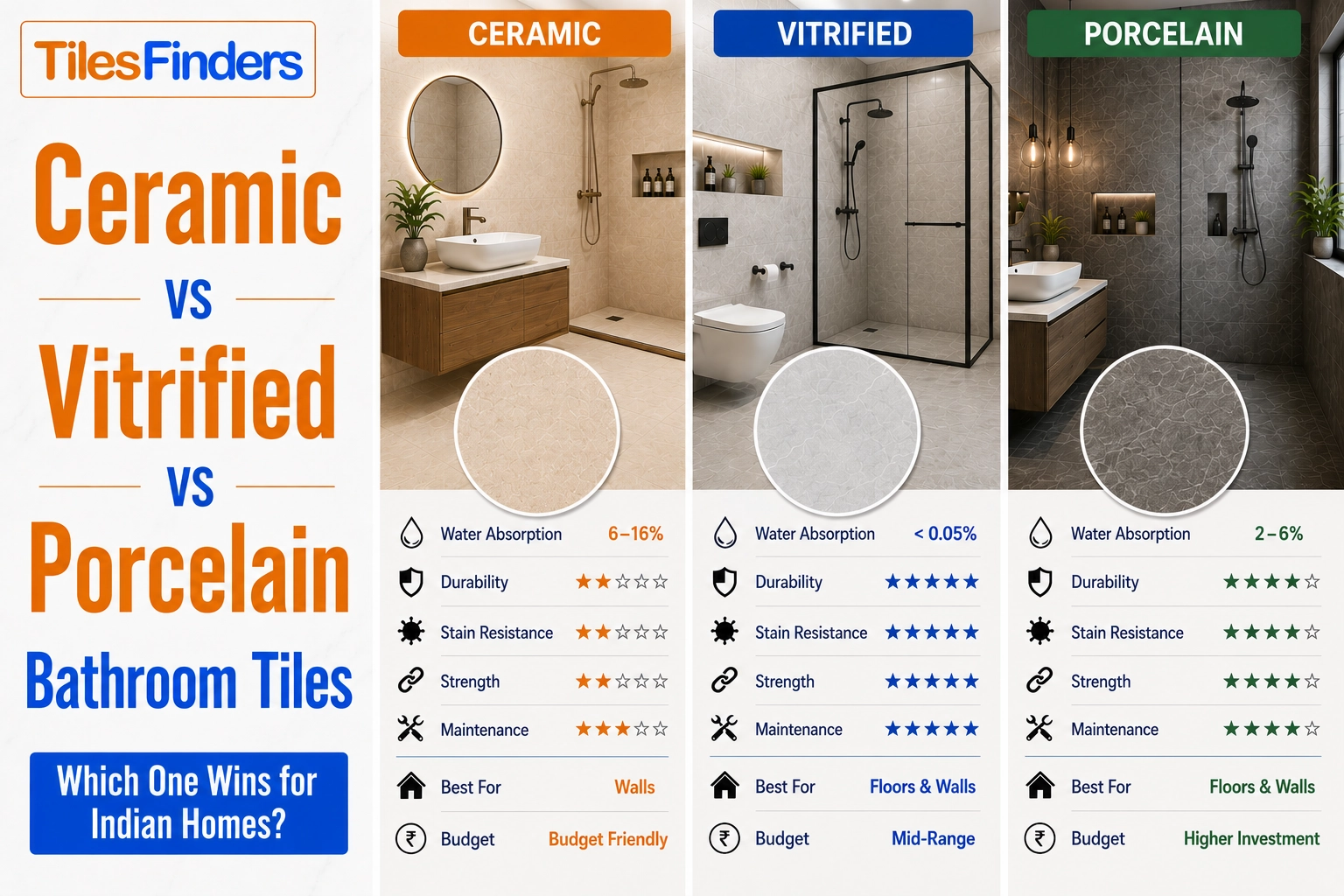
Ceramic vs Vitrified vs Porcelain Bathroom Tiles: Which One Wins for Indian Homes?
Compare ceramic, vitrified, and porcelain bathroom tiles for Indian homes. Discover the best opti...
Read More
16x16 (400x400 mm) Tile Designs: 20+ Classic and Modern Options for Indian Bathrooms and Kitchens
Explore 20+ classic and modern 16x16 (400x400 mm) tile designs for Indian bathrooms and kitchens....
Read More