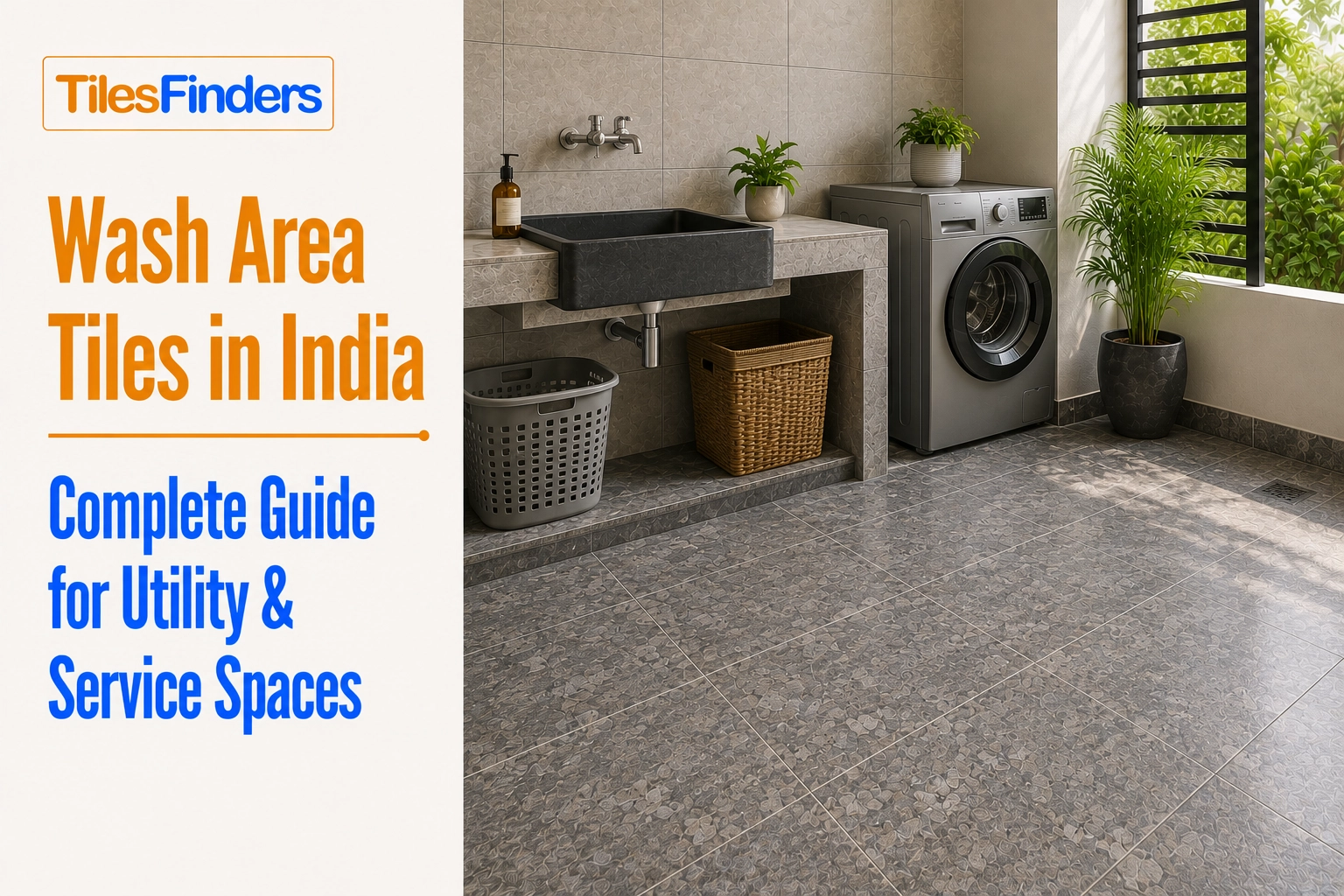
Wash Area Tiles in India: Complete Guide for Utility and Service Spaces
Choose the right wash area tiles with guidance on anti-skid ratings, tile sizes, drainage slopes, epoxy grout, waterproofing, and durable GVT options for Indian utility spaces.
- Why Wash Areas Have Different Requirements Than Bathrooms and Kitchens
- Size Guide for Wash Areas
- Anti-Skid Rating for Wash Areas
- Material and Finish Options
- Drainage and Installation Considerations
- Buying Checklist
- Wash Area Tiles in India: 2026 Manufacturing Context
- Find Wash Area Tiles on TilesFinders
Wash areas demand more than standard bathroom tiles due to prolonged water exposure, detergents, and irregular layouts. Choose R11 anti-skid GVT, epoxy grout, proper drainage slopes, and durable low-absorption tiles for long-lasting performance.
The wash area, utility room, service balcony, or whatever a household calls the space housing the washing machine, wash basin, and general household cleaning activity, sees more sustained water exposure than almost any other room in an Indian home, and receives the least design attention of any of them. This guide covers what genuinely differs about wash area tile specification, from the room's actual water and chemical exposure to its irregular plumbing geometry, and how to get it right.
Why Wash Areas Have Different Requirements Than Bathrooms and Kitchens
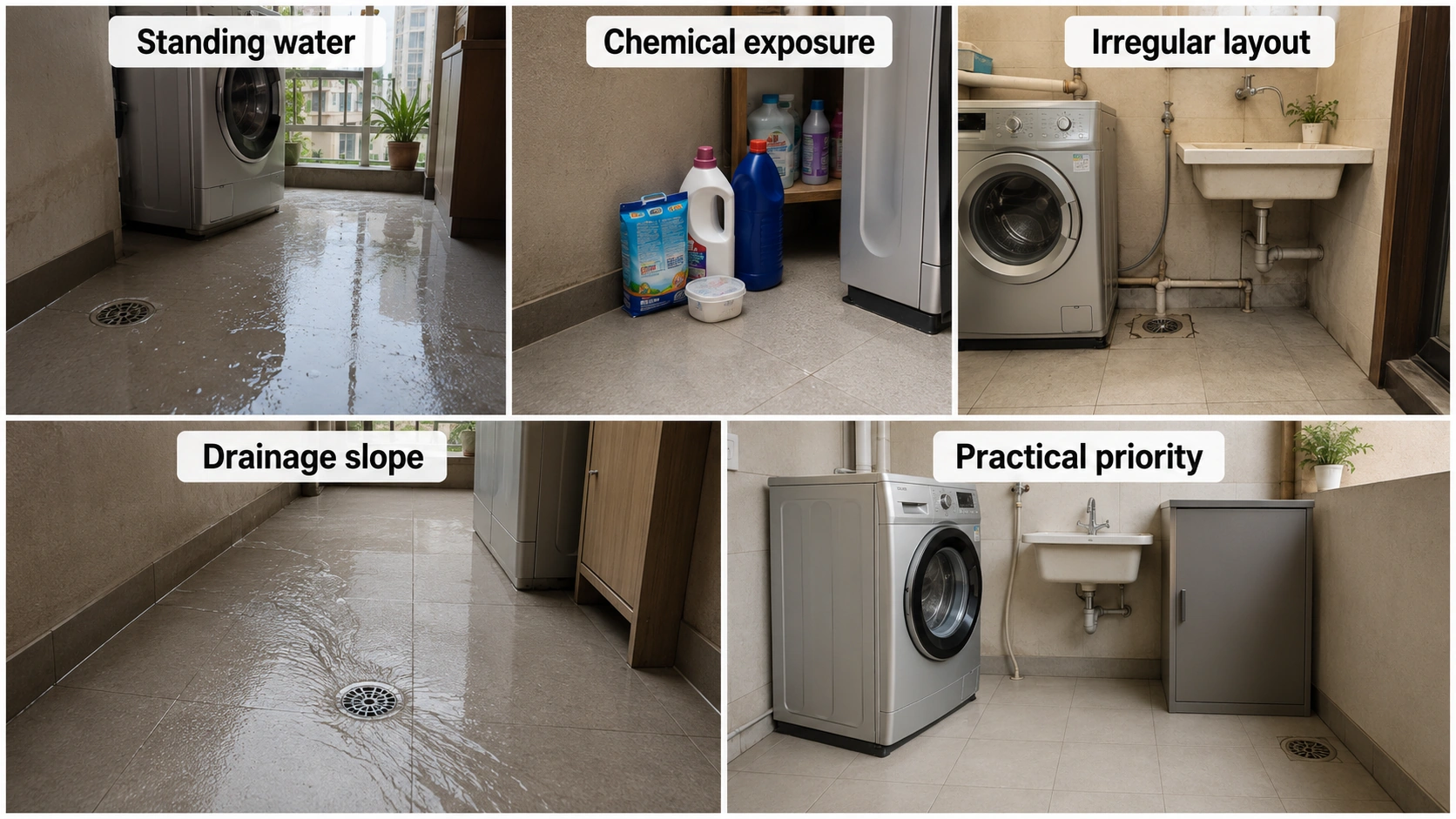
| Wash Area Condition | Practical Implication | Tile Requirement |
| Sustained standing water | Unlike a bathroom, where water contact is intermittent, a wash area frequently has standing water for extended periods during and after washing cycles | The highest practical anti-skid COF available, above the standard 0.4 wet minimum, where possible |
| Detergent and chemical exposure | Washing powder, bleach, and cleaning chemicals contact the floor regularly, at higher concentrations than typical bathroom water contact | Confirmed chemical resistance in the TDS, non-porous GVT at 0.05% absorption is essential here |
| Irregular plumbing and fixture layout | Washing machines, wash basins, and drainage points are rarely arranged on a clean grid, producing more irregular cut requirements than a bathroom | Smaller tile formats that cut efficiently around irregular fixture placement |
| Drainage slope requirements | A wash area floor needs a confirmed slope toward a drain, more so than most bathrooms, which may have a single shower drain only | Coordinate tile installation with the screed slope plan before ordering, not as an afterthought |
| Lower design priority, higher functional priority | Wash areas are rarely showcased to guests, so durability and practicality typically outweigh aesthetic ambition | Practical, hard-wearing anti-skid GVT in an easy-to-match neutral tone is usually the correct default |
Size Guide for Wash Areas
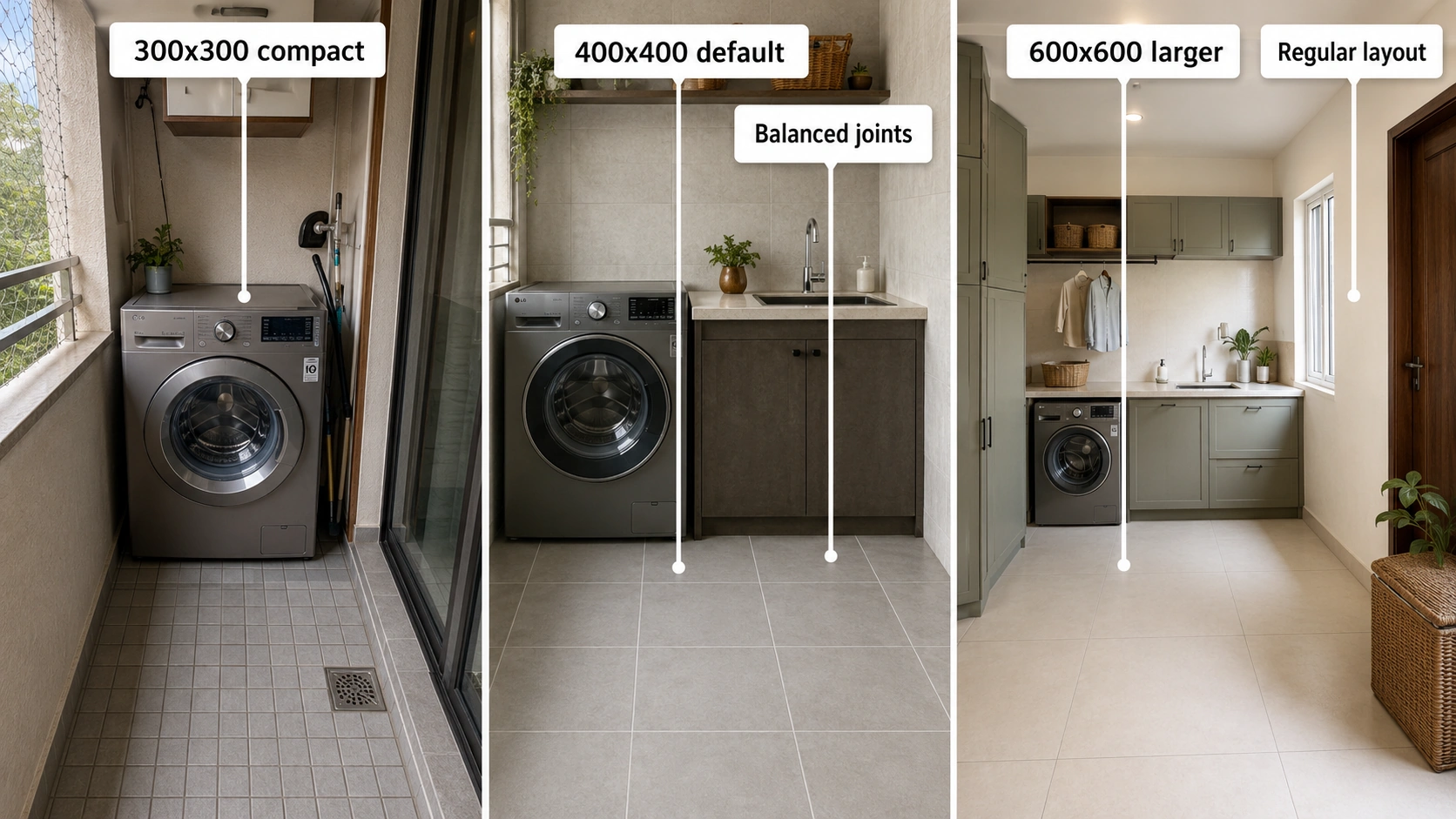
| Wash Area Size | Recommended Tile Size | Why |
| Very compact, under 25 sq.ft (balcony-style utility) | 1x1 or 12x12 (300x300 mm) | Cuts cleanly around the washing machine footprint and drainage points in the smallest wash areas |
| Compact to mid, 25 to 50 sq.ft | 16x16 (400x400 mm) | The practical default for most Indian wash areas, balancing efficient cutting with a manageable grout line count |
| Larger utility room, above 50 sq.ft | 2x2 or 24x24 (600x600 mm) | Suitable when the room has a regular enough layout to accommodate the larger format without excessive fixture-related cutting |
From The Marketplace
Popular tiles right now





Anti-Skid Rating for Wash Areas
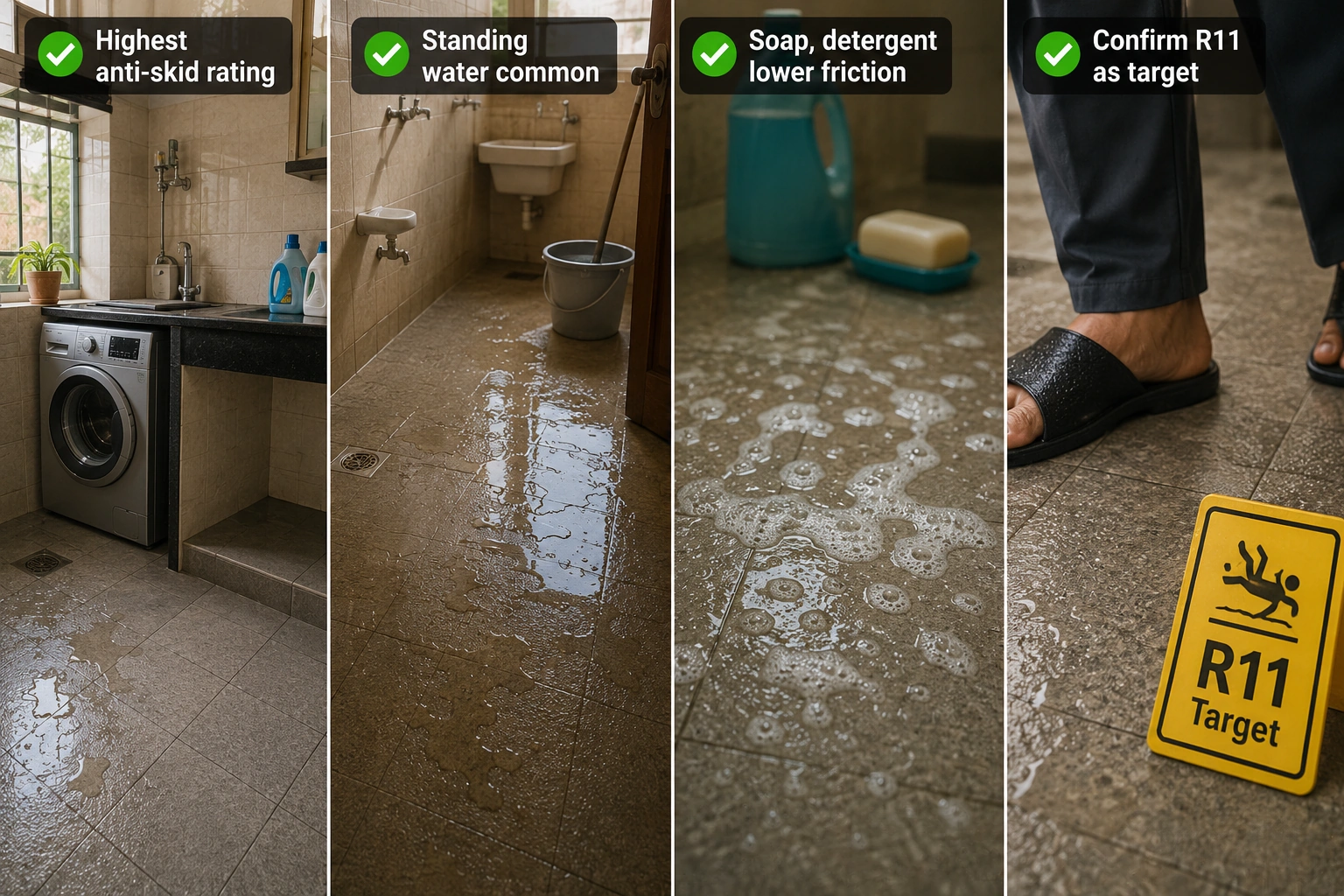
The core safety rule: Wash area floors should carry the highest anti-skid rating practically available, not merely the standard 0.4 wet COF minimum used for bathrooms. Standing water is more common here than in most bathrooms, and the combination of soap, detergent residue, and water creates a lower-friction surface condition than plain water alone. Confirm R11 rating as the practical target rather than the R10 minimum sometimes accepted for standard bathroom floors.
Material and Finish Options
Idea 1: Charcoal Anti-Skid GVT, High COF
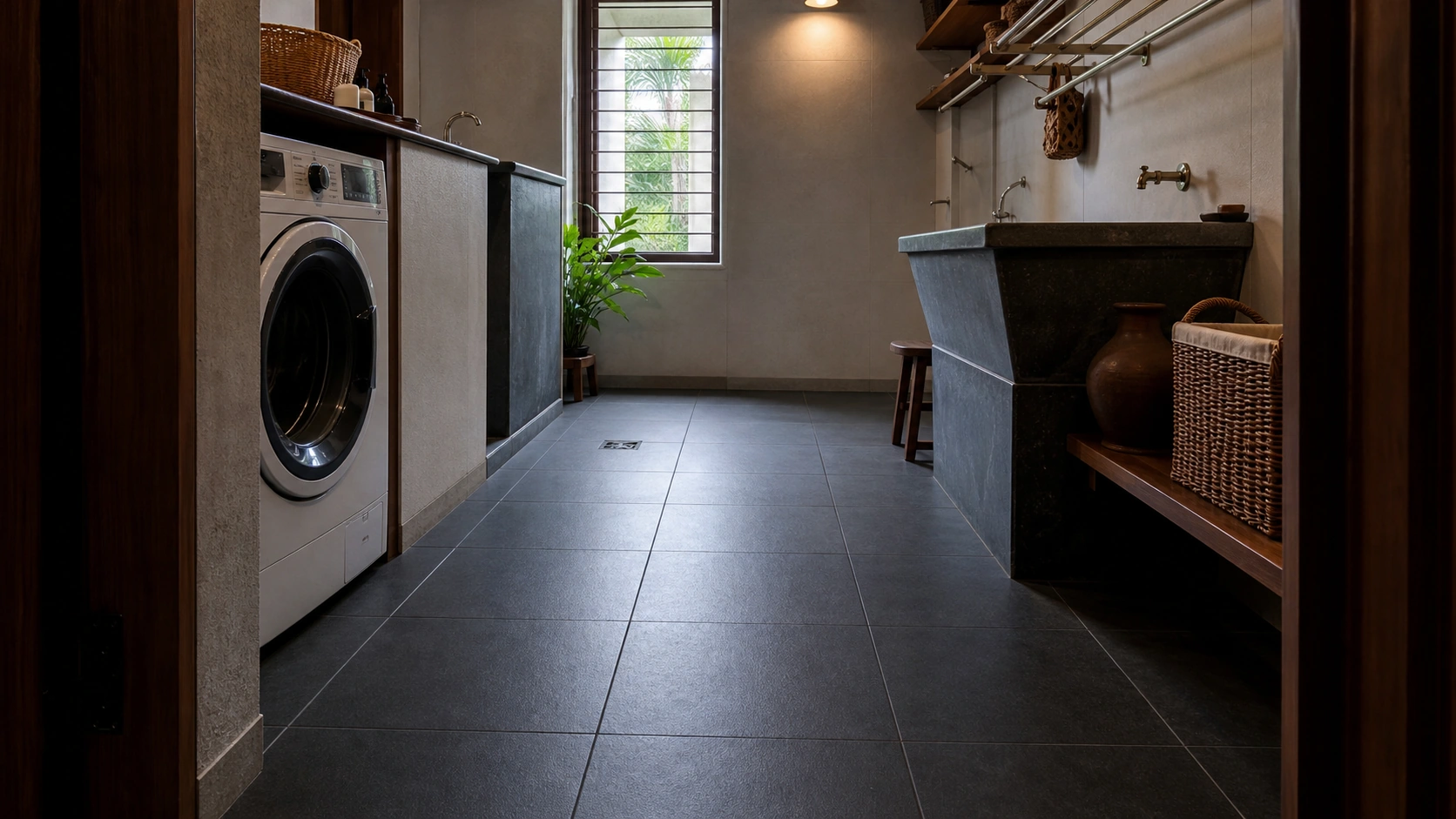
GVT | 16x16 (400x400 mm) | Anti-skid matte, R11 | Rs. 65 to Rs. 115/sq.ft
Dark charcoal anti-skid GVT tile is the most practical wash area specification available, hiding detergent residue and hard-water marks effectively while providing the confirmed high-COF safety rating this room's standing-water condition requires.
Idea 2: Warm Grey Anti-Skid GVT, Standard Utility
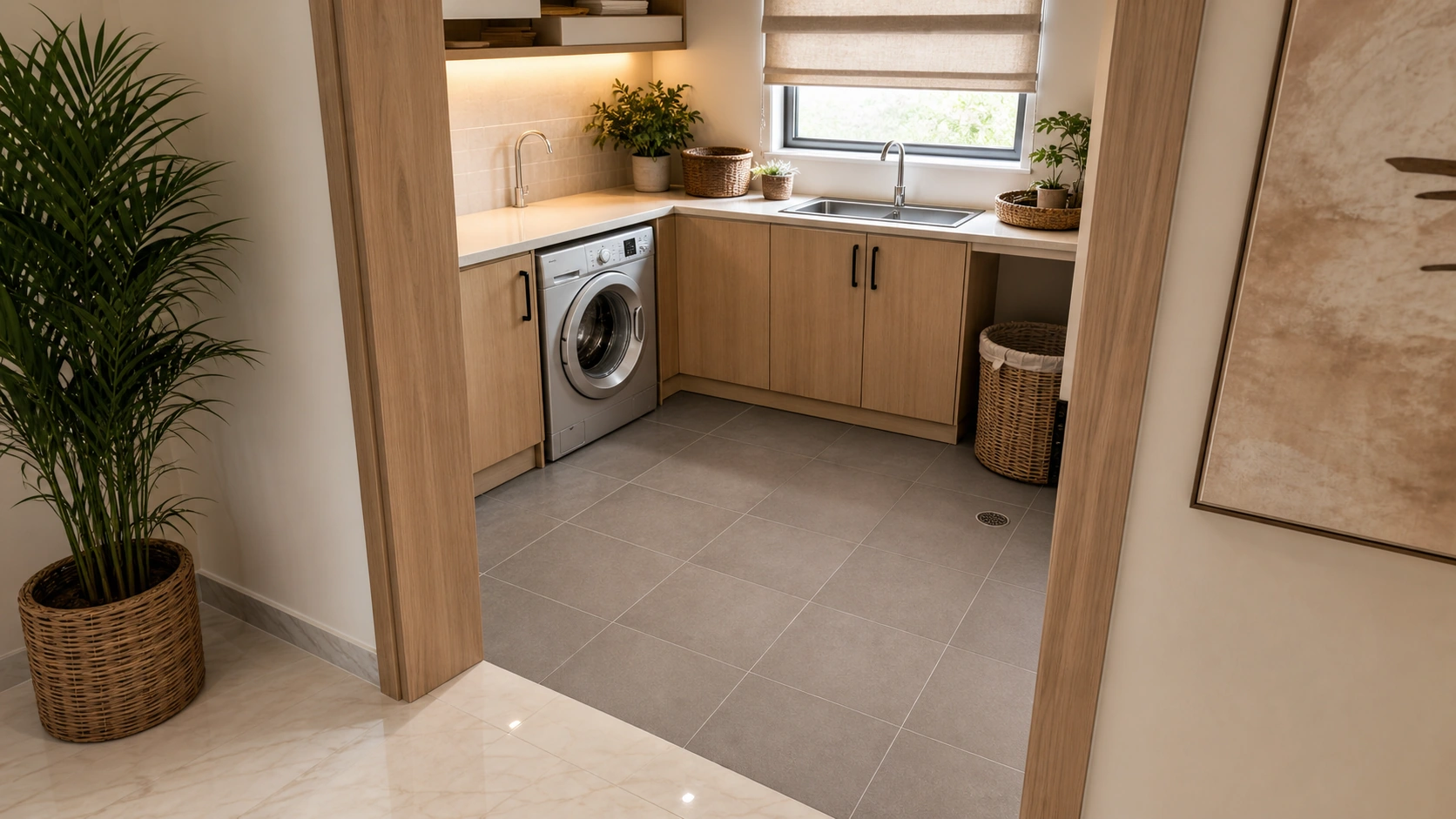
GVT | 16x16 (400x400 mm) | Anti-skid matte, R10 to R11 | Rs. 60 to Rs. 105/sq.ft
Warm grey anti-skid GVT is a slightly softer, more visually neutral alternative to charcoal, still hiding daily soiling well while reading less starkly utilitarian if the wash area is occasionally visible to visitors.
Idea 3: Terracotta-Tone Anti-Skid GVT
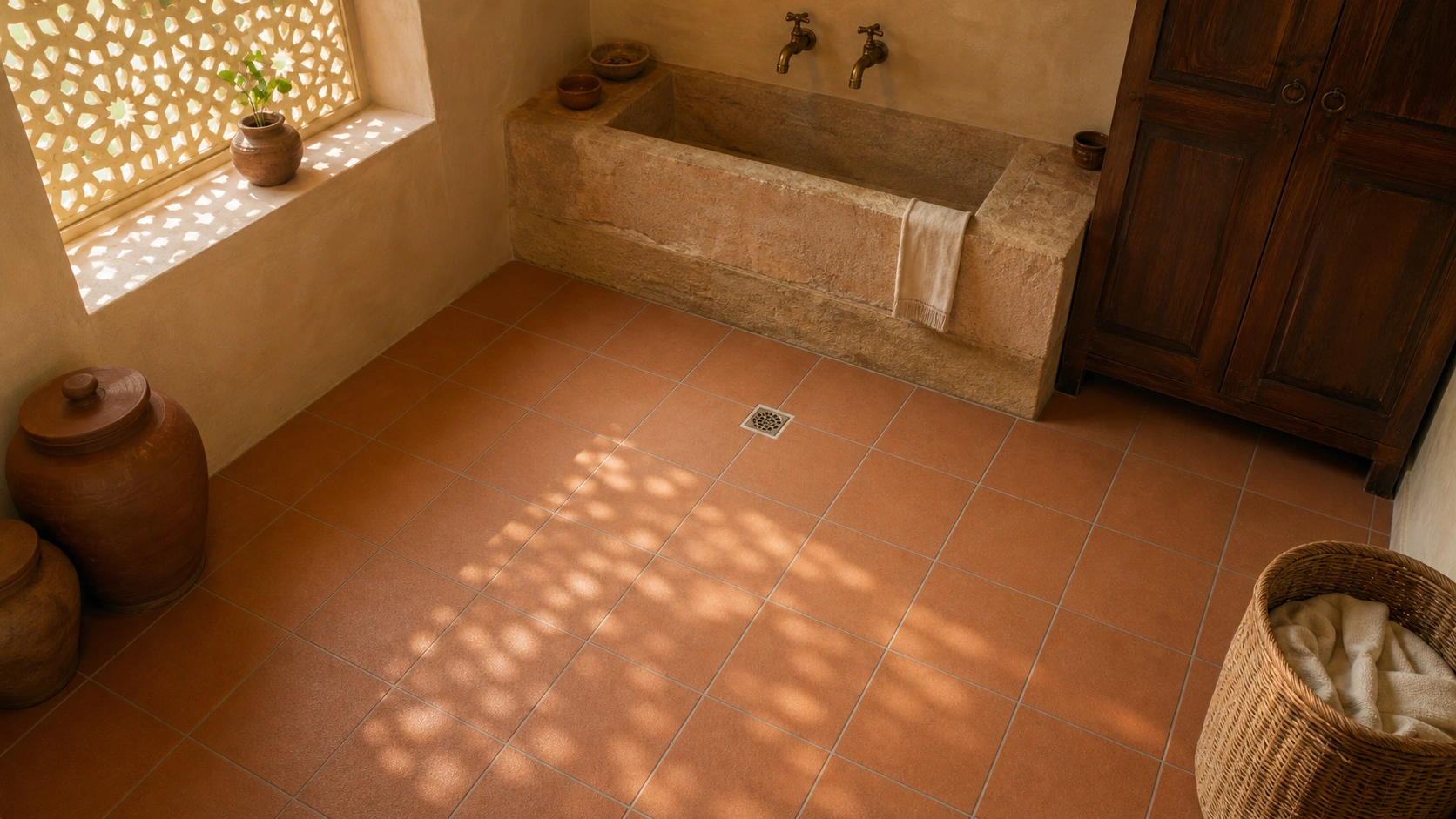
GVT | 16x16 (400x400 mm) | Anti-skid matte, R11 | Rs. 65 to Rs. 120/sq.ft
A warm terracotta-tone anti-skid floor brings a considered, heritage-adjacent character to a functional room, hiding water marks and detergent residue as effectively as charcoal while offering more warmth.
Idea 4: White and Grey Two-Tone Grid
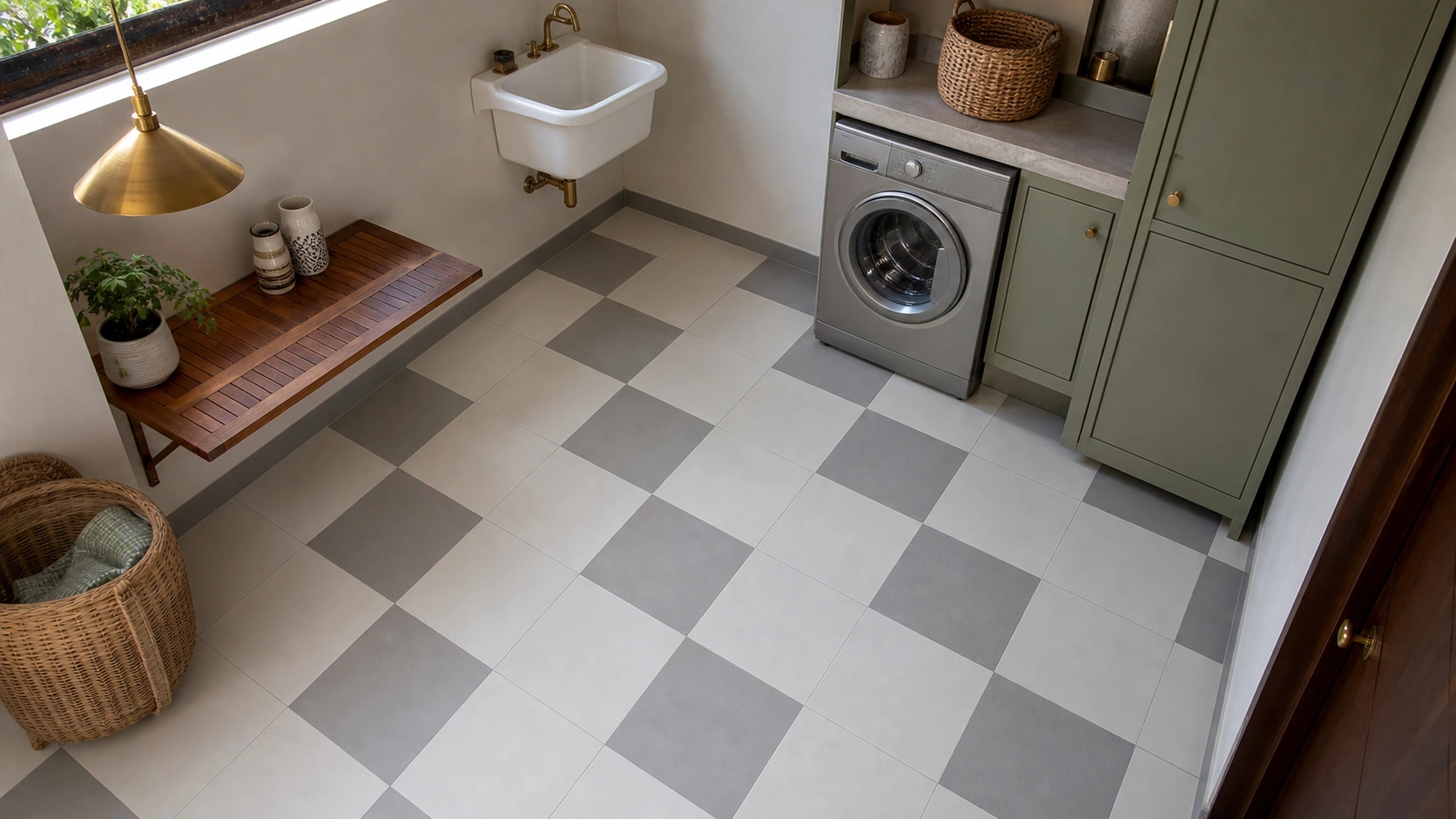
GVT | 16x16 (400x400 mm) | Anti-skid matte, R10 to R11 | Rs. 55 to Rs. 100/sq.ft combined
For a household that wants the wash area to appear intentionally designed rather than purely functional, a simple white and grey grid delivers a clean, orderly appearance within a controlled budget, both tones carrying the same anti-skid rating.
Drainage and Installation Considerations
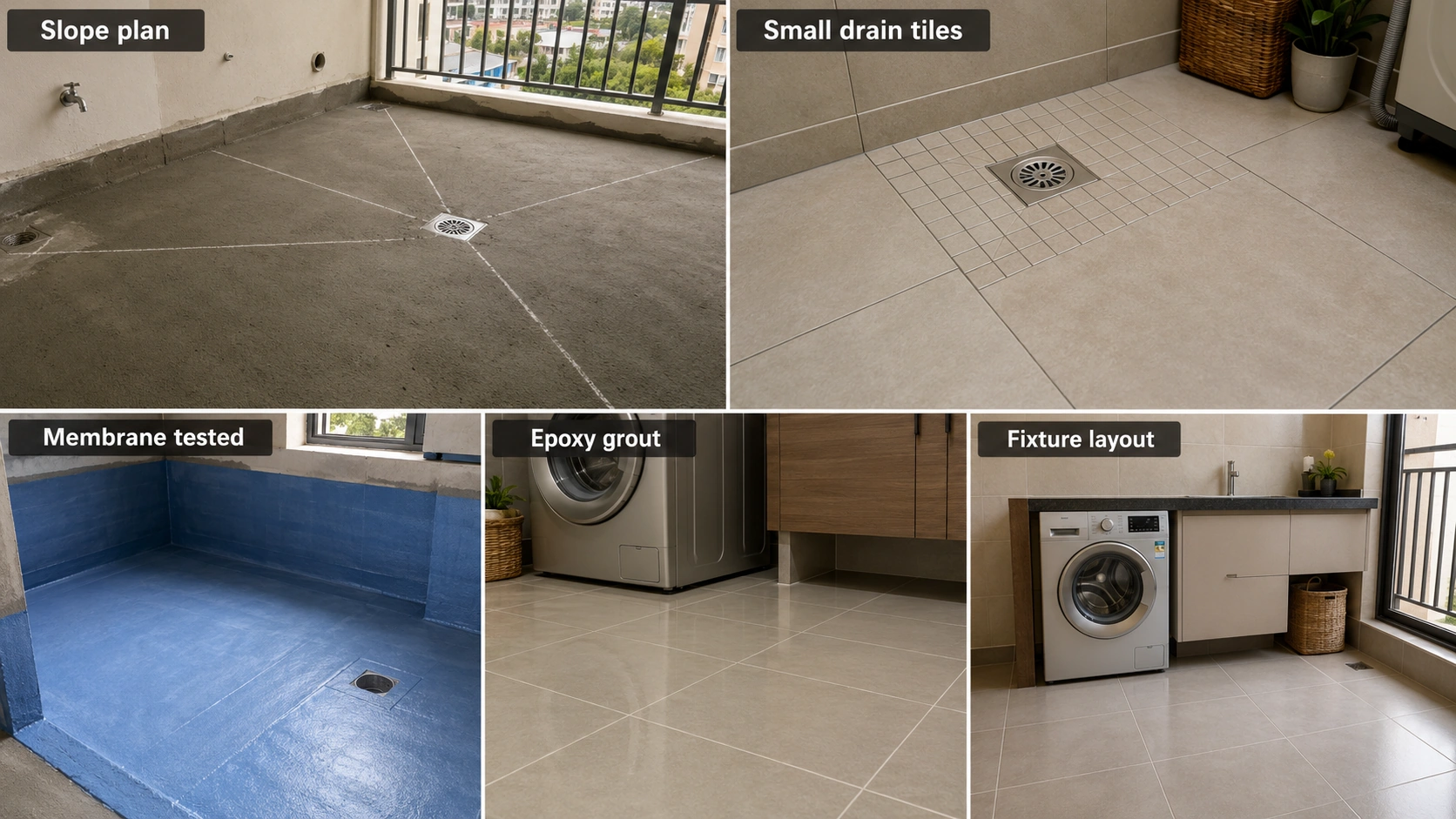
- Confirm the screed slope plan before tile ordering, since a wash area floor needs a consistent gradient toward the drainage point, typically 1:80 to 1:100, coordinated between the waterproofing contractor and the tile installer.
- Use a smaller tile format near drainage points, even if the main field uses a larger format, since smaller tiles conform to the sloped surface around a drain more cleanly than large-format tiles.
- Confirm that the waterproofing membrane is installed and tested before tiling begins, a step that is particularly important in a wash area, given the sustained water exposure.
- Specify epoxy grout for wash area floors, given the combination of detergent chemical exposure and sustained moisture that standard cementitious grout is not well-suited to withstand long term.
- Plan washing machine and basin placement before finalising the tile layout, since these fixtures determine where cuts and transitions occur and are far easier to coordinate before installation than after.
Buying Checklist
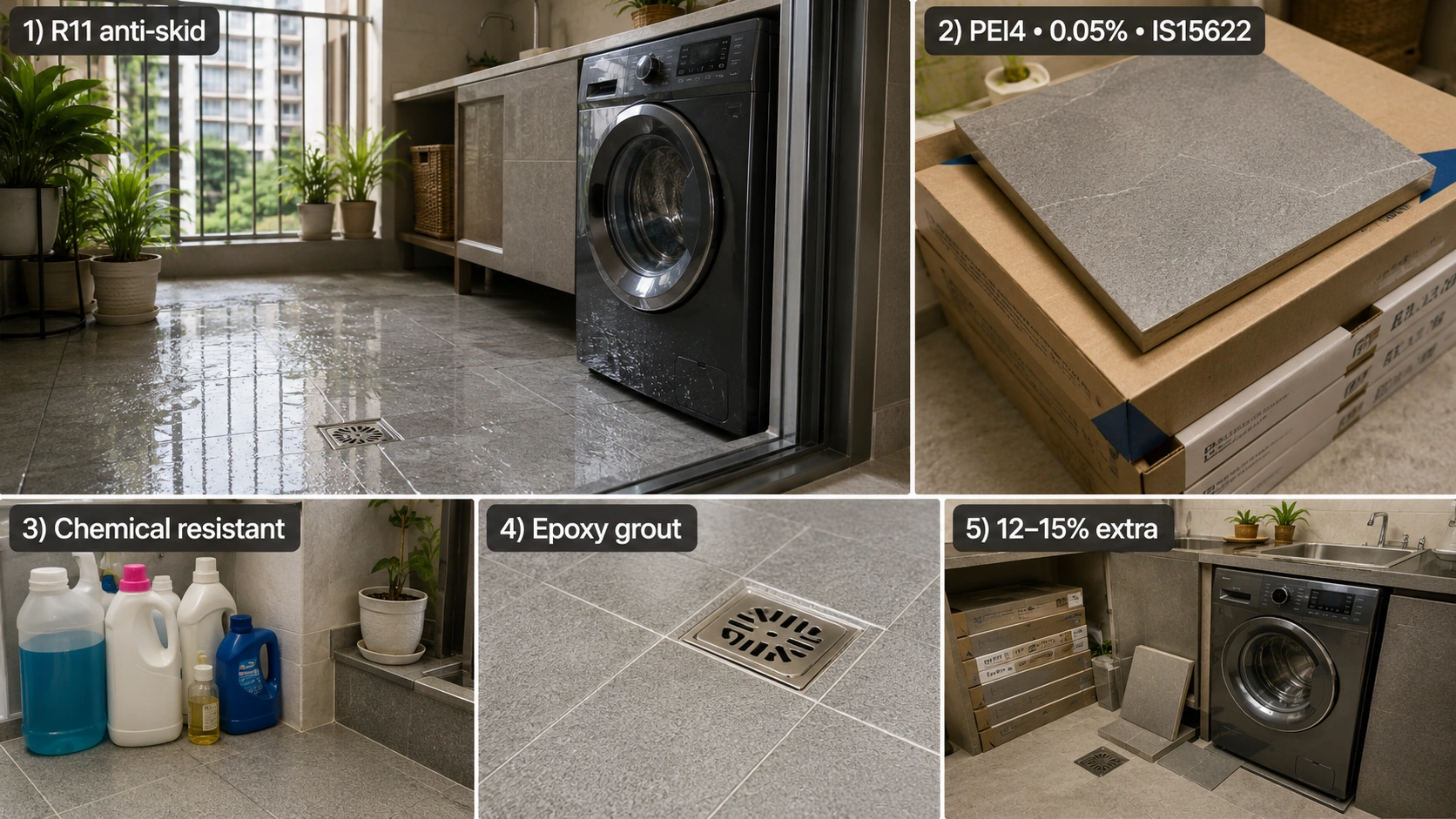
- Confirm anti-skid COF, targeting R11 rather than the R10 minimum, given the sustained standing-water condition this room presents.
- Confirm PEI 4 and IS 15622:2006 compliance with water absorption at 0.05% or below.
- Confirm chemical resistance in the TDS, given regular detergent and cleaning chemical contact that a standard bathroom floor does not see at the same concentration.
- Specify epoxy grout, not standard cementitious grout, for long-term resistance to sustained moisture and chemical exposure.
- Order 12 to 15% extra material, higher than the 10% typical for bathrooms, given the additional cutting required around washing machine footprints, wash basins, and drainage points.
Wash Area Tiles in India: 2026 Manufacturing Context
Anti-skid GVT suited to Indian wash areas is manufactured widely in Morbi, Gujarat, under IS 15622:2006 at water absorption 0.05% or below, with the highest-COF anti-skid ranges typically produced alongside standard bathroom anti-skid product lines rather than as a separate specialist category. Confirm the specific R-rating available for any design under consideration, since not every anti-skid product in a manufacturer's range carries the R11 rating that this room's sustained water exposure benefits from.
Find Wash Area Tiles on TilesFinders
Anti-skid GVT-rated for wash areas and utility spaces, with options available in charcoal, warm grey, and terracotta tones, can be filtered by COF rating on TilesFinders. Epoxy grout guidance is also available before you order for rooms with sustained water exposure.

FAQs
R11 is the recommended target for a wash area, higher than the R10 minimum sometimes accepted for standard bathroom floors, given the sustained standing water and detergent exposure this room typically experiences.
1x1 or 12x12 (300x300 mm) for very compact wash areas under 25 sq. ft., and 16x16 (400x400 mm) for the more common 25 to 50 sq ft range, both cutting efficiently around washing machine footprints and irregular drainage points.
Yes. Epoxy grout resists the combination of sustained moisture and detergent chemical exposure; a wash area floor experiences considerably better performance than standard cementitious grout, which is more prone to staining and degradation in this specific environment.
Yes, typically 1:80 to 1:100, coordinated between the waterproofing contractor and tile installer before tiling begins. Confirm this slope plan is in place, and use a smaller tile format near the drainage point to conform cleanly to the sloped surface.
Charcoal and terracotta-tone anti-skid GVT hide detergent residue and hard-water marks most effectively. White and very pale tones show soiling most clearly and require more frequent cleaning to maintain a presentable appearance.
12 to 15%, higher than the 10% typical for bathrooms, given the additional cutting required around washing machine footprints, wash basins, and drainage points that wash areas commonly present.
Often yes, provided it carries the higher R11 rating rather than the R10 minimum, since standard bathroom anti-skid product ranges frequently include both ratings. Confirm the specific R-rating for the design under consideration before assuming standard bathroom-grade anti-skid is sufficient.
Confirm the waterproofing membrane is installed and tested, the screed slope toward the drain is correctly planned, and washing machine and basin placement are finalised, since all three affect the tile layout and are far easier to coordinate before installation than to correct afterward.


Tiles Worth Exploring
See our tile guides first
Set TilesFinders as a preferred source and our buying guides surface ahead of the rest for you.
Add as preferred sourceTakes one tap. Nothing to install.
What Readers Say
I was about to redo my parking area with the wrong tile size until I read this. The layout comparisons saved me from a costly mistake.
We reference TilesFinders guides while briefing clients on material selection. The size and pattern breakdowns are accurate and easy to explain visually.
On site, I get asked about grout spacing all the time. This article gave me a solid reference I now share with my team before every job.
Finally a guide that doesn't just push generic advice. The oil stain removal steps actually worked on our clubhouse driveway tiles.
I run a small construction firm and now send this link to clients directly when they ask about entrance tile sizing. Saves me an hour of explaining.
Good practical detail, though I wish there were more examples for compact apartment entrances specifically, not just villas.
My mother-in-law wanted marble, I wanted vitrified. This blog gave us the neutral comparison we needed to actually decide together.
Detailed without being overwhelming. I appreciated that it covered both cost and maintenance, not just the aesthetics.
Used the algae and hard water removal tips on our terrace tiles after the monsoon. Worked better than what our regular cleaner was doing.
As someone who sources tiles for multiple builder projects, I find these comparisons genuinely useful for vendor conversations, not just consumer content.
Recommended this to a client who kept second-guessing the entrance design. The small vs large layout section settled the debate instantly.
Straightforward and honest, no unnecessary jargon. Would like to see a similar breakdown for outdoor pool-deck tiles next.
We've bookmarked several TilesFinders guides for our design handbook. Reliable source when clients want data, not just opinions.
Two paths, one marketplace.
Get free quotes from verified suppliers.
Share your room, budget, and style. Suppliers in Morbi respond within hours.
Get Free QuotesList your business, reach real buyers.
Put your showroom in front of homeowners searching for tiles right now.
List Your BusinessMore Blogs
See all
Balcony Wall Tiles vs Floor Tiles – Design Guide
Learn the golden rules of balcony design. Discover the key differences between wall and floor til...
Read More
Best Tiles for Kitchen Wall in India: Top Recommendations for 2026
Stop scrubbing masala stains! Discover 2026's top kitchen wall tiles. Learn why glossy ceramic is...
Read More
Mosaic Tile Design Ideas: 25+ Statement Looks for Bathrooms, Pools, and Feature Walls
Explore 25+ mosaic tile design ideas for bathrooms, kitchens, pools, feature walls, and living sp...
Read More