Pre-Festive Home Renovation: Which Tiles to Fix Before Diwali
Festive repairs call for smart timing: prioritise unsafe tiles, refresh guest-facing spaces, and tackle only renovations that can realistically be completed before Diwali without disrupting celebrations.

- At a Glance: Pre-Diwali Tile Triage
- Why Safety Comes Before Appearance, Even Right Before a Festival
- Priority 1: Safety Issues to Fix First
- Priority 2: Guest-Visible Work Worth Doing
- Priority 3: Fast Cosmetic Wins Under Three Weeks
- Priority 4: Full Renovations, and When to Honestly Defer Them
- Working Backwards: A Realistic Pre-Diwali Timeline
- Buying and Planning Checklist
- Plan Your Pre-Festive Tile Work on TilesFinders
Fix cracked, loose, hollow, or slippery tiles first, then refresh guest-visible areas such as the entrance, living room, pooja room, and backsplash. Start full-room renovations only with a six-to-eight-week window; otherwise, defer them until after Diwali and avoid a half-finished home during the festival.
Most pre-Diwali tile decisions are made backwards, starting with what a household wishes it could redo rather than what it can realistically finish in the weeks available. This guide flips that: it triages tile work by genuine urgency, safety issues first, guest-visible cosmetic work second, and full renovations only where the timeline honestly permits, so you finish what you start before the festival rather than living with a half-done room through it.
Quick answer: Fix safety issues first, regardless of visibility, cracked, loose, or slippery floor tiles, especially in bathrooms and entrances. Then address guest-visible cosmetic work: entrance, living room, and any stained or damaged feature areas. Save full room renovations for after Diwali unless you have at least six to eight weeks, since a half-finished room during the festival is worse than an untouched one. |
At a Glance: Pre-Diwali Tile Triage
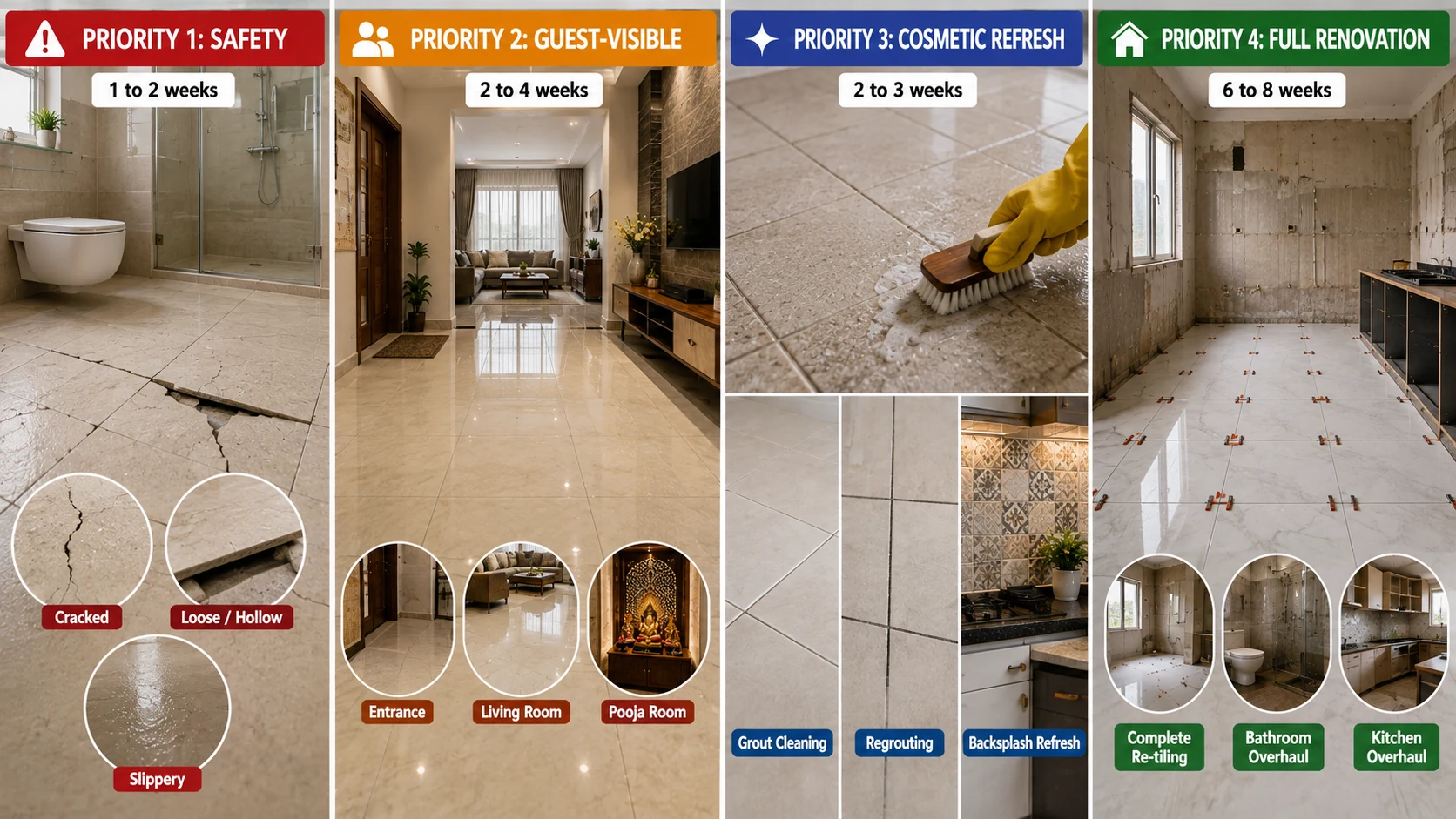
| Priority | What to Fix | Timeline Needed |
| Priority 1, safety | Cracked, loose, hollow-sounding, or slippery floor tiles anywhere in the home | 1 to 2 weeks, fix regardless of how close the festival is |
| Priority 2, guest-visible | Entrance, foyer, living room, and pooja room damage or staining | 2 to 4 weeks, including material delivery |
| Priority 3, cosmetic refresh | Grout cleaning or regrouting, small accent additions, backsplash refresh | 2 to 3 weeks |
| Priority 4, full renovation | Complete room re-tiling, bathroom or kitchen overhaul | 6 to 8 weeks minimum; defer to after Diwali if you have less |
Why Safety Comes Before Appearance, Even Right Before a Festival
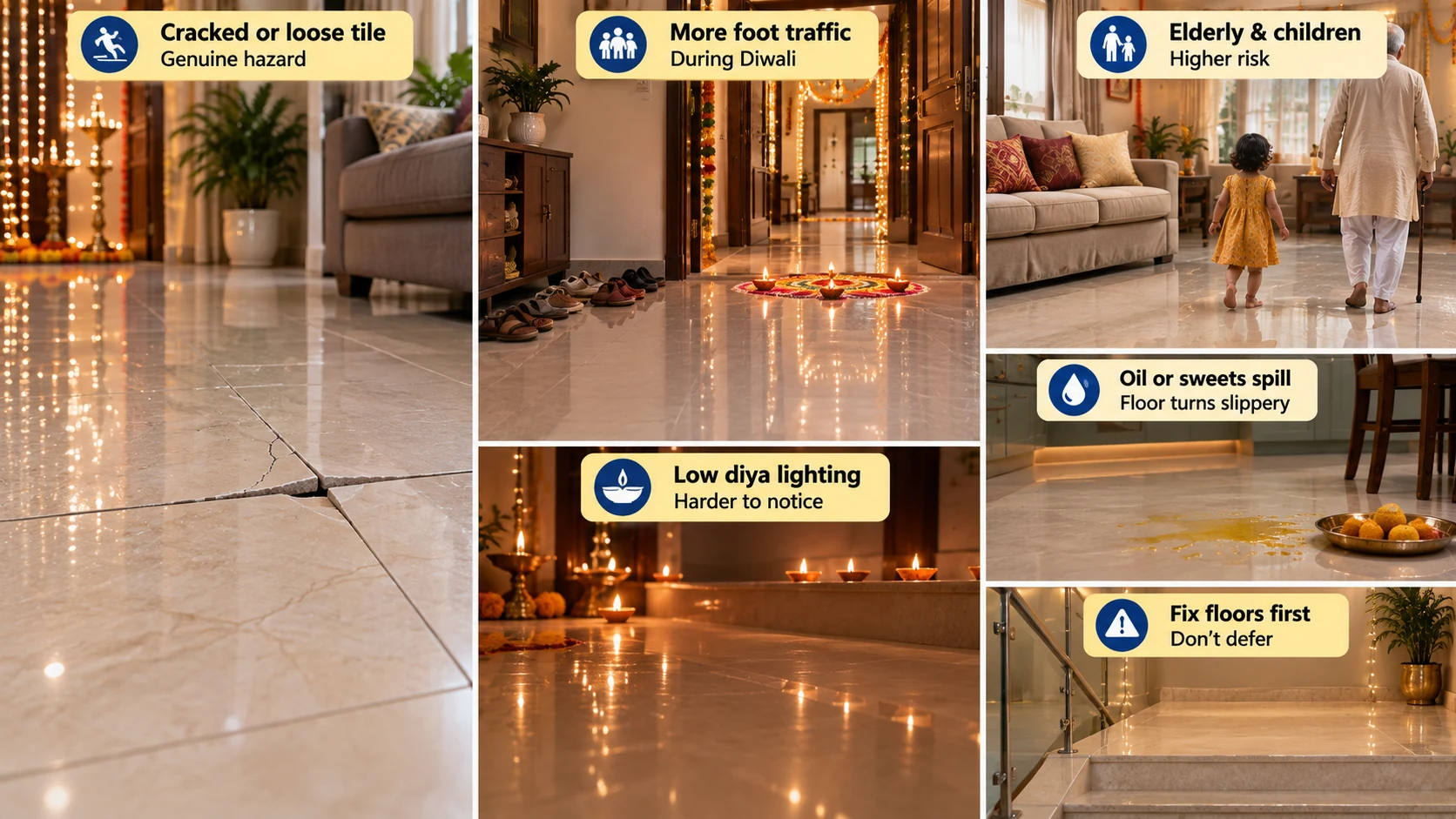
The one category that should never be deferred for timeline reasons: A cracked, loose, or slippery floor tile becomes a genuine hazard during Diwali, specifically when homes see far more foot traffic than usual, including elderly relatives and children, often in low diya lighting, and frequently with oil or sweets spilt underfoot in kitchens and dining areas. If your budget or timeline only allows one category of work before the festival, this is the one to do. A cosmetic flaw is a cosmetic flaw; a loose tile at the top of a staircase is not. |
From The Marketplace
Popular tiles right now
-01ae8c5a-0400-4c6d-8ff7-a3b93e85bf8f.jpg)








Priority 1: Safety Issues to Fix First
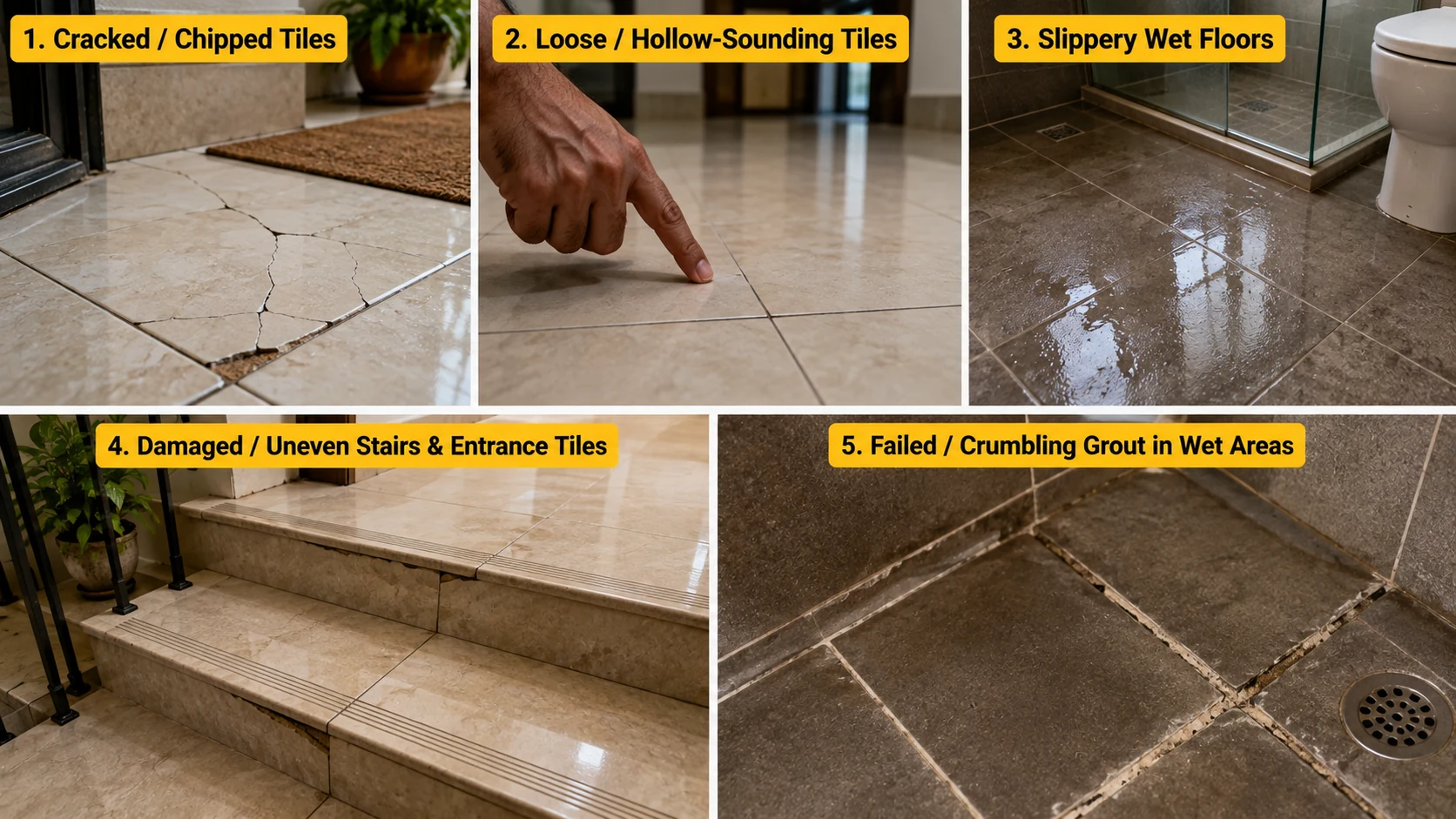
- Cracked or chipped floor tiles, particularly in high-traffic paths like entrances, corridors, and staircases, where a chipped edge becomes a genuine trip hazard.
- Loose or hollow-sounding tiles, tap across suspect areas and listen; a hollow sound means the adhesive bond has failed underneath and the tile can shift underfoot.
- Slippery bathroom or wash area floors, particularly if the original tile was never confirmed anti-skid, since increased guest use raises the risk meaningfully during festival week.
- Damaged or uneven entrance and staircase tiles are the highest-consequence location in the home for a trip or fall.
- Failed or crumbling grout in wet areas, which allows water beneath the tile and worsens both loosening and staining over time.
Priority 2: Guest-Visible Work Worth Doing
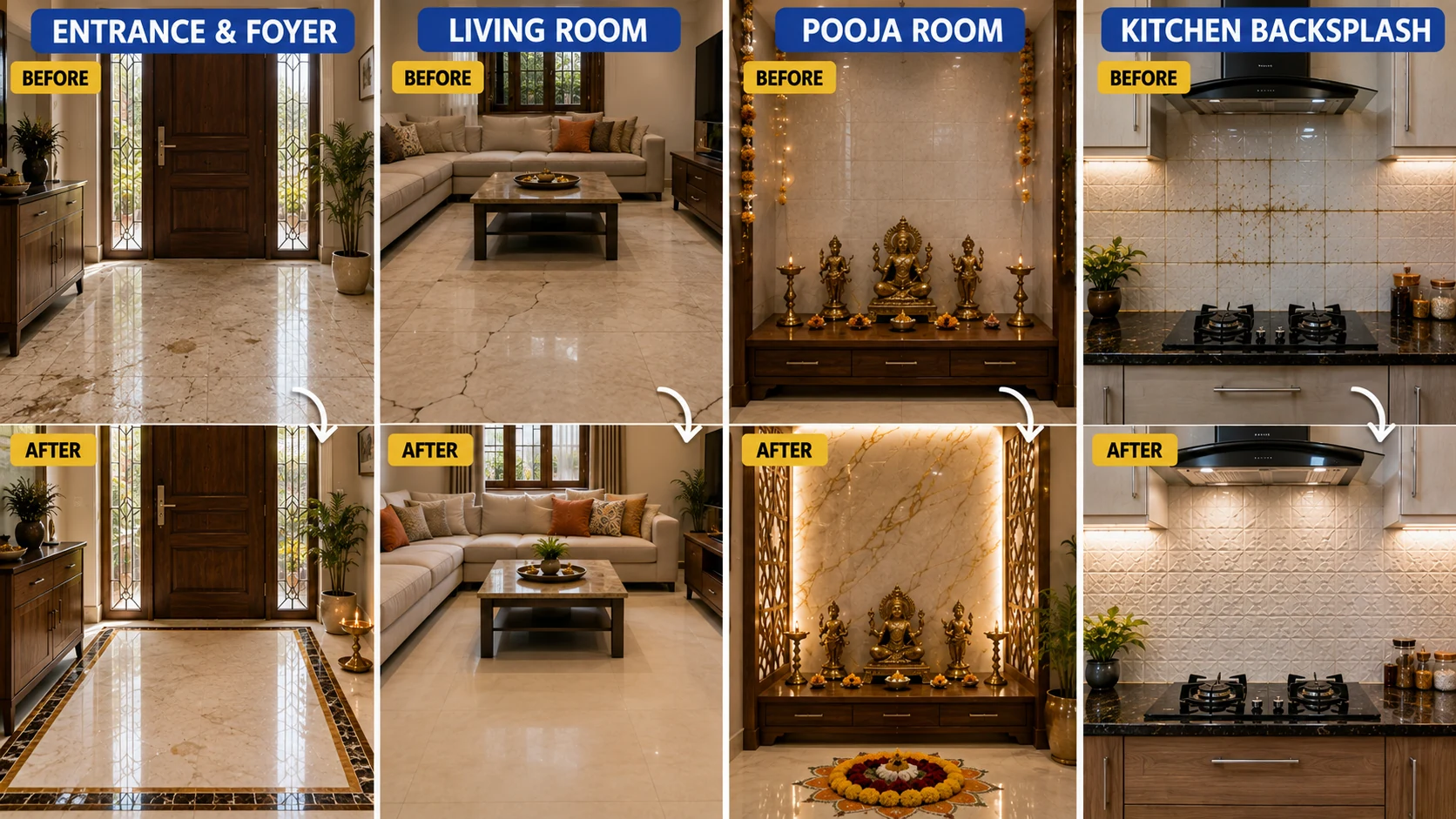
| Area | Common Pre-Diwali Issue | Realistic Fix |
| Entrance and foyer | Stained, dated, or damaged tiles at the home's first impression point | Replace the entrance section or add a fresh border; high impact for a modest area |
| Living room | A few cracked or stained tiles across an otherwise fine floor | Spot-replace damaged tiles if you have matching stock or can source a close match |
| Pooja room | Dated or worn backdrop, or a wish for a festive refresh | A contained gold, saffron, or marble-look accent panel, small area, genuine impact |
| Kitchen backsplash | Oil staining, discoloured grout, or damaged tiles behind the hob | Regrout, deep clean, or replace the backsplash section; typically a fast job |
Priority 3: Fast Cosmetic Wins Under Three Weeks
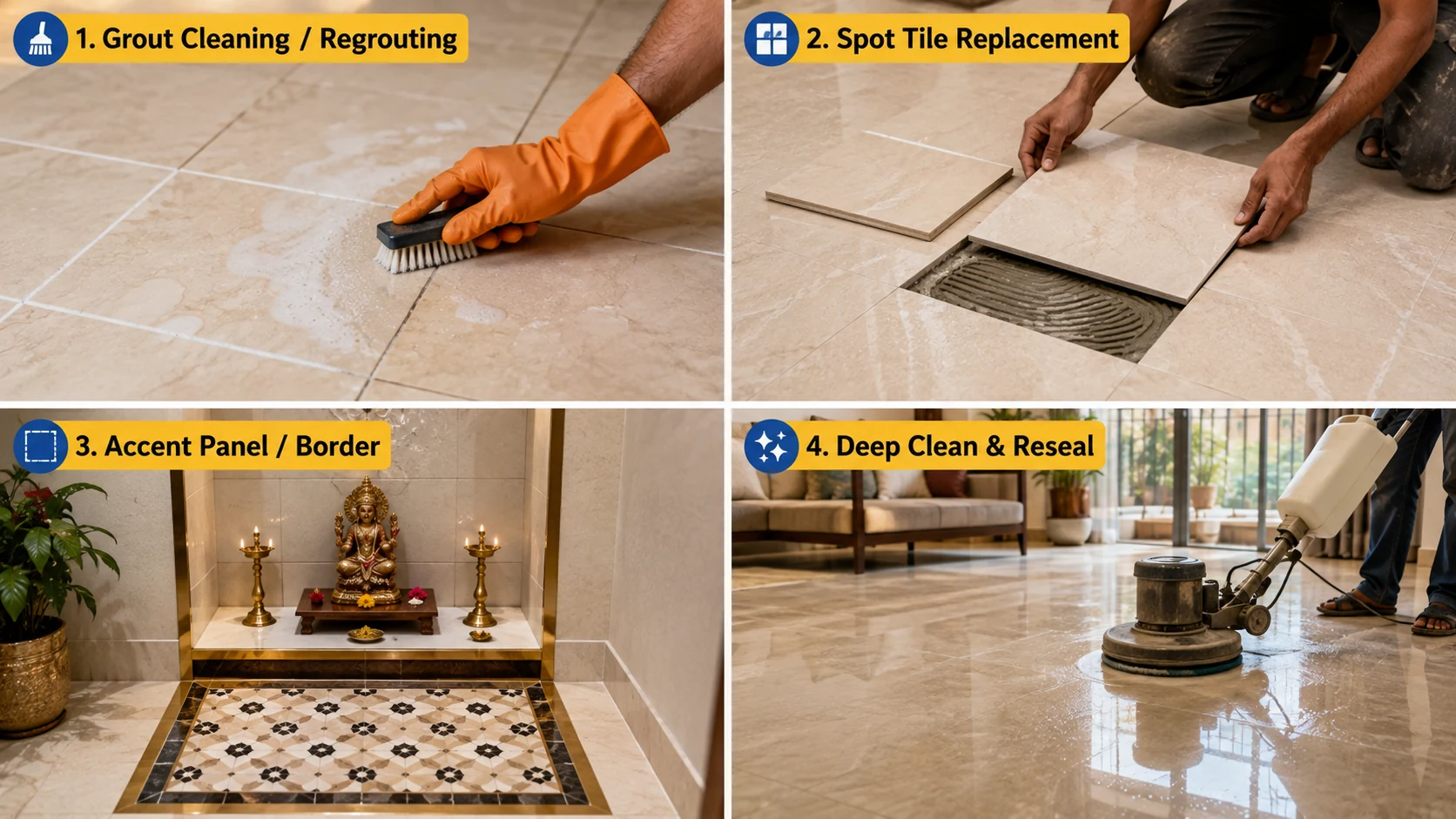
- Professional grout cleaning or regrouting often transforms how a floor looks without replacing a single tile, and is genuinely one of the highest-value-per-rupee pre-festival jobs.
- Spot-replacing a handful of damaged tiles, provided you have leftover stock from the original installation or can source a close match.
- Adding a contained accent panel or border, in the pooja room, entrance, or behind a display niche, a small area and fast to install.
- Deep-cleaning and resealing a stained floor, which can recover a surprising amount of a tired-looking floor's appearance.
Priority 4: Full Renovations, and When to Honestly Defer Them
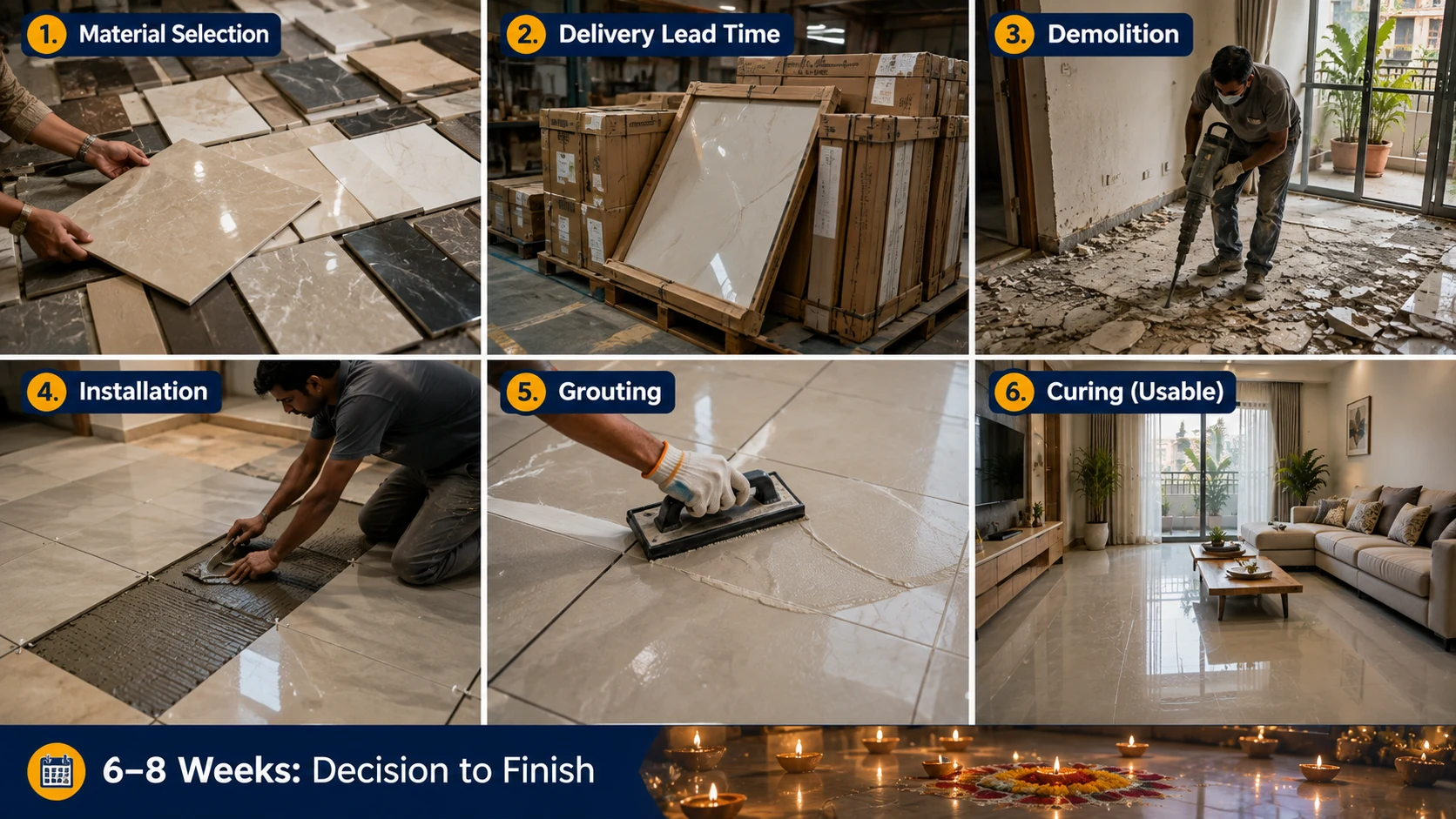
The honest timeline test: A full room re-tile realistically needs six to eight weeks from decision to finish, covering material selection, sample confirmation, delivery lead time, demolition of the existing floor, installation, grouting, and curing before the room is genuinely usable. If you are closer to the festival than that, deferring to after Diwali is the better call. A room mid-renovation during the festival, with furniture displaced and dust everywhere, costs more in daily disruption than a slightly dated but functional floor does. |
Working Backwards: A Realistic Pre-Diwali Timeline
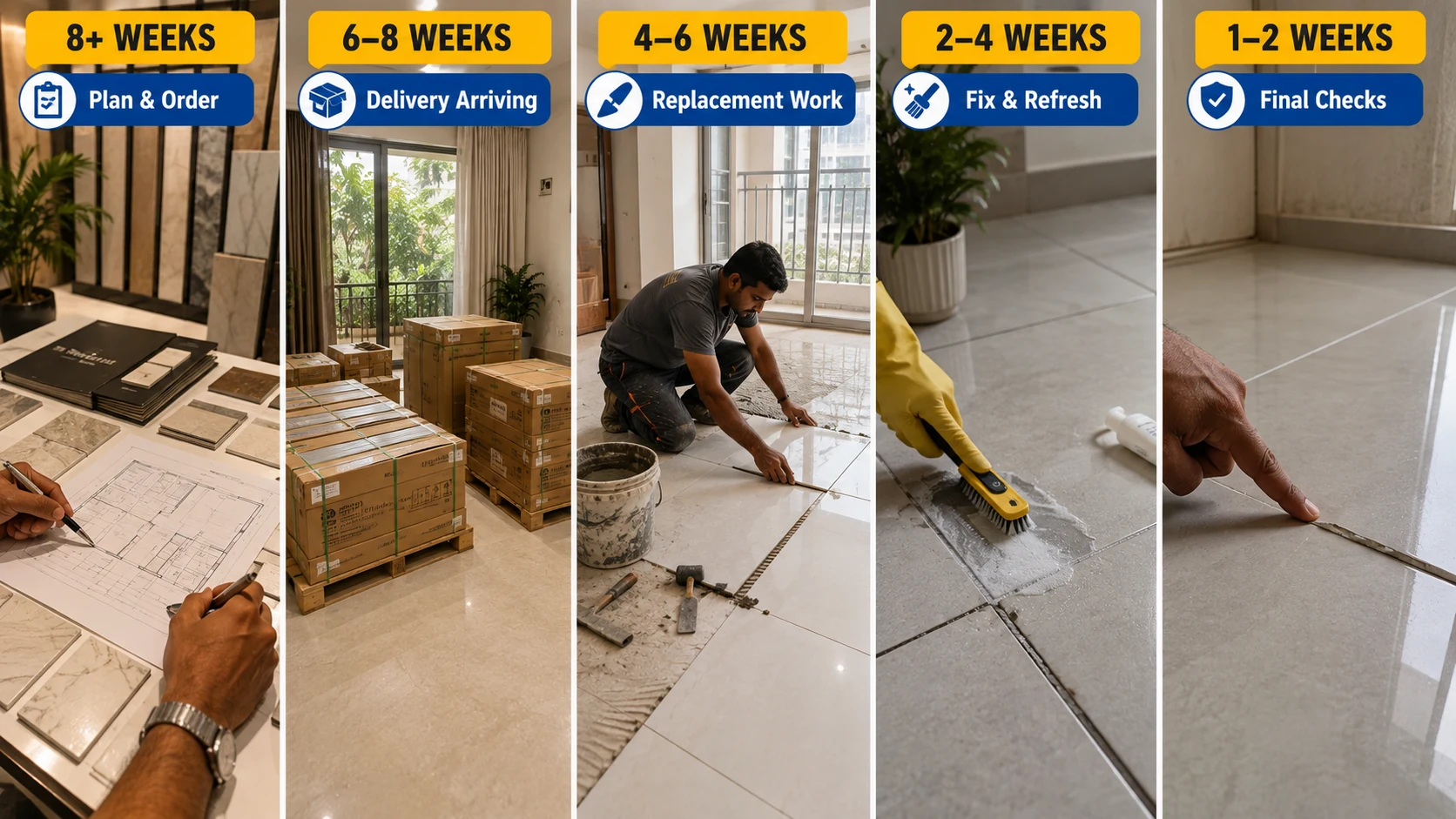
| Weeks Before Diwali | What Should Be Happening |
| 8 weeks or more | Full renovation decisions finalised, samples confirmed, material ordered |
| 6 to 8 weeks | Material delivery arriving; last realistic window to start a full room re-tile |
| 4 to 6 weeks | Guest-visible replacement work is underway; the last window to order material for it is |
| 2 to 4 weeks | Safety fixes and spot repairs; grout cleaning and regrouting |
| 1 to 2 weeks | Final safety checks only, loose tiles, anti-skid concerns; avoid starting new work |
Buying and Planning Checklist
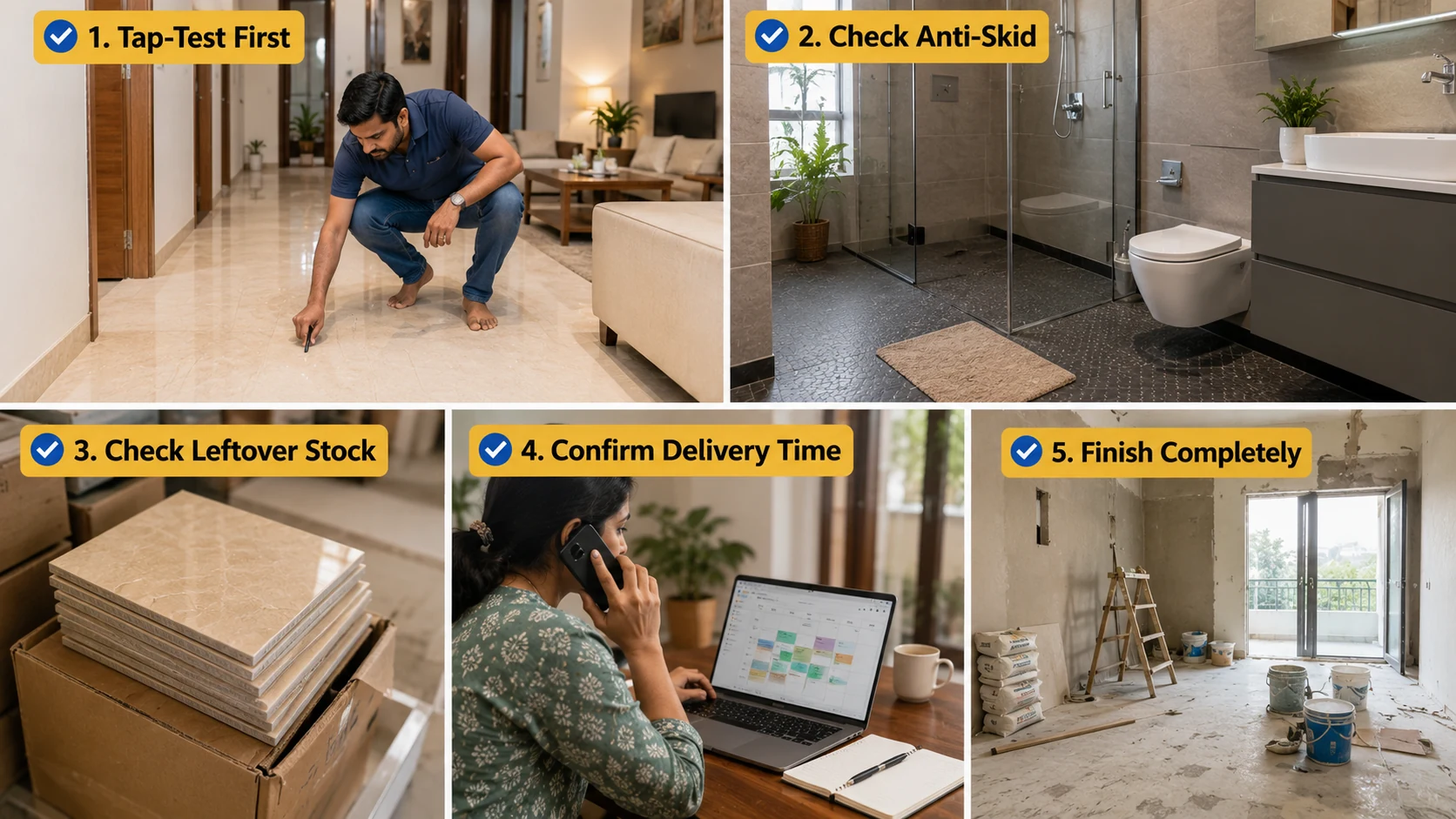
- Walk the whole home and tap-test suspect floor areas first, listing safety issues before deciding on any cosmetic work.
- Confirm anti-skid COF for any bathroom, wash area, or entrance floor replacement, particularly given increased festival foot traffic.
- Check whether you have leftover stock from the original installation before assuming a spot repair needs a full-floor replacement.
- Confirm delivery lead time honestly before committing to a timeline, since festival-season demand and freight distance both affect it.
- Defer any work you cannot genuinely finish, since a half-done room during the festival is worse than an untouched one.
Plan Your Pre-Festive Tile Work on TilesFinders
Replacement tiles for safety repairs, entrance refreshes, and pooja room accents can be compared by finish, anti-skid rating, and price on TilesFinders, with delivery lead time guidance available so you can plan realistically ahead of the festival.

FAQs
Safety issues first, cracked, loose, or slippery floor tiles, regardless of how visible they are, followed by guest-visible cosmetic work at the entrance, living room, and pooja room, with full renovations only where the timeline genuinely permits.
Six to eight weeks from decision to finish, covering material selection, sample confirmation, delivery, demolition, installation, grouting, and curing. If you have less time than that before the festival, deferring is the better call.
Tap across suspect areas and listen for a hollow sound, which indicates the adhesive bond beneath has failed, and the tile can shift underfoot, a genuine hazard during high-traffic festival gatherings.
Professional grout cleaning or regrouting, which often transforms how a floor looks without replacing a single tile, is one of the highest-value-per-rupee jobs available in a short timeline.
Homes see far more foot traffic than usual during the festival, including elderly relatives and children, often in low diya lighting and with oil or sweets spilled underfoot, all of which raise the consequence of a cracked, loose, or slippery floor tile meaningfully.
Yes, particularly if you have leftover stock from the original installation or can source a close match. Check this before assuming a spot repair requires replacing the entire floor.
Generally not. A bathroom overhaul needs the full six to eight week window, and a mid-renovation bathroom during the festival costs more in daily disruption than a dated but functional one does.
Yes, essential, since festival-season demand and freight distance from the manufacturing base both affect delivery timing, and an unconfirmed lead time is the most common reason pre-festival tile work runs late.


Tiles Worth Exploring
See our tile guides first
Set TilesFinders as a preferred source and our buying guides surface ahead of the rest for you.
Add as preferred sourceTakes one tap. Nothing to install.
What Readers Say
I was about to redo my parking area with the wrong tile size until I read this. The layout comparisons saved me from a costly mistake.
We reference TilesFinders guides while briefing clients on material selection. The size and pattern breakdowns are accurate and easy to explain visually.
On site, I get asked about grout spacing all the time. This article gave me a solid reference I now share with my team before every job.
Finally a guide that doesn't just push generic advice. The oil stain removal steps actually worked on our clubhouse driveway tiles.
I run a small construction firm and now send this link to clients directly when they ask about entrance tile sizing. Saves me an hour of explaining.
Good practical detail, though I wish there were more examples for compact apartment entrances specifically, not just villas.
My mother-in-law wanted marble, I wanted vitrified. This blog gave us the neutral comparison we needed to actually decide together.
Detailed without being overwhelming. I appreciated that it covered both cost and maintenance, not just the aesthetics.
Used the algae and hard water removal tips on our terrace tiles after the monsoon. Worked better than what our regular cleaner was doing.
As someone who sources tiles for multiple builder projects, I find these comparisons genuinely useful for vendor conversations, not just consumer content.
Recommended this to a client who kept second-guessing the entrance design. The small vs large layout section settled the debate instantly.
Straightforward and honest, no unnecessary jargon. Would like to see a similar breakdown for outdoor pool-deck tiles next.
We've bookmarked several TilesFinders guides for our design handbook. Reliable source when clients want data, not just opinions.
Two paths, one marketplace.
Get free quotes from verified suppliers.
Share your room, budget, and style. Suppliers in Morbi respond within hours.
Get Free QuotesList your business, reach real buyers.
Put your showroom in front of homeowners searching for tiles right now.
List Your BusinessMore Blogs
See all-d1476270-6634-42a9-90c8-1f6da025031b.webp)
Tile Sizes Guide: How to Choose the Right Dimensions for Every Room in Your Indian Home
Find the right tile sizes for every room in Indian homes. Compare floor & wall tile dimension...
Read More
Top 20 Tiles Manufacturers in India: Definitive 2026 Industry List
Discover the top 20 tile manufacturers in India for 2026. Compare leading brands, Morbi exporters...
Read More
Best Tile Combinations for 2BHK Homes in India
Tiling a 2BHK? Keep your main floors continuous from the living room to the bedrooms, then elevat...
Read More