Counter Top Tiles vs Granite vs Quartz Slabs: Cost, Hygiene, and Durability Compared for Indian Kitchens
Beyond material comparisons, discover how countertop surfaces differ in design, maintenance, and everyday performance to choose a practical, long-lasting kitchen or bathroom worktop.
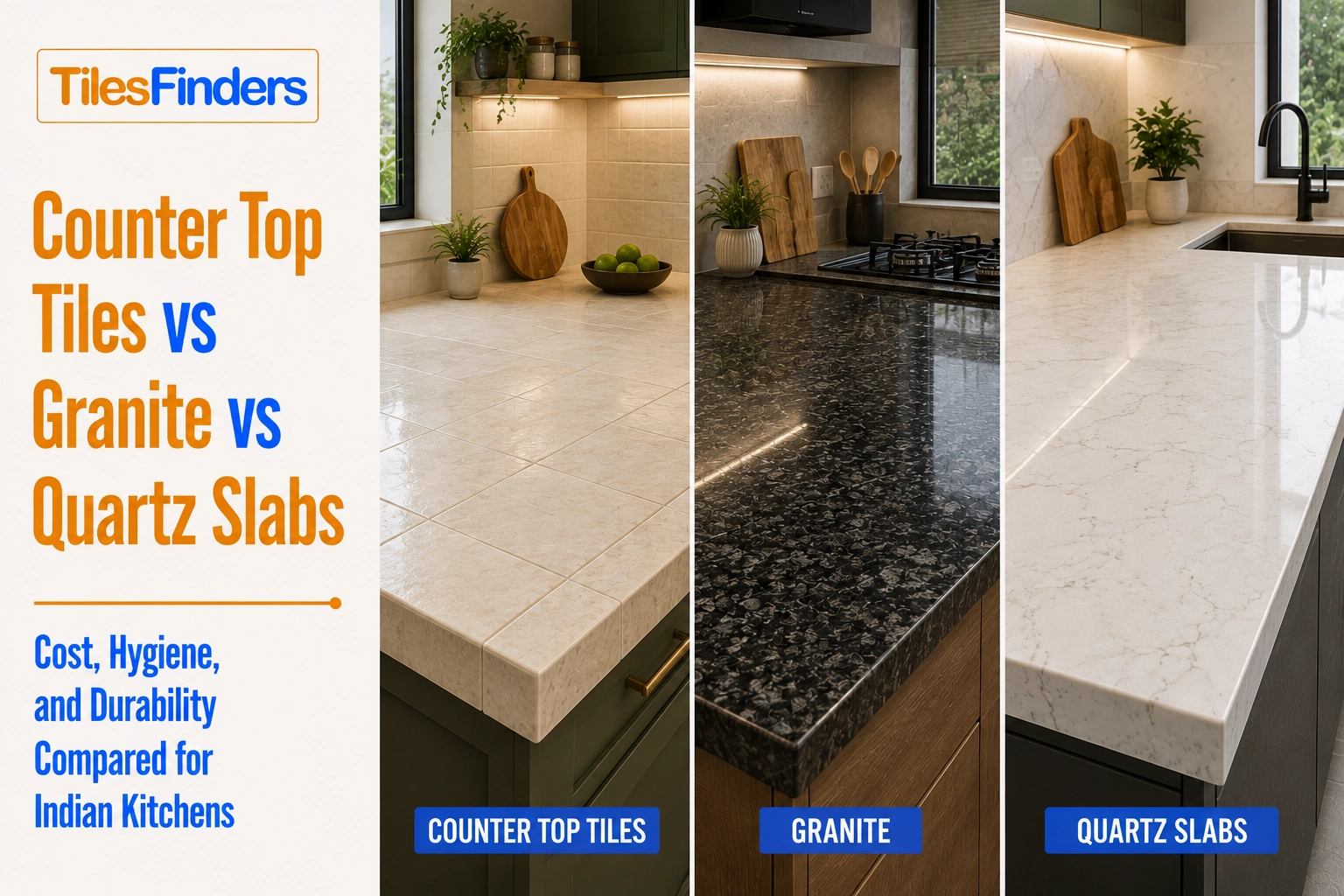
Choosing between GVT slab, granite, and quartz depends on your priorities for cost, maintenance, heat resistance, and design flexibility. Compare long-term ownership costs first, then select the countertop material that best suits your kitchen's daily cooking habits and visual style.
Three materials dominate genuine countertop specifications in India: GVT slab, natural granite, and engineered quartz. Each performs differently on the three factors that actually matter for daily kitchen use: upfront and long-term cost, hygiene and staining behaviour, and durability against heat, scratching, and impact. This guide compares all three directly.
The Three Materials Defined
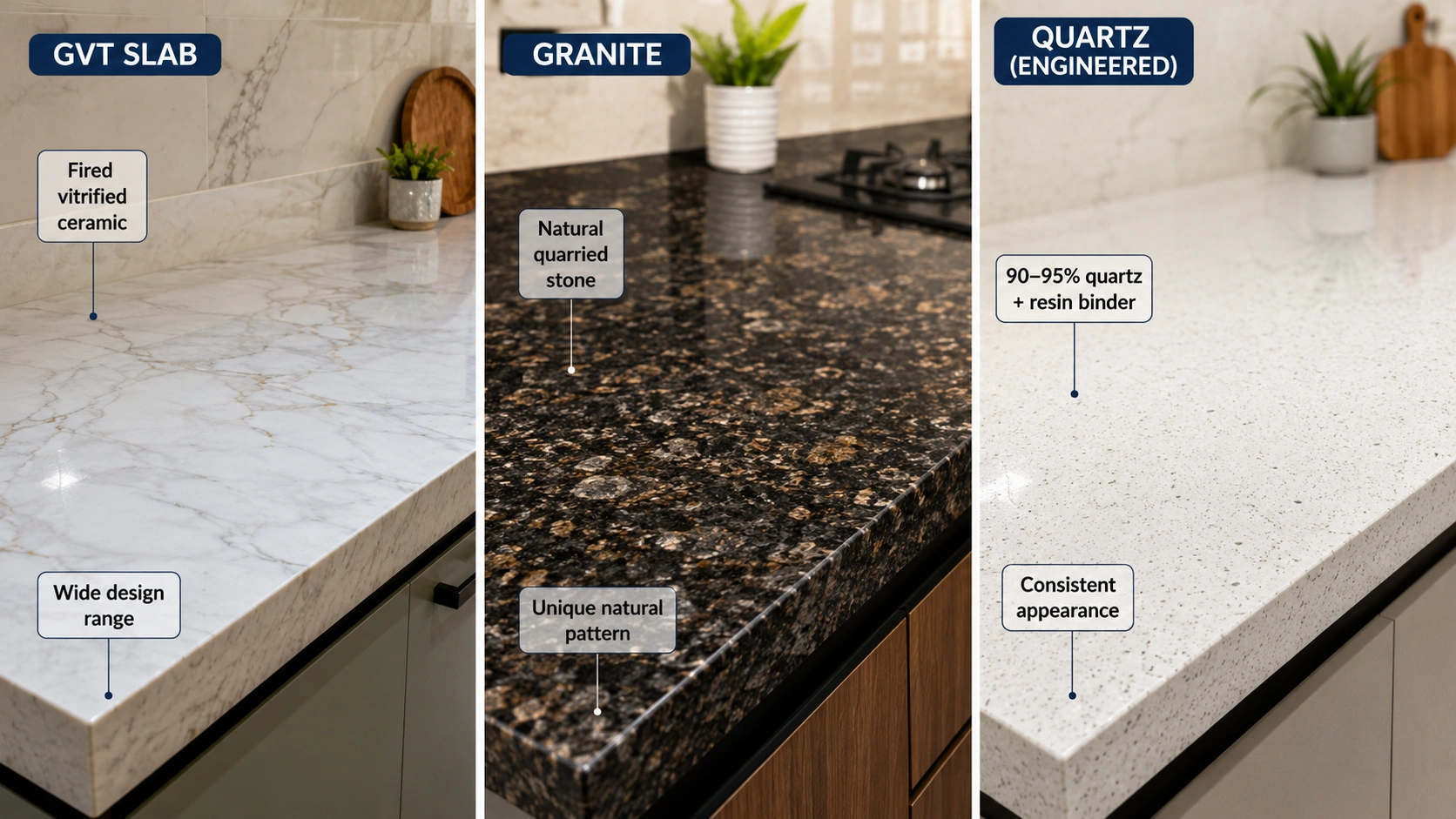
| Material | What It Is | Surface Character |
| GVT slab | Fired vitrified ceramic at slab thickness, 12 to 20mm, the same base material as floor GVT, but manufactured and rated for countertop use | Wide design range, including marble-look, concrete-look, and stone-look prints, consistent appearance |
| Granite | Natural quarried stone, cut and polished into slabs | Genuine natural mineral pattern, no two slabs are identical, the traditional Indian countertop material |
| Quartz (engineered) | Approximately 90 to 95% crushed natural quartz combined with resin binder, manufactured into uniform slabs | Highly consistent, manufactured appearance, wider colour range than natural granite, including pure whites and blacks |
Cost Comparison
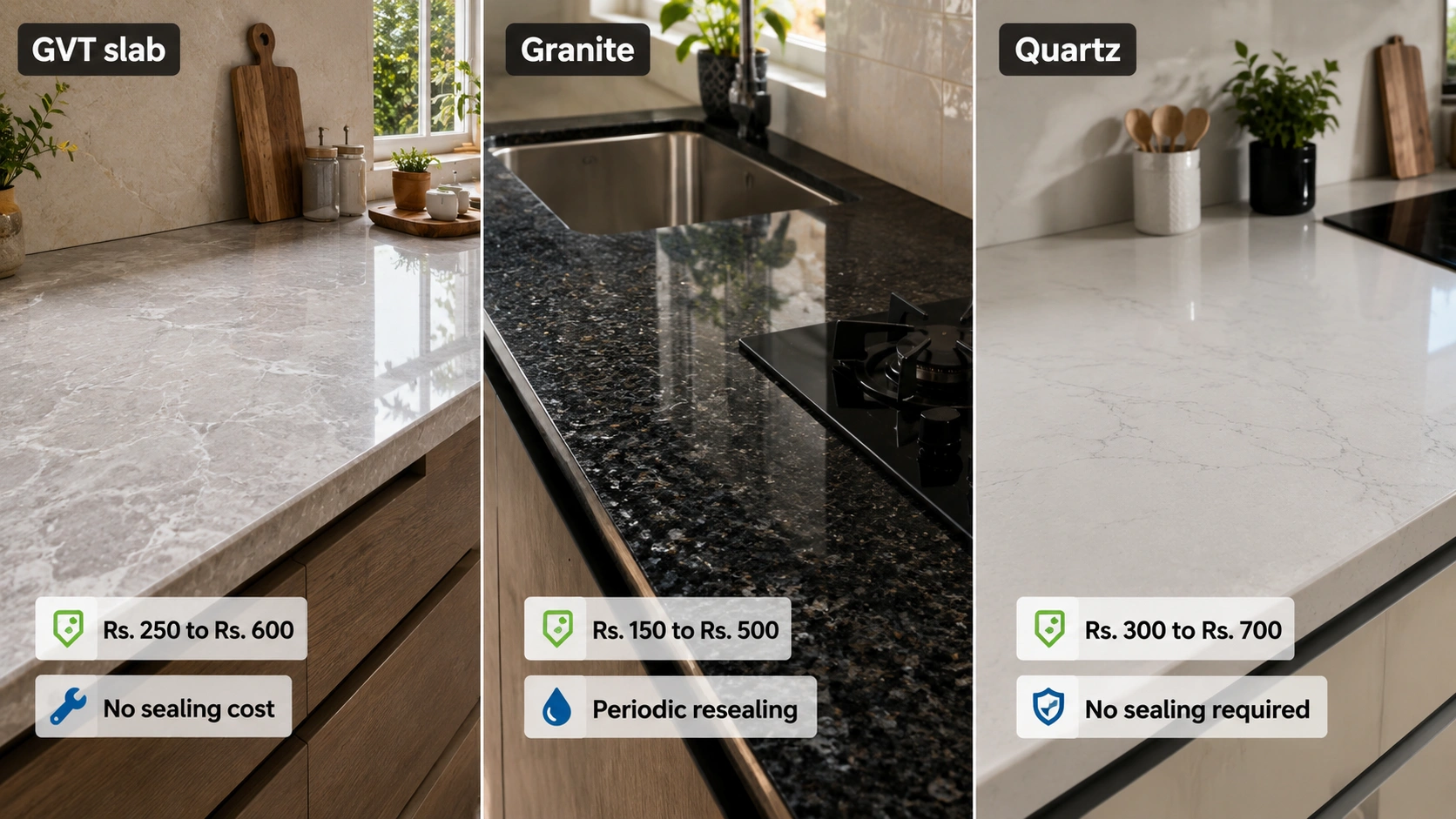
| Material | Price Range (per sq.ft, installed) | Long-Term Cost Factor |
| GVT slab | Rs. 250 to Rs. 600 | No sealing cost over the material's life; occasional professional edge repair if chipped |
| Granite | Rs. 150 to Rs. 500 | Periodic resealing is required, typically every 1 to 2 years, depending on stone type and usage, a recurring cost most buyers do not initially budget for |
| Quartz | Rs. 300 to Rs. 700 | No sealing required; generally, the highest upfront cost of the three, but no recurring sealing expense |
The cost reality most buyers miss: Granite's lower upfront price does not account for its recurring resealing cost over a kitchen's operating life, which can meaningfully close the total cost gap with quartz or GVT slab over a decade of ownership. When comparing prices, ask specifically about each material's long-term maintenance cost, not just the installed price per sq.ft.
Before deciding between granite, quartz, or GVT slabs, it's worth understanding how Counter Top Tiles in India compare across materials, finishes, thicknesses, and installation methods. A broader buying guide helps match the right surface to your kitchen or bathroom based on budget, maintenance, and daily usage.
From The Marketplace
Popular tiles right now
-31a79c8c-9152-4bea-a9a5-973d0751c214.jpg)
-b8850305-ddb1-4f3f-9e5f-5c3acb504a52.jpg)



Hygiene and Staining Comparison
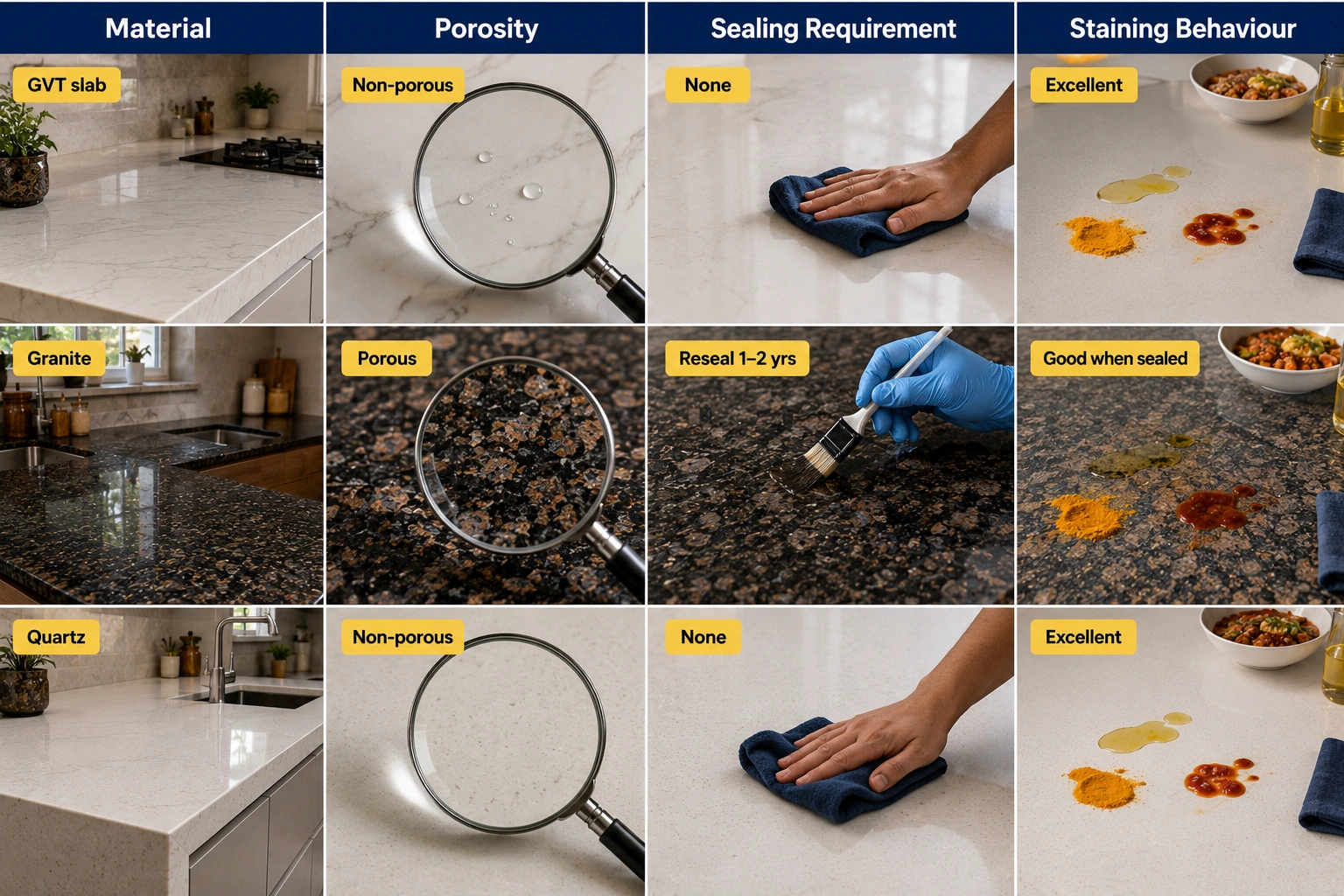
| Material | Porosity | Sealing Requirement | Staining Behaviour |
| GVT slab | 0.05% water absorption or below, effectively non-porous | None | Excellent stain resistance against turmeric, oil, and food contact, wipes clean easily |
| Granite | Naturally porous to varying degrees, depending on stone type | Required, typically every 1 to 2 years, more porous stones need more frequent resealing | Good when properly sealed; an unsealed or under-sealed granite counter can absorb oil and turmeric staining over time |
| Quartz | Effectively non-porous given the resin binder | None | Excellent stain resistance, among the most stain-resistant countertop materials available |
Durability Comparison
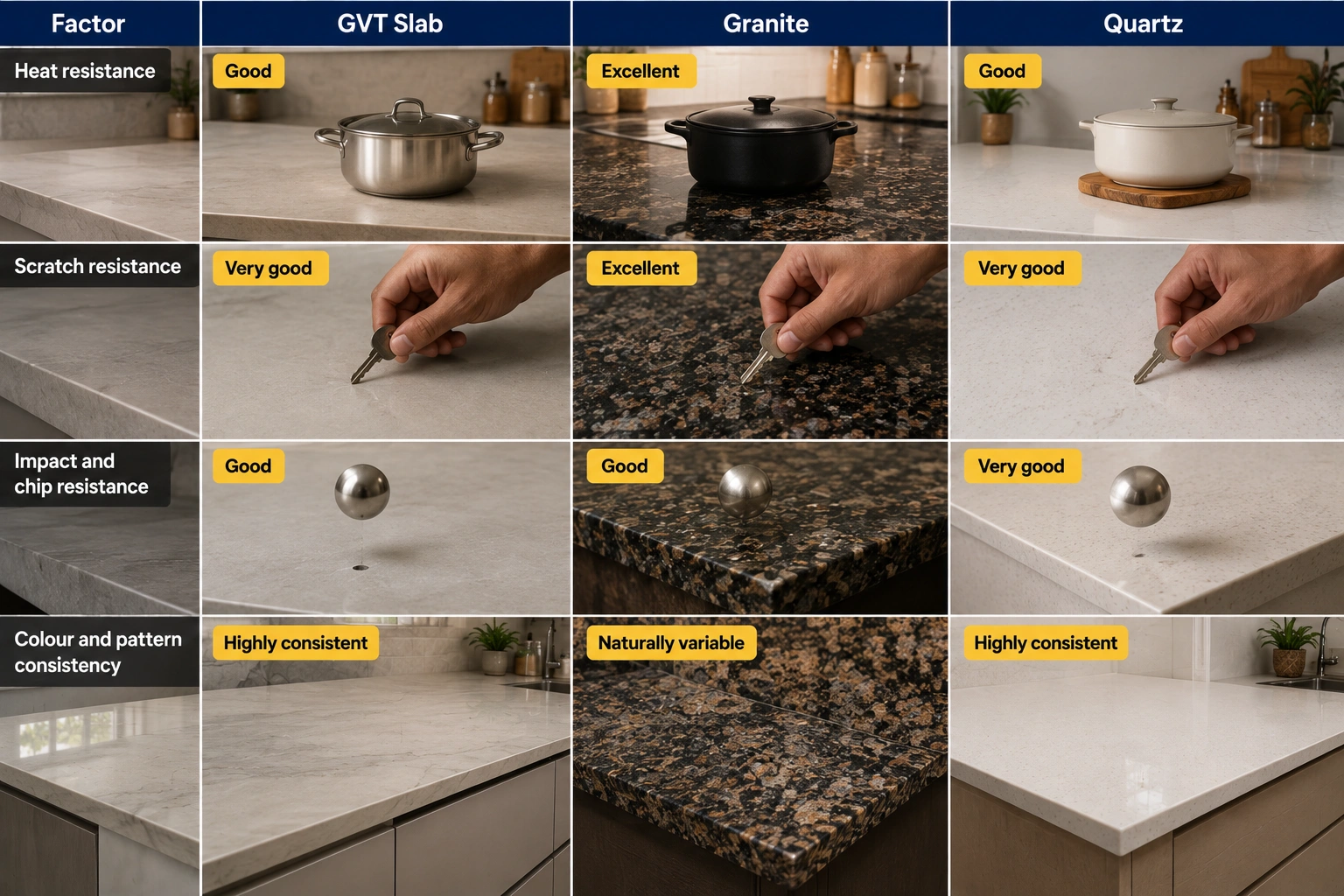
| Factor | GVT Slab | Granite | Quartz |
| Heat resistance | Good, confirm specific TDS rating | Excellent, the strongest heat tolerance of the three, given its pure mineral composition | Good but more heat-sensitive than granite or GVT, given the resin content; trivets recommended for very hot vessels |
| Scratch resistance | Very good | Excellent | Very good |
| Impact and chip resistance | Good, harder impacts can chip the surface | Good, though natural stone can chip at edges under sharp impact | Very good, generally more impact-tolerant than natural granite at the edges |
| Colour and pattern consistency | Highly consistent, manufactured print | Naturally variable, part of granite's appeal, but also means no perfect match on reorder | Highly consistent, manufactured appearance |
Which Material for Which Kitchen Brief
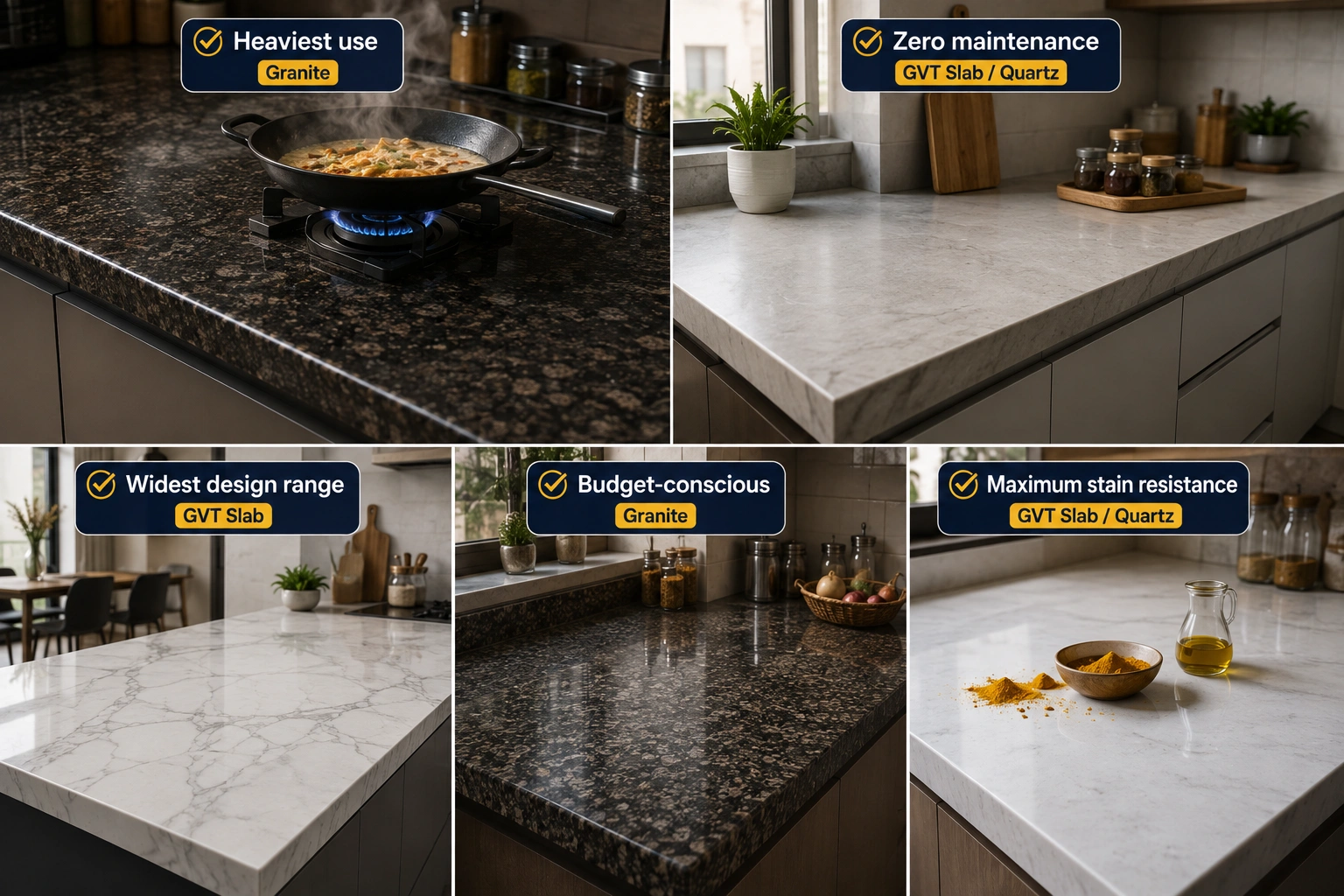
- Heaviest daily use, direct hot-pan contact routine: granite, given its superior heat tolerance from its natural mineral composition and long Indian track record in exactly this use case.
- Zero ongoing maintenance priority: GVT slab or quartz, both non-porous and requiring no periodic resealing, unlike granite.
- Widest design range, including marble-look and concrete-look finishes: GVT slab, which offers a broader printed design range than either natural granite's inherent patterns or quartz's manufactured colour range.
- Budget-conscious with genuine countertop durability still required: granite, generally the most accessible of the three per sq. ft., provided the resealing cost is budgeted for.
- Maximum stain resistance for a heavy-cooking Indian kitchen: GVT slab or quartz, both offering excellent resistance to turmeric and oil staining without any sealing dependency.
Once you've shortlisted the right countertop material, explore Kitchen Counter Tile Design Ideas for inspiration. From marble-look GVT slabs to contemporary stone finishes and minimalist surfaces, the right design can elevate both functionality and aesthetics.
Buying Checklist Across All Three Materials
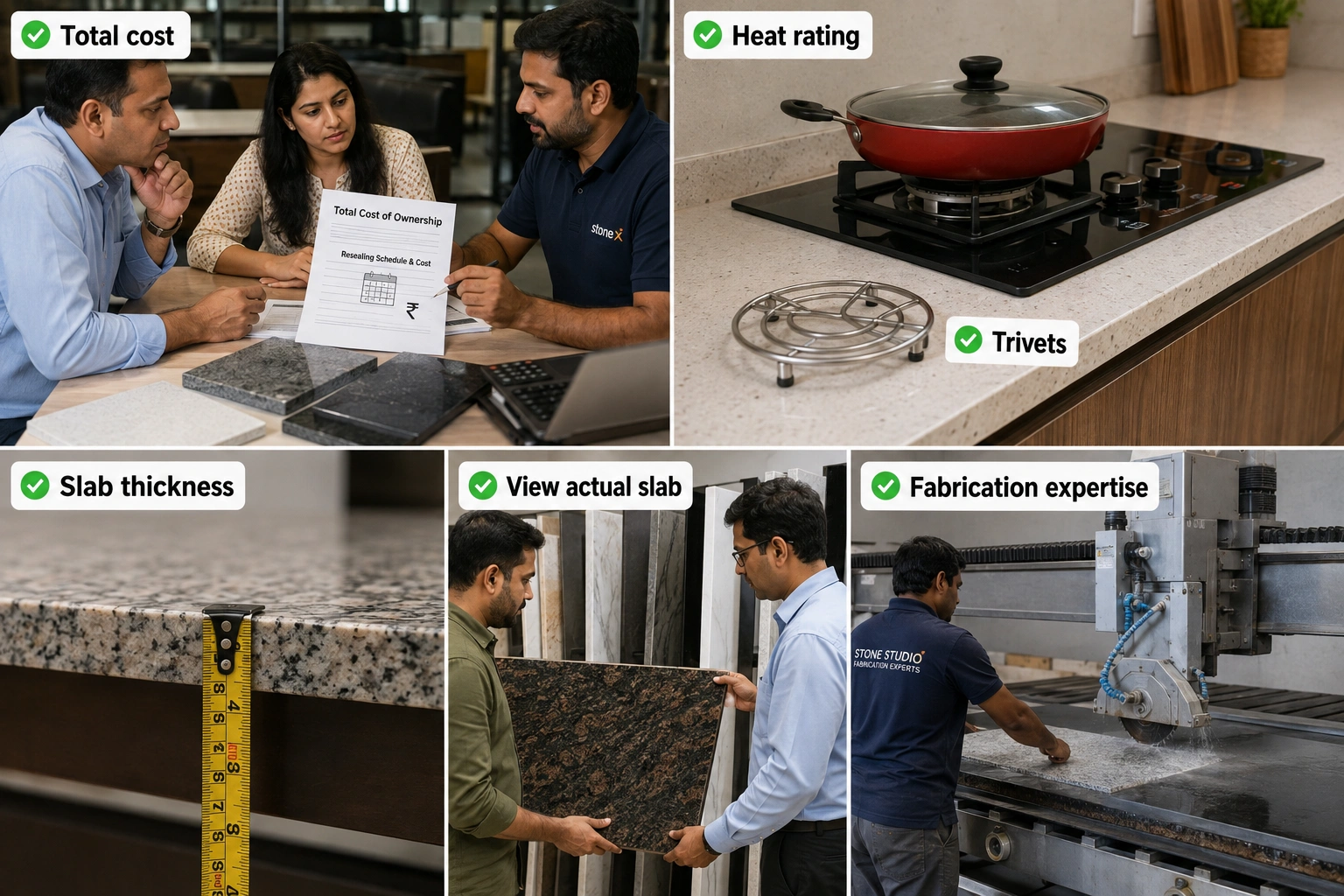
- Ask for the total cost of ownership, not just the installed price, specifically requesting the resealing schedule and cost for granite before comparing it against GVT slab or quartz.
- Confirm heat resistance rating for any material considered for direct hot-pan contact, and request trivets as standard practice for quartz regardless of its rated heat tolerance.
- Confirm slab thickness appropriate to the application, 18 to 20mm for high-use kitchen counters and islands across all three materials.
- View an actual slab sample in person before ordering, particularly for granite, given its natural pattern variation, since a catalog photograph does not reliably represent the specific slab you will receive.
- Confirm fabrication and installation expertise for the specific material, since granite fabrication is more widely available across Indian cities than GVT slab or quartz fabrication, which remain comparatively newer specialisations in many markets.
Countertop Material Availability in India: 2026 Context
Granite remains the most widely fabricated countertop material across Indian cities, sourced from quarries in Rajasthan, Karnataka, and Andhra Pradesh, with established local fabrication expertise in nearly every metro and tier-2 city. GVT slab, produced by a specialist subset of Morbi, Gujarat manufacturers, and quartz, produced both domestically and imported, both have a comparatively newer and more concentrated fabrication network, generally found in metro cities and larger tier-2 markets, a factor worth confirming locally before committing to either material for a project outside a major urban centre.
Compare All Three Materials on TilesFinders
GVT slab, granite, and quartz countertop options can be compared side by side by cost, heat resistance, and maintenance requirements on TilesFinders, with fabricator availability confirmed for your specific city before you commit to a material.

FAQs
Granite has a lower typical upfront price, but its recurring resealing cost every 1 to 2 years should be factored into a genuine cost comparison. GVT slab has no sealing requirement, which can close or reverse the total cost gap over a decade of ownership.
Yes, granite is naturally porous to varying degrees and requires periodic sealing, typically every 1 to 2 years depending on the specific stone type and kitchen usage intensity, to maintain its stain resistance.
Granite has the stronger heat tolerance of the two, given its pure natural mineral composition. Quartz contains a resin binder that makes it more heat-sensitive, and trivets are recommended for very hot vessels on a quartz counter, even though its rated heat tolerance is generally good.
GVT slab and quartz are both effectively non-porous and offer excellent stain resistance without any sealing dependency, generally considered more consistently hygienic than granite, which requires proper and ongoing sealing to maintain equivalent stain resistance.
Not identical, since granite's patterns are naturally occurring and unique to each slab. GVT slab offers the widest overall design range through printed marble-look, concrete-look, and stone-look finishes, while quartz offers a highly consistent manufactured colour range, including pure whites and blacks not found in natural granite.
Granite, given its superior heat tolerance from its natural mineral composition and the longest established track record in Indian kitchens for exactly this use case, provided the resealing schedule is maintained.
Increasingly, though its fabrication network remains more concentrated in metro and larger tier-2 cities than granite's well-established fabrication availability across nearly every Indian city. Confirm local fabricator availability before committing to a GVT slab outside a major urban centre.
GVT slab and quartz both require no sealing and maintain a consistent appearance over time with routine cleaning alone. Granite requires ongoing resealing to maintain its stain resistance and appearance, representing a genuine long-term maintenance commitment rather than a one-time installation decision.


Handpicked for You
See our tile guides first
Set TilesFinders as a preferred source and our buying guides surface ahead of the rest for you.
Add as preferred sourceTakes one tap. Nothing to install.
What Readers Say
I was about to redo my parking area with the wrong tile size until I read this. The layout comparisons saved me from a costly mistake.
We reference TilesFinders guides while briefing clients on material selection. The size and pattern breakdowns are accurate and easy to explain visually.
On site, I get asked about grout spacing all the time. This article gave me a solid reference I now share with my team before every job.
Finally a guide that doesn't just push generic advice. The oil stain removal steps actually worked on our clubhouse driveway tiles.
I run a small construction firm and now send this link to clients directly when they ask about entrance tile sizing. Saves me an hour of explaining.
Good practical detail, though I wish there were more examples for compact apartment entrances specifically, not just villas.
My mother-in-law wanted marble, I wanted vitrified. This blog gave us the neutral comparison we needed to actually decide together.
Detailed without being overwhelming. I appreciated that it covered both cost and maintenance, not just the aesthetics.
Used the algae and hard water removal tips on our terrace tiles after the monsoon. Worked better than what our regular cleaner was doing.
As someone who sources tiles for multiple builder projects, I find these comparisons genuinely useful for vendor conversations, not just consumer content.
Recommended this to a client who kept second-guessing the entrance design. The small vs large layout section settled the debate instantly.
Straightforward and honest, no unnecessary jargon. Would like to see a similar breakdown for outdoor pool-deck tiles next.
We've bookmarked several TilesFinders guides for our design handbook. Reliable source when clients want data, not just opinions.
Two paths, one marketplace.
Get free quotes from verified suppliers.
Share your room, budget, and style. Suppliers in Morbi respond within hours.
Get Free QuotesList your business, reach real buyers.
Put your showroom in front of homeowners searching for tiles right now.
List Your BusinessMore Blogs
See all
Best Kitchen Tiles in Bangalore: Designs, Price and Where to Buy in 2027
Learn how Bangalore’s Cauvery vs. borewell water impacts kitchen tile choices in 2027. Compare he...
Read More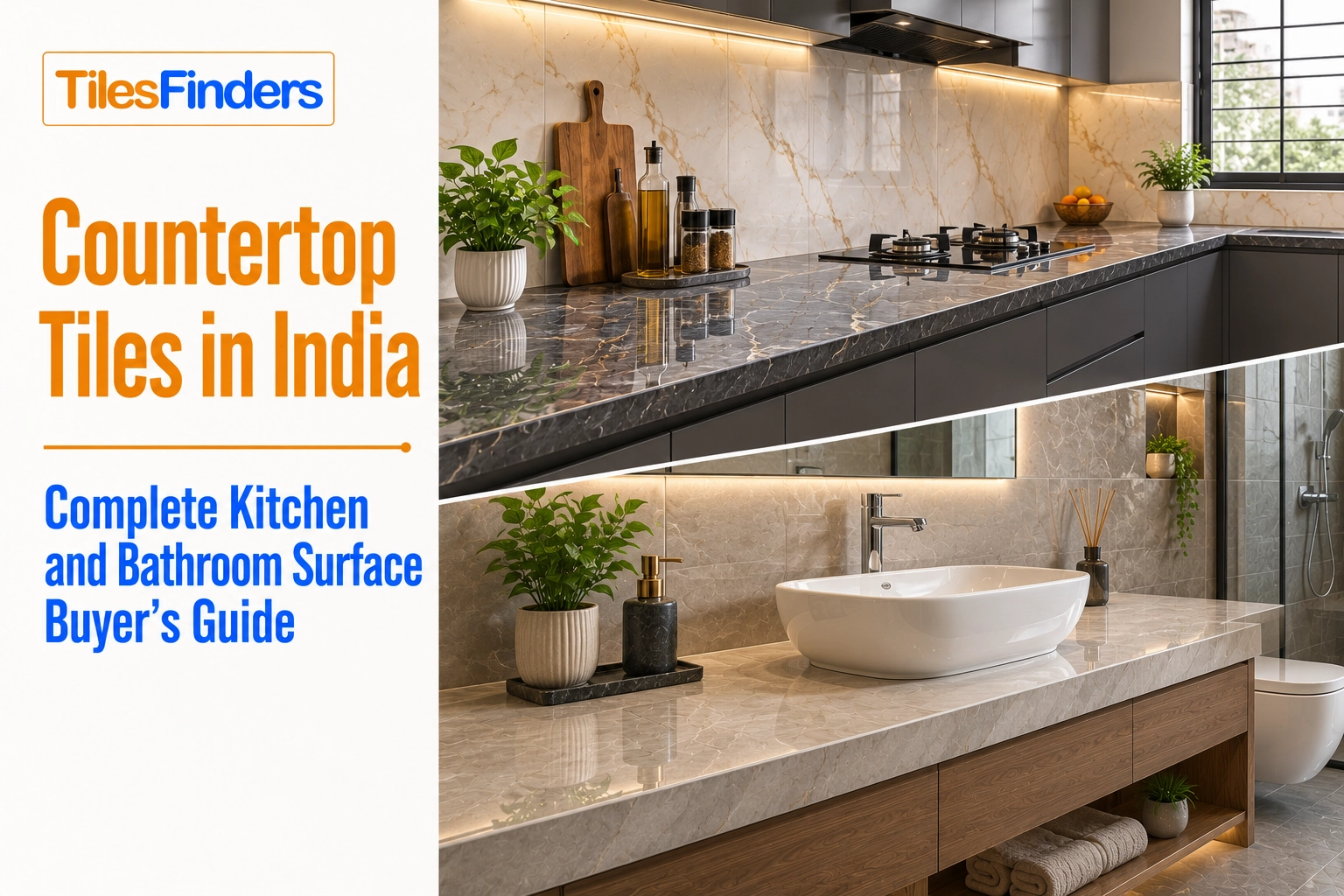
Countertop Tiles in India: Complete Kitchen and Bathroom Surface Buyer's Guide
Choose the right countertop tiles for Indian kitchens and bathrooms with this guide covering GVT ...
Read More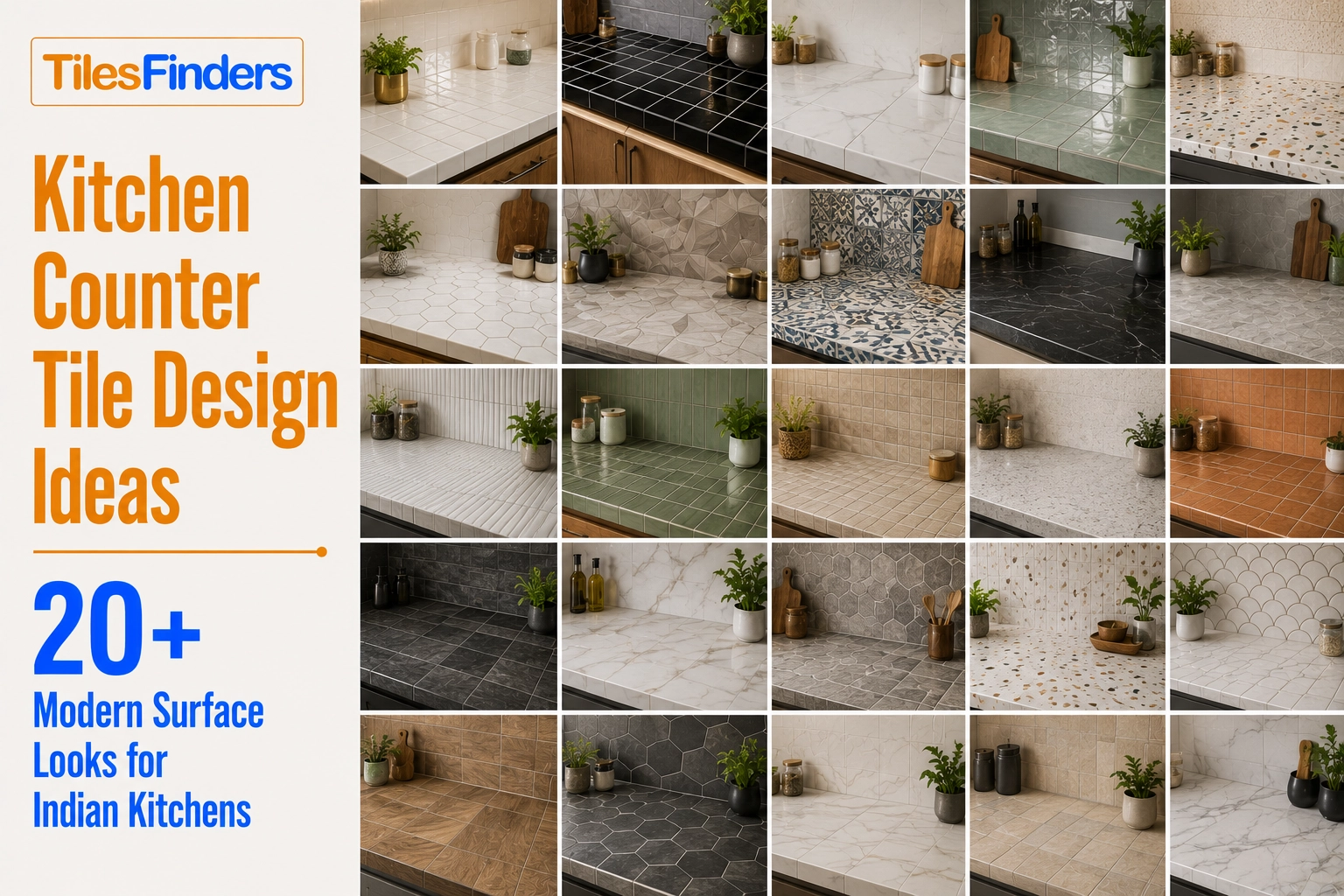
Kitchen Counter Tile Design Ideas: 20+ Modern Surface Looks for Indian Kitchens
Built for daily cooking, these countertop tile ideas combine heat resistance, stain protection, a...
Read More